Skip to content

Best Comics

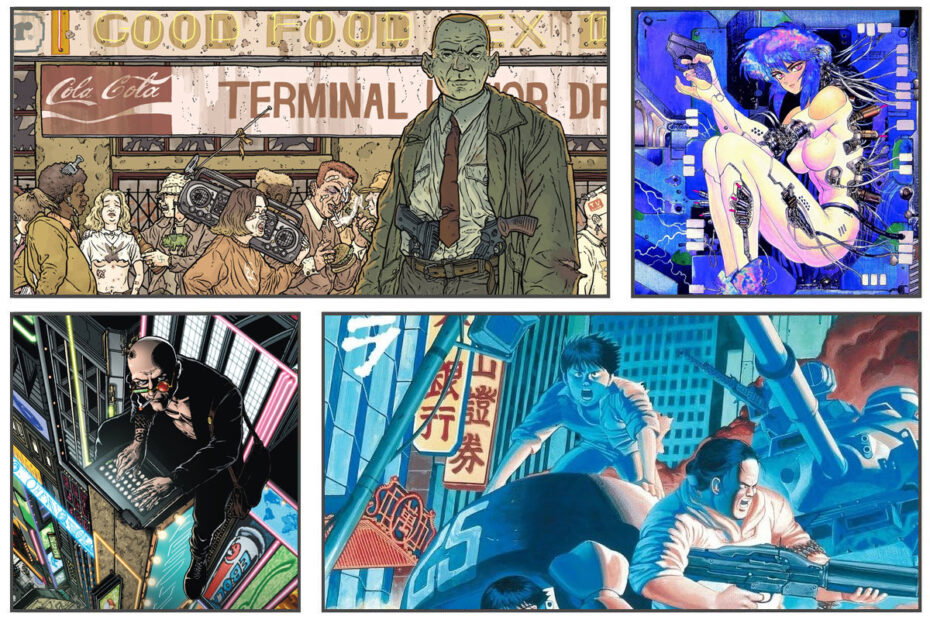
38 Cyberpunk Comics & Manga to read in 2026

What are the cyberpunk comics and manga to read in 2026? This curated list explores the essential graphic novels and seinen manga that define the “high-tech, low-life” aesthetic.

At its core, cyberpunk is a speculative subgenre of science fiction examining the collision between advanced technology and societal decay. Coined in the early 1980s, the term describes a world where rapid advances in AI, cybernetics, and global data networks have failed to produce a utopia. Instead, these developments intensify economic inequality, consolidate corporate power, and erode individual autonomy.

Cyberpunk is structured around several recurring themes: post-humanism, expressed through the integration of the digital and the biological; corporate hegemony, marked by the displacement or erosion of nation-states by powerful transnational corporations; surveillance culture, in which pervasive digital monitoring saturates everyday life; and urban decay, reflected in the transformation of social space into dense, vertically stratified megacities defined by inequality and infrastructural excess.

While the genre is closely associated with literature, its most iconic visuals are found in comics and manga. Western comic books frequently draw on film noir to emphasize corporate corruption and morally compromised antiheroes. In parallel, Japanese manga expands its scope by focusing on body modification, technological transcendence, and monumental “megastructures.”

Plug in, settle your neural link, and prepare to immerse yourself in the best cyberpunk literature available today.

Read More »38 Cyberpunk Comics & Manga to read in 2026

The Best Vertigo Comics Series: 20 must-read comics books

  • by

In 2026, Vertigo Comics is officially back in business. DC Comics discontinued the imprint in January 2020 and announced its return 4 years later, but nothing significant came of it until now. New series, including spin-offs of old hits, are coming, and this makes for the perfect time to look back at the greats that earned Vertigo its reputation.

If you are not familiar with the history of Vertigo, it was launched in 1993 under the direction of editor Karen Berger. Dedicated to creator-driven comics for mature readers, the imprint was freed from the constraints of DC’s main continuity and the Comics Code Authority (CCA), providing writers and artists with a level of creative autonomy that led to some of the medium’s most influential series.

Its true origin can be traced to DC’s mature-reader experiments of the 1980s and to landmark works such as The Dark Knight Returns and Watchmen, which demonstrated a growing audience for adult-oriented comics. But everything truly began when DC stopped submitting The Saga of the Swamp Thing to the CCA. Under Alan Moore, the series helped usher in a new wave of writers (many from the United Kingdom) often referred to as the “British Invasion.”

Read More »The Best Vertigo Comics Series: 20 must-read comics books

35 Books To Read About Comic Books

Every comic book reader has met someone who told them that it would be better if they read “real” books. Sadly, sequential art is often not considered to be as worthy an art form as literature. Nevertheless, if there are books that comic book readers like to read, it’s books about comic books! 

Some of those books are straightforward history books, while others are biographical in nature, but all explore, in one way or another, some aspect of the multifaceted development of the industry that has become such a pillar of American culture. From the creation of icons to the exploitative nature of the publishing world, the emergence of artistic movements, and the economic evolution of the industry, there are a lot of subjects to cover. 

Today, we are aiming to compile a selective list of books that you might be interested in reading about comic books. There are fewer than one might expect after so many decades. Nevertheless, more and more insiders and fans are trying to chronicle the history of comics before too many of those who lived it leave us. In the following selection, you’ll find biographies, history books, art books, essays, interviews, and memoirs, going into different genres, authors, and topics. 

Read More »35 Books To Read About Comic Books

55 Must Read Biographical Comics

There have been non-fiction comics for a long time. In fact, that’s what one of the appeals of True Comics (1941-1950) was, which provided educational material in a form that appealed to children while trying to help legitimize the medium maligned by criticism of superhero books. They were fairly simplified biographies of scientists, inventors, and other figures of history. It was also less impactful than Crime Does Not Pay (1942-1955), the first “true crime” comic book series, which propelled the crime comics to the top with its sensationalistic appeal.

We are not talking about “true crime” today (it will be the subject of another list), but biographical comics. Not just works of documentary value, but also autobiographies, personal memoirs, from the groundbreaking series American Splendor (1976–2008), that changed the idea of what stories comic books could tell, to the artists of the 2000s (James Kochalka, Kate Beaton, Julia Wertz, etc.) who developed their craft online by chronicling the story of their lives, and beyond.

Today, biographical comics are a widely respected genre. They range from meticulously researched historical biographies to intimate diaries and experimental visual essays. They are studied in classrooms, exhibited in museums, and celebrated with major literary awards. This once niche corner of comics has become one of its richest and most innovative traditions.

Read More »55 Must Read Biographical Comics

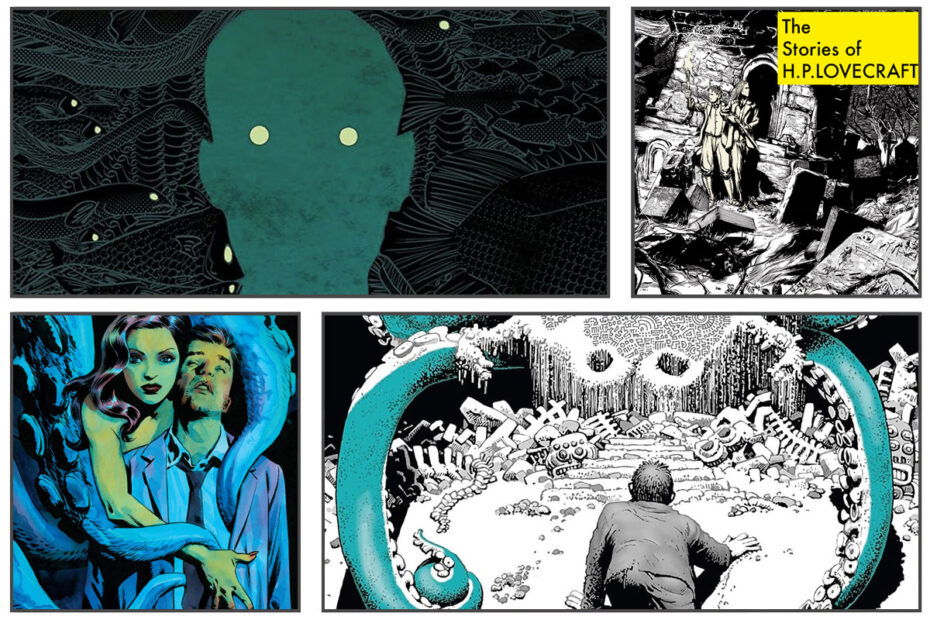
36 Lovecraftian Horror Comics and Graphic Novels

Next to Edgar Allan Poe, H.P. Lovecraft (1890-1937) is one of the most influential American writers in the horror genre. Though largely unrecognized in his lifetime, his work in the genre of weird fiction went on to shape generations of horror writers and artists. His stories are built around themes of cosmic dread, forbidden knowledge, and humanity’s insignificance in an uncaring universe, and often center on incomprehensible alien entities, ancient gods, and the fragility of sanity.

This type of tale has come to be known as Lovecraftian horror, also referred to as “cosmic horror.” It emphasizes atmosphere and existential terror over gore or jump scares. The horror lies not in what is seen, but in what cannot be fully understood. Over time, this distinctive approach to fear has taken root in a wide range of media, including comics, where artists and writers have found rich material in Lovecraft’s mythos and mood.

There are two types of Lovecraftian comics. We have the direct adaptations of H.P. Lovecraft’s original works, and the comic books full of cosmic horrors inspired by the master of the genre.

Today, we invite you to explore the shadowy, unsettling world of Lovecraftian horror through our selection of comics. From quiet tales of creeping madness to confrontations with ancient, godlike beings, these works capture the essence of a genre where fear comes not from what is known, but from what can never be fully understood.

Read More »36 Lovecraftian Horror Comics and Graphic Novels

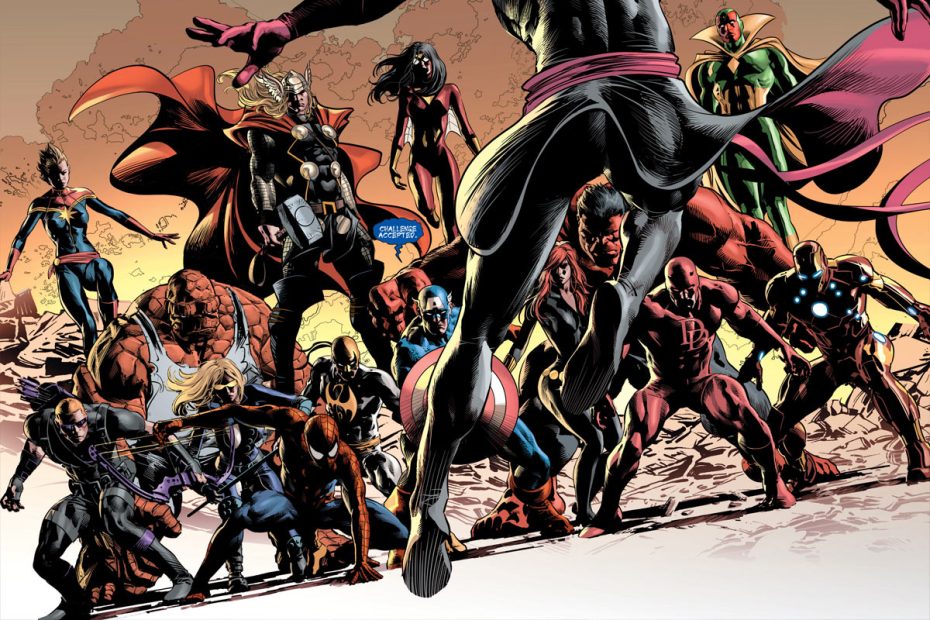
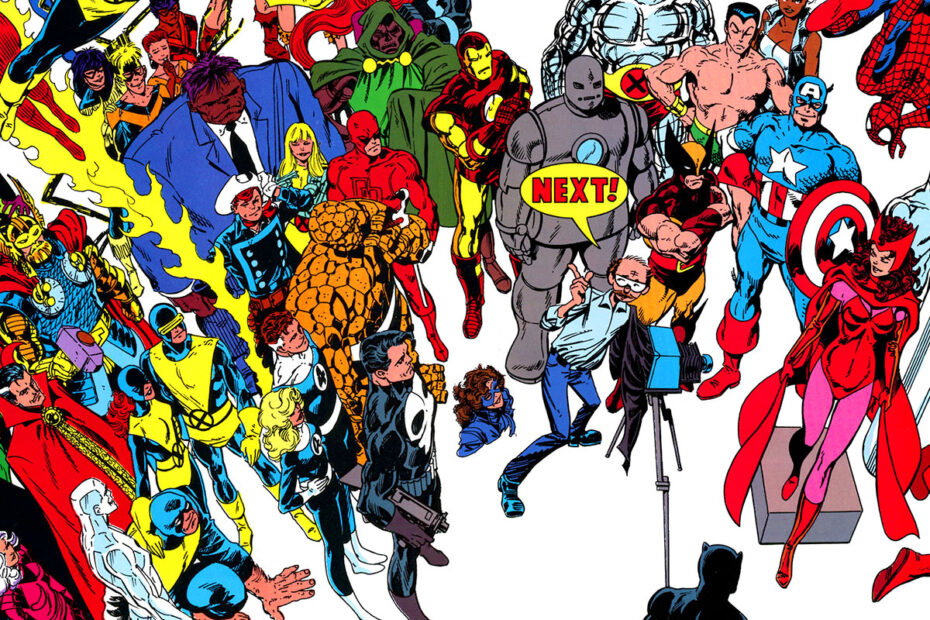
Best 1980s Marvel Comics: The Stories That Defined a Decade

These were good years for the comic book industry. Actually, they were great years. The 1980s were a period of tremendous financial and creative growth that transformed the medium. The emergence of the Direct Market, with specialty comic book stores, created more opportunities for creators and led to a wider range of publications.

It was during this decade that Alan Moore and Dave Gibbons’ Watchmen, Frank Miller’s The Dark Knight Returns, and Art Spiegelman’s Maus were published, breaking new comic book narrative ground for future writers. It was also during this decade that DC Comics was rebooted with Crisis on Infinite Earths and started its Renaissance with the British Invasion of creators. 

The comic book industry rose and fell during the 1980s, including Marvel Comics. The House of Ideas evolved in those years, embracing darker storytelling, launching new comic book series, trying new formats, hiring new talents, and releasing some of the most celebrated and iconic stories in its history.

Maybe one of the most important decades on the creative front, the 1980s helped redefine Marvel’s superheroes by pushing boundaries and going where the industry had never been before. Today, we explore the best Marvel stories of the decade!

Read More »Best 1980s Marvel Comics: The Stories That Defined a Decade

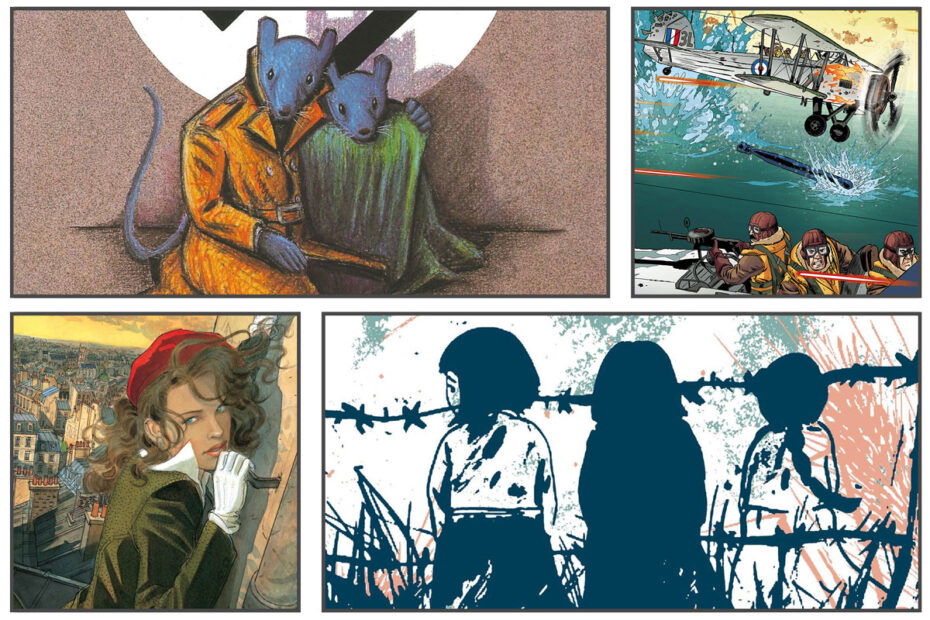
45 Must Read Comics about World War II

  • by

This year marks the 80th anniversary of the Armistice of the Second World War. Considered the largest and deadliest war in history, involving more than 30 countries, WWII shaped the world we live in today. Causing immense human suffering and physical destruction on an unprecedented scale, its conclusion resulted in a reshaping of the world’s political, economic, and social systems, laying the groundwork for international relations for the remainder of the twentieth century and into the twenty-first century.

When it comes to our duty of memory, comics offer a unique way to revisit World War II. From historical accounts to personal experiences, they depict the war’s events, and figures, providing different perspectives on a conflict that shaped the modern world.

Explore our curated list of 45 World War II comics and graphic novels — from personal family sagas shaped by conflict to graphic depictions of the war’s most brutal battles. These stories capture the trauma, sacrifice, and enduring impact of WWII through intimate portraits and large-scale historical events.

Read More »45 Must Read Comics about World War II

Naoki Urasawa Manga List: Exploring the Work of Japan’s Master of Suspense

  • by

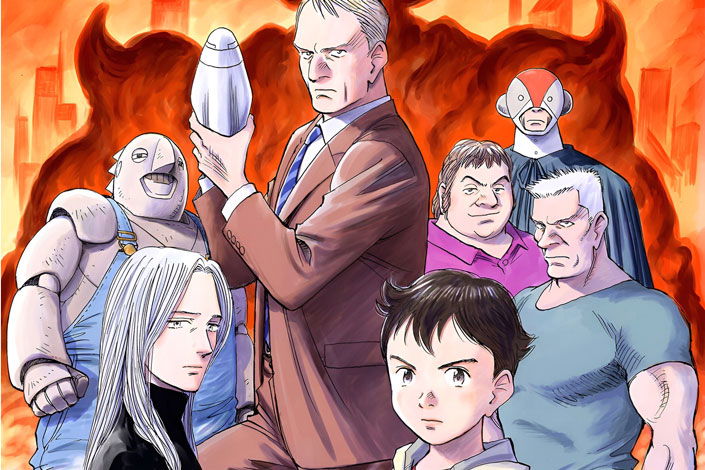
Naoki Urasawa is one of the most renowned Japanese manga artists, often regarded as a successor to the legendary Osamu Tezuka. While Tezuka’s work has without a doubt influenced Urasawa, he quickly established his own style, securing his place as one of the most celebrated names in manga today.

Urasawa first found success with Yawara!, a sports manga, but it was with Monster that he developed his distinctive style and reached international acclaim. Far from the lighthearted tone of Yawara!, Monster is a psychological thriller that showcases Urasawa’s talent for suspense and his fascination with darker, more complex themes—particularly the moral ambiguity that often exists between good and evil.

Known for creating two series simultaneously for much of his career, Urasawa is one of Japan’s best-selling authors. His works are frequently listed among the most highly regarded manga of all time. He has received multiple honors, including three Shogakukan Manga Awards, two Osamu Tezuka Cultural Prizes, the Kodansha Manga Award, and two Eisner Awards.

Below is a guide to discovering the works of Naoki Urasawa, designed to help you explore his most essential series and to help you find the best place to start reading!

Read More »Naoki Urasawa Manga List: Exploring the Work of Japan’s Master of Suspense

Darwyn Cooke’s Must-Read Comics: Exploring a Work Filled with Boldness and Hope

Graphic Ink: The DC Comics Art of Darwyn Cooke

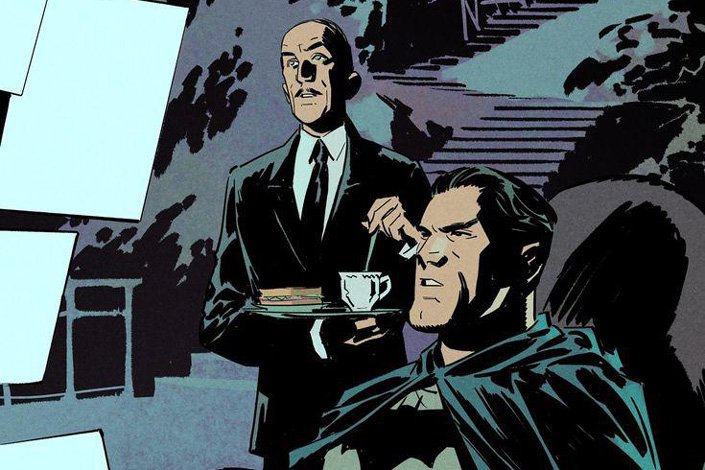
Canadian Cartoonist from Toronto Darwyn Cooke (1962–2016) always dreamt of making comics for a living, but it was not economically viable for him for a long time. He instead worked as a magazine art director, graphic and product designer until finally going back to his first love during the 1990s. He answered an ad placed by Bruce Timm that led him to work as a storyboard artist on Warner Bros. Animation shows like The New Batman Adventures, Superman: The Animated Series, Batman Beyond (he created the opening sequence), and Men in Black: The Series (as a director).

Cooke’s pitch to Timm, a Batman story that got him a job in animation, was later discovered by DC Comics art director Mark Chiarello who hired the artist to make a graphic novel based on it. That became the 2000 graphic novel Batman: Ego. Cooke officially transitioned to the comics world.

Despite a short career in comics, Darwyn Cooke’s distinctive artistic style became highly influential as well as his stories. He found popular success with some of his now-considered classic series and gained industry recognition with his work, winning 13 Eisner Awards, 8 Harvey Awards, and 5 Joe Shuster Awards.

Read More »Darwyn Cooke’s Must-Read Comics: Exploring a Work Filled with Boldness and Hope

15 Best Crime Comics to read, from Criminal to Sin City

  • by

Some may think that comics are all about superheroes, but even the mask vigilantes and other overpowered costume heroes are just fighting crimes. Batman was born in the pages of Detective Comics after all, next to Slam Bradley and others. In fact, he is still doing investigating work in the street of Gotham, when he doesn’t fight super-villains.

Anyways, there have always been crime fighters in the realm of comic books, from Will Eisner’s The Spirit, pulp heroes like The Shadow, to paranormal investigators like Hellboy or Scooby-doo & co. There also are simple private detectives, cops, local sheriffs, and amateur sleuths in the pages of the Big Two comics or independent publishers–we can’t forget anthologies like Crime Suspenstories by EC comics.

If you are a dedicated reader of crime stories, you know that they come in a lot of different flavors. The following list is an attempt at covering the spectrum of the crime genre in comics with what is among the best series published. You can add to it by leaving a comment!

Read More »15 Best Crime Comics to read, from Criminal to Sin City