Skip to content

Carole

Green Lantern New 52 Reading Order, with the Green Lantern Corps, Red Lanterns, New Guardians and Sinestro

  • by

Green Lantern New 52 Reading Order

A new era started in the DC Universe with the New 52. But the impact on the Green Lantern was quite limited. Geoff Johns took over creative duties on Green Lantern with the limited series Green Lantern: Rebirth in 2004 and was still the main writer for this relaunch with Doug Mahnke as penciler.

Like most DC characters, Green Lantern Hal Jordan was five years younger than his previous incarnations but there was no change in his history — all of Johns’ run on the Green Lantern title was still part of the continuity. During Geoff Johns’ time, Green Lantern Corps vol. 3 was written by Peter Tomasi, and the new Red Lantern series (written by Peter Milligan) was launched, as well as the Green Lantern: New Guardians series (written by Tony Bedard).

After issue #20, all the teams were changed with writer Robert Venditti and artist Billy Tan taking over as the main creative team for Green Lantern Vol. 5. Venditti also co-wrote Green Lantern Corps vol. 3 with Van Jensen before the latter became the sole writer. The Red Lanterns series continued with Charles Soule (#21-37) and Landry Q. Walker (#38-40), and the Green Lantern: New Guardians series was written by Justin Jordan (#21-40). The new Sinestro was launched, written by Cullen Bunn.

What to read before Green Lantern New 52?

First, you can check out our Green Lantern Reading Order which covers the history of the GL characters from start to finish. But it may be a bit too big. After all, we are here for the New 52 era. The DC Universe was rebooted after the Flashpoint event. It is not required reading, but you could take a look at it before reading anything else.

If New 52 was presented as a jumping point for new readers, Geoff Johns was the main writer for Green Lantern for almost 7 years at this stage, and, as said above, his run stayed in continuity. The events in Green Lantern Vol. 5 take place immediately after the last two books, War of the Green Lanterns and Aftermath. Don’t hesitate to check out Geoff Johns’ massive and celebrated run before entering the New 52 era. 

Read More »Green Lantern New 52 Reading Order, with the Green Lantern Corps, Red Lanterns, New Guardians and Sinestro

Amadeus Cho Reading Order, from sidekick to Totally Awesome Hulk and Brawn

  • by

Amadeus Cho is a 19-year-old Korean-American genius, one of the smartest people on earth. Actually, he was credited as the 7th smartest person in the world, a title he obtained after winning the Excello Soap Company’s “Brain Soap” competition (he’s maybe only the 8th or 10th smartest person in the world, but who’s counting?). It’s also where his story begins, as the game’s creator tries to kill Cho to preserve his ranking. His attempt failed but Cho’s parents were killed, and our young man had to flee for his life.

It didn’t take long for him to run across The Hulk who saved his life. As a result, Amadeus became his sidekick, a sort of modern-day Rick Jones before moving on to Hercules. But Amadeus Cho was too smart and too cocky to stay in this sidekick role and was destined to become a hero in his own right. Cho became the Totally Awesome Hulk but lost control at some point. He was somehow depowered when he finally succeeded in destroying the rage monster inside him. Amadeus chose to be called Brawn in this new form. He has also been a member of two superhero teams: The Champions and Agents of Atlas.

This reading order was requested by one of our readers! Don’t hesitate to leave a comment or write to us with some other suggestions!

Read More »Amadeus Cho Reading Order, from sidekick to Totally Awesome Hulk and Brawn

Birds of Prey Reading Order

  • by


A force to be reckoned with, the Birds of Prey is traditionally an all-women group of DC vigilantes founded in the late ’90s. Discover all their adventures in Gotham and beyond with our Birds of Prey comics reading list, covering the full history of the team, from their first appearance to Gail Simone’s celebrated run and the recent relaunch by Kelly Thompson.

Birds of Prey Logo

At its core, the Birds of Prey started as a partnership between Black Canary and Oracle, gradually expanding over time to include more superheroines. Their relationship was first established in Showcase ’96 #3, written by Jordan B. Gorfinkel—who also gave the team its name in the first issue of the ongoing series by writer Chuck Dixon and artist Gary Frank.

Chuck Dixon described the dynamic between Oracle and Black Canary as a clash of values, with “Dinah’s more idealistic approach” being at the heart of the book. Dinah Laurel Lance, alias Black Canary, is portrayed as passionate and idealistic, while Barbara Gordon, alias Oracle, has a strong sense of morality but is also less morally conflicted, per Dixon’s words who described her as a woman who knows that, sometimes, you have to kill to save lives–even if she’s not comfortable with that fact.

While Barbara and Dinah formed the heart of the team, other crimefighters joined throughout the series. One of the most prominent additions was Helena Bertinelli, a.k.a. Huntress, who became a key member during Gail Simone’s run.

Read More »Birds of Prey Reading Order

Black Canary Reading Order (Dinah Laurel Lance)

  • by


Despite having few solo title comics, Black Canary is one of the most important female characters in DC Comics. She’s a legacy character, following in the footsteps of her mother, who was an important member of the Justice Society of America in the Golden Age.

Dinah Laurel Lance doesn’t live in the shadow of her mother, first kicking ass as part of the Justice League of America, and also as a co-founder of the Birds of Prey team. She is also the longtime partner of Oliver Queen and, as a member of the Arrow Family, has been an important part of the Green Arrow comics.

Created by Dennis O’Neil and Dick Dillin, our famous Black Canary made her first appearance in Justice League of America #75 (1969), almost 60 years ago. Let’s now explore every comic featuring Black Canary with our Reading Order!
Read More »Black Canary Reading Order (Dinah Laurel Lance)

The Defenders Reading Order, Marvel’s premier non-team!

  • by

The Defenders are not your typical Marvel team. In fact, they are known as Marvel’s premier non-team! The group consists of powerful Marvel loners who have no interest in being part of a team, but who sometimes ally together to defend Earth. The Defenders don’t have a leader or a particular structure like a classic team; they came together through some successful team-ups!

It all began when the Doctor Strange series was abruptly canceled in the middle of a story due to low sales. Writer Roy Thomas would then tie up loose ends in Sub-Mariner (Vol. 2) #22 and Incredible Hulk #126. After that, Strange would choose to retire, but Namor and the Hulk would be reunited in a two-part story in the Sub-Mariner and allied themselves with the Silver Surfer. The trio became the “Titans Three”.

The combination of these non-conformist characters proved successful, prompting Roy Thomas to bring them together in a team series that he wanted to call The Invaders. As Kurt Busiek explained, “Stan Lee didn’t approve the name at that time and wouldn’t let Roy use the Silver Surfer as a regular member, so he launched the Defenders in Marvel Feature without him. Once the regular Defenders series had begun, Roy and Steve Englehart wanted to feature the Silver Surfer, but Lee would only allow him to appear as a guest star. Consequently, Steve featured him as a guest star as frequently as possible.” Although the Silver Surfer wasn’t an official core member of the Defenders, Roy Thomas and Steve Englehart treated him as such and made him a significant part of the team. Today, readers and writers alike treat the Silver Surfer as a core member.

Read More »The Defenders Reading Order, Marvel’s premier non-team!

Alan Scott, the comic origins of DC’s first Green Lantern

  • by

If Hal Jordan can be considered the most famous Green Lantern, he was not the first human to bear the name. That title belongs to Alan Scott, the Green Lantern of the Golden Age.

A selfless and dedicated man, Alan Scott could only become a role model for others and inspired other men to take up the fight. Even though he serves as an inspiration for many Green Lanterns, Alan Scott always holds himself to a higher standard than anyone else.

Though Alan Scott has never been a member of the Green Lantern Corps, he was a founding member of the Justice Society of America. With or without other superheroes, Alan Scott always fought to protect others and choose to make his emerald glow a sign of hope and a source of inspiration for decades…

Read More »Alan Scott, the comic origins of DC’s first Green Lantern

Punisher Reading Order

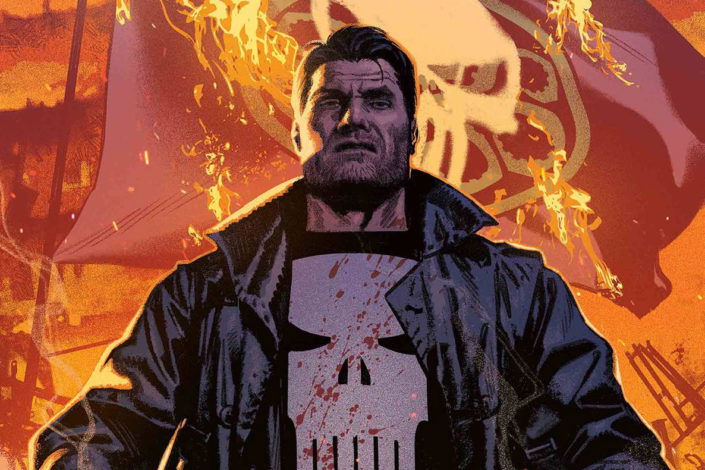
Created by Gerry Conway, John Romita Sr., and Ross Andru, The Punisher is a Marvel anti-hero who made his first appearance in The Amazing Spider-Man #129 in February 1974. Initially, he was portrayed as a bloodthirsty vigilante hired to make Spider-Man’s life miserable. The Punisher set himself apart from other Marvel characters by having no objection to killing people, something superheroes don’t do. And he was determined to kill Spidey, who was wanted for the alleged murder of Norman Osborn.

But the Punisher is no ordinary killer. Also known as Francis ‘Frank’ Castle, he is an Italian-American vigilante and war veteran. Like many Marvel characters, he is driven by tragedy, and in his case, by the deaths of his wife and two children, murdered by the mob for witnessing a killing in Central Park. However, Frank is driven by more than vengeance, the man follows a moral code: in his view, he kills only those who deserve to die.

Originally destined to be a second-tier character, The Punisher was a hit among readers and went on to make regular appearances in the Spider-Man comics and a famous arc on Daredevil before headlining his own miniseries, and his multiple ongoing comic series since then. Easily recognizable by the skull motif on his chest (a motif that has recently changed), the character reached the height of his popularity by the late 1980s-beginning of the 1990s with four monthly publications.

The Punisher has become a mainstream character, known today for several adaptations. He has been portrayed by Dolph Lundgren in 1989, Thomas Jane in 2004, Ray Stevenson in 2008, and more recently by Jon Bernthal in the second season of Daredevil (2016), his own spin-off series from 2017 to 2019, and soon in Daredevil: Born Again (2025)!

Where to start reading The Punisher comics?

If you are unfamiliar with The Punisher or would like to come back to the basics before diving into more stories, you can check out the following Marvel comic books:

  • Punisher: Year One – This origin tale by Dan Abnett and Dale Eaglesham covers the days and weeks following the murder of his family.
  • Punisher Vol. 1: Welcome Back, Frank – Garth Ennis’s run on The Punisher under the Marvel Knight imprint began with this limited series, illustrated by Steve Dillon, that shows us how Frank operates among the superheroes.
  • Punisher: Circle of Blood – For those interested in classic Punisher comics from the 1980s, “Circle of Blood” was the first miniseries featuring Frank Castle. Written by Steven Grant and illustrated by Mike Zeck and Mike Vosburg, this story revolves around Castle escaping from prison to join a group of vigilantes. It did many things that Marvel had never tried before, effectively establishing the violent world of the Punisher.
  • Punisher: Born – This four-issue comic book limited series written by Garth Ennis and illustrated by Darick Robertson is not officially part of the main continuity as the story was released through Marvel’s MAX imprint. Despite that, it seems those events can be regarded as canon to the main Marvel Universe. In all cases, this acclaimed tale gives us another origin story for the character, following Frank Castle during four days of his life as the war draws to an end but will change him forever. See also Punisher: The Platoon by the same team taking place before Born and about Frank’s first tour in Vietnam.

Read More »Punisher Reading Order

Star Wars: War of the Bounty Hunters Reading Order, a Boba Fett story

  • by

Star Wars War of the Bounty Hunters Reading Order

Every Marvel reader could tell you how much the publisher loves a crossover event, for better or worse. So, I’m pretty sure no one was surprised when they finally announced a big crossover event in the Star Wars Universe.

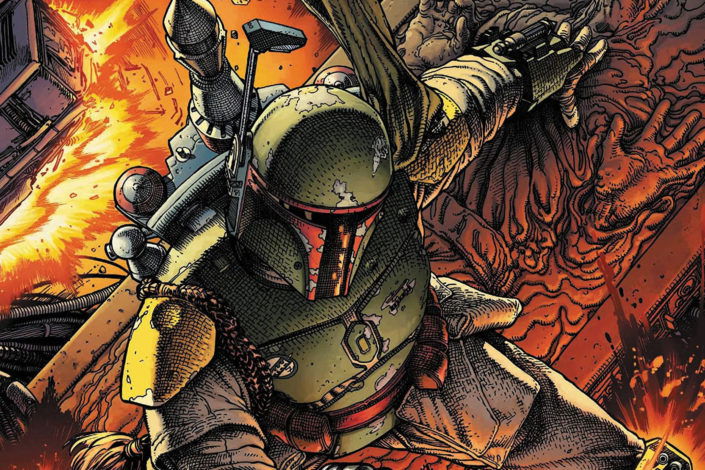
Coming from writer Charles Soule and artist Luke Cross, Star Wars: War of the Bounty Hunters takes place during the Age of the Rebellion, between the Empire Strikes Back and Return of the Jedi. As the official synopsis reveals, “the notorious bounty hunter Boba Fett has finally landed his greatest prize — Han Solo, frozen in carbonite for easy transport. Fett will bring the smuggler to Tatooine to collect the massive bounty placed on Solo’s head by the fearsome crime lord Jabba the Hutt. Sounds easy. What could go wrong? There’s just one problem standing between Fett and the payday…and it’s a big one. But Fett will stop at nothing to get the job done!”

What to read before Star Wars: War of the Bounty Hunters?

There is no background reading necessary to do before jumping into The Star Wars: War of the Bounty Hunters event. Still, if you want to know what’s happened in the comics before this crossover, check out our Star Wars Comics Canon Reading Order.

Read More »Star Wars: War of the Bounty Hunters Reading Order, a Boba Fett story

Iron Man (Tony Stark) Reading Order

Since the 1960s, Iron Man has been a major superhero at Marvel, but his popularity drastically increased from 2008 onwards, thanks to Robert Downey Jr. playing the character on the big screen.

Created by Stan Lee, Larry Lieber, Don Heck, and Jack Kirby, Anthony Edward ‘Tony’ Stark made his first appearance in Tales of Suspense #39 before founding the Avengers alongside Thor, Ant-Man, Wasp, and the Hulk not long after.

As you well know, thanks to the movies, Tony Stark is a businessman superhero, a rich industrialist, and a genius inventor who was a weapons manufacturer and provided weapons for the Army before being captured by local terrorists. They wanted him to build weapons for them, but Tony chose to build a suit of armor for himself to escape his kidnappers instead. After that, Tony decided to upgrade his creation and put his resources to better the world as the superhero named Iron Man.

For Stan Lee, Tony Stark was a way to go against the tide, creating a character that represented everything that Marvel’s readers hated at the time: “the quintessential capitalist”. Born rich as the son of Howard Stark, also a genius inventor and the founder of Stark Industries, Tony was a ladies’ man with an invulnerable armor but with a (literally) broken heart. And before taking the looks of Robert Downey Jr., Lee based the physical and personality traits of the character on another rich (real) figure, Howard Hughes.

Read More »Iron Man (Tony Stark) Reading Order

Barbara Gordon Reading Order (Batgirl and Oracle)

Barbara Gordon Reading Order

Created by television producer William Dozier, editor Julius Schwartz, writer Gardner Fox, and artist Carmine Infantino, Barbara Gordon first appeared in the pages of Detective Comics #359 published in January 1967 as Batgirl. As she was the by-product of the Adam-West Television show, following a request by Schwartz who wanted a new female counterpart to Batman, she was introduced into the television series in September of that same year, in the season 3 premiere of Batman.

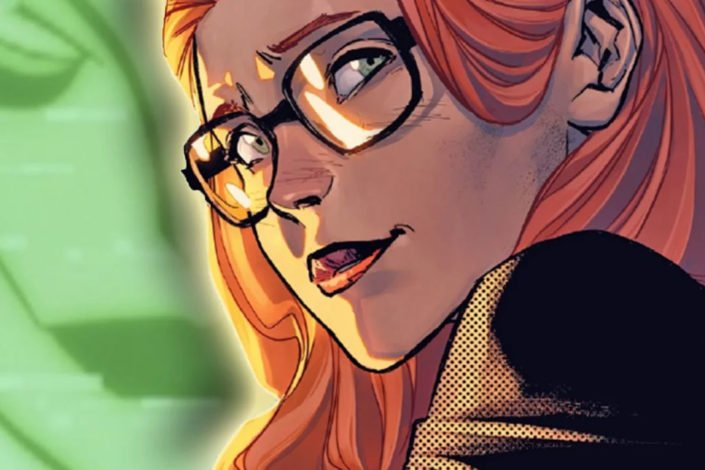
Barbara Joan Gordon is the daughter of Gotham City police commissioner James Gordon and one of the most female iconic vigilante super-hero in the DC Universe. She began her career as Batgirl, working close to Batman and the first Robin. Quite a popular character during the Silver era thanks to her presence in the media, Barbara has a tumultuous history, filled with violence and tragedy but also reinvention and successes and love.

Following the events of Alan Moore’s Killing Joke, where the Joker paralyzed her from the waist down with a gunshot, Barbara lost everything and was changed forever. After that, Barbara reinvented herself as Oracle (created by Kim Yale and John Ostrander in the pages of Suicide Squad). Behind a computer, Babs as Oracle became one of the most valuable assets to Batman and other DC superheroes, using her above than normal intellect, eidetic memory, and hacking talents to fight crimes. She became one of the most emblematic characters for disabled people, regarded as a symbol of empowerment.

So, it was controversial when DC decided, as part of The New 52 relaunch, that Barbara had finally recovered from her paralysis following a surgical procedure and returned as Batgirl. The character was still affected by posttraumatic stress disorder and had difficulty asking for help. Barbara Gordon is as much Batgirl as she is Oracle, and now, she embodies her two vigilante identities.

As both Batgirl and Oracle, Barbara Gordon has gone through a lot and has one of the richest histories in the Batfamily. And to know more about it, here is a Barbara Gordon reading order:

Read More »Barbara Gordon Reading Order (Batgirl and Oracle)