
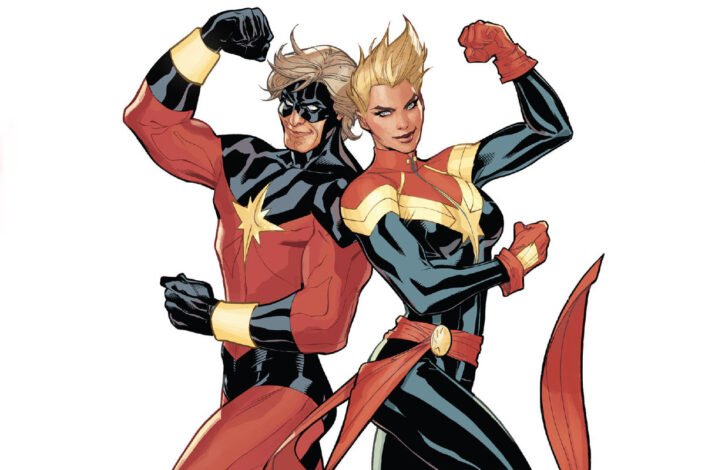
There are several characters known as Captain Marvel. We are not here to talk about Shazam, but we have to start the story with him. As you may know, Fawcett’s Captain Marvel was enormously popular in the 1940s, outselling even Superman, becoming one of the most successful superheroes of the Golden Age of Comics. His popularity, however, brought legal trouble. In 1941, DC Comics filed a lawsuit against Fawcett Publications, claiming that Captain Marvel was an infringement on Superman. The case dragged on for over a decade, with multiple appeals and shifting rulings.
Ultimately, in 1953, Fawcett agreed to cease publication of its superhero comics, citing declining sales and the high cost of litigation. Captain Marvel disappeared from newsstands for nearly twenty years. DC Comics would later license and eventually purchase the character from Fawcett, reintroducing him in the early 1970s under the title “Shazam!” since by that time, Marvel Comics had legally claimed the trademark “Captain Marvel.”
Marvel’s claim to the name began in 1967, when writer-editor Stan Lee and artist Gene Colan introduced their own Captain Marvel in Marvel Super-Heroes #12. This version, a Kree military officer named Mar-Vell, was created largely to secure the trademark and prevent others from using it. To maintain ownership, Marvel was required to publish a comic featuring the name “Captain Marvel” periodically. As a result, readers have seen a long succession of characters (Mar-Vell, Monica Rambeau, Genis-Vell, Phyla-Vell, Noh-Varr, and Carol Danvers) take up the mantle in various ongoing series, limited runs, team books, and one-shots from the late 1960s to the present day.
Captain Marvel Reading Order
Over the decades, the name Captain Marvel has been carried by many heroes. Each brought something distinct to the legacy, shaping what the title represents within the Marvel Universe. Now…
Choose your Captain Marvel:
- Mar-Vell (1967-1982)
- Monica Rambeau (1982-1994)
- Genis-Vell (1995-2004)
- Phyla-Vell (2004)
- Khn’nr (2008)
- Noh-Varr (2009)
- Carol Danvers (2012-present)

Mar-Vell is Captain Marvel (1967-1982)
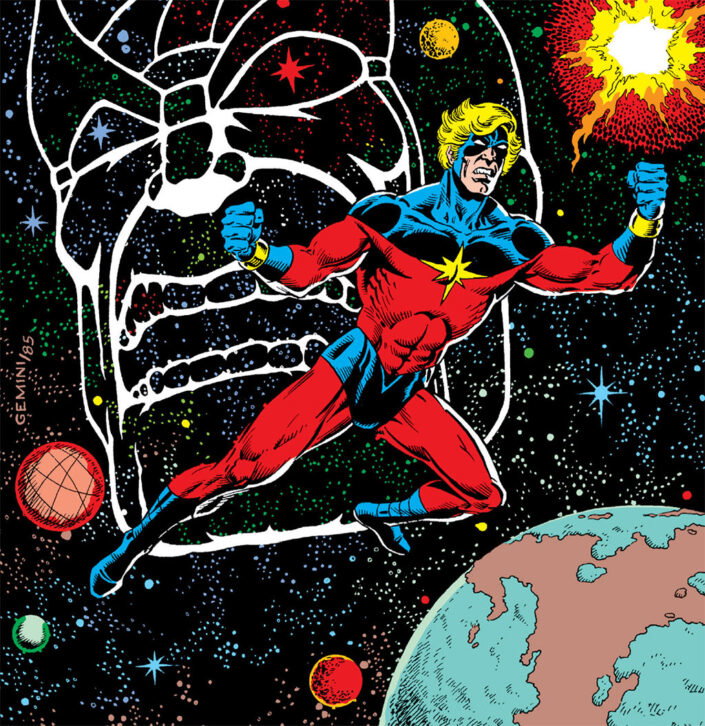
Created by writer Roy Thomas and artist Gene Colan, the first Captain Marvel from Marvel Comics debuted in Marvel Super-Heroes #12 (1967). Conceived at a time when Marvel was rapidly expanding its roster of cosmic and science-fiction heroes, Mar-Vell was introduced as a captain in the Kree Imperial Militia, part of an advanced alien race that had previously appeared in Fantastic Four #65. Sent to Earth as a spy to assess humanity’s potential threat to the Kree Empire, Mar-Vell gradually became sympathetic toward the humans he was meant to observe. His defection from the Kree made him a traitor in the eyes of his superiors.
When he was exiled by the Kree Supreme Intelligence and trapped within the Negative Zone, Mar-Vell’s only connection to the physical world was through the young musician and sidekick Rick Jones (previously known for his ties to the Hulk, the Avengers, and Captain America). The two were bonded via a pair of Kree Nega-Bands, which allowed them to switch places between Earth and the Negative Zone by striking the bands against each other.
When artist-writer Jim Starlin took over the character in Captain Marvel #25 (1973), he freed him from the zone and made him the “Protector of the Universe.” Of course, today his death is more famous than the rest of his career because of the success of Marvel’s first large-format graphic novel, “The Death of Captain Marvel,” published in 1982.
Recommended Reading:
- Captain Mar-Vell Omnibus Vol. 1
Collects Marvel Super-Heroes (1967) #12-13 and Captain Marvel (1968) #1-33, Iron Man (1968) #55, and material from Not Brand Echh #9. - Death of Captain Marvel Omnibus [2025]
Collects Captain Marvel (1968) #34-62, Marvel Spotlight (1979) #1-4 And #8, Avengers Annual (1967) #7, Marvel Two-In-One Annual (1976) #2, and Marvel Graphic Novel #1 – And Material From Marvel Super-Heroes (1990) #3, What If? (1977) #17 And What If? (1989) #14.
You can also find the most iconic part of Mar-Vell’s career in:
- Captain Marvel by Jim Starlin: The Complete Collection
Collects Captain Marvel (1968) #25-34, Iron Man (1968) #55, Marvel Feature (1971) #12, Marvel Graphic Novel #1, and material from Daredevil (1964) #105, and Life of Captain Marvel #1-5.
Check out our article about The Death of Captain Marvel to learn more about his career and his tragic ending.
Monica Rambeau is Captain Marvel (1982-1994)
The second “Captain Marvel” was Monica Rambeau. Created by writer Roger Stern and artist John Romita Jr., she was introduced in The Amazing Spider-Man Annual #16 (1982). She had no connection to Mar-vell or the Kree Empire. A lieutenant in the New Orleans Harbor Patrol, she gained the ability to convert her body into any form of energy within the electromagnetic spectrum after being exposed to extra-dimensional energy during an accident involving experimental technology.
A reluctant superhero at first, Monica was encouraged by the media to adopt the name “Captain Marvel,” in honor of the deceased Kree hero. She quickly joined the Avengers, debuting as a member in The Avengers #227 (1983), also written by Roger Stern, and eventually became team leader.
Eventually, she gave away the Captain Marvel name to Genis-Vell in the 1990s, and continued her career under various aliases, including Photon, Pulsar, and later Spectrum. For details, I invite you to read our larger look at Monica Rambeau’s career.
Recommended Reading:
- Captain Marvel: The Saga of Monica Rambeau
Collects Amazing Spider-Man Annual (1964) #16; Avengers (1963) #227, 279; Marvel Team-Up (1972) #142-143; Captain Marvel (1989) #1; Captain Marvel (1994) #1; Avengers Unplugged (1995) #5; material from Solo Avengers (1987) #2; Marvel Fanfare (1982) #42, 57.
As Captain Marvel, Monica Rambeau didn’t get her own ongoing series. She stayed with the Avengers from Avengers #227 to #333 (she came back in #345), see our Avengers Reading Order for more details about the collected editions. After that, she came back with the Starblast crossover (not collected), her last storyline as Captain Marvel.
Genis-Vell is Captain Marvel (1995-2004)
Created by writer Ron Marz and artist Ron Lim, Genis-Vell was introduced in Silver Surfer Annual #6 (1993) under the codename Legacy. He is the genetically engineered son of Mar-Vell and the Titanian Eternal Elysius, who used preserved genetic material from the late Captain Marvel to conceive him artificially before being artificially aged to adulthood.
Genis eventually assumed his father’s mantle of Captain Marvel, starring in a self-titled series written by Fabian Nicieza with art by Ed Benes (1995) which only lasted for six issues. The character made a notable comeback in Kurt Busiek and Carlos Pacheco’s Avengers Forever (1998), reconnecting him to his father’s heroic legacy. This led to the successful Captain Marvel ongoing series (1999) written by Peter David with art by ChrisCross.
Exploring Genis’s struggle to live up to his father’s legend while forging his own identity, the series teamed up with Rick Jones in the same way the ultimate Marvel sidekick had been with Mar-vell. His story took a dark turn with the series was relaunched in 2002. Still written by Peter David, Captain Marvel became a more metaphysical tale with Genis’s cosmic awareness, a vast extrasensory connection to the universe, driving him to madness.
Recommended Reading:
- Avengers Forever
Collects Avengers Forever #1-12. - Captain Marvel: Genis-Vell by Peter David Omnibus
Collects Captain Marvel (1999) #0-35 and Captain Marvel (2002) #1-25.
After dying and resurrecting himself—with the secret aid of Baron Helmut Zemo—Genis-Vell joins the Thunderbolts under the name Photon. Ultimately, Genis-Vell was killed by Baron Zemo in Thunderbolts #100 (2006).
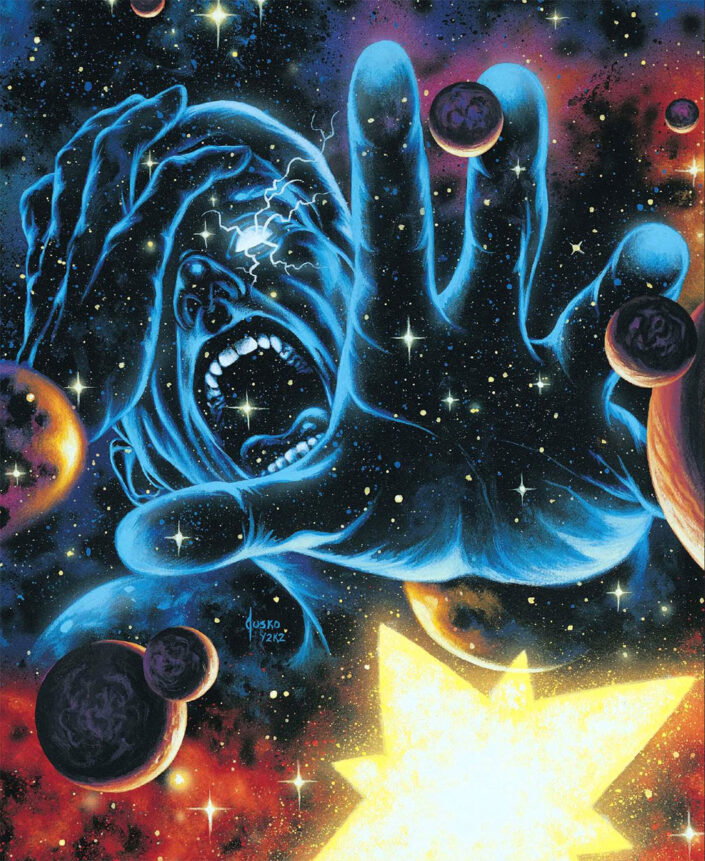
In 2022, after two decades, Genis-Vell came back in a new “Captain Marvel” series written by Peter David (with art by Juanan Ramírez) that reunites Genis, Rick, Marlo, and Phyla.
- Genis-Vell: Captain Marvel
Collects Genis-Vell: Captain Marvel #1-5.
Phyla-Vell is Captain Marvel (2004)
Created by Peter David and Paul Azaceta, Phyla-Vell first appeared in Captain Marvel vol. 5 #16 (2004). She is the genetically engineered younger sister of Genis-Vell and the daughter of Elysius. Her existence resulted from Genis’s reality-altering actions after he inadvertently recreated the universe, introducing temporal and genetic anomalies. These distortions restored Elysius to life and simultaneously caused the spontaneous creation of Phyla.
Following the conclusion of Genis’s saga, Phyla assumed her brother’s mantle and became the next Captain Marvel. It happened in time for the Annihilation crossover event (2006–2007), written by Keith Giffen with art by Andrea Di Vito, in which Phyla emerged as one of the central heroes resisting the invasion of the Annihilation Wave led by Annihilus.
In the aftermath, Phyla continued to evolve as a character, taking on new roles and identities. She later wielded the Quantum Bands and adopted the name Quasar, following in the footsteps of Wendell Vaughn.
Recommended Reading:
- Annihilation Modern Era Epic Collection: Desperate Measures
Collects Annihilation: Ronan #1-4, Annihilation #1-6, Annihilation: Heralds Of Galactus #1-2, and Annihilation: The Nova Corps Files.
Khn’nr is Captain Marvel (2008)
The story of Khn’nr as Captain Marvel is even more anecdotal than Phyla’s. Introduced during the buildup to Secret Invasion, Khn’nr was a Skrull sleeper agent engineered to impersonate the original Mar-Vell as part of the alien race’s long-term plan to infiltrate Earth. His first full appearance came in Civil War: The Return (2007), written by Paul Jenkins with art by Tom Raney, serving as a prologue to the Skrull infiltration storyline that would culminate in Secret Invasion (2008).
To perfect his disguise, the Skrulls bonded Khn’nr with Mar-Vell’s DNA and also equipped him with advanced Skrull technology that replicated the Kree Nega-Bands. However, the plan unraveled when his mental conditioning failed. Khn’nr sincerely believed himself to be the real Captain Marvel. His storyline played out primarily across tie-ins to Secret Invasion, where he ultimately perished.
Recommended Reading:
- Secret Invasion: Captain Marvel
Collects Captain Marvel (vol. 6) #1-5, Civil War: The Return.
Noh-Varr is Captain Marvel (2009)
Created by writer Grant Morrison and artist J.G. Jones, Noh-Varr first appeared in the six-issue limited series Marvel Boy (2000). A member of the Kree race from an alternate dimension, Noh-Varr was a teenage ensign serving aboard the Marvel, a Kree exploration vessel that crash-landed on Earth after a confrontation with the villainous Dr. Midas. Noh-Varr was a morally ambiguous antihero who reemerged during the events of Secret Invasion when a dying Khn’nr recognized Noh-Varr’s potential and appointed him the new “Protector of the Earth.” Inheriting Captain Marvel’s Nega-Bands, Noh-Varr used their power to help repel the Skrull invasion.
In the aftermath, during the Dark Reign era (2009), Noh-Varr was recruited by Norman Osborn into his government-sanctioned team, the Dark Avengers, under the codename Captain Marvel. This didn’t last. Upon realizing the team’s corruption and Osborn’s manipulation, he abandoned the Dark Avengers and renounced the Captain Marvel identity.
Recommended Reading:
- Dark Avengers Vol. 1: Assemble
Collects Dark Avengers (2009) #1-6.
Noh-Varr later resurfaced under new aliases, most notably as Protector during Brian Michael Bendis’s Avengers run (2010).
Carol Danvers is Captain Marvel (2012-Present)
The story of Carol Danvers began in Marvel Super-Heroes #13 (1968), created by writer Roy Thomas and artist Gene Colan. Introduced as an officer in the United States Air Force and head of security at Cape Canaveral, Carol was originally a supporting character in the early adventures of Mar-Vell, serving as his human colleague and occasional damsel-in-distress.
Carol’s life changed dramatically in Ms. Marvel #1 (1977), written by Gerry Conway with art by John Buscema. After being caught in the explosion of a Kree “Psyche-Magnetron” device, her DNA was fused with that of Mar-Vell, granting her superhuman strength, flight, and precognitive “seventh sense” abilities. This transformation led her to become the first Ms. Marvel. Over the next decade, Carol appeared regularly in The Avengers, Uncanny X-Men, and Defenders.
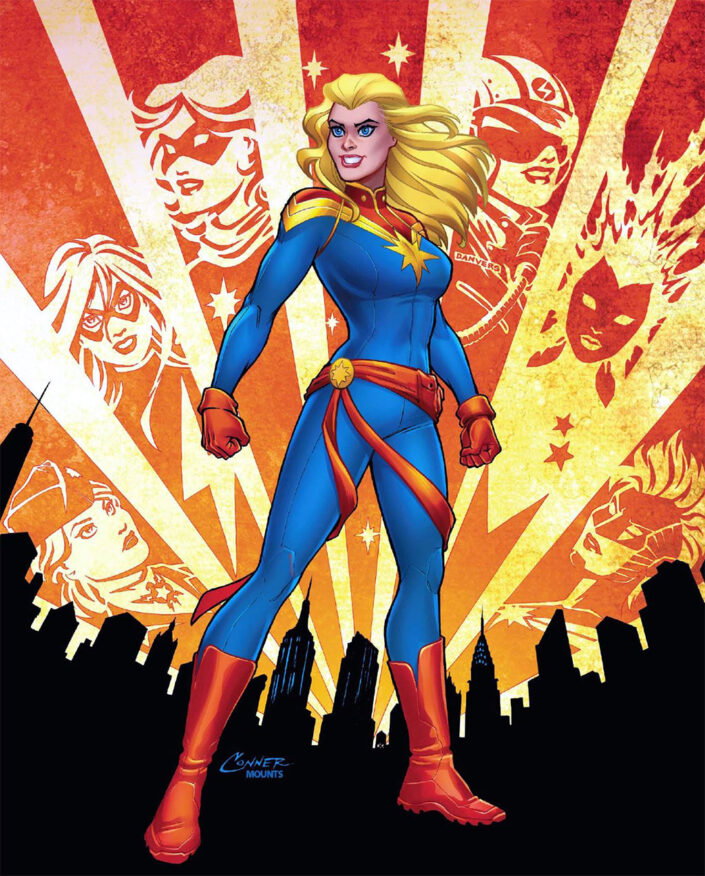
It wasn’t until the Marvel NOW! publishing initiative in 2012 that Carol Danvers officially assumed the mantle of Captain Marvel, in a new series written by Kelly Sue DeConnick with art by Dexter Soy. The relaunch redefined Carol as Marvel’s premier cosmic hero.
It would be too long to cover everything Carol Danvers does as Captain Marvel here, that’s why we have a reading order dedicated to the character.
Recommended Reading:
- Captain Marvel by Kelly Sue DeConnick Omnibus
Collects Captain Marvel (2012) #1-17, Captain Marvel (2014) #1-15, Avengers: The Enemy Within (2013) #1, Avengers Assemble (2012) #16-19, Avenging Spider-Man (2011) #9-10, Captain Marvel & The Carol Corps (2015) #1-4. - Captain Marvel by Kelly Thompson Omnibus Vol. 1
Collects Captain Marvel (2019) #1-26, Star (2020) #1-5, and Captain Marvel: The End. - Captain Marvel: Highest, Furthest, Fastest Omnibus [2026]
Collects Captain Marvel (2019) #27-50, Captain Marvel Annual (2022) #1, X-Men (2021) #19-21, Captain Marvel: Dark Tempest (2023) #1-5, Captain Marvel: Assault on Eden (2023) #1, Captain Marvel (2023) #1-10
Not all Captain Marvels are equal. Some have carried the mantle only briefly, for a single storyline or limited series, while others have held it for years. Despite their differences in origin, powers, and temperament, all those who have adopted the identity of Captain Marvel have fought to save the innocents and the Marvel Universe!