Skip to content

Other articles

Namora: The Origin and History of Namor’s Cousin

  • by

Less than ten years after Namor made his debut, his female counterpart was introduced on the pages of Marvel Mystery Comics #82. Namora – full name Aquaria Nautica Neptunia – is, like her cousin Namor, a hybrid and one of Marvel’s first mutants.

Soon played by Mabel Cadena on the big screen in Black Panther: Wakanda Forever, Namora was created by artist Ken Bald (and an unknown writer), though several of her Golden Age appearances were written by Bill Everett who also designed her costume.

She’s the daughter of an Atlantean father and a human mother who lived several adventures next to her cousin in the Golden Age but was unfortunately killed off in the ‘60s. Namora continued to appear in a number of flashbacks but only made her permanent return to the Marvel Universe in 2006.

Though Namora didn’t have the chance to become a major player in the Marvel Universe, she still had the time to become a hero and make the undersea world safer!

Read More »Namora: The Origin and History of Namor’s Cousin

Little Nemo in Slumberland, Winsor McCay’s influential comic strip

  • by
Little Nemo in Slumberland, New York Herald, January 7, 1906

One of the most famous Little Nemo in Slumberland comic strips today was published in July 1908. Considered a masterpiece, it shows the young Nemo atop his bed which had grown crazy long legs and was walking among buildings.

At this stage, creator Winsor McCay was working for the New York Herald for a few years and had already produced many illustrations and comic strips. He came to work for publisher James Gordon Bennett in 1903 where he was doing caricatures of officeholders. But it was in Telegram that he began experimenting with the comic strip form: a sequential panel called “Hubby Goes Shopping with the Usual Results” was published on December 24, 1903.

Read More »Little Nemo in Slumberland, Winsor McCay’s influential comic strip

Werewolf by Night Comics: Origin, History, and Reading Order Explained!

  • by

1972 was a year of transition for Marvel Comics. Stan Lee was promoted and started handing over his management responsibilities to his protégé, Roy Thomas, who became the new editor-in-chief of the company. This was also the year that Marvel finally surpassed DC Comics in terms of overall sales. Superheroes were not that widely popular at the time. Their popularity was waning, so Marvel diversified to stay relevant.

Taking advantage of the loosening of the Comics Code, Marvel launched new horror titles like The Tomb of Dracula, Ghost Rider, The Man-Thing, and Werewolf by Night, of course. Back then, Roy Thomas was trying a lot of new concepts.

The title Werewolf by Night was not entirely new when it debuted as an ongoing series in the 1970s. Marvel Comics had previously used the title in 1953 for a short horror story published in Marvel Tales #116, during the company’s Atlas Comics era. However, the 1970s Werewolf by Night introduced an original character and mythology, marking a significant departure from the earlier standalone tale. Conceived by Roy Thomas and co-plotted with Jean Thomas, the series was scripted by Gerry Conway and illustrated by Mike Ploog.

As was common practice at the time, the new Werewolf by Night character was first introduced through an anthology title—Marvel Spotlight #2 (February 1972). The initial storyline unfolded over three issues, concluding with Marvel Spotlight #4. Following a positive reception, the character was given his own ongoing comic book series, launching with Werewolf by Night #1 in September 1972. This not only solidified the presence of supernatural horror within Marvel’s publishing line but also paved the way for the introduction of other monster-themed characters and series throughout the 1970s.

Read More »Werewolf by Night Comics: Origin, History, and Reading Order Explained!

Heroes Reborn: Marvel Heroes, Image Style, the famous 1996 relaunch

  • by

In 2021, Marvel published a new Heroes Reborn storyline. The company loves confusing readers by using the same titles over and over. But why Heroes Reborn? The 1996 original storyline was not a success and does in fact has not the best reputation. Let’s take a look back at that strange pure 1990s experiment.

Everything started in 1992 when Jim Lee, Todd McFarlane, Rob Liefeld, Erik Larsen, Whilce Portacio, Jim Valentino, and Marc Silvestri left Marvel to form Image Comics. Those creators found big success at Marvel. In fact, they were quite famous and wanted the company to recognize that in ways that were not agreeable for Marvel—they wanted better treatment, pay, and rights.

Everybody thought that they were coming back quickly, but Image became an instant hit that changed the industry forever. And then, the comic speculator bubble burst in 1993, changes in the distribution of comics created cash flow difficulties for some publishers, and poor sales numbers certainly didn’t help.

In fact, 1996 was a very bad year for Marvel. In January, the stock price dropped, and 275 staffers were laid off, and it was not the first time nor the last that year. In December, Marvel Comics declared bankruptcy—in truth, that was mostly the result of a battle to control the company between leaders that didn’t care for comics.

Read More »Heroes Reborn: Marvel Heroes, Image Style, the famous 1996 relaunch

Who is Black Adam? The origin story of Shazam’s villain

  • by

Like several DC characters created in the 1940s, the history of Black Adam is a complicated one. His origin story has been told multiple times and changes have been made throughout the years.

Soon played by Dwayne Johnson on the big screen, Black Adam was created by Otto Binder, Bill Parker, and C.C. Beck. He made his first appearance in The Marvel Family #1 (1945) published by Fawcett Comics where he served as a powerful one-time enemy of the superhero Shazam (see reading order) and the Shazam Family. 

However, Black Adam was resurrected nearly 30 years later as a recurring character following DC’s acquisition of the Fawcett characters. The character was redefined with time by writers Jerry Ordway, Geoff Johns, and David S. Goyer and the character has evolved from outright villain to sometimes anti-hero.

Read More »Who is Black Adam? The origin story of Shazam’s villain

Alan Scott, the comic origins of DC’s first Green Lantern

  • by

If Hal Jordan can be considered the most famous Green Lantern, he was not the first human to bear the name. That title belongs to Alan Scott, the Green Lantern of the Golden Age.

A selfless and dedicated man, Alan Scott could only become a role model for others and inspired other men to take up the fight. Even though he serves as an inspiration for many Green Lanterns, Alan Scott always holds himself to a higher standard than anyone else.

Though Alan Scott has never been a member of the Green Lantern Corps, he was a founding member of the Justice Society of America. With or without other superheroes, Alan Scott always fought to protect others and choose to make his emerald glow a sign of hope and a source of inspiration for decades…

Read More »Alan Scott, the comic origins of DC’s first Green Lantern

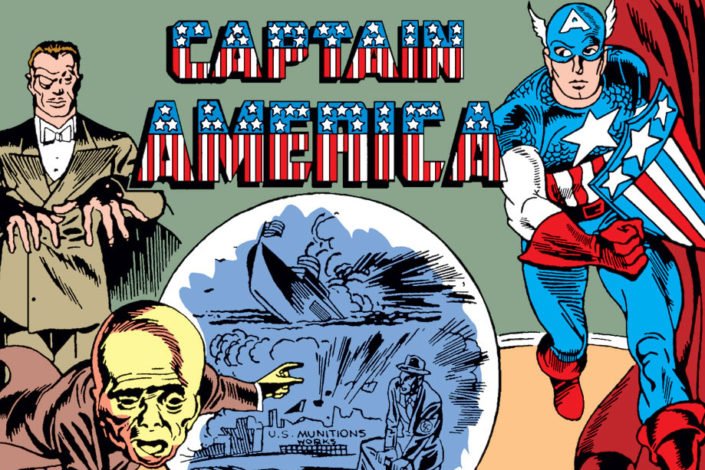
Captain America’s First Appearance: The Origin Story of Steve Rogers

  • by

Captain America is one of the most popular characters in the Marvel Universe. Since his beginnings as a superhero, Cap — as he is sometimes affectionately called — made a name for himself as a brave and righteous man. He is known as the champion of the ideals of truth, justice, and the American way, fighting for the protection of those who can’t fight for themselves.

Working with or without the Avengers, Captain America fought against many threats to those ideals. Throughout the years, he stopped enemies such as Red Skull and HYDRA, Baron Zemo, and Doctor Doom to achieve world domination, abuse power, and destroying innocent lives. For the man named Steve Rogers, everything began in 1940-41…

Read More »Captain America’s First Appearance: The Origin Story of Steve Rogers

Best Batman Stories For Beginners

Batman - Best Batman Stories For Beginners

We often explore the way to read Batman stories. We’ve got a Batman Post-Crisis Reading Order, a Batman New 52 Reading Order, a Batman Rebirth Reading Order, and even more specific ones following writers’ works on the famous characters or about specific crossover and bigger events. There is a lot to cover in the Batman Universe.

But all of this is not beginner-friendly. There are always too many books to track down if we just want to see if we like it or not. Everybody is not heavily invested in the Dark Knight Universe, yet. We all start somewhere and there’s nothing better than a good story to discover if we want to read more.

This article is here to provide those who are not that familiar with Batman with a list of possible entry points in his world or just some good stories to read without the pressure to complete a series or to invest too much time. The title says it all: the best stories for beginners.

But first, we assume that everybody knows who Batman is, but there are always younger people who just start to learn about those things. So, let me introduce you to Batman–quickly because we have now a complete article about his origins. Created by artist Bob Kane and writer Bill Finger in 1939, Batman is the superhero identity of Bruce Wayne, a wealthy man from Gotham City who witnessed the murder of his parents as a child. After training himself physically and intellectually, he started fighting crime, masking his true identity behind a mark, and becoming a symbol of justice in the process.

Simply put, he is a vigilante but also the greatest detective and, with his sidekick Robin, he’s now facing costume villains like the Joker, Two-Face, The Riddler, the Penguin, and more. But he also has a lot of allies in his crusade for justice like Commissioner James Gordon, his previous sidekicks, and numerous vigilantes and powerful superheroes.

Read More »Best Batman Stories For Beginners
The Best Alan Moore Comics to Read

  • by

Alan Moore Best Comics

Alan Moore is the most influential comics writer of the 1980s-1990s. It’s a fact. His work helped to define a new creative era of the medium at a time when it needed a way to grow, to mature. Nobody can deny how important some of his books were and still are for the comic book industry and for a lot of readers. His way to push the boundaries of what superhero comics can be never stopped to amaze and his success is undeniably justified.

Although he became a controversial figure and sometimes a tragic one too, you can not look at his career with anything but respect. In fact, reading Alan Moore’s work is required to fully understand the History of comic books – it helps that he collaborated with some of the greatest artists of his time like Dave Gibbons, Eddie Campbell, Ian Gibson, Stephen R. Bissette, Rick Veitch, John Totleben, Kevin O’Neill and more.

Of course, everybody has something to say about Alan Moore and his work. Us too! That’s why we are here today, to talk about his best comics, in my opinion. Some books are hard to find, a lot of his independent comics are in fact out-of-print, so it’s not easy to read everything he wrote. That said, there’s still enough available out there to enjoy and this is my selection of 10 of the best Alan Moore comics to read. You can write your own suggestions in the comments section.

Read More »The Best Alan Moore Comics to Read

The DC Comics Events and Crossovers List


DC Comics Universe Events Crossovers

Like Marvel Comics did (see the full events & crossovers list here), DC Comics started to organize big events and crossovers during the ’1980s. The first one was Crisis on Infinite Earths, an event that changed DC Comics continuity forever, a huge creative accomplishment from Marv Wolfman and George Perez. After that, more crossovers followed, some big and ambitious, others more modest in scope, connecting heroes and series.

Like I said about Marvel events, even after the near extinction of the industry following the speculative boom of the ’90s, big events and crossovers kept multiplying. Some are forgettable, others are unmissable parts of the overall mythology surrounding the superhero’s adventures, from Batman to the Green Lanterns, from Superman to Harley Quinn.

This article is a list of the crossover events, big and small, involving superheroes and characters from different DC Comics series. It will be updated with links to the dedicated reading orders, as they are published, and, of course, with new entries, as DC Comics continues to announce more and more of them.

Read More »The DC Comics Events and Crossovers List