Skip to content

Other articles

Best 1980s Marvel Comics: The Stories That Defined a Decade
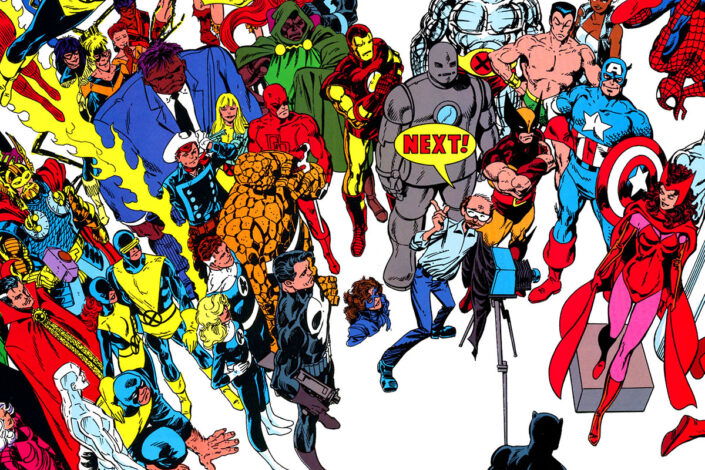
These were good years for the comic book industry. Actually, they were great years. The 1980s were a period of tremendous financial and creative growth that transformed the medium. The emergence of the Direct Market, with specialty comic book stores, created more opportunities for creators and led to a wider range of publications.

It was during this decade that Alan Moore and Dave Gibbons’ Watchmen, Frank Miller’s The Dark Knight Returns, and Art Spiegelman’s Maus were published, breaking new comic book narrative ground for future writers. It was also during this decade that DC Comics was rebooted with Crisis on Infinite Earths and started its Renaissance with the British Invasion of creators. 

The comic book industry rose and fell during the 1980s, including Marvel Comics. The House of Ideas evolved in those years, embracing darker storytelling, launching new comic book series, trying new formats, hiring new talents, and releasing some of the most celebrated and iconic stories in its history.

Maybe one of the most important decades on the creative front, the 1980s helped redefine Marvel’s superheroes by pushing boundaries and going where the industry had never been before. Today, we explore the best Marvel stories of the decade!

Read More »Best 1980s Marvel Comics: The Stories That Defined a Decade
The Phantom Zone Explained: The Evolution of the Kryptonian Prison

Before Marvel Comics introduced its Negative Zone, DC Comics had presented to its readers a different type of zone, one connected to Superman‘s world, The Phantom Zone. Created by Robert Bernstein and George Papp, this prison parallel dimension first appeared in Adventure Comics #283 in 1961. Back then, Superboy found a stash of Kryptonian weapons that included the Phantom Zone Projector. Since then, the subject has been developed by multiple authors and retconned by others.

The Pre-Crisis Origins of the Phantom Zone

As explained in Superboy #104 by Edmond Hamilton and Papp, the Phantom Zone was created by Kryptonian scientist Jor-El. He introduced it as a humane alternative to replace the “orbit exile system.” Following that, Krypton’s legal system sentenced the criminals to an intangible, timeless exile in a pocket dimension. Within the Phantom Zone, prisoners exist as spectral entities, unable to interact with the physical world but still conscious and aware—essentially, ghosts stuck in eternal imprisonment without the ability to age or die.

With the Phantom Zone Projector saved from destruction, those Kryptonian prisoners survived the explosion of their planet and found their way to Earth. The evil Jax-Ur was the first to escape and torment Superboy, but not the last. The Zone quickly became a recurring plot device in Superman used for decades.

Read More »The Phantom Zone Explained: The Evolution of the Kryptonian Prison

Marvel Knights Comics, The Imprint That Rescued Marvel with Daredevil, Punisher, and more!

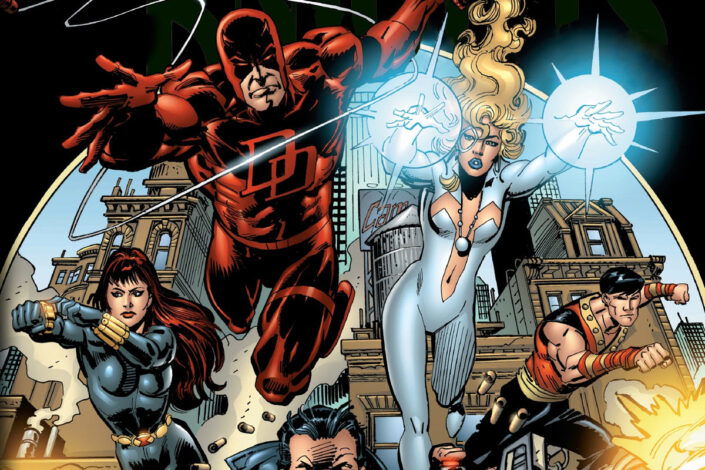
In 1998, Marvel Comics was not in the best of shape but was starting to look better. Even if the Heroes Reborn publishing initiative had not been the expected success, as it was an expensive affair, the idea of contracting exterior talents to package comics for the company was still explored. This time, though, Marvel president Joe Calamari wanted to do it at a reasonable cost. He consulted Gareb Shamus (Wizard magazine publisher), who recommended his two friends, Joe Quesada and Jimmy Palmiotti.

At the time, the two men were the founders of the independent comic book publisher Event Comics (Ash, Painkiller Jane…) and took the contract as a way to make money for their company and try to promote their books by association with the popular Marvel Comics characters. Unlike what Image Comics had to do with Heroes Reborn, their deal was not to relaunch some of the biggest comics of the company but to take over some of the weakest and try to save them. And that’s how Marvel Knights came to be.

Read More »Marvel Knights Comics, The Imprint That Rescued Marvel with Daredevil, Punisher, and more!

Maxwell Lord: The Comic Book History of a Master Manipulator

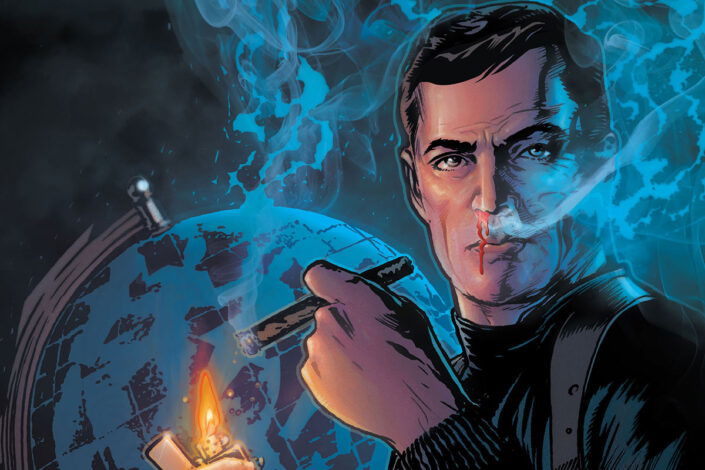
« Lord was always sort of a nebulous, self-serving hard ass » said Keith Giffen (RIP) in a CBR interview twenty years ago. He’s talking about Maxwell Lord, power broker, master manipulator, cyborg for a time, spy and full-blown villain.

The Maxwell Lord appearing in the pages of DC Comics today is not the same man readers encountered when he made his first appearance almost 40 years ago in Justice League #1 (May 1987). His origins were rewritten post-Flashpoint to better align with his modern characterization. Once an amoral power broker, Lord has since become a more straightforward villain.

With a new version of Maxwell Lord set to appear in the upcoming Superman movie this summer, we take a look back at Maxwell Lord’s history, and how the character has changed over time.

Read More »Maxwell Lord: The Comic Book History of a Master Manipulator

Elvira, Mistress of the Dark Comic Book’s History, From DC to Dynamite

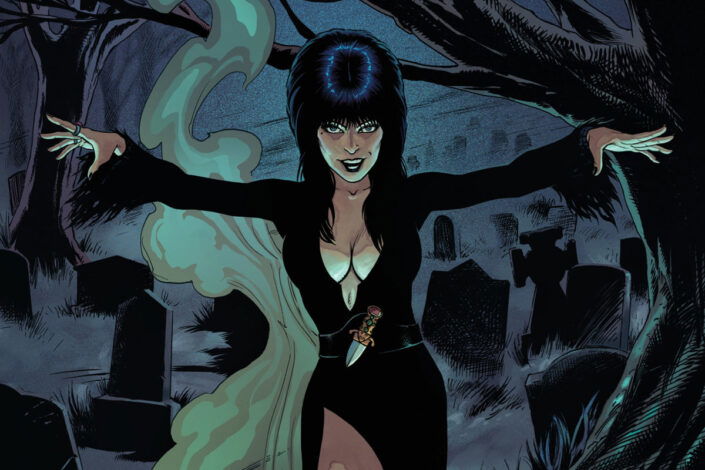
Amateurs of horror are certainly familiar with Elvira, Mistress of the Dark. Played by Cassandra Peterson, Elvira is a campy horror-themed TV hostess with a razor-sharp wit and an iconic gothic sense of style–her plunging black dress and beehive hairdo are immediately identifiable. She rose to fame in the early 1980s as the Movie Macabre star, a show featuring her clever, satirical, and innuendo-filled commentary on low-budget horror films. 

Her popularity led her to host another type of horror show, as she became one of the caretakers of DC’s House of Mystery, the horror anthology comic book. Since then, her adventures in comics have taken a different path, as she became the protagonist of a long-running series—not just the hostess—before coming back in a pop-culture-heavy series that Dynamite regularly publishes. So today, we are taking a look at Elvira’s comics history.

Read More »Elvira, Mistress of the Dark Comic Book’s History, From DC to Dynamite

ROM: Marvel’s SpaceKnight, from failing toy to hit comics

  • by

In the late 1970s, the success of the Star Wars comics led to even more licensed comics. One of them was The Micronauts, a set of action figures that Bill Mantlo and Michael Golden turned into a successful comic book series. A success that Parker Brothers noted and hoped to be reproduced with one of his new toys, ROM the Spaceknight.

From The ROM Toys to The ROM Comics

Then Marvel Comics editor-in-chief, Jim Shooter asked writer Bill Mantlo and artist Sal Buscema–two creatives who were open to work on non-superhero comics, in fact, Buscema was the only artist who agreed to do it—to develop a story as the toy came with close to no story element.

Mantlo was not aware of the toy before that and immediately thought about doing something in the vein of 1950s sci-fi with a touch of Arthurian myths. He added tragedy and Brandy Clark, ROM’s human ally, who eventually becomes romantically linked with him. But Jim Shooter and editor Al Milgrom himself provided a few ideas.

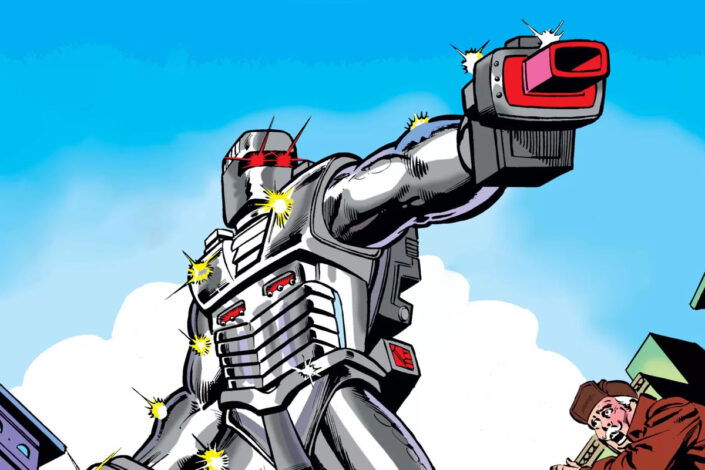
The final result has often been compared to the Silver Surfer, but ROM the Spaceknight had his own rich mythology that helped him stand apart. ROM is a noble warrior from the utopian planet Galador who volunteers to become a Spaceknight—a cyborg warrior—to battle the Dire Wraiths, a shape-shifting alien species threatening the universe—his primary weapon is the Neutralizer, which banishes Dire Wraiths to Limbo. Rom sacrifices his humanity to become a Spaceknight, clad in powerful armor that enhances his abilities but also isolates him emotionally.

Read More »ROM: Marvel’s SpaceKnight, from failing toy to hit comics

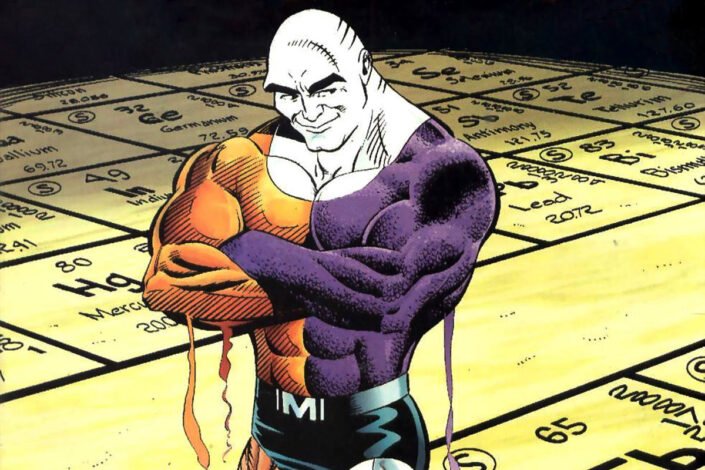
Metamorpho: DC Comics’s Element Man, Rex Mason

  • by

Metamorpho DC Comics Elemental Man

During the mid-1960s, unconventional comic book heroes like the Doom Patrol or the Metal Men found a bit of success at DC Comics. To build some more on what seems to be a trend, writer Bob Haney and artist Ramona Fradon were asked to create a new character in the same vein. The result was Metamorpho, who debuted in The Brave and the Bold #57 (January 1965).

Also known as the Element Man, Metamorpho found immediate success and started appearing in other popular comics like Justice League of America (even if he refused to become a full-time member). He also got his own ongoing comic book series, but it lasted only 17 issues. However, this was by far the end of the character.

Read More »Metamorpho: DC Comics’s Element Man, Rex Mason

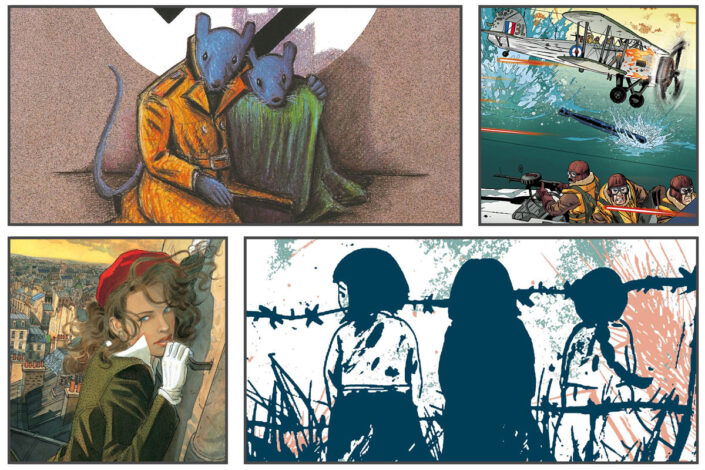
45 Must Read Comics about World War II

  • by

This year marks the 80th anniversary of the Armistice of the Second World War. Considered the largest and deadliest war in history, involving more than 30 countries, WWII shaped the world we live in today. Causing immense human suffering and physical destruction on an unprecedented scale, its conclusion resulted in a reshaping of the world’s political, economic, and social systems, laying the groundwork for international relations for the remainder of the twentieth century and into the twenty-first century.

When it comes to our duty of memory, comics offer a unique way to revisit World War II. From historical accounts to personal experiences, they depict the war’s events, and figures, providing different perspectives on a conflict that shaped the modern world.

Explore our curated list of 45 World War II comics and graphic novels — from personal family sagas shaped by conflict to graphic depictions of the war’s most brutal battles. These stories capture the trauma, sacrifice, and enduring impact of WWII through intimate portraits and large-scale historical events.

Read More »45 Must Read Comics about World War II

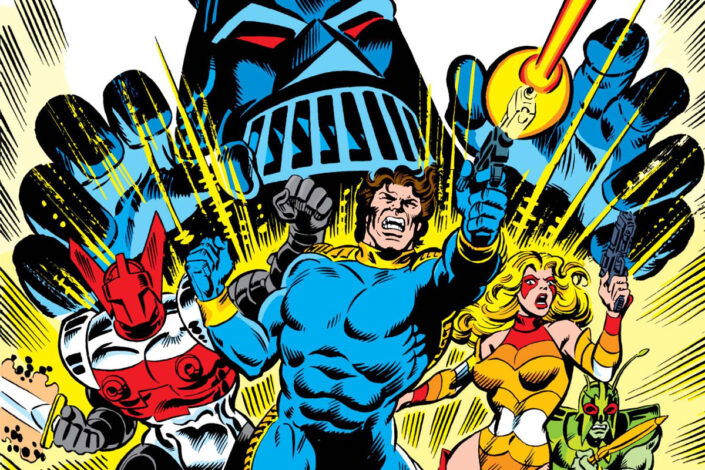
Micronauts: Marvel Comics went into the Micro Verse

  • by

In 1977, Marvel Comics was not doing that well until the movie Star Wars helped propel the newly launched comics based on George Lucas’s creation to the top of the charts. It was such a massive hit that the company started looking into more licensed comics, from Godzilla to Hanna-Barbera cartoon adaptations, Edgar Rice Burroughs comics, and Battlestar Galactica. It represented 20% of Marvel Comics’ production and some fans were not too happy about that. But it was a commercial success and it was not going to stop any time soon.

Introduced in 1974 by Japanese toy maker Takara (also known as Tomy in English), Mircoman was included in the line “Henshin Cyborg” but was not an 8 or 12-inch action figure, as it was the standard back then, but was 3.75-inch tall. The marketing used the size to sell the idea that this miniature bionic alien came from a place called Micro Earth. It was so successful that Microman got his own line. Soon, the American company Mego started importing them into the US under the name Micronauts.

Read More »Micronauts: Marvel Comics went into the Micro Verse

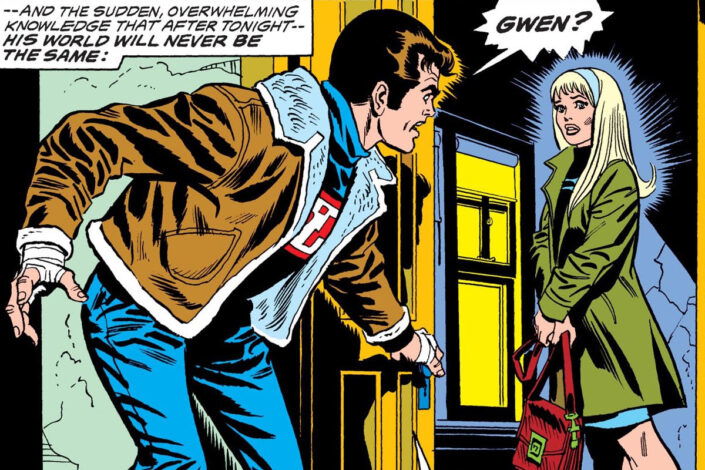
Gwen Stacy: Her Life, Her Death, Her Clones

Recently, Marvel Comics announced another storyline about Gwen Stacy, one of those characters who has been killed but never came back to life. At least, it was not the original Gwen who came back. Her death is probably one of the most iconic and well-known in the medium’s entire history, one that had such an impact on Spider-Man that touching it would be considered sacrilegious to many fans. This never stops the House of Ideas from trying to find a way around it, making Gwen Stacy a sensible subject. As a character, her life was short in comparison to many others, but her influence is still felt to this day.

The Creation of Gwen Stacy

Created by writer Stan Lee and artist Steve Ditko, Gwen Stacy first appeared in The Amazing Spider-Man #31 (1965). She was introduced as one of Peter Parker’s college classmates at Empire State University, alongside Harry Osborn. Initially, Gwen was a background character, but as Ditko departed the book and John Romita Sr. took over as the main artist, her role expanded.

Lee and Romita made Gwen a sophisticated and fashionable young woman. She became Peter Parker’s primary love interest, embodying an idealized romance often filled with drama, misunderstandings, and heartbreak. Being Spider-Man always complicated Peter’s relationships, and with Gwen, this often led to conflicts. Following the death of her father, NYPD Captain George Stacy, in The Amazing Spider-Man #90, Gwen blamed Spider-Man for the tragedy, not realizing Peter was behind the mask, and she decided to leave for Europe as a way to grieve far away from everything that reminded her of the tragedy. However, her love for Peter quickly brought her back to New York and they rebuilt their relationship.

Read More »Gwen Stacy: Her Life, Her Death, Her Clones