Skip to content

Marvel Knights Comics, The Imprint That Rescued Marvel with Daredevil, Punisher, and more!
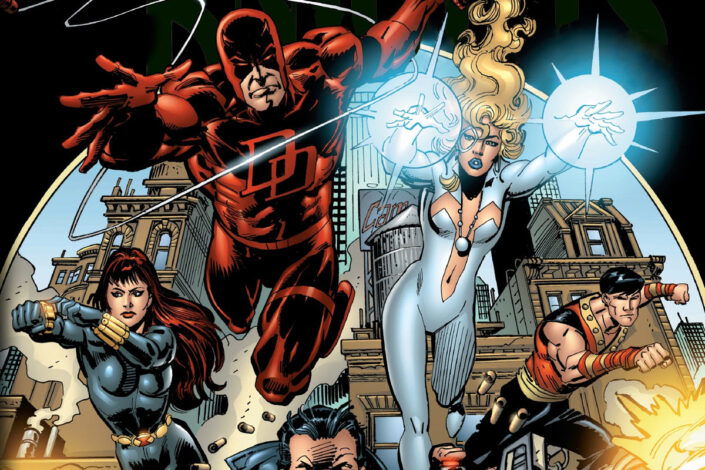
In 1998, Marvel Comics was not in the best of shape but was starting to look better. Even if the Heroes Reborn publishing initiative had not been the expected success, as it was an expensive affair, the idea of contracting exterior talents to package comics for the company was still explored. This time, though, Marvel president Joe Calamari wanted to do it at a reasonable cost. He consulted Gareb Shamus (Wizard magazine publisher), who recommended his two friends, Joe Quesada and Jimmy Palmiotti.

At the time, the two men were the founders of the independent comic book publisher Event Comics (Ash, Painkiller Jane…) and took the contract as a way to make money for their company and try to promote their books by association with the popular Marvel Comics characters. Unlike what Image Comics had to do with Heroes Reborn, their deal was not to relaunch some of the biggest comics of the company but to take over some of the weakest and try to save them. And that’s how Marvel Knights came to be.
Read More »Marvel Knights Comics, The Imprint That Rescued Marvel with Daredevil, Punisher, and more!

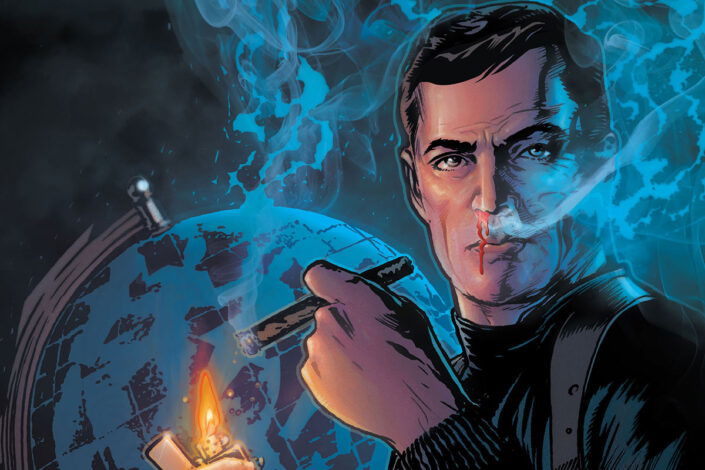
Maxwell Lord: The Comic Book History of a Master Manipulator

« Lord was always sort of a nebulous, self-serving hard ass » said Keith Giffen (RIP) in a CBR interview twenty years ago. He’s talking about Maxwell Lord, power broker, master manipulator, cyborg for a time, spy and full-blown villain.

The Maxwell Lord appearing in the pages of DC Comics today is not the same man readers encountered when he made his first appearance almost 40 years ago in Justice League #1 (May 1987). His origins were rewritten post-Flashpoint to better align with his modern characterization. Once an amoral power broker, Lord has since become a more straightforward villain.

With a new version of Maxwell Lord set to appear in the upcoming Superman movie this summer, we take a look back at Maxwell Lord’s history, and how the character has changed over time.

Read More »Maxwell Lord: The Comic Book History of a Master Manipulator

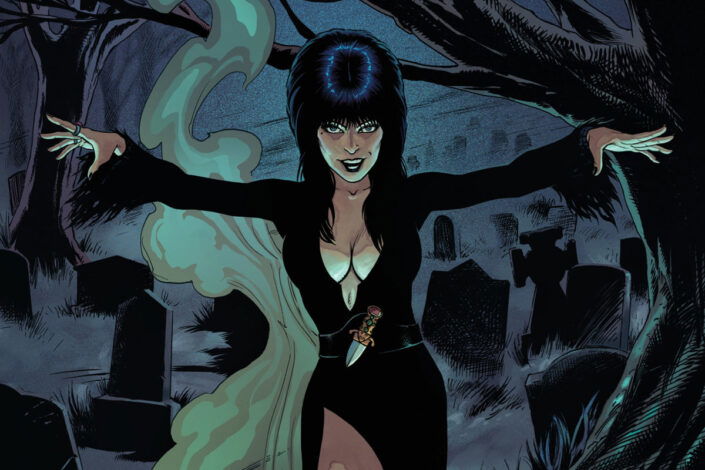
Elvira, Mistress of the Dark Comic Book’s History, From DC to Dynamite

Amateurs of horror are certainly familiar with Elvira, Mistress of the Dark. Played by Cassandra Peterson, Elvira is a campy horror-themed TV hostess with a razor-sharp wit and an iconic gothic sense of style–her plunging black dress and beehive hairdo are immediately identifiable. She rose to fame in the early 1980s as the Movie Macabre star, a show featuring her clever, satirical, and innuendo-filled commentary on low-budget horror films. 

Her popularity led her to host another type of horror show, as she became one of the caretakers of DC’s House of Mystery, the horror anthology comic book. Since then, her adventures in comics have taken a different path, as she became the protagonist of a long-running series—not just the hostess—before coming back in a pop-culture-heavy series that Dynamite regularly publishes. So today, we are taking a look at Elvira’s comics history.

Read More »Elvira, Mistress of the Dark Comic Book’s History, From DC to Dynamite

Mystique Reading Order (X-Men)

Some mutants are older than they look. We all know that Wolverine‘s healing factor slowed down the effects of aging granting him an extended lifespan. But he is not the only Marvel mutant to have quite a long life. This is also the case of the mysterious and dangerous Mystique.

Mostly known as Raven Darkhölme, Mystique has hidden behind many aliases, such as Sherlock Holmes, Foxx, Surge, Raven Wagner, and more. Her true identity is still a mystery, despite having made her first appearance in Ms. Marvel #16 (January 1978), more than 47 years ago.

This unknown past fit quite well with the shapeshifting mutant terrorist who found her way to the Marvel Comics page by accident. Artist Dave Cockrum simply drew a beautiful woman who was colored by Paty Greer (the future Mrs. Cockrum) and Marvel colorist Andy Yanchus. When Claremont saw the design, he asked for information about her and if he could use her. He came up with the name Mystique and included her in Ms. Marvel.

Read More »Mystique Reading Order (X-Men)

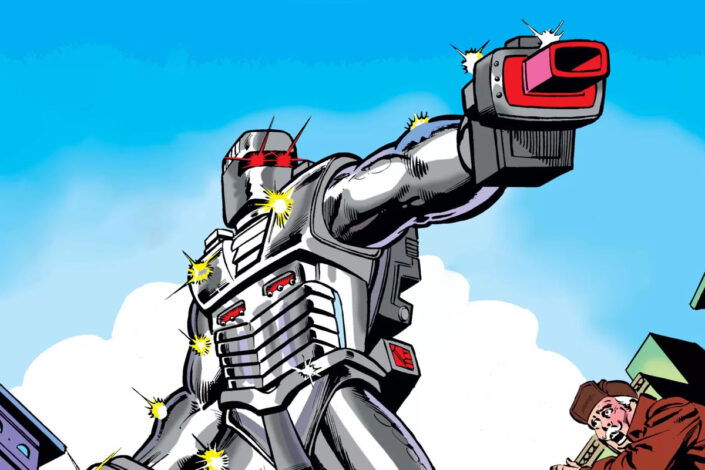
ROM: Marvel’s SpaceKnight, from failing toy to hit comics

  • by

In the late 1970s, the success of the Star Wars comics led to even more licensed comics. One of them was The Micronauts, a set of action figures that Bill Mantlo and Michael Golden turned into a successful comic book series. A success that Parker Brothers noted and hoped to be reproduced with one of his new toys, ROM the Spaceknight.

From The ROM Toys to The ROM Comics

Then Marvel Comics editor-in-chief, Jim Shooter asked writer Bill Mantlo and artist Sal Buscema–two creatives who were open to work on non-superhero comics, in fact, Buscema was the only artist who agreed to do it—to develop a story as the toy came with close to no story element.

Mantlo was not aware of the toy before that and immediately thought about doing something in the vein of 1950s sci-fi with a touch of Arthurian myths. He added tragedy and Brandy Clark, ROM’s human ally, who eventually becomes romantically linked with him. But Jim Shooter and editor Al Milgrom himself provided a few ideas.

The final result has often been compared to the Silver Surfer, but ROM the Spaceknight had his own rich mythology that helped him stand apart. ROM is a noble warrior from the utopian planet Galador who volunteers to become a Spaceknight—a cyborg warrior—to battle the Dire Wraiths, a shape-shifting alien species threatening the universe—his primary weapon is the Neutralizer, which banishes Dire Wraiths to Limbo. Rom sacrifices his humanity to become a Spaceknight, clad in powerful armor that enhances his abilities but also isolates him emotionally.

Read More »ROM: Marvel’s SpaceKnight, from failing toy to hit comics

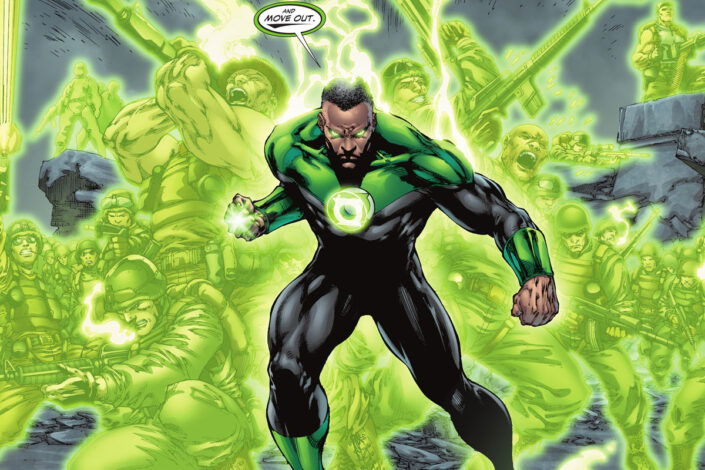
John Stewart’s Evolution: From Green Lantern Backup to Corps Leader

Among the Green Lanterns from Earth, John Stewart is one of the most popular and he may be gaining more fans soon as he is one of the main characters in the Green Lantern TV Show coming on HBO–played by actor Aaron Pierre.

Created by Dennis O’Neil and Neal Adams in Green Lantern vol. 2 #87 (1971), John Stewart was one of the first African-American superheroes to appear in DC Comics. Still, he didn’t immediately become one of the most prominent ones.

In fact, after this first appearance, he only came back four years later for a team-up with the Justice League of America (in Justice League of America #110, in 1974). He then continued to pop up only sporadically in Green Lantern comics until the mid-1980s with Crisis on Infinite Earths and his time as the main protector of sector 2814 in Green Lantern (from #182 to #200).

It was a slow start but John Stewart’s cosmic adventures are still going strong today.

Read More »John Stewart’s Evolution: From Green Lantern Backup to Corps Leader

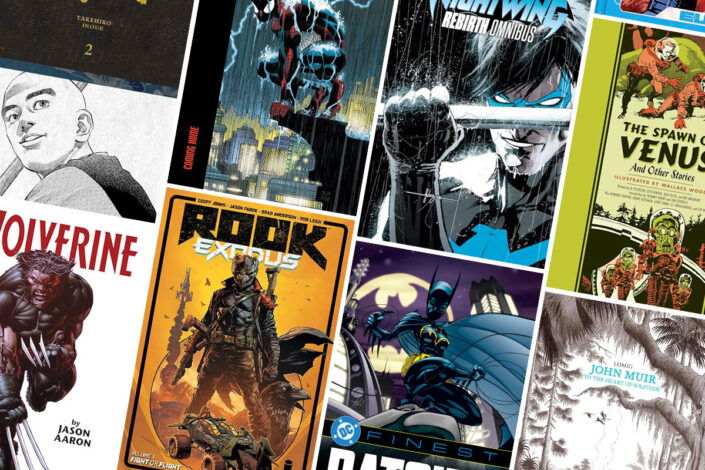
What to Read This Month: The Best Comics of April 2025

  • by

Last month, we launched our new column, helping you navigate the overwhelming number of collected editions released each month. Between Marvel or DC Omnibus, the Epic Collection, DC Finest, Compact editions, and everything else publishers put out, there’s always way there’s always more to discover!

That’s why we’re back with a selection of notable releases for April, highlighting some great stories from members of the Batfamily, sci-fi stories, and an ecological tale. 

Without further ado, here are our picks for April!

Read More »What to Read This Month: The Best Comics of April 2025

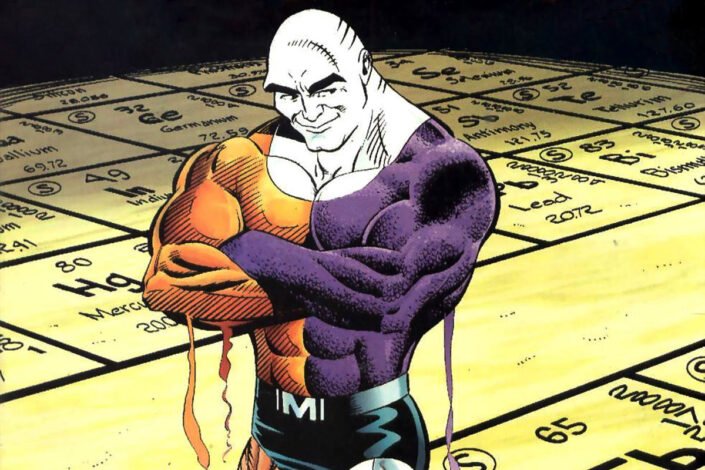
Metamorpho: DC Comics’s Element Man, Rex Mason

  • by

Metamorpho DC Comics Elemental Man

During the mid-1960s, unconventional comic book heroes like the Doom Patrol or the Metal Men found a bit of success at DC Comics. To build some more on what seems to be a trend, writer Bob Haney and artist Ramona Fradon were asked to create a new character in the same vein. The result was Metamorpho, who debuted in The Brave and the Bold #57 (January 1965).

Also known as the Element Man, Metamorpho found immediate success and started appearing in other popular comics like Justice League of America (even if he refused to become a full-time member). He also got his own ongoing comic book series, but it lasted only 17 issues. However, this was by far the end of the character.

Read More »Metamorpho: DC Comics’s Element Man, Rex Mason

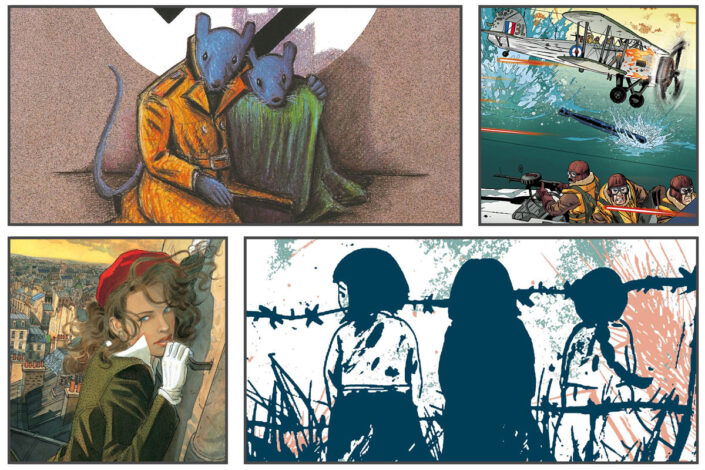
45 Must Read Comics about World War II

  • by

This year marks the 80th anniversary of the Armistice of the Second World War. Considered the largest and deadliest war in history, involving more than 30 countries, WWII shaped the world we live in today. Causing immense human suffering and physical destruction on an unprecedented scale, its conclusion resulted in a reshaping of the world’s political, economic, and social systems, laying the groundwork for international relations for the remainder of the twentieth century and into the twenty-first century.

When it comes to our duty of memory, comics offer a unique way to revisit World War II. From historical accounts to personal experiences, they depict the war’s events, and figures, providing different perspectives on a conflict that shaped the modern world.

Explore our curated list of 45 World War II comics and graphic novels — from personal family sagas shaped by conflict to graphic depictions of the war’s most brutal battles. These stories capture the trauma, sacrifice, and enduring impact of WWII through intimate portraits and large-scale historical events.

Read More »45 Must Read Comics about World War II

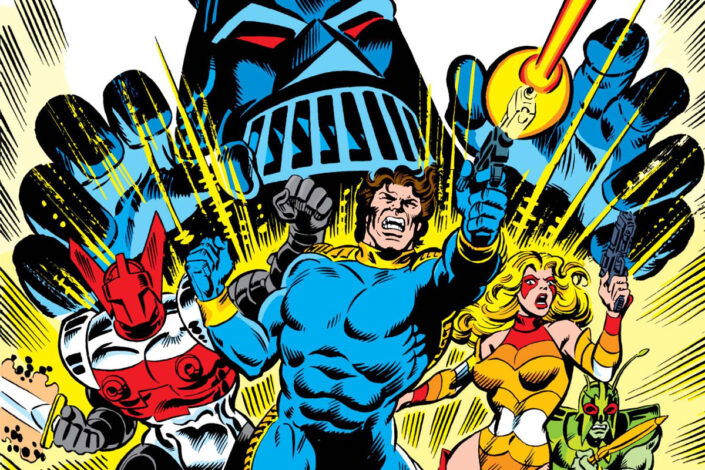
Micronauts: Marvel Comics went into the Micro Verse

  • by

In 1977, Marvel Comics was not doing that well until the movie Star Wars helped propel the newly launched comics based on George Lucas’s creation to the top of the charts. It was such a massive hit that the company started looking into more licensed comics, from Godzilla to Hanna-Barbera cartoon adaptations, Edgar Rice Burroughs comics, and Battlestar Galactica. It represented 20% of Marvel Comics’ production and some fans were not too happy about that. But it was a commercial success and it was not going to stop any time soon.

Introduced in 1974 by Japanese toy maker Takara (also known as Tomy in English), Mircoman was included in the line “Henshin Cyborg” but was not an 8 or 12-inch action figure, as it was the standard back then, but was 3.75-inch tall. The marketing used the size to sell the idea that this miniature bionic alien came from a place called Micro Earth. It was so successful that Microman got his own line. Soon, the American company Mego started importing them into the US under the name Micronauts.

Read More »Micronauts: Marvel Comics went into the Micro Verse