Skip to content

IDW

Ghostbusters Comics Reading Order (IDW and Dark Horse)
  • by

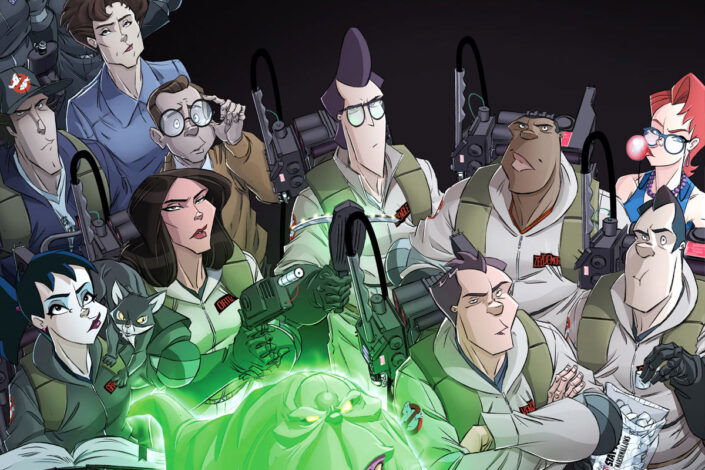
If there’s something strange in your comics, who you gon’ call? Ghostbusters! And to do that, you’ll have to check out IDW Publishing’s catalogue, as it has been the house of the Ghostbusters comics since 2008.

The Ghostbusters franchise started with the 1984 movie, directed by Ivan Reitman and written by Dan Aykroyd and Harold Ramis. It introduced us to this team of ghost hunters, professors Peter Venkman, Ray Stantz, Egon Spengler, and Winston Zeddemore. They had to face the evil Zuul to save New York City. It was only the beginning of their adventures.

The property subsequently expanded into animated television series, most notably The Real Ghostbusters (1986–1991) and Extreme Ghostbusters (1997), as well as video games, novels, and comic books. In comics, The Real Ghostbusters was adapted in the late 1980s by NOW Comics in the United States and by Marvel UK in the United Kingdom, both drawing directly from the animated series. In the 2000s, the Quebec-based publisher 88MPH Studios also produced The Real Ghostbusters comics. There was even a one-shot Manga in 2008.

In 2008, IDW Publishing acquired the license to produce Ghostbusters comics. Unlike previous publishers, IDW shifted away from the animated continuity and instead focused on the primary film continuity established by Ghostbusters (1984) and Ghostbusters II (1989), later incorporating elements from Ghostbusters: The Video Game (2009), which was co-written by Aykroyd and Ramis and is often treated as a canonical sequel. IDW lost the license in 2020 to Dark Horse Comics, putting an end to this continuity.

To navigate through all those comics, no need to call anybody, just follow our reading order!

Read More »Ghostbusters Comics Reading Order (IDW and Dark Horse)

Buffyverse Comics Reading Order, The Dark Horse and IDW Years

  • by

Welcome to Sunnydale, a California city located on a Hellmouth, a mystical portal attracting supernatural evils, and the setting of the Buffy the Vampire Slayer tv series. Vampires and other demons are omnipresent and they can prey easily on their victims in the many dark alleys, abandoned houses, factories, and such. Well, that is, if they don’t encounter a little blonde with a stake named Buffy! 

Buffy Summers is the Chosen One, granted powers to fight and kill vampires, demons, and other supernatural creatures. She was a cheerleader in high school when she learned about her destiny and accidentally burned down the school gym while fighting vampires before moving to Sunnydale with her mother for a new start in life. She has the surprise to discover that vampires are well established in her new little town, and she now must juggle between the challenge of her teenage life and her mission as a Slayer. She killed many vampires, saved many lives and lived many other dangerous, dark, funny adventures with her family and friends during the seven seasons comprising the series. 

However, Buffy’s story didn’t stop there! The vampire slayer also lived many adventures in the pages of several comic books! Publisher Dark Horse Comics released the first Buffy comic in 1998, as an extension to the television series, but not officially part of the canon. It will continue to do so until 2003, telling parallel adventures of Buffy and the Scooby Gang. 

Read More »Buffyverse Comics Reading Order, The Dark Horse and IDW Years

Star Trek Comics: Your Reading Guide to the Kelvin Timeline

Today is Star Trek Day! Since the first Star Trek comics were released over 50 years ago, many more comics have been published by various publishers. IDW Publishing became one of them in 2009 after securing the rights to Star Trek comics. They started with the release of Star Trek: Countdown, a comic prequel to the 2009 film, Star Trek.

It was the start of a series of comics set in the film continuity, officially named by CBS in 2016, the Kelvin Timeline. This alternate reality was created when the Romulan Nero traveled to 2233 and destroyed the Federation starship U.S.S. Kelvin. From then on, history became different from the Prime Universe, where Star Trek: The Original Series and the other TV series take place.

In comic book form, the Kelvin Timeline spans around 10 years of comic book stories, including two ongoing series and a few limited series. Following is our guide to the Star Trek’s Kelvin Universe Comics, to discover all the adventures of Captain Kirk and his crew, before, during, and after the movies! 

Read More »Star Trek Comics: Your Reading Guide to the Kelvin Timeline

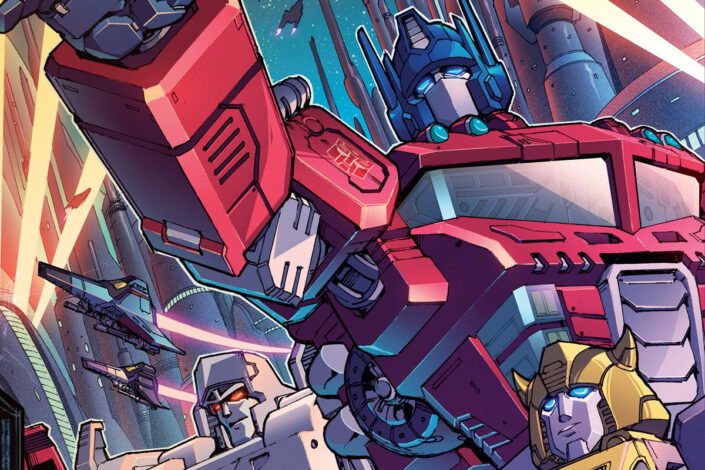
Transformers IDW Reading Order

  • by

Like with the Teenage Mutant Ninja Turtles, the Buffyverse, or the G.I. Joe comic book franchise, IDW took over the Transformers comics and launched its own continuity–and there are some discussions about the more legitimate continuity, but it’s not the subject of this article. We are here to talk about the third Transformers comics series.

The first was published by Marvel (from 1984 to 1991), and the second by Dreamwave Productions (from 2002 to 2004). After that, IDW Publishing took over with the third series (the Generation 1 continuity) written by Simon Furman starting with issue #0 in October 2005 and a regular series starting in January 2006 (and ending in November 2018). The fourth series is a relaunch at IDW that started in 2019.

And so, as the official synopsis tells it, it began on Earth, in 2006. The fate of the planet is already sealed, its destiny decided… by the marauding mechanical beings known as Decepticons. In their way stand an embattled crew of seven hardy Autobot warriors, sworn to prevent the impending Armageddon at any cost, and an unlikely trio of human misfits, pulled kicking and screaming into a hitherto hidden world of pain and hurt. The can of worms is open, the genie is out of the bottle… and nothing will ever be the same again! It begins again — here, now — the saga of the war-torn robots in disguise, the Transformers!

In 2022, IDW Publishing lost the license to publish Transformers comics. Skybound Entertainment (an imprint of Image Comics) took it over and created the Energon Universe.

Read More »Transformers IDW Reading Order

The X-Files Comics: A Reading Guide to Mulder and Scully’s Comic Book Adventures

Not many live-action TV shows have expanded their stories into comic books. Star Trek, Buffy the Vampire Slayer, and Firefly are the most successful examples, of course. Science fiction is a genre that lends itself perfectly to the medium. So it’s no surprise that The X-Files, the biggest sci-fi sensation on TV during the 1990s, expanded into the world of comics. 

Since the first issue was published in 1995 by Topps Comics, multiple comics have starred the famous FBI agents Mulder and Scully. Some are based on actual episodes of the show created by Chris Carter, while others are original stories that run alongside or continue the series after its cancellation. And now that there are talks about reviving the X-Files comics at Marvel, let’s take a look back at the long history of the franchise in print.

Read More »The X-Files Comics: A Reading Guide to Mulder and Scully’s Comic Book Adventures

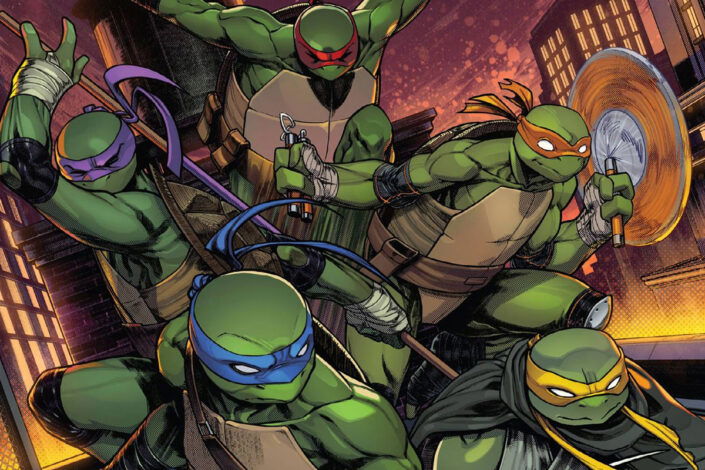
Teenage Mutant Ninja Turtles IDW Reading Order

Originally published by Mirage Studios in 1984, Teenage Mutant Ninja Turtles was a black-and-white, self-published comic created by Kevin Eastman and Peter Laird that quickly gained traction, helping to ignite the independent comics boom of the 1980s.

Unlike many of its contemporaries, which faded into obscurity, TMNT evolved into a long-lasting franchise. The original comics follow four mutated turtles—Leonardo, Raphael, Donatello, and Michelangelo—who are trained in ninjutsu by their rat sensei, Splinter. Living in the sewers of New York City, they battle crime, alien threats, and supernatural forces, expanding their adventures across multiple dimensions in comics, television, and film.

While the original Mirage series ended in 1995, TMNT publications continued in various forms. The property moved to Image Comics in 1996, returned to Mirage in the early 2000s, and was later acquired by Nickelodeon in 2009. Since 2011, IDW Publishing (Transformers, G.I. Joe) has produced an ongoing Teenage Mutant Ninja Turtles comic series, spearheaded by TMNT co-creator Kevin Eastman, writer Tom Waltz, and artist Dan Duncan. This iteration introduced a revised origin story and an expanded mythology, ensuring that the heroes in a half shell continue their legacy in fresh and ambitious ways.

After 150 issues, IDW decided to relaunch the main Teenage Mutant Ninja Turtles comic series and announced Volume 2 now written by Jason Aaron. A new era of the Turtles began.

Read More »Teenage Mutant Ninja Turtles IDW Reading Order

What to Read This Month: The Best Comics of March 2025

  • by

While you can check out all the Marvel or DC Comics Omnibus announcements for 2025 or see the upcoming releases in the Epic Collection, DC Finest and DC Compact on the website, there’s still a lot more collected editions put out there every month by comic book publishers! So much in fact that sometimes, you’ll wish you could buy more than what’s reasonable. That cost adds up and the time is missing to read everything we want!

That’s why we are launching a new column, starting in March, to spotlight a selection of collected editions released each month we think would be great to have in our library (and yours by extension!). 

Without further ado, here is our selection of comic books for March!

Read More »What to Read This Month: The Best Comics of March 2025

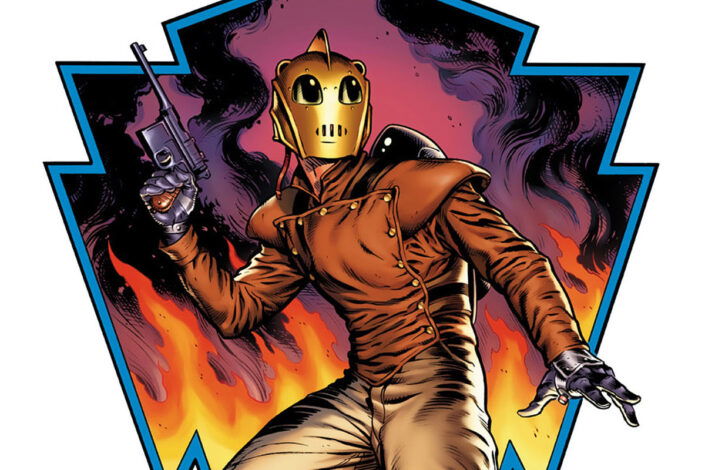
The Rocketeer Reading Order, A guide to Dave Stevens’ cult comics and the IDW miniseries

First appearing as a backup feature in Starslayer #2, published by Pacific Comics in 1982, The Rocketeer is a now-cult comic book created by Dave Stevens (1955-2008) who was heavily inspired by the aesthetic of pulp magazines, early Hollywood serials, and vintage aviation.

Set in 1930s Los Angeles, the story of The Rocketeer follows Cliff Secord, a young and cocky stunt pilot trying to make a name for himself. Cliff’s life takes an unexpected turn when he discovers a mysterious rocket pack hidden in his hangar. This experimental device allows him to fly, making him a target at the same time as it was originally stolen by gangsters during a botched robbery and ends up in Cliff’s possession. They want it back, as does its creator, Howard Hughes. Soon, Cliff’s girlfriend, an aspiring actress and model named Betty, becomes entangled in Cliff’s adventures when villains attempt to use her to get to him. To make matters worse, the Nazis view the rocket pack as a potential weapon that could give them a significant advantage in their plans for world domination and want to get it for themselves.

A skilled storyteller and an exceptionally gifted artist, Stevens injected everything he liked in the comics. From his love of the iconic pin-up model Bettie Page to retro-futurism and aviation culture, the aesthetic of pulp magazines and early serials, and the glamour of the Golden Age of Hollywood.

Read More »The Rocketeer Reading Order, A guide to Dave Stevens’ cult comics and the IDW miniseries

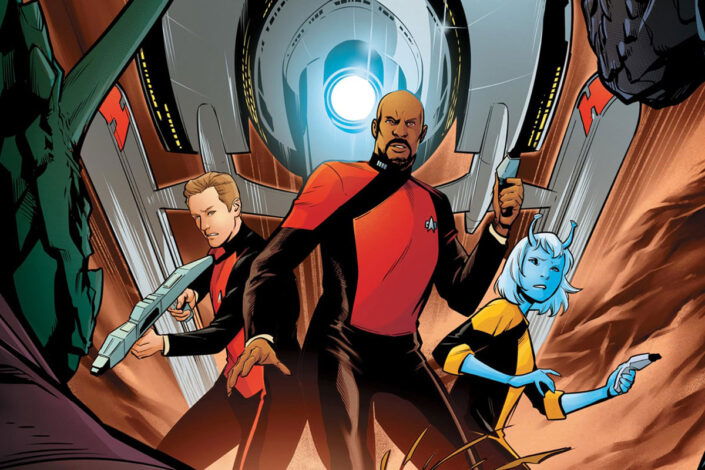
Star Trek Comics Reading Order, the 2022 IDW shared Universe

Since the premiere of Star Trek: The Original Series in 1966, the universe created by Gene Roddenberry has never stopped expanding. The exploration of strange new worlds and other civilizations has unfolded across movies, television series, video games, novels, and comic books, making Star Trek one of the biggest media franchises of all time.

Since the first Star Trek comic was published in 1967 by Gold Key Comics, the franchise’s comics have been almost continuously in publication. Over the years, they have been produced by various publishers, including Marvel, DC Comics, and, of course, IDW Publishing, which secured the rights in 2006 and has been producing new comics ever since.

Recently, IDW has decided to go where no one has gone before by launching an epic new adventure: a Star Trek Multiverse of sorts. Described by co-writer Jackson Lanzing as “an Avengers-style ongoing crossover that treats Gene Roddenberry’s creation as a living universe,” this new Star Trek series brings together characters from across the galaxy—and all eras and variations of the beloved franchise.

The stardate is 2378, marking the return of an omnipotent Benjamin Sisko from the Bajoran Wormhole. He is sent by the Prophets on a mission that only he and a crew of Starfleet members from every era of Star Trek can accomplish. These new stories take place a few years after the end of Star Trek: Deep Space Nine, after the USS Voyager returned home but before the events of Nemesis, the final Star Trek: The Next Generation movie.

While IDW has published many Star Trek comics in the past, this article focuses on the interconnected timeline of IDW Star Trek comics launched in 2022.

Read More »Star Trek Comics Reading Order, the 2022 IDW shared Universe

Hasbro Comic Book Universe Reading Order (2005-2018)

  • by

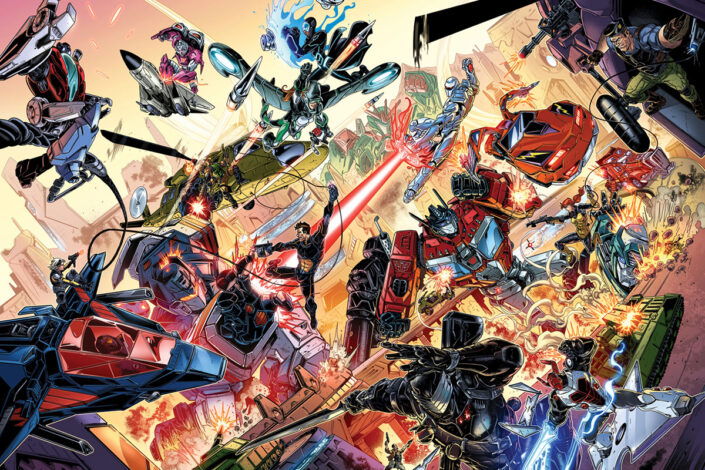
As the Energon Universe featuring characters from Transformers and G.I. Joe is expanding, we take a look back at the previous Comic Book Universe based on several Hasbro brands and published by IDW – The Hasbro Comic Book Universe or HCBU!

IDW picked up the Transformers license in 2005 and obtained the rights for G.I. Joe in 2008, but the Hasbro Comic Book Universe was officially launched in 2016 with the release of the Revolution miniseries, a crossover event involving many characters from Hasbro and establishing a shared universe for all these brands. It was then decided that all the stories previously published were retroactively set in the same continuity.

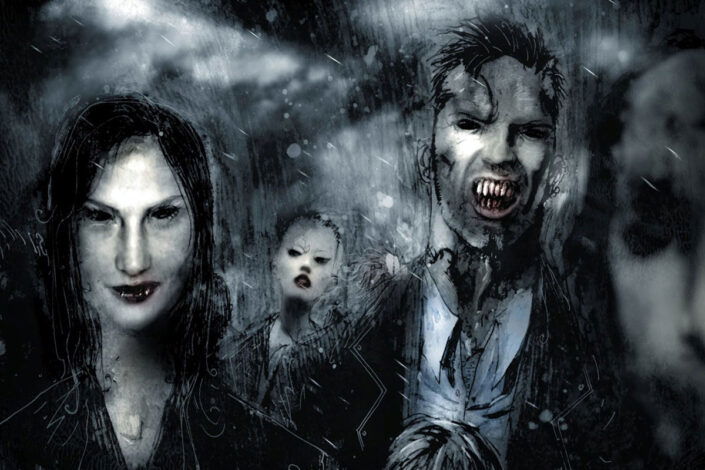
Revolution wasn’t IDW’s first crossover event connecting several licensed series. The publisher released Infestation at the beginning of 2011 in which a zombie infectation spread between dimensions and reached into the worlds of Transformers, Star Trek, G.I. Joe, and Ghostbusters. None of them interact with each other at any point. A follow up called Infestation 2 was released a year later involving this time The Transformers, Dungeons & Dragons, Teenage Mutant Ninja Turtles, G.I. Joe and 30 Days of Night.

Read More »Hasbro Comic Book Universe Reading Order (2005-2018)