Skip to content

Fabien

Co-founder of Comic Book Treasury, your Hellboy Specialist and the man behind the Batman Modern Age and the Amazing Spider-Man Guides.
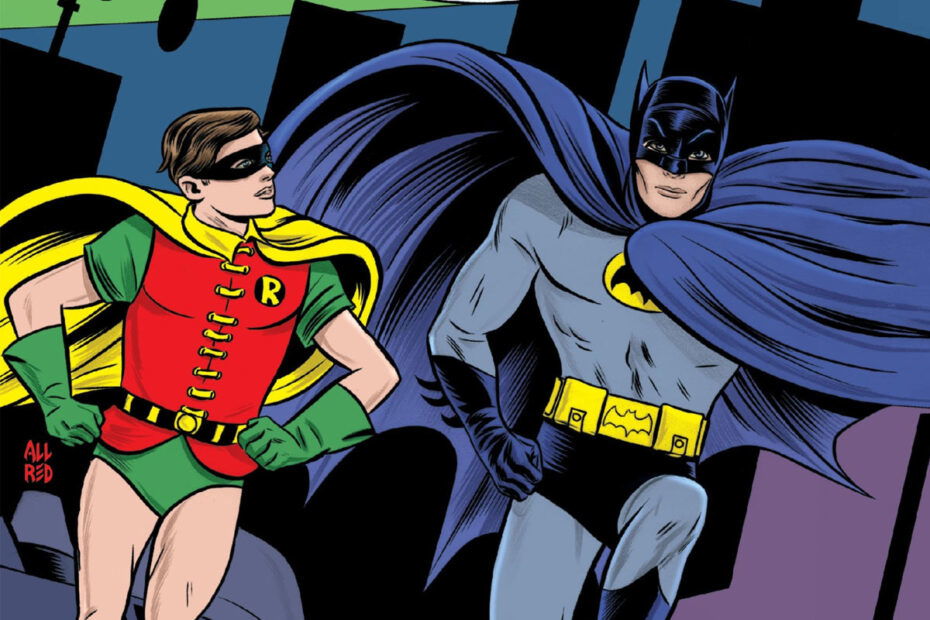
Darwyn Cooke’s Must-Read Comics: Exploring a Work Filled with Boldness and Hope

Graphic Ink: The DC Comics Art of Darwyn Cooke

Canadian Cartoonist from Toronto Darwyn Cooke (1962–2016) always dreamt of making comics for a living, but it was not economically viable for him for a long time. He instead worked as a magazine art director, graphic and product designer until finally going back to his first love during the 1990s. He answered an ad placed by Bruce Timm that led him to work as a storyboard artist on Warner Bros. Animation shows like The New Batman Adventures, Superman: The Animated Series, Batman Beyond (he created the opening sequence), and Men in Black: The Series (as a director).

Cooke’s pitch to Timm, a Batman story that got him a job in animation, was later discovered by DC Comics art director Mark Chiarello who hired the artist to make a graphic novel based on it. That became the 2000 graphic novel Batman: Ego. Cooke officially transitioned to the comics world.

Despite a short career in comics, Darwyn Cooke’s distinctive artistic style became highly influential as well as his stories. He found popular success with some of his now-considered classic series and gained industry recognition with his work, winning 13 Eisner Awards, 8 Harvey Awards, and 5 Joe Shuster Awards.

Read More »Darwyn Cooke’s Must-Read Comics: Exploring a Work Filled with Boldness and Hope

DC Finest Collection: The 2026 Release Schedule

  • by

Years ago, Marvel launched its Epic Collection, offering full stories at an affordable price. You can choose your favourite heroes and pick up a complete run and arc to access both old and new stories, including some classics and some that have been forgotten. It was and still is a massive success. Now, DC Comics has decided to follow suit with its own line of books: DC Finest.

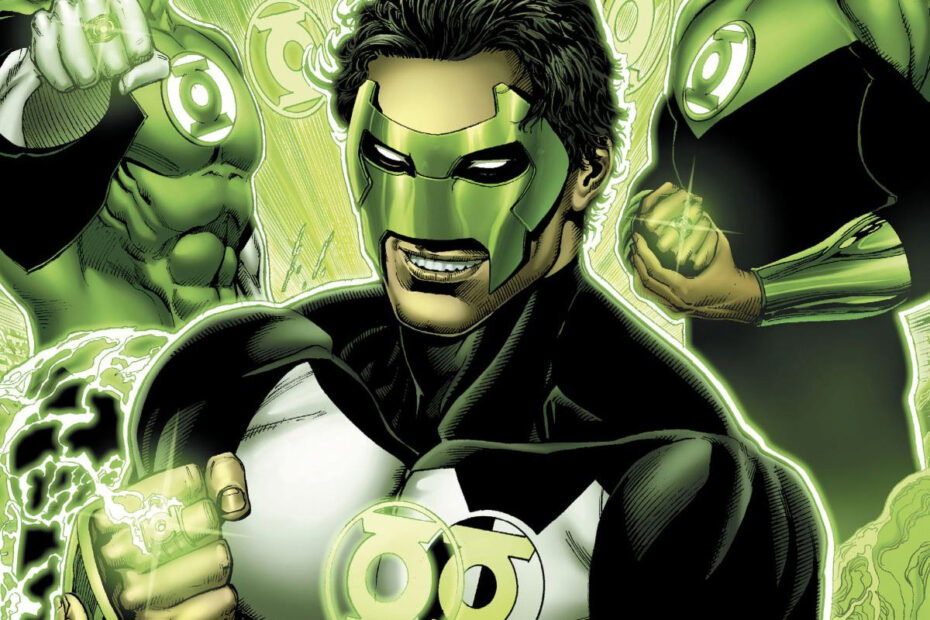
Each DC Finest book covers a specific character, team, event, or genre from across DC history. Depending on the chronology, a volume dedicated to ‘Robin’ could feature Dick Grayson, Tim Drake, Damian Wayne or Jason Todd. The Green Lantern volumes will feature stories starring Hal Jordan, John Stewart, Kyle Rayner, Alan Scott, and others, depending on the era. One moment you’ll be enjoying classic Silver Age adventures with Barry Allen, and the next you’ll be following Wally West into danger in the Modern Age.

Each volume is around 600 pages long and collects around 25 issues or more. These include main series issues, annuals, tie-in,s and any other stories that contribute to the main storyline. This makes it easy to jump into a character or series without needing the previous volumes. Like the Epic Collection, the volumes are not released in chronological order as DC Comics jumps around different eras. Over time, the line is designed to fill in all the gaps and provide a comprehensive chronological reading experience.

Don’t miss a volume in the DC Finest Collection thanks to our release schedule!

Read More »DC Finest Collection: The 2026 Release Schedule

Star-Lord Comics Reading Order, Peter Quill’s Cosmic Marvel Guide

  • by

The introduction of Star-Lord in the Marvel Comics Universe didn’t come with a boom but with editorial complications. Created by Steve Englehart and Steve Gan, the character made his first appearance in Marvel Preview #4 in 1976. He was supposed to go, according to its creator, from “being a jerk to the most cosmic being in the universe.” However, things changed quickly when Steve Englehart left Marvel, and Chris Claremont took over the character. Claremont’s revamp led to some legal issues due to his heavy reliance on Robert A. Heinlein’s work as inspiration. fter that, Star-Lord made only a few appearances before disappearing from the scene. This version of the character is no longer considered a part of the regular Marvel Universe anymore.

In 2005, Peter Quill/Star-Lord was introduced by Keith Giffen and Ron Lim in the ongoing Thanos comic series. This introduction led him to play a part in the Annihilation saga, and then in the new incarnation of the Guardians of the Galaxy series from Dan Abnett and Andy Lanning.

Now with a revised origin story, Peter is revealed to be the son of an alien named J’son, who crashed on Earth and met Meredith Quill. When J’son left to go back to fighting his intergalactic war, he didn’t know that Meredith was pregnant. A decade later, enemies of his father J’son came to Earth and murdered his mother. Orphaned, Peter was raised by hMeredith’s ‘s best friend Lisa Chang, a commander at NASA. He was destined to join the stars.

During a mission in Space, Peter Quill’s ship malfunctioned and was discovered by a group of space pirates led by Yondu, the Ravagers. After some convincing, he was allowed to join them. That’s how his cosmic adventures started… that you can right now discover with our Star-Lord Reading Guide!

Read More »Star-Lord Comics Reading Order, Peter Quill’s Cosmic Marvel Guide

The Negative Zone: Marvel’s Antimatter Universe Explained

The Marvel Universe doesn’t lack realities, dimensions, and other parallel Earths. But one is particularly famous as it has been firmly tied to the Fantastic Four for decades now: The Negative Zone.

First introduced in Fantastic Four #51 (published in 1966) by writer Stan Lee and artist Jack Kirby, the Negative Zone is an antimatter universe–a universe parallel to Earth’s in which all matter is negatively charged. As such, it is a dangerous place for those who come from the regular Marvel Universe, those who are positive matter beings. It’s not immediately dealy for them, but being there for a prolonged period of time is quite dangerous.

Read More »The Negative Zone: Marvel’s Antimatter Universe Explained

Grendel Reading Order, Matt Wagner’s Epic Comic Book Series

  • by

First published in 1982 by Comico, in Comico Primer #2, Grendel is a creation of Matt Wagner that started as something highly usual at the time. Inspired by Diabolik, Kriminal, Elric, the Beowulf myth, and more, this was the story of an anti-hero, Hunter Rose, an assassin turned mob boss whose Nemesis was Argent the wolf–a powerful and terrifying man-wolf.

The story of this master criminal would soon be retold in Devil by the Deed as a backup story in Wagner’s other series, Mage.

Grendel would eventually become an ongoing series at Comico, from 1986 to 1990. Instead of bringing back Hunter Rose, inspired by the generational aspects of The Phantom, Wagner decided to create a collection of stories exploring the influence of the Grendel identity. The first was Christine Spar, the daughter of Stacy Palumbo who played an integral part in Hunter Rose’s life, then Brian Li Sung who was for a time involved with Christine. After that, Wagner started to adopt a different angle, revisiting Hunter Rose’s career before going progressively into the future.

Continuously evolving, Grendel became a sci-fi story about a dystopic future where a corrupt religious society is disrupted by a powerful Vigilante dressed as Grendel. This led to a revolution and a new status quo as the power shifted and the spirit of Grendel pushed the whole imagery of the Grendel to evolve again. Then emerged the powerful and mysterious Grendel Prime.

As Comico went into bankruptcy in 1990, Grendel’s story was interrupted, but Matt Wagner moved it creation to Dark Horse Comics. Since then, he published new series and revisited old ones, coming back to it multiple times through the years.

Read More »Grendel Reading Order, Matt Wagner’s Epic Comic Book Series

Criminal Reading Order, The Ed Brubaker and Sean Phillips’ Celebrated Comics

Originally published by Marvel Comics’ Icon imprint before being moved to Image Comics, Criminal is a long-running creator-owned comic book series by writer Ed Brubaker and artist Sean Phillips (the duo behind Reckless). It has become the most prominent independent crime comic of the last twenty years and is now adapted for television on Prime Video.

Launched in 2006, Criminal started as a ten-issue series before coming back in multiple formats through the years, from graphic novel to one-shot. Every storyline works as a standalone story that takes place in a much larger narrative–mostly articulated around the Lawless Family and the mob boss Sebastian Hyde.

As a crime comic series, Brubaker and Phillips’ creation explores the many forms of the genre. In an interview with Tom Spurgeon at the launch of the series, Brubaker stated “The kinds of stories we’ll be putting all these characters through, though, run the gamut from the heist caper, to the revenge story, to the man on the run story, and even beyond that to the sort of meta-noir innocent man caught in a web of crime story.” That’s exactly what they did.

Eighteen years later, we have a collection of books, stories that were not written or published in chronological order, featuring a group of recurring characters whose lives we discover through dark and violent events. The following guide is here to help you find the stories you may have missed and to offer multiple ways to read them.

Read More »Criminal Reading Order, The Ed Brubaker and Sean Phillips’ Celebrated Comics

Deathlok Reading Order, Marvel’s Deadly Cyborgs

  • by

Not to be confused with DC’s Deadshot or Deathstroke, Deathlok is a Marvel Comics character. In fact, it’s the codename of more than one character. The First one was created by cartoonist Rich Buckler in Astonishing Tales #25 (he plotted and pencilled it, Doug Moench wrote the script and suggested the name), in 1974, the same year as The Punisher and Wolverine. Marvel was into violent warriors at the time and The Six Million Dollar Man TV Show had popularized the concept of a cyborg just a few months earlier.

Known at first as Deathlok the Demolisher, Luther Manning was an American soldier who was killed and subsequently brought back to life by Simon Ryker who transformed him into a cyborg. This takes place in a dystopian future: 1990. He escaped Ryker’s control and fought against him, up until the end of his Astonishing Tales run when he was sent back in time to the regular Marvel timeline. This was only the beginning for him as he got to meet other Marvel heroes, and eventually went back to his timeline.

Manning was just the first. Through the years, Michael Collins, Jack Truman, Rebecca Ryker, Henry Hayes, and Jemma Simmons used the “Deathlok” identity. They mostly followed the same route, dead humans reanimated as cyborgs.

Read More »Deathlok Reading Order, Marvel’s Deadly Cyborgs

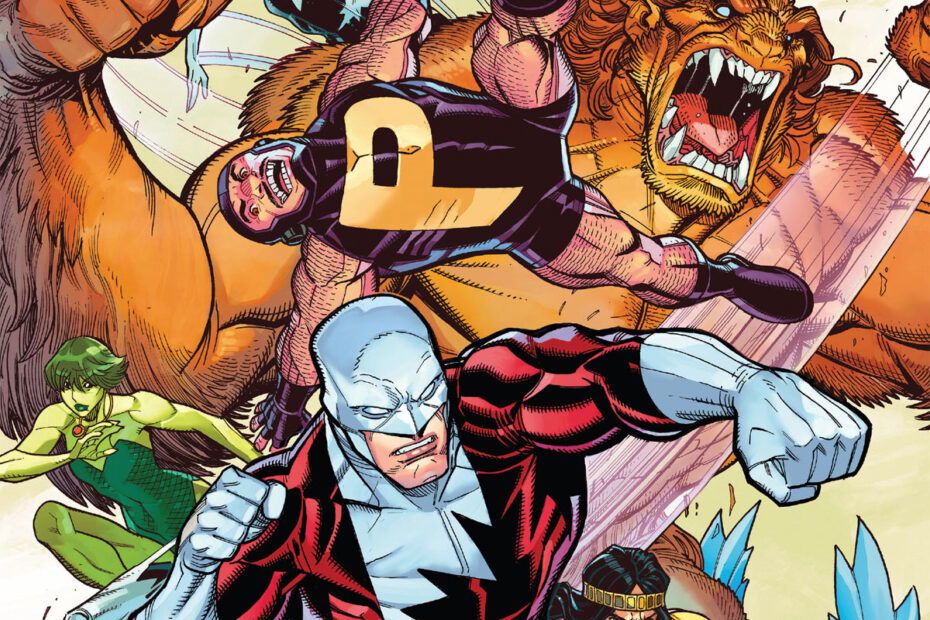
Plastic Man Reading Order

  • by

Launched as a minor feature in Police Comics #1 in 1941 (originally published by Quality Comics and later acquired by DC Comics), Plastic Man is a creation of artist and writer Jack Cole. He initially thought of a character named the Indian Rubber Man, inspired by sideshow freaks, but Everett Arnold–who was the founder of Quality Comics–suggested naming the character after that material that was all the rage at the time.

According to Art Spiegelman, who profiled Cole for The New Yorker magazine, in 1943, when Plastic Man expanded into his own book, Cole explained the morphing hero to new readers: “If you should see a man standing on the street and reaching into the top window of a sky-scraper…that’s not astigmatism—it’s Plastic Man!… If you happen upon a gent all bent up like a pretzel…don’t dunk him…it’s Plastic Man! All this and bouncing too, you’ll see when the rubber man and his pal Woozy Winks gamble their lives in—The Game of Death.”

This is the story of Patrick “Eel” O’Brian, a lowlife gangster. While committing a robbery, he was accidentally doused by some unnamed acid. Nursed back to health by a reclusive order of monks, Eel became a new man. He now had stretching abilities that defied the laws of physics and, inspired by the teaching of the monks, he was now ready to put his criminal past behind him to protect the law–he first helped the police force and later became a special agent for the F.B.I.

Read More »Plastic Man Reading Order

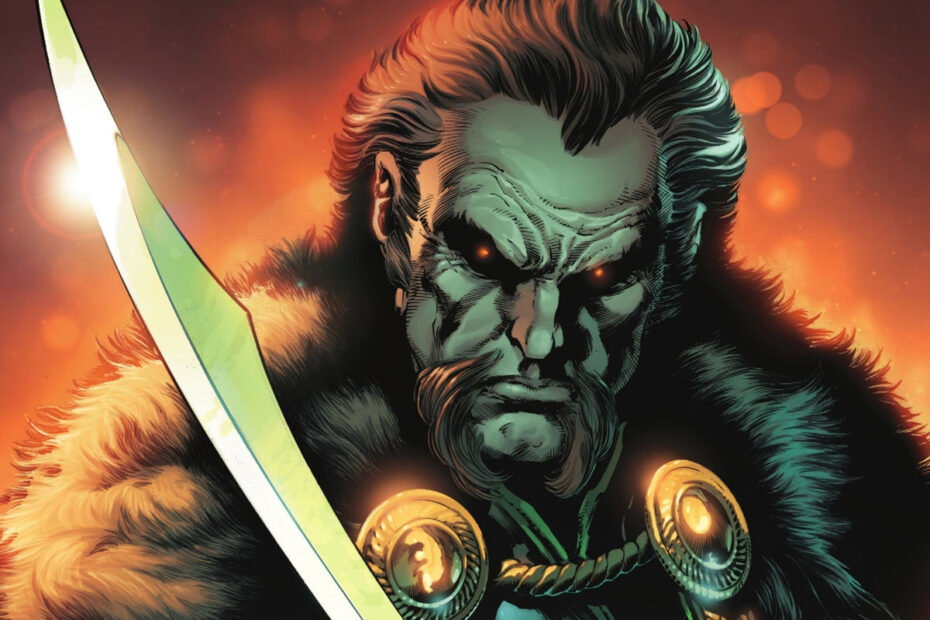
Marvel’s Dracula Reading Order

  • by

In 1972, as the Comics Code started to loosen and Stan Lee became Marvel’s Publisher, making Roy Thomas the new editor-in-chief, Marvel launched new horror titles like Ghost Rider, The Man-Thing, Werewolf by Night, and The Tomb of Dracula.

Written by Gerry Conway, plotted by Roy Thomas, and drawn by Gene Colan (who fought to get this assignment), The Tomb of Dracula #1 introduced the famous vampire created by author Bram Stoker into the Marvel Universe. The concept seduced the readers, but the writing not that much. Conway rapidly left the book, Archie Goodwin then Gardner Fox took over for only two issues each before Marv Wolfman assumed the writing duties and received critical success–he also introduced Blade and other vampire hunters.

Like most of Marvel’s horror books, The Tomb of Dracula was not part of the Marvel Universe until issue #44 which was a crossover with Doctor Stange (concluding in issue #14 of the Sorcerer Supreme’s series). The series ended with over-sized issue #70 but was quickly revived as a black & white magazine. That didn’t last.

Some of The Tomb of Dracula‘s characters came back in regular Marvel books like Doctor Strange. Dracula himself reappeared with Rachel Van Helsing in 1982 in Chris Claremont’s X-Men. Then in 1991, The Tomb of Dracula was revived for a 4-part miniseries. A few years later, Dracula came back in more Marvel series. Since then, he occasionally appeared in stand-alone stories or full storylines, finding a place in the Marvel Universe.

Read More »Marvel’s Dracula Reading Order

DC Comics’ Prez, America’s First Teen President Is The Politician of Another Time

  • by

The chaotic world of comic books is full of oddities. On that survived in a strange way is Prez, America’s First Teen President!

The year was 1973. DC Comics had a problem: Marvel was publishing many comics that the newsstands were full of them and DC Comics was barely visible on the racks. Publisher Carmine Infantino had to do something and he ordered more series, most of them were collections of reprints, but a few contained original characters, like Prez.

Created by writer Joe Simon (Captain America‘s co-creator) and artist Jerry Grandenetti, Prez: First Teen President of the U.S.A. introduced a teenage boy named Prez Rickard. He was named “Prez” because his mother dreamt of him becoming President one day. How prescient of her.

Read More »DC Comics’ Prez, America’s First Teen President Is The Politician of Another Time