Skip to content

Fabien

Co-founder of Comic Book Treasury, your Hellboy Specialist and the man behind the Batman Modern Age and the Amazing Spider-Man Guides.
A.X.E: Judgment Day Reading Order (Avengers/X-Men/Eternals)

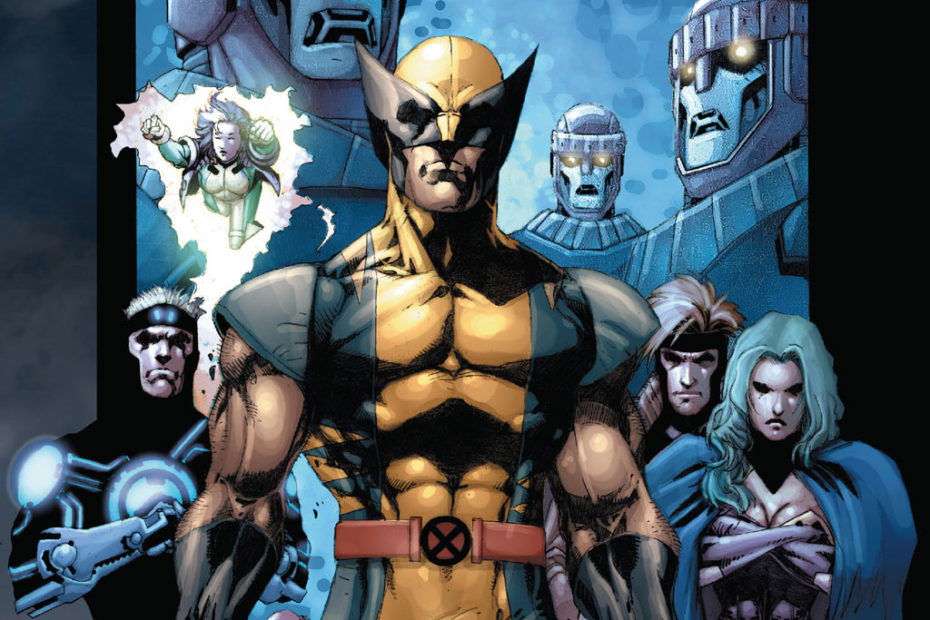
Starting this summer, Judgment Day is the latest Marvel Comics crossover event! Written by Kieron Gillen and with art by Valerio Schiti, A.X.E: Judgment Day will put the Avengers, X-Men, and Eternals in the heart of a deadly conflict.

Here is the official synopsis: The battle for the planet is here! The X-Men claim they’re Earth’s new gods. The Eternals know that position is already filled. And the Avengers are about to realize exactly how many secrets their so-called friends have been keeping from them!

Years of tension are about to lead to a volcanic eruption — and two worlds will burn! Who has leaked the X-Men’s secrets to their latest foes? Why is Tony Stark abducting an old friend? And who stands in judgment over the whole world?

What to read before A.X.E: Judgment Day?

Being an event coming from Kieron Gillen and Valerio Schiti, you certainly need to be up-to-date with their Eternals’ run:

But also with Kieron Gillen and Mark Brooks’ Immortal X-Men

  • Immortal X-Men
  • as well as other Destiny of X titles like X-Men (#11-12, X-Men – Hellfire Gala (2022) #1), X-Men Red. No Avengers reading really required.

Read More »A.X.E: Judgment Day Reading Order (Avengers/X-Men/Eternals)

Green Arrow Reading Order, DC Comics’ Archer

  • by

Green Arrow Reading Order

Created by Mort Weisinger and George Papp, Green Arrow made his first appearance in More Fun Comics #73 in November 1941. His real name is Oliver Queen and, with his sidekick Speedy, he fights crime in his home city of Star City – or Seattle at some point. He doesn’t have superpowers. Like Marvel’s Hawkeye, he is an extremely skilled archer, but he’s more like Bruce Wayne than Clint Barton, because Oliver Queen is a wealthy businessman and owner of Queen Consolidated.

He is one of the rare Golden Age heroes who survived the 1940s and 1950s without a lot of alterations and entered the Silver Age without much trouble and he even joined the Justice League. That said, he was seriously retooled at the end of the 1960s by Neal Adams and Dennis O’Neil. He then lost his money and became an advocate for the underprivileged with a lot of left-wing views to express. At that time too, his teammate Black Canary became a love interest and his friendship with Hal Jordan (Green Lantern) became iconic – also, that’s when it was revealed that Speedy was addicted to heroin! Strangely enough, Green Arrow had to wait until the 1980s to be the star of his own series. And then came the Crisis on Infinite Earths that led to a retcon.

In 1987, Green Arrow came back with a series for a mature audience. No more gadgets and Star City. Oliver Queen moved to Seattle where he was faced with a lot of violence. Written and illustrated by Mike Grell, this series was not fully integrated into the DC Universe. That changed when Grell stopped writing. Green Arrow quickly found a place alongside the other heroes, and also discovered a son!

Dead for a few years, Green Arrow was revived in 2001. He then picked up his bow to again fight crime in Star City. He faced horrors, got married, and a lot more as each crisis (and relaunch of the DC Universe) changed the course of his life. Also, The CW TV Adaptation led DC Comics to introduce new elements to the story (mainly the character of John Diggle).

As his past was revisited and his relationships with his sidekicks and Black Canary were explored, Green Arrow evolved through the years (more than 80 now!).

Read More »Green Arrow Reading Order, DC Comics’ Archer

Blade Reading Order, Marvel’s Vampire Hunter

Created by writer Marv Wolfman and artist Gene Colan in The Tomb of Dracula #10 (July 1973), Blade was at first a supporting character but quickly gained prominence.

Blade’s real name is Eric Cross Brooks. He is an Afro-American vampire hunter who used to sport 1970s-style Afro hair and wield teak-bladed knives. He really became a solid character during the 1990s, first in the team series Nightstalkers, then in his own ongoing series Blade the Vampire Hunter.

At first, he was presented as a human immune to vampire bites, but it was retroactively established that he was a “dhampir” (the son of a vampire and a mortal human) following his adaptation as such in Spider-Man: The Animated Series and the Blade film series. In the comics, he also became a “Daywalker” after being bitten by Morbius.

It took years to establish the definitive mythology of Blade in the comics because he never really got a long ongoing series, playing a supporting role between miniseries. That didn’t stop him from becoming a member of the Avengers.

Read More »Blade Reading Order, Marvel’s Vampire Hunter

Spawn Reading Order (and the Spawn Universe)

  • by

In 1992, after leaving Marvel, Todd McFarlane and other high-profile illustrators launched Image Comics – you know the story… It was a gamble, to say the least, but it paid big. This success didn’t take long to come as the first issues published were smashing hits. Spawn was no exception. In fact, it was the most consistent one because of McFarlane, and that stayed that way.

In fact, in 2020, Spawn reached issue #300, a rare feat for an independently published comic. Now, there’s even a Spawn Universe with new spin-offs to expand the world of Spawn like never before.

Here is the story: Murdered during a mission in Botswana by fellow mercenary Bruce Stinson (aka Chapel), Al Simmons was sent to Hell because of his life as an assassin. There, he made a deal with the being known as Malebolgia to become a Hellspawn in exchange for being allowed to see his wife Wanda Blake one last time. He is now back in town, but five years have passed, and, off-balance and disoriented, Simmons quickly realizes that he couldn’t pick up things where he left them. As Spawn, he becomes some kind of hero in order to find a new purpose in life.

Read More »Spawn Reading Order (and the Spawn Universe)

Suicide Squad Reading Order

  • by

The Suicide Squad as we know it today wasn’t always like that. First created by writer Robert Kanigher and artist Ross Andru in 1959 in the pages of The Brave and the Bold #25, the first incarnation of The Suicide Squad was a team of good guys with a scientific edge led by Rick Flag Jr. They faced monsters and nuclear bombs. It didn’t last long, and we will not talk about it more here.

The Suicide Squad, as we know it, was introduced by writer John Ostrander (with Len Wein) and artist John Byrne in the pages of the Legends miniseries in 1986, the first major DC Universe crossover after the events of Crisis on Infinite Earths. This governmental team, controlled by the morally ambiguous Amanda Waller, is really called Task Force X and is composed of supervillains like Blockbuster, Bronze Tiger, Captain Boomerang, Deadshot, and Enchantress. Rick Flag Jr. is still the leader. The team is sent on “suicide” missions—sometimes, not everybody comes back.

After Ostrander’s run ended in 1992, Suicide Squad saw multiple revivals. In 2001, Keith Giffen and Paco Medina reintroduced the team, and in 2011, as part of DC’s New 52, written by Adam Glass, Harley Quinn was introduced as a core member for the first time. Another relaunch came with DC Rebirth in 2016 by Rob Williams and Jim Lee, cementing Harley’s prominence alongside Deadshot. The Squad continues to appear across comics and media, with frequent roster changes and thematic ties to espionage and black ops missions. Amanda Waller stayed in control through the multiple incarnations of the team and has grown to become a central figure in the DC Universe.

Read More »Suicide Squad Reading Order

Avengers Reading Order (1963-2015)

DC Comics had the Justice League and, in 1963, Marvel was inspired by its success to respond with its own team of superheroes. And thus, The Avengers were created by Jack Kirby and Stan Lee in the pages of The Avengers #1 (September 1963).

The story begins with Loki seeking revenge against Thor. His actions led young Rick Jones to call for help. That’s how Ant-Man (Hank Pym), the Wasp, and Iron Man joined Thor and the Hulk in their fight against Loki. The story ended well for the good guys. So well in fact that Ant-Man suggested they form a team – it was the Wasp that came up with the name Avengers.

The rest is history. A long history in fact, with multiple incarnations of the team with the Hulk rapidly leaving the team (in issue #2) and being replaced by Captain America (in issue #4). Former villains, new heroes, honorary members… the roaster changed, but the fight went on against famous foes on Earth, in Space, and everywhere else!

Read More »Avengers Reading Order (1963-2015)

The Final Night Reading Order, 1996 DC crossover event

  • by

Published in 1996, The Final Night is a DC Comics crossover event written by Karl Kesel with art by Stuart Immonen. For a change, it was not about a Super-Villain fighting the Heroes, but about an extraterrestrial entity called the Sun-Eater that envelopes and extinguishes the Sun, causing Earth to freeze and wither into ecological collapse. It’s an End of the World scenario in which heroes, villains, and everybody else had to work together to surmount the impossible.

Here is the official synopsis: In The Final Night, the heroes and citizens of Earth face the impending end of the universe. When a cosmic force of nature known as the Sun-Eater extinguishes the Sun, Earth is thrust into its final night. Deprived of the massive star’s illumination and heat, the world experiences a catastrophe of epic proportions.

But even in a situation devoid of hope, the world’s greatest champions struggle on against the inevitable. Featuring many of the heroes of the DC Universe, including Superman, Batman, Wonder Woman, The Flash, Green Lantern, and Aquaman, this book graphically illustrates the true definition of a hero, as Hal Jordan, the former Green Lantern, makes the ultimate sacrifice to save the world.

What to Read Before The Final Night?

The Final Night is a self-contained event, but you may want to be familiar with the character of Parallax to have a better understanding of his decisions in this story. First, the famous Emerald Twilight storyline (Green Lantern Vol. 3 #48–50), collected in:

Second, the event “Zero Hour: Crisis in Time!” You can find our reading order here.

Read More »The Final Night Reading Order, 1996 DC crossover event

Carnage Reading Order

Created by writer David Michelinie and artist Mark Bagley in The Amazing Spider-Man #361 (published in 1992), Carnage is a supervillain, pure and simple. Being an offspring of Venom (see reading order to know more), Carnage is a Symbiote, an extraterrestrial organism who bonds with a host to which he gave superpowers.

In this case, even if it had multiple hosts through the years, Carnage is famously connected to its first, the sadistic serial killer Cletus Kasady. Everything began when, after Venom left behind him its offspring in a prison cell, the new symbiote connected with Eddie Brock’s cellmate, Kasady. Together, they left behind them chaos and deaths.

Envisioned as a darker version of Venom, Carnage is more violent, powerful, and – simply put – deadly. He became an adversary of Spider-Man of course, but also the archenemy of Venom. At times, Carnage was put at the center of multiple storylines, crossovers, and events, spreading fear throughout the Marvel Universe.

Read More »Carnage Reading Order

Venom Reading Order

A few decades before becoming the star of his own movie franchise, Venom was just a new, improved, and dark costume used by Spider-Man. Introduced in The Amazing Spider-Man #252 (May 1984), the black costume really became Venom in The Amazing Spider-Man #300 (May 1988) from David Michelinie and Todd McFarlane, the sentient alien symbiote with an amorphous, liquid-like form, that bonds with a host.

Venom became one of Spider-Man’s most prominent villains when he bonded with Eddie Brock, a disgraced journalist who, after having wrongly accused a man to be the serial killer known as the Sin-Eater (the truth was exposed by Spider-Man!), became suicidal. That’s when he came into contact with the symbiote. They bond together, and Venom is born.

First a villain, Venom evolved to become an antihero (before reverting to his old ways… for a time). Eddie Brock is not the only host for the symbiote. He bonded with Mac Gargan (Scorpion), Flash Thompson, and more. He spawned several “children” like Carnage, Scream, Lasher, Phage, and more. Recently, the mythology surrounding the Alien symbiotes became massive to the point of menacing the entirety of the Marvel Universe.

Read More »Venom Reading Order

Dark Crisis Reading Order, the Dark Crisis on Infinite Earths (DC Comics)

Dark Crisis Reading Order

Since the launch of the Infinite Frontier era, Joshua Williamson has been building up to his first major crossover event, Dark Crisis on Infinite Earths (originally named “Dark Crisis,” the event was officially retitled “Dark Crisis on Infinite Earths” after it launched).  Williamson teamed up with artist Daniel Sampere, colorist Alejandro Sánchez, and letterer Tom Napolitano for this crisis. As the official synopsis puts it:

Superman, Batman, Wonder Woman, and the rest of the Justice League are dead. The remaining heroes are left to protect the world from an onslaught of violent attacks by DC’s greatest villains! Leading the charge is a super-powered Slade Wilson … but this time there’s something dark fueling his rage.

Can the younger heroes, led by the 21st century Superman Jonathan Kent, step out of the shadows of the classic icons to form a new Justice League? And will that be enough to stop a darkness greater than anything they’ve ever faced from destroying everything? The world burns as Pariah and the Great Darkness make their play for planet Earth!

Dark Crisis on Infinite Earths is an event built on older stories, as DC Comics explains it:

“In the original Crisis on Infinite Earths by Marv Wolfman and George Pérez, the homeworld of Pariah, along with the infinite Multiverse, was obliterated. Now, this mad sole survivor has found a way to bring his homeworld and the entire infinite Multiverse back from the dead: Earth-0 must die. An ancient destructive force called the Great Darkness, first appearing in Swamp Thing by Alan Moore and Stan Woch, is the weapon Pariah will wield as he paves a path to rebirth and vengeance.”

Dark Crisis on Infinite Earths marked the end of another short era in the DC Universe, but it also introduced a new roadmap to follow for the year to come. Before diving into the event, you may want to do some reading. Here is our reading guide.

Read More »Dark Crisis Reading Order, the Dark Crisis on Infinite Earths (DC Comics)