Skip to content

Fabien

Marvel Runaways Reading Order

  • by

First published by Marvel Comics in July 2003, The Runaways is a comic book series created by writer Brian K. Vaughan (Saga) and artist Adrian Alphona. It launched as part of Marvel’s “Tsunami” imprint, an initiative designed to attract readers who were fans of manga and other youth-oriented genres. Although the Tsunami line was discontinued after a brief period and despite modest initial single-issue sales, The Runaways found new readers with the help of the trade paperback collections, which led Marvel to revive the title in 2005 after an initial cancellation.

This starts as the story of six teenagers from Los Angeles: Nico Minoru, Chase Stein, Karolina Dean, Gertrude Yorkes, Molly Hayes, and Alex Wilder. They have little in common beyond the annual gatherings of their wealthy parents. When they accidentally discover that their parents are part of a secret criminal cabal known as the Pride, an organization that has covertly controlled much of the city’s underworld, their lives are upended. Shocked by the revelation, the teens band together and flee from their homes, determined to put an end to their parents’ criminal activities while struggling to survive on their own.

Over time, the group members each develop distinct roles and abilities that aid them in their fight against the Pride and other adversaries. Nico Minoru wields a powerful magical artifact called the Staff of One; Chase Stein utilizes advanced technology stolen from his parents; Karolina Dean learns she is an alien with the ability to manipulate solar energy; Gertrude Yorkes bonds telepathically with a genetically engineered dinosaur; Molly Hayes manifests superhuman strength and invulnerability; and Alex Wilder emerges as a strategic leader, though his loyalty becomes a pivotal point in the early narrative.

Following Vaughan and Alphona’s departure after 30 additional issues, The Runaways was continued by other creative teams, including notable writers such as Joss Whedon and Terry Moore. The Runaways inspired a 3-season (2017-19) live-action adaptation for the streaming service Hulu.

Read More »Marvel Runaways Reading Order

Etrigan The Demon Reading Order

  • by

Created by Jack Kirby for DC Comics, Etrigan the Demon made his debut in 1972. The character was first teased in the last issue of The Forever People (issue #10), announcing the launch of the new series simply titled “The Demon.”

Inspired by a character from Hal Foster’s Prince Valiant comics, Etrigan is a demon from Hell whom Merlin originally summoned to help him seek and protect the Eternity Book. The Wizard bound him to Jason Blood, one of his loyal knights. This fusion condemned Jason to immortality and a constant inner struggle with the demonic entity he now shared a body with. Blood worked with Harry Matthews, Glenda Mark, and Randy Singh to face powerful foes, including Morgaine Le Fey and her followers.

Jack Kirby only wrote and drew the original 16-issue series, but The Demon came back a few years later, in 1977, first in his second team-up with Batman in Brave and the Bold #137 ( the first one was in B&B #109 by Bob Haney and Jim Aparo, the only Demon story not by Kirby at the time, in 1973). After all, Jason Blood was based in Gotham City, so he had to meet the Caped Crusader from time to time. DC Comics continued to bring Etrigan back in Batman Family, Detective Comics, Wonder Woman, and DC Comics Presents, before appearing notably in The Saga of Swamp Thing.

That’s when a change appeared in The Demon’s characterization. In SOTST #26 (1984) by Alan Moore, Stephen R. Bissette, and John Totleben, Etrigan started to speak exclusively in rhyming verse, which quickly became a defining trait of the character. Other renowned writers and cartoonists continued to bring The Demon back after that, like Matt Wagner, Jim Starlin and Mike Mignola, John Byrne, and more. The character was recurring inside the DC Universe with his story being developed from one book to the other, but he never became a major one. Still, he is a memorable and captivating figure.

Read More »Etrigan The Demon Reading Order

X-Men: From The Ashes Reading Order (Part. 8)

  • by

Welcome back to the world of the X-Men with part 8 of our ultimate reading guide. Once the “Krakoan Age” came to an end, Marvel Comics launched a new era called “From The Ashes.” A complete relaunch of the X-Line of comics starting summer 2024.

This was teased in X-Men (vol. 6) #35 (legacy Uncanny X-Men #700), announcing a return to something similar to the old status quo with mutants rejoining the rest of the world and facing hatred and fear. 

The new era of X-Men kicks off with three flagship titles. First, in X-Men (vol. 7) by Jed MacKay and Ryan Stegman, Cyclops, Beast, Magneto, Psylocke, Kid Omega, Temper (formerly Oya), Magik, and Juggernaut come together to face emerging threats, fighting not just for survival, but for the future and guiding philosophy of mutantkind. Then, in Uncanny X-Men (vol. 6) by Gail Simone and David Marquez, outlaws once more, Rogue, Gambit, Nightcrawler, Jubilee, and Wolverine are now based in the heart of the Big Easy, and they continue to defend a world that fears and hates them. Then, in Exceptional X-Men by Eve L. Ewing and Carmen Carnero, Kate Pryde returned to her hometown of Chicago in the aftermath of the war with Orchis, hoping to leave the world of mutant affairs behind. But when she encounters three young mutants—Bronze, Axo, and Melee—in desperate need of training and guidance, she finds herself reluctantly drawn back in. And to make matters more complicated, Emma Frost wholeheartedly agrees.

Those X-Men comic book series are soon joined by NYX (vol. 2), Phoenix, Storm (vol. 5), Wolverine (vol. 8), X-Factor (vol. 5), X-Force (vol. 7), and some limited series and, soon, the first crossovers. 

Read More »X-Men: From The Ashes Reading Order (Part. 8)

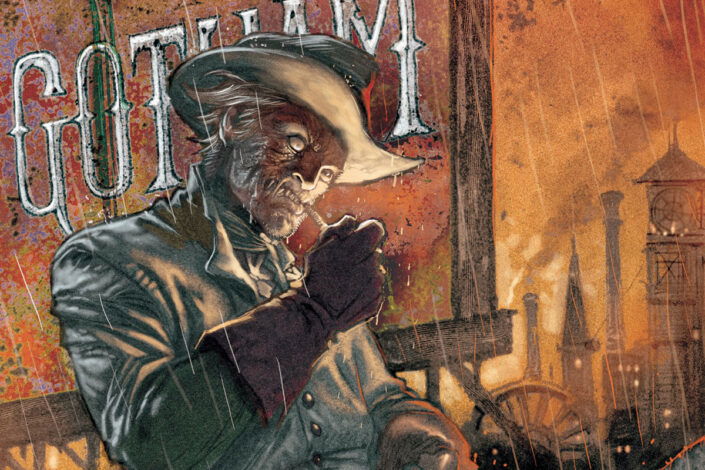
Clayface Explained: The Many Faces of Batman’s muddiest Rogue

It may not be surprising that a character made of clay has been reshaped multiple times. In the world of DC Comics (and superhero comics in general), legacy characters are now pretty common, but few have passed the baton–or the moniker–as much as Clayface. Known for being one of Batman’s Rogues Gallery members, this adversary is undoubtedly not a simple villain but “multiple.”

From actor Basil Karlo to firefighter Johnny Williams, the Clayface name is rooted in horror and tragedy, with each version bringing something different and reshaping the character’s relationship with the Caped Crusader.

Read More »Clayface Explained: The Many Faces of Batman’s muddiest Rogue

Norman Osborn: The Evolution of Spider-Man’s Nemesis, from Green Goblin to Reformed Man

In the world of superhero comics, so many villains are just coming back, barely evolving as the decades pass. Still, some took on prominent roles and were forced to grow with the times as their continuing existence became so tightly connected to one of the superheroes that they couldn’t stop fighting. They may not be legion, but Norman Osborn is certainly one of them.

As one of Marvel Comics’ most complex and enduring antagonists, he is known primarily as the original Green Goblin. A personal nemesis to Spider-Man, Osborn’s career of villainy has led to some of the most impactful moments in Peter Parker’s life, but also in the Marvel Universe as a whole. 

Read More »Norman Osborn: The Evolution of Spider-Man’s Nemesis, from Green Goblin to Reformed Man

Teenage Mutant Ninja Turtles IDW Reading Order

Originally published by Mirage Studios in 1984, Teenage Mutant Ninja Turtles was a black-and-white, self-published comic created by Kevin Eastman and Peter Laird that quickly gained traction, helping to ignite the independent comics boom of the 1980s.

Unlike many of its contemporaries, which faded into obscurity, TMNT evolved into a long-lasting franchise. The original comics follow four mutated turtles—Leonardo, Raphael, Donatello, and Michelangelo—who are trained in ninjutsu by their rat sensei, Splinter. Living in the sewers of New York City, they battle crime, alien threats, and supernatural forces, expanding their adventures across multiple dimensions in comics, television, and film.

While the original Mirage series ended in 1995, TMNT publications continued in various forms. The property moved to Image Comics in 1996, returned to Mirage in the early 2000s, and was later acquired by Nickelodeon in 2009. Since 2011, IDW Publishing (Transformers, G.I. Joe) has produced an ongoing Teenage Mutant Ninja Turtles comic series, spearheaded by TMNT co-creator Kevin Eastman, writer Tom Waltz, and artist Dan Duncan. This iteration introduced a revised origin story and an expanded mythology, ensuring that the heroes in a half shell continue their legacy in fresh and ambitious ways.

After 150 issues, IDW decided to relaunch the main Teenage Mutant Ninja Turtles comic series and announced Volume 2 now written by Jason Aaron. A new era of the Turtles began.

Read More »Teenage Mutant Ninja Turtles IDW Reading Order

Flash Thompson Agent Venom Reading Order Guide

So few characters really change in the comic book world, but there are exceptions like Eugene “Flash” Thompson. Created by Stan Lee and Steve Ditko, he first appeared in Amazing Fantasy #15 (1962), the same comic that introduced Spider-Man. A high school jock, Flash was one of Peter Parker’s biggest tormentors, constantly mocking him for his bookish nature, but also Spider-Man’s number one fan, never suspecting that the hero he idolized was the same teenager he bullied daily. From that, he would go on to become one of Spider-Man’s most unlikely allies, a war hero, and even the host of the Venom symbiote!

Flash Thompson: The Early Years

Flash was never a villain, his story is not one of redemption, but one of growth as a human being. Despite his antagonistic behavior, Flash had moments of kindness, and over time, he began to mature and became a more noble human being. His admiration for Spider-Man always indicated his sense of justice. After high school, Flash enlisted in the military to serve in the Vietnam War and returned later, eventually becoming Peter’s roommate. At that point, their relationship had already evolved into a more cordial territory, and they developed a true friendship.

Read More »Flash Thompson Agent Venom Reading Order Guide

The Phantom Zone Explained: The Evolution of the Kryptonian Prison

Before Marvel Comics introduced its Negative Zone, DC Comics had presented to its readers a different type of zone, one connected to Superman‘s world, The Phantom Zone. Created by Robert Bernstein and George Papp, this prison parallel dimension first appeared in Adventure Comics #283 in 1961. Back then, Superboy found a stash of Kryptonian weapons that included the Phantom Zone Projector. Since then, the subject has been developed by multiple authors and retconned by others.

The Pre-Crisis Origins of the Phantom Zone

As explained in Superboy #104 by Edmond Hamilton and Papp, the Phantom Zone was created by Kryptonian scientist Jor-El. He introduced it as a humane alternative to replace the “orbit exile system.” Following that, Krypton’s legal system sentenced the criminals to an intangible, timeless exile in a pocket dimension. Within the Phantom Zone, prisoners exist as spectral entities, unable to interact with the physical world but still conscious and aware—essentially, ghosts stuck in eternal imprisonment without the ability to age or die.

With the Phantom Zone Projector saved from destruction, those Kryptonian prisoners survived the explosion of their planet and found their way to Earth. The evil Jax-Ur was the first to escape and torment Superboy, but not the last. The Zone quickly became a recurring plot device in Superman used for decades.

Read More »The Phantom Zone Explained: The Evolution of the Kryptonian Prison

Marvel Knights Comics, The Imprint That Rescued Marvel with Daredevil, Punisher, and more!

In 1998, Marvel Comics was not in the best of shape but was starting to look better. Even if the Heroes Reborn publishing initiative had not been the expected success, as it was an expensive affair, the idea of contracting exterior talents to package comics for the company was still explored. This time, though, Marvel president Joe Calamari wanted to do it at a reasonable cost. He consulted Gareb Shamus (Wizard magazine publisher), who recommended his two friends, Joe Quesada and Jimmy Palmiotti.

At the time, the two men were the founders of the independent comic book publisher Event Comics (Ash, Painkiller Jane…) and took the contract as a way to make money for their company and try to promote their books by association with the popular Marvel Comics characters. Unlike what Image Comics had to do with Heroes Reborn, their deal was not to relaunch some of the biggest comics of the company but to take over some of the weakest and try to save them. And that’s how Marvel Knights came to be.

Read More »Marvel Knights Comics, The Imprint That Rescued Marvel with Daredevil, Punisher, and more!

Elvira, Mistress of the Dark Comic Book’s History, From DC to Dynamite

Amateurs of horror are certainly familiar with Elvira, Mistress of the Dark. Played by Cassandra Peterson, Elvira is a campy horror-themed TV hostess with a razor-sharp wit and an iconic gothic sense of style–her plunging black dress and beehive hairdo are immediately identifiable. She rose to fame in the early 1980s as the Movie Macabre star, a show featuring her clever, satirical, and innuendo-filled commentary on low-budget horror films. 

Her popularity led her to host another type of horror show, as she became one of the caretakers of DC’s House of Mystery, the horror anthology comic book. Since then, her adventures in comics have taken a different path, as she became the protagonist of a long-running series—not just the hostess—before coming back in a pop-culture-heavy series that Dynamite regularly publishes. So today, we are taking a look at Elvira’s comics history.

Read More »Elvira, Mistress of the Dark Comic Book’s History, From DC to Dynamite