Skip to content

Fabien

Co-founder of Comic Book Treasury, your Hellboy Specialist and the man behind the Batman Modern Age and the Amazing Spider-Man Guides.
55 Must Read Biographical Comics

There have been non-fiction comics for a long time. In fact, that’s what one of the appeals of True Comics (1941-1950) was, which provided educational material in a form that appealed to children while trying to help legitimize the medium maligned by criticism of superhero books. They were fairly simplified biographies of scientists, inventors, and other figures of history. It was also less impactful than Crime Does Not Pay (1942-1955), the first “true crime” comic book series, which propelled the crime comics to the top with its sensationalistic appeal.

We are not talking about “true crime” today (it will be the subject of another list), but biographical comics. Not just works of documentary value, but also autobiographies, personal memoirs, from the groundbreaking series American Splendor (1976–2008), that changed the idea of what stories comic books could tell, to the artists of the 2000s (James Kochalka, Kate Beaton, Julia Wertz, etc.) who developed their craft online by chronicling the story of their lives, and beyond.

Today, biographical comics are a widely respected genre. They range from meticulously researched historical biographies to intimate diaries and experimental visual essays. They are studied in classrooms, exhibited in museums, and celebrated with major literary awards. This once niche corner of comics has become one of its richest and most innovative traditions.

Read More »55 Must Read Biographical Comics

DCAU Comics Reading Order: The Extended DC Animated Universe

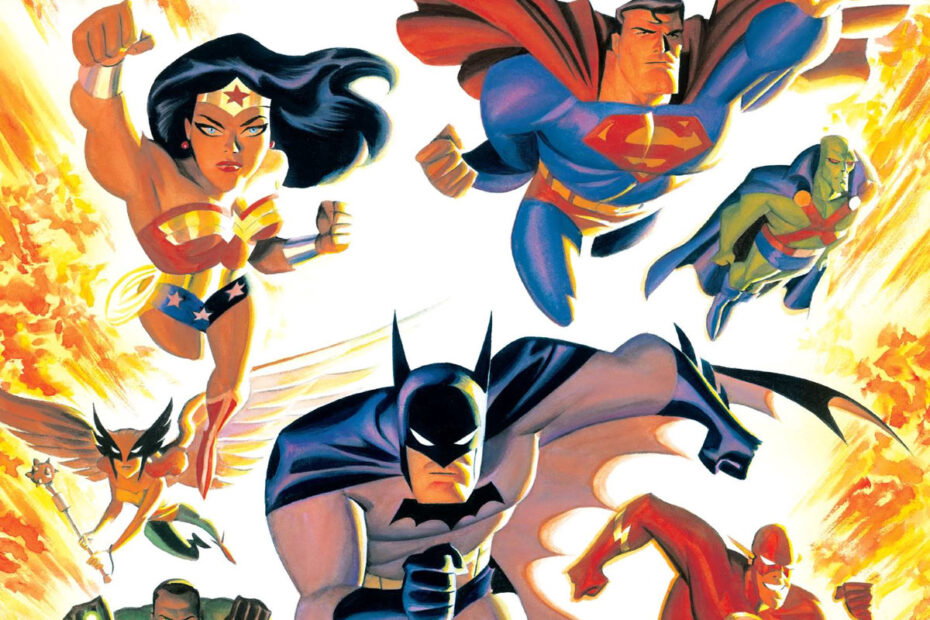
With the launch of the Batman: The Animated Series, a new and popular version of the DC Comics universe found its way to a new generation of fans. While not connected to the main line of comics, it borrowed a lot, adapted many comics into episodes, and also created new stories and characters that would eventually be later introduced in the canonical timeline of the post-Crisis DC Comics Universe.

With its easily recognizable art style and its own developing universe, Batman: TAS opened the way for what we know call the DC Animated Universe. Guided by producers Bruce Timm, Paul Dini, Alan Burnett, and others, it’s whole universe of animated shows that was created with Superman: The Animated Series (1996–2000), Batman Beyond (1999–2001), and Justice League (2001–2004) along with its follow-up Justice League Unlimited (2004–2006), but also a new line of comics was launched.

Although primarily aimed at younger readers, the comics were noted for their storytelling quality, which appealed to a broader audience. It often introduced original characters, bridged episode narratives, and explored side stories within the DCAU continuity. Serving both as accessible entry points for new readers and as canonical expansions of the animated franchise, the comics were typically written and illustrated by creators closely associated with the animated productions, including Kelley Puckett, Ty Templeton, and Rick Burchett, ensuring fidelity to the shows’ tone, characterizations, and art style.

Over time, the DCAU comics evolved into a cohesive publishing universe in their own right. The universe has been revisited through miniseries, specials, and digital-first projects well into the 2020s, establishing it as one of DC Comics’ most enduring multimedia spin-offs.

Read More »DCAU Comics Reading Order: The Extended DC Animated Universe

Big Barda Reading Order, The Fiercest of DC Comics Furies

  • by

With a name like that, it’s no surprise that Big Barda is no ordinary warrior among the DC Comics superheroes. She’s one of the New Gods. Created by writer and artist Jack Kirby, Barda made her first appearance in Mister Miracle #4 (1971), as part of Kirby’s “Fourth World” saga.

A warrior raised on the planet Apokolips, Big Barda was trained to lead the Female Furies, an elite fighting force in the service of the tyrant Darkseid. After aiding Scott Free, also known as Mister Miracle, to escape from their world, she accompanied him to Earth, where the two built a life together outside of Darkseid’s control. Their marriage became one of the most enduring partnerships in the DC Comics universe.

Depicted as physically imposing (way more than her husband) and exceptionally skilled in combat, Barda quickly distinguished herself as one of the most powerful female characters in the DC Universe. On Earth, she has been a member of the Justice League and also joined the Birds of Prey. 

Read More »Big Barda Reading Order, The Fiercest of DC Comics Furies

Blade Runner Comics Reading Order (Titan Comics)

  • by

In 1982, Blade Runner, directed by Ridley Scott, premiered in movie theaters and didn’t become a hit. However, it became a Marvel Comics title as it was adapted into a two-issue miniseries by Archie Goodwin, Al Williamson, and Carlos Garzon. With the film becoming a cult classic, those comics are not the last to be associated with the franchise.

Based on the 1968 novel “Do Androids Dream of Electric Sheep?” by Philip K. Dick, Blade Runner follows Rick Deckard of the Los Angeles Police Department’s Replicant Detection Unit. In Scott’s neo-noir science fiction film, it’s 2019, and Deckard is charged to hunt down a group of replicants, biorobotic androids virtually identical to adult humans, that have escaped an off-world colony and now hide on Earth. 

The cyberpunk franchise had extended to other media with novels, video games, and comics, even before the 2017 movie Blade Runner 2049, directed by Denis Villeneuve, which brought back Harrison Ford as Deckard on the big screen. This sequel set the stage for the subsequent comics series published by Titan Comics and Alcon Publishing, a collection of maxiseries focusing on LAPD’s best Blade Runner and detective, Aahna ‘Ash’ Ashina, but also a few more spin-off miniseries.

Read More »Blade Runner Comics Reading Order (Titan Comics)

36 Lovecraftian Horror Comics and Graphic Novels

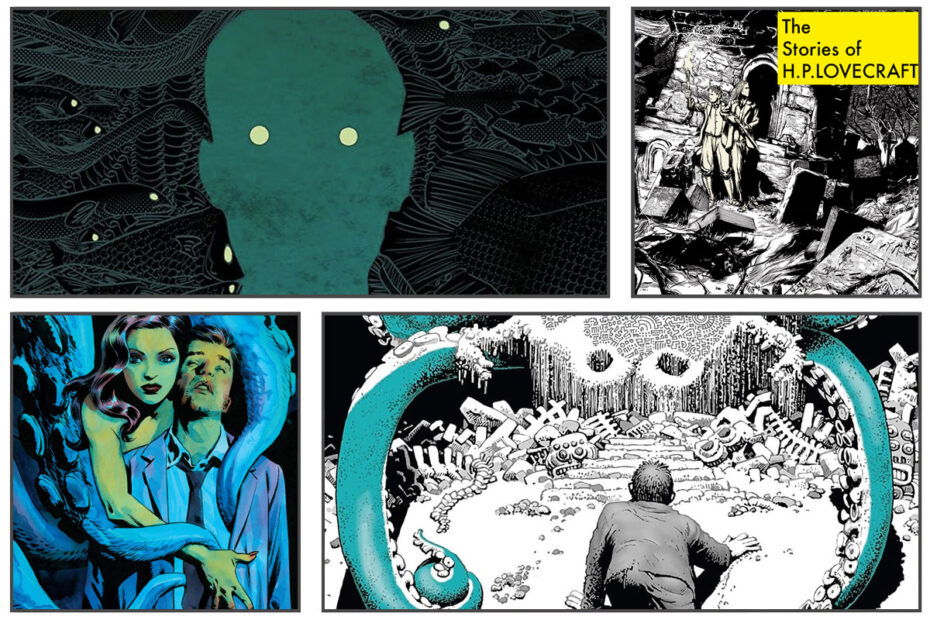
Next to Edgar Allan Poe, H.P. Lovecraft (1890-1937) is one of the most influential American writers in the horror genre. Though largely unrecognized in his lifetime, his work in the genre of weird fiction went on to shape generations of horror writers and artists. His stories are built around themes of cosmic dread, forbidden knowledge, and humanity’s insignificance in an uncaring universe, and often center on incomprehensible alien entities, ancient gods, and the fragility of sanity.

This type of tale has come to be known as Lovecraftian horror, also referred to as “cosmic horror.” It emphasizes atmosphere and existential terror over gore or jump scares. The horror lies not in what is seen, but in what cannot be fully understood. Over time, this distinctive approach to fear has taken root in a wide range of media, including comics, where artists and writers have found rich material in Lovecraft’s mythos and mood.

There are two types of Lovecraftian comics. We have the direct adaptations of H.P. Lovecraft’s original works, and the comic books full of cosmic horrors inspired by the master of the genre.

Today, we invite you to explore the shadowy, unsettling world of Lovecraftian horror through our selection of comics. From quiet tales of creeping madness to confrontations with ancient, godlike beings, these works capture the essence of a genre where fear comes not from what is known, but from what can never be fully understood.

Read More »36 Lovecraftian Horror Comics and Graphic Novels

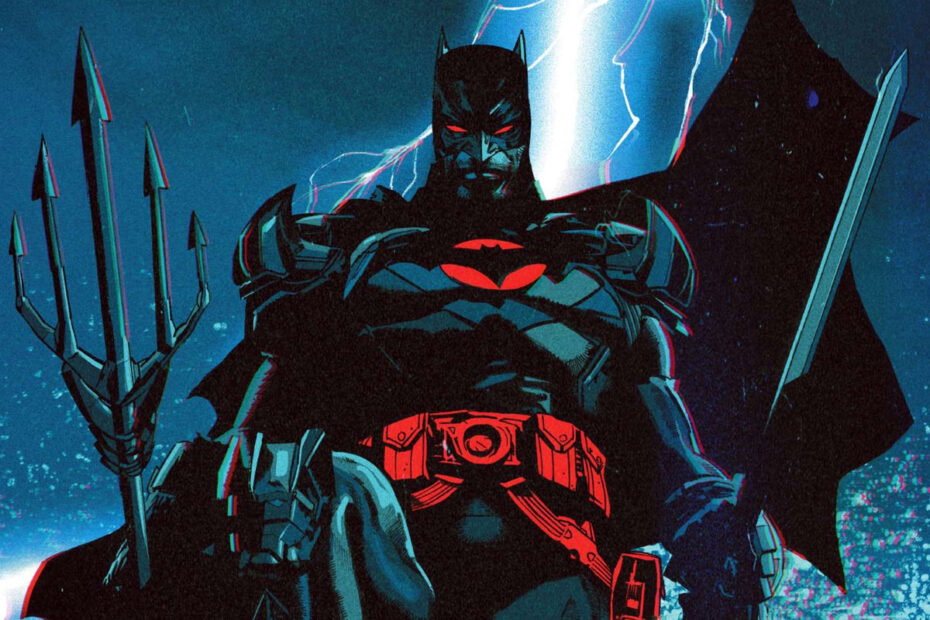
Thomas Wayne Reading Order (The Flashpoint Batman)

  • by

Today is Batman Day! Everybody knows the origin story of Batman. Thomas and Martha Wayne went out with their son Bruce for a family outing in town. In the infamous Crime Alley, they are murdered in a street mugging gone wrong. Only one of them survives and ultimately becomes Batman.

In the 2011 reality-shattering crossover event Flashpoint, written by Geoff Johns and pencilled by Andy Kubert, the one who survives is not young Bruce, but his father, the renowned Gotham City surgeon and philanthropist Thomas Wayne. 

Flashpoint begins when Barry Allen, the Flash, wakes up in an altered timeline where the world is on the brink of collapse. Wonder Woman and Aquaman are at war, Superman is missing, and the Justice League was never formed. At the heart of this reality is a changed Gotham City, where crime is rampant and hope is scarce. This is not the world Barry knows, and at its center is a very different Batman.

Read More »Thomas Wayne Reading Order (The Flashpoint Batman)

Groot Reading Order

  • by

A well-known member of the Guardians of the Galaxy, Groot didn’t start out as a hero, but as a villainous alien intent on capturing humans for experimentation. He first appeared in Tales to Astonish #13 (November 1960), created by writer Stan Lee, artist Jack Kirby and scripter Larry Lieber. Of course, this is not the Groot we know today.

In 2006, he was reimagined as a heroic character in Annihilation: Conquest – Star-Lord #1 (2007), written by Keith Giffen. Hailing from the planet X, a world characterised by sentient plant life, Groot belongs to the Flora Colossus species. Distinguished by his arboreal physiology and limited verbal expression, he primarily communicates through tone, inflection, and context, which is understood by those familiar with him, such as his friend Rocket Raccoon. Despite his linguistic limitations, Groot exhibits considerable emotional depth and intelligence, as well as formidable strength and regenerative capabilities. He often serves as both protector and moral anchor within his narrative contexts.

Throughout his cosmic adventures, Groot has demonstrated several unique abilities, including regenerative healing, size manipulation, limited photokinesis, and the power to grow and control plant matter. He has died and regenerated multiple times, with each incarnation sometimes being treated as a rebirth or a new version of the character. The cinematic version, voiced by Vin Diesel, introduced in 2014 in the Guardians of the Galaxy movie directed by James Gunn, made that element quite popular with “Baby Groot” and later “Teen Groot.”

In solo or with his friends, Groot certainly went through epic adventures in space during the last two decades. So, let’s follow the guide!

Read More »Groot Reading Order

Justice League Dark Reading Order, Your Guide to DC Comics’ supernatural team

  • by

Published by DC Comics, Justice League Dark was created by writer Peter Milligan and artist Mikel Janín and first debuted in September 2011, as part of DC’s The New 52 publishing initiative.

Conceived as the supernatural equivalent of the traditional Justice League, the series focuses on characters within the occult and mystical realms of the DC Universe who confront threats beyond the scope of conventional superhero teams.

As a team, the Justice League Dark is composed of a rotating cast of magical and paranormal figures who are called upon to combat arcane and metaphysical dangers, the type of crisis that the main Justice League is neither equipped nor qualified to handle. The original lineup included John Constantine, Zatanna Zatara, Madame Xanadu, Deadman, and Shade, the Changing Man.

Read More »Justice League Dark Reading Order, Your Guide to DC Comics’ supernatural team

Batman The Court of Owls Reading Order

  • by

Created by Scott Snyder and Greg Capullo, The Court of Owls first appeared in Batman (vol. 2) #2 in 2011, at the start of the New 52 era. Previously, the Owls were not part of the DC Universe, but Snyder provided hints about the organisation in his earlier Batman work, Batman: Gates of Gotham.

The shadowy Court of Owls is an organised crime group and secret society made up of wealthy Gothamites. It has existed in Gotham City since colonial times. For a very long time, the Court was just an urban legend, until Batman discovered one of their secret base of operations. There, he found a series of old photographs of the Court’s members with one of their assassins, the Talon (William Cobb), an undead, reanimated killer. The Court kidnaps child circus performers to train and transform them into assassins known as Talons.

The Court of Owls is composed of some of Gotham City’s oldest and wealthiest families. It has controlled Gotham City for centuries, wielding political influence throughout history through murder and money. They revealed themselves to Batman when they decided to send their killer after Bruce Wayne, who had announced plans to rebuild and reshape Gotham City for the future.

Read More »Batman The Court of Owls Reading Order

Age of Apocalypse Reading Order, an X-Men crossover event

  • by

The 1995 crossover storyline Age of Apocalypse was one of the most ambitious crossover events in X-Men history. Much like The Clone Saga in the Spider-Man titles, this story became an era-defining milestone within the broader Marvel Universe.

Unlike traditional crossover events, which build upon existing continuity, the Age of Apocalypse storyline temporarily replaced the main X-Men titles with entirely new series set in an alternate universe. These included X-Calibre, Gambit and the X-Ternals, Generation Next, Astonishing X-Men, Amazing X-Men, Weapon X, Factor X, X-Man and X-Universe. Each of these limited series explored different aspects of a dystopian timeline dominated by the ancient mutant Apocalypse, offering radically altered reimaginings of familiar characters and dynamics.

The story kicks off when Legion (David Haller), the mentally unstable son of Professor Charles Xavier, travels back in time intending to assassinate Magneto in the hope of preventing the ideological conflict that would later erupt between Magneto and Xavier. However, Legion’s mission ends in tragedy when he inadvertently kills Xavier instead. This assassination fractures the timeline, giving rise to an alternate reality in which Apocalypse begins his conquest of Earth a decade earlier than in the original continuity.

Read More »Age of Apocalypse Reading Order, an X-Men crossover event