Skip to content

Carole

Co-founder and owner of Comic Book Treasury. The woman behind the Batfamily Guide (and the many Robins Guides), the Fables Universe and some of your favorite Spider-People among others!

Tokyo Ghoul Manga Order

Tokyo Ghoul Manga Order

Although our site is mainly dedicated to American comics, we also occasionally write about European comic books. Now, we are expanding our horizons with our first manga order, thanks to Tokyo Ghoul!

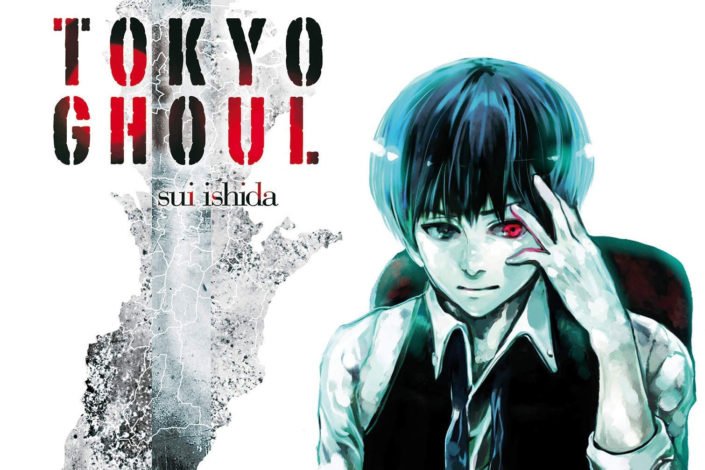
Created by Sui Ishida, Tokyo Ghoul is a dark fantasy manga series set in a world where ghouls live alongside humans. These cannibalistic humanoids can only eat human flesh and that of other ghouls. As such, they regularly attack humans in order to feed. The government tries to keep the situation under control with a special entity called the CCG and its investigators, who specialise in exterminating ghouls.

Ken Kaneki was an ordinary college student with a passion for literature until a violent encounter turned him into the first human-ghoul hybrid. Trapped between two worlds, he must survive ghoul turf wars, learn more about ghoul society, and master his new powers.

Read More »Tokyo Ghoul Manga Order

Stephanie Brown Reading Order (Spoiler, Robin, Batgirl)

  • by

Stephanie Brown Reading Order (Spoiler, Robin IV, Batgirl III)

Created in 1992 by Chuck Dixon and Tom Lyle as a plot device in Detective Comics #647-649, Stephanie Brown is a DC Comics superheroine considered part of the Batfamily. She is first introduced as the vigilante Spoiler, had a brief stint as Robin, and has also taken the mantle of Batgirl.

Before the New 52 reboot, Stephanie Brown had a difficult life, one that had some similarities with Jason Todd’s. Her mother was a drug addict and her father was the third-rate villain known as Cluemaster. It was in order to stop him that Stephanie Brown became the vigilante named Spoiler (as she was trying to ‘spoil’ things for her abusive father), starting out with little training, relying on her determination and natural agility. She lived in poverty and didn’t have a great track record when it comes to her love life.

Initially seen as an amateur, Spoiler’s tenacity caught the attention of Tim Drake/Robin II, with whom she developed a romantic relationship–though she didn’t know his real name for a long time. Stephanie’s relationship with Batman was a difficult one, a sort of reflection of the way some people at DC Comics seemed to perceive her–leading us to some mistreatment of her character.

During the DC New 52 era, Stephanie Brown’s story was rewritten, her past and her relationship with Batman were way less harsh and complicated than it has been before. In the subsequent reboots of the DC line of comics, she remained part of the Bat Family, sometimes questioning Batman’s methods but ultimately establishing herself as a valuable ally.

Right now, Stephanie Brown is protecting Gotham City as one of the Batgirls, alongside Cassandra Cain, while being guided by Oracle/Barbara Gordon.

The following is Stephanie Brown’s reading order to discover all her adventures.

Read More »Stephanie Brown Reading Order (Spoiler, Robin, Batgirl)

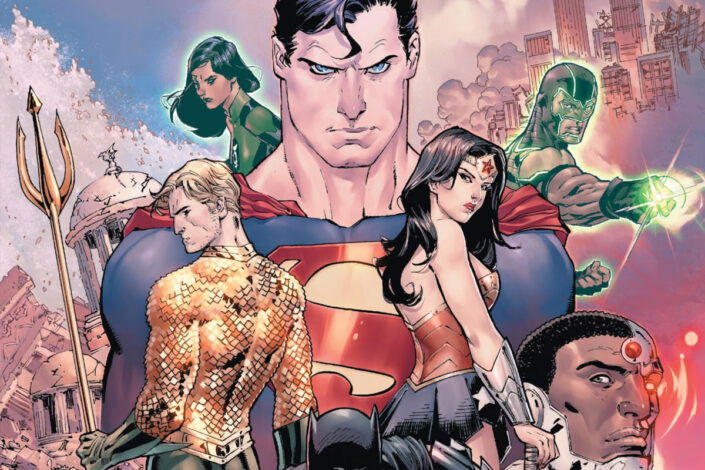
Justice League Rebirth Reading Order (with Justice League of America, Justice League Odyssey and Justice League Dark)

  • by

Following the ending of The New 52 era, DC Comics relaunched its entire line in 2016 under the Rebirth banner. For this occasion, the company restored the timeline to a form much closer to what it was before the famous Flashpoint storyline while still maintaining several elements of the New 52.

What does it mean for the Justice League? The most famous DC superteam still continues saving the world! No continuity changes were introduced at the beginning, but the team’s roster changed with the two Green Lanterns Simon Baz and Jessica Cruz joining the League (taking the place of Hal Jordan).

Here is the official synopsis: Superman. Batman. Wonder Woman. The Flash. Cyborg. Green Lantern. They’re more than just a team of superheroes. They’re the Justice League…and they’re about to enter a whole new era! The Superman these incredible heroes once knew is dead, leaving an older, wiser Man of Steel from a vanished universe to take up the fight against evil. Hal Jordan, the greatest of the Green Lanterns, has taken to the stars, entrusting his place in the League to his powerful but untested young protégés, Jessica Cruz and Simon Baz. Now the Justice League must get used to these new faces and learn to work as a team once more. But they’d better do it fast. They’re about to confront the biggest threats they’ve ever faced, from godlike machines capable of converting all life on Earth into a weapon, to a humble hacker who’s ready to hit them where it hurts most…

What to Read Before The Justice League Rebirth Comics?

As a new era is launched, it’s fairly safe to simply jump right in with the one-shot DC Universe Rebirth #1 serving as an introduction. But if you want a little more context, here are the comics you may be interested to read before:


As the Justice League has been active since the 1960s, you can obviously explore the team’s past.

Read More »Justice League Rebirth Reading Order (with Justice League of America, Justice League Odyssey and Justice League Dark)

Batman: War Games Reading Order

  • by

Batman War Games Reading Order

Published in 2004-2006, the Batman: War Games Saga is a Batman crossover event that spanned every Batman Family title being published at the time. Part of the Batman Modern Age (check out our reading order), the story was written by Devin Grayson, Andersen Gabrych, A.J. Lieberman, Bill Willingham, Dylan Horrocks and Ed Brubaker, with illustrations by Ramon Bachs, Pete Woods, Brad Walker, Mike Lilly, Al Barrionuevo, Giuseppe Camuncoli, Sean Phillips, Paul Gulacy and Kinsun Loh. 

Taking place after No Man’s Land and Bruce Wayne: Murderer, Batman: War Games tried to be a sort of mix of those two stories, with stakes on a street level as it is an all-gang war, but still on a big full scale like No Man’s Land. It’s also an event happening when Tim Drake had given up on his Robin role and Stephanie Brown had taken his place — and for her fans, this story is simply her character assassination.

But what is really Batman: War Games about? Tensions escalate and war comes to Gotham City when Batman is drawn into a skirmish between rival gangs. As Gotham’s biggest gang battle ignites, Batman must call on all his available allies—Oracle, Batgirl, Nightwing, Orpheus, Onyx, and Tarantula—to preserve life and contain the chaos while trying to determine who started this outbreak of violence.

Read More »Batman: War Games Reading Order

Dick Grayson as Robin Reading Order (Pre-Crisis)

  • by

Dick Grayson Robin Reading Order (Pre-Crisis era)

Despite the fact that Batman has a reputation as a solo vigilante, Batman’s readers know the truth is quite different. Just under a year after Batman’s first adventure, Dick Grayson, the first Robin debuted in Detective Comics #38 (April 1940). Created by writer Bill Finger, artist Bob Kane and illustrator Jerry Robinson (who also came up with the character’s name inspired by Robin Hood), Dick was designed to appeal to younger readers. It was a success, as sales doubled and critics were overwhelmingly positives.

Dick Grayson was the son of John and Mary Grayson and part of the “Flying Graysons”, a family of trapeze artists working at Haly’s Circus and famous for always working without a net. As tragedy is never far away, Dick’s parents are killed following the sabotage of their trapeze by Tony Zucco, a mafia leader. Present that day at the circus was billionaire Bruce Wayne who choose to take little under his care and train him as his sidekick. Dick became his crime-fighting partner Robin. Batman and Robin became known as the Dynamic Duo, and there was rarely a Batman published story without the Boy Wonder. From 1947 through 1952, our original Robin appeared in Star-Spangled Comics, in stories devoted to him. Our original Robin also stars alone in Star Spangled Comics for nearly five years (1947-1952), and was a founding member of the Teen Titans team, created in July 1964.

Before becoming Batman’s sidekick, Dick Grayson was already a young talented athlete with amazing acrobatic skills. Batman trained him to become an expert tactician and field commander, as well as a martial artist, hand-to-hand combatant, and a highly skilled detective. Not to mention the use of all Batman’s gadgets.

To know more about Dick Grayson’s time as Robin, the iconic Batman’s sidekick, check out the following reading order!

Read More »Dick Grayson as Robin Reading Order (Pre-Crisis)

Star Wars Comics Canon Reading Order (2026 Edition)

Star Wars Comics Canon Reading Order

In a galaxy far, far away, humans, aliens, and droids have lived numerous adventures since 1977 in the Star Wars franchise, comprised of movies, television series, video games, books, comic books, and more.

For a long time, those adventures were part of what was called The Star Wars Expanded Universe — since then renamed Star Wars Legends (see our reading order). Things changed when Walt Disney acquired the Star Wars franchise and decided it was time for a clean slate (or a reboot!). This means that, outside of the original six Star Wars films produced by George Lucas and certain other materials, everything that was created before April 25, 2014, was now part of the Star Wars Legends aka the old continuity. And so, everything published after April 25 was now considered part of the new canon (it’s a little more complicated than that, but the details are not necessary here).

Marvel was actually the first company to publish Star Wars Comics in 1977 (and for the next ten years). The Star Wars comics license returned to them in 2015, and they are now the primary Star Wars comics publisher. In 2017, IDW Publishing launched the anthology series Star Wars Adventures. And in 2022, Dark Horse will resume publishing new Star Wars comics and graphic novels.

This article is devoted to the Star Wars canon, to the Star Wars comic books published after April 25, 2014. Since that date, Marvel has been quite a busy bee, helped by IDW, and a lot of Star Wars comics are published every month. It’s now time to take a closer look at all those stories…

Read More »Star Wars Comics Canon Reading Order (2026 Edition)

Dark Reign Reading Order, Norman Osborn takes over the Marvel Universe

  • by

Dark Reign Marvel reading Order

In the aftermath of Secret Invasion (see reading order), Norman Osborn came out as a hero and rise to national power. This led us to Dark Reign, a period in the Marvel Universe where the former Green Goblin was in control. A branding used by Marvel Comics during 2008-2009, Dark Reign is not really what we would call an event, as stated by then-editor-in-chief Joe Quesada. This branding refers more to an era in the Marvel Universe, a troubled one where everyone is affected.

With more than 200 issues, Marvel explored a whole year of Osborn’s rise to power and its ramifications. After defeating the Skrull, Norman becomes the director of S.H.I.E.L.D., which he replaces with H.A.M.M.E.R. Then, he created the Cabal alongside Doctor Doom, Emma Frost, Namor, Loki, and the Hood and used H.A.M.M.E.R. to carry out his and the Cabal agenda. However, Osborn’s actions and his reputation influence a number of heroes and villains to attempt to resist Osborn’s rule and remove him from power by force, if necessary.

What to read before?

To know exactly how Norman Osborn became a national hero, you have to read Secret Invasion, as stated above.

Read More »Dark Reign Reading Order, Norman Osborn takes over the Marvel Universe

Justice League (New 52) Reading Order, the Geoff Johns’ era

  • by

Justice League New 52 Reading Order

One of the most famous superhero teams today, The Justice League was conceived as a revival of the Justice Society of America. A team from the 1940s, the JSA title was canceled due to to a decline in sales, as superheroes were in decline after World War II.

When editor Julius Schwartz asked writer Gardner Fox to reintroduce his creation, the JSA, he decided to rename it the “Justice League of America”, a name he thought would appeal better to young readers. After having made its first appearance in The Brave and the Bold #28 in March 1960, the Justice League got quickly its own title and became one of DC’s best-selling title.

The Justice League is usually comprised of highly popular heroes (like Batman, Superman, and Wonder Woman) who generally operate independently, but would team up to tackle more ruthless villains of world epic menace. That way, the characters gain exposure that helps sales titles and participate to build the DC shared universe by working and interacting with each other. Though, DC gas deviated from this formula at different times, most notably in the late 1980s and early 1990s with the Justice League International, which purposefully starred an ensemble of lesser-known characters. This more quirky and humourous Justice League led to the creation of several spin-offs.

DC revamped the Justice League in the second part of the nineties, first with the help of Mark Waid and Fabian Nicieza, returning to the basic, then with Grant Morrison’s run named JLA, where he made the Justice League an analogy for a pantheon of gods and wrote more epic stories. It became a staple for years to come, with the Justice League specializing in world-shattering threats with epic stakes.

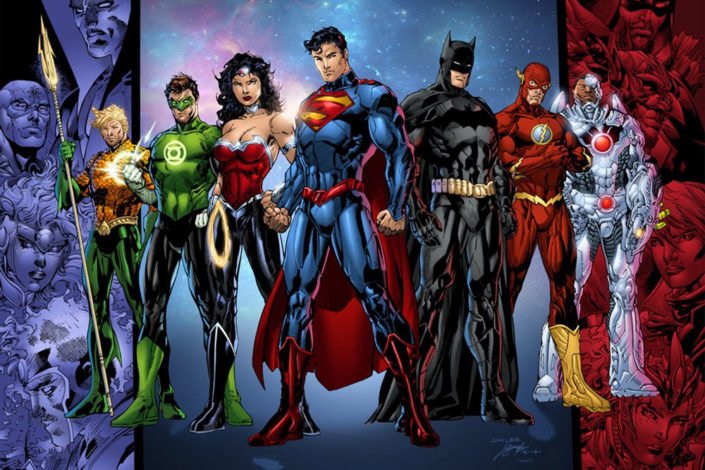
Which lead us to New 52 in 2011, when DC relaunched its entire line for a partial reboot and with a new continuity. This era begins with a new origin story for the Justice League, featuring initial team members Superman, Batman, Green Lantern, Flash, Wonder Woman, Aquaman, and Cyborg. Those heroes must come together when loner vigilante Batman stumbled upon a dark evil that threatens to destroy the earth as we know it. To save the world, they must put aside their differences…

Read More »Justice League (New 52) Reading Order, the Geoff Johns’ era
Tim Drake Reading Order (Robin III, Red Robin, Drake)

Tim Drake (Robin) Reading-Order

After Dick Grayson and Jason Todd, Timothy Jackson Drake is our third Robin. Created by writer Marv Wolfman and artist Pat Broderick, Tim Drake made his first appearance in Batman #436 in August 1989. He introduced himself to Dick Grayson in the storyline Batman: A Lonely Place of Dying, and is convinced that “Batman needs Robin.”

Having great detective skills and Genius-level intellect, Tim Drake had discovered the real identity of Batman and the original Robin (though, I’m not convinced you need to be Sherlock Holmes to arrive at this conclusion!). As Dick refuses to become Robin again, Tim was the perfect young boy to take the mantle and become the third Robin. Though Batman will make him go through a rigorous training program for his own safety (to avoid history repeating itself), Tim Drake will obviously rise up to the challenge.

Recognized as the most intellectually gifted of the Robins, he speaks several languages, excels in computer science, and possesses a large knowledge in other scientific fields, including biology, engineering, and genetics. He is also the most calculated of all Robins in combat, and of course a great martial artist.

What to read before?

Though Tim is not present in this storyline, we invite you to read the now classic ‘A Death in the Family’, marking the end of Jason Todd as Robin, offering a better context about where Batman stands when Tim enters the scene and explaining some of his choices.

  • Batman: A Death in the Family
    Collects the original Death in the Family tale from Batman #426-429 plus “A Lonely Place of Dying” from Batman #440-442 and The New Titans #60-61.

Read More »Tim Drake Reading Order (Robin III, Red Robin, Drake)

Madame Web Reading Order (Cassandra Webb and Julia Carpenter)

  • by

Madame Web Reading Order (Spider-Family)

The original Madame Web made her first appearance in the pages of The Amazing Spider-Man #210 in 1980. Created by writer Denny O’Neil and artist John Romita Jr., Madame Web was not like other heroes, she wasn’t swinging through the streets or battling villains. Instead, Madame Web possesses psychic sensory powers, including telepathy, clairvoyance, prescience, and the ability to sense psionic powers in others. The first time Peter Parker heard about her and her clairvoyance abilities, he thought she looked like a fraud. But soon enough, Spider-Man would learn that she was anything but.

First introduced as the elderly, blind woman Cassandra Webb, she helped Spider-Man by delivering bad news or asking for his help. She also had the ability to transfer her powers to another individual. When the time came, she passed on her powers to Julia Carpenter (who had once been Spider-Woman), making her the new resident Madame Web.

Known as the ‘Creepy Clairvoyant,’ Madame Web is undeniably a mysterious character and certainly not your typical member of the Spider-Man Family. Her appearances are generally limited to just a few panels or issues within larger storylines. For a fuller understanding of her role, it’s recommended to read the complete story arcs in which she appears.

Forget everything you may have learned from watching Madame Web and explore the often cryptic role of Madame Web in the Spider-Verse with this comic book reading guide, tracing her appearances in Marvel Comics!

Read More »Madame Web Reading Order (Cassandra Webb and Julia Carpenter)