
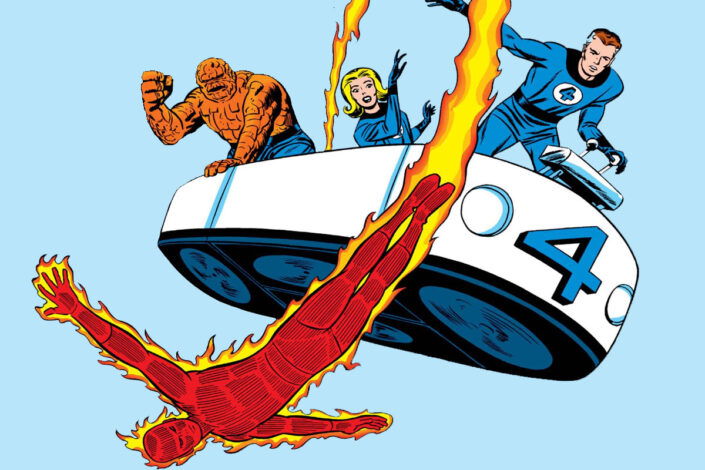
In November 1961, a page of comic book history was written when the Fantastic Four comic debuted. The first issue was an unexpected success, and the public simply fell in love with the First Family. It played a massive role in making Marvel the company we know, launching and influencing the superhero comics in a new direction.
Traditionally, the Fantastic Four are Reed Richards (Mister Fantastic), scientific genius and leader; Susan “Sue” Storm (Invisible Woman), Reed’s partner and co-leader; Johnny Storm (The Human Torch), Sue’s little brother; and Ben Grimm (The Thing), pilot and best friend. They all gained superpowers following exposure to cosmic rays during a scientific mission to outer space.
The Fantastic Four are maybe the most famous superheroes in the Marvel Universe, as they chose to become celebrities instead of hiding their real identities from the public.
If the name of the team implies they are only four members, the roster of the famous ‘family’ has changed several times, and sometimes, other characters have been members. Crystal, Medusa (from the Inhumans), She-Hulk, Ant-Man (Scott Lang), Storm and Black Panther, and even Spider-Man have been at some point or other members of the team.
They fought and stop more than once the Supreme Leader Doctor Doom but also had several encounters with Galactus, Ronan the Accuser, Namor, Silver Surfer, the Mole Man, the Frightful Four, and more. They worked with the Avengers, the X-Men, and other Marvel superheroes to save the world.
This most emblematic team has lived a lot, and it’s time to explore those adventures with our Complete Fantastic Four reading order!

Fantastic Four Reading Order
Decades of history can be daunting for new readers. If you want a crash course about the Fantastic Four’s history and catching up on Stan Lee and Jack Kirby’s legendary FF run in one go, check out Tom Scioli’s Fantastic Four: Grand Design:
- Fantastic Four: Grand Design – Treasury Edition
Collects Fantastic Four: Grand Design (2019) #1-2
You can also take a look at our Beginner’s Guide to the Fantastic Four, which helps you find the perfect starting point in your FF journey,
Navigating through the Fantastic Four Reading Guide: The FF-Menu
Are you ready to experience the full journey of the Fantastic Four, issue by issue? Our fantastic reading order below covers every era, world-breaking event and space journey, as well as Doom’s confrontations, in the lives of the Fantastic Four.
You can take a look at two specific formats of books:
- Fantastic Four Omnibus Collection: The Many Monster-Books covering the history and the important FF runs
- Marvel Masterworks: The Fantastic Four Collection: Incomplete premium-format collecting the FF’s classic era (now on hiatus)
Or you can now choose when to start this adventure right now, with our collected edition guide, full of Epic Collection and other classic trade paperbacks:
- Fantastic Four: The Classic Era (1961-1996), including:
- Interlude: Fantastic Four Flashback Series: New Marvel tales set in the past
- Fantastic Four: Heroes Reborn: Jim Lee and Brandon Choi’s run
- Fantastic Four: Heroes Return: The FF back on Earth-616 (1998-2002)
- Fantastic Four in the Modern Age: Mark Waid and Mike Wieringo’s famous new readers-friendly run (2002-2005)
- Marvel Knights 4: Grant Morrison and Roberto Aguirre-Sacasa’s take on the FF (2001-2006)
- Forgotten Fantastic Four: The overlooked era by J. Michael Straczynski, Dwayne McDuffie, and Mark Millar (2004-2009)
- Jonathan Hickman’s Fantastic Four: A Return to Form for the FF (2009-2012)
- Marvel Now Fantastic Four: Matt Fraction Era (2012-2014)
- The Fall of the Fantastic Four: James Robinson Run (2014-2015)
- All-New All-Different Fantastic Four: The Adventures of the Human Torch and The Thing (2015-2018)
- Fantastic Four Fresh Start: The Return of Marvel’s First Family by Dan Slott (2018-2022)
- Fantastic Four by Ryan North: The Current Era (2022-Present)

What’s new in the Fantastic Four universe? Discover the 2026 releases for Marvel’s First Family.
- Fantastic Four by Waid & Wieringo: Rising Storm
- Fantastic Four Epic Collection: Back to the Basics
- Fantastic Four Fanfare
- One World Under Doom
- Fantastic Four Vol. 1: Save Everyone
- Ultimate Fantastic Four Omnibus Vol. 2 (see our Ultimate Guide for more info!)
- Fantastic Four by Dan Slott Omnibus Vol. 1
- Fantastic Four Epic Collection: Heroes Reborn
- Marvel Two-in-One Epic Collection: Project Pegasus
- Fantastic Four Vol. 2: The Invincible Woman
- Planet of the Apes vs. Fantastic Four (out of continuity, not placed in the order).
- Fantastic Four by Dan Slott Omnibus Vol. 2
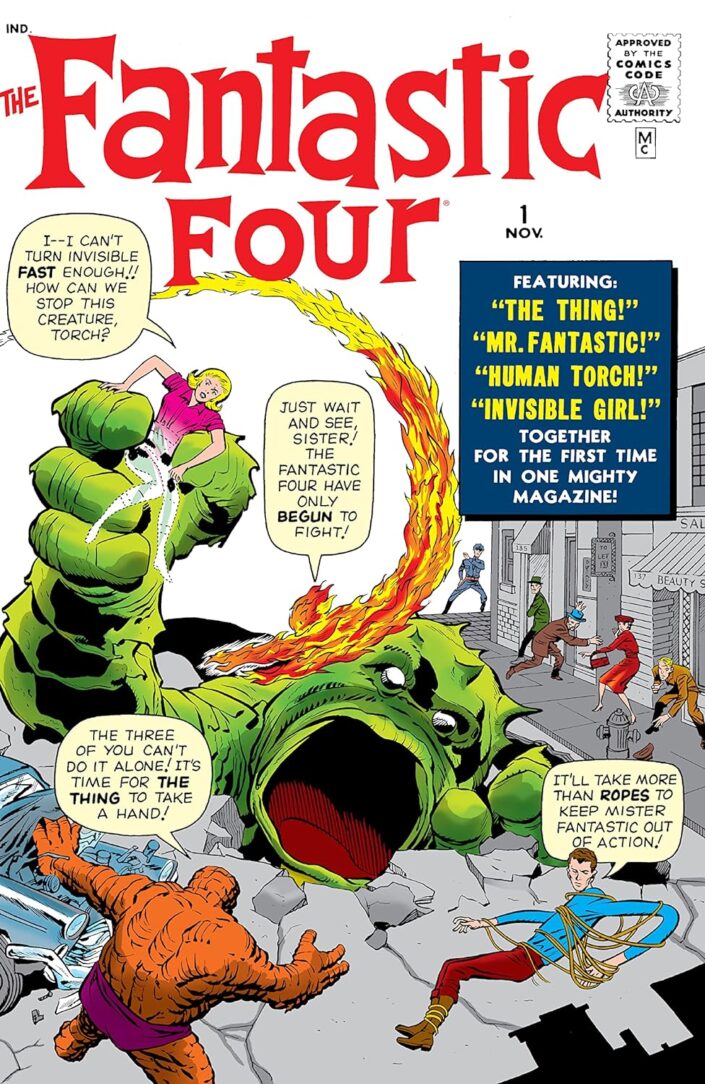
Fantastic Four Omnibus Collection
Collecting the Fantastic Four series is a massive endeavor as there are so many books, but Marvel’s Omnibus Collection offers a shortcut with multiple big volumes. The collection is ongoing and not complete for now. You’ll find more details about the series with the detailed reading orders below.
- Fantastic Four Omnibus Vol. 1
Collects Fantastic Four (1961 ) #1-30 & Annual #1. - Fantastic Four Omnibus Vol. 2
Collects Fantastic Four (1961) #31-60, Fantastic Four Annual (1963) #2-4. - Fantastic Four Omnibus Vol. 3
Collects Fantastic Four (1961) #61-93, Fantastic Four Annual (1963) #5-7, material from Not Brand Echh (1967) #5-7. - Fantastic Four Omnibus Vol. 4
Collects Fantastic Four (1961) #94-125, Fantastic Four: The Lost Adventure (2008) #1, material from Fantastic Four Annual (1963) #8-9. - Fantastic Four Omnibus Vol. 5
Collects Fantastic Four (1961) #126-163, Giant-Size Super-Stars #1, Giant-Size Fantastic Four (1974) #2-4, and Avengers (1963) #127. - Marvel Two-in-One Omnibus Vol. 1
Collects Marvel Feature (1971) #11-12, Marvel Two-In-One (1974) #1-20, 22-36 & Annual (1976) #1, Marvel Team-Up (1972) #47 And The Fantastic Four Annual (1963) #11 - Fantastic Four Omnibus Vol. 6
Collects The Fantastic Four (1961) #164-203 & Annual (1963) #11-13, Marvel Two-In-One (1974) #20 & Annual (1976) #1 And What If? (1977) #1, #6 & #11. - Fantastic Four by John Byrne Omnibus, Vol. 1
Collects Marvel Team-Up (1972) 61-62; Marvel Two-in-One (1974) 50; Fantastic Four (1961) 209-218, 220-221, 232-260; Fantastic Four Annual (1963) 17; Avengers (1963) 233; Thing (1983) #2 - Fantastic Four by John Byrne Omnibus, Vol. 2
Collects Fantastic Four #261–295; Fantastic Four Annual #18–19; Alpha Flight #4; The Thing #7, 10 and 19; The Avengers Annual #14; material from Secret Wars II #2; Epic Illustrated #26–34; What If…? #36; What The–?! #2 and 10; Fantastic Four Roast #1; and Fantastic Four Special Edition - The Thing Omnibus
Collects Thing (1983) #1-36; Fantastic Four (1961) #274, 277, 296; Secret Wars II (1985) #7; West Coast Avengers (1985) #10; Questprobe (1984) #3; Marvel Tales (1964) #198; Marvel Graphic Novel: Hulk & Thing – The Big Change (1987); material from Marvel Fanfare (1982) #15, Marvel Super-Heroes (1990) #5. - Fantastic Four by Waid & Wieringo Omnibus
Collects Fantastic Four (1998) #60-70, #500-524 and #500 Director’s Cut. - Fantastic Four by Millar & Hitch Omnibus
Collects Fantastic Four #554–569, Annual #32, Fantastic Force #1-4, Marvel 1985 #1. - Fantastic Four by Jonathan Hickman Omnibus Vol. 1
Collects Dark Reign: Fantastic Four (2009) #1-5, Fantastic Four (1998) #570-588, FF (2011) #1-5, material from Dark Reign: The Cabal One-Shot (2009). - Fantastic Four by Jonathan Hickman Omnibus Vol. 2
Collects FF (2011) #6-23; Fantastic Four (2012) #600-611, 605.1. - Fantastic Four By Matt Fraction Omnibus
Collects Fantastic Four (2012) 1-16 & 5AU, FF (2012) 1-16; and material from Marvel Now! Point One - Fantastic Four by Dan Slott Omnibus Vol. 1 [2026]
Collects Fantastic Four (2018) #1-11, 12 (A story), 13-24; Fantastic Four Wedding Special (2018) #1, Empyre #0 Fantastic Four (2020), Empyre Fallout: Fantastic Four (2020) #1, Fantastic Four: 4 Yancy Street (2019) #1, Fantastic Four: Negative Zone (2019) #1, Fantastic Four: Grimm Noir (2020) #1. - Fantastic Four by Dan Slott Omnibus Vol. 2 [2026]
Collects Fantastic Four (2018) #25-48, Fantastic Four: Reckoning War Alpha (2022) #1, Reckoning War: Trial of the Watcher (2022) #1, Fantastic Four: Road Trip (2020) #1
Fantastic Four Complete Comics Reading Order
Fantastic Four: The Classic Era (1961-1996)
It all starts here! Stan Lee and Jack Kirby created the Fantastic Four in 1961. The comic series ran without interruption until 1996, with 416 issues in total. During those years, the team had many crazy adventures, encountered many dangers, and made friends and allies. They naturally learned to use their powers, deal with loss and gain, split up more than once, and were joined by other members. They also had many team-ups and tackled invasions from outer space. And they were so popular that spin-offs and miniseries were also created.
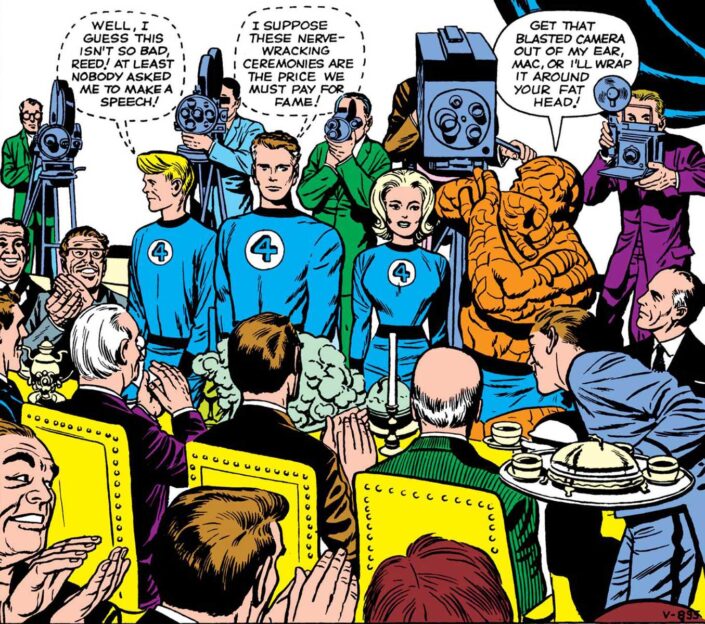
Fantastic Four by Stan Lee & Jack Kirby (1961-1970). The Classic original run began as an experiment with a team book and became the foundation of the ‘Marvel Age of Comics’. It’s often recommended to everyone interested in Marvel history, as many classic elements and characters were introduced during those famous 104 issues. It is not recommended for complete new readers of Marvel Comics. The Silver Age is an acquired taste, extremely wordy and repetitive, and frankly boring at times. While this is a classic run worth checking out, don’t feel obligated to read all of it. If this is not your cup of tea (it’s not mine either), check out at least the “Coming of Galactus” classic story!
- Fantastic Four Epic Collection: The World’s Greatest Comic Magazine
Collects Fantastic Four #1–18.

The Fantastic Four were so popular that launching a spin-off was the next logical step. The young Human Torch became the star of his own series in the pages of Strange Tales. After a series of successful solo stories, the Human Torch was joined by the ever-lovin’ blue-eyed Thing, and the two teammates faced some of the wildest ne’er-do-wells of the Silver Age, including the Wizard, the Sandman, the Rabble Rouser, Plantman, and Paste-Pot Pete. The series also features Marvel’s first fire-and-ice battle between the Human Torch and the X-Men’s Iceman, as well as guest appearances by Spider-Man, Mr. Fantastic, the Invisible Woman, and a famous foursome named John, Paul, George, and Ringo. These stories take place between issues #14 and #44 and have been collected in:
- Human Torch And The Thing: Strange Tales The Complete Collection
Collects Strange Tales #101-134, Strange Tales Annual #2.
- Fantastic Four Epic Collection: The Master Plan of Doctor Doom
Collects Fantastic Four #19–32, Annual #1–2. - Fantastic Four Epic Collection: The Coming of Galactus
Collects Fantastic Four #33–51, Annual #3.- “The Coming of Galactus!” story is also collected in Fantastic Four vs. Galactus and is part of our selection of Best Marvel Comic Books to Read.
- First appearance of the Negative Zone in FF#51.
- Fantastic Four Epic Collection: The Mystery of the Black Panther
Collects Fantastic Four #52–67, Annual #4–5, and material from Not Brand Echh #1, 5. - Fantastic Four Epic Collection: The Name is Doom
Collects Fantastic Four #68-87, Annual #6, and material from Not Brand Echh #6-7.- In Issue #81, Crystal from the Inhumans joins the team during Sue’s leave of absence.
- Fantastic Four Epic Collection: At War with Atlantis
Collects Fantastic Four #88-104, Annual #7; Fantastic Four: The Lost Adventure #1.
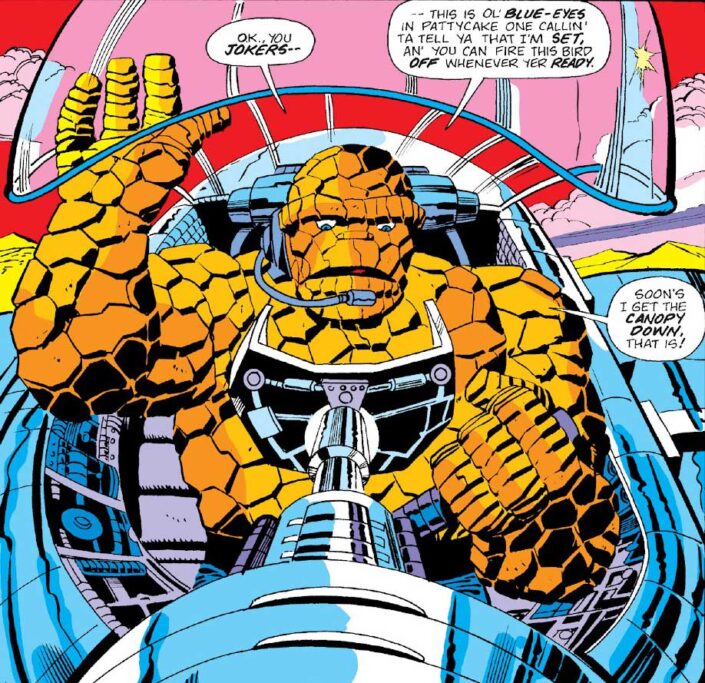
Fantastic Four: The Bronze Age by Roy Thomas, Gerry Conway, Len Wein, Marv Wolfman and more (1970-1980). Lee and Kirby’s collaboration came to an end after 104 issues. Kirby was becoming more and more unhappy at Marvel and moved to DC Comics, where he created the Fourth World Saga. Lee continued to write the title until 1972 (officially leaving at issue #125), when he took on the role of publisher, while artist John Buscema took over as the main artist. The title continued in this decade with writers Roy Thomas, Gerry Conway, Len Wein, and Marv Wolfman and artists John Romita Sr., Rich Buckler, and George Pérez.
- Fantastic Four Epic Collection: Battle of the Behemoths
Collects Fantastic Four #105-125.- Crystal leaves the team in FF #105.
- Fantastic Four Epic Collection: Annihilus Revealed
Collects Fantastic Four #126-146; Giant-Size Super-Stars #1.- Invisible Girl leaves the group in #130, and Medusa takes her place in the line-up in #132.

It’s the Classic Marvel Two-in-One! After a successful running test in Marvel Feature #11-12, Ever-lovin’ blue-eyed Ben Grimm teamed up with a different character for , including Moon Knight, Adam Warlock, Scarlet Witch, the Guardians of the Galaxy, the Inhumans, She-Hulk, Captain America, Thor and Spider-Man. It lasted 100 issues and seven Annuals, and most of it have been reprinted in the Epic Collection:
- Marvel Two-In-One Epic Collection Volume 1: Cry Monster
Collects Marvel Feature (1971) #11-12, Marvel Two-in-One (1974) #1-19; Marvel Team-Up (1972) #47 - Marvel Two-in-One Epic Collection: Two Against Hydra
Collects Marvel Two-In-One (1974) #20, #22-36 and Annual #1; and Fantastic Four Annual #11) - Marvel Two-in-One Epic Collection: Remembrance of Things Past
Collects Marvel Two-in-One (1974) #37-52, Marvel Two-in-One Annual (1976) #2-4, Avengers Annual (1967) #7. - Marvel Two-in-One Epic Collection: Project Pegasus [2026]
Collects Marvel Two-in-One (1974) #53-74 - Marvel Two-in-One (1974) #75-100 are not yet collected in the Epic Collection. You can find part of those issues in the Marvel Masterworks collection (see below).
- Fantastic Four Epic Collection: The Crusader Syndrome
Collects Fantastic Four #147-167; Giant-Size Fantastic Four #2-4; Avengers #127.- Medusa leaves the group in #159 and returns to the Inhumans. Also in #159, Invisible Girl is back on the team as a full member.
- Fantastic Four Epic Collection: Counter-Earth Must Die
Collects Fantastic Four #168–191, Annual #11; Marvel Two-in-One #20, Annual #1.- Mr. Fantastic hires Luke Cage to join the FF in issue #168. He only stayed for three issues.
- Fantastic Four Epic Collection: Four No More
Collects The Fantastic Four (1961) #192-214 & Annual (1963) #12-13.- Also collected in Fantastic Four: In Search of Galactus (FF #204-2014)
- John Byrne became the main artist at issue #209.
- Fantastic Four Epic Collection: The Possession of Franklin Richards [2025]
Collects Fantastic Four #215-231, Annual #14-16- #220-221 is John Byrne’s first story. It was supposed to be a promotional comic for Coca-Cola, but was rejected as too violent.
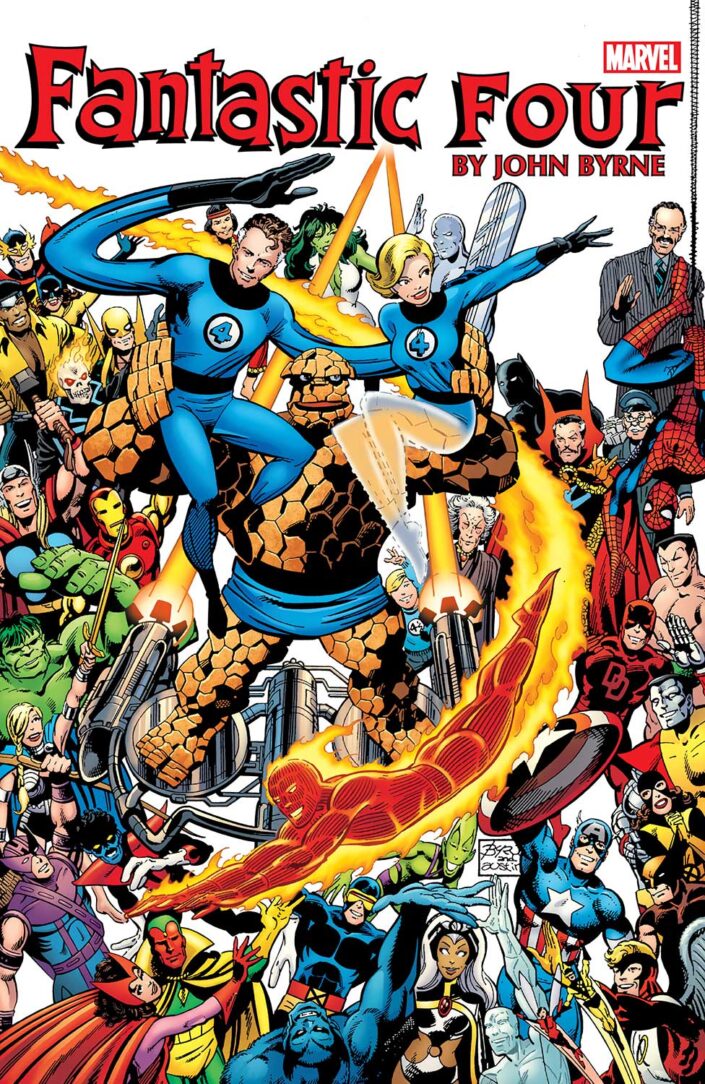
Fantastic Four by John Byrne (1980-1986). John Byrne started as a penciller on the team before writing his first story almost a year later. Another year would pass before his run officially started with issue 232. It’s a back-to-basics approach, as Byrne wanted to get back to “what it was that made the book great at its inception.” He clearly succeeded, with his run becoming one of the most defining ones for the team and often considered the Second Golden Age for the First Family.
But Byrne didn’t simply come back to the original formula. He revitalized the Fantastic Four by making several changes during his time on the title: he transformed Invisible Girl into Invisible Woman, temporarily replaced The Thing with She-Hulk, and co-created and developed Terrax, among other things.
- Fantastic Four Epic Collection: Back to the Basics [2026]
Collects Fantastic Four (1961) #232-248, Fantastic Four Roast (1982) #1, material from What If? (1977) #36.- From issue #239, a longtime ally of the team, Frankie Raye (later Nova) aids the team as another Human Torch before leaving at FF #244.
- Issues #242-244 are also collected in Fantastic Four vs. Galactus.
- After #248, The Fantastic Four are forced to be part of the Marvel Super Hero Contest Of Champions, the first Marvel event miniseries.
- Fantastic Four Epic Collection Vol. 14-16 (FF #249-295), which covers the rest of Byrne’s run, have not been released yet.
- Secret Wars takes place between FF #264 & #265.
- Following this event, She-Hulk officially joins the Fantastic Four as Ben’s replacement.
- FF #282, #285, #288, and #316-319 are part of the Secret Wars II crossover event. See the reading order to know more about it.
- Byrne left the Fantastic Four at #293, in the middle of a story arc.
Fantastic Four: Visionaries – The John Byrne Collection
Between 2001 and 2009, Marvel Comics highlighted John Byrne’s work on the Fantastic Four in the Visionaries collection. Some of these books are hard to find and are now expensive to buy.
- Fantastic Four Visionaries: John Byrne Vol. 0 (Marvel Team-Up #61-62, Marvel Two-In-One #50, And Fantastic Four #215-218 and #220-221)
- Fantastic Four Visionaries: John Byrne, Vol. 1 (Fantastic Four #232-240)
- Fantastic Four Visionaries: John Byrne, Vol. 2 (Fantastic Four #241-250)
- Fantastic Four Visionaries: John Byrne, Vol. 3 (Fantastic Four #251-257 and Annual #17, Avengers #233, and Thing #2)
- Fantastic Four Visionaries: John Byrne, Vol. 4 (Fantastic Four #258-267, Alpha Flight #4 and Thing #10)
- Fantastic Four Visionaries: John Byrne, Vol. 5 (Fantastic Four #268-275, Fantastic Four Annual #18, and Thing #19)
- Fantastic Four Visionaries: John Byrne, Vol. 6 (Collects Fantastic Four #276-284; Thing #23 and Secret Wars II #2)
- Fantastic Four Visionaries: John Byrne, Vol. 7 (The Avengers #263 & Annual 14, Fantastic Four #285-286 & Annual 19, and X-Factor #1)
- Fantastic Four Visionaries: John Byrne, Vol. 8 (Fantastic Four #287-295
The Thing Solo Series. It’s Ben Grimm – the ever-lovin’, blue-eyed Thing – on his own for the first time! The cancellation of Marvel Two-in-One was immediately followed by the Thing solo series, which ran for 36 issues, in parallel to the Fantastic Four. The comic was originally written by John Byrne (#1-13, #19), and later Mike Carlin (#14-36). The complete series is only available in Omnibus at the moment:
- The Thing Omnibus
Collects Thing (1983) #1-36; Fantastic Four (1961) #274, 277, 296; Secret Wars II (1985) #7; West Coast Avengers (1985) #10; Questprobe (1984) #3; Marvel Tales (1964) #198; Marvel Graphic Novel: Hulk & Thing – The Big Change (1987); material from Marvel Fanfare (1982) #15, Marvel Super-Heroes (1990) #5.- Previously collected in Thing Classic Vol. 1 (#1-10) and Thing Classic Vol. 2 (#11-22 and FF #274)
- The Thing #2 takes place after the events of Fantastic Four #251–256.
- The Thing #4 has a reference to Fantastic Four #257.
- Secret Wars takes place between Thing #10 & #11.
- Thing #19 continues in Fantastic Four (1961) #274.
- Thing #22 concludes Ben Grimm’s Battleword long story. He reappears next on Earth on Fantastic Four #277/Thing #23.
- Thing #25 happens at the same time that FF #278–279
- Sharon Ventura makes her first appearance in Thing #27
- Thing #30 is part of Secret Wars II
- West Coast Avengers (1985) #10 delivers an epilogue to issue #36.
- Ben Grimm makes his next appearance in Fantastic Four #296…
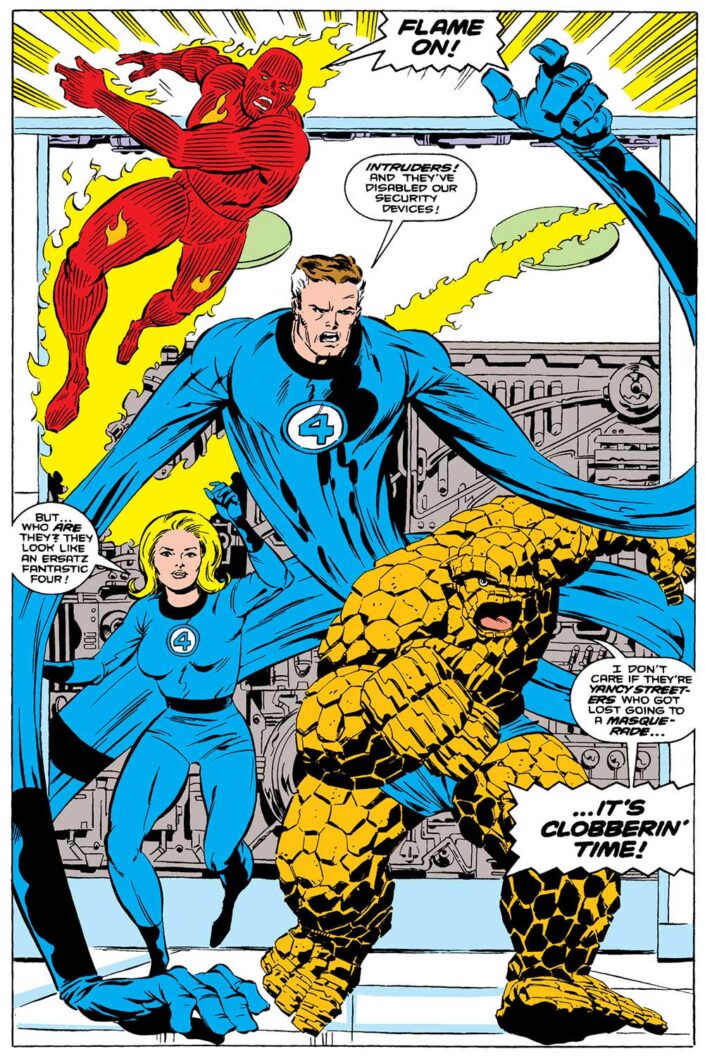
Fantastic Four by Roger Stern, Steve Englehart, Walt Simonson, and more (1986-1991). A string of writers took over Following Byrne’s departure from the titles, starting with a short stint by Roger Stern. Steve Englehart became the main writer for issues #304-333, where he decided to make some radical changes with Reed and Sue retiring, and Sharon Ventura and Crystal joining the team as replacements. It will not last as Marvel Comics will force Engleheart to bring Reed and Sue back. The writer was already in conflict with the publisher on West Coast Avengers, and he simply chose to take his name off the book for the last stretch of his run (#326-333). Writer-artist Walt Simonson succeeded him for a brief but quite popular run (#334-354) !
- Fantastic Four Epic Collection: All in the Family
Collects The Fantastic Four #296–307, Annual #20, The Fantastic Four vs. the X-Men #1-4- In 305-306, Reed and Sue retire and Crystal and Sharon Ventura join the team.
- Fantastic Four Epic Collection: The More Things Change…
Collects The Fantastic Four #308-320, Annual #21, The Incredible Hulk #350, Marvel Graphic Novel: Hulk/Thing: The Big Change - Fantastic Four Epic Collection: The Dream is Dead
Collects Fantastic Four (1961) 321-333, Fantastic Four Annual (1963) #22, Marvel Graphic Novel: Doctor Strange and Doctor Doom – Triumph and Torment (1989).- Fantastic Four (1961) #322-324 are also collected in X-Men: Inferno Omnibus as part of this X-Men event.
- Fantastic Four Epic Collection: Into the Time Stream
Collects The Fantastic Four #334-346, Fantastic Four Annual #23; material from New Mutants Annual #6, X-Factor Annual #5, X-Men Annual #14- #334-336 are part of Acts of Vengeance.
Another team took over the Fantastic Four for the last part of this era. Writer Tom DeFalco and artist Paul Ryan led the team into the 1990s, taking over from issue #356 to #416. This period was massively unpopular, to say the least, although sales were actually increasing. Today, DeFalco’s work is rarely discussed, even though he ended the relationship between Storm and Master and completely changed the story.
- Fantastic Four Epic Collection: The New Fantastic Four
Collects The Fantastic Four #347-361, Fantastic Four Annual #24; material from Marvel Holiday Special #1- Sharon officially leaves the team at issue #354.
- Fantastic Four Epic Collection: This Flame, This Fury
Collects Fantastic Four (1961) #362-376, Fantastic Four Annual (1963) #25-26, Adventures of the Thing (1992) #3. - Fantastic Four Epic Collection: Nobody Gets Out Alive
Collects Fantastic Four (1961) #377-392, Fantastic Four Annual (1963) #27, Namor the Sub-Mariner (1990) #47-48, Fantastic Four Ashcan Edition (1994) #1.- Ant-Man (Scott Lang) is part of the team during FF #384-408 (then acts as a supporting player until issue #416)
- Fantastic Four Epic Collection: Atlantis Rising
Collects Fantastic Four (1961) #393-402, Fantastic Force (1994) #7-9, Fantastic Four: Atlantis Rising (1995) #1-2, and Fantastic Four: Atlantis Rising Collector’s Preview (1995) #1.- Fantastic Force started around Issue #396 and lasted 18 issues. The first issue has been reprinted in Marvel Firsts: The 1990s Vol. 2. Issues #2-6, #10-18 have not been collected anywhere at this moment.
- Also collected in… Fantastic Four/Inhumans: Atlantis Rising (Namor the Sub-Mariner #60–62, FF: Atlantis Rising #1–2, Fantastic Force (1994) #8–9, FF #401–402, FF Unlimited #11)
- Fantastic Four Epic Collection: Strange Days
Collects The Fantastic Four #403–416, Fantastic Four: The Legend, Onslaught: Marvel Universe; material from Tales of the Marvel Universe- Lyja (Alicia Masters) joins the team for a short stint, from #403 to #408.
- Fantastic Four #415-416 are part of the Onslaught event that concludes this era of Marvel Comics! The whole event can be found in the X-Men / Avengers: Onslaught Omnibus.
Fantastic Four: Marvel Masterworks Collection
Marvel Comics stopped publishing the Marvel Masterworks line. Some of these books are already hard to find; most will soon be. You can also find four volumes in the Mighty Marvel Masterworks: The Fantastic Four Collection (a trade paperback version of the collection).
- Marvel Masterworks: The Fantastic Four Vol. 1 – The Fantastic Four #1–10.
- Marvel Masterworks: The Fantastic Four Vol. 2 – The Fantastic Four #11–20, Annual #1.
- Marvel Masterworks: The Human Torch Volume 1 – Strange Tales #101-117 and Annual #2.
- Marvel Masterworks: The Human Torch Volume 2 – Strange Tales #118-134.
- Marvel Masterworks: The Fantastic Four Vol. 3 – The Fantastic Four #21–30.
- Marvel Masterworks: The Fantastic Four Vol. 4 – The Fantastic Four #31–40, Annual #2.
- Marvel Masterworks: The Fantastic Four Vol. 5 – The Fantastic Four #41–50, Annual #3.
- Marvel Masterworks: The Fantastic Four Vol. 6 – The Fantastic Four #51–60, Annual #4.
- Marvel Masterworks: The Fantastic Four Vol. 7 – The Fantastic Four #61–71, Annual #5.
- Marvel Masterworks: The Fantastic Four Vol. 8 – The Fantastic Four #72–81, Annual #6.
- Marvel Masterworks: The Fantastic Four Vol. 9 – The Fantastic Four #82–93, Annual #7.
- Marvel Masterworks: The Fantastic Four Vol. 10 – The Fantastic Four #94–104.
- Marvel Masterworks: The Fantastic Four Vol. 11 – The Fantastic Four #105–116.
- Marvel Masterworks: The Fantastic Four Vol. 12 – The Fantastic Four #117–128.
- Marvel Masterworks: The Fantastic Four Vol. 13 – The Fantastic Four #129–141.
- Marvel Masterworks: Marvel Two-In-One Vol. 1 – Marvel Feature #11-12, Marvel Two-In-One #1-10.
- Marvel Masterworks: Marvel Two-In-One Vol. 2 – Marvel Two-In-One #11-20, Annual #1, Marvel Team-Up #47, Fantastic Four Annual #11
- Marvel Masterworks: Marvel Two-In-One Vol. 3 – Marvel Two-In-One #21-36.
- Marvel Masterworks: Marvel Two-In-One Vol. 4 – Marvel Two-In-One #37-46, Annual #2-3, Avengers Annual #7
- Marvel Masterworks: Marvel Two-In-One Vol. 5 – Marvel Two-In-One #47-60, Annual #4
- Marvel Masterworks: Marvel Two-In-One Vol. 6 – Marvel Two-In-One #61-74
- Marvel Masterworks: Marvel Two-In-One Vol. 7 – Marvel Two-In-One #75-82 and Annual #5-6.
- Marvel Masterworks: Marvel Two-in-One Vol. 8 – Marvel Two-In-One #83-93.
- Marvel Masterworks: The Fantastic Four Vol. 14 – The Fantastic Four #142–150, Giant-Size Super-Stars #1, Giant-Size Fantastic Four #2, The Avengers #127.
- Marvel Masterworks: The Fantastic Four Vol. 15 – The Fantastic Four #151–163.
- Marvel Masterworks: The Fantastic Four Vol. 16 – Fantastic Four #164–175, Fantastic Four Annual #11, Marvel Two-In-One #20, Marvel Two-In-One Annual #1.
- Marvel Masterworks: The Fantastic Four Vol. 17 – Fantastic Four #176–191.
- Marvel Masterworks: The Fantastic Four Vol. 18 – Fantastic Four #192–203, Fantastic Four Annual #12–13.
- Marvel Masterworks: The Fantastic Four Vol. 19 – Fantastic Four #204–218, Fantastic Four Annual #14. A
- Marvel Masterworks: The Fantastic Four Vol. 20 – Fantastic Four #219–231, Fantastic Four Annual #15.
- Marvel Masterworks: The Fantastic Four Vol. 21 – Fantastic Four (1961) #232-240, Annual (1963) #16; Fantastic Four Roast (1982) #1.
- Marvel Masterworks: The Fantastic Four Vol. 22 – Fantastic Four (1961) #241-250; What If? (1977) #36; Silver Surfer (1982) #1; Marvel Fanfare (1982) #2.
- Marvel Masterworks: The Fantastic Four Vol. 23 – Fantastic Four (1961) #251-257, Annual (1964) #17; Avengers (1963) #233; Thing (1983) #2; material from The Official Handbook of the Marvel Universe (1983).
- Marvel Masterworks: The Fantastic Four Vol. 24 – Fantastic Four (1961) 258-268, Alpha Flight (1983) 4, Thing (1983) 10; material from Thing (1983) 7, Marvel Fanfare (1982) 15, Fantastic Four Special Edition (1984) 1.
- Marvel Masterworks: The Fantastic Four Vol. 25 – Fantastic Four (1961) #269-277, Fantastic Four Annual (1963) #18, Thing (1983) #19, 23, material from Epic Illustrated (1980) #26-34.
- Marvel Masterworks: The Fantastic Four Vol. 26 – Fantastic Four (1961) #278-285 and Annual #19, Avengers Annual #14, Marvel Graphic Novel #18: The Sensational She-Hulk and material from Secret Wars II #2.
- Marvel Masterworks: The Fantastic Four Vol. 27 – Fantastic Four (1961) #286-296 and material from Marvel Fanfare (1982) #37.

Interlude: Fantastic Four Flashback Series
Marvel Comics regularly publishes stories taking place in the past, revisiting classic events, or delivering untold tales from those eras. This is what is called a Flashback series. The Fantastic Four have headlined several of those comics, including these modern stories set during Lee/Kirby’s run:
- Fantastic Four: First Family (2006) – miniseries by Joe Casey and Christ Weston set during the first FF issue, delivering a new take on their origins.
- Fantastic Four: Books of Doom (2006) – miniseries by Ed Brubaker and Pablo Raimondi, taking place before FF#5, revisiting his origins.
- Fantastic Four: Full Circle (2022) – miniseries by Alex Ross and a sequel to This Man… This Monster! (FF #51)
- Fantastic Four: The World’s Greatest Comics Magazine (2000-2001) – An homage series from Erik Larsen, Eric Stephenson, Bruce Timm, Keith Giffe,n and more is told as if Stan Lee and Jack Kirby didn’t leave the title after issue #104.
Then, the next miniseries takes place during the eighties:
- The Thing: The Next Big Thing (2022) – Walter Mosley’s miniseries seems to happen during the John Byrne era.
- Thing: The King of Yancy Street (2025) – Thing miniseries by Tony Fleecs and Justin Mason set during the mid-80s (the John Byrne era), possibly just before Secret Wars.
- New Fantastic Four: Hell in a Handbasket (2022) – A Peter David story taking place after the first adventures of the New Fantastic Four team (Spider-Man, Ghost Rider, Wolverine, The Hulk) in FF #347-349.
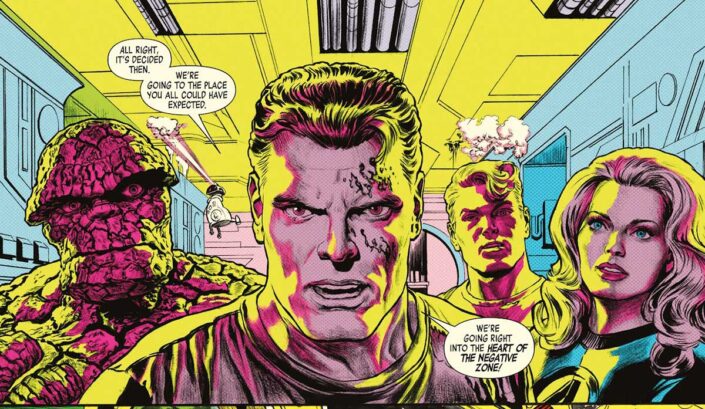
Heroes Reborn (aka Fantastic Four Vol. 2) with Jim Lee and Brandon Choi
With the Onslaught Saga, the Marvel Universe was… changed. Following the apparent deaths of the Avengers, the Fantastic Four, and Doctor Doom, Marvel asked the Image Comics founders to come back to relaunch their heroes. This led to the Heroes Reborn era. Wildstorm writer Brandon Choi and artist Jim Lee reimagined the Fantastic Four, retelling the team’s early adventures in a more contemporary style, facing old threats for the first time, from the Mole Man to Doctor Doom!
The whole era can be found in one big omnibus:
- Heroes Reborn: The Original Epic Omnibus
Collects Heroes Reborn (1996) 1/2, Captain America (1996) #1-12, Avengers (1996) #1-12, Fantastic Four (1996) #1-12, Iron Man (1996) #1-12, material from Incredible Hulk (1968) #450.
The Fantastic Four story is also available by itself:
- Fantastic Four Epic Collection: Heroes Reborn [2026]
Collects Fantastic Four (1996) #1-12, Avengers (1996) #12, Iron Man (1996) #12, Captain America (1996) #12, material from Incredible Hulk (1968) #450- Previously collected in Heroes Reborn: Fantastic Four (Only The Fantastic Four material)
At the end, the Fantastic Four and Avengers were returned to the mainstream Marvel Universe:
- Heroes Reborn: The Return
Collects Heroes Reborn: The Return #1-4; Heroes Reborn: Doomsday, Ashema, Masters Of Evil, Rebel, Remnants, Young Allies And Doom.
Fantastic Four: Heroes Return (1998-2002)
Following the end of the Heroes Reborn experiment, The Fantastic Four were back in the Marvel Universe and a third volume launched by writer Scott Lobdell and penciller Alan Davis.Then Chris Claremont joined the team, co-writing the next two issues before becoming the sole writer and working with penciller Salvador Larroca for a run that lasted until 32 issues. Then, Then Carlos Pacheco took over as penciller and co-writer alongside Rafael Marín and Jeph Loeb.
- Fantastic Four: Heroes Return – The Complete Collection Vol. 1
Collects Fantastic Four vol. 3 #1–15, 1/2; Fantastic Four Annual ’98; Iron Man #14 - Fantastic Four: Heroes Return – The Complete Collection Vol. 2
Collects Fantastic Four vol. 3 #16-32; Fantastic Four Annuals 1999-2000. - Galactus the Devourer
Collects Galactus the Devourer #1-6. Miniseries set after FF #23 from Louise Jones Simonson and John Buscema. - Domination Factor: Fantastic Four #1-4
Uncollected miniseries set after Galactus the Devourer from Jerry Ordway and Dan Jurgens. - Fantastic Four: Heroes Return – The Complete Collection Vol. 3
Collects Fantastic Four (1998) #33-45, Fantastic 4th Voyage of Sinbad (2001) #1, Inhumans (2000) #1-4 - Fantastic Four: Heroes Return – The Complete Collection Vol. 4
Collects Fantastic Four (1998) #46-59, Fantastic Four Annual 2001, Thing & She-Hulk: The Long Night (2002) #1 - The Thing: Freakshow
Collects Thing: Freakshow #1-4, Thing & She-Hulk: The Long Night. Set between FF #56 & 57. From Geoff Johns and Scott Kolins.
Fantastic Four in the Modern Age: Mark Waid and Mike Wieringo’s Run (2002-2005)
This run is also collected in Fantastic Four by Waid & Wieringo Omnibus and is part of our 25 Best Marvel Comics to read.
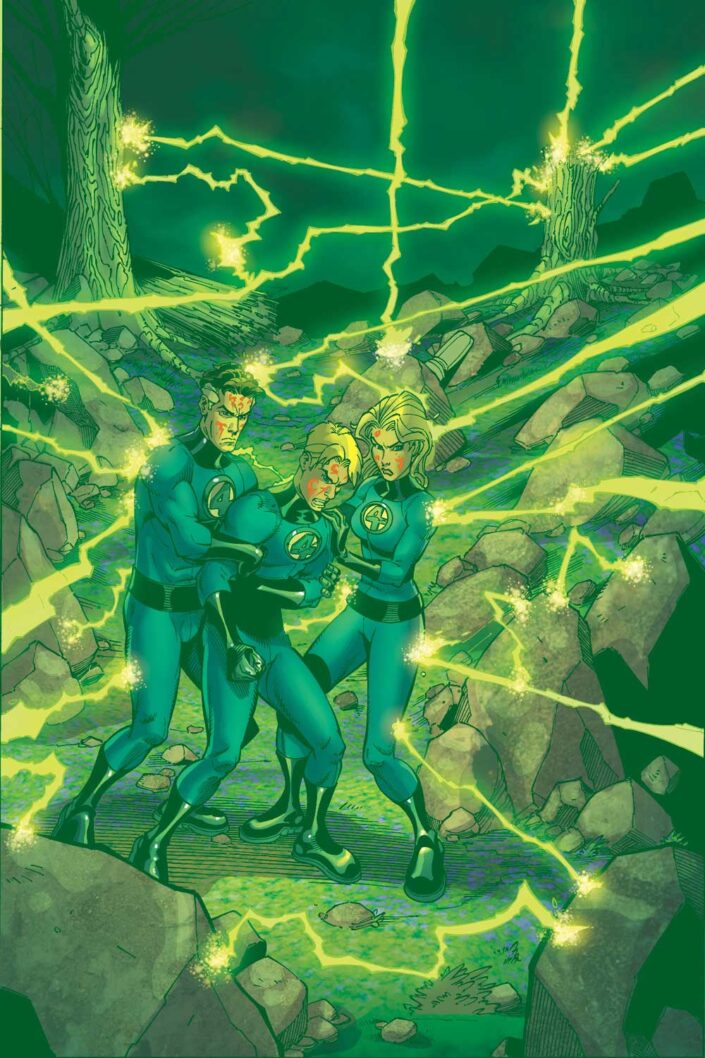
The Fantastic Four have been back for a few years now, but Marvel’s First Family really entered a new era under the creative team of Mark Waid and Mike Wieringo. The creative duo gave us one of the most accessible and celebrated runs for the team that has now become a classic and great modern entry point for new readers! This is a run full of action, comedy, and relationships that perfectly illustrate what the FF represents: a family with a special bond, with the twist of being superheroes. Marvel Comics has recently reprinted the whole run in new paperback editions:
- Fantastic Four by Waid & Wieringo: Imaginauts [2025 edition]
Collects Fantastic Four (1998) #56, 60-66. - Fantastic Four by Waid & Wieringo: Unthinkable [2025 edition]
Collects Fantastic Four (1998) #67-70, 500-502. And, we’re back to the legacy numbering with #500! - Human Torch by Karl Kesel & Skottie Young: The Complete Collection
Collects Human Torch (2003) #1-12. The new solo adventures of Johnny Storm. - Startling Stories: The Thing – Night Falls on Yancy Street (2003) #1-4
From Evan Dorkin and Dean Haspiel. Available on Kindle - Fantastic Four by Waid & Wieringo: Authoritative Action [2025]
Collects Fantastic Four (1998) #503-513 - Fantastic Four by Waid & Wieringo: Rising Storm [2026]
Collects Fantastic Four (1998) #514-524.- Marvel Knights 4 #1-12 take place between FF #516 and #517. See below for the trade.
- Fantastic Four: Antithesis
This miniseries, written by Mark Waid and illustrated by Neal Adams, was published in 2020. It takes place after his original run and the last issues occur after Avengers Disassembled, but there are continuity errors.
Waid & Wieringo’s Fantastic Four run has been collected in four volumes in the Ultimate Collection, mostly out of print now.
Marvel Knights 4 (2001, 2004-2006)
Launched in 1998, the Marvel Knights Imprint featured standalone material set within the Marvel Universe (Earth-616), targeting a more mature audience. Except our first Fantastic Four story published under the imprint — Fantastic Four: 1234 by Grant Morrison and Jae Lee — occupies a weird place in continuity. Meaning that there seems to be a little debate whether this series is canon or not. This can be considered part of the main continuity, with the story explaining all the weird things and the out-of-character reactions (short answer: blame Doom!). In all cases, that is not your classic FF story with Morrison putting the First Family through hell during four issues, collected in:
- Marvel Knights Fantastic Four by Morrison & Lee: 1234
Collects Fantastic Four: 1234 #1-4 And Material From Marvel Knights Double-Shot #2.
A few years later, playwright Roberto Aguirre-Sacasa became the lead writer on Marvel Knights 4, a new Fantastic Four title published under the imprint. Together with artist Steve McNiven, he tells stories happening concurrently with the primary series. You can choose to read the series independently or together.
- Marvel Knights Fantastic Four, Vol. 1: Wolf at the Door
Collects Marvel Knights 4 #1–7 - Marvel Knights Fantastic Four, Vol. 2: The Stuff of Nightmares
Collects Marvel Knights 4 #8–12 - Marvel Knights Fantastic Four, Vol. 3: Divine Time
Collects Marvel Knights 4 #13–18 - Marvel Knights Fantastic Four, Vol. 4: Impossible Things Happen Every Day
Collects Marvel Knights 4 #19-24 - Marvel Knights Fantastic Four, Vol. 5: The Resurrection of Nicholas Scratch
Collects Marvel Knights 4 #25–30
Forgotten Fantastic Four: The overlooked era by J. Michael Straczynski, Dwayne McDuffie, and Mark Millar (2004-2009)
The years following Waid and Wieringo’s work are rarely discussed and are often overlooked amid all the Avengers’ redefining events taking place at the time. There are a lot of miniseries, while several runs took place during this time, starting with Writer J. Michael Straczynski and penciller Mike McKone (#527–541), followed by Dwayne McDuffie and Paul Pelletier that would go on to the Civil War and beyond. Then, writer Mark Millar and penciller Bryan Hitch took over at issue #554 for a 16-issue run.
- Fantastic Four #525–526
Collected in Fantastic Four: The Beginning of the End - Fantastic Four / Iron Man: Big in Japan
Collects Fantastic Four/Iron Man: Big In Japan #1-4. By Zeb Wells and Seth Fisher. - X-Men / Fantastic Four
Collects X-Men/Fantastic Four #1-5. - Fantastic Four: Foes.
Mini-series from Robert Kirkman. - House of M: Fantastic Four/Iron Man
Collects House of M: Fantastic Four #1-3, House of M: Iron Man #1-3. See our House of M reading order for the full event. - Spider-Man and The Fantastic Four: Silver Rage
Collects Spider-Man/Fantastic Four #1-4. By Jeff Parker and Mike Wieringo.
- Fantastic Four by J. Michael Straczynski, Vol. 1
Fantastic Four #527–532 - Fantastic Four: The Life Fantastic
Fantastic Four #533–535; Fantastic Four Special #1; Fantastic Four: The Wedding Special; Fantastic Four: A Death in the Family - The Road to Civil War
Fantastic Four #536–537; New Avengers: Illuminati; The Amazing Spider-Man #529–531 - The Thing & The Human Torch by Dan Slott
Collects Spider-Man/Human Torch #1-5 and The Thing (2005) #1-8. - Fantastic Four: Civil War
Fantastic Four #538–543. See the Civil War guide for the full event. - Fantastic Four: The New Fantastic Four
Fantastic Four #544–550 - Fantastic Four: The Beginning of the End
Fantastic Four #525–526, 551–553; Isla de la Muerte- In #544, Reed and Sue take a leave of absence, and Storm and Black Panther join the group as their replacement for a story arc.
- Isla de la Muerte is also collected in Fantastic Four: Island of Death
- Fantastic Four: True Story
Collects Fantastic Four: True Story #1-4. Set before issue #544. By Paul Cornell and Horacio Dominguez.
A Fantastic Four/Marvel Knights 4 Reading Order
An Issue-by-issue Reading Order to the 2004-2007 Era
Fantastic Four #516 | Marvel Knights 4 #1–12 | Fantastic Four #517-526 | Marvel Knights 4 #13–14 | Fantastic Four / Iron Man: Big in Japan #1-4 | X-Men/Fantastic Four #1-5 | Marvel Knights 4 #15-18 | Fantastic Four: Foes #1-6 | Marvel Knights 4 #19-21 | House of M: Fantastic Four #1-3 | Spider-Man/Fantastic Four #1-4 | Marvel Knights 4 #21-24 | FF #527 | Marvel Knights 4 #25-27 | FF #528-532 | Marvel Knights 4 #28 | FF #533-537 | Marvel Knights 4 #29 | Fantastic Four Special #1 | Marvel Knights 4 #30 | Fantastic Four: A Death in the Family | Spider-Man / Human Torch #1-5 | Thing (2006) #1-8 | Fantastic Four #538–543 | Fantastic Four: Island of Death | Fantastic Four: True Story #1-4 | Fantastic Four #544–553
Mark Millar and Bryan Hitch’s run starts here (and is available on Omnibus)! It is overshadowed by Hickman’s run while also often being recommended as a good lead-in to this particular run, with Hickman building up on some of those stories. When it comes to Millar, The Ultimate Fantastic Four is generally more recommended.
- Fantastic Four: World’s Greatest
Collects Fantastic Four #554–561 - Fantastic Four: The Master of Doom
Collects Fantastic Four #562–569- Secret Invasion: Fantastic Four
Collects Secret Invasion: Fantastic Four #1-3, Fantastic Four #300 and 357. For the full event, see the Secret Invasion guide.
From writer Roberto Aguirre-Sacasa. Set between FF #563 & #564.
- Secret Invasion: Fantastic Four
- Fantastic Four: Island of Death
Collects Fantastic Four: Isla de Muerte!, Spider-Man & The Human Torch in… Bahia de los Muertos!, Fantastic Four in Ataque del M.O.D.O.K! By Tom Beland and
Jonathan Hickman’s Fantastic Four (2009-2012)
Norman Osborn took over the Marvel Universe, starting the Dark Reign era. At the same time, writer Jonathan Hickman became the main writer for the Fantastic Four and produced one of the most celebrated runs of modern Marvel comics. During that period, Mister Fantastic formed the Future Foundation (Fantastic Four #579), a philanthropic organization created to better serve humanity’s future. It’s also the name of the team after a tragedy, with Spider-Man as a member of the group, starring in the FF title.
The run has been collected in two omnibus, and you can also check out our Jonathan Hickman’s Fantastic Four issue-by-issue guide.
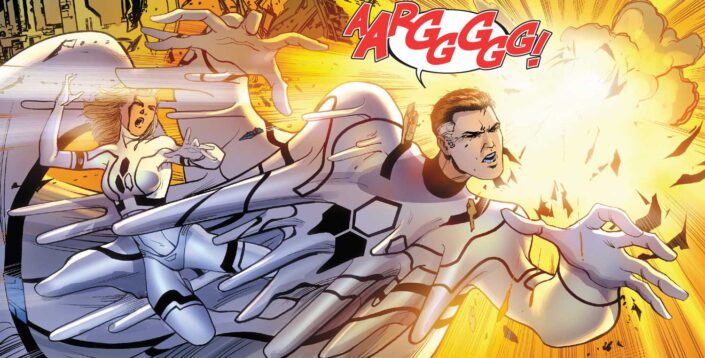
- Fantastic Four by Jonathan Hickman: The Complete Collection Vol. 1
Collects Dark Reign: Fantastic Four #1-5, Fantastic Four (1998) #570-578, and material from Dark Reign: The Cabal One-Shot.- Fantastic Four (1998) #570-588 are also collected in Fantastic Four: Solve Everything – Marvel Premier Collection.
- Doomwar
Collects Doomwar #1–6. A Black Panther event from Jonathan Maberry and Scot Eaton, taking place after Dark Reign. - X-Factor – Volume 9: Invisible Woman has Vanished
Collects X-Factor #200-203. From Peter David and Bing Cansino - Heralds
Collects Heralds #1-5 - Fantastic Four by Jonathan Hickman: The Complete Collection Vol. 2
Collects Fantastic Four (1998) #579-588 & FF (2011) #1-5. - Spider-Man / Fantastic Four
Collects Spider-Man/Fantastic Four (2010) #1-4; Peter Parker, The Spectacular Spider-Man (1976) #42; And Fantastic Four (1961) #218.- Stand-alone series from Cristos Gage and Mario Alberti exploring Spidey and the FF’s relationship at different time periods in each issue.
- Fear Itself: Spider-Man
Collects Fear Itself: Spider-Man #1-3, Fear Itself: The Worthy #1 and Fear Itself: FF #1. For the full event, see our Fear Itself guide. - Fantastic Four by Jonathan Hickman: The Complete Collection Vol. 3
Collects FF (2011) #6-16, Fantastic Four (1998) #600-604. - Fantastic Four by Jonathan Hickman: The Complete Collection Vol. 4
Collects Fantastic Four (1998) #605, 605.1, 606-611; FF (2011) #17-23.
Marvel Now Fantastic Four by Matt Fraction (2012-2014)
When you’re the First Family, your vacation is more cosmic than that of an ordinary mortal! This is Matt Fraction’s short run on the Fantastic Four (also available on Omnibus), which sends the family on holiday through time and space with artist Mark Badgley. But no worries, the Earth is not left without protection, as they have formed a new team to guard the planet, comprising of Ant-Man (Scott Lang), She-Hulk (Jennifer Walters), Medusa (from the Inhumans), and Ms. Thing! They are the FF, penciled by Mike Allred.
- Fantastic Four, Vol. 1: New Departure, New Arrivals
Collects Fantastic Four (2012) #1–3, FF (2012) #1–2 - Fantastic Four, Vol. 2: Road Trip
Collects Fantastic Four (2012) #4–8 - Fantastic Four, Vol. 3: Doomed
Collects Fantastic Four (2012) #9–16 - FF Vol. 1: Fantastic Faux
Collects FF (2012) #4-8 - FF Vol. 2: Family Freakout
Collects FF (2012) #9-16.
Fantastic Four Vol. 5 by James Robinson, 2014-2015
After a short holiday with Matt Fraction, the first family faces its darkest hour under the creative team of James Robinson and Leonard, while the Marvel Universe heads towards its end…
- Fantastic Four, Vol. 1: The Fall of the Fantastic Four
Collects Fantastic Four (2014) #1–5 - Fantastic Four, Vol. 2: Original Sin
Collects Fantastic Four (2014) #6–10 - Fantastic Four, Vol. 3: Back in Blue
Collects Fantastic Four Annual (2014) #1, Fantastic Four (2014) #11-14. - Fantastic Four, Vol. 4: The End is Fourever
Collects Fantastic Four #642-645

The 2015 Secret Wars! The Marvel Universe as we know it comes to an end in Jonathan Hickman’s Secret Wars. The interdimensional Incursions have eliminated each and every alternate universe one by one. And now, the Marvel Universe and Ultimate Universe have collided…and been destroyed! All that exists in the vast empty cosmos is a single, titanic patchwork planet made of the fragmented remains of hundreds of devastated dimensions: Battleworld! Don’t skip this story, this is an important event for the Fantastic Four.
- Secret Wars by Jonathan Hickman Omnibus
Collects Avengers (2012) #35-44, New Avengers (2013) #24-33, Secret Wars (2015) #1-9 And Material From Free Comic Book Day 2015 (Secret Wars) #0.- Although you could read only the main event, we recommend this omnibus, which provides a better context for understanding the story from the FF’s perspective. Also, Reed appears in New Avengers.
All-New All-Different Fantastic Four (2015-2018)
Since their launch in 1961, the Fantastic Four have always headlined their own title… until now. Following Secret Wars, Reed Richards, Sue Storm and their children disappeared, but what happened to the Thing and the Human Torch? The Marvel Universe was relaunched, with the two remaining members joining different teams. The Thing first joined the Guardians of the Galaxy before becoming a supporting character in the Infamous Iron Man series. Meanwhile, Johnny joined the Inhumans and became part of Steve Rogers’ Unity Squad, which aims to promote peace between humans, mutants and Inhumans.
- Uncanny Inhumans Volume 1: Time Crush
Collects Uncanny Inhumans #0–4; FCBD 2015: Inhumans Story - Guardians of the Galaxy: New Guard Vol. 1: Emperor Quill
Collects Guardians of the Galaxy (vol. 4) #1–5. - Uncanny Avengers: Unity Vol. 1: Lost Future
Collects Uncanny Avengers (2015) #1-6 & material from Avengers #0. - Guardians of the Galaxy: New Guard Vol. 2: Wanted
Collects Guardians of the Galaxy (vol. 4) #6–10. - Avengers: Standoff
Collects Avengers Standoff: Welcome to Pleasant Hill #1, Avengers Standoff: Assault on Pleasant Hill Alpha #1, Agents of S.H.I.E.L.D. (2016) #3-4, Uncanny Avengers (2015) #7-8, All-New, All-Different Avengers #7-8, New Avengers (2015) #8-10, Captain America: Sam Wilson #7-8, Illuminati (2015) #6, Howling Commandos of S.H.I.E.L.D. (2015) #6, Avengers Standoff: Assault on Pleasant Hill Omega #1. - Uncanny Inhumans Volume 2: The Quiet Room
Collects Uncanny Inhumans #5–9 - Uncanny Avengers: Unity Vol. 2: The Man Who Fell to Earth
Collects Uncanny Avengers (2015) #7-12. - Uncanny Avengers: Unity Vol. 3: Civil War II
Collects Uncanny Avengers 13-18. See our Civil War II guide for the complete event. - Guardians of the Galaxy: New Guard Vol. 3: Civil War II
Collects Guardians of the Galaxy (vol. 4) #11–14. - Guardians of the Galaxy: New Guard Vol. 4: Grounded
Collects Guardians of the Galaxy (vol. 4) #15–19. - Infamous Iron Man Vol. 1
Collects Infamous Iron Man #1-6 - Uncanny Avengers: Unity Vol. 4: Red Skull
Collects Uncanny Avengers (2015) #18-23. - Peter Parker: The Spectacular Spider-Man Vol. 1: Into The Twilight
Collects: Peter Parker: The Spectacular Spider-Man (2017) #1-6, Material from Free Comic Book Day 2017 (Secret Empire) #1 - Infamous Iron Man Vol. 2: The Absolution of Doom
Collects Infamous Iron Man Vol. 2 #7-12 - Secret Empire: United We Stand
Collects Secret Empire: United #1, Secret Empire: Underground #1, Secret Empire: Uprising #1, Uncanny Avengers #24-25. Those issues are part of the Secret Empire event. - Uncanny Avengers: Unity Vol. 5: Stars and Garters
Collects Uncanny Avengers #26-30.
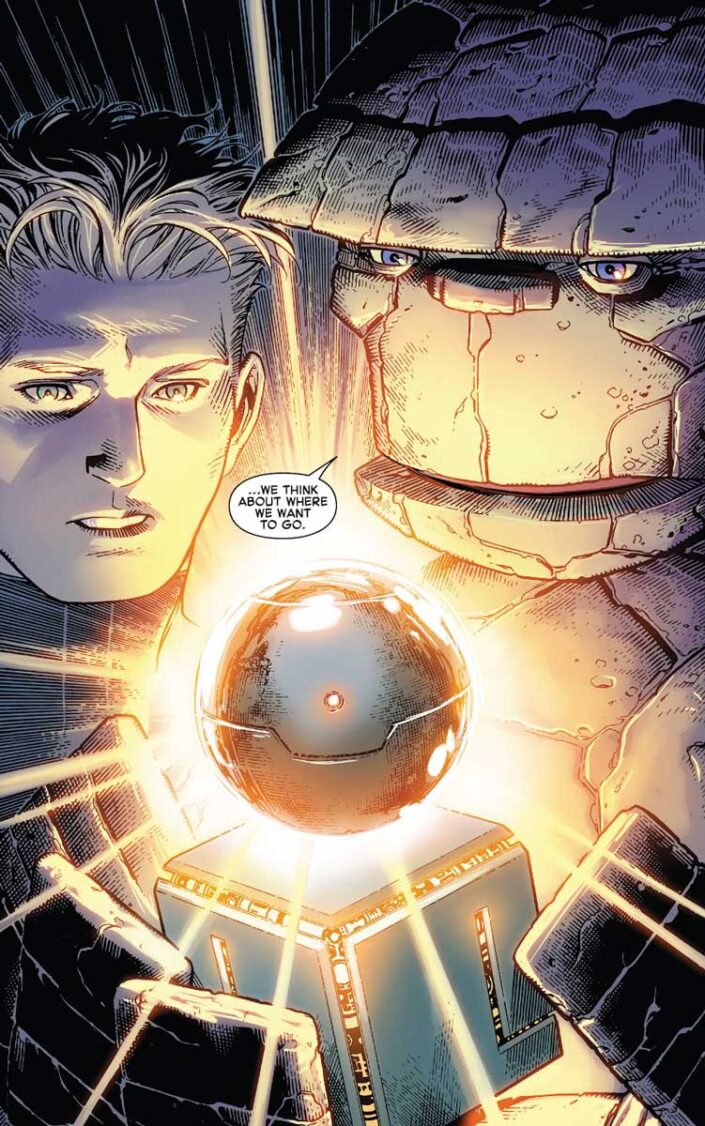
If you have to read one comic for this period, be it the Marvel 2-in-One series from Chip Zdarsky. Johnny Storm and Ben Grimm are reunited in a quest to find their family with other side adventures:
- Fantastic Four by Chip Zdarsky: Fate of the Four [2025]
Collects Marvel 2-in-One (2017) #1-12, Marvel 2-in-One Annual (2018) #1. Previously collected in:- Marvel Two-In-One Vol. 1: Fate Of The Four (Marvel 2-In-One (2017) #1-6
- Marvel Two-In-One Vol. 2: Next Of Kin (Marvel 2-In-One (2017) #7-12, Marvel 2-In-One Annual (2018) #1
During this period, The duo joins forces with Lunella in Moon Girl and Devil Dinosaur Vol. 5: Fantastic Three and Johnny almost died as a member of Avengers Unity Division in Avengers: No Surrender (you can read those stories between issues #6 and 7).
Fantastic Four Fresh Start by Dan Slott (2018-2022)
A Fresh Start for the Fantastic Four! After years of rebuilding the Marvel Universe, the First Family is reunited and is facing new and old threats under the creative team of writer Dan Slott and artist Sarah Pichelli. It’s generally perceived as a hit-and-miss run, with some good things (such as the progression of Ben and Alicia’s romance) and some divisive choices (such as the story around Franklin’s powers and the not-so-popular Reckoning War event).
Dan Slott’s run has also been reprinted in 5 hardcover volumes (including the Reckoning War book) and this year in two Omnibuses!
- Fantastic Four Vol. 1: Fourever
Collects Fantastic Four (2018) #1–4 - Fantastic Four Vol. 2: Mr. And Mrs. Grimm
Collects Fantastic Four (2018) #5, Fantastic Four: Wedding Special #1, Fantastic Four (1961) #8 - Fantastic Four Vol. 3: The Herald Of Doom
Collects Fantastic Four (2018) #6-11- Fantastic Four (2018) #10 is part of the War of Realms event.
- Invisible Woman: Partners in Crime
Sue Storm has finally her own miniseries by Mark Waid. - Fantastic Four Vol. 4: Thing Vs. Immortal Hulk
Collects Fantastic Four (2018) #12-13, Fantastic Four: Yancy Street #1, Fantastic Four: Negative Zone #1 - Fantastic Four Vol. 5: Point Of Origin
Collects Fantastic Four (2018) #14-20

Coming from Al Ewing and Dan Slott, with art by Valerio Schiti, is Empyre, an Avengers/Fantastic Four Marvel event! Old allies make a distress call to the Avengers with news of a terrible enemy that could wipe out humanity itself. The Celestial Messiah has returned – but is Earth ready to hear his message? Meanwhile, in the most unlikely of places, the Fantastic Four witness the final conflict of the Kree/Skrull War…and a long-hidden Elder of the Universe stands revealed! With the Kree and the Skrulls united under a new emperor, their war fleet charts a course – for Earth!
- Empyre
Collects Empyre: Avengers #0, Empyre: Fantastic Four #0, Empyre #1-6, Empyre Epilogue. - Fantastic Four Vol. 6: Empyre
Collects Fantastic Four (2018) #21-24, Empyre: Fantastic Four #0, Empyre Fallout: Fantastic Four #1
Empyre Reading Order
A focused Fantastic Four Issue-by-Issue Guide
Road to Empyre: The Kree/Skrull War | Empyre: Avengers #0 | Empyre: Fantastic Four #0 | Empyre #1-2 | Fantastic Four (2018) #21-22 | Empyre #3-5 | Fantastic Four (2018) #23 | Empyre #6 | Empyre Fallout: Fantastic Four | Fantastic Four (2018) #24
For the full event, see our complete Empyre Reading Guide.
- Fantastic Four Vol. 7: The Forever Gate
Collects Fantastic Four (2018) #25-30. Issues #29-30 are part of King in Black event. - Fantastic Four Vol. 8: The Bride Of Doom
Collects Fantastic Four (2018) #31-35 - Fantastic Four Vol. 9: Eternal Flame
Collects Fantastic Four (2018) #36-39, Fantastic Four: Road Trip #1, Fantastic Four: Grimm Noir #1

A cosmic saga years in the making! Before the Kree, Skrull or Shi’ar Empires…before the emergence of Galactus…before the birth of Asgard…there was the First War. The greatest conflict to ever rage across the Multiverse. Today, it is reignited. This…is the Day of Reckoning! And all that stands between all of reality and revenge from the dawn of time are the heroes of Earth – and the mind of Mister Fantastic! This special Fantastic Four event marks the end of Dan Slott’s run on the title.
- Fantastic Four Vol. 10: The Reckoning War Part I
Collects Fantastic Four (2018) #40-42, Fantastic Four: Reckoning War Alpha #1, Reckoning War: Trial Of The Watcher #1 - Fantastic Four Vol. 11: The Reckoning War Part II
Collects Fantastic Four (2018) #43-46
Reckoning Reading Order
An Issue-by-Issue Reading Order
Fantastic Four (2018 series) #39 (prelude) | Fantastic Four: Reckoning War Alpha #1 | Fantastic Four (2018 series) #40- 41 | Reckoning War: Trial of the Watcher #1 (tie-in) | Fantastic Four (2018 series) #42-45
Judgement Times! Before the start of a new era for the Fantastic Four, the First Family is being judged during the A.X.E.: Judgment Day event.
- Fantastic Four (2018) #47-48
From David Pepose and Juann Cabal. Collected in A.X.E.: Judgment Day Companion. See our Judgment Day Reading Order for the complete event.
Fantastic Four by Ryan North (2022-Present)
It’s the start of a new era for the Fantastic Four with writer Ryan North and artist Iban Coello. Of course, the FF are already in trouble! This new run starts with our favorite family caught in a time loop that’s been going on since before they were born…
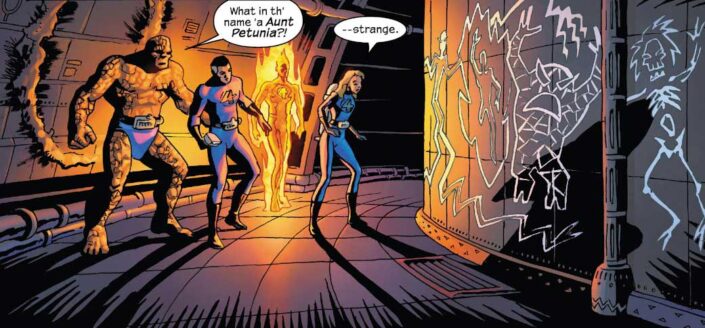
- Fantastic Four by Ryan North Vol. 1: Whatever Happened to the Fantastic Four
Collects Fantastic Four (2022) #1-6. - Fantastic Four by Ryan North Vol. 2: Four Stories About Hope
Collects Fantastic Four (2022) #7-11. - Clobberin’ Time
Collects Clobberin’ Time #1-5. A standalone story by Steve Skroce. - Fantastic Four by Ryan North Vol. 3: The Impossible Is Probable
Collects Fantastic Four (2022) #12-17. - Fantastic Four by Ryan North Vol. 4: Fortune Favors the Fantastic
Collects Fantastic Four (2022) #18-22. Issues #21-22 are connected to the Blood Hunt event. You don’t have to read it, but if you do, follow our reading order. - Fantastic Four by Ryan North Vol. 5: Aliens, Ghosts and Alternate Earths [2025]
Collects Fantastic Four (2022) #23-28.

Following the Blood Hunt, Doom became the Sorcerer Supreme and disappeared for months. Now, he returns as Emperor Doom in One World Under Doom, written by Ryan North with art by R. B. Silva. Despite North being the main writer, the Fantastic Four only play a small part for most of the event. They still appear, and the relaunch (which coincides with the release of the movie First Steps) has been justified by Doom’s actions.
- One World Under Doom [2026]
Collects One World Under Doom (2024) #1-9. - Fantastic Four by Ryan North Vol. 6: Our World Under Doom [2025]
Collects Fantastic Four (2022) #29-33 and Giant-Size Fantastic Four (2024) #1. - Fantastic Four Vol. 1: Save Everyone [2026]
Collects Fantastic Four (2025) #1-5, Free Comic Book Day 2025: Fantastic Four/Giant-Size X-Men #1 (Fantastic Four story)
One World Under Doom Reading Order
A focused Fantastic Four Issue-by-Issue Guide
OWUD #1 | FF #29 | OWUD #2 | FF #30-33 | OWUD #3 | FF #1-3 | OWUD #4-9.
The event concludes with “The Will of Doom #1” (collected in Dungeons of Doom), which introduces some changes that are not used immediately. You can read it after OWUD #9 or FF #5.
For the full event, see our complete One World Under Doom reading order.
- Fantastic Four Fanfare [2026]
An anthology series featuring different creative teams celebrating the FF that was released around the movie. Can be read at anytime. - Fantastic Four Vol. 2: The Invincible Woman [2026]
Collects Fantastic Four (2025) #6-10.
More Fantastic Four coming soon…
Hi! Fantastic Four, Vol. 3: Back in Blue contains #11-14, not #11-16.
Hey Amín,
Thanks for the info, the reading order has been updated!