Skip to content

Dark Horse

Cyberpunk 2077 Comics – A Guide to the Stories Beyond the Game

The future in comics is not always post-apocalyptic; it can also be cyberpunk! A dystopian future is the setting of the famous Cyberpunk 2077 franchise. Based on a tabletop RPG, the Cyberpunk 2077 video game was launched in 2020. While not making a splash at the time (it was massively hyped and led to disappointment at the release), it has since become one of the best-selling games of all time.

You guessed it, the year is 2077. The action is mostly set in Night City, a place that’s known as the worst to live in America. Violence is at an all-time high and more people are living below the poverty line here than in any other location. MecaCorps control every aspect of life, while the streets are run by gangsters, tech hustlers, and illegal braindance dealers. And yet, nothing can stop humans from dreaming. Dreaming about the unattainable American Dream!

In recent years, the world of Cyberpunk 2077 has expanded in various directions, including a spin-off anime and several comic books. And today, we are taking a closer look at the Dark Horse comics set in the world of Cyberpunk 2077, telling new stories of people trying to survive and make a profit in this cutthroat world. 

Read More »Cyberpunk 2077 Comics – A Guide to the Stories Beyond the Game

Star Wars Omnibus Reading Order!

  • by

May the 4th Be With You! Since the movie’s release in 1977, Star Wars Comics have been produced with few interruptions. It all started at Marvel Comics with a six-issue comic book adaptation of the film. It was such a success that it helped Marvel survive the financial difficulties of the time. The series continued with original stories starting from issue #7 and became one of the top-selling titles. Marvel published the series until 1986, totaling 107 issues and three Annuals.

During this period, a newspaper strip was also distributed by the Los Angeles Times Syndicate and the Watertown Daily Times, while Pendulum Press released in 1978 a 31-page loose adaptation designed for classroom use. For several years after Marvel’s comic series ended, there was few Star Wars material. This changed in 1991 when Dark Horse acquired the license and revived the franchise with the release of the novel Heir to the Empire—the first book of a trilogy by Timothy Zahn—which was also adapted into a comic book. After that, the publisher launched dozens of series set in the Star Wars universe over the next 20 years.

A well-established fact now, Dark Horse lost the license in 2014 to Marvel Comics, which became the primary publisher of Star Wars Comics. It marked the end of the Star Wars Expanded Universe and the beginning of a new continuity known as Star Wars Canon. In 2017, IDW Publishing launched the anthology series Star Wars Adventures, and in 2022, Dark Horse started publishing new Star Wars comics and graphic novels.

For Star Wars Day, we look closer at the many Star Wars omnibus editions—from Dark Horse’s older collections to Marvel’s ongoing omnibus line to help you navigate this vast galaxy!

Read More »Star Wars Omnibus Reading Order!

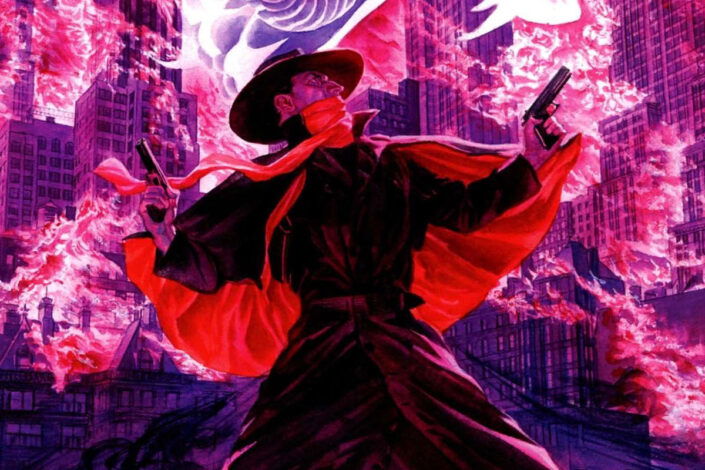
The Shadow Comics: The Comic Book History of a Pulp Hero

  • by

Created for the magazine publishers Street & Smith, the character of The Shadow started in 1930 on the Detective Story Hour radio show as a mysterious host before moving to print the following year. He would stay on the air for a few years, but this original incarnation would be forgotten and replaced by the one created by writer Walter B. Gibson (under the pen name of Maxwell Grant).

Gibson was tasked to write stories about “The Shadow” and, inspired by classic literary works and the French character Judex, he composed a character that would eventually become the prototype of the American Superhero. Through the years, The Shadow prospered in the pulps, on the radio, and even got a comic strip in the early 1940s.

The Shadow was a former World War I aviator named Kent Allard who faked his death and became a crime-fighter. Upon returning to the United States, he adopted several different identities to aid him in his war on crime. The most famous one is Lamont Cranston, a wealthy socialite who went abroad and Allard stole his identity, impersonating him to gain access to the rich and powerful of the world.

Read More »The Shadow Comics: The Comic Book History of a Pulp Hero

Grendel Reading Order, Matt Wagner’s Epic Comic Book Series

  • by

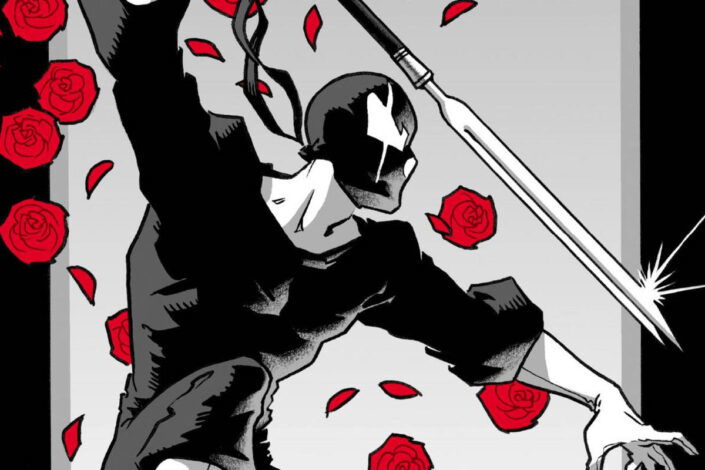
First published in 1982 by Comico, in Comico Primer #2, Grendel is a creation of Matt Wagner that started as something highly usual at the time. Inspired by Diabolik, Kriminal, Elric, the Beowulf myth, and more, this was the story of an anti-hero, Hunter Rose, an assassin turned mob boss whose Nemesis was Argent the wolf–a powerful and terrifying man-wolf.

The story of this master criminal would soon be retold in Devil by the Deed as a backup story in Wagner’s other series, Mage.

Grendel would eventually become an ongoing series at Comico, from 1986 to 1990. Instead of bringing back Hunter Rose, inspired by the generational aspects of The Phantom, Wagner decided to create a collection of stories exploring the influence of the Grendel identity. The first was Christine Spar, the daughter of Stacy Palumbo who played an integral part in Hunter Rose’s life, then Brian Li Sung who was for a time involved with Christine. After that, Wagner started to adopt a different angle, revisiting Hunter Rose’s career before going progressively into the future.

Continuously evolving, Grendel became a sci-fi story about a dystopic future where a corrupt religious society is disrupted by a powerful Vigilante dressed as Grendel. This led to a revolution and a new status quo as the power shifted and the spirit of Grendel pushed the whole imagery of the Grendel to evolve again. Then emerged the powerful and mysterious Grendel Prime.

As Comico went into bankruptcy in 1990, Grendel’s story was interrupted, but Matt Wagner moved it creation to Dark Horse Comics. Since then, he published new series and revisited old ones, coming back to it multiple times through the years.

Read More »Grendel Reading Order, Matt Wagner’s Epic Comic Book Series

Umbrella Academy Reading Order: How to Start reading Gerard Way and Gabriel Ba’s comic book series?

  • by

You may know Umbrella Academy thanks to its television adaptation by Netflix. Written by Gerard Way (of My Chemical Romance) and illustrated by Gabriel Bá, Umbrella Academy is described as a “dysfunctional family of superheroes” — and part of our 15 Dark Horse Must-Read Comic Books.

All began with an inexplicable worldwide event, where forty-three extraordinary children were spontaneously born by women who’d previously shown no signs of pregnancy. Millionaire inventor Reginald Hargreeves adopts seven of the children and prepares them to save the world from an unspecified threat as the Umbrella Academy.

The members are Spaceboy (Luther Hargreeves), The Kraken (Diego Hargreeves), The Rumor (Allison Hargreeves), The Séance (Klaus Hargreeves), The Boy (Number Five), The Horror (Ben Hargreeves), and The White Violin (Vanya Hargreeves).

Read More »Umbrella Academy Reading Order: How to Start reading Gerard Way and Gabriel Ba’s comic book series?

Millarworld Reading Order

  • by

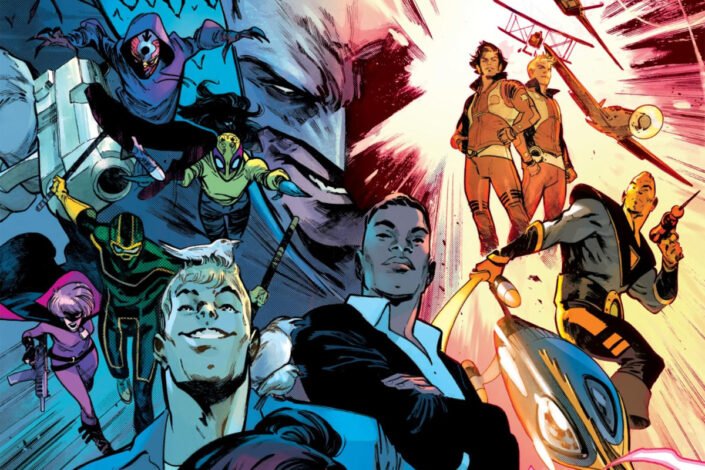
According to Mark Millar, all of the titles that are part of his created-owned imprint Millardworld, take place in the same continuity. It may be confusing at times, but it’s because some of the stories are fiction in this fictional universe–like the Jupiter’s Legacy stories.

Launched in 2003 with the miniseries Wanted, the Millarworld imprint published all of Mark Millar-created series and the works of some authors who write stories in his universe (like with the Hit-Girl series). Millar worked with popular artists to give life to his stories like John Romita Jr. (Kick-Ass), Frank Quitely (Jupiter’s Legacy), Greg Capullo (Reborn), Stuart Immonen (Empress, The Magic Order 2), Rafael Albuquerque (Huck, Prodigy), Olivier Coipel (The Magic Order), Pepe Larraz (Big Game), Dave Gibbons (Kingsman: Secret Service), and a lot more.

Most of those series work as standalone. In fact, the links to the other parts of the Millarworld are often limited to easter eggs or one-line references. However, the Big Game series is a crossover that connects a lot of the previous series (Hit Girl, Empress, Kingsman, The Chononauts, Kick-Ass, Nemesis, Huck, The Magic Order, and more). With that, the idea of reading the series in a certain order started to make sense.

Read More »Millarworld Reading Order

Predator & Alien Comics Reading Order!

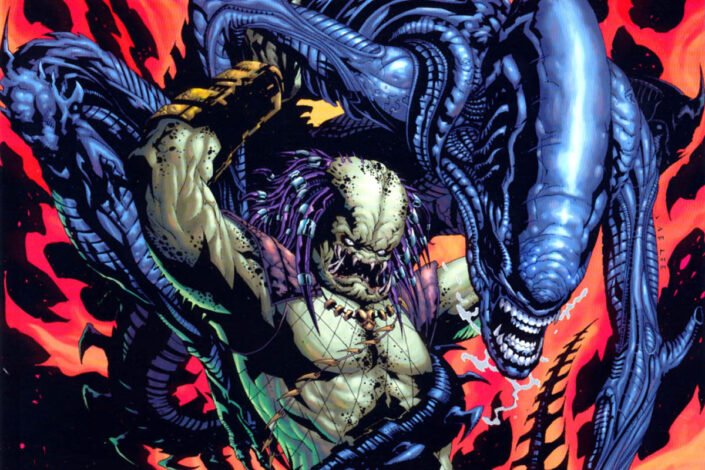
Based on the movie franchises respectively launched by Alien (1979) and Predator (1987), the Alien & Predator comics were published by Dark Horse Comics from 1988 to 2020. 

Because they thought it would give the writers and artists more creative freedom and flexibility, the heads of Dark Horse Comics decided early on not to publish ongoing or unlimited titles from the license and to compose the line as a series of limited series, one-shots, and short stories, with a main focus on limited series. The first three books were a sequel to the first two Alien movies.

Quickly, the Predator franchise was added to the line, following the same editorial directive. Dark Horse Comics published continuously new miniseries, one-shots, and graphic novels set in the Alien and Predator universe, and in both of them, as “Aliens vs. Predator” stories were also regularly published, for a good decade. But between 1999 and 2008 the line was on hiatus.

In 2020, after Disney acquired FOX Studios and took control of the characters’ rights, Dark Horse lost the license to publish more Alien and Predator stories, and could not reprint anything anymore. Marvel Comics, being a Disney property, took over and started by reprinting all the stories in new omnibus collections (and now Epic Collection). Marvel also launched new miniseries (or short ongoing series).

Read More »Predator & Alien Comics Reading Order!

The Best Dark Horse Comics Series: 15 must-read comics books

  • by

Best Dark Horse Comic

Following the success of Teenage Mutant Ninja Turtles, what is now called the Black-and-White Boom took form with the apparition in 1986 of a LOT of new publishers ready to make a fortune. Apple Comics, Fantagor Press, ACE Comics, Crystal Publications, Eternity Comics, Imperial Comics, Quality Comics, Malibu Comics, and more! Most of them produced forgettable books and rapidly closed shops. Not all of course, or else we wouldn’t be here to talk about Dark Horse Comics.

Mike Richardson used the profit generated by his comic book shop to launch the company with his friend Randy Stradley. Dark Horse Comics started with the anthology Dark Horse Presents and James Dean Smith’s parody comic Boris the Bear. The two titles became hits and helped the company to go much further than most of its competitors.

Using its successful launch, Dark Horse Comics adopted a strategy based on popular franchises. Mike Richardson began buying the rights to make Godzilla comics, then it was Aliens, Predator, Star Wars, and Tarzan. The company soon started producing toys and producing movies (via Dark Horse Entertainment).

Dark Horse Comics even tried to invade the world of superheroes with the imprint Comics’ Greatest World. But as the industry changed, DH had to refocus its ambitions on the creators–this led to the publication of Mike Mignola’s Hellboy.

Read More »The Best Dark Horse Comics Series: 15 must-read comics books

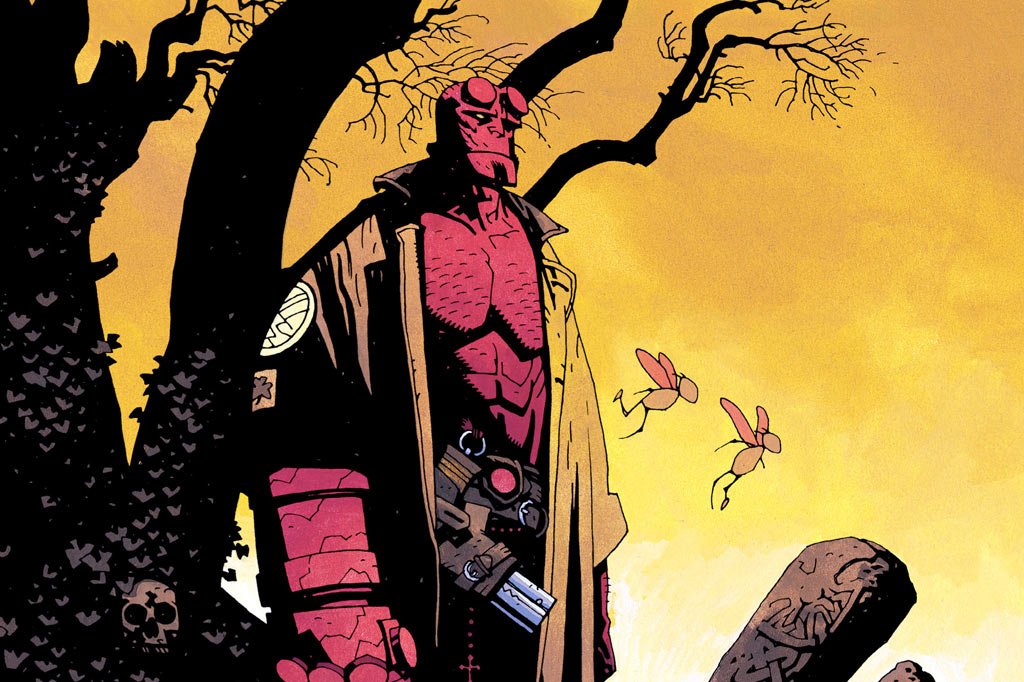
Hellboy: The Creation and Origin Story of Mike Mignola’s Red Monster

  • by

Mike Mignola was getting known for his work for Marvel and DC, but it was not what he especially desired to draw. What he wanted to do was stories about an occult detective and did it with Hellboy.

This was in 1993. Mignola had finished his now-celebrated comic adaptation of the Bram Stoker’s Dracula movie that helped him continue to explore themes and historical elements he was really into—like did his (DC Elseworlds) Gotham by Gaslight story just before. For his next work, he wanted to do a created-owned book and, at first, he intended to keep going in that same direction, inspired by stories written by William Hope Hodgson (Carnacki), Alice & Claude Askew (Aylmer Vance), H. Heron (Flaxman Low), A.M. Burrage (Francis Chard), and more. But after being confronted with the challenges of drawing Victorian-era stories, he kept his occult detective concept and chose another time period.

The idea of the big red monster was inspired by a drawing he made a couple of years earlier for a pamphlet to help promote the Great Salt Lake Comic-Con. It was not the Hellboy we know now, but a demonic monster with the word “Hell Boy” on his belt. That name was what the artist kept in mind as the design of the character evolved seriously and transformed into a more human creature—still, he was a red-skinned, cloven-hooved demon with a big gun.

Read More »Hellboy: The Creation and Origin Story of Mike Mignola’s Red Monster

Sin City Reading Order, Frank Miller’s crime noir classic

Frank Miller's Sin City Reading Order

After deciding to stop working for DC Comics, Frank Miller went to Dark Horse Comics with two projects, the miniseries Give Me Liberty (a Martha Washington story drawn by Dave Gibbons) and Hard Boiled (drawn by Geof Darrow). In 1991, he was then already established at Dark Horse and was naturally part of the line-up of artists who contributed to the one-shot Dark Horse Presents 5th Anniversary Special. In this book, Miller wrote and drew what would become one of his most iconic comics, Sin City.

This crime noir saga would then continue in Dark Horse Presents issues #51 to 62. This would be later collected in paperbacks under the title “The Hard Goodbye.” With this, Miller won three Eisner Wards—Best Penciller/Inker, Black & White Publication, Best Writer/Artist, and Best Graphic Album: Reprint (Modern Material).

Sin City was not the first crime story Frank Miller had written, his work on Daredevil attests to that, but this series was written, drawn, and lettered by him.

Read More »Sin City Reading Order, Frank Miller’s crime noir classic