Skip to content

Dark Horse

ElfQuest Reading Order
  • by

Elfquest Reading Order

Published by Dark Horse Comics (home of Hellboy) since 2013, ElfQuest is much older than that as it was launched in 1978. Back then, the Fantasy series created by Wendy and Richard Pini was self-published, taking advantage of the emerging Direct Market. Things didn’t start without a bump.

The first Elfquest story was the lead feature in Fantasy Quaterly #1. But with Independent Publishers Syndicate immediately going out of business after one issue, the adventure could have ended pretty quickly, especially as the publisher refused to give the Pinis back the work they already provided for issue 2. Richard had to take a very long trip to get everything back. After that, the couple learned as fast as possible how to become publishers. They formed WaRP Graphics and put ElfQuest #2 out.

ElfQuest became a success story, one of the most popular self-published comic books (and brand). There were difficult times through the years, like the 1990s bubble. WaRP Graphics was closed in 2003, but ElfQuest is still here.

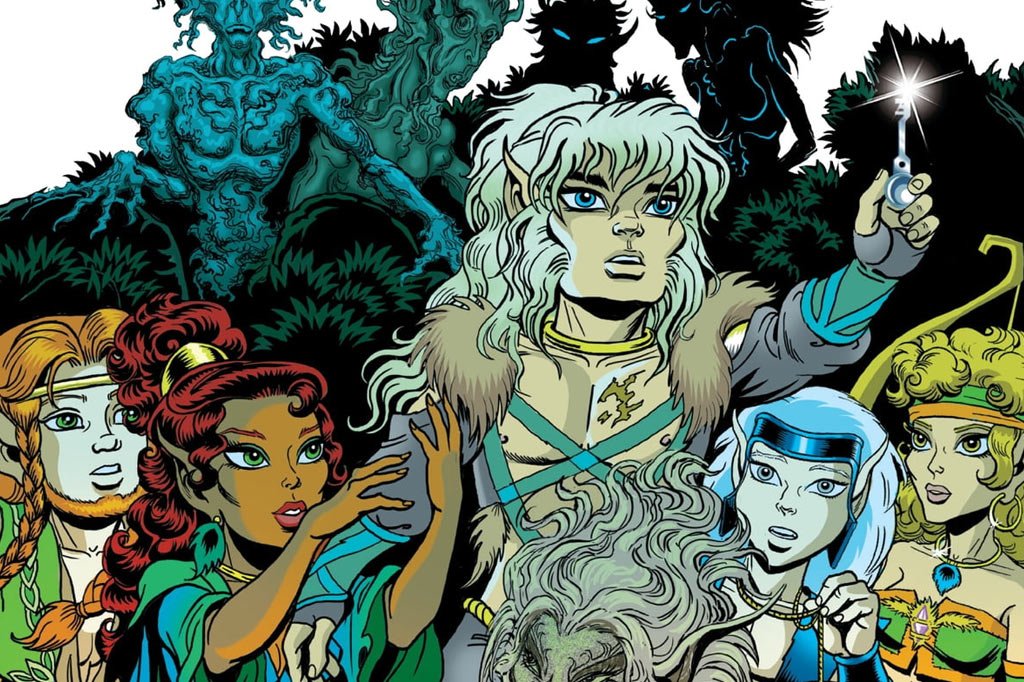
The story of ElfQuest started with the “Original Quest.” It was about Chief Cutter and the Wolfriders being driven from their forest home by the threat of annihilation. As they wander an ever-changing landscape inhabited by excitable humans–and other odd creatures–they discover other elf tribes as well. Alliances are forged, enemies discovered, and savage battles fought…

It is an epic fantasy adventure with sci-fi elements about nature-loving elves trying to survive on a world that isn’t theirs to begin with.

Read More »ElfQuest Reading Order

Godzilla Comics Reading Order, From Marvel to IDW and Legendary

  • by

Like King Kong, Godzilla is a monster and an international pop culture icon. This prehistoric reptilian monster made his debut in the 1954 movie directed and co-written by Ishirō Honda. A movie franchise was developed, and the kaiju appeared soon enough in various other media. It never stopped since.

Naturally, he was featured in several mangas, but we’re here today to talk about Godzilla in American comics.

Following a deal with Toho Studios, Marvel Comics published a Godzilla Comics set in the Marvel Universe. The King of Monsters was depicted more as an anti-hero way too big for our time! It lasted two years before Marvel lost the rights to the monster. Following this loss, Marvel would find a way to continue to use Godzilla for a few years afterward by introducing a mutated version of the character who no longer looked like the Toho versions.

Years later, Dark Horse acquired the comic rights to the Godzilla franchise. The company published various comic books (one-shots, miniseries, ongoing series) based on the monster for the next 12 years.

But no one has used Godzilla as much as IDW, a company that also published Teenage Mutant Ninja Turtles, Transformers, Sonic the Hedgehog, and more. They began publishing Godzilla comics in 2011 and still hold the license, offering a variety of stories and several continuities (the miniseries are all standalone stories).

IDW is not, right now, the only publisher putting comics with Godzilla out there. Legendary has also released several tie-in graphic novels with Godzilla, all part of their Monsterverse Universe.

Read More »Godzilla Comics Reading Order, From Marvel to IDW and Legendary

The Outerverse Reading Order, The Horror Universe by Mike Mignola and Christopher Golden

  • by

Mostly known today for creating Hellboy and its expanded universe, Mike Mignola has also written (and sometimes drawn) a variety of other stories exploring similar themes full of supernatural, folklore, horror, and other paranormal elements.

With Christopher Golden, he co-created Baltimore in 2007, an illustrated novel that led to a comic-book series published by Dark Horse Comics, then to an expanded universe called “The Outerverse.”

Baltimore, or, The Steadfast Tin Soldier and the Vampire introduced us to Lord Henry Baltimore. The story begins in November 1914. A British officer during World War I, Lord Baltimore is left for dead on a battlefield in the Ardennes Forest. When he awakes, he sees the most unexpected scene: giant bat-like creatures are feeding on his dead men.

When he is attacked, he fights back and wound the vampire who tried to feed on him. This action inadvertently changes Baltimore himself, but also in the course of the war, and of human history. 

Read More »The Outerverse Reading Order, The Horror Universe by Mike Mignola and Christopher Golden

Usagi Yojimbo Reading Order, the comics that inspired Samurai Rabbit: The Usagi Chronicles

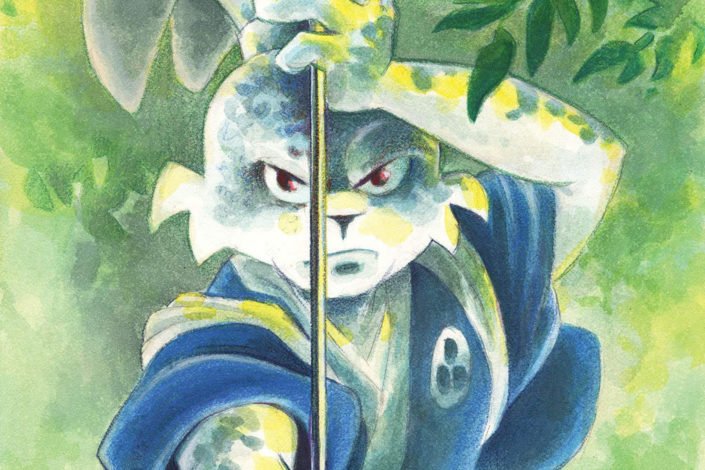
Now adapted on Netflix under the title “Samurai Rabbit: The Usagi Chronicles,” Usagi Yojimbo is certainly not a new series. In fact, this creator-owned comic book series was created by Stan Sakai in 1984 – Usagi Yojimbo first appeared in Albedo Anthropomorphics #2, published by Thoughts and Images in November 1984. 

Openly inspired by Japanese cinema and real-life samurai Miyamoto Musashi, Usagi Yojimbo explores Japanese history, folklore, arts, and more. The story tells the adventures of the Miyamoto Usagi, a rōnin samurai rabbit, in Japan at the beginning of the Edo period (early 17th century) – it is an anthropomorphic comic where humans are replaced by animals – as he travels the country on shogyusha, sometimes monetizing his services as a bodyguard. 

The concept of the series, with Usagi meeting new people which each new adventure during his travels, makes reading Usagi Yojimbo easy as you don’t have to track down every book in order of publication. You can just pick a story at random. Of course, if you like what you read, you can also start from the beginning.

The publication history of Usagi Yojimbo is not clear and simple, as the series has been published by multiple publishers: Fantagraphics Books (Usagi Yojimbo Vol. 1), Mirage Studios (Usagi Yojimbo Vol. 2), Dark Horse Comics (Usagi Yojimbo Vol. 3), and lately IDW Publishing (Usagi Yojimbo Vol. 4). The samurai also appeared in occasional short stories published by other companies.

Read More »Usagi Yojimbo Reading Order, the comics that inspired Samurai Rabbit: The Usagi Chronicles

Harrow County Reading Guide to Cullen Bunn’s Horror series

  • by

Published by Dark Horse Comics, Harrow County is an Eisner-nominated horror comic book series created by writer Cullen Bunn and artist Tyler Crook that blends elements of folk horror, dark fantasy, and Southern Gothic traditions. It’s also part of our list of Horror Comic Books to read and the Best Dark Horse Comics Series.

The concept originated as a serialized prose story titled Countless Haints, written by Bunn and released online. When adapted into a comic form in collaboration with Crook, the story underwent substantial reworking, evolving into a visually rich, serialized narrative that debuted in May 2015. The story follows Emmy Crawford, a young woman in rural Harrow County, who discovers on the eve of her eighteenth birthday that she is mystically connected to the land around her and the supernatural beings—ghosts, haints, and monsters—that inhabit it.

The original Harrow County series ran for 32 issues from 2015 to 2018. It has since been collected in multiple formats, including trade paperbacks, library editions,  deluxe hardcover omnibuses, and a compendium.

Following its conclusion, the franchise continued with the spin-off series Tales from Harrow County (2019–2021), not to be confused with the Tales of Harrow County short stories, written by Bunn with art by Naomi Franquiz and later Emily Schnall. These stories expand the mythology and explore events set after the main series, focusing on Emmy’s friend Bernice and the lingering supernatural forces in Harrow County.

Read More »Harrow County Reading Guide to Cullen Bunn’s Horror series

Hellboy Universe Reading Order (Hellboy, BPRD, Abe Sapien), from the mind of Mike Mignola

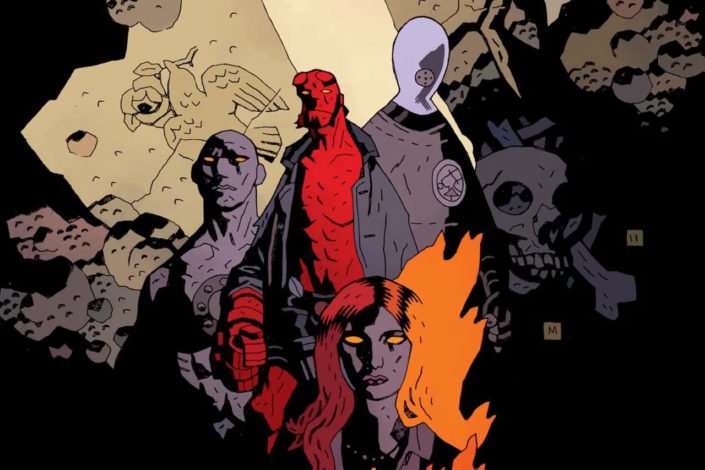
The Hellboy Universe is vast and full of monsters. It’s also composed of multiple series and miniseries, stories published in a non-chronological order. The following article is not the ultimate reading order, it’s a reading guide, an attempt to offer a good view of one of the best comic book universes.

Created by writer-artist Mike Mignola (you can read about the origin of the creation of the character here), Hellboy is a half-demon who was summoned from Hell to Earth as a baby by the “Mad Monk” Grigori Rasputin for the Nazis. Adopted by Professor Trevor Bruttenholm, the man behind the United States Bureau for Paranormal Research and Defense (also called the B.P.R.D.), Hellboy grew up with humans and learned to hunt monsters. As an adult, he is easily identifiable. After all, he is red-skinned, huge with a tail, horns, and cloven hooves for feet, and his right hand is made of stone.

Working with the B.P.R.D., he hunts Nazis, witches, and other types of Lovecraftian monsters, teaming up with the amphibian humanoid Abe Sapien, and pyrokinetic Liz Sherman. As the years pass, Hellboy must confront who he really is and fulfill his destiny as the B.P.R.D. becomes the first line of defense against cosmic menaces.

Read More »Hellboy Universe Reading Order (Hellboy, BPRD, Abe Sapien), from the mind of Mike Mignola

The Legend of Korra Comics Reading Order, the sequel to Avatar: The Last Airbender

  • by

The Legend of Korra Comic book Reading Order

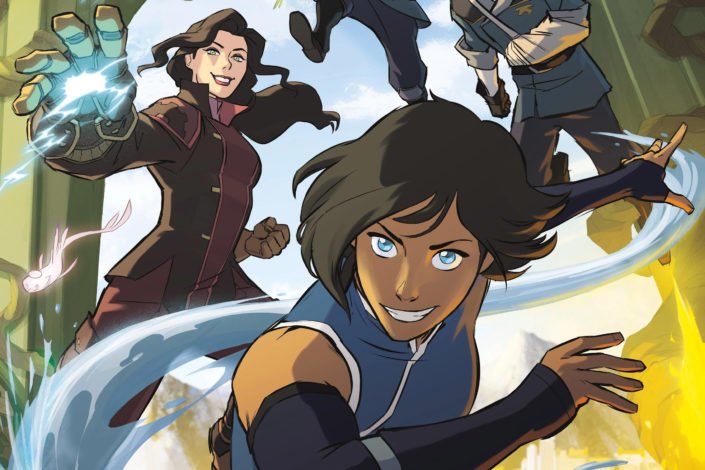
A sequel series to Avatar: The Last Airbender, The Legend of Korra is an animated American television series with four seasons. The story picks up seventy years after the end of the Avatar: The Last Airbender and follows Korra as she faces the difficult challenges, duties, and responsibilities that come with being the Avatar.

Now, the adventure continues in comic book form, with most stories taking place after the conclusion of the show’s official run. Here is the official synopsis:

“Relishing their newfound feelings for each other, Korra and Asami leave the Spirit World . . . but find nothing in Republic City but political hijinks and human vs. spirit conflict! A pompous developer plans to turn the new spirit portal into an amusement park, potentially severing an already tumultuous connection with the spirits. What’s more, the triads have realigned and are in a brutal all-out brawl at the city’s borders–where hundreds of evacuees have relocated! In order to get through it all, Korra and Asami vow to look out for each other–but first, they’ve got to get better at being a team and a couple!”

What to read before The Legend of Korra?

Before going into The Legend of Korra, you can watch and read about Avatar: The Last Airbender, then (re)discover The Legend of Korra animated series.

Read More »The Legend of Korra Comics Reading Order, the sequel to Avatar: The Last Airbender