Skip to content

Image Comics

Chew Comics, Your Reading Guide to the Cannibal detective Series

  • by

Meet Tony Chu. He’s a cibopath, which means that whenever he eats food, he learns everything about that food, from how it was grown and the pesticides used, to how the animal was killed, and much more. The only food that does not give him these sensations is beets, so Tony eats a lot of them!

Tony Chu is the lead of Chew, a comic book written by John Layman and illustrated by Rob Guillory. It was published by Image Comics between 2009 and 2016. During this time, Tony Chu mostly worked as a cop for the U.S. Food and Drug Administration, using his special skills to solve food-related crimes. 

Although Chew is now established as one of the most popular titles from Image Comics, it was not an easy sell to make for creator John Layman. He explained, “Nobody would give me the time of day on this Chew pitch.” Many people did not think it would sell, but Layman decided to go ahead anyway. he said he “did it as suicide.[…] It was almost my last gasp of comics.” (sktchd.com).

Read More »Chew Comics, Your Reading Guide to the Cannibal detective Series

Stray Bullets Comics: Looking Back At David Lapham’s 30-year-old Crime Classic

  • by

After starting his career as a penciller at Valiant Comics, David Lapham followed Jim Shooter when he left to launch Defiant Comics, but thirty years ago, in 1995, it was his turn to open his own indie publishing house: El Capitan Books. His flagship self-published title was something quite different from what he was known to draw. No superheroes, but black & white crime fiction with the award-winning Stray Bullets series.

Entirely written, illustrated, and lettered by Lapham himself (who won the Eisner Award for Best Writer/Artist in 1996), the long-running series targets a mature audience with bleak stories of violence dipped in drama, romance, desperation, and disillusionment. It’s about regular people and criminals, children and adults, growing up and dying, at the periphery or in the heart of the crime world.

David Lapham’s Stray Bullets is not about one character going forward, as it follows a panel of different characters in stories told in a non-chronological fashion. It builds a large narrative, piece by piece, focusing on human experiences, developing thematically complex, rich tales defying clichés and tropes, notably about the consequences of violence and the cyclical nature of trauma. They are tragic vignettes revolving around people pushed to their limits. Every bullet makes an impact.

Read More »Stray Bullets Comics: Looking Back At David Lapham’s 30-year-old Crime Classic

Tomb Raider Comics, Your Guide to the Top Cow Series Starring Lara Croft

Alongside Indiana Jones, Lara Croft is one of the most famous archaeologists in popular culture, and for good reason! The heroine of the video game franchise Tomb Raider, she is an intelligent and athletic British adventurer who travels the world in search of mysterious artifacts and other magical items. She solves complex puzzles, swims into seemingly impossible places, and shoots bad guys in dangerous locations such as ancient ruins. She does all this while wearing a tank top, shorts, socks, and combat boots, with her hair tied up in a French braid. Most importantly, she stays cool while doing it all!

The first video game was released in 1996. It was the start of a media franchise consisting of many action-adventure games, novels, comics, feature films and short films, animated television series, and even two theme park rides.

Tomb Raider’s first comic book wasn’t published by Top Cow but by the Mean Machines Sega gaming magazine in issues #47-50. Written by the game’s writer Vicky Arnold and penciled by artist Paul Peart-Smith, it was a comic book promotion for the first Tomb Raider game. Our British adventurer also featured, a few years later, in a comic book produced by French publisher Glenat, which was quickly taken off the market for licensing issues. At this stage, Top Cow has finally secured the Tomb Raider’s rights, and was starting to publish Tomb Raider comics.

Read More »Tomb Raider Comics, Your Guide to the Top Cow Series Starring Lara Croft

Lady Mechanika Reading Order, A Guide to Joe Benitez’s Steampunk Comics

  • by

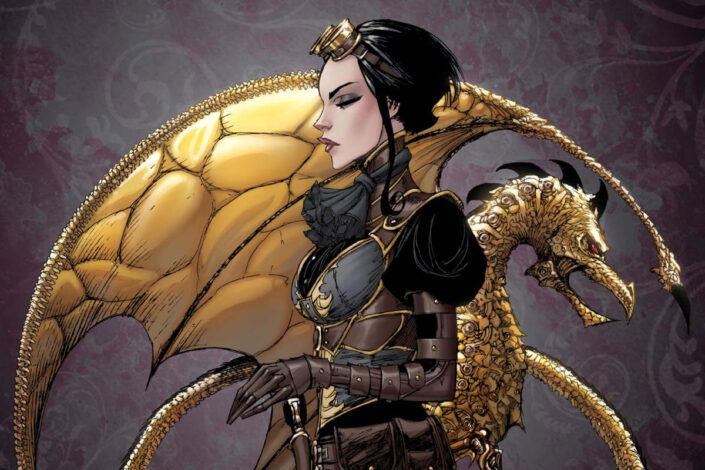
Created by comic artist Joe Benitez, Lady Mechanika is a steampunk-inspired comic book series that debuted in 2010 with the one-shot Lady Mechanika #0 (later subtitled “The Demon of Satan’s Alley“). Originally published by Aspen Comics, then later under Benitez Productions, the series is composed of multiple miniseries.

Set in a steampunk world full of advanced Victorian-era technology, alchemy, and supernatural elements, the Lady Mechanika comic book series follows the adventures of a woman with mechanical limbs who has no memory of her past. Lady Mechanika is a detective and adventurer who is using her skills to uncover mysteries, battle villains, face off against shadowy organizations, and piece together the story of her origins.

Called by the tabloids “Lady Mechanika,” she’s the only survivor of a mad scientist’s cruel experiments that gave her mechanical limbs. With no memory of her past or captivity, she started a new life as an adventurer and private investigator, solving cases others couldn’t or wouldn’t. Still, she never gave up searching for the truth about her past.

With the help of Mr. Lewis, her loyal engineer who assists her with gadgets and technology, and later the young Winifred “Winnie” Huxley, Lady Mechanika navigates a world rich with clockwork automatons, airships, and a blend of science and magic. Read More »Lady Mechanika Reading Order, A Guide to Joe Benitez’s Steampunk Comics

Madman Reading Order, Explore Mike Allred’s Comics Universe

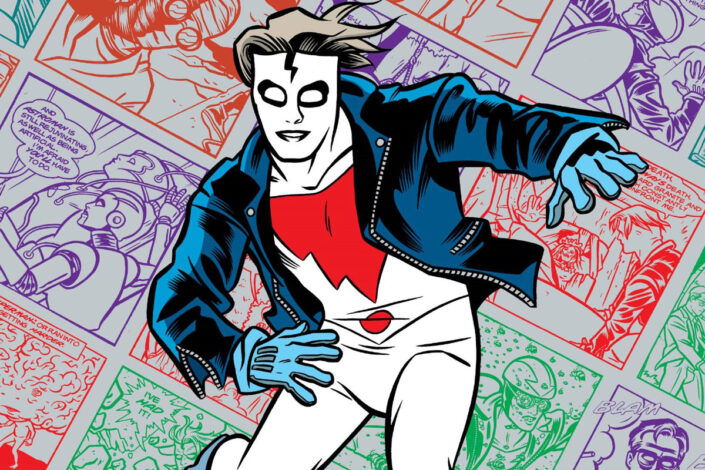
In 1992, Tundra Publishing had a large lineup of comic book series by independent creators. One of them was Madman by Mike Allred, who quickly gathered a few nominations for prestigious awards (it won the Harvey for Best New Series). It was a superhero comic with a unique vision and an atypical aesthetic for the time, as Allred’s Pop Art style certainly made the book immediately distinguish itself from the rest.

From its initial success, Madman Adventures moved to Dark Horse Comics–when Denis Kitchen bought Tundra–where it gained even more popularity and colors (by Laura Allred). As the Madmanverse developed new characters were introduced and spin-off series were created. Madman himself made some appearances in other books, even from other publishers.

The story follows the adventures of Frank Einstein, a man who was revived by two scientists, Dr. Egon Boiffard and Dr. Gillespie Flem. With no memory of his past, he took the name “Frank Einstein” after his creators’ heroes, Frank Sinatra and Albert Einstein. Now reborn with enhanced abilities—superhuman agility, reflexes, and a touch of precognition—Frank remembers little of his past life. His identity as “Madman” is inspired by his childhood comic hero, Mr. Excitement. Despite his Frankenstein-like appearance, including blue skin and scars, he has a girlfriend, Joe Lombard, and is joined by allies like the alien Mott, invisible scientist Gale, and robotic companions Astroman and Machina.

The publication history of Madman is not the simplest as the book changed publishers multiple times. It started at Tundra in the Grafik Muzik anthology before getting a solo book titled Madman Adventures, went to Dark Horses where it evolved to become Madman Comics for a few years, then Allred established his own publishing company, AAA Pop Comics, where he continued Madman’s story with The Atomics–a new comic book series focused on Frank’s superhero team, the Atomics. It stopped in 2001, but Frank Einstein returned in Madman Atomic Comics, which was launched at Image Comics in 2007.

The Madmaniverse is a superhero universe like no other, the colorful vision of one independent cartoonist who developed a cult favorite. Below, you’ll find a guide to reading everything.

Read More »Madman Reading Order, Explore Mike Allred’s Comics Universe

Ghost Machine: Your Gateway to the new Creator-Owned Comics Universes (by Geoff Johns and others)

Many new universes have recently emerged in the comic book world! After the Massive-Verse and the Energon Universe, we’re now taking a look at the shared universes of the recently formed creator-owned company, Ghost Machine!

What is Ghost Machine?

Let’s talk business for a moment! In the early ’90s, seven of Marvel Comics’ most recognized illustrators left the company to found Image Comics, seeking ownership of their creations, better pay, and fairer treatment. As it is said, it changed the industry forever. Since then, Image Comics has published popular titles like The Walking Dead, Witchblade, Savage Dragon, Saga, Criminal, The Wicked + The Divine, Stray Bullets, Chew, Revival, and many more!

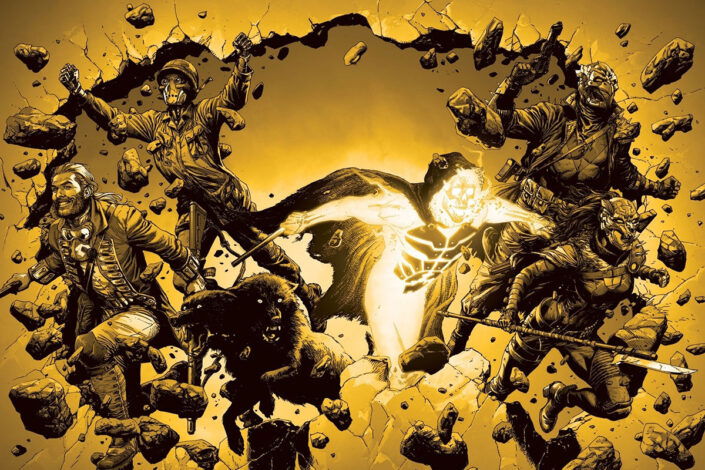
So, what does all of this have to do with Ghost Machine? Founded in October 2023, Ghost Machine is an independent studio, or if we want to be more specific, a creator-owned comic book creative studio. The creators own the company, the characters, and the universes together (as well as everything coming from it in other forms of media and merchandising). Image Comics is simply in charge of the promotion and distribution.

Read More »Ghost Machine: Your Gateway to the new Creator-Owned Comics Universes (by Geoff Johns and others)

Energon Universe Reading Order (Skybound’s Transformers, GI Joe, Voir Rivals…)

  • by

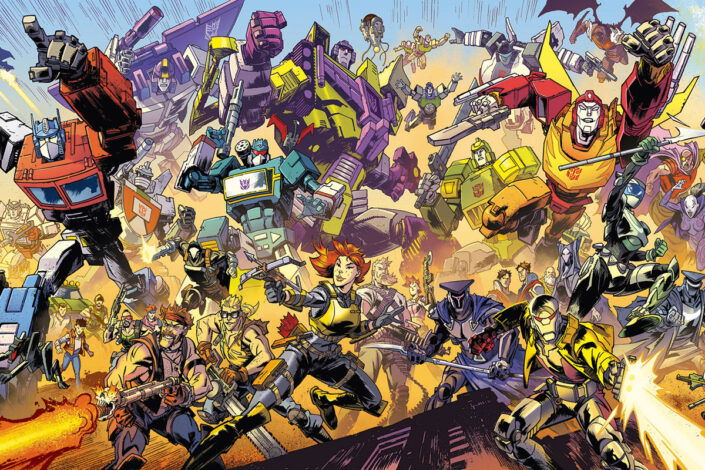
At the end of 2020, IDW lost the license to publish comic books from the Hasbro Universe. Therefore, series like Transformers and G.I. Joe went elsewhere. More precisely, they went to Image Comics via Robert Kirkman’s Skybound Entertainment imprint.

Naturally, the new creative teams didn’t continue with what was done at IDW. Instead, a new comic book universe was launched: The Energon Universe. It uses creative elements from Transformers and G.I. Joe, such as familiar concepts and characters, but also introduces original materials, notably with the all-new Void Rivals.

“I’ve loved these characters for most of my life and to have the opportunity to add to the already rich tapestry Hasbro has built with the all-new Void Rivals is an unbelievable opportunity. If you look at everything done with Transformers and G.I. Joe, you can see the inkling of a vast universe with tremendous potential for crossovers and interaction that will enhance the fan experience while staying true to the individual identities of both concepts. I look forward to exploring that potential for years to come.” – Robert Kirkman.

Juggling between ongoing and limited series, with some one-shots added to the mix, the Energon Universe was officially launched in June 2023. The creative teams are made of top talents with writers like Robert Kirkman, Daniel Warren Johnson, Joshua Williamson, Kelly Thompson, and Dan Watters (and more to come), and artists like DW Johnson, Lorenzo De Felici, Jorge Corona, Tom Reilly, Andrea Milana, Marco Ferrari, and more.

Read More »Energon Universe Reading Order (Skybound’s Transformers, GI Joe, Voir Rivals…)

The Walking Dead Comics Reading Order/Timeline, a Zombie post-apocalypse universe by Robert Kirkman

  • by

The Walking Dead Comic Book Reading Order

There is no doubt that The Walking Dead is one of the most popular comic book series, gaining widespread recognition at the start of the 2010s with the television adaptation by AMC. Now a media franchise, it includes seven live-action television series, eight web series, several video games, novels, a role-playing game, and even an indoor roller coaster haunted attraction at Thorpe Park in England. The zombie apocalypse that captured the world’s attention began in 2003 with the original comic series.

Created by Robert Kirkman (Invincibles) and Tony Moore, The Walking Dead almost didn’t see the light of day as the two men struggled to sell their pitch. Their initial proposal, titled Dead Planet, was set in the 27th century, where a mysterious mineral on a newly discovered planet turned people into zombies, intended as a weapon. After Image Comics rejected the idea, Kirkman returned with a reworked concept, this time set on Earth and centered around the Grimes family during a zombie apocalypse in the 1960s. The comic series was initially called Night of the Living Dead, after the 1968 George Romero classic film. However, Image Comics co-founder Jim Valentino pushed for a more original concept, one with no ties to another classic zombie story.

Kirkman then proposed The Walking Dead with a more traditional approach, but the pitch was again rejected for being “too normal.” To secure the green light from Image Comics, Kirkman added a twist: the zombie plague was caused by aliens, turning the story into an alien invasion tale. Although this secured approval, Kirkman never actually intended to include aliens in the comic book.

Drawing inspiration from 28 Days Later (itself a nod to The Day of the Triffids), The Walking Dead begins with Rick Grimes, a Kentucky deputy who is shot in the line of duty and awakens from a coma to find that the world as he knew it is gone. In just a few months, society has crumbled: no government, no grocery stores, no mail delivery, and no cable TV. An epidemic of apocalyptic proportions has swept the globe, causing the dead to rise and feed on the living. With his family missing, Rick travels to a military evacuation zone in Atlanta to find them and joins a small group of survivors along the way, all while trying to adapt to life in this terrifying new world…

Read More »The Walking Dead Comics Reading Order/Timeline, a Zombie post-apocalypse universe by Robert Kirkman

Criminal Reading Order, The Ed Brubaker and Sean Phillips’ Celebrated Comics

Originally published by Marvel Comics’ Icon imprint before being moved to Image Comics, Criminal is a long-running creator-owned comic book series by writer Ed Brubaker and artist Sean Phillips (the duo behind Reckless). It has become the most prominent independent crime comic of the last twenty years and is now adapted for television on Prime Video.

Launched in 2006, Criminal started as a ten-issue series before coming back in multiple formats through the years, from graphic novel to one-shot. Every storyline works as a standalone story that takes place in a much larger narrative–mostly articulated around the Lawless Family and the mob boss Sebastian Hyde.

As a crime comic series, Brubaker and Phillips’ creation explores the many forms of the genre. In an interview with Tom Spurgeon at the launch of the series, Brubaker stated “The kinds of stories we’ll be putting all these characters through, though, run the gamut from the heist caper, to the revenge story, to the man on the run story, and even beyond that to the sort of meta-noir innocent man caught in a web of crime story.” That’s exactly what they did.

Eighteen years later, we have a collection of books, stories that were not written or published in chronological order, featuring a group of recurring characters whose lives we discover through dark and violent events. The following guide is here to help you find the stories you may have missed and to offer multiple ways to read them.

Read More »Criminal Reading Order, The Ed Brubaker and Sean Phillips’ Celebrated Comics

Millarworld Reading Order

  • by

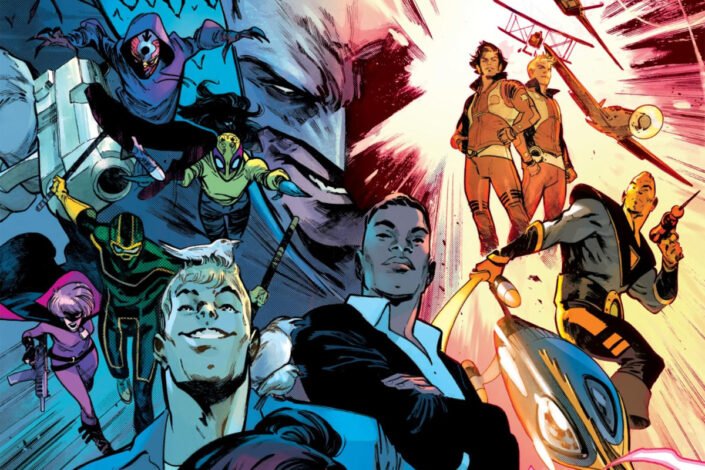
According to Mark Millar, all of the titles that are part of his created-owned imprint Millardworld, take place in the same continuity. It may be confusing at times, but it’s because some of the stories are fiction in this fictional universe–like the Jupiter’s Legacy stories.

Launched in 2003 with the miniseries Wanted, the Millarworld imprint published all of Mark Millar-created series and the works of some authors who write stories in his universe (like with the Hit-Girl series). Millar worked with popular artists to give life to his stories like John Romita Jr. (Kick-Ass), Frank Quitely (Jupiter’s Legacy), Greg Capullo (Reborn), Stuart Immonen (Empress, The Magic Order 2), Rafael Albuquerque (Huck, Prodigy), Olivier Coipel (The Magic Order), Pepe Larraz (Big Game), Dave Gibbons (Kingsman: Secret Service), and a lot more.

Most of those series work as standalone. In fact, the links to the other parts of the Millarworld are often limited to easter eggs or one-line references. However, the Big Game series is a crossover that connects a lot of the previous series (Hit Girl, Empress, Kingsman, The Chononauts, Kick-Ass, Nemesis, Huck, The Magic Order, and more). With that, the idea of reading the series in a certain order started to make sense.

Read More »Millarworld Reading Order