Skip to content

Marvel

Norman Osborn: The Evolution of Spider-Man’s Nemesis, from Green Goblin to Reformed Man

In the world of superhero comics, so many villains are just coming back, barely evolving as the decades pass. Still, some took on prominent roles and were forced to grow with the times as their continuing existence became so tightly connected to one of the superheroes that they couldn’t stop fighting. They may not be legion, but Norman Osborn is certainly one of them.

As one of Marvel Comics’ most complex and enduring antagonists, he is known primarily as the original Green Goblin. A personal nemesis to Spider-Man, Osborn’s career of villainy has led to some of the most impactful moments in Peter Parker’s life, but also in the Marvel Universe as a whole. 

Read More »Norman Osborn: The Evolution of Spider-Man’s Nemesis, from Green Goblin to Reformed Man

Star Wars Omnibus Reading Order!

  • by

May the 4th Be With You! Since the movie’s release in 1977, Star Wars Comics have been produced with few interruptions. It all started at Marvel Comics with a six-issue comic book adaptation of the film. It was such a success that it helped Marvel survive the financial difficulties of the time. The series continued with original stories starting from issue #7 and became one of the top-selling titles. Marvel published the series until 1986, totaling 107 issues and three Annuals.

During this period, a newspaper strip was also distributed by the Los Angeles Times Syndicate and the Watertown Daily Times, while Pendulum Press released in 1978 a 31-page loose adaptation designed for classroom use. For several years after Marvel’s comic series ended, there was few Star Wars material. This changed in 1991 when Dark Horse acquired the license and revived the franchise with the release of the novel Heir to the Empire—the first book of a trilogy by Timothy Zahn—which was also adapted into a comic book. After that, the publisher launched dozens of series set in the Star Wars universe over the next 20 years.

A well-established fact now, Dark Horse lost the license in 2014 to Marvel Comics, which became the primary publisher of Star Wars Comics. It marked the end of the Star Wars Expanded Universe and the beginning of a new continuity known as Star Wars Canon. In 2017, IDW Publishing launched the anthology series Star Wars Adventures, and in 2022, Dark Horse started publishing new Star Wars comics and graphic novels.

For Star Wars Day, we look closer at the many Star Wars omnibus editions—from Dark Horse’s older collections to Marvel’s ongoing omnibus line to help you navigate this vast galaxy!

Read More »Star Wars Omnibus Reading Order!

Best 1980s Marvel Comics: The Stories That Defined a Decade

These were good years for the comic book industry. Actually, they were great years. The 1980s were a period of tremendous financial and creative growth that transformed the medium. The emergence of the Direct Market, with specialty comic book stores, created more opportunities for creators and led to a wider range of publications.

It was during this decade that Alan Moore and Dave Gibbons’ Watchmen, Frank Miller’s The Dark Knight Returns, and Art Spiegelman’s Maus were published, breaking new comic book narrative ground for future writers. It was also during this decade that DC Comics was rebooted with Crisis on Infinite Earths and started its Renaissance with the British Invasion of creators. 

The comic book industry rose and fell during the 1980s, including Marvel Comics. The House of Ideas evolved in those years, embracing darker storytelling, launching new comic book series, trying new formats, hiring new talents, and releasing some of the most celebrated and iconic stories in its history.

Maybe one of the most important decades on the creative front, the 1980s helped redefine Marvel’s superheroes by pushing boundaries and going where the industry had never been before. Today, we explore the best Marvel stories of the decade!

Read More »Best 1980s Marvel Comics: The Stories That Defined a Decade

Comic Book News of The Week: Grant Morrison returns to Batman and More

What’s going on in the Comic Book World? Life can be pretty busy, so we highlight recent news and articles that may catch your interest in our fifth edition of Comic Book News.


A week ago, Grant Morrison appeared on the Comic Book Couples Counseling podcast to discuss All-Star Superman and other Man of Steel topics. But what made waves wasn’t the praise for Alex Ross’s Peace on Earth or the reveal that Superman Beyond is a personal favorite. It was the unexpected announcement that Morrison is working on a new Batman project.

As Morrison explained: “I just actually took on a job that I wasn’t expecting because I don’t need to do these things anymore, and I only do them for something interesting. It’s not Superman but it’s a Batman thing. I didn’t ever think I’d go back, but if someone comes to me with something good, and it just strikes a spark and it starts a fire, then of course I’ll do it. I’m not writing it off.”

While there are no more details, this was enough to spark excitement!

Read More »Comic Book News of The Week: Grant Morrison returns to Batman and More

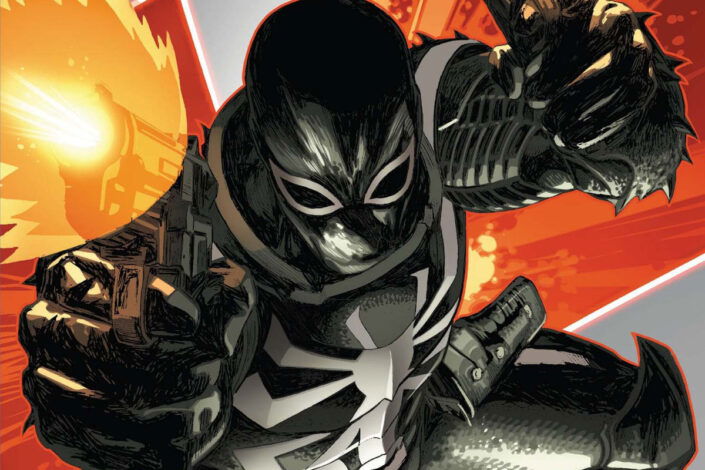
Flash Thompson Agent Venom Reading Order Guide

So few characters really change in the comic book world, but there are exceptions like Eugene “Flash” Thompson. Created by Stan Lee and Steve Ditko, he first appeared in Amazing Fantasy #15 (1962), the same comic that introduced Spider-Man. A high school jock, Flash was one of Peter Parker’s biggest tormentors, constantly mocking him for his bookish nature, but also Spider-Man’s number one fan, never suspecting that the hero he idolized was the same teenager he bullied daily. From that, he would go on to become one of Spider-Man’s most unlikely allies, a war hero, and even the host of the Venom symbiote!

Flash Thompson: The Early Years

Flash was never a villain, his story is not one of redemption, but one of growth as a human being. Despite his antagonistic behavior, Flash had moments of kindness, and over time, he began to mature and became a more noble human being. His admiration for Spider-Man always indicated his sense of justice. After high school, Flash enlisted in the military to serve in the Vietnam War and returned later, eventually becoming Peter’s roommate. At that point, their relationship had already evolved into a more cordial territory, and they developed a true friendship.

Read More »Flash Thompson Agent Venom Reading Order Guide

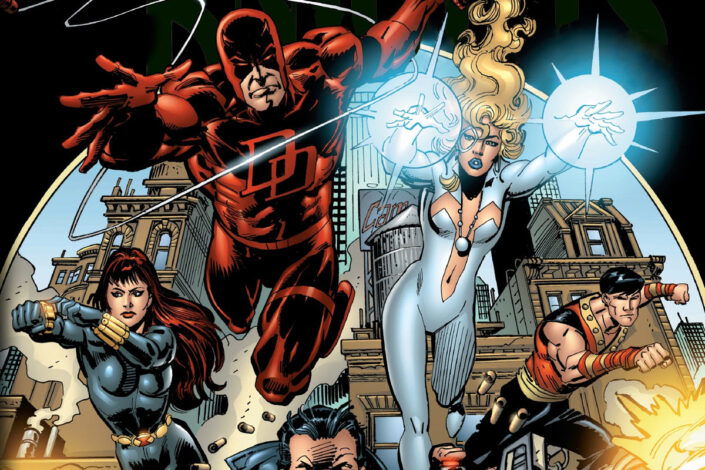
Marvel Knights Comics, The Imprint That Rescued Marvel with Daredevil, Punisher, and more!

In 1998, Marvel Comics was not in the best of shape but was starting to look better. Even if the Heroes Reborn publishing initiative had not been the expected success, as it was an expensive affair, the idea of contracting exterior talents to package comics for the company was still explored. This time, though, Marvel president Joe Calamari wanted to do it at a reasonable cost. He consulted Gareb Shamus (Wizard magazine publisher), who recommended his two friends, Joe Quesada and Jimmy Palmiotti.

At the time, the two men were the founders of the independent comic book publisher Event Comics (Ash, Painkiller Jane…) and took the contract as a way to make money for their company and try to promote their books by association with the popular Marvel Comics characters. Unlike what Image Comics had to do with Heroes Reborn, their deal was not to relaunch some of the biggest comics of the company but to take over some of the weakest and try to save them. And that’s how Marvel Knights came to be.

Read More »Marvel Knights Comics, The Imprint That Rescued Marvel with Daredevil, Punisher, and more!

Mystique Reading Order (X-Men)

Some mutants are older than they look. We all know that Wolverine‘s healing factor slowed down the effects of aging granting him an extended lifespan. But he is not the only Marvel mutant to have quite a long life. This is also the case of the mysterious and dangerous Mystique.

Mostly known as Raven Darkhölme, Mystique has hidden behind many aliases, such as Sherlock Holmes, Foxx, Surge, Raven Wagner, and more. Her true identity is still a mystery, despite having made her first appearance in Ms. Marvel #16 (January 1978), more than 47 years ago.

This unknown past fit quite well with the shapeshifting mutant terrorist who found her way to the Marvel Comics page by accident. Artist Dave Cockrum simply drew a beautiful woman who was colored by Paty Greer (the future Mrs. Cockrum) and Marvel colorist Andy Yanchus. When Claremont saw the design, he asked for information about her and if he could use her. He came up with the name Mystique and included her in Ms. Marvel.

Read More »Mystique Reading Order (X-Men)

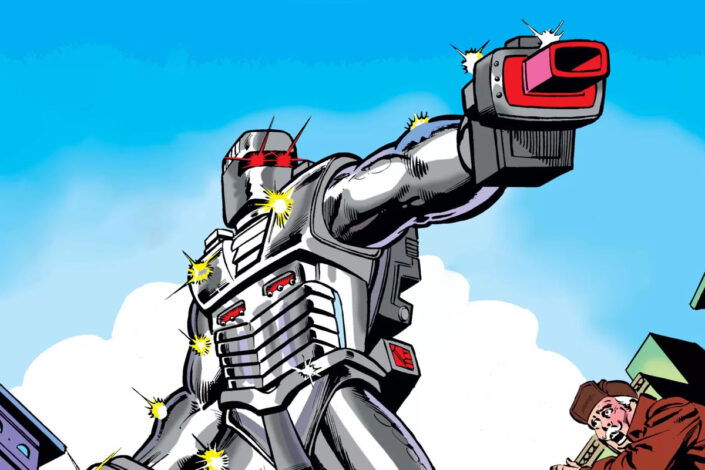
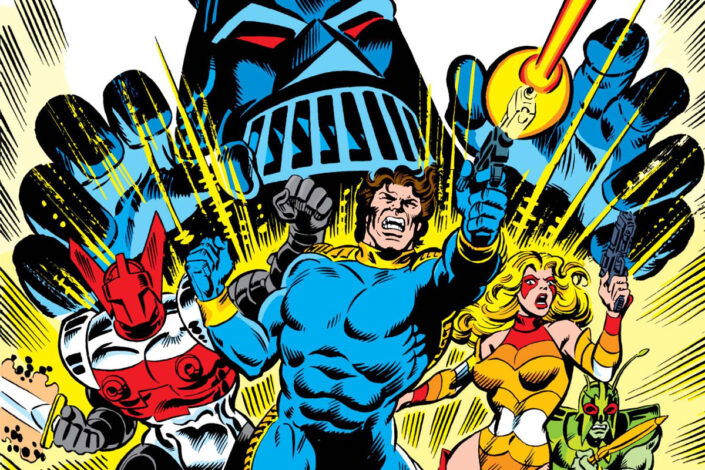
ROM: Marvel’s SpaceKnight, from failing toy to hit comics

  • by

In the late 1970s, the success of the Star Wars comics led to even more licensed comics. One of them was The Micronauts, a set of action figures that Bill Mantlo and Michael Golden turned into a successful comic book series. A success that Parker Brothers noted and hoped to be reproduced with one of his new toys, ROM the Spaceknight.

From The ROM Toys to The ROM Comics

Then Marvel Comics editor-in-chief, Jim Shooter asked writer Bill Mantlo and artist Sal Buscema–two creatives who were open to work on non-superhero comics, in fact, Buscema was the only artist who agreed to do it—to develop a story as the toy came with close to no story element.

Mantlo was not aware of the toy before that and immediately thought about doing something in the vein of 1950s sci-fi with a touch of Arthurian myths. He added tragedy and Brandy Clark, ROM’s human ally, who eventually becomes romantically linked with him. But Jim Shooter and editor Al Milgrom himself provided a few ideas.

The final result has often been compared to the Silver Surfer, but ROM the Spaceknight had his own rich mythology that helped him stand apart. ROM is a noble warrior from the utopian planet Galador who volunteers to become a Spaceknight—a cyborg warrior—to battle the Dire Wraiths, a shape-shifting alien species threatening the universe—his primary weapon is the Neutralizer, which banishes Dire Wraiths to Limbo. Rom sacrifices his humanity to become a Spaceknight, clad in powerful armor that enhances his abilities but also isolates him emotionally.

Read More »ROM: Marvel’s SpaceKnight, from failing toy to hit comics

Comic Book News of The Week #3: A New History of the DC Universe and More!

What’s going on in the Comic Book World? Life can be pretty busy, so we highlight recent news and articles that may catch your interest!


Lost in the DC Universe Continuity? Mark Waid and a team of artists will make it easier to understand soon with New History of the DC Universe, a four-issue series that will align all of DC’s continuity over the past 90 years through the eyes of Barry “The Flash” Allen. 

“This is my dream project,” said series writer Waid. “It’s a chance to realign all of DC’s sprawling continuity into one master timeline, and to be joined by some of comics’ greatest artists to make it shine. With new information for even longtime fans, plus Easter eggs galore, this series will be an essential read for DC fans.”

The debut issue features art by Jerry Ordway and Todd Nauck, who join Waid in chronicling Barry Allen’s journey from the birth of the DC Universe to the rise of the Justice Society and the Golden Age of Heroes.

“I’m having an absolute blast with this project,” said co-artist Nauck. “Mark has come up with something cool for me to draw on every page, and it’s been an honor to share art chores with a comics legend like Jerry Ordway. The DC editorial team has coordinated a wealth of deep-dive references for me to draw from, and I’m learning new aspects of DC history I hadn’t known before—and I’ve been reading DC comics for decades!”

“As one of the artists who was part of Crisis on Infinite Earths in the 1980’s, added co-artist Jerry Ordway, I am thrilled to be involved in telling the story of this newest DC Universe with Mark and Todd.”

Read More »Comic Book News of The Week #3: A New History of the DC Universe and More!

Micronauts: Marvel Comics went into the Micro Verse

  • by

In 1977, Marvel Comics was not doing that well until the movie Star Wars helped propel the newly launched comics based on George Lucas’s creation to the top of the charts. It was such a massive hit that the company started looking into more licensed comics, from Godzilla to Hanna-Barbera cartoon adaptations, Edgar Rice Burroughs comics, and Battlestar Galactica. It represented 20% of Marvel Comics’ production and some fans were not too happy about that. But it was a commercial success and it was not going to stop any time soon.

Introduced in 1974 by Japanese toy maker Takara (also known as Tomy in English), Mircoman was included in the line “Henshin Cyborg” but was not an 8 or 12-inch action figure, as it was the standard back then, but was 3.75-inch tall. The marketing used the size to sell the idea that this miniature bionic alien came from a place called Micro Earth. It was so successful that Microman got his own line. Soon, the American company Mego started importing them into the US under the name Micronauts.

Read More »Micronauts: Marvel Comics went into the Micro Verse