Skip to content

Carole

Co-founder and owner of Comic Book Treasury. The woman behind the Batfamily Guide (and the many Robins Guides), the Fables Universe and some of your favorite Spider-People among others!

Archer & Armstrong Reading Order (2012 Valiant Reboot)
  • by

The world of superhero comics is dominated by Marvel and DC Comics, but other publishers also have their own superhero worlds. This is the case with the Millarworld (including Kick-Ass and Jupiter’s Legacy), the Wildstorm Universe (now owned by DC Comics), the Spawn’s Universe or the Invincible Universe (also considered part of the bigger Image Universe).

Today, we turn our attention toward another superhero comic book publisher, and more specifically toward a unique superhero duo: Archer and Armstrong from the Valiant Comics Universe. Created by Jim Shooter, Bob Layton, and Barry Windsor-Smith, our two adventurers made their first appearances in Archer & Armstrong Vol. 1 #0, an issue explaining Archer’s background and how the two men meet.

Armstrong, also known as Aram Anni-Padda, is a hedonist noted for his drinking and sexual adventures. He is one of three immortal brothers (along with Gilad and Ivar the Timewalker). Obadiah Archer is the polar opposite of Armstrong, a martial genius raised by Evangelical Christians who ran away from home after learning his parents were serial killers. They are both targets of an old religious order called “The Sect.”

The original Archer & Armstrong ran for two years, concluding with issue #26 in 1994. Following Valiant’s takeover by Acclaim Entertainment in 1997, the Valiant characters were relaunched for the first time. It spawned the short series Eternal Warriors (as well as additional one-shots) in which the three eternal brothers banded together to combat threats. Archer is no longer a character in this story because he died and was replaced with a new character named LeMont Quirrel.
 
When Acclaim Entertainment declared bankruptcy in 2007, the newly formed Valiant Entertainment, Inc. purchased many characters’ rights and relaunched Valiant Comics. Fred Van Lente and Clayton Henry revived Archer and Armstrong with more success. They are the versions at the center of this reading order, spanning their escapades from 2012 to 2022, the publication date of their most recent series (to this day)!

Read More »Archer & Armstrong Reading Order (2012 Valiant Reboot)
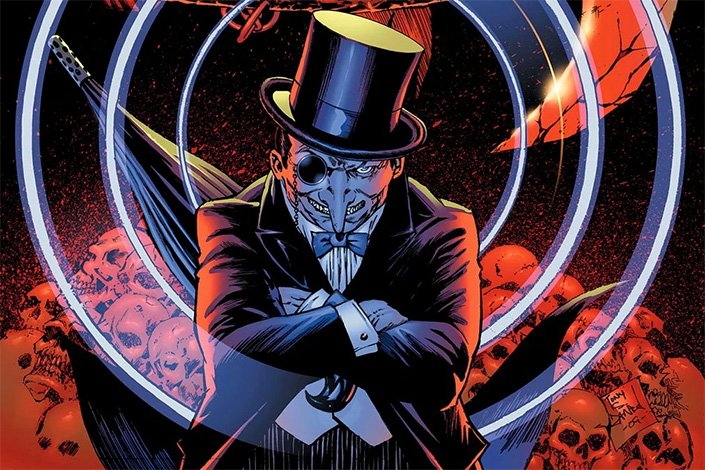
Who is The Penguin? The Origin Story of Oswald Cobblepot

  • by

The Penguin has long been a fixture in Batman’s rogues gallery. With villains like The Joker, he is undoubtedly one of the most recognizable among the public, thanks to some iconic appearances on television and in movies.

The Penguin thrived as a more traditional villain during the Golden Age and Silver Age of comics. His criminal exploits often revolved around stealing precious items, frequently with bird-related themes. Unlike many of Gotham’s criminals, The Penguin is depicted as sane, relying on his intellect and persona to set himself apart and achieve his ambitions.

The Penguin’s popularity soared to new heights with the 1960s Batman television series, where Burgess Meredith memorably portrayed him. This iconic depiction influenced future iterations of the character, infusing the Penguin with more explicit bird-like features and distinctive personality quirks. Behind the appearance and the campiness hides a criminal mastermind and one of the more obscure villains in the Batman comics.

Read More »Who is The Penguin? The Origin Story of Oswald Cobblepot

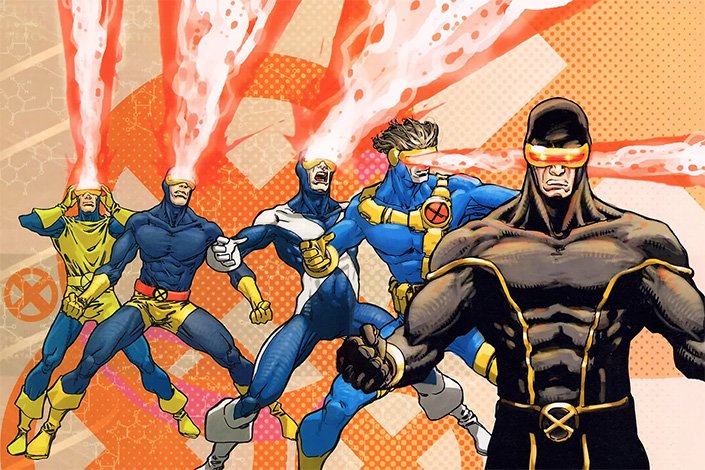
The Best of Cyclops Comics, Your Essential Scott Summers Reading Order

  • by

He is an X-Men founding member. He stands out among many mutants due to his unique eyewear and deadly optic rays. Yes, we’re talking about Scott Summers, a.k.a. Cyclops.

Created by Stan Lee and Jack Kirby in 1963, Cyclops is a polarising X-Man who is as much loved as he is hated, and who is frequently misunderstood. Scott Summers, who was first regarded as the archetypical hero, has never been without flaws or weaknesses. This resilient but very effective leader suffered from poor self-esteem and a tendency to dwell on his mistakes. He was also not the type of man to express his feelings and had difficulties verbalizing his problems. You guessed it, Cyclops has had to make some difficult decisions, make sacrifices, put his life in peril several times, and live in some crazy situations in the sixty years since his initial appearance!

His love life is also complicated, as he has been married to Jean Grey and her clone Madelyne Pryor, as well as being in a long-term committed relationship with our favorite White Queen, Emma Frost.

As the character celebrates the sixty anniversary of his first appearance, Scott Summers/Cyclops finds himself right now in the spotlight with this essential reading order, listing the best Cyclops comics to read to understand his character, motivations, and transformations. Beware! A Best/Essential Comic for a character can be a mediocre or okay story with great characterization or important for the character’s evolution.

Read More »The Best of Cyclops Comics, Your Essential Scott Summers Reading Order

DC Comics Timeline, Your Guide to each era from the Golden Age to DC All In

DC Comics, one of the biggest American comic book companies today, began under a different name in 1934. Major Malcolm Wheeler-Nicholson established National Allied Publications in order to produce New Fun: The Big Comic Magazine #1 (February 1935), subsequently renamed More Fun, the first comic book to feature original tales in several genres rather than comic strip reprints.

Soon after, Wheeler-Nicholson launched a second magazine, New Comics, which later became Adventure Comics. His third and last title was Detective Comics, which debuted in March 1937 and is credited with introducing Batman to the world. Wheeler-Nicholson had to collaborate with magazine distributor Harry Donenfeld to produce this third title since he was in debt. Detective Comics, Inc. was founded at the time, but Wheeler-Nicholson’s financial difficulties persisted, and he was forced out a year later. After National Allied declared bankruptcy, Detective Comics, Inc. purchased it.

Not long later, Action Comics #1 was published, creating the Superman universe. As the character gained popularity, the Golden Age of Comic Books began, and the publisher launched an array of new superheroes. Throughout the history of comic books, DC Comics has been forced to reestablish its universe and main continuity several times, with various events bringing in a new era each time.

The following is a presentation of each era, consisting of amazing comics, dreadful comics, bizarre, humorous, and much more.

Read More »DC Comics Timeline, Your Guide to each era from the Golden Age to DC All In

DC Graphic Novels for Young Adults, The Complete Reading List

  • by

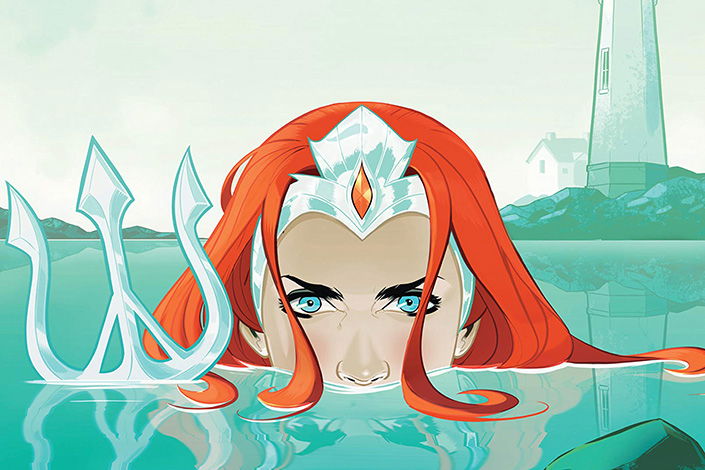
In 2017, DC Comics announced a new imprint to publish original one-shots, graphic novels, and a few reprints targeting young readers in the hope to attract an audience that wasn’t familiar with DC in the first place. The imprint was first named DC Ink, with Mera: Tidebreaker as the first title published.

But in a classic DC move, it didn’t take long for the company to relaunch. One year after the official launch of DC Ink, DC Comics made a few changes. It was mostly tied to a simple internal reorganization, shuttering previous imprint lines in favor of new imprint lines defined by age. DC Zoom was renamed DC Kids (ages 8-12) and Vertigo became DC Black Label (17+).

DC Ink was replaced by DC Graphic Novels for Young Adults with the goal to present DC characters with stories outside of the main continuity, directed at readers aged 13 and older. They explore a large array of characters, heroes, anti-heroes, and villains.

Below you’ll find a list of the stories published in the DC Comics Young Adult Graphic Novels line, with the Teen Titans, Batgirl, Poison Ivy, Wonder Woman, Swamp Thing and more…

Read More »DC Graphic Novels for Young Adults, The Complete Reading List

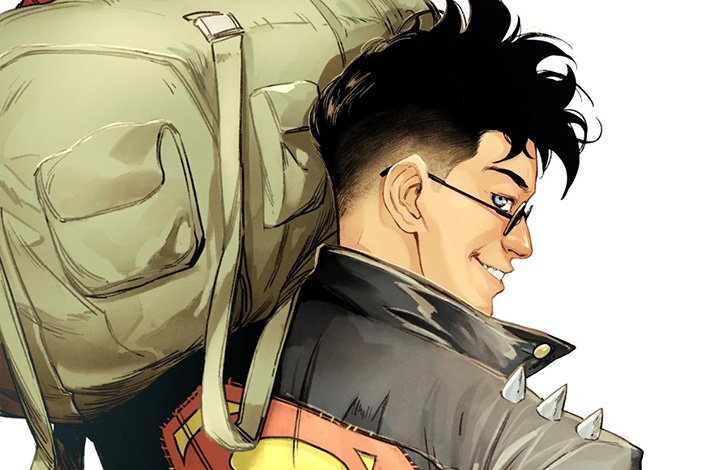
Conner Kent Reading Order (Superboy, Kon-El)

For a long time, Superboy designated simply the adventures of Kal-El primarily set in Smallville when he was a boy, teenager or young adult. This changed in 1993 when a second Superboy was introduced.

Created by writer Karl Kesel and artist Tom Grummett, our new Superboy was introduced in The Adventures of Superman #500 (June 1993). For the first ten years, he was portrayed as a genetically-engineered metahuman clone created by Project Cadmus as a copy and closest genetic counterpart to Superman. His origins were retconned in 2003 in Teen Titans (vol. 3) #1 (September 2003) where he was established as a human/Kryptonian binary clone derived from Superman and Lex Luthor’s DNA.

Also, Superboy didn’t have a real name for more than five years (in real-time). He had to wait until Superboy (vol. 4) #59 (February 1999) where Superman invited him to the Fortress of Solitude and offered him the Kryptonian name of Kon-El. He will later take the civilian identity of Conner Kent (see Teen Titans Vol.3).

Blending Superman’s moral attributes with a young and rebellious personality, Kon-El is known for having to grapple with conflicting influences of his genetic heritage. He had to face many challenges, by himself or with his best friends, Tim Drake and Bart Allen, and the rest of the Young Justice/Teen Titans team.

To know more about Kon-El, let’s read some comics with this Superboy/Kon-El reading order!

Read More »Conner Kent Reading Order (Superboy, Kon-El)

Sentry Reading Order, the Golden Guardian of Good

  • by

Who is Sentry? It’s a question that has been asked more than once since his first appearance in Marvel Comics—and one that has come up again with Lewis Pullman playing him in the upcoming Thunderbolts movie.

Created by Paul Jenkins and Jae Lee, Sentry—also known as Robert Reynolds—made his debut in The Sentry #1, published in September 2000. Often presented as a psycho Superman, Robert Reynolds took a strengthened version of the Super Soldier Serum (from Captain America) and gained the power of a million exploding suns! He then became Sentry, one of the greatest superheroes who ever existed, with the Void as his archenemy…

Or maybe, all of this is false? The truth is far more convoluted since Robert Reynolds was actually a drug addict with mental health problems, including paranoid schizophrenia. Taking the serum transformed Robert into a reality warper. The man can subconsciously alter reality and give way to Sentry – the best Robert can be – and Void – the worst Robert can be.

Robert Reynolds/Sentry is undeniably one of the most complex and intriguing characters introduced in the past two decades. His complex persona and intriguing journey can clearly be the subject of a whole other article.

For the moment, you can simply discover Sentry’s history with this reading order!

Read More »Sentry Reading Order, the Golden Guardian of Good

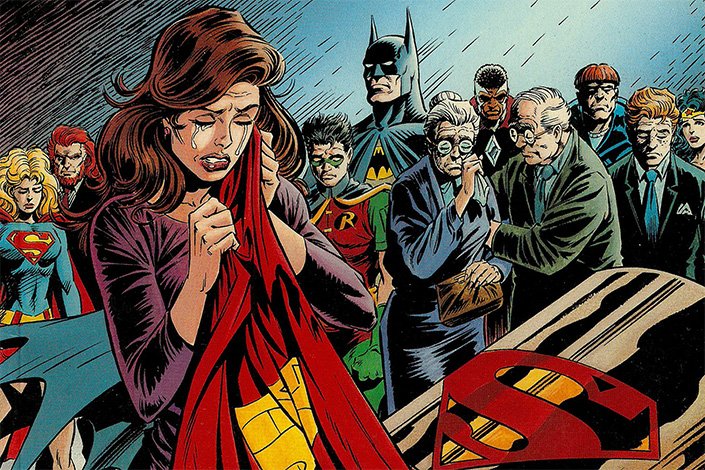
Superman’s deaths : Exploring the Multiple Deaths of the Man of Steel in the comics

  • by

It’s no secret that Superman is nearly indestructible, except when he’s in the presence of Kryptonite. But, like all other comic book characters, he is not immune to death. On the contrary, killing off Superman is a popular notion that has been explored several times over the years.

Readers are naturally intrigued by the stories dealing with Superman’s death. Because he is one of the most popular and powerful superheroes, his death has a significant emotional impact as well as a mythical meaning. Those storylines may also have high stakes and epic conflicts in order to create a spectacle based on what Superman means to the readers, his allies, and his foes.

Whatever attracts the readers towards Superman’s death, it is a subject that has been explored throughout the years, from forgettable tales to iconic stories.


Warning! As this article discussed how Superman died in several stories, it is full of spoilers. Tread carefully.

Read More »Superman’s deaths : Exploring the Multiple Deaths of the Man of Steel in the comics

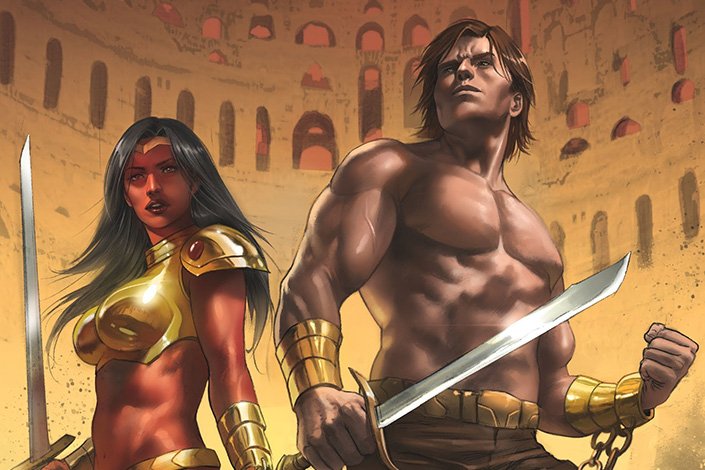
Warlord of Mars/Dejah Thoris Reading order (Dynamite Comics)

  • by

Created by Edgar Rice Burroughs in 1911, the Barsoom series — also called the John Carter of Mars series —  is one of the most influential science fiction and fantasy tales of the 20th Century. The story features John Carter, a veteran of the American Civil War who is transported to the planet Mars, known as Barsoom by its inhabitants, where he lives dangerous adventures, falls in love with the princess of Mars , and saves the world. Some classic tales!

John Carter has influenced characters like Buck Rogers, Flash Gordon, and Superman, as well as other massive stories, including Dune, Star Wars, and Avatar. He was also a popular character among many famous people like Carl Sagan, Michael Crichton, Ray Bradbury, and Arthur C. Clarke.

This is no surprise that John Carter found his way into the comic book format. In the past, John Carter has been adapted by companies like DC Comics (as John Carter featured in Tarzan and Weird Worlds), Marvel Comics (in John Carter Warlord of Mars), and Dark Horse (see Tarzan / John Carter: Warlords of Mars).

But the most important publisher is Dynamite (Red Sonja, Evil Dead), which has released many series in the John Carter Universe since 2010. His main series Warlord of Mars ran from 2010 to 2014 and spawned several spin-offs, most notably Warlord of Mars: Dejah Thoris, as the Princess of Mars is the breakout character of the comics. Several crossover stories have also been published, with other popular female characters from Dynamite, but also with other franchises.

In 2012, Edgar Rice Burroughs Inc., the family company in charge of handling everything associated with the Edgar Rice Burroughs estate, sued Dynamite Entertainment over trademark infringement. It never stopped the publisher from releasing new comics during all that time. The matter was settled in 2014, and both parties worked together to relaunch the series as John Carter: Warlord of Mars.

The Warlord of Mars franchise is still expanding today, and to help you find your way, we have created this Warlord of Mars/Dejah Thoris Comics Reading order!

Read More »Warlord of Mars/Dejah Thoris Reading order (Dynamite Comics)

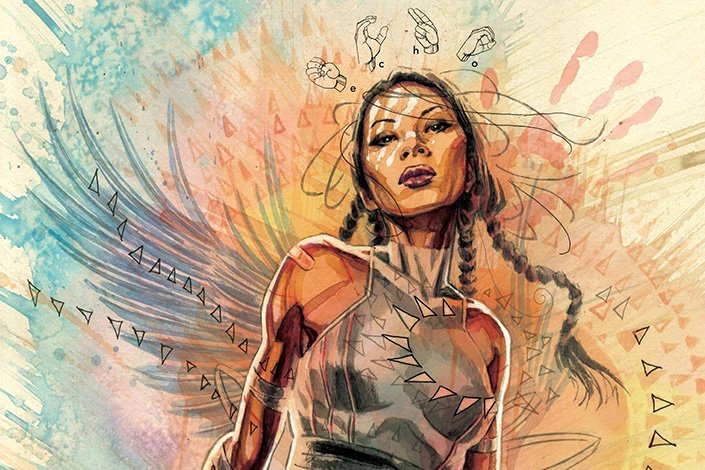
Maya Lopez Reading Order (Echo, Ronin, Thunderbird)

  • by

While Matt Murdock/Daredevil became blind following a childhood chemical accident, Maya Lopez was born blind. Her great ability to lip reading when she was young has delayed her diagnosis. Following her father’s death, a Native American of the Cheyenne Nation and a mob enforcer, Maya was taken care of by Wilson Fisk, the one and only Kingpin. She was sent to a boarding school for special children and discovered she has photographic reflexes – the capacity to memorize anything and copy the exact movements of anything. Her education was then pursued in a school for prodigies.

With a special relationship with Kingpin, this is no surprise that Maya made her debut in Daredevil #9 in December 1999. Created by David Mack and Joe Quesada, Maya was manipulated by Fisk who was using her to destroy Matt Murdock and feeding her lies about Daredevil. Maya took the codename Echo to fight Daredevil before discovering the truth and the Kingpin’s manipulations.

After those events, Maya took the road to find herself and this will lead her to take another alias: she was the first person to be Ronin (before Clint Barton), wearing a suit that conceals her identity, and later joined the Avengers. As Ronin and Echo, she participated in many missions, including a fight against the Hood and Secret Invasion.

Following in the footsteps of characters like Monica Rambeau or Hank Pym, Maya tends to change her alias following her circumstances. Recently, she took Thunderbird as a mantle after being chosen by the cosmic entity known as the Phoenix Force to be her new host. She was then gifted with new abilities including telepathy, flight, superhuman strength, and more.

Maya’s place in the Marvel Universe is clearly expanding, thanks to her introduction to the Marvel Cinematic Universe. She was introduced in the series Hawkeye (2021), portrayed by Alaqua Cox, and her own spin-off, Echo, is planned for 2023!

Read More »Maya Lopez Reading Order (Echo, Ronin, Thunderbird)