Skip to content

Carole

Cable Reading Order

  • by

Cable looks straight at you with his signature intensity

Meet Nathan Summers, time-traveling soldier, powerful mutant, and original X-Force leader, with this Cable comics reading list, covering everything from his first appearance to his team-ups with Deadpool, his X-Men days, the Messiah Trilogy, and more.

X-Men Reading Order - X-Logo

Few characters at Marvel have a backstory as complicated as Cable (with the possible exception of Psylocke). Born Nathan Christopher Charles Summers, Cable is the time-traveling son of Scott Summers (Cyclops) and Madelyne Pryor (a clone of Jean Grey). Behind his conception lurks the mad geneticist Mr. Sinister, who planned to use the child as a weapon to destroy his archenemy, Apocalypse.

As an infant, Nathan was infected by a deadly techno-organic virus incurable in the present. To save him, Cyclops gave Nathan up, sending him 2,000 years into the future (Earth-493) where he could be treated and raised. There was no hope for Scott to ever see his son again… or so he thought.

In this future world, Nathan was raised by the Askani Clan to become the warrior known as Cable, a sworn enemy of Apocalypse. The religious order was led by Mother Askani, a time-displaced version of Rachel Summers, Cable’s half-sister.

Read More »Cable Reading Order

Big Trouble in Little China Comics, a Reading Guide

  • by

Jack Burton is not your ordinary hero… because he’s not a hero at all! He is the iconic sidekick who thinks he is the leading man. This gave us the 1986’s cult classic Big Trouble in Little China, directed by John Carpenter and starring Kurt Russell, Kim Cattrall, Dennis Dun and James Hong.

Although Jack Burton was born ready, the amazing and hilarious adventure he had was almost impossible to predict. The wisecracking truck driver found himself embroiled in an ancient battle between good and evil when his friend Wang Chi’s fiancée was kidnapped by bandits in San Francisco’s Chinatown and had to be rescued.

Despite its lack of success at the box office upon release, the film has become a cult favourite. In fact, almost 30 years later, Boom! Studios continued Jack’s journey through multiple ongoing stories. Today, we are taking a closer look at the adventures of Jack Burton in comics for some serious trouble and serious fun. 

Read More »Big Trouble in Little China Comics, a Reading Guide

Superman Reading Order, The Modern Age (Post-Crisis)

  • by

It’s a Bird… It’s a Plane… It’s Superman! Created by Jerry Siegel and Joe Shuster in Action Comics #1 (1938), Superman is an alien from the planet Krypton who fights crime in Metropolis and the rest of the world. Under the costume is Kal-El, who was sent to Earth as a baby and adopted by farmers Jonathan and Martha Kent, who named him Clark Kent and raised him in the small town of Smallville. As Clark developed superhuman abilities, his parents taught him to use his talents to help humanity.

Clark relocated to Metropolis to pursue a career in journalism. He landed a job at the Daily Planet, where he met the love of his life and journalist Lois Lane, photographer Jimmy Olsen, and editor-in-chief Perry White. In parallel, he put on a colorful costume and used the codename Superman to fight powerful enemies, including General Zod, Brainiac, and the most emblematic of them all, the narcissistic-genius Lex Luthor.

The superhero genre wouldn’t be the same without Superman. Although there were others before him who could be said to fit the bill, he established the conventions and popularized the entire genre, being the best-selling superhero in American comic books until the 1980s.

As the DC Universe was becoming more complicated and sales were declining, a new page of history was written following a Crisis like no one else: Crisis on Infinite Earths. This was the beginning of the Modern Age and the creation of new instant-classic stories. The event was used to retcon the history of most characters. The idea was to clean up the timeline (something DC is still trying to do, in vain) and to update the superheroes to appeal to a contemporary audience. 

This is when this Superman reading order begins. From his new origin story by John Byrne to his iconic death, The Triangle Era, and much more, this guide covers the Superman comics released over 25 years, before DC Comics relaunched their universe with New 52.

Read More »Superman Reading Order, The Modern Age (Post-Crisis)
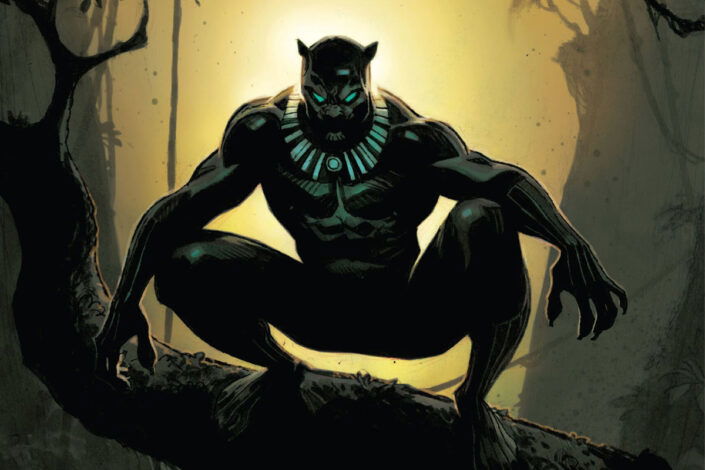
Black Panther Reading Order, The King of Wakanda

Created by writer Stan Lee and artist Jack Kirby, Black Panther made his first comic book appearance in Fantastic Four #52 (July 1966). He was introduced as T’Challa, the ruler and protector of Wakanda, a fictional African nation that is the most technologically advanced country in the Marvel Comics Universe. This hidden nation owes much of its advancements to Vibranium, a nearly indestructible metal that crash-landed in Wakanda centuries ago, shaping its scientific and cultural evolution.

T’Challa is not only a formidable warrior but also one of the most intelligent minds in the Marvel Universe. He ranks among the top ten smartest characters, alongside Reed Richards, Tony Stark, and Amadeus Cho. His genius extends to physics, engineering, and political strategy, making him an exceptional leader. Beyond his intelligence, T’Challa possesses enhanced physical abilities granted by the Heart-Shaped Herb, which links him to the Panther God, Bast. This connection allows him to access the knowledge and experiences of every Black Panther who came before him. His combat skills, agility, superhuman strength, endurance, and heightened senses make him one of the most formidable heroes in Marvel Comics.

Initially introduced as a guest character in Fantastic Four, Black Panther soon became a recurring hero, later joining The Avengers. He starred in Jungle Action during the 1970s, a critically acclaimed series that explored themes of colonialism and racial identity. Over the years, he has played major roles in Marvel storylines, serving as a member of the Illuminati, The Ultimates, and various Avengers teams.

Black Panther made his live-action debut in the Marvel Cinematic Universe (MCU), portrayed by Chadwick Boseman. His first appearance in Captain America: Civil War (2016) was quickly followed by the solo film Black Panther (2018), which became a cultural and box office phenomenon. The film’s success cemented Black Panther as one of Marvel’s most iconic and influential characters.

Read More »Black Panther Reading Order, The King of Wakanda

Irredeemable/Incorruptible Reading Order

  • by

What If Superman Was Evil? is a question that has inspired writers for a very long time. One of the most famous examples out there right now is certainly Homelander from The Boys, designed as an evil version of Captain America and Superman. This is also the subject at the center of the alternate universe of Injustice, a trope explored by Mark Millar in his now-classic story Superman: Red Son, and many many more stories.

This is also the question asked in a way by Irredeemable. To be more specific, the comic asks: what if the world’s greatest hero decided to become the world’s greatest villain? Writer Mark Waid and artist Peter Krause answers this question with Plutonian, the world’s most powerful hero, who snaps and turns into the world’s greatest villain, with only his former teammates having a chance at stopping his rampage. But while on the run from the world’s most powerful and angry being, will these former teammates discover his secrets in time? How did he come to this? What became of the hope and promise once inside him? What happens to the world when its savior betrays it? What makes a hero irredeemable?

And when the more powerful hero goes bad, what happens to the super villain? Mark Waid partnered with Jean Diaz for the companion piece Incorruptible, about a super villain trying to become a superhero.

Read More »Irredeemable/Incorruptible Reading Order

Legion of Super-Heroes Reading Order, the team from the future

When Superboy met three teenagers and members of the Legion of Super-Heroes for the first time in the comic book Adventure Comics #247 (April 1958), he couldn’t predict how popular this young team would become. Created by writer Otto Binder and artist Al Plastino for a one-off story, the Legion is a team of young superheroes from the 30th and 31st centuries.

They proved so popular that they returned again and again, eventually becoming a regular feature in Adventure Comics #300. Sharing the spotlight with Superboy for years, the Legion finally earned its own comic title in the 1970s.

By the 1980s, the Legion of Super-Heroes was among DC’s best-selling series, alongside Uncanny X-Men and New Teen Titans. During this time, Paul Levitz wrote some of the most iconic stories in Legion history, including The Great Darkness Saga. Later, Keith Giffen took the series in a darker, more experimental direction, but not without its share of continuity challenges.

To reconnect with a lighter and simpler Legion, the Legion of Super-Heroes title was rebooted by Mark Waid, Tom McCraw, and Stuart Immonen In 1994. Ten years later, sales were failing, and despite good reviews, Waid and Barry Kitson rebooted the series again, creating a third incarnation of the Legion.

Generally, when a new version of the Legion was introduced, the previous team was usually erased from continuity, as they all occupied the same place in history. Each team was meant to represent a different possible future for DC. In 2008, writer Geoff Johns changed this concept with Final Crisis, revealing that the different versions of the Legion come from separate worlds but still interact with the main Earth’s history. This allowed all the Legion teams to coexist, and the pre-Crisis team was restored to continuity for the occasion. In 2019, a new version of the team was introduced by Brian Michael Bendis.
 
The Legion became a beloved team, with a history that’s anything but simple. Full of stories ranging from lighthearted to dark and serious, from soap opera to high sci-fi, and everything in between, you can now explore their rich past with our Legion of Super-Heroes Comics reading order!

Read More »Legion of Super-Heroes Reading Order, the team from the future

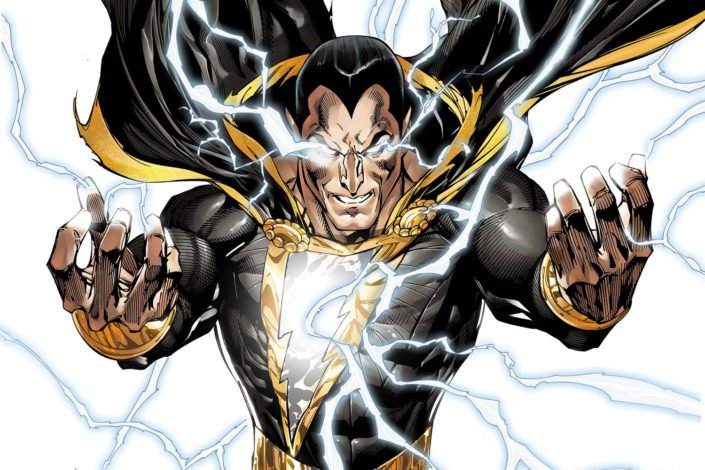
Who is Black Adam? The origin story of Shazam’s villain

  • by

Like several DC characters created in the 1940s, the history of Black Adam is a complicated one. His origin story has been told multiple times and changes have been made throughout the years.

Soon played by Dwayne Johnson on the big screen, Black Adam was created by Otto Binder, Bill Parker, and C.C. Beck. He made his first appearance in The Marvel Family #1 (1945) published by Fawcett Comics where he served as a powerful one-time enemy of the superhero Shazam (see reading order) and the Shazam Family. 

However, Black Adam was resurrected nearly 30 years later as a recurring character following DC’s acquisition of the Fawcett characters. The character was redefined with time by writers Jerry Ordway, Geoff Johns, and David S. Goyer and the character has evolved from outright villain to sometimes anti-hero.

Read More »Who is Black Adam? The origin story of Shazam’s villain

Shang-Chi: Master of Kung Fu Reading Order

  • by

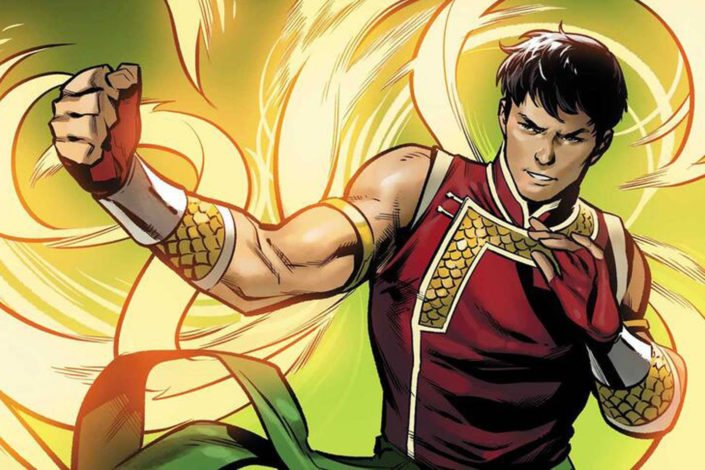
Shang-Chi: Master of Kung Fu Reading Order

In the early 1970s, a “Kung Fu craze” swept across the United States, forever changing the landscape of pop culture. It was during this particular cultural time that Shang-Chi, the Master of Kung Fu, was born. Originally conceived by writer Steve Englehart and artist Jim Starlin, the character’s origin is a fascinating tale of creative ambition and corporate licensing.

The duo originally hoped to adapt the television series Kung Fu into a comic book. Because Warner Communications (DC’s parent company) owned the rights to the show, they first approached DC Comics with their proposition. The publisher passed on this opportunity, doubting the longevity of the martial arts trend. On the other hand, Marvel was all in this craze, having acquired the rights of the licensed pulp world of Sax Rohmer’s Fu Manchu. At the House of Ideas, Shang-Chi was reimagined as the villain’s rebellious son.

When Marvel eventually lost the rights to the Fu Manchu characters, Shang-Chi entered a period of relative obscurity, with fewer appearances. His father was also renamed Zheng Zu to distance the character from the expired license, and with time, the character simply transition as a Martial art hero more immersed in the world of superheroes, joining teams like the Heroes for Hire, The Avengers, and The New Agents of Atlas, and even mentoring heroes like Spider-Man. Today, Shang-Chi is even part of the Marvel Cinematic Universe (MCU), played by Simu Liu. 

You can, right now, Trace the path of the Dragon, and explore the martial arts corner of Marvel  with our complete Shang-Chi comics reading guide.

Read More »Shang-Chi: Master of Kung Fu Reading Order

Aquaman Reading Order, the King of Atlantis

Aquaman emerged from the sea during the Golden Age, making his first appearance in More Fun Comics #73. It was only one month after Wonder Woman‘s first appearance, and it was the same issue as Green Arrow and Speedy. Since then, he has been one of the more enduring heroes of DC Comics. Yet, the King of the Sea is still often overshadowed and overlooked. Even his splash on the big screen where he was played by Jason Momoa didn’t change the situation.

Created by Paul Norris and Mort Weisinger, Aquaman from the Golden Age was quite different from the hero we know today. First, this version of the character – known today as the Aquaman of Earth-2 – was not a true denizen of Atlantis. He had no particular powers. His father was a scientist and undersea explorer who discovered the ancient city of Atlantis. He taught his son how to survive and breathe underwater, and how to use all the power of the sea to make him strong and swift. Then, he was erased from existence with Crisis on Infinite Earths.

His origin story has been revised a few times since then. He is now known as Arthur Curry, half Atlantean, half-human, and undersea royalty. Since his debut and his gained popularity from his 1960s animated appearances, DC worked at making Aquaman more powerful and edgier, but failed to give him a more defined role and purpose. For a very long time, DC Comics didn’t know what to do with the character.

If Aquaman is more of a joke for some people, the character has lived some great, strange, colorful, and exciting adventures. He has gained a devoted fan base and the respect that he is due as one of the top-tier DC superheroes. Long live the King!

Read More »Aquaman Reading Order, the King of Atlantis

Star Wars: Crimson Reign Reading order, the follow-up to War of the Bounty Hunters

  • by

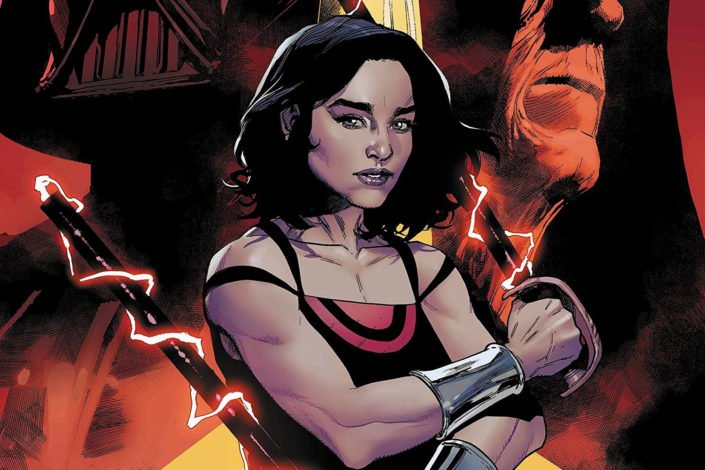
If the War of the Bounty Hunter is over, the story continues in another Star Wars event, Crimson Reign. Written by Charles Soule and penciled by Steven Cummings, this is the second part of a trilogy that is supposed to reshape the Star Wars galaxy during the Age of Rebellion! 

As the official synopsis reveals, “The criminal organization known as the Crimson Dawn has risen — but what is their goal, and how do they plan to achieve it? And how will the Rebel Alliance and the Empire both react to this new galactic power player? Featuring the return of beloved characters, shocking twists, epic feats of the Force, and a story that will reach from the darkest underworld all the way to the Imperial Palace on Coruscant.”

What to read before Star Wars: Crimson Reign?

This event takes place during the Age of the Rebellion. Check out our Star Wars Comics Canon Reading Order to learn more about it.

Read More »Star Wars: Crimson Reign Reading order, the follow-up to War of the Bounty Hunters