Skip to content

Reading Order

The Best of Magneto Comics, our Recommended Reading Order (X-Men)
  • by

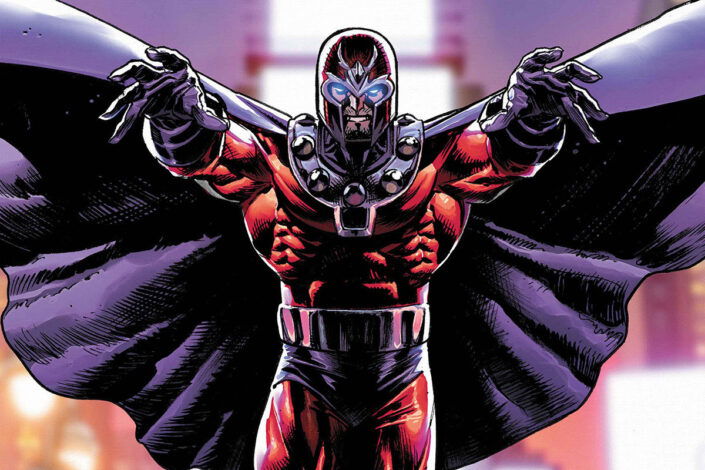
He is a Master of Magnetism. He is one of the most complex and ambiguous figures among the X-Men. We’re talking about Magneto, alias Max Eisenhardt, or Erik Magnus Lehnsherr.

Created by Stan Lee and Jack Kirby in 1963, Magneto started as a one-dimensional foe for the young X-Men team led by Professor Xavier, mostly defined by his mutant-versus-human ideals. The Magneto we know today was developed by Chris Claremont, who transformed him into a more complex, three-dimensional character. The first turning point came with the classic Uncanny X-Men #150, which introduced the first notion of Magneto’s past as a Holocaust survivor.

Over the next few years, Magneto continued to evolve, leading to the milestone Uncanny X-Men #200—”The Trial of Magneto”—which concluded with a major change in the status quo for the mutants. Magneto’s potential for redemption became central to his character, pushing him into a more complex grey area, often shifting between good and evil depending on the writer’s interpretation.

Here’s a guide to some of the most important and recommended comics featuring Magneto, Marvel’s Master of Magnetism!

Read More »The Best of Magneto Comics, our Recommended Reading Order (X-Men)
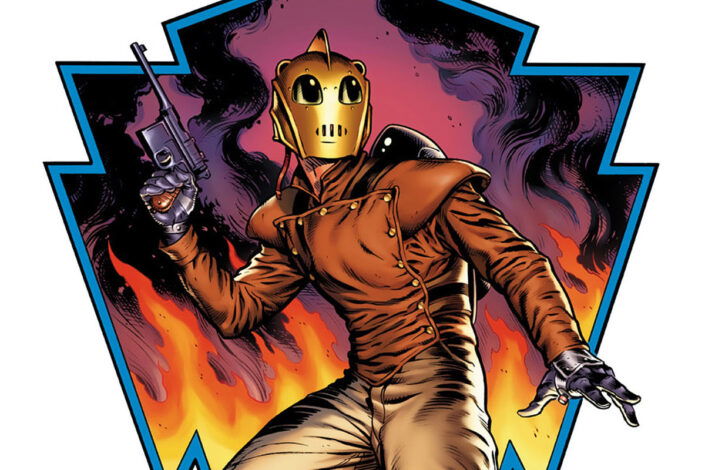
The Rocketeer Reading Order, A guide to Dave Stevens’ cult comics and the IDW miniseries

  • by

First appearing as a backup feature in Starslayer #2, published by Pacific Comics in 1982, The Rocketeer is a now-cult comic book created by Dave Stevens (1955-2008) who was heavily inspired by the aesthetic of pulp magazines, early Hollywood serials, and vintage aviation.

Set in 1930s Los Angeles, the story of The Rocketeer follows Cliff Secord, a young and cocky stunt pilot trying to make a name for himself. Cliff’s life takes an unexpected turn when he discovers a mysterious rocket pack hidden in his hangar. This experimental device allows him to fly, making him a target at the same time as it was originally stolen by gangsters during a botched robbery and ends up in Cliff’s possession. They want it back, as does its creator, Howard Hughes. Soon, Cliff’s girlfriend, an aspiring actress and model named Betty, becomes entangled in Cliff’s adventures when villains attempt to use her to get to him. To make matters worse, the Nazis view the rocket pack as a potential weapon that could give them a significant advantage in their plans for world domination and want to get it for themselves.

A skilled storyteller and an exceptionally gifted artist, Stevens injected everything he liked in the comics. From his love of the iconic pin-up model Bettie Page to retro-futurism and aviation culture, the aesthetic of pulp magazines and early serials, and the glamour of the Golden Age of Hollywood.

Read More »The Rocketeer Reading Order, A guide to Dave Stevens’ cult comics and the IDW miniseries

Outsiders Reading Order, A DC Comics Team (featuring Batman!)

  • by

When Wayne Enterprises manager Lucius Fox goes missing in Markovia, Batman recruits the Justice League of America (JLA) to find him, only to have Superman informing him that he promised the State Department that no member of the team would interfere in the Markovian Revolution.

As a result, Batman resigns from the JLA and goes to Markovia with Black Lightning. The duo encounters Metamorpho along with new heroes Katana, Halo, and Geo-Force. At the end of their mission, Batman convinces them to come together as a team. And thus, The Outsiders were formed!

Created by writer Mike W. Barr and artist Jim Aparo, The Outsiders first appeared in a preview of The Brave and the Bold #200 (July 1983), the final issue of that series, before making their official debut in the own title, Batman and The Outsiders, the following month.

Read More »Outsiders Reading Order, A DC Comics Team (featuring Batman!)

One World Under Doom Reading Order, a new Dark era in the Marvel Comics Universe

  • by

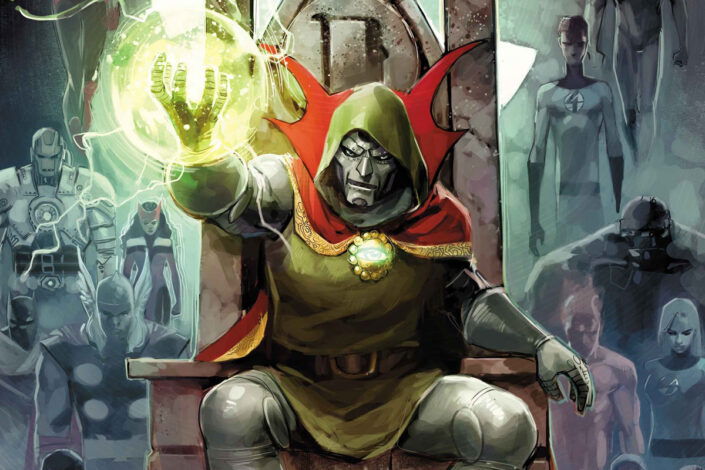
It’s a new day and a new world in the Marvel Comics Universe. It’s One World Under Doom!!! The Sorcerer Supreme is launching his Dark Reign era in 2025.

To save the world from the Vampire invasion, Doctor Strange had to give Doctor Victor Von Doom his title as Sorcerer Supreme. After that, Latveria’s leader retreated to his country. Months passed without any news, but the wait just ended: Doctor Doom, Earth’s Sorcerer Supreme, has magically taken over every broadcast medium on the planet and declared himself Emperor of the World — the ruler of a new United Latveria!

Leaders of the World complied, but Earth’s heroes are not so easily manipulated. The resistance is forming, but will they succeed in stopping Doom’s machinations? The answers will come, written by Fantastic Four author Ryan North and artist R. B. Silva in their “One World Under Doom” limited series. Of course, it would not be a Marvel event if the story were confined to one book. Everybody is affected by this power shift.

Read More »One World Under Doom Reading Order, a new Dark era in the Marvel Comics Universe

Donny Cates’ Venom Reading Order

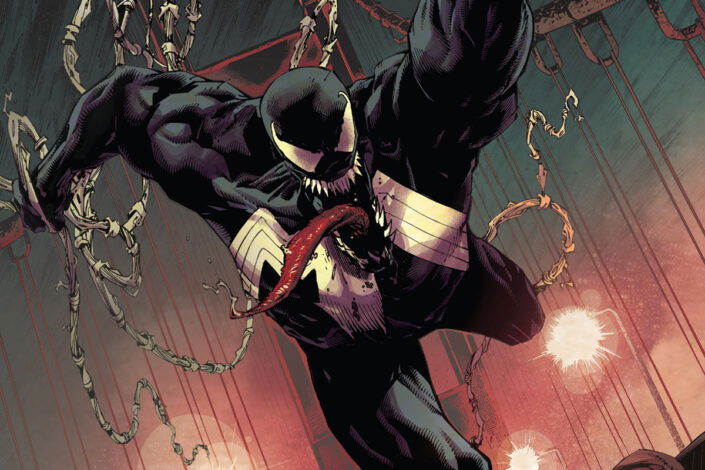
Introduced during the first Secret Wars comic book event in the ‘1980s, this alien symbiote was Spider-man’s black costume for a short period. When Reed Richards realized it was more than a piece of intelligent fabric, he helped Spidey to get rid of it. Following its rejection, the alien symbiote tried to get back to Peter Parker but ended up bounding with Eddie Brock. This reporter for the Daily Globe wrote a story exposing the identity of the Sin-Eater but Spider-Man revealed it was not the truth and Eddie lost his job. At the end of his rope, Eddie met the symbiote. Together, they became Venom.

Friend or foe, Venom changed over the years and became a major Marvel player. He went from Eddie Brock to other hosts but came back to Eddie. When Donny Cates took over the writing duties on his title with artist Ryan Stegman, Venom got back to Eddie who was searching for redemption. To do that, he aligned himself with heroes. During his fight with a cosmic monster, he discovered the real origin of the symbiote, opening a new way in the mythology of this iconic character.

What to read before Venom by Donny Cates & Ryan Stegman?

There are a lot of Venom stories (we have a big article about that) and some are referenced in Donny Cates’s comic book run on Venom. That said, it’s a new start, a new mythology, and a friendly entry point for new readers.

However, you may not be familiar with a character named The Maker who plays a part in this story, so check out our article about this Ultimate Reed Richards.

Read More »Donny Cates’ Venom Reading Order

Star Trek Comics Reading Order, the 2022 IDW shared Universe

Since the premiere of Star Trek: The Original Series in 1966, the universe created by Gene Roddenberry has never stopped expanding. The exploration of strange new worlds and other civilizations has unfolded across movies, television series, video games, novels, and comic books, making Star Trek one of the biggest media franchises of all time.

Since the first Star Trek comic was published in 1967 by Gold Key Comics, the franchise’s comics have been almost continuously in publication. Over the years, they have been produced by various publishers, including Marvel, DC Comics, and, of course, IDW Publishing, which secured the rights in 2006 and has been producing new comics ever since.

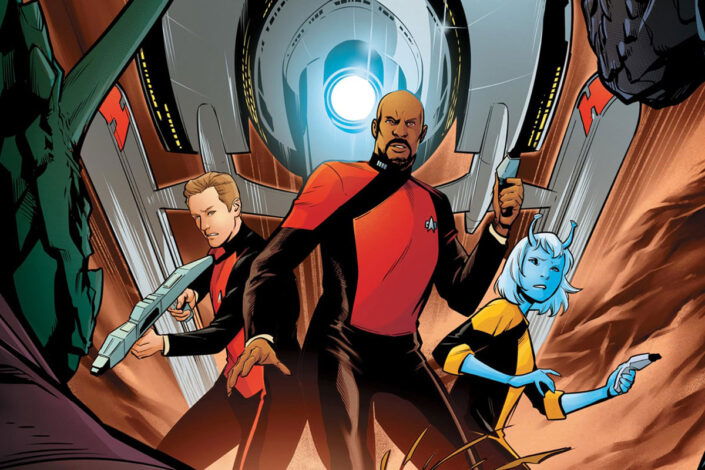
Recently, IDW has decided to go where no one has gone before by launching an epic new adventure: a Star Trek Multiverse of sorts. Described by co-writer Jackson Lanzing as “an Avengers-style ongoing crossover that treats Gene Roddenberry’s creation as a living universe,” this new Star Trek series brings together characters from across the galaxy—and all eras and variations of the beloved franchise.

The stardate is 2378, marking the return of an omnipotent Benjamin Sisko from the Bajoran Wormhole. He is sent by the Prophets on a mission that only he and a crew of Starfleet members from every era of Star Trek can accomplish. These new stories take place a few years after the end of Star Trek: Deep Space Nine, after the USS Voyager returned home but before the events of Nemesis, the final Star Trek: The Next Generation movie.

While IDW has published many Star Trek comics in the past, this article focuses on the interconnected timeline of IDW Star Trek comics launched in 2022.

Read More »Star Trek Comics Reading Order, the 2022 IDW shared Universe

Wonder Man Reading Order

  • by

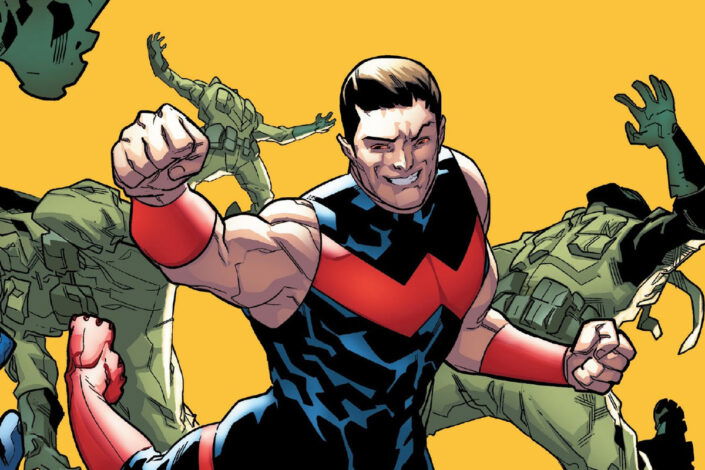
Created by Stan Lee, Jack Kirby, and Don Heck for Marvel Comics in The Avengers #9 (1964), the character of Wonder Man, aka Simon Williams, is one of those who started as a villain before becoming a hero and a member of the Avengers–like Hawkeye, for example. But the most surprising part is that he apparently died in that first issue and didn’t reappear for four years, and then again, it was not for long. It was not before the mid-1970s that he would start to play a bigger part.

All of this is because DC Comics sued Marvel Comics for the right to use the name. DC had Wonder Woman and didn’t like the idea that Marvel would use Wonder Man. Stan Lee didn’t want to fight it (he created She-Hulk to avoid someone else doing it, it was the game at the time), but when DC introduced Power Girl (Marvel already had Power Man), it seemed fair to bring back Wonder Man.

Simon Williams was an industrialist who gained superpowers after being imbued with “ionic” energy by Baron Zemo. As Wonder Man, he infiltrated the Avengers but ultimately betrayed Zemo and seemingly sacrificed himself to save the team. Resurrected later, Wonder Man became a loyal member of the Avengers and grew into a prominent hero. He also developed a career in Hollywood as an actor and stuntman.

Wonder Man helped form the West Coast Avengers, and later joined Force Works, but most of all, he has been an Avenger!

Read More »Wonder Man Reading Order

Star Wars Legends Comics Reading Order (The Star Wars Expanded Universe)

Star Wars Legends Comics in Order

Since the release of the first Star Wars movie, the universe created by George Lucas has never stopped expanding. Beyond the movies, TV shows, games, novels, comics, and more have been created to cover many stories in the Star Wars galaxy, spanning more than 25, 000 years of history.

It was called the Star Wars Expanded Universe. But when Disney bought the Star Wars franchise, the company simply blew up this Expanded Universe in order to create a new official canon. So everything that have been published before April 25, 2014, was now part of the Star Wars Legends, the new name given to the Star Wars Expanded Universe.

A lot of comic books have been published during the past 35 years, before April 2014. Star Wars Comic books were first published by Marvel Comics from 1977 to 1986. After, Dark Horse Comics owned the license exclusively from 1991 to 2014. Pendulum Press (1978) and Blackthorne (1987–1988) also published some Star Wars Comics, and Star Wars comic strips have been distributed in the newspapers, the Los Angeles Times Syndicate and Watertown Daily Times, between 1979 and 1984.

This article is devoted to the Star Wars Legends or Expanded Universe, to the Star Wars comic books published before April 25, 2014. For the ongoing Star Wars Canon, you can find the reading order over here.

Read More »Star Wars Legends Comics Reading Order (The Star Wars Expanded Universe)

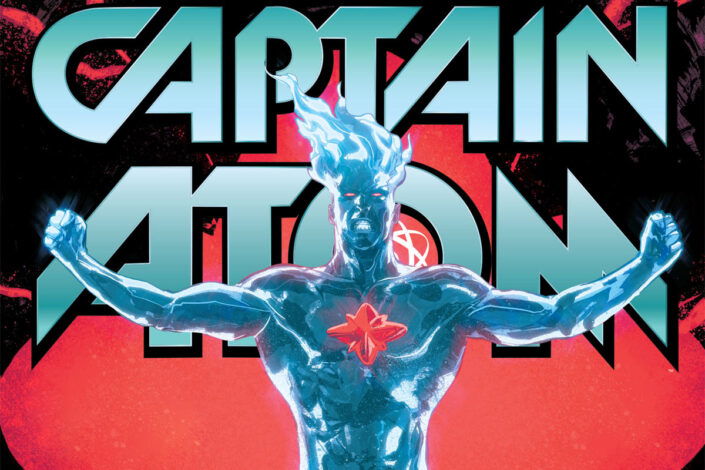
Captain Atom Reading Order (Nathaniel Adam)

Created by Joe Gill and Steve Ditko in 1960, Captain Atom first appeared in Space Adventures #33 published by Charlton Comics, a publishing company later acquired by DC Comics. Back then, the character was named Allen Adam, a technician who was trapped in a rocket that exploded. He should have died but instead became a superpowered atomic hero. His series continued for a few years (until December 1967). Back then, he had a red and yellow outfit and pretty generic powers.

In 1983, DC Comics acquired Charlton Comics’ action heroes and asked Alan Moore to do something with them. That’s how Captain Atom became Doctor Manhattan in Watchmen. Moore’s take on the characters was not what DC’s editors had in mind for them and the British writer had to rewrite some of them to create his own version while the publisher introduced Charlton’s super-heroes (like Blue Beetle) in its Post-Crisis universe. During the Crisis on Infinite Earths, it was established that they were on Earth-4. After that, they found their way into the main continuity.

Captain Atom was then reinvented as Nathaniel Christopher Adam, a United States Air Force officer and Vietnam War veteran. Framed and condemned for a crime he didn’t commit, his only option to survive was to join the military experiment called ‘Project: Captain Atom‘ during which he was placed in an alien craft positioned next to an atomic bomb. The goal was to test the resistance of the ship, but the result was ultimately the creation of a superhero. During the explosion, Nathaniel was disintegrated, but he mysteriously reappeared 18 years later, now bonded with the alien metal that has the ability to tap into the “Quantum Field”. Captain Atom can absorb energy to a certain point (beyond that, he jumps in time).

In 1986, as Captain Atom just reappeared, the military forced him to work for them. He eventually joined the Justice League and later became the leader of Justice League Europe. Through the years, he joined other teams, fought his enemy through times, and became a villain before returning to normal.

Read More »Captain Atom Reading Order (Nathaniel Adam)

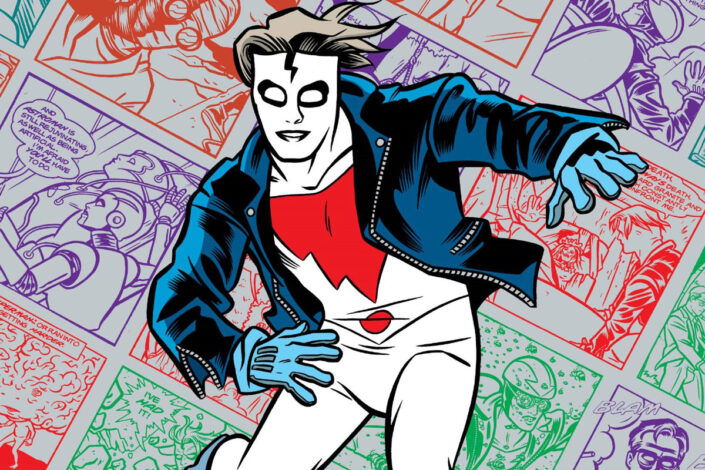
Madman Reading Order, Explore Mike Allred’s Comics Universe

In 1992, Tundra Publishing had a large lineup of comic book series by independent creators. One of them was Madman by Mike Allred, who quickly gathered a few nominations for prestigious awards (it won the Harvey for Best New Series). It was a superhero comic with a unique vision and an atypical aesthetic for the time, as Allred’s Pop Art style certainly made the book immediately distinguish itself from the rest.

From its initial success, Madman Adventures moved to Dark Horse Comics–when Denis Kitchen bought Tundra–where it gained even more popularity and colors (by Laura Allred). As the Madmanverse developed new characters were introduced and spin-off series were created. Madman himself made some appearances in other books, even from other publishers.

The story follows the adventures of Frank Einstein, a man who was revived by two scientists, Dr. Egon Boiffard and Dr. Gillespie Flem. With no memory of his past, he took the name “Frank Einstein” after his creators’ heroes, Frank Sinatra and Albert Einstein. Now reborn with enhanced abilities—superhuman agility, reflexes, and a touch of precognition—Frank remembers little of his past life. His identity as “Madman” is inspired by his childhood comic hero, Mr. Excitement. Despite his Frankenstein-like appearance, including blue skin and scars, he has a girlfriend, Joe Lombard, and is joined by allies like the alien Mott, invisible scientist Gale, and robotic companions Astroman and Machina.

The publication history of Madman is not the simplest as the book changed publishers multiple times. It started at Tundra in the Grafik Muzik anthology before getting a solo book titled Madman Adventures, went to Dark Horses where it evolved to become Madman Comics for a few years, then Allred established his own publishing company, AAA Pop Comics, where he continued Madman’s story with The Atomics–a new comic book series focused on Frank’s superhero team, the Atomics. It stopped in 2001, but Frank Einstein returned in Madman Atomic Comics, which was launched at Image Comics in 2007.

The Madmaniverse is a superhero universe like no other, the colorful vision of one independent cartoonist who developed a cult favorite. Below, you’ll find a guide to reading everything.

Read More »Madman Reading Order, Explore Mike Allred’s Comics Universe