
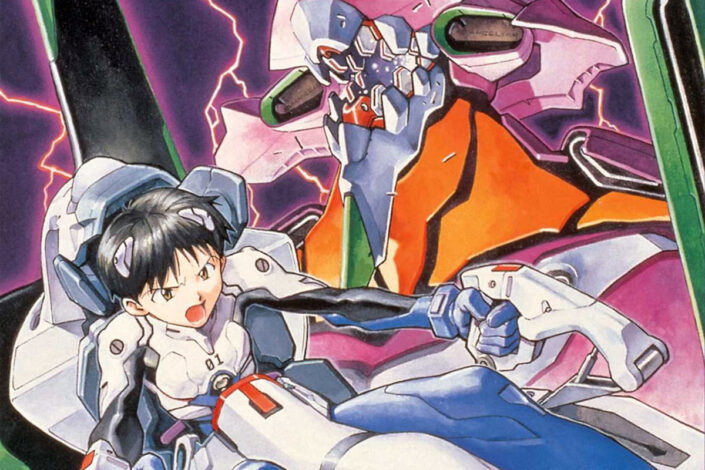
I feel it may not be necessary to introduce Neon Genesis Evangelion, as it is still today one of the most popular anime series ever produced. Nevertheless, if you only know the reputation, here is what you need to know.
This is a Japanese science fiction franchise that blends mecha action with psychological drama and philosophical inquiry. Created by Hideaki Anno as an anime series in 1995, it is set in a post-apocalyptic world where humanity faces existential threats from mysterious beings known as Angels. The story follows a group of teenagers recruited to pilot biomechanical weapons called Evangelions, with a particular focus on Shinji Ikari and his struggle with identity, trauma, and human connection.
The franchise is vast, but when it comes to manga, there is mainly the adaptation. Originally illustrated by the series’ character designer, Yoshiyuki Sadamoto, the primary manga offers a distinct take on the story. Beyond that, you also have spin-offs and alternate universe stories, and that’s when things get a bit confusing, and this Neon Genesis Evangelion Manga Guide is here to help.
Neon Genesis Evangelion Manga in Order
- The Main Manga: Sadamoto’s 14-volume run.
- The “Alternate Universe” series: Manga series based on non-canon “what-if” scenarios.
- The Parodies series: Manga series satirizing the Neon Genesis Evangelion stories

The Original Neon Genesis Evangelion Manga
The original Neon Genesis Evangelion manga is composed of 14 volumes, written and illustrated by Yoshiyuki Sadamoto. He was the character designer for the anime created by Hideaki Anno, but went on working on the manga after a few episodes. Serialized in Monthly Shōnen Ace from 1994 to 2013, the manga runs parallel to the anime’s development but ultimately delivered its own version of the material.
Set in a post-cataclysmic world threatened by enigmatic entities known as Angels, the story follows Shinji Ikari, a withdrawn teenager recruited by the paramilitary organization NERV to pilot a giant biomechanical unit called an Evangelion. As in the anime, the story combines large-scale battles with an inward focus on psychological conflict, trauma, and interpersonal disconnection. However, Sadamoto’s version diverges in tone and structure, and the conclusion offers a more explicit sense of resolution, making it a distinct but complementary counterpart to the original series.
- Neon Genesis Evangelion, Vol. 1: Behold the angels of God descending
- Neon Genesis Evangelion, Vol. 2: A flaming sword, which turned every way
- Neon Genesis Evangelion, Vol. 3: She gave me fruit of the tree, and I ate
- Neon Genesis Evangelion, Vol. 4: the woman whom thou gavest to be with me
- Neon Genesis Evangelion, Vol. 5: if this work be of men, it will come to nought
- Neon Genesis Evangelion, Vol. 6: let me go, for the day breaketh
- Neon Genesis Evangelion, Vol. 7: as one of us, to know good and evil
- Neon Genesis Evangelion, Vol. 8: Come now, let us make covenant, you and I
- Neon Genesis Evangelion, Vol. 9: Tell me, I pray thee, thy name
- Neon Genesis Evangelion, Vol. 10: if thou shalt afflict my daughters, or if thou shalt take other wives
- Neon Genesis Evangelion, Vol. 11: Which long for death, but it cometh not; and dig for it more than hid treasures
- Neon Genesis Evangelion, Vol. 12: Ye fathers, provoke not your children to wrath
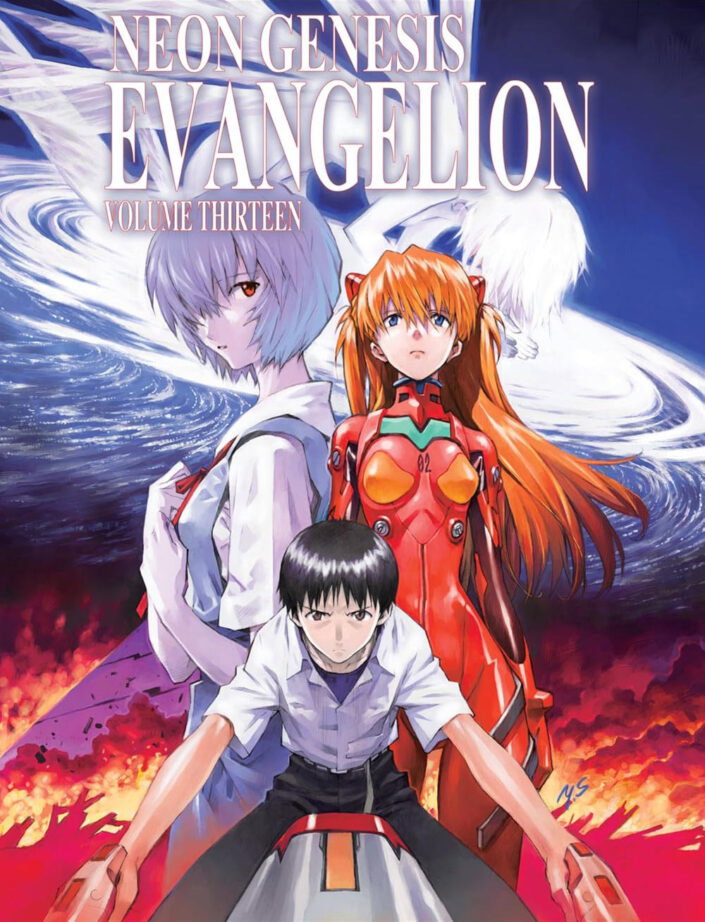
- Neon Genesis Evangelion, Vol. 13: And there appeared a great wonder in heaven; a woman clothed with the sun
- Neon Genesis Evangelion, Vol. 14: And he sat upon the throne and said, Behold, I make all things new
VIZ Media also reprinted the complete series in larger omnibus editions. Each volume compiles three original tankōbon volumes into a single book (except the last), with no major changes to the story. They include color pages and bonus artwork that were not always present in single-volume releases and were printed in standard manga format (right-to-left reading).
- Neon Genesis Evangelion 3-in-1 Edition, Vol. 1: Includes vols. 1, 2 & 3
- Neon Genesis Evangelion 3-in-1 Edition, Vol. 2: Includes vols. 4, 5 & 6
- Neon Genesis Evangelion 3-in-1 Edition, Vol. 3: Includes vols. 7, 8 & 9
- Neon Genesis Evangelion 3-in-1 Edition, Vol. 4: Includes vols. 10, 11 & 12
- Neon Genesis Evangelion 2-in-1 Edition, Vol. 5: Includes vols. 13 & 14
Neon Genesis Evangelion: ANIMA is not a manga but a light novel spin-off written by Ikuto Yamashita, with illustrations by Yoshiyuki Sadamoto. Originally published between 2008 and 2013, it differs from most Evangelion side material by functioning not as an alternate universe, but as a direct continuation of an alternate ending to the anime.
The story is set in a timeline where the events of Neon Genesis Evangelion diverge near the conclusion, effectively imagining a scenario in which the Human Instrumentality Project is averted. Taking place three years later, it follows an older Shinji Ikari and the remaining pilots as they confront new threats tied to evolved Evangelion units and remnants of earlier experiments.
The Evangelion “Alternate Universe” series
Within the Neon Genesis Evangelion franchise, the term ‘Alternate Universe’ refers to a series of spin-off manga that reinterpret the core characters and dynamics within completely different settings from those of the original continuity. Rather than extending the central storyline created by Hideaki Anno or the manga by Yoshiyuki Sadamoto, these works are self-contained reinterpretations based on the same character framework. These series typically originate from side materials such as video games, light novels, or conceptual scenarios, and explore “what-if” premises.
Neon Genesis Evangelion: Angelic Days
Written and illustrated by Fumino Hayashi, Angelic Days was published between 2003 and 2005 in Monthly Asuka. It runs for 6 volumes and is based on the visual novel Girlfriend of Steel 2nd. It takes place in an alternate reality derived from the final episode’s “what-if” scenario, where Shinji imagines a normal, happier life, and focuses on the romantic relationships between the main characters. It moves from psychological sci-fi to romantic comedy/slice-of-life.
- Neon Genesis Evangelion: Angelic Days, Vol. 1
- Neon Genesis Evangelion: Angelic Days, Vol. 2
- Neon Genesis Evangelion: Angelic Days, Vol. 3
- Neon Genesis Evangelion: Angelic Days, Vol. 4
- Neon Genesis Evangelion: Angelic Days, Vol. 5
- Neon Genesis Evangelion: Angelic Days, Vol. 6
Neon Genesis Evangelion: Shinji Ikari Raising Project
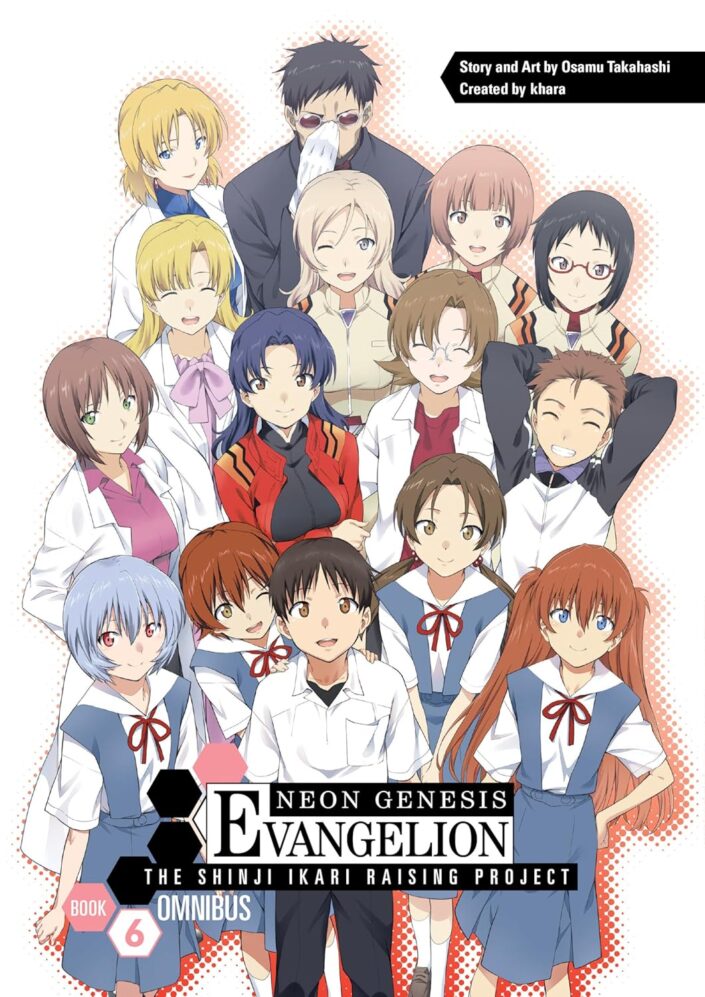
Written and illustrated by Osamu Takahashi, Shinji Ikari Raising Project was serialized from 2005 to 2016. Spanning 18 volumes, it is loosely based on the dating-simulation game of the same name and reimagines the Evangelion cast in a radically different context. Set in a world derived from the “ordinary life” scenario glimpsed in the original anime, the series places Shinji Ikari in a domestic, school-centered environment where he lives with his parents, Gendo and Yui, in a relatively stable household. It’s a conventional blend of slice-of-life and romantic comedy with interpersonal relationships, romantic tension, and episodic school-life stories.
- Neon Genesis Evangelion: The Shinji Ikari Raising Project Omnibus Volume 1
- Neon Genesis Evangelion: The Shinji Ikari Raising Project Omnibus Volume 2
- Neon Genesis Evangelion: The Shinji Ikari Raising Project Omnibus Volume 3
- Neon Genesis Evangelion: The Shinji Ikari Raising Project Omnibus Volume 4
- Neon Genesis Evangelion: The Shinji Ikari Raising Project Omnibus Volume 5
- Neon Genesis Evangelion: The Shinji Ikari Raising Project Omnibus Volume 6
Neon Genesis Evangelion: Campus Apocalypse
Written and illustrated by Ming Ming and serialized between 2007 and 2009, Campus Apocalypse is composed of 4 volumes blending action, mystery, and supernatural thriller elements. Set in a contemporary school environment, the story follows Shinji Ikari as a student who becomes involved with a secret organization led by Gendo Ikari, tasked with combating supernatural entities known as Angels.
- Neon Genesis Evangelion: Campus Apocalypse Volume 1
- Neon Genesis Evangelion: Campus Apocalypse Volume 2
- Neon Genesis Evangelion: Campus Apocalypse Volume 3
- Neon Genesis Evangelion: Campus Apocalypse Volume 4
Neon Genesis Evangelion: The Shinji Ikari Detective Diary
Written by Shinji Katō and illustrated by Takumi Yoshimura, The Shinji Ikari Detective Diary was serialized from 2010 to 2011 and collected in 2 volumes. It’s a mystery story, with Shinji Ikari working under Ryoji Kaji and his young assistant, Kaworu Nagisa, as part of a detective agency. Rather than piloting Evangelions, the characters are involved in solving cases that often incorporate light science fiction or supernatural elements.
- Neon Genesis Evangelion: The Shinji Ikari Detective Diary Volume 1
- Neon Genesis Evangelion: The Shinji Ikari Detective Diary Volume 2
Neon Genesis Evangelion: Comic Tribute
an anthology manga released in 2009, Comic Tribute compiles non-canonical short stories from various manga artists, each offering their own take on the Evangelion universe. Contributions range from comedic parodies to introspective or romantic vignettes.
- Neon Genesis Evangelion: Comic Tribute (complete)
The Evangelion Parodies series
The serious and philosophical tone of Neon Genesis Evangelion inspired comedic reinterpretations that exaggerate the characters, situations and iconic moments of the original story for humour. This turns the high-stakes mecha drama into slapstick, absurd and self-aware comedy.
Tony Takezaki’s Neon Genesis Evangelion
A parody manga created by Tony Takezaki and first published in 1997, Tony Takezaki’s Neon Genesis Evangelion is a comedic reinterpretation of Hideaki Anno’s anime, exaggerating the characters and situations for humorous effect. The story brings together the most important parts of Evangelion, but shows them in very silly situations that make fun of the serious tone and dramatic tension of the original. It’s a cartoonish and slapstiky non-canonical satire.
- Tony Takezaki’s Neon Genesis Evangelion (complete)
Neon Genesis Evangelion: The Legend of Piko Piko Middle School Students
Written and illustrated by Yushi Kawata and Yukito, serialized from 2014 to 2016 and collected in 5 volumes, The Legend of Piko Piko Middle School Students takes the main characters of Neon Genesis Evangelion and places them in a school to deliver an absurd, meta-driven comedy. It is overtly parodic.
- Neon Genesis Evangelion: Legend of the Piko Piko Middle School Students Volume 1
- Neon Genesis Evangelion: Legend of the Piko Piko Middle School Students Volume 2
The first two books came out in English in 2017. The other three volumes have not been published yet (at least as of 2026).
If you’re looking for more classic manga in the vein of Neon Genesis Evangelion to explore similarly complex themes, genre deconstruction, and psychological depth, check out:
- Ghost in the Shell
- Akira
- Gunnm (also known as Battle Angel Alita)