Skip to content

The Defenders Reading Order, Marvel’s premier non-team!

  • by

The Defenders are not your typical Marvel team. In fact, they are known as Marvel’s premier non-team! The group consists of powerful Marvel loners who have no interest in being part of a team, but who sometimes ally together to defend Earth. The Defenders don’t have a leader or a particular structure like a classic team; they came together through some successful team-ups!

It all began when the Doctor Strange series was abruptly canceled in the middle of a story due to low sales. Writer Roy Thomas would then tie up loose ends in Sub-Mariner (Vol. 2) #22 and Incredible Hulk #126. After that, Strange would choose to retire, but Namor and the Hulk would be reunited in a two-part story in the Sub-Mariner and allied themselves with the Silver Surfer. The trio became the “Titans Three”.

The combination of these non-conformist characters proved successful, prompting Roy Thomas to bring them together in a team series that he wanted to call The Invaders. As Kurt Busiek explained, “Stan Lee didn’t approve the name at that time and wouldn’t let Roy use the Silver Surfer as a regular member, so he launched the Defenders in Marvel Feature without him. Once the regular Defenders series had begun, Roy and Steve Englehart wanted to feature the Silver Surfer, but Lee would only allow him to appear as a guest star. Consequently, Steve featured him as a guest star as frequently as possible.” Although the Silver Surfer wasn’t an official core member of the Defenders, Roy Thomas and Steve Englehart treated him as such and made him a significant part of the team. Today, readers and writers alike treat the Silver Surfer as a core member.

Read More »The Defenders Reading Order, Marvel’s premier non-team!

Alan Scott, the comic origins of DC’s first Green Lantern

  • by

If Hal Jordan can be considered the most famous Green Lantern, he was not the first human to bear the name. That title belongs to Alan Scott, the Green Lantern of the Golden Age.

A selfless and dedicated man, Alan Scott could only become a role model for others and inspired other men to take up the fight. Even though he serves as an inspiration for many Green Lanterns, Alan Scott always holds himself to a higher standard than anyone else.

Though Alan Scott has never been a member of the Green Lantern Corps, he was a founding member of the Justice Society of America. With or without other superheroes, Alan Scott always fought to protect others and choose to make his emerald glow a sign of hope and a source of inspiration for decades…

Read More »Alan Scott, the comic origins of DC’s first Green Lantern

Punisher Reading Order

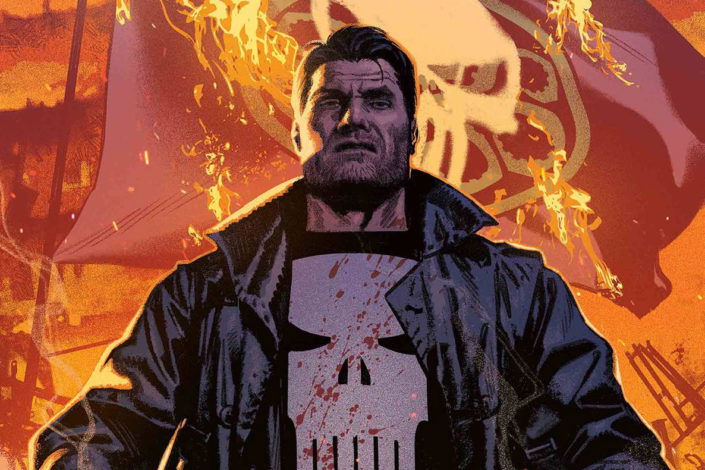
Created by Gerry Conway, John Romita Sr., and Ross Andru, The Punisher is a Marvel anti-hero who made his first appearance in The Amazing Spider-Man #129 in February 1974. Initially, he was portrayed as a bloodthirsty vigilante hired to make Spider-Man’s life miserable. The Punisher set himself apart from other Marvel characters by having no objection to killing people, something superheroes don’t do. And he was determined to kill Spidey, who was wanted for the alleged murder of Norman Osborn.

But the Punisher is no ordinary killer. Also known as Francis ‘Frank’ Castle, he is an Italian-American vigilante and war veteran. Like many Marvel characters, he is driven by tragedy, and in his case, by the deaths of his wife and two children, murdered by the mob for witnessing a killing in Central Park. However, Frank is driven by more than vengeance, the man follows a moral code: in his view, he kills only those who deserve to die.

Originally destined to be a second-tier character, The Punisher was a hit among readers and went on to make regular appearances in the Spider-Man comics and a famous arc on Daredevil before headlining his own miniseries, and his multiple ongoing comic series since then. Easily recognizable by the skull motif on his chest (a motif that has recently changed), the character reached the height of his popularity by the late 1980s-beginning of the 1990s with four monthly publications.

The Punisher has become a mainstream character, known today for several adaptations. He has been portrayed by Dolph Lundgren in 1989, Thomas Jane in 2004, Ray Stevenson in 2008, and more recently by Jon Bernthal in the second season of Daredevil (2016), his own spin-off series from 2017 to 2019, and soon in Daredevil: Born Again (2025)!

Where to start reading The Punisher comics?

If you are unfamiliar with The Punisher or would like to come back to the basics before diving into more stories, you can check out the following Marvel comic books:

  • Punisher: Year One – This origin tale by Dan Abnett and Dale Eaglesham covers the days and weeks following the murder of his family.
  • Punisher Vol. 1: Welcome Back, Frank – Garth Ennis’s run on The Punisher under the Marvel Knight imprint began with this limited series, illustrated by Steve Dillon, that shows us how Frank operates among the superheroes.
  • Punisher: Circle of Blood – For those interested in classic Punisher comics from the 1980s, “Circle of Blood” was the first miniseries featuring Frank Castle. Written by Steven Grant and illustrated by Mike Zeck and Mike Vosburg, this story revolves around Castle escaping from prison to join a group of vigilantes. It did many things that Marvel had never tried before, effectively establishing the violent world of the Punisher.
  • Punisher: Born – This four-issue comic book limited series written by Garth Ennis and illustrated by Darick Robertson is not officially part of the main continuity as the story was released through Marvel’s MAX imprint. Despite that, it seems those events can be regarded as canon to the main Marvel Universe. In all cases, this acclaimed tale gives us another origin story for the character, following Frank Castle during four days of his life as the war draws to an end but will change him forever. See also Punisher: The Platoon by the same team taking place before Born and about Frank’s first tour in Vietnam.

Read More »Punisher Reading Order

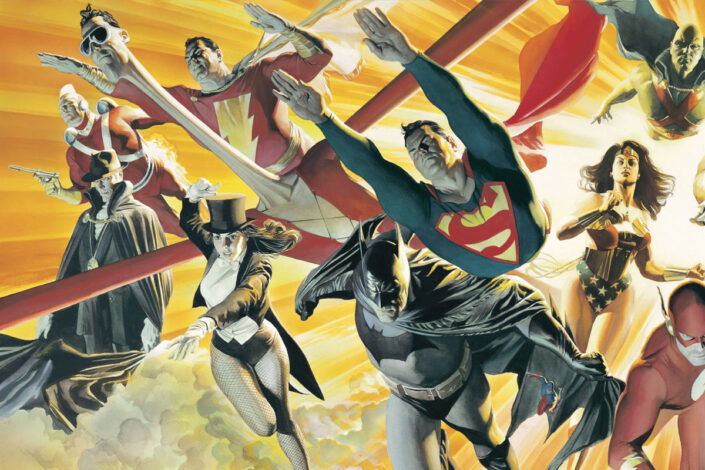
Justice League Reading Order, DC Comics’ Greatest Team of Superheroes

Almost nine years after the end of the original JSA comic book run, DC Comics introduced another team of Super Heroes in The Brave and the Bold #28 (dated March 1960) by writer Gardner Fox and artist Mike Sekowsky. It was viewed as a modernization of the Justice Society but with a new name chosen by editor Julius Schwartz who thought that a “‘Society’ meant something you found on Park Avenue”. He went with “League” instead–because of the popularity of the baseball leagues.

The first Justice League team was composed of Aquaman, Flash, Green Lantern, Martian Manhunter, and Wonder Woman, but also of Superman and Batman, even if they were mostly absent from the League’s early adventures (it was thought that they would quickly become overused if they appeared in too many titles). Soon, the team would welcome Green Arrow, the Atom, and Hawkman.

The Justice League comics became a hit. As the years passed, the roaster of superheroes changed a little, the DC Universe became more connected and events were organized like the famous annual crossovers with the Justice Society.

Read More »Justice League Reading Order, DC Comics’ Greatest Team of Superheroes

Wolverine Reading Order

Created by Roy Thomas, Len Wein, and John Romita Sr. in 1974 (in The Incredible Hulk #180-181) but first drawn for publication by Herb Trimpe, Wolverine quickly became the most popular X-Man.

Described as a Canadian of small stature and with a wolverine’s fierce temper, Wolverine has a complicated past, multiple origin stories, and a lot of deaths and resurrections. In fact, he already had a long life before joining the X-Men, as we discovered over the years. He was born during the late 19th century, and his youth was marked by family secrets and tragedies. He already had claws, but they were not made of adamantium. He also already had his animal-keen senses, enhanced physical capabilities, and a powerful healing factor. That made him the perfect candidate for the mysterious Weapon X program that kidnapped him before having adamantium forcibly fused onto his bones.

Obviously, he escaped and found his way toward Professor Charles Xavier who recruited him into his new X-Men with Jean Grey and Cyclops (go to our X-Men Reading Order). With the team, he fought against many foes. He lost his claws, his adamantium, his memories, his loves, his family, and his friends, but he also got most of them back, joined other teams, and discovered even more about himself, his friends, his place in this world, and his powers.

Wolverine is so popular that he appeared in a lot of series. Too many in fact to the point that his story doesn’t always make sense. As a consequence, writing an exhaustive reading order is almost an impossible task to complete, but we can still try to write one that is usable. This is what we are trying to do here, with a focus on his solo career.

Read More »Wolverine Reading Order

Star Wars: War of the Bounty Hunters Reading Order, a Boba Fett story

  • by

Star Wars War of the Bounty Hunters Reading Order

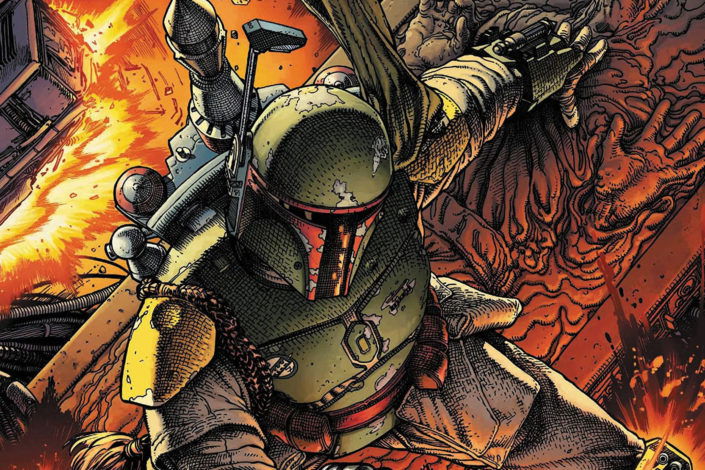
Every Marvel reader could tell you how much the publisher loves a crossover event, for better or worse. So, I’m pretty sure no one was surprised when they finally announced a big crossover event in the Star Wars Universe.

Coming from writer Charles Soule and artist Luke Cross, Star Wars: War of the Bounty Hunters takes place during the Age of the Rebellion, between the Empire Strikes Back and Return of the Jedi. As the official synopsis reveals, “the notorious bounty hunter Boba Fett has finally landed his greatest prize — Han Solo, frozen in carbonite for easy transport. Fett will bring the smuggler to Tatooine to collect the massive bounty placed on Solo’s head by the fearsome crime lord Jabba the Hutt. Sounds easy. What could go wrong? There’s just one problem standing between Fett and the payday…and it’s a big one. But Fett will stop at nothing to get the job done!”

What to read before Star Wars: War of the Bounty Hunters?

There is no background reading necessary to do before jumping into The Star Wars: War of the Bounty Hunters event. Still, if you want to know what’s happened in the comics before this crossover, check out our Star Wars Comics Canon Reading Order.

Read More »Star Wars: War of the Bounty Hunters Reading Order, a Boba Fett story

Carol Danvers Reading Order, From Mrs. to Captain Marvel

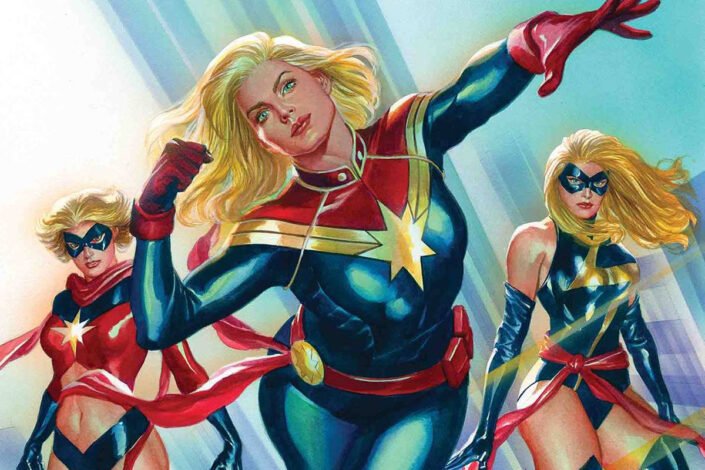
Created by Roy Thomas and Gene Colan in Marvel Super-Heroes #13 (March 1968), Carol Danvers was originally an officer in the United States Air Force and a colleague of the Kree superhero Mar-Vell, the original Captain Marvel—you can see our Captain Marvel Reading Order to know more about all the incarnations of the famous superhero.

It wasn’t until 1977 that Carol got her powers and became known as Ms. Marvel (created by writer Gerry Conway and artist John Buscema). At that time, she resurfaced as the editor of Women Magazine, a spin-off of the Daily Bugle. We then discovered that the energy exposure from the explosion of a “Psyche-Magnetron” was behind the melding of Carol’s genetic structure with Captain Marvel’s. She technically became a human-Kree hybrid.

At the beginning of the 1980s, Mrs. Marvel was the victim of bad writing before being mixed up with the X-Men—and especially with Rogue who absorbs her abilities and memories. This story led her to become known as Binary, the superhero capable of generating the power of a star. During the 1990s, after some cosmic adventures, she reverted to her original Ms. Marvel powers and later rejoined the Avengers as Warbird.

When Brian Michael Bendis took over the Avengers, he introduced the idea of Carol Danvers becoming Captain Marvel. This didn’t become a reality immediately as she reclaimed her place in the hero community as Ms. Marvel, playing significant roles in major events. In fact, it was in July 2012 that Carol Danvers finally assumed the mantle of Captain Marvel in an ongoing series written by Kelly Sue DeConnick with art by Dexter Soy. And now, she got her own movies!

Read More »Carol Danvers Reading Order, From Mrs. to Captain Marvel

JSA Reading Order, The Justice Society of America!

  • by

The Justice Society of America is the first team of superheroes in comic book history. Launched during the Golden Age of Comic Books, making its first appearance in All Star Comics #3 (Winter 1940-41), the JSA was conceived at DC Comics by editor Sheldon Mayer and writer Gardner Fox–Everett E. Hibbard was the artist on the title.

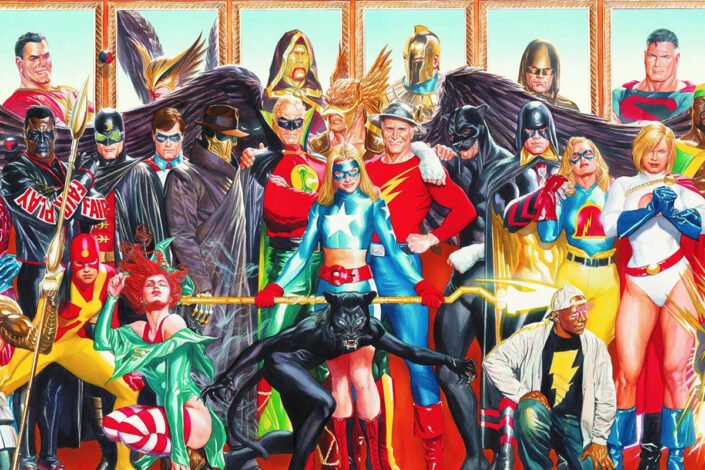
The original members of the Justice Society of America were Doctor Fate, Hourman, The Spectre, Sandman, Atom, Flash, Green Lantern (Alan Scott), and Hawkman. For a good decade, they were quite popular, but the team didn’t survive the post-war disinterest in superheroes in comics. Their adventures ceased with All Star Comics issue #57 (March 1951), but it was not the end for the JSA.

During the Silver Age, multiple members of the Justice Society of America were revamped and the team became the Justice League (see our JL reading order for more about that). At one point, the original JSA resurfaced, but this was on what became known as Earth-Two (the JL being on Earth-One). With a multiverse annual team-up with the Justice League, the JSA stayed alive and well for two decades–and even got a spin-off. Then, there was the 1985 Crisis on Infinite Earths that put an end to the JSA (and Earth-Two) for a time.

This didn’t last as a revival of the JSA happened in 1991. The old characters returned, but not in the past. But that didn’t last, a tragedy (an editorial one) occurred, the JSA disappeared, but was not forgotten.

In fact, the team was constantly present in the new Starman series by James Robinson (following his JSA: The Golden Age Elsewhere miniseries). This title led to another, a new JSA series. The team stayed active until the New 52 era, then disappeared again. The Rebirth era reestablished its place in the continuity though, but it was not until Geoff Johns came back to relaunch the title during the Infinite Frontier/Dawn of DC era that the Justice Society regained a bit of staying powers.

Read More »JSA Reading Order, The Justice Society of America!

Iron Man (Tony Stark) Reading Order

Since the 1960s, Iron Man has been a major superhero at Marvel, but his popularity drastically increased from 2008 onwards, thanks to Robert Downey Jr. playing the character on the big screen.

Created by Stan Lee, Larry Lieber, Don Heck, and Jack Kirby, Anthony Edward ‘Tony’ Stark made his first appearance in Tales of Suspense #39 before founding the Avengers alongside Thor, Ant-Man, Wasp, and the Hulk not long after.

As you well know, thanks to the movies, Tony Stark is a businessman superhero, a rich industrialist, and a genius inventor who was a weapons manufacturer and provided weapons for the Army before being captured by local terrorists. They wanted him to build weapons for them, but Tony chose to build a suit of armor for himself to escape his kidnappers instead. After that, Tony decided to upgrade his creation and put his resources to better the world as the superhero named Iron Man.

For Stan Lee, Tony Stark was a way to go against the tide, creating a character that represented everything that Marvel’s readers hated at the time: “the quintessential capitalist”. Born rich as the son of Howard Stark, also a genius inventor and the founder of Stark Industries, Tony was a ladies’ man with an invulnerable armor but with a (literally) broken heart. And before taking the looks of Robert Downey Jr., Lee based the physical and personality traits of the character on another rich (real) figure, Howard Hughes.

Read More »Iron Man (Tony Stark) Reading Order

Batman: Endgame Reading Order (New 52)

  • by

Batman: Endgame Reading Order

Written by Scott Snyder with art by Greg Capullo, Batman: Endgame is a crossover storyline from 2014 – part of the New 52 era. It’s about the return of The Joker after his disappearance at the end of the “Death of the Family” story arc. It’s an exploration of the violent dynamic between Batman and the Joker.

Here is the official synopsis: He is Batman’s greatest enemy, his deadliest threat, his opposite number. His bloody-minded madness is exceeded only by his twisted genius. He is the Clown Prince, the Pale Man, and his crimes turn the world into one big, sick joke. But today, the joke is over.

As The Joker plays his endgame with the Batman, citizens, villains, and heroes alike must survive his deadly antics and come to terms with who The Joker is and what he means to them.

What to read before Batman: Endgame?

Scott Snyder presented Batman: Endgame as a conclusion of the Joker story developed previously in the Zero Year and Death of the Family storylines. To know more about this era and the Batman stories leading up to Endgame, take a look at our Batman by Snyder and Capullo Reading Order.

  • Batman: Zero Year
    Collects Batman #21-27 and Batman #29-33.
  • The Joker: Death of the Family
    Collects the tie-in Catwoman 13-14, Batgirl 13-16, Suicide Squad 14-15, Batman and Robin 15-16, Nightwing 15-16, Detective Comics 15-16, Red Hood and The Outlaws 15-16, and Teen Titans 15-16.

Read More »Batman: Endgame Reading Order (New 52)