Skip to content

Madame Web Reading Order (Cassandra Webb and Julia Carpenter)

  • by

Madame Web Reading Order (Spider-Family)

The original Madame Web made her first appearance in the pages of The Amazing Spider-Man #210 in 1980. Created by writer Denny O’Neil and artist John Romita Jr., Madame Web was not like other heroes, she wasn’t swinging through the streets or battling villains. Instead, Madame Web possesses psychic sensory powers, including telepathy, clairvoyance, prescience, and the ability to sense psionic powers in others. The first time Peter Parker heard about her and her clairvoyance abilities, he thought she looked like a fraud. But soon enough, Spider-Man would learn that she was anything but.

First introduced as the elderly, blind woman Cassandra Webb, she helped Spider-Man by delivering bad news or asking for his help. She also had the ability to transfer her powers to another individual. When the time came, she passed on her powers to Julia Carpenter (who had once been Spider-Woman), making her the new resident Madame Web.

Known as the ‘Creepy Clairvoyant,’ Madame Web is undeniably a mysterious character and certainly not your typical member of the Spider-Man Family. Her appearances are generally limited to just a few panels or issues within larger storylines. For a fuller understanding of her role, it’s recommended to read the complete story arcs in which she appears.

Forget everything you may have learned from watching Madame Web and explore the often cryptic role of Madame Web in the Spider-Verse with this comic book reading guide, tracing her appearances in Marvel Comics!

Read More »Madame Web Reading Order (Cassandra Webb and Julia Carpenter)
Morbius Reading Order, Marvel’s Living Vampire

  • by

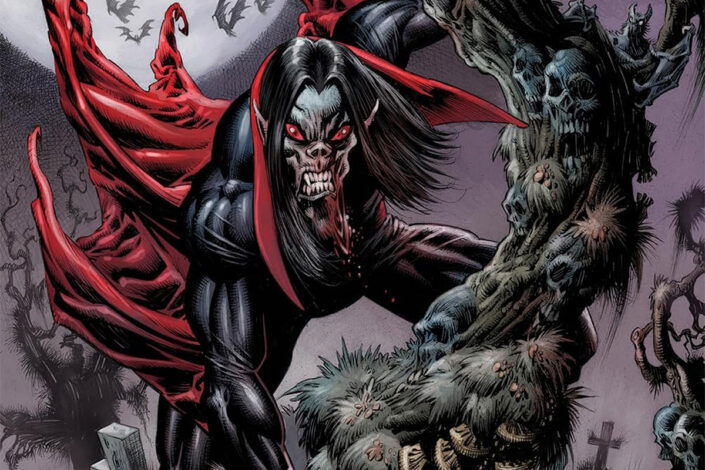
Michael Morbius is a Nobel Prize-winning biochemist and a living vampire in the Marvel Universe. Introduced as an enemy of Spider-Man in The Amazing Spider-Man #101 (October 1971), Morbius became a tragic antihero.

After years of experimentation to eliminate his rare blood disease, he thought he had found a cure, but the side effects changed him dramatically. Now, he has enhanced senses, an aversion to light, and an insatiable thirst for blood. He is not dead. He is a kind of Dhampir, not really a vampire or a mortal human.

Created by Roy Thomas and Gil Kane, Morbius is more of a scientific creature than a supernatural one—like the lizard. After a few encounters with Spider-Man, he became the star of his own feature in Marvel’s bimonthly for a while, then he went on to make guest appearances here and there for a long time. He made a comeback during the 1990s. During the next two decades, Morbius joined teams, appeared in The Amazing Spider-Man, and sometimes in his own miniseries.

Read More »Morbius Reading Order, Marvel’s Living Vampire

DC Comics Bombshells Reading Guide, a reality where superheroines guard the homefront during World War II

  • by

DC Comics Bombshells Reading Guide

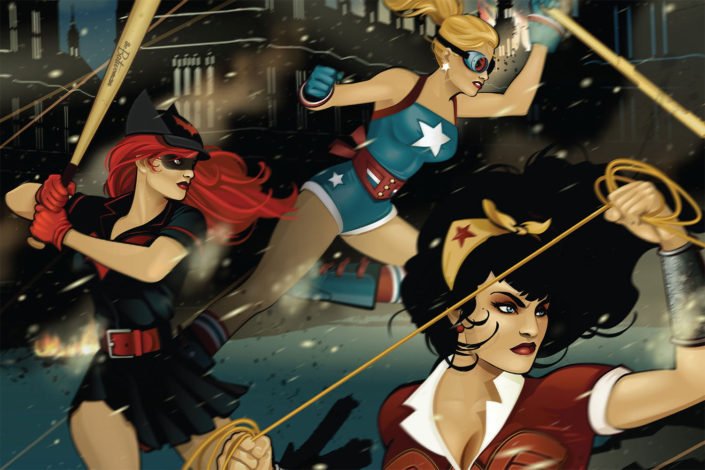
First and foremost, DC Comics Bombshells is a line of variant covers and collectible statues created by Ant Lucia and featuring superheroines reimagined in a 1940s-era pinup style. The line was launched in 2013 with Wonder Woman and the brand became soon enough popular enough for DC Comics to expand the line with art prints, T-shirts, mugs but also an out-of-continuity series.

Written by Marguerite Bennett and illustrated by rotating artists, DC Comics Bombshells is a reality where female superheroes guard the homefront during World War II. When the story began, Kate Kane is the Batwoman, a player in an all-women’s baseball league where the players’ identities are kept secret to protect them from sexist backlash. Kate Kane plays baseball and fights crime in her Batwoman identity. Soon enough, she is recruited by Commander Amanda Waller who offers her to join her Bombshell, her team working to end the war.

Bombshells is an ensemble comic book series, in which you can also find alternate versions of Queen Mera Curry (Aquawoman), The Question (Renee Montoya)Stargirl (Kortni Duginovna), Supergirl (Kara Starikov), Diana Prince (Wonder Woman), Zatanna “Zee” Zatara, and more.

As a digital-first ongoing series, Bombshells ran for 100 digital issues (the equivalent of 33 print issues), with the final issue released in August 2017. That same month, the second digital-first series named Bombshells United was launched, picking up from the end of the previous Bombshells series. The first arc introduced Bombshells versions of Donna Troy and Cassie Sandsmark. This second series was less successful as the title was canceled after 38 digital issues and 19 print issues.

Read More »DC Comics Bombshells Reading Guide, a reality where superheroines guard the homefront during World War II

Grant Morrison’s JLA Reading Order

In 1986, Keith Giffen and J.M. DeMatteis launched Justice League International, a series that quickly became popular (see the reading order for details). By the mid-1990s, though, the success had faded, and the titles were canceled. DC Comics tried to revamp the League with Mark Waid and Fabian Nicieza’s miniseries Justice League: A Midsummer’s Nightmare. But it wasn’t until 1997, when Grant Morrison and artist Howard Porter launched the new JLA series, that the team found success again.

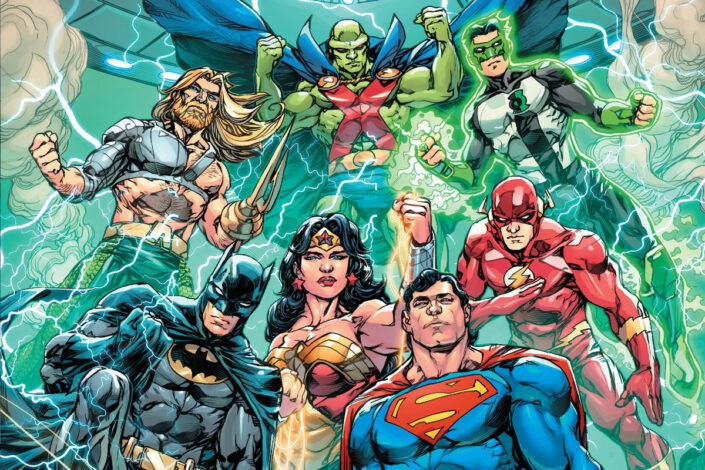
After years without A-listers, Grant Morrison brought the core team back together—Superman, Batman, Wonder Woman, and the rest—and introduced the idea of JLA as a modern pantheon of gods. To match this larger-than-life vision, the League moved into a new headquarters on the Moon, the Watchtower, and faced villains who threatened the world—or the entire universe. The creative team revisited and rebranded classic threats such as the White Martians, The Injustice Gang, and the Key, while also introducing new foes like Prometheus and Mageddon. Simply put, “JLA has rallied to save humankind from the brink of extinction. These are the adventures that have made them living legends.”

Grant Morrison’s run on JLA lasted four years, from 1997 to 2001. He wrote the series for the first 41 issues, along with a brief crossover during JLA’s “World War III” arc. During that time, the Justice League became one of DC’s best-selling titles and completely redefined the team for decades to come. It’s one of the most important runs in JLA history, and now you can explore it with our reading order!

Read More »Grant Morrison’s JLA Reading Order

Elektra Reading Order, Marvel’s most deadly assassin

  • by

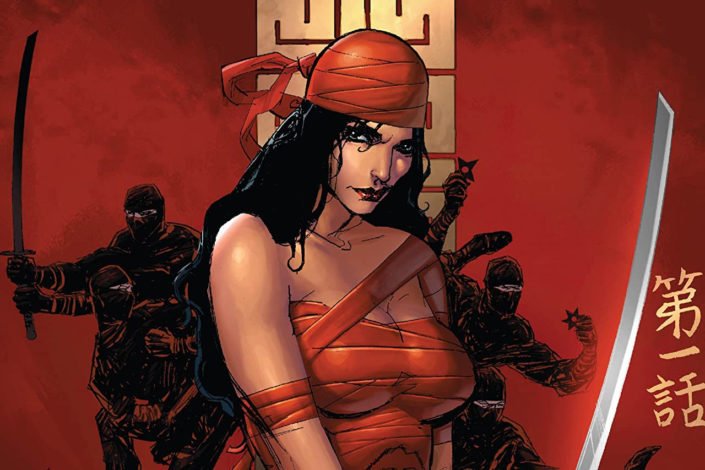
Created by Frank Miller, Elektra Natchios is a dangerous woman and a true antihero. The daughter of a Greek ambassador with a troubled childhood, Elektra is a highly trained assassin and martial artist who never goes out without her pair of sai. She is also known as a love interest to Matt Murdock aka Daredevil, both of them having a very complicated relationship, where love, passion, violence, and ideals merge and collide.

As a character evolving in a gray area, between a hero and a villain, Elektra has been associated with several groups, one of the most important being the Hand, an order of evil mystical ninjas who are heavily involved in organized crime and mercenary activities. Since her first appearance, she has also been part of Hydra, The Shield, The Thunderbolts, and Heroes for Hire. Whatever the team she’s part of, Elektra is a deadly character who will prefer to die than show you what she feels.

Read More »Elektra Reading Order, Marvel’s most deadly assassin

Jonathan Hickman’s Fantastic Four Reading Order

  • by

Jonathan Hickman Fantastic Four Reading Order

Following “Secret Invasion,” the 2008 crossover storyline, came the “Dark Reign” era which leads to a shift of power in the Marvel Universe toward “reformed supervillain” Norman Osborn. Mark Millar who was writing the Fantastic Four series – with art by Bryan Hitch – left the title and Jonathan Hickman took over and started to revamp and redefine Marvel’s First Family.

Here is the official synopsis: it all begins when Mr. Fantastic decides to solve everything! As the team contends with Norman Osborn’s Dark Reign, an older Franklin arrives from the future with an ominous warning! And as the Fantastic Four fight the War of the Four Cities, Mr. Fantastic assembles a band of genius youngsters. But when Nathaniel Richards returns, Galactus rises and a new Annihilation Wave threatens to invade from the Negative Zone, tragedy suddenly strikes. Grieving, the surviving members of the Fantastic Four dissolve the team – but from its ashes rises the Future Foundation!
Read More »Jonathan Hickman’s Fantastic Four Reading Order

Batman RIP Reading Order

  • by

Batman RIP Reading Order

Some storylines are more complicated than you can think – or they just seemed weirdly confusing for no reason. In the case of Batman R.I.P., the complication (and confusion) comes from the fact that it’s connected to the Final Crisis event. This story concluded the first third of Grant Morrison’s Batman run (full reading order here), leading to a new status quo as the series was renamed Batman and Robin for a time.

Here is the official synopsis: The troubled life of Bruce Wayne seems to spin out of control when his relationship with the mysterious Jezebel Jet deepens. Soon Bruce Wayne drops out completely, having seemingly become the victim of mental illness and abandoning his Batman identity for a life on the streets of Gotham City. Capitalizing on the fall of their greatest foe, the Club of Villains begins a crime spree through the streets of Gotham that threatens to bring the city to its knees.

What to read before Batman R.I.P.?

  • Batman: The Black Casebook
    Collects Batman #65, 86, 112, 113, 134, 156 And 162, Detective Comics #215, 235, 247 And 267, And World’s Finest Comics #89.
  • Batman and Son (collects previous editions Batman & Son and The Black Glove in one volume)
    Collects Batman issues #655-658, #663-669 and #672-675.
  • Batman: Heart of Hush
    Collects Detective Comics #846-850.

  • Grant Morrison’s run and Batman R.I.P. take place during the Modern Age period. For more Batman’s adventures during this time, check out our Batman reading order, the Modern Age.

Read More »Batman RIP Reading Order

Harley Quinn Reading Order

Harley Quinn is a rarity in the Comic Book World because she was created on TV by Paul Dini and Bruce Timm in Batman: The Animated Series, in 1992. She became a recurring character on the show and, because of her popularity, she made the transition to paper, joining the Batman comic book canon seven years later.

Here was her story at the beginning, as told in the Mad Love comics: When she was only seven years old, Harleen Quinzel witnessed her father being beaten up by thugs, and then arrested by the police. That night, she ran away to the safest place she could think of: Coney Island amusement park. But there, pursued into the Funhouse by the men who brutalized her father, she beheld unimaginable horrors. Years later, Harleen has put her past behind her and used her intelligence and ambition to escape her childhood of poverty with a career in psychiatry. Assigned to her first position at Arkham Hospital, she will discover, deep in the asylum, something dangerous and alluring, something quite unlike anything else she has ever known before: The Joker.

She became Harley Quinn and, after having been injected with a special formula by Poison Ivy, she got new abilities, such as immunity to toxins and enhanced strength and agility. She left Joker behind and became a solo criminal. It was not a hit at first, but Harley came back a few years after the end of her first solo series to team up with Catwoman and Poison Ivy (forming the Gotham City Sirens).

Harley was a criminal, then an anti-heroine. Her backstory was refined, as was her relationship with Poison Ivy. She became quite popular on paper (especially during the 2010s), and later on the big screen too.

Read More »Harley Quinn Reading Order

Archie Horror Reading Order (with Afterlife With Archie and Chilling Adventures of Sabrina)

  • by

Archie Horror Reading Order

As a publisher that exists since 1939, it’s understandable that once in a while, the people at Archie Comics feel the need to go out of their comfort zone to expand their audience and modernize their image. It’s what happened in 2010, with Afterlife with Archie.

It’s the early 2010s, when we are in a full-blown Zombie renaissance, thanks to successful zombie comedies (like Shaun of the Dead, Zombieland, and more). So, what would happen if a zombie apocalypse happened in Riverdale? It gave us Afterlife with Archie, the first title in the company not to be aimed at children, containing graphic horror scenes and moderate language.

The successes of Afterlife with Archie and Chilling Adventures of Sabrina lead to the creation of the imprint Archie Horror in 2015,  with Afterlife #8 the first to feature the company’s Archie Horror logo.

Soon they published other titles, each taking place in their own alternate universe existing independently of each other, full of zombies, evil witches or werewolves. They all exist independently of each other, with one exception to that rule–the crossover story between Jughead and Vampironica.

Read More »Archie Horror Reading Order (with Afterlife With Archie and Chilling Adventures of Sabrina)

Shadow War Reading Order, a Batman, Robin & Deathstroke, Inc. crossover event

  • by

Since James Tynion IV stopped writing Batman, Joshua Williamson is the main writer of the series. He also writes Robin, Deathstroke, Inc., and everything linked to Infinite Frontier. This summer, he will be in charge of the Dark Crisis event, but before that he organized another crossover event in the Batmanverse called Shadow War—illustrated by Viktor Bogdanovic.

Here is how it starts: When Deathstroke assassinates Ra’s al Ghul, Talia al Ghul demands revenge and sends her League of Shadows to kill Deathstroke and Deathstroke Inc.! Batman and Robin must team up to track down Deathstroke and bring him to justice … but do they?

Expect over-the-top fights, action, mystery, and betrayal as this crossover event creates a major impact on the DCU!

What to read before Shadow War?

With this kind of event, it’s always better to be up-to-date, especially with Joshua Williamson’s writing. First, we’ve got Batman, the first story after the Fear State event, then Damian Wayne in Robin (see Damian Wayne Reading Order for more info), and Deathstroke in the new Deathstroke, Inc. series.

Read More »Shadow War Reading Order, a Batman, Robin & Deathstroke, Inc. crossover event