Skip to content

X-Men

Where to Start Reading X-Men Comics? An Introduction to the X-Universe

X-Men were the first Marvel superheroes I read. I remember picking up the latest release from the shelf, which turned out to be the conclusion of a storyline! From then on, I started exploring the X-Men’s history, following their contemporary adventures and tracking down older stories — from Chris Claremont’s run to the many spin-offs, limited series and maxi-series (I loved Cable back then!).

These days, it’s easier than ever to get into reading good X-Men comics thanks to the different collected editions, which explore the many eras of the mutants’ history. But with over 60 years’ worth of stories, it can also be hard to know where to start!

So, where should you start? The X-Men are a big family with many characters and various types of adventures. Whether you prefer the old comic book styles of the ’80s, epic modern stories, high-concept ideas, or personal and intimate tales, there’s an X-Men comic for you!

To help you find the perfect one, here’s a curated beginner’s guide with several routes you can take to read some great X-Men stories!

Read More »Where to Start Reading X-Men Comics? An Introduction to the X-Universe

Age of Revelation Reading Order, The Marvel Universe 10 years into the future

As Marvel Comics celebrates the 30th Anniversary of Age of Apocalypse, one of the most famous alternate timelines in the X-Universe, the publisher is revisiting the cataclysmic style of the ’90s with Age of Revelation.

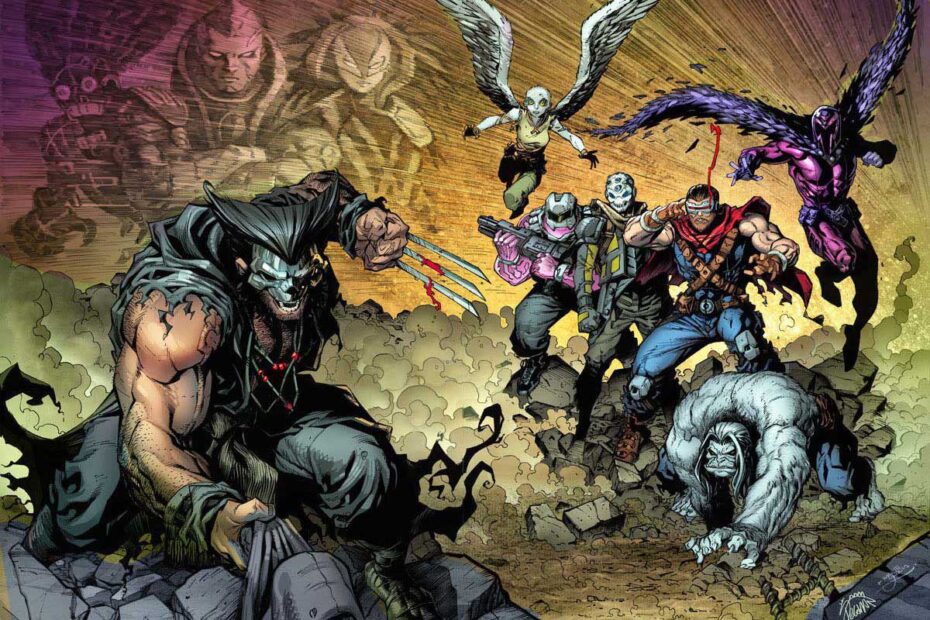
Instead of an alternate reality, it is an alternate future that takes over the X-Men line. To be more specific, the Marvel Universe is going 10 years into the future “where the world has been reshaped by Apocalypse’s heir, Doug Ramsey AKA Revelation!”

Arising from current events happening in the X-Men main title from writer Jed MacKay and artist Ryan Stegman, Revelation has set out on the impossible task that Apocalypse entrusted him with: creating a world where only the fittest survived. Ten years later, Doug Ramsey commands Earth with his voice, creating the Revelation Territories, a new mutant utopia built on an insidious lie. Beneath the surface, rebellion brews and as a ragtag X-Men team strikes from the shadows, Revelation faces threats from within. 

Welcome to the Age of Revelation, a spiritual sequel to Age of Apocalypse that you can explore now with our reading order and checklist! 

Read More »Age of Revelation Reading Order, The Marvel Universe 10 years into the future

Age of Apocalypse Reading Order, an X-Men crossover event

  • by

The 1995 crossover storyline Age of Apocalypse was one of the most ambitious crossover events in X-Men history. Much like The Clone Saga in the Spider-Man titles, this story became an era-defining milestone within the broader Marvel Universe.

Unlike traditional crossover events, which build upon existing continuity, the Age of Apocalypse storyline temporarily replaced the main X-Men titles with entirely new series set in an alternate universe. These included X-Calibre, Gambit and the X-Ternals, Generation Next, Astonishing X-Men, Amazing X-Men, Weapon X, Factor X, X-Man and X-Universe. Each of these limited series explored different aspects of a dystopian timeline dominated by the ancient mutant Apocalypse, offering radically altered reimaginings of familiar characters and dynamics.

The story kicks off when Legion (David Haller), the mentally unstable son of Professor Charles Xavier, travels back in time intending to assassinate Magneto in the hope of preventing the ideological conflict that would later erupt between Magneto and Xavier. However, Legion’s mission ends in tragedy when he inadvertently kills Xavier instead. This assassination fractures the timeline, giving rise to an alternate reality in which Apocalypse begins his conquest of Earth a decade earlier than in the original continuity.

Read More »Age of Apocalypse Reading Order, an X-Men crossover event

The Best of Juggernaut Comics, A Recommended Reading Order

There may be no other family tree as complex as the Grey-Summers one in the X-Men Universe, but it doesn’t mean that other characters haven’t had their share of pain and problems with their relatives. Case in point with Marko Cain, better known as Juggernaut, who is also the stepbrother of Professor X!

Unlike Charles Xavier, Juggernaut is not a mutant, but a human empowered by an ancient jewel powered by the deity Cyttorak, which transformed him into the unstoppable Juggernaut. Created by Stan Lee and Jack Kirby, he made his first appearance in X-Men #12 (1965) as an enemy of the X-Men. For a long time after his introduction, Juggy was a one-note villain, popping up in one or two issues to rampage and disappear (or get thrown into prison for a while). Still, that didn’t stop him from making a name for himself as a member of the Brotherhood of Mutants and as the criminal partner and BFF of Black Tom Cassidy. For many decades, he fought against the X-Men, as well as Spider-Man and the Hulk.

Things changed for Juggernaut in the early 2000s during Chuck Austen’s infamous run on Uncanny X-Men. While that era is often panned, it is also when Ol’ Jughead got some noticeable character development as he joined the X-Men and officially crossed the line between villain and hero, becoming more of an anti-hero (or anti-villain).

Read More »The Best of Juggernaut Comics, A Recommended Reading Order

X-Men: From The Ashes Reading Order (Part. 8)

  • by

Welcome back to the world of the X-Men with part 8 of our ultimate reading guide. Once the “Krakoan Age” came to an end, Marvel Comics launched a new era called “From The Ashes.” A complete relaunch of the X-Line of comics starting summer 2024.

This was teased in X-Men (vol. 6) #35 (legacy Uncanny X-Men #700), announcing a return to something similar to the old status quo with mutants rejoining the rest of the world and facing hatred and fear. 

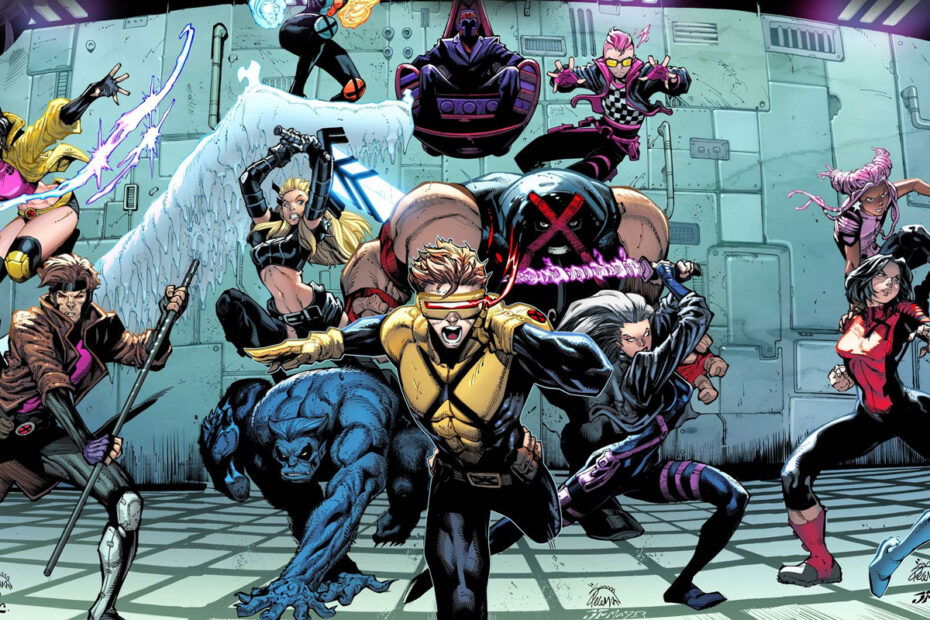
The new era of X-Men kicks off with three flagship titles. First, in X-Men (vol. 7) by Jed MacKay and Ryan Stegman, Cyclops, Beast, Magneto, Psylocke, Kid Omega, Temper (formerly Oya), Magik, and Juggernaut come together to face emerging threats, fighting not just for survival, but for the future and guiding philosophy of mutantkind. Then, in Uncanny X-Men (vol. 6) by Gail Simone and David Marquez, outlaws once more, Rogue, Gambit, Nightcrawler, Jubilee, and Wolverine are now based in the heart of the Big Easy, and they continue to defend a world that fears and hates them. Then, in Exceptional X-Men by Eve L. Ewing and Carmen Carnero, Kate Pryde returned to her hometown of Chicago in the aftermath of the war with Orchis, hoping to leave the world of mutant affairs behind. But when she encounters three young mutants—Bronze, Axo, and Melee—in desperate need of training and guidance, she finds herself reluctantly drawn back in. And to make matters more complicated, Emma Frost wholeheartedly agrees.

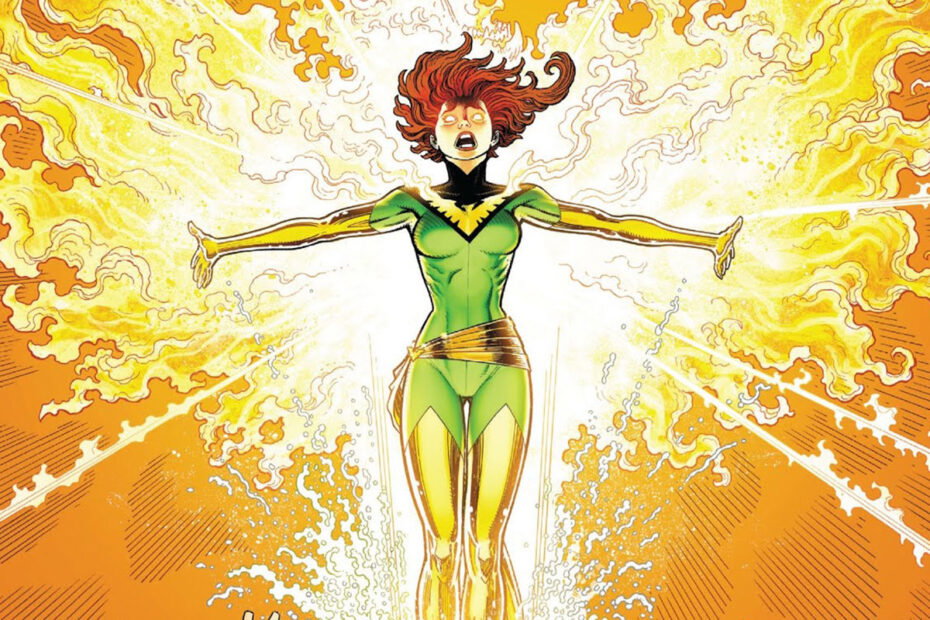
Those X-Men comic book series are soon joined by NYX (vol. 2), Phoenix, Storm (vol. 5), Wolverine (vol. 8), X-Factor (vol. 5), X-Force (vol. 7), and some limited series and, soon, the first crossovers. 

Read More »X-Men: From The Ashes Reading Order (Part. 8)

Best 1980s Marvel Comics: The Stories That Defined a Decade

These were good years for the comic book industry. Actually, they were great years. The 1980s were a period of tremendous financial and creative growth that transformed the medium. The emergence of the Direct Market, with specialty comic book stores, created more opportunities for creators and led to a wider range of publications.

It was during this decade that Alan Moore and Dave Gibbons’ Watchmen, Frank Miller’s The Dark Knight Returns, and Art Spiegelman’s Maus were published, breaking new comic book narrative ground for future writers. It was also during this decade that DC Comics was rebooted with Crisis on Infinite Earths and started its Renaissance with the British Invasion of creators. 

The comic book industry rose and fell during the 1980s, including Marvel Comics. The House of Ideas evolved in those years, embracing darker storytelling, launching new comic book series, trying new formats, hiring new talents, and releasing some of the most celebrated and iconic stories in its history.

Maybe one of the most important decades on the creative front, the 1980s helped redefine Marvel’s superheroes by pushing boundaries and going where the industry had never been before. Today, we explore the best Marvel stories of the decade!

Read More »Best 1980s Marvel Comics: The Stories That Defined a Decade

Mystique Reading Order (X-Men)

Some mutants are older than they look. We all know that Wolverine‘s healing factor slowed down the effects of aging granting him an extended lifespan. But he is not the only Marvel mutant to have quite a long life. This is also the case of the mysterious and dangerous Mystique.

Mostly known as Raven Darkhölme, Mystique has hidden behind many aliases, such as Sherlock Holmes, Foxx, Surge, Raven Wagner, and more. Her true identity is still a mystery, despite having made her first appearance in Ms. Marvel #16 (January 1978), more than 47 years ago.

This unknown past fit quite well with the shapeshifting mutant terrorist who found her way to the Marvel Comics page by accident. Artist Dave Cockrum simply drew a beautiful woman who was colored by Paty Greer (the future Mrs. Cockrum) and Marvel colorist Andy Yanchus. When Claremont saw the design, he asked for information about her and if he could use her. He came up with the name Mystique and included her in Ms. Marvel.

Read More »Mystique Reading Order (X-Men)

The Best of Jubilee Comics, Your Recommended Reading Order (X-Men)

Being part of the mutantkind comes with a different set of powers. Some people have telekinesis or pyrokinesis—and plenty of other -kinesis. Others can shoot energy from their eyes, control a planet’s magnetic field, or heal from any injury.

If your name is Jubilation Lee, you’re most known for your “fireworks”! While some people have called Jubilee’s powers one of the lamest, that didn’t stop her from becoming popular, especially in the nineties. And since it’s clear she can go nuclear on you, it’s safe to say you should never underestimate any power!

Created by Chris Claremont and Marc Silvestri in 1989, Jubilee joined the X-Men and became Wolverine‘s sidekick, forming a father-daughter bond with him. Later, she joined Generation X and became a fan favorite on X-Men: The Animated Series. Over the years, Jubilee’s life took some wild turns: she had a stint in Hollywood, lost her powers, worked for a pro-mutant group, became a vampire, adopted a child, got her powers back, and even turned human again!

To discover these stories and more, you can follow our Jubilee reading order guide for the best comics to read about one of Marvel’s most popular Asian American superheroes.

Read More »The Best of Jubilee Comics, Your Recommended Reading Order (X-Men)

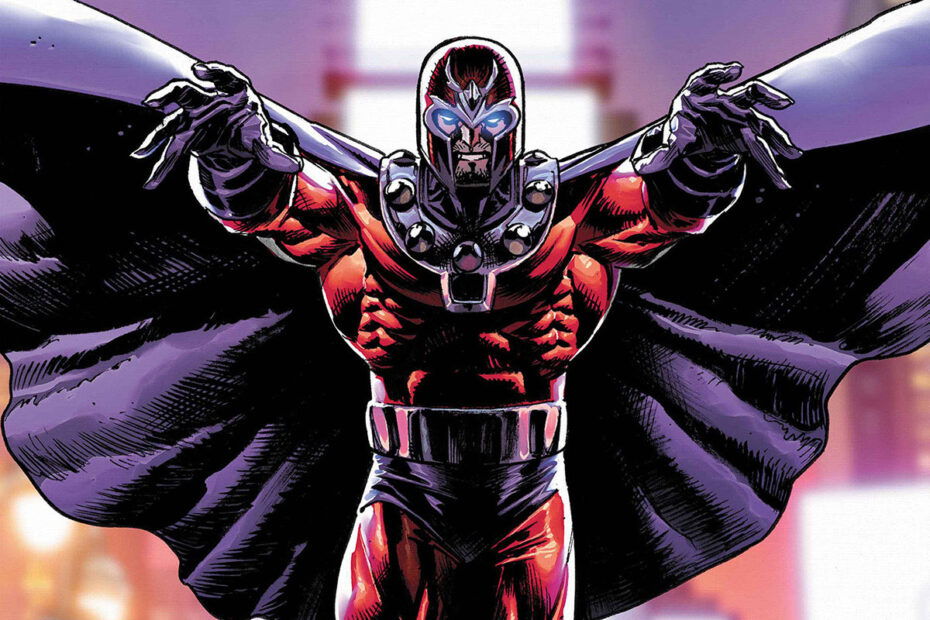
The Best of Magneto Comics, our Recommended Reading Order (X-Men)

He is a Master of Magnetism. He is one of the most complex and ambiguous figures among the X-Men. We’re talking about Magneto, alias Max Eisenhardt, or Erik Magnus Lehnsherr.

Created by Stan Lee and Jack Kirby in 1963, Magneto started as a one-dimensional foe for the young X-Men team led by Professor Xavier, mostly defined by his mutant-versus-human ideals. The Magneto we know today was developed by Chris Claremont, who transformed him into a more complex, three-dimensional character. The first turning point came with the classic Uncanny X-Men #150, which introduced the first notion of Magneto’s past as a Holocaust survivor.

Over the next few years, Magneto continued to evolve, leading to the milestone Uncanny X-Men #200—”The Trial of Magneto”—which concluded with a major change in the status quo for the mutants. Magneto’s potential for redemption became central to his character, pushing him into a more complex grey area, often shifting between good and evil depending on the writer’s interpretation.

Here’s a guide to some of the most important and recommended comics featuring Magneto, Marvel’s Master of Magnetism!

Read More »The Best of Magneto Comics, our Recommended Reading Order (X-Men)

Domino Reading Order (X-Men)

Black Cat is not the only Marvel character with lucky-based powers. While Felicia Hardy brings bad luck to those around her, the woman known as Domino shifts the odds in her favor. A member of the X-Men family, Domino often worked as a mercenary, taking on questionable jobs but still guided by a moral compass that pushes her to do the right thing when necessary.

Created by Fabian Nicieza and Rob Liefeld, Domino first “appeared” in New Mutants #98. However, it was later revealed that this was an imposter, with her real first appearance taking place in X-Force #8. You know the World of Comics, it’s complicated!

While she was often called “Beatrice” (a name meaning lucky) at first, Domino’s real name was revealed to be Neena Thurman. She became one of the most emblematic members of the X-Force team, a long-time ally to the time-traveling mutant Cable and one of Deadpool’s closest friends. Domino is also visually striking, with her pure-white skin and distinctive black eye patch. As Rob Liefield explained in a Comics Beat interview: “I was obsessed with the game dominoes. And I always thought that a character who was 100% black and white would be a tremendous visual.” He also gave her luck powers, because “when you play dominoes, it’s a game of chance.”

Check out our Domino reading order, guiding you through the essential comics and story arcs featuring Marvel’s luckiest mutant!

Read More »Domino Reading Order (X-Men)