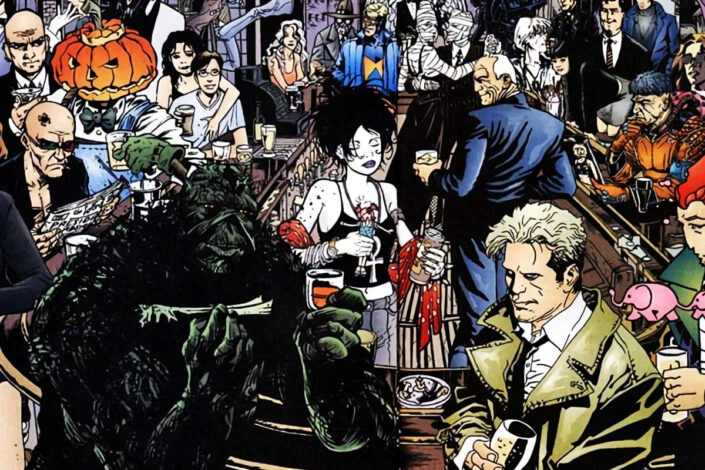
In 2026, Vertigo Comics is officially back in business. DC Comics discontinued the imprint in January 2020 and announced its return 4 years later, but nothing significant came of it until now. New series, including spin-offs of old hits, are coming, and this makes for the perfect time to look back at the greats that earned Vertigo its reputation.
If you are not familiar with the history of Vertigo, it was launched in 1993 under the direction of editor Karen Berger. Dedicated to creator-driven comics for mature readers, the imprint was freed from the constraints of DC’s main continuity and the Comics Code Authority (CCA), providing writers and artists with a level of creative autonomy that led to some of the medium’s most influential series.
Its true origin can be traced to DC’s mature-reader experiments of the 1980s and to landmark works such as The Dark Knight Returns and Watchmen, which demonstrated a growing audience for adult-oriented comics. But everything truly began when DC stopped submitting The Saga of the Swamp Thing to the CCA. Under Alan Moore, the series helped usher in a new wave of writers (many from the United Kingdom) often referred to as the “British Invasion.”
Officially launched in January 1993, Vertigo published a mix of ongoing series, limited series, and graphic novels, both new titles and continuations of existing ones. The first book to carry the Vertigo label was Death: The High Cost of Living by Neil Gaiman and Chris Bachalo. Throughout the 1990s and 2000s, the imprint released numerous acclaimed works, many of which are now regarded as modern classics.
Vertigo’s influence gradually waned in the following decade. Karen Berger departed DC in 2012, and subsequent editorial changes failed to reverse the imprint’s decline. Despite initiatives such as the revival of the Sandman Universe, DC announced in 2019 that Vertigo would be discontinued as part of a broader branding consolidation, effective January 2020, and was in part replaced by DC Black Label.
For many readers, Vertigo remains synonymous with ambitious, adult-oriented comics and innovative storytelling. Below is a selection of our favorite Vertigo titles.
Note: Despite their strong association with Vertigo, Alan Moore’s The Saga of the Swamp Thing, and Grant Morrison’s Animal Man and Doom Patrol were not launched under the imprint. Swamp Thing was only branded as Vertigo beginning with issue #129, during Nancy A. Collins’s run.

The Best Vertigo Comics
Hellblazer
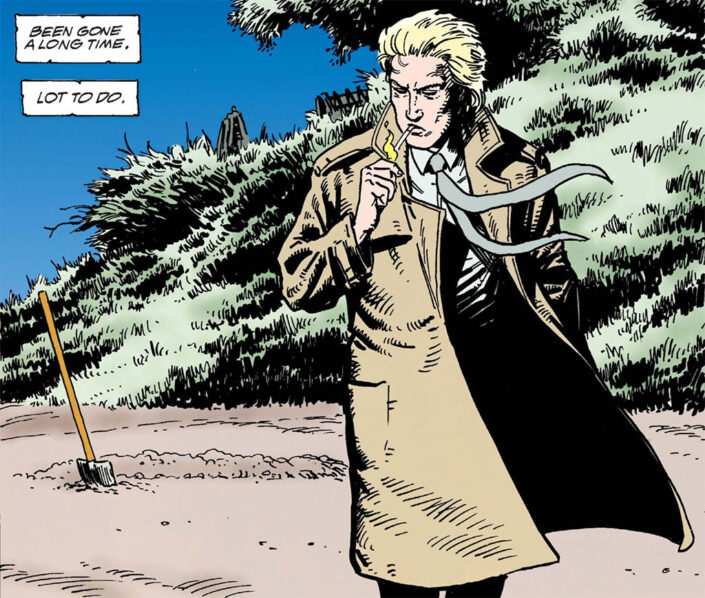
The quintessential Vertigo series, Hellblazer spun out of The Saga of the Swamp Thing. Although it began before the imprint’s launch, it became Vertigo’s longest-running title, reaching 300 issues. The series follows John Constantine, a streetwise British occultist, in stories that blend horror, dark fantasy, and social commentary.
Written and illustrated by many of the creators most closely associated with Vertigo, including Jamie Delano, Garth Ennis, Mike Carey, Peter Milligan, Warren Ellis, Brian Azzarello, and artists such as Steve Dillon, Richard Corben, and Sean Phillips, Hellblazer is marked by its unsettling tone, inventive storytelling, and moral ambiguity.
Lucifer
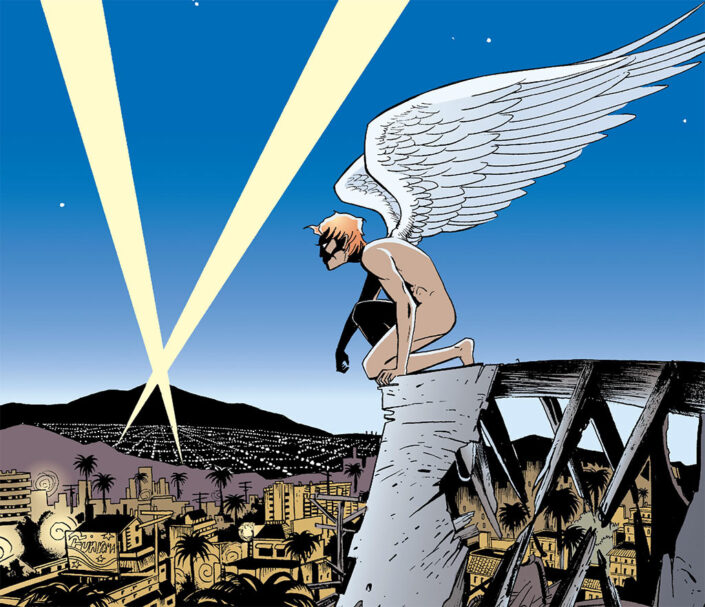
Spun off from The Sandman, Mike Carey’s Lucifer is an expansive, high-concept series centered on free will and the rejection of predestination, with art by Peter Gross and Ryan Kelly. Epic in scale and philosophical in intent, it stands as one of Vertigo’s most accomplished series and bears little resemblance to its later television adaptation.
The story follows Lucifer Morningstar after he abdicates from Hell, now operating the Lux piano bar in Los Angeles. Drawn back into cosmic affairs by a direct commission from the Creator, Lucifer embarks on a gamble that could grant him ultimate freedom—at the cost of everything else.
Preacher
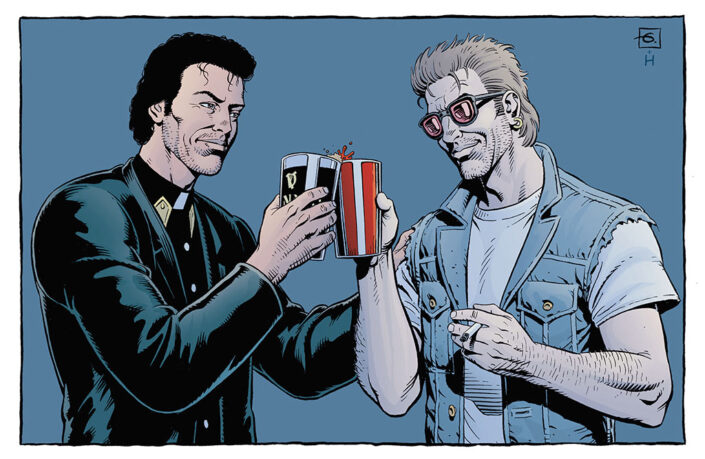
Created by writer Garth Ennis and artist Steve Dillon, Preacher is a provocative and influential Vertigo series that combines road-trip narrative, dark comedy, and extreme violence to interrogate religion, belief, responsibility, love, and friendship. Through its transgressive approach and memorable cast, the series helped redefine the limits of mainstream comics.
The story follows Jesse Custer, a small-town Texas preacher possessed by Genesis, a supernatural entity that grants him the power to command absolute obedience. Armed with the “Word of God,” Jesse sets out to confront a deity he believes has abandoned His creation.
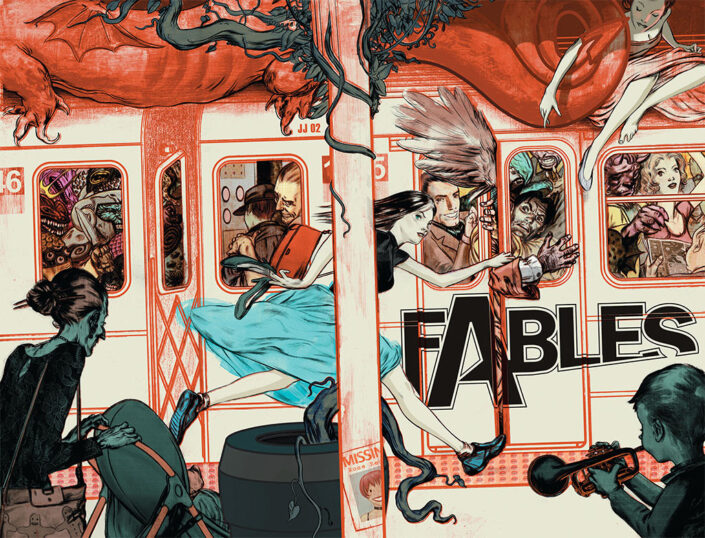
Fables
Created by Bill Willingham, with primary art by Mark Buckingham, Fables reimagines characters from folklore and fairy tales within a long-form narrative spanning 150 issues (at the time, now 162 issues), plus multiple miniseries. Blending fantasy, mystery, and political drama, the series explores themes of exile, war, love, and family, and quickly established itself as one of Vertigo’s signature titles.
Set largely in modern-day New York, Fables follows a hidden community of displaced fairy-tale characters living in exile after the conquest of their homelands. The story initially centers on Bigby Wolf, the reformed Big Bad Wolf and sheriff of Fabletown, as he investigates a murder that exposes larger conflicts.
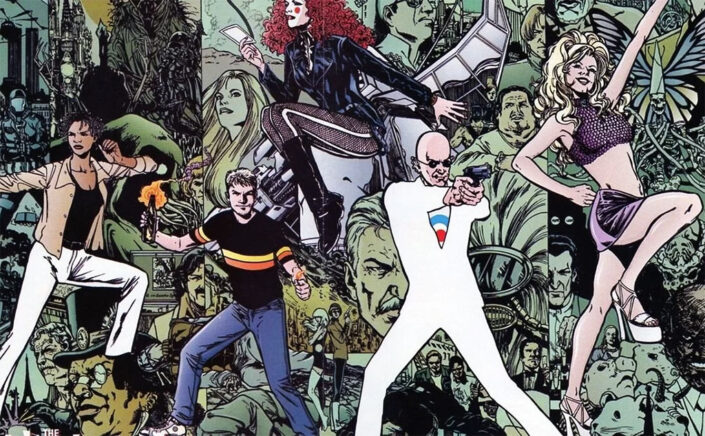
The Invisibles
Created by Grant Morrison, The Invisibles is an ambitious and deliberately disorienting Vertigo series that blends political theory, occultism, science fiction, and surrealism. Centered on resistance to systemic and psychic forms of oppression, the series is often regarded as a key to understanding Morrison’s broader body of work and is structured to reward multiple readings.
The epic story follows the Invisibles, a clandestine collective waging a covert war against forces of control, including interdimensional entities known as the Archons of the Outer Church, using time travel, altered consciousness, and revolutionary tactics.
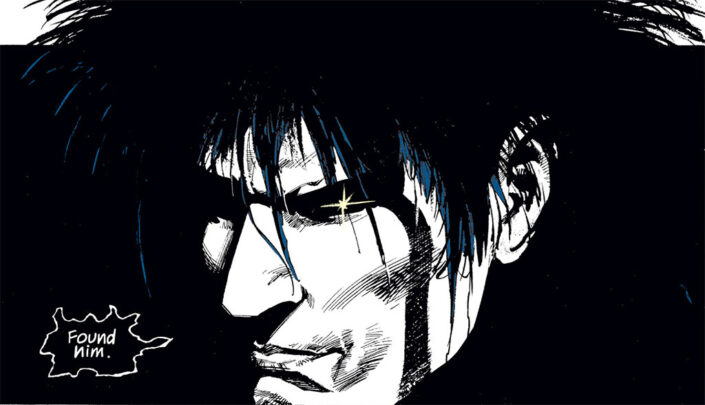
The Sandman
I used to put it before anything else, but Neil Gaiman’s actions have tainted the reading experience of The Sandman. Nevertheless, this is the most influential and widely recognized series associated with Vertigo, joining the imprint at its launch and generating numerous spin-offs in the years that followed. Blending horror, mythology, fantasy, and literary fiction, the series played a decisive role in expanding the thematic and formal possibilities of mainstream comics.
The comics follow Dream, also known as Morpheus, one of the Endless, after he escaped from decades of captivity. As he seeks to restore his realm and identity in a transformed world, the series moves through mythic landscapes, contemporary America, and Hell itself, ultimately centering on responsibility, change, and the consequences of power.
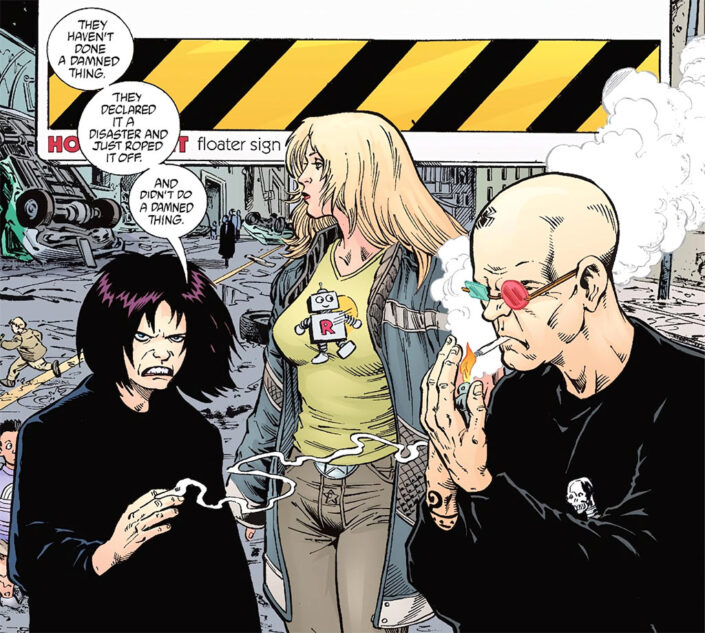
Transmetropolitan
Written by another problematic author, Warren Ellis, and co-created and designed by Darick Robertson, Transmetropolitan is a cyberpunk satire whose political themes have remained strikingly relevant since its publication. Centered on journalism, corruption, and the abuse of power, the series follows a near-future conflict between a relentless reporter and two successive U.S. presidents, blending dark humor with dystopian science fiction.
Set in a grotesque, hyper-technological city, the story focuses on Spider Jerusalem, a cynical investigative journalist compelled to return from self-imposed exile. Through his work at The Word, Spider confronts systemic injustice and moral decay in a future that often mirrors the present.
Shade, the Changing Man
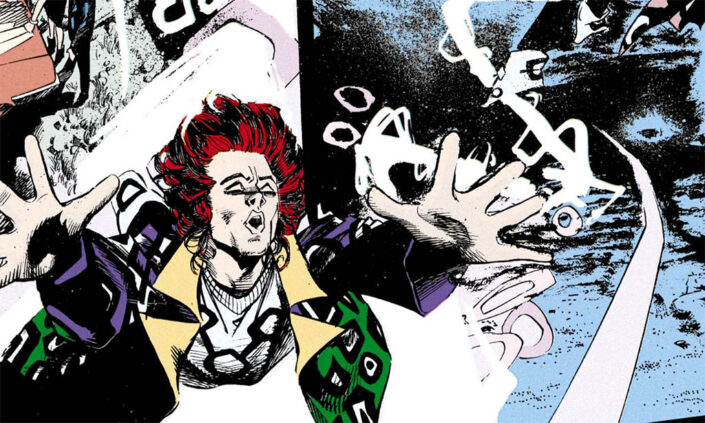
Peter Milligan’s Shade, the Changing Man is a surreal and socially incisive Vertigo series that blends psychological horror, romance, and satirical commentary on American culture, addressing topics such as racial tension, gun violence, and homelessness. Innovative in both theme and narrative, it remains one of the imprint’s most distinctive works.
The story begins when Shade arrives on Earth from his home dimension of Meta, inhabiting the body of his host’s murderer. Together with Kathy George, he journeys through America’s collective unconscious to confront a malevolent force known as the American Scream.
100 Bullets
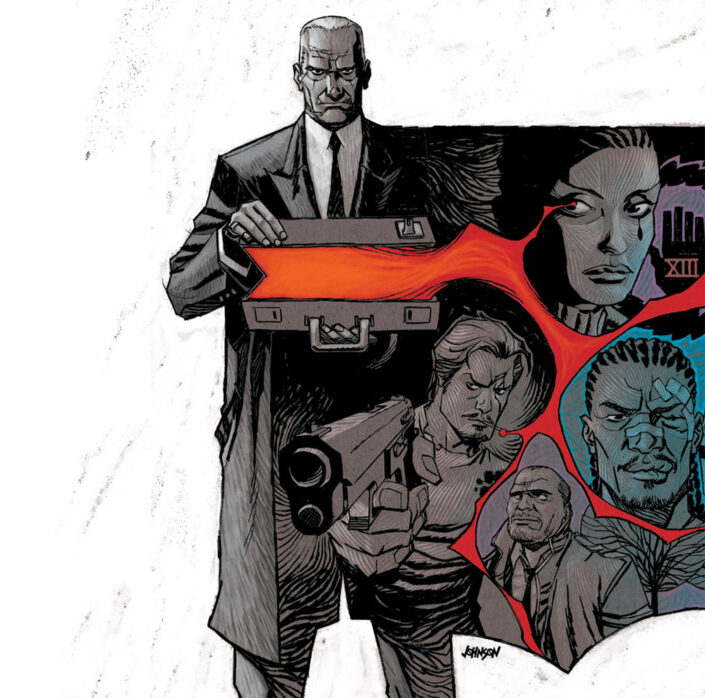
Written by Brian Azzarello with art by Eduardo Risso, 100 Bullets is a dark and intricate crime series that ran for 100 issues. Beginning as a meditation on vengeance, it evolves into a complex saga of morality, power, and consequence, earning a place among Vertigo’s most compelling crime stories.
The story centers on Agent Graves, who offers selected individuals a special case containing a gun, 100 bullets, and legal immunity to exact revenge on anyone of their choosing. While this presents a stark moral choice, a larger mystery looms: who is orchestrating these opportunities—and to what end?
American Vampire
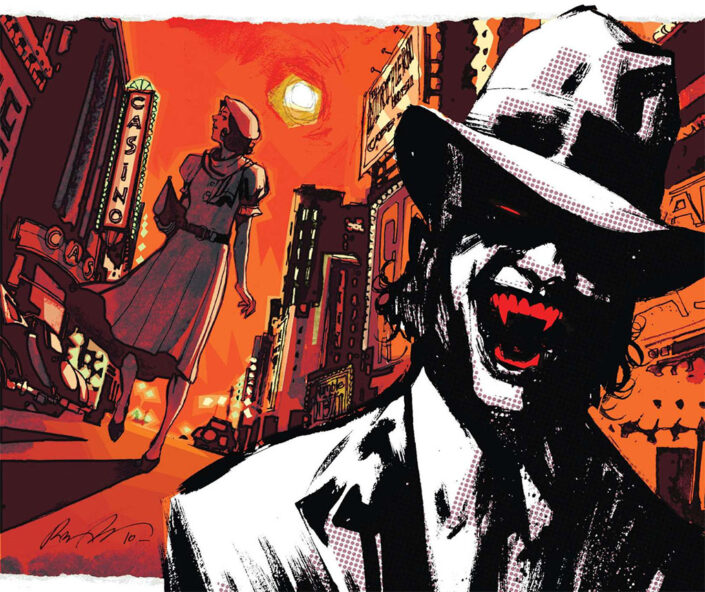
Written by Scott Snyder with art by Rafael Albuquerque, American Vampire is an ambitious horror series that blends western, historical, and supernatural elements to reimagine American history through the lens of vampirism. Known for its scope and cinematic storytelling, the series spans multiple eras and genres while building to an epic narrative.
The story follows Skinner Sweet, a ruthless gunslinger transformed into the first American vampire by European vampires, and Pearl Jones, a young actress whom Sweet turns into a vampire. Immune to sunlight and driven by vengeance, Sweet navigates the United States’ defining historical periods (from the Wild West to the space race) while Pearl tries to build a life for herself, but she’s forced to contend with a secret society that rose to challenge both the American vampires and their European predecessors.
The Unwritten
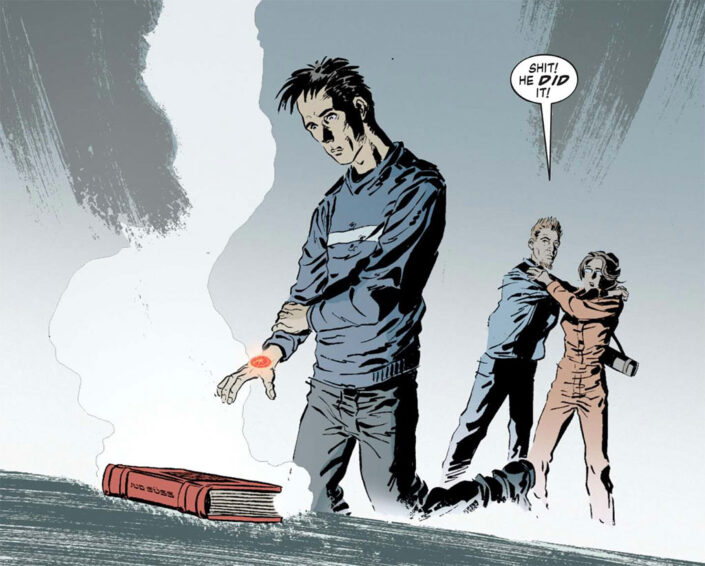
After Lucifer, Mike Carey reunited with artist Peter Gross for The Unwritten, a series that explores the intersection of fiction and reality, fame, and human consciousness. While it shares thematic echoes with Fables (including a crossover), it carves its own path through literary and metafictional storytelling.
The comic book follows Tom Taylor, the real-life inspiration for a wildly popular boy-wizard book series. Plagued by constant comparison to his fictional counterpart, Tom becomes entangled with a secretive organization when evidence suggests he may truly embody the fictional hero. To uncover the truth, he travels the world, visiting locations where stories, ranging from classic literature to pop culture, have tangibly influenced reality.
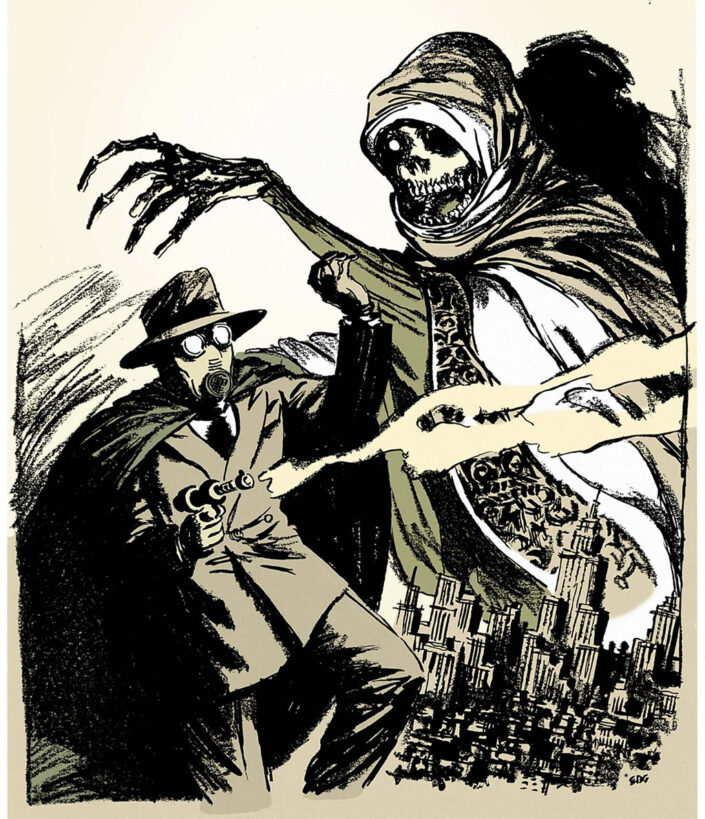
Sandman Mystery Theatre
Written by Matt Wagner with (mainly) artist Guy Davis, Sandman Mystery Theatre reimagines the Golden Age character Wesley Dodds, blending noir, mystery, and historical fiction. The series is notable for its psychological depth, social commentary, and exploration of crime and corruption in 1930s America.
Set in Depression-era New York, the story follows private detective Wesley Dodds, who dons a gas mask and becomes the vigilante Sandman, and his girlfriend Dian Belmont (daughter of the District Attorney). Confronted with murder, organized crime, and personal dilemmas, Dodds navigates both the criminal underworld and the complexities of morality, often confronting issues of social injustice, racism, gender, and class.
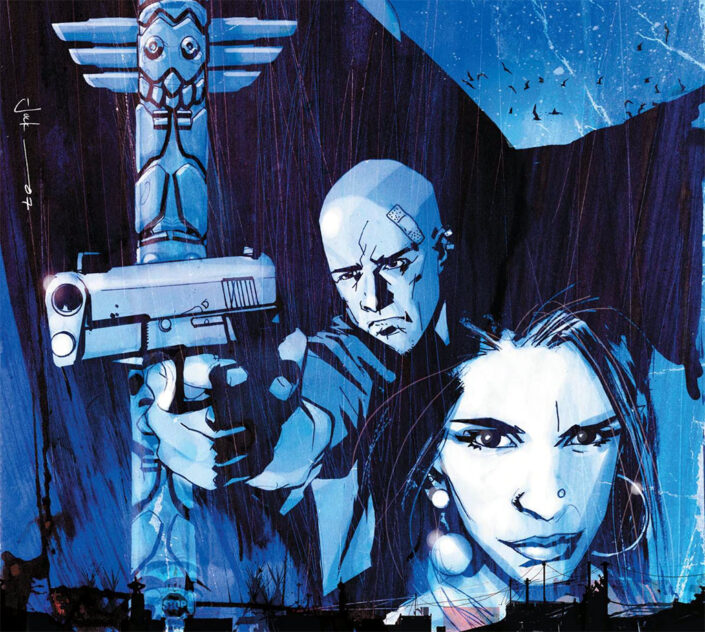
Scalped
Written by Jason Aaron with art by R. M. Guéra, Scalped is a crime-drama series that examines the consequences of choices, poverty, addiction, and power within a Native American community. Set on the fictional Prairie Rose Indian Reservation in South Dakota, it explores the preservation of cultural identity amid violence and corruption.
The story follows Dashiell “Dash” Bad Horse, who returns to the reservation after fifteen years, now working undercover as an FBI agent to investigate tribal leader and crime boss Lincoln Red Crow. Confronted by meth labs, murder, and organized crime, Dash must navigate a treacherous path to uncover the Rez’s darkest secrets.
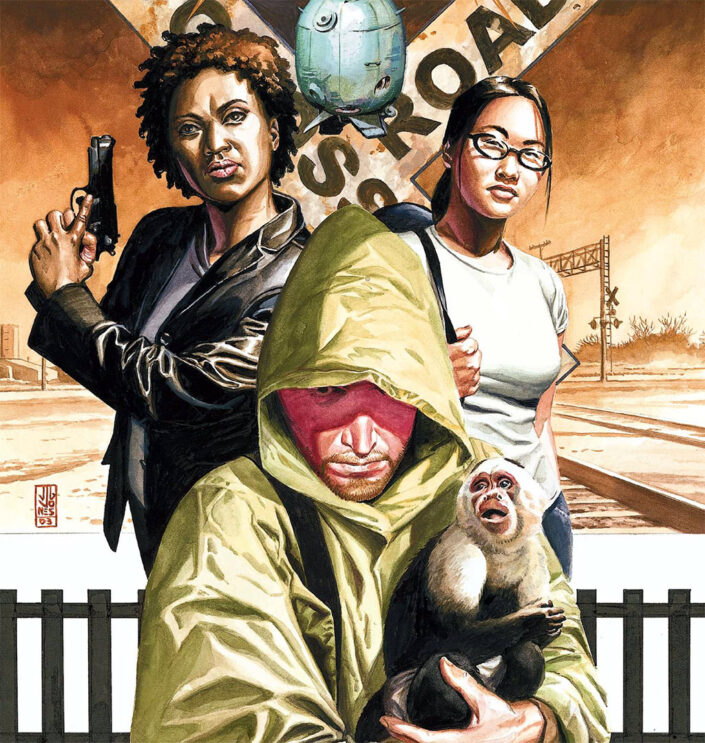
Y: The Last Man
Written by Brian K. Vaughan with art by Pia Guerra, Y: The Last Man is a post-apocalyptic Vertigo series that explores gender, survival, and society in the aftermath of a mysterious plague that kills every male mammal except one man, Yorick Brown, and his pet monkey. The series blends adventure, political intrigue, and human drama.
The comics follow Yorick as he travels across a radically transformed world, accompanied by his bodyguard Agent 355 and scientist Dr. Allison Mann, seeking to understand the cause of the plague and find a future for humanity.
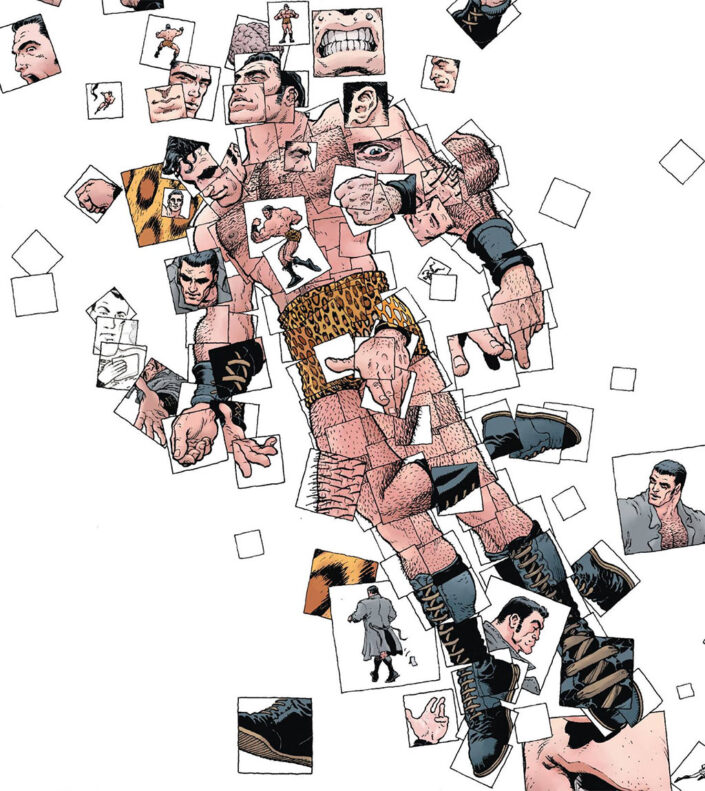
Flex Mentallo
Written by Grant Morrison with art by Frank Quitely, Flex Mentallo is a metafictional Vertigo miniseries that blends superhero tropes with psychological exploration and satire. The series examines the nature of heroism, imagination, and the relationship between fiction and reality through the prism of the comic book medium.
The story follows Flex Mentallo, a muscle-bound “hero for the ages,” as he navigates a world shaped by dreams, memories, and the subconscious. Through his adventures, Morrison interrogates the power of stories, the act of creation, and how comic book heroes inspire and transform both characters and readers.
DMZ
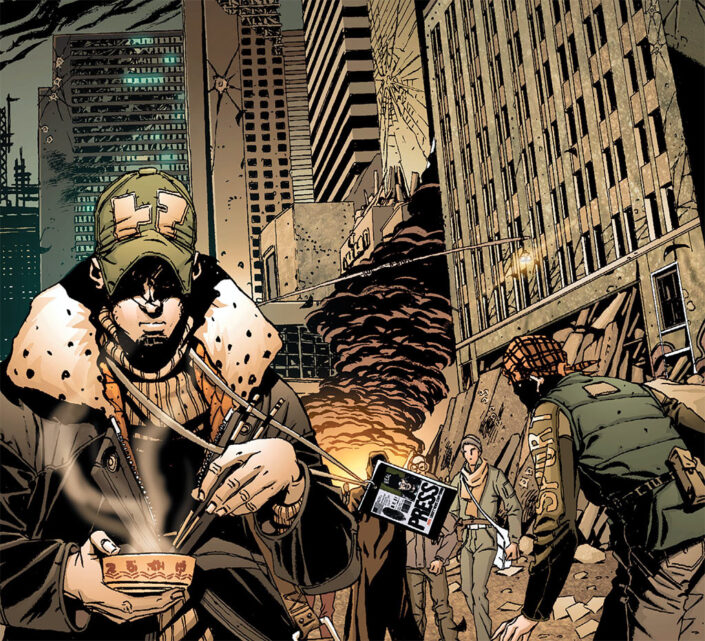
Written by Brian Wood, with art by Wood and Riccardo Burchielli, DMZ is a post-9/11 political drama that imagines a second American civil war, using Manhattan as a war-torn zone to explore the consequences of ideology, propaganda, and human survival. The series combines action, social commentary, and moral complexity to examine the costs of conflict.
The story follows Matty Roth, an aspiring photojournalist who enters Manhattan (now the DMZ) to cover the war firsthand. When circumstances leave him isolated, Matty must navigate a dangerous urban battlefield while confronting the challenge of uncovering and reporting the truth amidst chaos.
The Exterminators
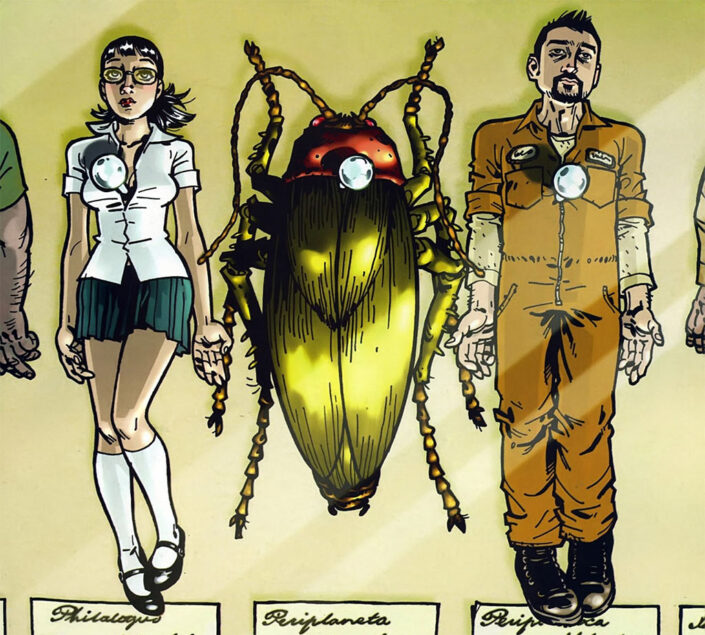
Written by Simon Oliver with art by Tony Moore, The Exterminators is a darkly comic, unpredictable horror series that combines action, conspiracy, and grotesque humor. Though lesser-known, it is a cleverly constructed Vertigo title with a richly imagined world and memorable characters.
The story follows Henry James, a new exterminator at Bug-Bee-Gone Co., navigating a dysfunctional team while confronting both human and insect threats. As the line between civilization and chaos blurs, Henry discovers that humans may be the true pests, and the bugs the real exterminators.
Human Target
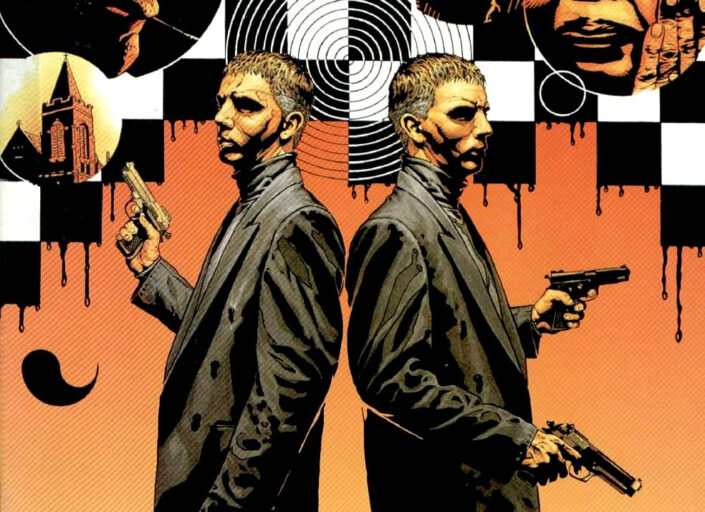
Another series written by Peter Milligan (here with artist Javier Pullido), Human Target reinvents the 1972 character created by Len Wein and Carmine Infantino, turning Christopher Chance into the center of a psychological and espionage-driven narrative. The series explores identity, morality, and the psychological cost of his work.
Chance, a bodyguard who assumes the appearance of those he protects, becomes entangled in complex cases that blur the line between self and role. Tasked with impersonating a threatened movie star and later tracking a kidnapped child, Chance’s identity begins to merge with those of the people he imitates, creating a tense exploration of multiple personalities and moral ambiguity.
Daytripper
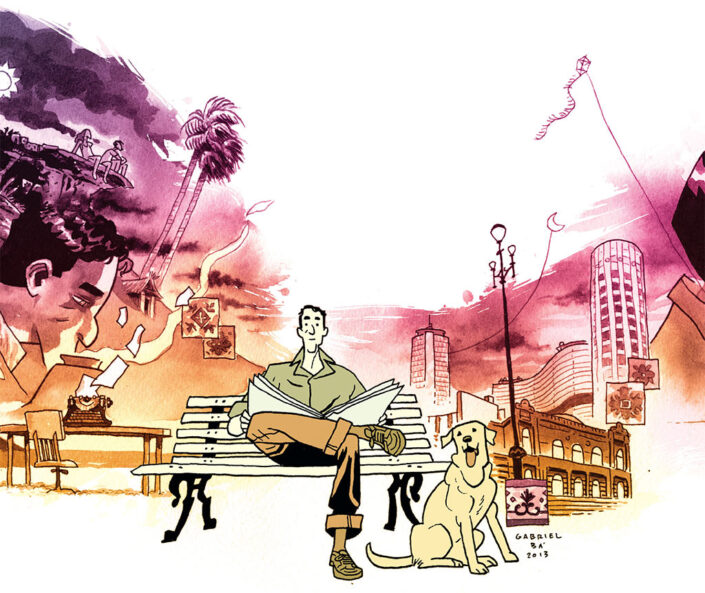
Written by Fábio Moon and Gabriel Bá, Daytripper is a contemplative (award-winning) Vertigo series that examines life, death, and the moments that define us. Blending magical realism with intimate human drama, it explores the fragility and beauty of everyday existence.
The story follows Brás de Oliva Domingos, a Brazilian writer, across key moments of his life and career. Each chapter presents a turning point, reflecting on love, family, ambition, and mortality, culminating in a meditation on the meaning of life and the impact of ordinary choices, and ends with Brás’s death at a different age.
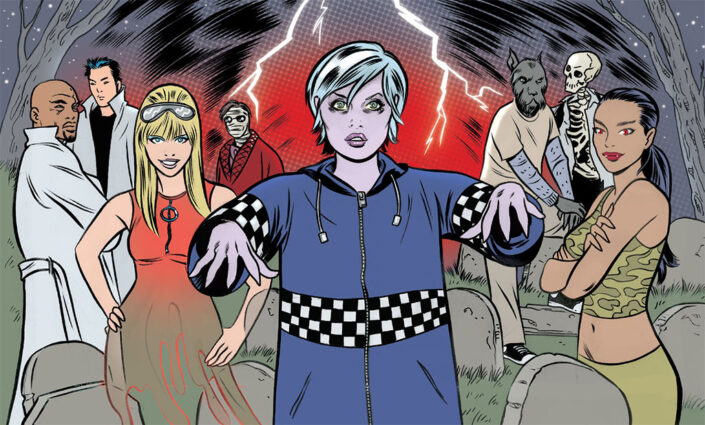
iZombie
Written by Chris Roberson with art by Mike Allred, iZombie is a Vertigo series that blends supernatural horror and dark comedy. The series is notable for its witty tone, strong characterization, and inventive approach to the monster genre, dealing with what not-quite-human twenty-somethings have to deal with, like vampires, romances, G-men, a mummy, and something even more nefarious.
The story follows Gwen Dylan, a zombie who works as a gravedigger in Eugene, Oregon, and her friends Ellie, a 1960s ghost, and Scott, a were-terrier. Gwen needs to eat a brain once a month to keep from losing her memories and intelligence, but when she consumes the brains of recently deceased people, she “inherits” part of their thoughts.
Note: An earlier version of this best of appeared on our site in 2022. It has been completely refreshed and updated with new titles and new pictures.