Skip to content

Reading Order

Martian Manhunter Reading Order (J’onn J’onzz)

Introduced in the story “The Strange Experiment of Dr. Erdel” in Detective Comics #225 (1955) by writer Joseph Samachson and artist Joe Certa, the Martian Manhunter is a DC Comics superhero also known as J’onn J’onzz (often pronounced “John Jones”).

A green-skinned humanoid from Mars, J’onn J’onzz came to Earth with an experimental teleportation beam constructed by Dr. Saul Erdel who can’t send him back before a few years. In the waiting, the Martian Manhunter shapeshifts into a human. When Dr. Erdel is killed, he has no way to go back to Mars. He then decided to fight crime under the identity of John Jones, a detective in Middletown, USA.

During this time, J’onn J’onzz revealed his existence to the world to act publicly as a superhero and became a founding member of the Justice League. However, he still kept his secret identity “alive” until “Detective John Jones” was killed in action. After that, he moved to The House of Mystery to fight a supernatural menace.

With Superman taking a bigger role in the Justice League, the Martian Manhunter became less and less present. At the end of the 1960s, he eventually went back to Mars and only appeared occasionally in stories and didn’t make a real comeback until 1984 (in Justice League of America #228). Three years later, Post-Crisis on Infinite Earths, J’onn J’onzz stayed in the Justice League of America, unlike most of the other previous members. He quickly got a short miniseries that retcon his origin stories.

Now, the Martian Manhunter is the last of the Martian race. He has a lot of powers as he can shape-shift, fly, has super-strength and speed, possesses enhanced senses, can turn invisible, communicate telepathically, move objects via Telekinesis, and more! Despite his fear of fire, he is one of the most powerful heroes of the DC Universe. Also, he is known for his wisdom, calm demeanor, and profound sense of duty.

Read More »Martian Manhunter Reading Order (J’onn J’onzz)

X-Men Omnibus Reading Order!

From their first appearance in September 1963 to the present, The X-Men have lived countless adventures filled with action, tragedy, comedy, romance, and more. These adventures have spawned many teams such as New Mutants, X-Factor, Excalibur, and X-Force, as well as solo journeys for many characters in the form of miniseries and ongoing titles!

Naturally, the library of X-Men and X-Men-related comic book titles can look daunting for new readers and even older ones. Throughout the years, Marvel Comics has collected many runs and tens of thousands of X-Men issues in various formats, including classic trade paperbacks, Marvel Masterworks, in the popular Epic Collection, and, of course, the Omnibus line!

With more than 50 omnibuses dedicated to the X-Men and all associated titles—and the number is still growing—, we have decided to create a Specific X-Men Omnibus Reading Order. This guide can serve as a roadmap to the extraordinary adventures of the X-Men in this particular collection, helping new and old readers to find their ways in the vast world of the mutantkind!

Read More »X-Men Omnibus Reading Order!

Lady Death Reading Order

  • by

At the start of the 1990s emerged a new popular trend in the comic book world, the Bad Girls comics. Violent scantily clad busty women of supernatural/occult origins who quickly found an audience in this bubbling market. Vampirella was making a comeback, but soon also came Neil Gaiman’s Angela, Rob Liefeld’s Avengelyne, Billy Tucci’s Shi, Marc Silvestri’s Witchblade, but before them, there was Lady Death.

Introduced in 1991 by writer Brian Pulido and artist Steven Hughes in Evil Ernie #1 published by Chaos! Comics, Lady Death was originally a hallucination. Ernest “Ernie” Fairchild thought that she was his dream girl and she would love him if he killed everything on Earth. Evil Ernie was deranged, to say the least. Nevertheless, Lady Death caught on and moved to become something else.

In her own series, Lady Death was introduce as Hope, a young Swedish medieval girl whose power-mad father tries to gain enough strength to challenge the lord of hell so he can become its ruler. As she tried to save herself, Hope ended up in Hell fighting Lucifer. She cast him through Heaven’s Gate and took his place as the ruler of Hell–but he cursed her, she can never return to the mortal plane so long as the living walk the Earth.

As the 1990s progressed, Lady Death found her way into more Chaos! Comics series and additional miniseries. But once Chaos! Comics filed for bankruptcy, the character rights were sold and Lady Death entered the CrossGen universe–but not all the Chaos characters followed her. Brian Pulido continued to work on Lady Death with the (family-friendly) series Medieval Lady Death, but CrossGen Entertainment followed the same road as Chaos! Comics. Lady Death was this time sold to Avatar Press where Pulido worked on two series, Medieval Lady Death as well as the Classic Lady Death

Since then Lady Death moved to a new imprint at Avatar Press (Boundless Comics) before jumping to Coffin Comics, Brian Pulido’s own publishing company.

Read More »Lady Death Reading Order

Alpha Flight Reading Order, Canada’s premier team of superheroes

  • by

A lot of Marvel’s superheroes are based in New York, but you can’t find more all around the world, including Canada! That’s where you’ll meet the members of Alpha Flight, a team often described as the Canadian’s Avengers.

From time to time, Wolverine’s back story was evoked and, in The Uncanny X-Men #120-121 by John Byrne, a new element was introduced, the Alpha Flight team. Their first on-page action was to try to abduct Wolverine to get him back to his home country as the Canadian government had invested in his training and wanted to have him rejoin his original team.

That’s how James MacDonald Hudson (Vindicator, later Guardian), Jean-Paul Beaubier (Northstar), Jeanne-Marie Beaubier (Aurora), Corporal Anne McKenzie (Snowbird),  Walter Langowski (Sasquatch), and Michael Twoyoungmen (Shaman) were first introduced to the readers.

John Byrne thought this was a one-off, but Canadian readers and X-Men fans alike loved the concept, and the Alpha Flight team quickly got its own ongoing series that ran from 1983 to 1994. Throughout the year, the team evolved by adding new characters.

After the first volume concluded, the series would come back multiple times and, to this day, is still active.

Read More »Alpha Flight Reading Order, Canada’s premier team of superheroes

Cyborg Superman Reading Order (Hank Henshaw)

Since his creation, Superman has inspired many other characters including different versions of himself such as Bizarro, the “mirror image” of The Man of Steel. Among the alternative versions of the superhero is also Cyborg Superman, a character whose origin story is more of a dark homage to what happened to the Fantastic Four.

Created by Dan Jurgens, Hank Henshaw made his first appearance in The Adventures of Superman #465 (May 1990). The astronaut was on the LexCorp space shuttle Excalibur with his wife Terri and two other crew members when it crashed, supposedly at first from a solar flare created by Superman which also exposed the crew to a fatal dose of radiation. As Hank’s body deteriorated, he transferred his consciousness to LexCorp’s mainframe and transformed into a cyborg resembling Superman. His wife didn’t survive the whole ordeal and with time, Hank became delusional and paranoid, blaming Superman for Terri’s death — even though she herself established what happened was simply an accident.

From the rubble of this freakish accident was born Cyborg Superman, also called The Cyborg (not to be confused with Cyborg!). With the ability to control machines and computers, as well as physical strength similar to Superman’s, Cyborg Superman became one of the Man of Steel’s dangerous foes and a Green Lantern villain.

Now, learn more about Cyborg Superman with our reading order, guiding you through the essential comics and story arcs featuring DC Comics’s evil twisted version of Superman!

Read More »Cyborg Superman Reading Order (Hank Henshaw)

Lobo Reading Order (DC Comics)

When he was first introduced by Roger Slifer and Keith Giffen in Omega Men #3 (1983), Lobo was a villain from planet Velorpian, the last of his race, who partnered with Bedlam. You can forget about that. This was not DC Comics’ Main Man, the Lobo who gained fame during the 1990s.

Reintroduced by Giffen in Justice League International, then in L.E.G.I.O.N. (and R.E.B.E.L.S.), before getting his own miniseries famously written by Alan Grant (plotted by Giffen) and with art by Simon Bisley that retconned his origins, Lobo is an interstellar mercenary and bounty hunter from the utopian planet of Czarnia. He is brash, indestructible, and likes being violent.

Drenched in black humor, Lobo was deliberately outrageous as he was used to parody the violent excesses of the time. As Giffen said it, “I have no idea why Lobo took off.  I came up with him as an indictment of the Punisher, Wolverine, badass hero prototype and somehow he caught on as the high-violence poster boy. Go figure.”

As a product of the 1990s, Lobo appeared less often during the following decades, but he still came by from time to time to collect a bounty and be chaotic.

Read More »Lobo Reading Order (DC Comics)

The Sixth Gun Reading Order (and Shadow Roads)

  • by

The Sixth Gun is a comic book series created by Cullen Bunn and Brian Hurtt that was published by Oni Press. The story is set in the Old West, shortly after the end of the Civil War. It’s a Western with fantasy elements (or sci-fi, I’m not quite sure how to define it).

The story of The Sixth Gun takes place in the Old West during the late 1880s and centers around a set of six magic pistols connected to each other by dark powers. They will be used to rewrite the World. Each one of the six guns is bound to the man who used it until his death.

The Sixth one ends up in the hand of Becky Montcrief and now people want to kill her in order to take it back. With the help of the mysterious Drake Sinclair, Becky goes hunting for the other guns, and she’s not the only one. During their quest, they must fight against General Hume and his four horsemen, the Knights of Solomon, the Sword of Abraham, and the Grey Witch.

The main Sixth Gun series is composed of 50 issues. During its original run, the publication of the series was punctuated by multiple spin-off miniseries. Once the main story was concluded, a new ongoing spin-off series titled Shadow Roads was launched.

Read More »The Sixth Gun Reading Order (and Shadow Roads)

Batman ’66 Reading Order

  • by

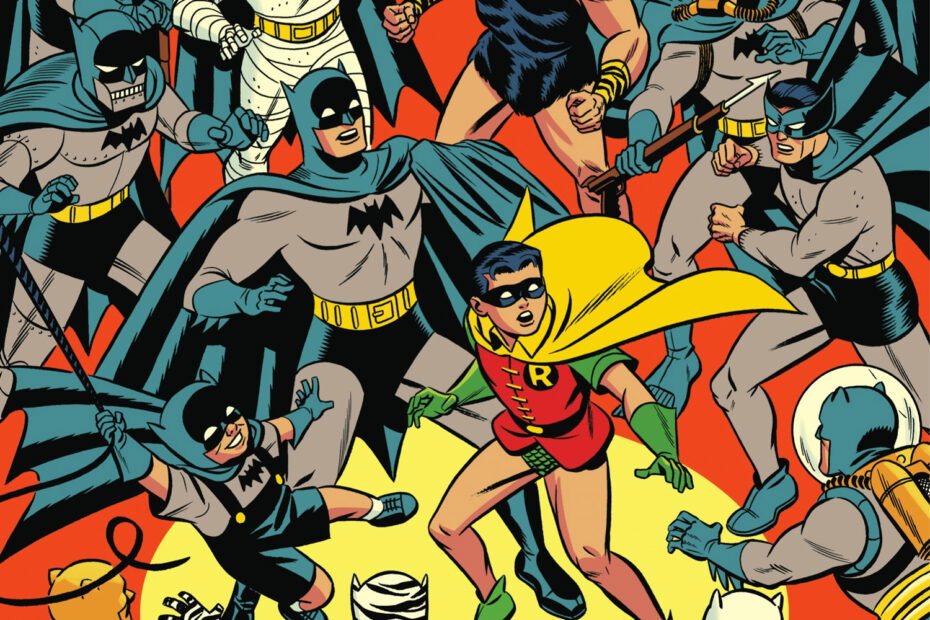
In January 1966, the American TV Network ABC launched a live-action Batman show starring Adam West as Bruce Wayne/Batman and Burt Ward as Dick Grayson/Robin. It soon became a massive hit which had a big impact on pop culture, influencing other TV Shows but also the comic book it was based on.

It was created by William Dozier, a man who, before starting work on the project, had never read a Batman comic in his life. Not knowing how to adapt the character, he tried multiple approaches and the one that worked was to make Batman a pop-art campy comedy. For the kids, it was a colorful action/adventure series. For the adults, it was a fun time.

This Batman show lasted for three seasons and a movie as ABC decided to milk this success to the max, ordering 60 episodes for the second season, emptying at a fast rate its creative juice. The public grew tired of Batman and Dozier tried to save the series by introducing Batgirl/Barbara Gordon (played by Yvonne Craig) and asking DC Comics to develop the character in the Batman comics. This was not enough to make the ratings go up–Dozier also flirted with surrealism at one point and tried to be more topical.

Read More »Batman ’66 Reading Order

The Best of Magik Comics, Our Illyana Rasputin Recommended Reading Order (X-Men)!

  • by

While it’s obvious to think about Scarlet Witch or Clea and Stephen Strange when talking about magic users in the Marvel Universe, it would be a great mistake to disregard Magik, also known as Illyana Rasputina.

Created by Len Wein and Dave Cockrum, Illyana made her first appearance in the comic book Giant-Size X-Men #1 (May 1975), like many other X-Men characters such as Nightcrawler, Storm, Thunderbird, and her brother Colossus! For a long time, she was only known as Colossus’ little sister until Chris Claremont and Sal Buscema sent her to the magical realm of Limbo. In her time there, Illyana aged seven years,  developed her teleportation abilities and became a sorceress later known as Magik.

Since her debut, Illyana has been abused by demons during her formative years, de-aged, exploited by her government, killed by a Virus, resurrected, turned on the Dark Side and more! With those many traumatic experiences, Magik became one of the most fascinating and ambiguous X-Men and well deserving of her own reading order! 

So today, let’s explore Magik’s history with her best comics to understand her character and motivations, learn more about her place among the X-Men, her relationship with her brother, Shadowcat and more!

Read More »The Best of Magik Comics, Our Illyana Rasputin Recommended Reading Order (X-Men)!

Berserk Manga Order

  • by

Berserk is undoubtedly one of the most popular manga series in the United States. When the manga returned in 2023 with a new volume, it topped the charts, outselling One Piece and Demon Slayer in the processIt is also an influential work that affected not just many mangakas but also the worlds of games, film, animation, and literature. 

Written and illustrated by Kentaro Miura (1966-2021), Berserk is a Dark Fantasy manga set in a medieval-Europe-inspired world. The story follows Guts, a lone swordsman, on his quest for vengeance against Griffith, the leader of a mercenary band that betrayed him. Starting in 1989, Berserk was published in the manga magazine Monthly Animal House, which was replaced in 1992 by the semimonthly magazine Young Animal.

Berserk was a life’s work for Miura, who died from acute aortic dissection in May 2021. Manga artist Kouji Mori, the only person who knows how Miura intended to finish Berserk, has agreed to continue the manga and see it through to the end using plans and thoughts relayed to Mori by Miura himself, as well as memorandums and character designs that Miura left behind.

Read More »Berserk Manga Order