
While they are often compared to the X-Men, the Inhumans occupy a unique, cosmic corner of the Marvel Universe. Created by the legendary duo Stan Lee and Jack Kirby in 1965 (Fantastic Four #45), these powerful beings aren’t just “born with it,” they are the product of ancient alien engineering and a ritualistic transformation that changes their lives forever.
Inhumans vs. Mutants: What’s the Difference?
The primary difference lies in the source of their power. While Mutants carry the X-Gene that naturally activates during puberty, Inhumans are the result of Kree science experiments. To gain their abilities, an Inhuman must undergo Terrigenesis, a process where they are exposed to the Terrigen Mist (vaporized Terrigen Crystals).
Originally intended as weapons for the Kree-Skrull War, the Inhumans instead formed a secluded, highly advanced society governed by the Royal Family and the Genetic Council.
Read More in The Origins of The Inhumans, Marvel’s Royal Family.
Meet the Inhuman Royal Family
To understand the best Inhumans stories, you have to know the key players living in their lunar kingdom of Attilan:
- Black Bolt: The King, whose voice is so destructive that a mere whisper can level a city.
- Medusa: The Queen, with powerful, prehensile hair.
- Crystal: Mistress of the elements (fire, water, earth, air).
- Karnak: The philosopher who never underwent Terrigenesis but can see the flaw in all things.
- Maximus: Black Bolt’s brother, a mad genius.
- Lockjaw: The fan-favorite giant bulldog with the power of teleportation.
From Classic Lore to the NuHumans
The Inhuman mythos expanded significantly in recent years with the arrival of NuHumans. These are individuals with dormant Inhuman DNA living among humans who were transformed when a Terrigen Cloud drifted across Earth. This era gave us modern icons like Kamala Khan (Ms. Marvel), Daisy Johnson (Quake), and Moon Girl.
With over 50 years of complex political drama, cosmic wars, and genetic evolution, diving into their history can be daunting. Whether you’re a fan of the classic Kirby era or the modern “Inhumanity” event, here is the definitive Inhumans reading order to guide you through the mists.
Where to Start: The 3 Best Entry Points
If 50 years of Marvel history feels like a lot, don’t worry. You don’t need to read every issue from 1965 to understand who the Inhumans are. Depending on your “reader type,” here are the three best places to jump in:
1. The “Modern Classic” (Best Overall)
Read: Inhumans by Paul Jenkins and Jae Lee. It’s a self-contained story that perfectly explains the Royal Family, the caste system of Attilan, and why Black Bolt is so feared. If you only read one Inhumans book, make it this one.
2. The “Modern Marvel” Era (Best for Ms. Marvel Fans)
Read: Inhumanity & Inhuman by Charles Soule. If you’re interested in Kamala Khan, Daisy Johnson, or how the Inhumans fit into the current Marvel world, start here. This era explains the “Terrigen Cloud” and the rise of the NuHumans.
3. The “Classic Origins” (Best for Historians)
Read: The Origin of the Inhumans. For those who want to see the “First Appearance” magic. It’s pure Stan Lee and Jack Kirby energy, introducing the Inhumans as a mysterious, misunderstood force that even the Fantastic Four couldn’t handle at first.

Inhumans Reading Order
- The first 30 years: The Origin of the Inhumans (1965-1998)
- Inhumans: From Marvel Knights to the Illuminati (1998-2006)
- The Cosmic King: Inhumans Take the Stars (2007-2011)
- Inhumanity: The Rise of the NuHumans (2013-2016)
- All-New, All-Different Marvel: The Inhuman Explosion (2015-2017)
- The Death of the Inhumans: War, Fallout, and Farewell (2017-2018)
- The Imperial Comeback (2025-Present)
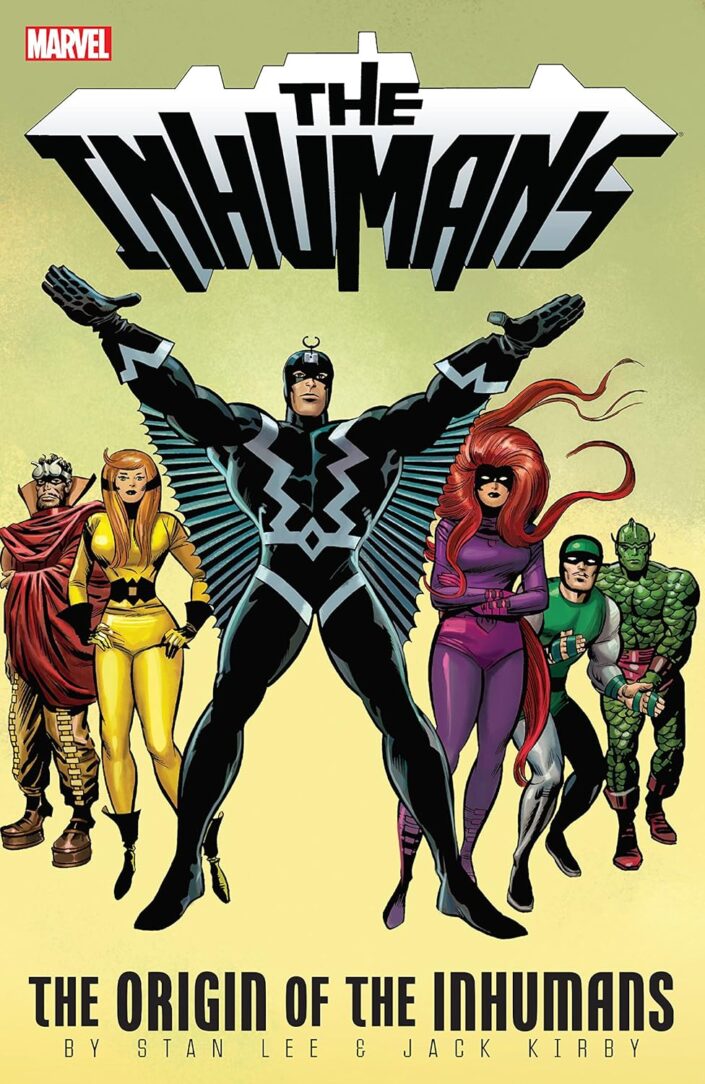
The Inhumans, the first 30 years (1965-1998)
After their explosive 1965 debut in Fantastic Four, the Inhumans followed a non-traditional path. Unlike the X-Men or Avengers, they didn’t always have a monthly title. Instead, they spent decades as Marvel’s premier “guest stars” and cosmic wildcards.
From Fantastic Four to the Silver Age
Following their introduction, the Royal Family starred in Amazing Adventures before finally landing their first self-titled series in the 1970s, written by Doug Moench.
However, by the 1980s, the group had almost faded from the spotlight, appearing primarily in a 1988 Inhumans Graphic Novel and occasional guest spots. It wouldn’t be until 1998—ten years later—that the Royal Family would headline a major series again.
👉 Key Cameos and Team-Ups
Because this era lacks a consistent solo title, the Inhumans’ history is scattered across the Marvel Universe. Here are the essential arcs to watch for:
- The Fantastic Four Connection: Predictably, they appear most often with the FF. Medusa actually debuted as a villain in the Frightful Four before eventually serving as a temporary replacement for Susan Storm.
- The Inhumans in Love: Crystal (Medusa’s sister) famously took Sue’s place on the FF and entered a long-term relationship with Johnny Storm (The Human Torch). Later, she married the mutant Quicksilver and joined the Avengers in the 1990s (The Gathering / Collection Obsession arcs).
- The Daredevil Run: In a cult-classic crossover, Gorgon and Karnak appeared in Ann Nocenti’s Daredevil run. Interestingly, Nocenti also wrote the 1988 Inhumans graphic novel!
Note: This list isn’t exhaustive—the Inhumans have appeared in hundreds of issues as guest stars. Below, we’ve curated the most essential “must-read” stories from these 30 years.
- 👉The Origin of the Inhumans
Collects Fantastic Four (1961) #36, 38, 41–47, 62-65 and material from #48, 50, 51, 52, 54–61, Fantastic Four Annual (1963) #5, Thor (1966) #146–152 and Not Brand Echh (1967) #6. The Thor issues are also collected in Marvel Masterworks: Inhumans Vol. 1 (see below) - Inhumans: Beware the Inhumans
Collects Marvel Super-Heroes (1967) #15; Incredible Hulk Annual (1968) #1; Fantastic Four (1961) #81–83, 99; Amazing Adventures (1970) #1–10; Avengers (1963) #95 and material from Fantastic Four (1961) #95, 105; Not Brand Echh (1967) #12 - Marvel Masterworks: Inhumans Vol. 1
Collects Thor #146–152; Amazing Adventures #1–10; Avengers #95; Marvel Super-Heroes #15 - Marvel Masterworks: Inhumans Vol. 2
Collects Inhumans vol. 1 #1–12; Captain Marvel #52–53; Fantastic Four Annual #12; Marvel Fanfare #14; What If? #29–30; Thor Annual #12 - Inhumans: By Right of Birth
Collects Marvel Graphic Novel: The Inhumans (1988); Inhumans: The Untold Saga (1990) - The Inhumans: The Great Refuge (1995)
A one-shot issue that has not been collected (BB, Gorg, Kar, Med) - Fantastic Four/Inhumans: Atlantis Rising
Collects Namor the Sub-Mariner #60–62, Fantastic Four: Atlantis Rising #1–2, Fantastic Force (1994) #8–9, Fantastic Four (1961) #401–402, Fantastic Four Unlimited #11
For a modern take on Black Bolt and Maximus, their origins were retold in the 2017 miniseries Inhumans: Once and Future Kings.
Inhumans: From Marvel Knights to the Illuminati (1998-2006)
This era marks the “Golden Age” of modern Inhuman storytelling. After a decade in the shadows, Marvel gave the Royal Family a prestige makeover that forever changed how they were viewed in the Marvel Universe.
🌟 The Entry Point: Marvel Knights Inhumans
- Inhumans
Collects Inhumans vol. 2 #1–12
This is the definitive starting point for most fans. This Eisner Award-winning maxi-series (Best New Series) by Paul Jenkins & Jae Lee traded classic superhero tropes for deep political intrigue and psychological drama. It proved that the Inhumans were more than just Fantastic Four side characters—they were a powerhouse franchise in their own right.
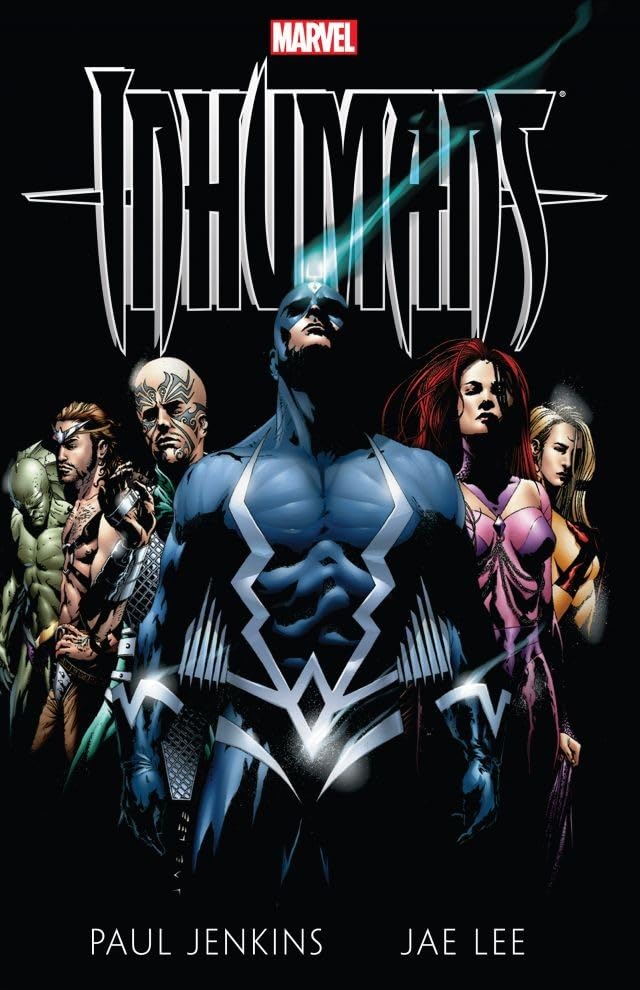
The Lunar Kingdom & A New Generation
Following the success of Marvel Knights, the Inhumans’ lore expanded through two key titles:
- Fantastic Four/Inhumans
Collects Inhumans vol. 3 #1–4; Fantastic Four vol. 3 #51–54
The Royal Family’s Return: A four-issue limited series by Carlos Pacheco, Rafael Marín, and José Ladrönn (Inhumans Vol. 3, 2000) focused on Black Bolt’s struggle to lead his people against the threat of the Kree and Portuguese-inspired internal politics.
- Young Inhumans
Collects Inhumans vol. 4 #1–12. The first six issues are also collected in Inhumans: Culture Shock
The 2003 Ongoing Series: Simply titled Inhumans, this 12-issue run by Sean McKeever took a “Young Adult” approach. It followed a new generation of Inhuman students—including Nahrees, Tonaja, and Alaris as they navigated the complexities of Terrigenesis and Earthly culture.

While the Inhumans do not appear in the House of M event itself [see: House of M Reading Order for context], making the core event optional for this reading order, the fallout changed their world forever.
The Silent War for Terrigen
When Scarlet Witch stripped the majority of the world’s mutants of their powers (an event known as M-Day or The Decimation), the shockwaves hit Attilan. Quicksilver (at the time, the husband of Crystal) stole the Terrigen Crystals in a desperate attempt to restore mutant powers.
This theft sparked a massive international conflict known as the Silent War.
- Decimation: Son of M
Collects Son of M #1–6. This is the direct aftermath of House of M and is essential for understanding why the Inhumans go to war with the United States [see: Silent War in the next section]. - Beyond!
Collects Beyond! (2006) #1-6. Medusa is among a group of people abducted and finds herself on a Battleworld.
The Secret History: Black Bolt and the Illuminati
- New Avengers: Illuminati
Collects New Avengers: Illuminati #1-5. Introduction of The Illuminati, with Black Bolt as part of this secret society group.
During this time, it was also revealed that Black Bolt was a founding member of the Illuminati, a secret group of Marvel’s most influential leaders (alongside Iron Man, Professor X, and Reed Richards). This connection would eventually lead the Inhumans directly into the massive World War Hulk and Secret Invasion events.
The Cosmic King: Inhumans Take the Stars (2007-2011)
Set after the events of Son of M and written by David Hine with art by Frazer Irving, the Silent War depicts the Royal Family’s strike against Earth to reclaim their stolen crystals.
- Silent War
Collects Silent War #1–6
Following the Silent War on Earth, Black Bolt and the Royal Family decide that humanity is too dangerous to live alongside. They return to their creators—the Kree Empire—not as subjects, but as conquerors and saviours.
The Road to War
The Inhumans’ cosmic journey begins during the fallout of the Secret Invasion. After discovering that Skrull impostors had infiltrated the Royal Family, Black Bolt leads his people into deep space to settle an old debt with the Kree.
- Secret Invasion: Inhumans – A 4-issue mini-series that shows the Royal Family fighting back against the Skrull infiltration.
Collects Secret Invasion: Inhumans #1–4; Thor #146–147. [see: Secret Invasion Reading Order for more]
After this series, Black Bolt (with Medusa and Gorgon) appears in Planet Hulk and World War Hulk as a member of the Illuminati. For the whole story, see our Complete Reading order for this Marvel Cosmic Event!
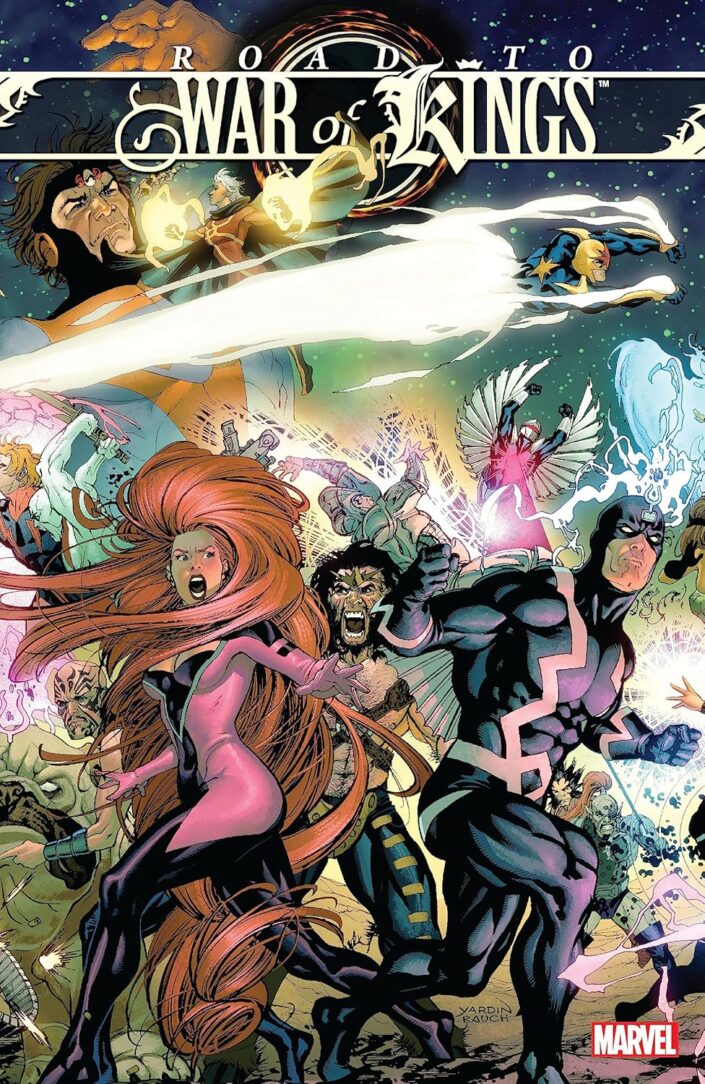
The Ascension: War of Kings by Dan Abnett, Andy Lanning, and Paul Pelletier. Black Bolt becomes the King of the Kree Empire, leading them into a massive interstellar war against Vulcan (the mad brother of the X-Men’s Cyclops) and the Shi’ar Empire.
- War of Kings: Road to War of Kings
Collects Secret Invasion: War of Kings; War of Kings Saga; X-Men: Divided We Stand #2; X-Men: Kingbreaker #1–4 - War of Kings
Collects War of Kings #1–6.
The Aftermath: Realm of Kings
The war leaves a massive tear in reality known as The Fault. The Inhumans must now police the galaxy and deal with Lovecraftian horrors emerging from this rift.
- Realm of Kings – Focuses on Medusa ruling the Kree in Black Bolt’s absence and the family’s struggle to maintain their cosmic throne.
Collects Realm of Kings one-shot, Realm of Kings: Inhumans #1–5, Realm of Kings: Son of Hulk #1–4, and Realm of Kings: Imperial Guard #1–5. The consequences of War of Kings. - The Thanos Imperative
Collects The Thanos Imperative 1–6, The Thanos Imperative: Ignition, The Thanos Imperative: Devastation, and The Thanos Sourcebook.
 As all of this unfolded in space, Norman Osborn rose to national power and took control. Introduced in Secret War #2 and present during Secret Avengers, the young Inhuman known as Daisy ‘Quake’ Johnson was recruited by Nick Fury to be part of his Secret Warriors to fight Hydra. All of this is collected in six Secret Warriors volumes.
After a little detour from Medusa by the Illuminati, The Inhumans found themselves back in Fantastic Four, with Jonathan Hickman at the helm. In his run, the writer introduced The Universal Inhumans, a collective of races that had been genetically altered to be Inhumans. For the whole picture and to read the whole run, see Jonathan Hickman’s Fantastic Four Reading Order.
- Avengers By Brian Michael Bendis Vol. 2
Collects Avengers (2010) #7-12 & 12.1. Medusa joins the re-formed Illuminati for a short time. - Fantastic Four by Jonathan Hickman: The Complete Collection Vol. 3
Collects FF (2011) #6-16, Fantastic Four (1998) #600-604.
Marvel NOW!: The Illuminati, Thanos, and the Terrigen Bomb (2013-2015)
In the Marvel NOW! era, and after his run on the Fantastic Four, Jonathan Hickman became the main writer on The Avengers titles, bringing back the Inhumans and Black Bolt to the forefront. [see Jonathan Hickman’s Avengers Reading Order for the full run]
While the main Avengers team went global, Black Bolt rejoined the Illuminati in the pages of New Avengers. Alongside Iron Man, Black Panther, and Namor, the Silent King faced the “Incursions,” a terrifying phenomenon where alternate Earths collide.
- New Avengers Vol. 1: Everything Dies
Collects New Avengers (2013) #1-6.in
The Infinity Event: A Turning Point
When Thanos invaded Earth during the Infinity event, he wasn’t just looking for conquest—he was hunting for his secret Inhuman son, Thane. This culminated in one of the most iconic moments in Inhuman history: The detonation of the Terrigen Bomb. This triggered the “Inhumanity” era and the rise of the NuHumans. [For more information, see the Marvel Infinity/Inhumanity Reading Order]
- Infinity
Collects Infinity #1-6, New Avengers Vol. 3 #7-12, Avengers Vol 5. #14-23. - Inhumanity
Collects Avengers Assemble #21.INH-23. INH ; Inhumanity #1-2; Uncanny X-Men #15.INH; Indestructible Hulk #17.INH-18.INH, 19; New Avengers #13.INH; Iron Man #20.INH; Inhumanity: The Awakening #1-2; Avengers A.I. #7.INH ; Mighty Avengers #4.INH-5.INH; Inhumanity: Superior Spider-Man.
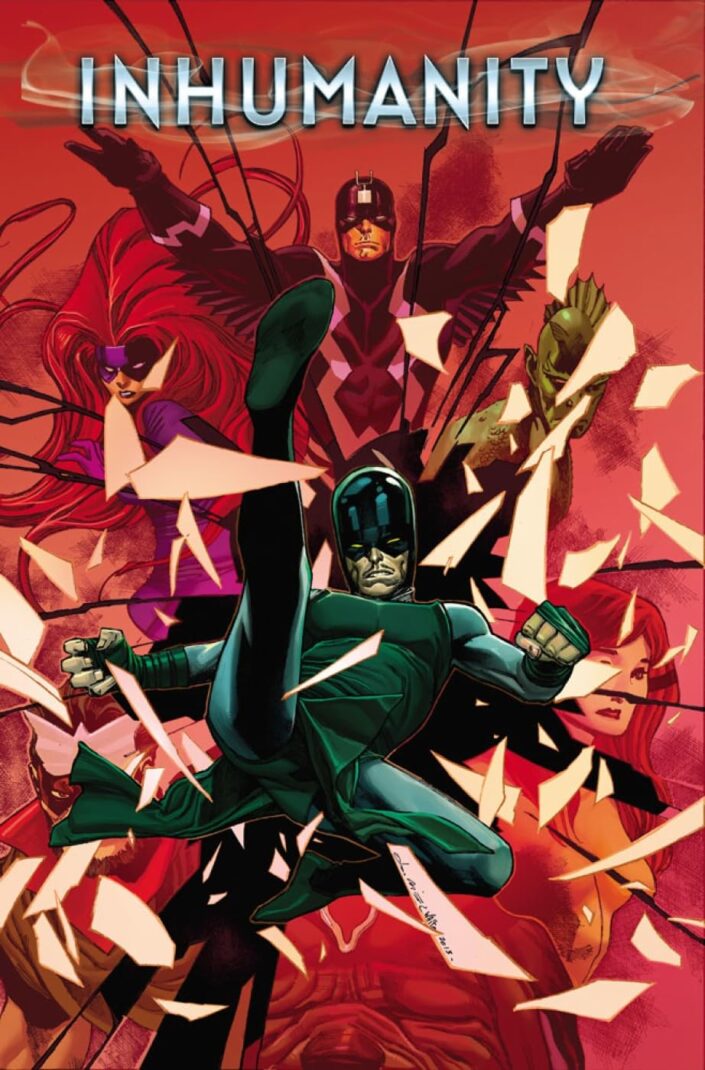
In the immediate fallout of the bomb, the Inhumans faced a fragmented world. While the Royal Family dealt with their new status as a global superpower in Inhumanity, the clock was ticking. As the Marvel Universe marched toward the end of everything in Secret Wars (2015), the Inhumans played a pivotal role in the final stand of the 616 Universe.
- New Avengers Vol. 3: Other Worlds
Collects New Avengers 13.INH, 14-17. - New Avengers Vol. 4: A Perfect World
Collects New Avengers #18-23.

The Terrigen Mist spread worldwide, triggering latent genes and transforming normal people into Inhumans! Charles Soule explores this situation in a new Inhuman series, while the adventures of Ms. Marvel begin here. [See Kamala Khan Reading Order for more]
- Inhuman by Charles Soule
Collects Inhuman #1-14, Annual, Original Sins #3.
Note after Inhuman #6, you can read the two following events, both featuring Medusa.
- Original Sin
- Avengers & X-Men: Axis
- Amazing Spider-Man/Inhuman/All-New Captain America: Inhuman Error
Collects All-New Captain America Special #1; Amazing Spider-Man Special #1; Inhuman Special #1

Time is Running out
It’s the end of Hickman’s Avengers run, but also of an era for Marvel with the 2015 Secret Wars. The interdimensional Incursions have eliminated every alternate universe one by one. And now, despite the best efforts of scientists, sages and superhumans, the Marvel Universe and Ultimate Universe have collided…and been destroyed! All that exists in the vast empty cosmos is a single, titanic patchwork planet made of the fragmented remains of hundreds of devastated dimensions: Battleworld!
- Avengers: Time Runs Out Vol. 3
Collects: Avengers #40-42, New Avengers #29-30 - Avengers: Time Runs Out Vol. 4
Collects: Avengers #43-44, New Avengers #31-33 - Secret Wars
Collects Secret Wars #0,#1-9, Free Comic Book Day 2015.
- Inhumans: Attilan Rising
Collects Inhumans: Attilan Rising #1-5.
All-New, All-Different Marvel: The Inhuman Explosion (2015-2017)
Following the events of Secret Wars, the Marvel Universe was reborn with the Inhumans as a central pillar of the “All-New, All-Different” line. With the Terrigen Cloud still circling the globe, the Inhuman population skyrocketed, leading to two distinct flagship titles and several high-profile crossovers.
Uncanny Inhumans (by Charles Soule and Brandon Peterson ) is the direct continuation of the previous Inhuman series. It features the Royal Family dealing with time-travelling threats like Kang the Conqueror. Most notably, the roster expanded to include famous non-Inhumans like The Beast (from the X-Men) and The Human Torch (Johnny Storm), who acted as ambassadors and allies.
All-New Inhumans (by Charles Soule and James Asmus) follows Crystal led a mobile strike team (the “R.I.V.”) across the globe. Their mission was humanitarian: to track the Terrigen Cloud and help the “NuHumans” who were transforming in its wake.
👉 One of the most prominent Inhumans, Ms. Marvel (Kamala Khan), officially joined the All-New, All-Different Avengers. This is also the era during which we saw the debut of Lunella Lafayette, a pre-teen super-genius who discovers her Inhuman lineage in Moon Girl and Devil Dinosaur.
- Uncanny Inhumans Volume 1: Time Crush
Collects Uncanny Inhumans #0–4; FCBD 2015: Inhumans Story - Uncanny Inhumans Volume 2: The Quiet Room
Collects Uncanny Inhumans #5–9 - All-New Inhumans Volume 1: Global Outreach
Collects All-New Inhumans #1–4, All-New, All-Different Point One #1 (Inhumans story) - All-New Inhumans Volume 2: Skyspears
Collects All-New Inhumans #5–9 - A-Force Vol. 1: Hypertime
Collects A-Force #1-4, Avengers #0 (A-Force story), Avengers (1963) #83, A-Force (2015) #1. With Medusa.
 It’s time for Civil War II by Brian Michael Bendis and David Marquez. When a NuHuman named Ulysses gained the power to see the future, a massive divide formed between Iron Man and Captain Marvel over “predictive justice.” The Inhumans were caught in the middle, forced to protect one of their own while the superhero community tore itself apart. The Inhumans play a major part in the event, and if you want to know more about it, check out the Marvel Civil War II Reading Order.
- Civil War II
Collects Civil War II 0–8, Free Comic Book Day 2016 - A-Force Vol. 2: Rage Against the Dying of the Light
Collects A-Force #5-10. - Uncanny Inhumans Volume 3: Civil War II
Collects Uncanny Inhumans #11–14 - Karnak: The Flaw in All Things
Collects Karnak #1-6

Morris Sackett is a professional basketball player and celebrity loved by millions. But when he comes into contact with the transformative Terrigen Mists, Morris is imbued with the ability to jump from person-to-person like a ghost and can control the bodies and memories of those he inhabits. The character made his debut in Uncanny Inhumans #11, though what follows takes place before and tells his origin story.
- Mosaic: King of the World
Collects Mosaic #1-5 - Mosaic Vol. 2: Down Below
Collects Mosaic #6-8, Uncanny Inhumans #11 and material from BARNES & NOBLE MAKE MINE MARVEL SAMPLER.
The Death of the Inhumans: War, Fallout, and Farewell (2017-2018)
As the Terrigen Cloud continued to move across Earth, a terrifying truth was revealed: the very mist that gave Inhumans life was lethal to Mutants. This “M-Pox” crisis forced a desperate confrontation between the two species.

Inhumans vs. X-Men (IvX)
Written by Charles Soule and Jeff Lemire, this event is the climax of years of tension. The X-Men, led by Emma Frost and Magneto, launch a pre-emptive strike on New Attilan to destroy the cloud before it makes Earth uninhabitable for mutants. [see Inhumans Vs X-Men Reading Order (IvX)]
- Death Of X
Collects Death Of X #1-6. - Inhumans Vs X-Men
Collects IvX #0-6. - Uncanny Inhumans Volume 4: IVX
Collects Uncanny Inhumans #15–20.
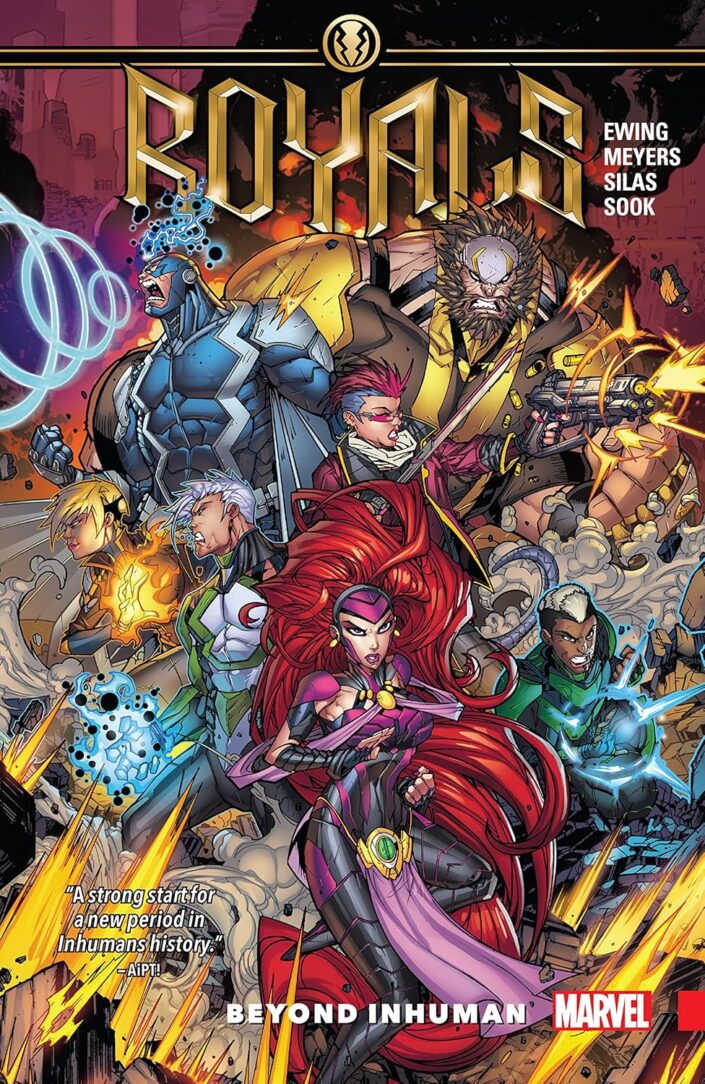
The Final Stand: Royals and Black Bolt
Following the war, the story splits into two high-concept series. First, there is Royals (by Al Ewing and Jonboy Meyers), a cosmic odyssey where the Royal Family travels to the ruins of the Kree homeworld to discover the secret origins of Primagen (the source of Terrigen). Second is Black Bolt by Saladin Ahmed and Christian Ward. It’s a psychological prison-break story.
- Royals Vol. 1: Beyond Inhuman
Collects Royals #1–5, Inhumans Prime #1. - Royals Vol. 2: Judgment Day
Collects Royals #6–12, Inhumans: Judgement Day #1.
- Black Bolt Vol. 1: Hard Time
Black Bolt #1-9 (2017). Also collected in Black Bolt (HC). - Black Bolt Vol. 2: Home Free
Black Bolt #10-12 (2017). Also collected in Black Bolt (HC).
A new Secret Warriors series is launched during Secret Empire! S.H.I.E.L.D. Agent Daisy Johnson, a.k.a. Quake, recruits Ms. Marvel, Moon Girl, Devil Dinosaur, Karnak and Inferno to her cause to fight the good fight – not just for the Inhumans, but for the entire country!
- Secret Warriors Vol. 1: Secret Empire
Collects Secret Warriors #1-5. - Secret Warriors Vol. 2: If Trouble Must Come
Collects Secret Warriors #1-5.
- Inhumans: Once and Future Kings
Collects Inhumans: Once and Future Kings #1–5. A retelling of the origin of Black Bolt and Maximus. - Lockjaw: Who’s a Good Boy?
Collects Lockjaw (2018) #1-4, Thing (2005) #4; Lockjaw backups from Inhumans: Once And Future Kings #1-5, and material from Girl Comics (2010) #2 and Original Sins #1.
The Finale: Death of the Inhumans
This is the “final curtain” for the classic era. An ancient Kree super-soldier named Vox is sent to eliminate every Inhuman in the galaxy. It is a brutal, high-stakes slasher story by Donny Cates and Ariel Olivetti. that leaves the Royal Family decimated.
- Death of the Inhumans
Collects Death of the Inhumans #1–5 - Darkhold: Black Bolt
Collected in Darkhold. Seems to mostly ignore Death of Inhumans.
The Imperial Comeback (2025-Present)
The 2025 event Imperial (written by Jonathan Hickman with art by Federico Vicentini and Iban Coello) kicked off with a massive interstellar crisis: the assassination of several galactic leaders. While the finger was initially pointed at the Intergalactic Empire of Wakanda, the truth was far more sinister. As the story unfolds, the Inhumans are brought back in a major way to restore their past glory.
- Imperial
Collects Imperial (2025) #1-4, Imperial War: Nova – Centurion (2025), Imperial War: Planet She-Hulk (2025), Imperial War: Imperial Guardians (2025), Imperial War: Exiles (2025) and Imperial War: Black Panther (2025).
