Skip to content

Kamala Khan Reading Order (Ms. Marvel!)

  • by

When Carol Danvers got her promotion and officially became known as Captain Marvel in 2014, a place opened up for a new Mrs. Marvel. That’s when Kamala Khan became a Marvel superhero. She made a background cameo in Captain Marvel #14 before making her first official appearance in the anthology All-New Marvel Now! Point One #1. Co-created by writer G. Willow Wilson, artists Adrian Alphona and Jamie McKelvie, and editors Sana Amanat and Stephen Wacker, she went on to star in her own solo series shortly afterward. Her arrival marked Marvel’s first Muslim character to lead a comic book series, quickly making her a landmark figure within modern superhero storytelling.

Kamala Khan is a teenager, Pakistani-American, Muslim, and Inhuman with shapeshifting abilities (mostly elongation, shrinking…) from Jersey City. After discovering her power, she assumes the mantle of Ms. Marvel because Carol Danvers was her idol. Of course, she had to learn how to be a superhero, but she quickly joined famous teams such as the Avengers, the Champions, Secret Warriors, and more (she’s quite popular).

She rapidly got her own series and took part in major Marvel events, including Civil War II, Secret Empire, and Outlawed. She’s young, but there’s already a lot to read: several volumes of her solo comic, team books, crossovers, and even adaptations outside of comics—animated appearances, video games, and her 2022 live-action series on Disney+. Also, even if she’s still a fairly new character, Kamala has already been killed and resurrected, coming back to life with a new perspective on the origins of her powers (she’s a mutant now!), a shift that ties her even more directly into Marvel’s evolving X-Men mythology.

Read More »Kamala Khan Reading Order (Ms. Marvel!)

Wonder Woman Rogues Gallery: Meet Her Villains

Everybody is familiar with Batman’s Rogues Gallery. With villains such as the Joker, the Penguin, Bane, and Two-Face, it’s considered the most iconic in DC Comics. What about Wonder Woman‘s own Rogues Gallery, then?

While far less well-known, Wonder Woman’s enemies are no less powerful and dangerous. After all, not everybody can claim to confront mythic gods, ancient sorceresses, monstrous creatures, and even some corrupt and powerful humans! Over the decades, this eclectic gallery has challenged her philosophy and mission for peace, putting her ideals and identity to the test.

To help you discover more of Princess Diana’s universe, what could be better than learning about her enemies? Follow our guide as we introduce you to Wonder Woman’s Greatest Foes!

Read More »Wonder Woman Rogues Gallery: Meet Her Villains

Jennifer Blood Reading Order

Created by writer Garth Ennis and artist Adriano Batista, Jennifer Blood is a vigilante character who made her debut in her own comic book series published by Dynamite Entertainment in 2011. 

Her story will sound slightly familiar to fans of Ennis’s work, as she may be described as the female suburban version of The Punisher (the first issue is even titled “War Journal“). Jessica Blute is the daughter of Sam and Jennifer Blute, members of the violent Blute family. Betrayed by his brothers (Jimmy, Michael, Nicholas, Pete, and Steve), who thought his marriage softened him, Sam was murdered. Pete decided to take care of Jennifer, who learned what really happened to Sam and revealed it through letters to her daughter, who was then at boarding school. After Jennifer took her own life, Jessica disappeared, faking her death during Spring Break.

As Jenny Bell, she spent years training in combat, weapons, espionage, and forgery, preparing to avenge her parents. In college, she met Andrew Fellows, married him, and had two children. Though nearly ready to abandon her mission, the Blutes’ repeated escapes from prosecution pushed her to create her vigilante persona, Jennifer Blood, to go after her uncles one by one. But that’s only the beginning for Jennifer’s bloody journey…

Read More »Jennifer Blood Reading Order

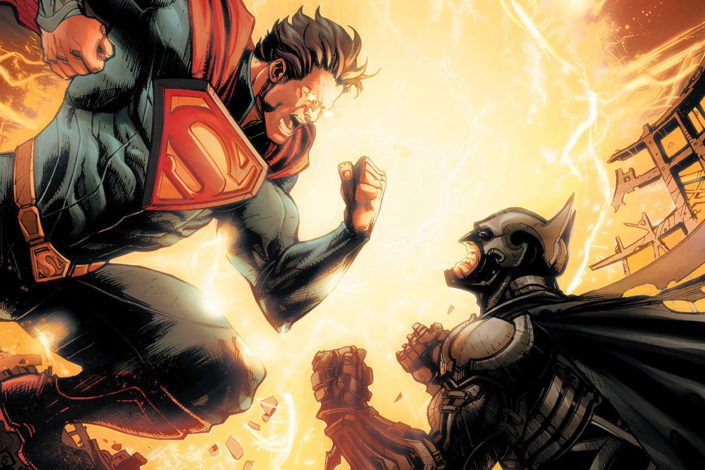
Injustice Reading Order, A DC Comics Alternate Universe Where Superman Goes Bad

During the past fifteen years, DC Comics has found real success in the video game market, as we have already seen with the Batman: Arkham franchise. However, it’s not the only game to introduce a widely popular alternate version of the DC Universe.

A few years after the release of Batman: Arkham Knight, NetherRealm Studios launched the fighting game Injustice: Gods Among Us in 2013. A comic book series, serving as a prequel to the game, was published beforehand. Initially written by Tom Taylor (and later by Brian Buccellato), the series featured artwork by Jheremy Raapack, Mike S. Miller, Bruno Redondo, Tom Derenick, and others.

We all know that the Joker could blow up the world, and Batman would still not kill him. But what about Superman? Injustice explores what happens when Superman does what Batman would never do and decides to start ruling the world. To be more precise, “when the Man of Steel couldn’t protect those he held most dear, he decided being a hero wasn’t enough. To truly save this world, he would have to abandon his philosophy as the Big Blue Boy Scout and become the ruler he felt humankind needed. Facing a god among men, only one person stands between Superman and ultimate power: the Dark Knight.”

Explore the world of Injustice with our reading order guide to this alternate reality where Superman turns bad!

Read More »Injustice Reading Order, A DC Comics Alternate Universe Where Superman Goes Bad

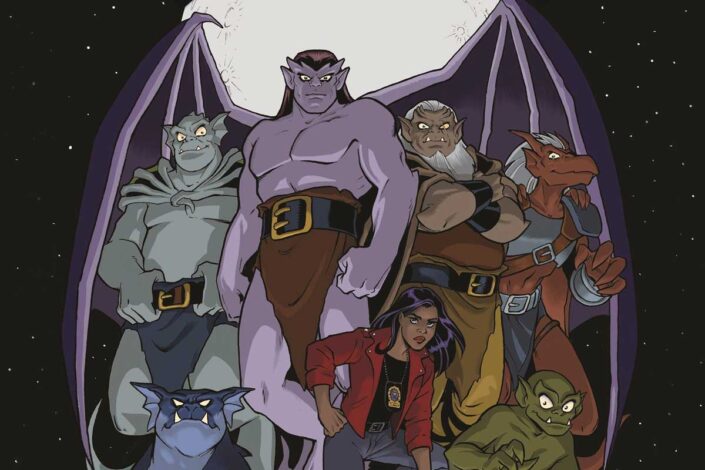
Gargoyles Comics – Your Reading Guide to the Stories Beyond The Show

While the DCAU Universe was taking shape in the ’90s, changing the landscape for animated children’s shows, Disney was making its mark with Gargoyles:

One thousand years ago, superstition and the sword ruled. It was a time of darkness. It was a world of fear. It was the age of gargoyles. Stone by day, warriors by night, We were betrayed by the humans we had sworn to protect, frozen in stone by a magic spell for a thousand years. Now, here in Manhattan, the spell is broken, and we live again! We are defenders of the night! We are gargoyles!

While there is no official creator credit, Gargoyles (1994–1997) was developed by former DC Comics editor and Disney director of series development Greg Weisman, co-producer Frank Paur and key writers Michael Reaves and Brynne Chandler (among other writers), and would go on for three seasons, and a total of 78 episodes. The third and last season — untitled The Goliath Chronicles — was unexpectedly ordered and mostly made by a new creative team and is now classified as non-canon.

Read More »Gargoyles Comics – Your Reading Guide to the Stories Beyond The Show

The New Ultimate Universe Reading Order

  • by

In 2019, Jonathan Hickman successfully relaunched the X-Men with the Krakoan Age. In 2023, he came back with a miniseries set up to help him do the same with the Ultimate Universe. Ended in 2015 and destroyed by the Secret Wars event (also by Hickman), the original Ultimate Marvel Universe (Earth-1610) still left behind it a few characters, like Miles Morales (Spider-Man), Jimmy Hudson (the son of Wolverine), Aaron Davis (Miles Morales’ uncle), The Maker (evil Reed Richards), and more. 

For the New Ultimate Universe, everything starts with The Maker coming back and setting up his own new alternate universe. He indeed went to Earth-6160 and used time travel to stop the apparition of most superheroes, which allowed him to become the leader of that Earth. However, he was defeated and trapped inside The City, a futuristic infrastructure that will reopen in 24 months. Before that happens, the heroes have to prepare themselves and contend with other menaces, including the secretive Maker’s Council.

As a result, the New Ultimate Universe came with a programmed end. One that was confirmed by Marvel Comics. In April 2026, the last issue will be published. But let’s go back to the reading from the beginning.

Read More »The New Ultimate Universe Reading Order

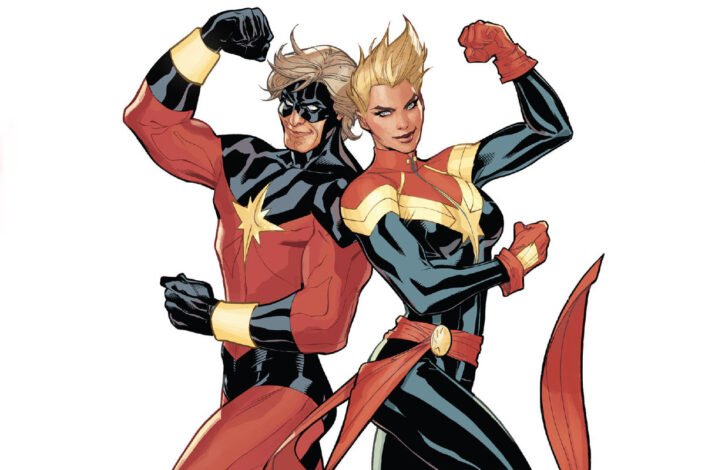
Captain Marvel Reading Order: From Mar-Vell to Carol Danvers

  • by

There are several characters known as Captain Marvel. We are not here to talk about Shazam, but we have to start the story with him. As you may know, Fawcett’s Captain Marvel was enormously popular in the 1940s, outselling even Superman, becoming one of the most successful superheroes of the Golden Age of Comics. His popularity, however, brought legal trouble. In 1941, DC Comics filed a lawsuit against Fawcett Publications, claiming that Captain Marvel was an infringement on Superman. The case dragged on for over a decade, with multiple appeals and shifting rulings.

Ultimately, in 1953, Fawcett agreed to cease publication of its superhero comics, citing declining sales and the high cost of litigation. Captain Marvel disappeared from newsstands for nearly twenty years. DC Comics would later license and eventually purchase the character from Fawcett, reintroducing him in the early 1970s under the title “Shazam!” since by that time, Marvel Comics had legally claimed the trademark “Captain Marvel.”

Marvel’s claim to the name began in 1967, when writer-editor Stan Lee and artist Gene Colan introduced their own Captain Marvel in Marvel Super-Heroes #12. This version, a Kree military officer named Mar-Vell, was created largely to secure the trademark and prevent others from using it. To maintain ownership, Marvel was required to publish a comic featuring the name “Captain Marvel” periodically. As a result, readers have seen a long succession of characters (Mar-Vell, Monica Rambeau, Genis-Vell, Phyla-Vell, Noh-Varr, and Carol Danvers) take up the mantle in various ongoing series, limited runs, team books, and one-shots from the late 1960s to the present day.

Read More »Captain Marvel Reading Order: From Mar-Vell to Carol Danvers

Dawn of DC, The Complete Reading Order

  • by

Building the future, “one hero at a time.” It was DC’s new statement for a new era, Following the restoration of the pre-Crisis infinite Multiverse and the disbandment of the Justice League at the end of the Dark Crisis, and the devastation of the DC Universe by the dispersion of Lazarus Resin across the globe.

While on paper, it sounded like a new start, Dawn of DC was more of a continuation of the Infinite Frontier period. Writers once again continued their runs, such as Chip Zdarsky’s Batman, Tini Howard’s Catwoman, Tom Taylor’s Nightwing, and Phillip Kennedy Johnson’s Action Comics. For new readers who wanted to jump into the DC Universe, this was not ideal, although there was new releases throughout the years to help, from a new Superman by Joshua Williamson to the launch of a new Titans title by Tom Taylor, as they became the world’s premier superhero team for a short time.

This initiative was full of events, including the return of the Justice Society, a summer of nightmares during Knight Terrors, a conflict between Batman and Catwoman in Gotham War, a global threat in Titans: Beast World, and Superman facing the House of Brainiac. During all this time, the superhero community was threatened by the ambitious Amanda Waller, who was working her way towards more power in order to enact a crazy plan and redefine the DC Universe, culminating in Absolute Power!

Read More »Dawn of DC, The Complete Reading Order

35 Books To Read About Comic Books

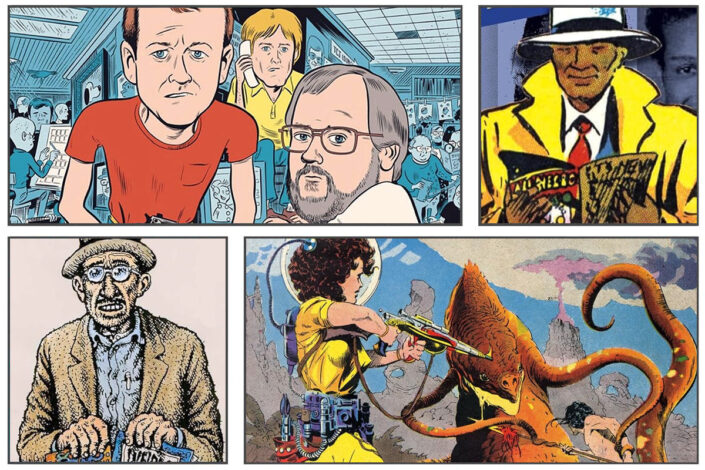
Every comic book reader has met someone who told them that it would be better if they read “real” books. Sadly, sequential art is often not considered to be as worthy an art form as literature. Nevertheless, if there are books that comic book readers like to read, it’s books about comic books! 

Some of those books are straightforward history books, while others are biographical in nature, but all explore, in one way or another, some aspect of the multifaceted development of the industry that has become such a pillar of American culture. From the creation of icons to the exploitative nature of the publishing world, the emergence of artistic movements, and the economic evolution of the industry, there are a lot of subjects to cover. 

Today, we are aiming to compile a selective list of books that you might be interested in reading about comic books. There are fewer than one might expect after so many decades. Nevertheless, more and more insiders and fans are trying to chronicle the history of comics before too many of those who lived it leave us. In the following selection, you’ll find biographies, history books, art books, essays, interviews, and memoirs, going into different genres, authors, and topics. 

Read More »35 Books To Read About Comic Books

Lumberjanes Reading Order (Boom! comics)

Friendship to the Max! Published by Boom! Studios under its Boom! Box imprint, Lumberjanes is a comic book series created by Shannon Watters, Grace Ellis, ND Stevenson, and Brooklyn A. Allen. Launched in April 2014, it was initially conceived as an eight-issue limited run, but its popularity led to an extended publication, ultimately concluding with issue #75 in 2020.

Set at Miss Qiunzella Thiskwin Penniquiqul Thistle Crumpet’s Camp for Hardcore Lady Types, the series follows five friends (Jo, April, Mal, Molly, and Ripley) who attend a summer camp where the ordinary rules of nature and reality rarely apply. Strange phenomena abound: three-eyed foxes roam the forest, mysterious caves hide ancient secrets, and cryptic messages appear in the form of anagrams. Despite the chaos, the campers face every challenge with courage, wit, and unwavering friendship, embodying the series’ recurring motto: “Friendship to the max!”

Paying homage to classic “Girl Scout” and camp adventure tropes, Lumberjanes blends adventure, fantasy, and humor with strong themes of teamwork, empowerment, and inclusivity through its mix of magical realism and heartfelt friendship. Critically acclaimed, the series has been the recipient of multiple awards, including two Eisner Awards (Best New Series and Best Publication for Teens in 2015) and a GLAAD Media Award for Outstanding Comic Book in 2016.

The success of the Lumberjanes comics led to various spin-offs and adaptations, including Lumberjanes: Gotham Academy (a crossover with DC Comics), a series of middle-grade novels co-written by Mariko Tamaki, and an animated television adaptation in development at HBO Max (later canceled during restructuring).

Read More »Lumberjanes Reading Order (Boom! comics)