Skip to content

DC Comics

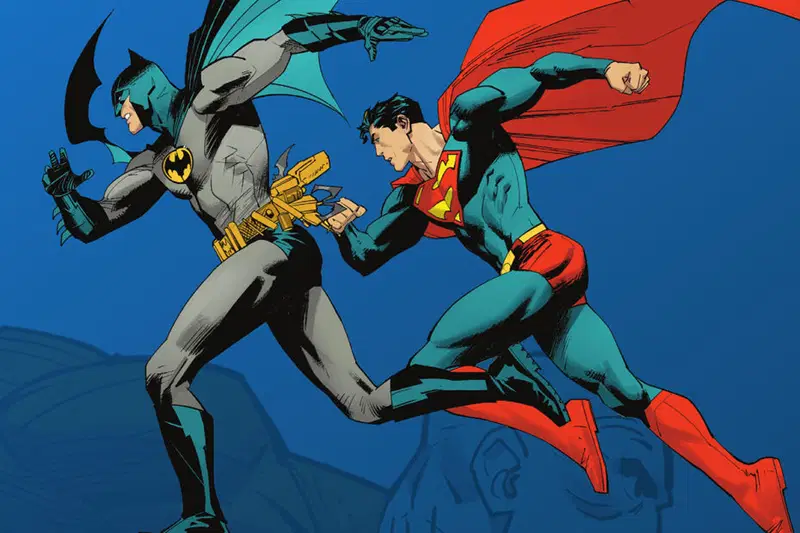
Batman / Superman: World’s Finest Comics and the Return of the Classic DC Spirit

For new readers, reading old comics from the Golden to the Bronze Age can sometimes be rough. They were aimed at children at the time, with almost no one thinking that they would be reprinted and collected 80 years later. While exploring those years of comics can be interesting and fun, it’s also an acquired taste. The writing style was completely different to modern standards, often more wordy and descriptive, and accompanied by great art that was sometimes recycled throughout issues (anyone who has read Lee and Kirby’s run on Fantastic Four will have noticed some repeated panels!).

At DC Comics, these stories are all part of the Pre-Crisis era, which is set before the events of Crisis on Infinite Earths. This was the first major crisis, but certainly not the last! The timeline has changed significantly since then due to the many crises that have occurred, resulting in changes to the origins, events and canons of the DC Universe’s superheroes.

This past few years, writer Mark Waid has dedicated a certain amount of his time to exploring DC’s new past. As he explained in a interview on DC.com, “the joy of using the past is in recontextualizing earlier eras and earlier ideas for the modern audience by coupling genuine character moments with some of the cooler forgotten artifacts of DC history. I don’t want to just retell past stories—I want to find new ways into history that resonate today.”

Read More »Batman / Superman: World’s Finest Comics and the Return of the Classic DC Spirit

Boston Brand, Deadman Reading Order

  • by

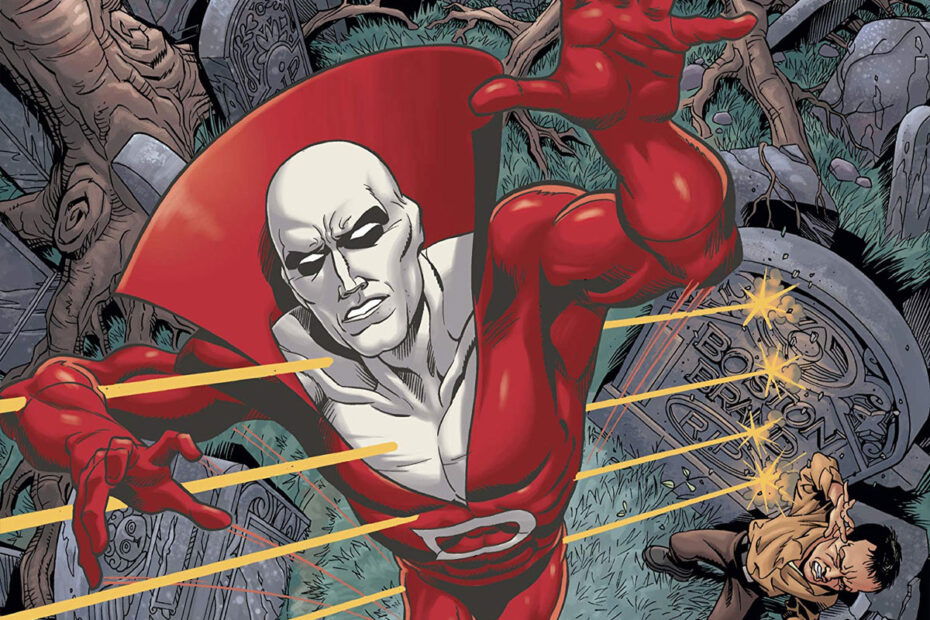
Created by writer Arnold Drake and artist Carmine Infantino in Strange Adventures #205 (1967), Deadman was a risky concept. At a time when the Comics Code Authority strictly regulated horror, editor Jack Miller had to navigate the fine line between a ‘ghost’ and the prohibited ‘walking dead.’

The character was born from the era’s growing fascination with the mystical. Drake utilized themes of Zen and reincarnation to explore a hero who was neither living nor dead. The saga begins with Boston Brand, a selfish circus trapeze artist, murdered mid-performance by a mysterious assassin with a steel hook. Instead of moving on, Brand is granted a reprieve by the deity Rama Kushna: the power to possess the living so he may find his killer.

While Arnold Drake left the title early (after two issues over creative differences), the character reached new heights when Neal Adams took over, bringing a cinematic art style to the book. Though Strange Adventures was eventually canceled, Deadman stayed in the realm of the living. From his 1980s revival to his pivotal role in Justice League Dark, Boston Brand has evolved from a restless spirit seeking vengeance into a key figure of the DC Universe’s supernatural side.

Read More »Boston Brand, Deadman Reading Order

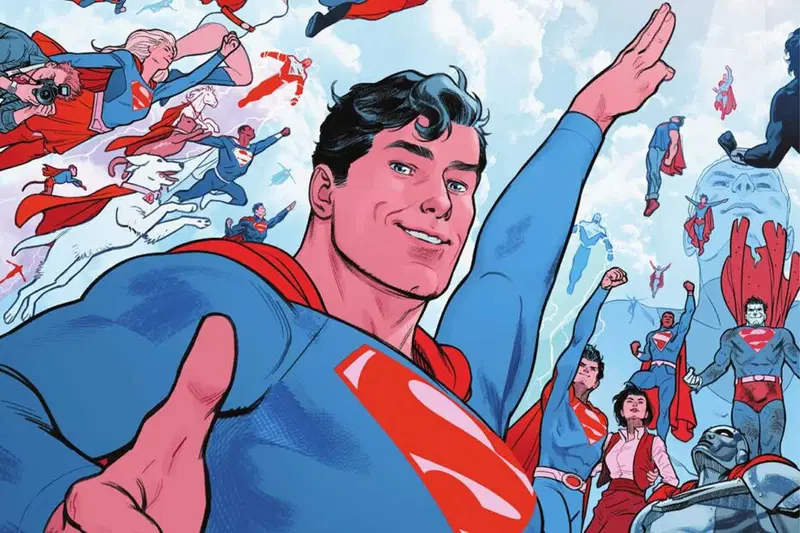
Superman Family: A Brief Guide to Metropolis’ Heroes and Allies

Superman is all about family. Having been sent to Earth as a child by his parents before their home planet was destroyed, he is driven by a desire for connection, purpose and belonging. Though he is an alien on Earth, he is also “the most human of us all”, as Batman would say. He is also one of the most humble, compassionate and dedicated superheroes on Earth, always ready to help and protect life in all its forms.

While he is protecting Earth (and other planets) as a member of the Justice League, the superhero known as Clark Kent in his civilian life is surrounded by loved ones, members of his adopted and biological families, and other allies who help him make Metropolis one of the safest towns in the DC Universe. Together, they form the Superman Family.

For many years, Superman was a lone superhero, the Last Son of Krypton. This doesn’t mean he was completely alone, though, as Clark built many strong and lasting relationships with the staff of the Daily Planet, including his love interest and future wife Lois Lane and Superman’s best friend, Jimmy Olsen.

Read More »Superman Family: A Brief Guide to Metropolis’ Heroes and Allies

DC Rebirth, The Complete Reading Order (10th Anniversary!)

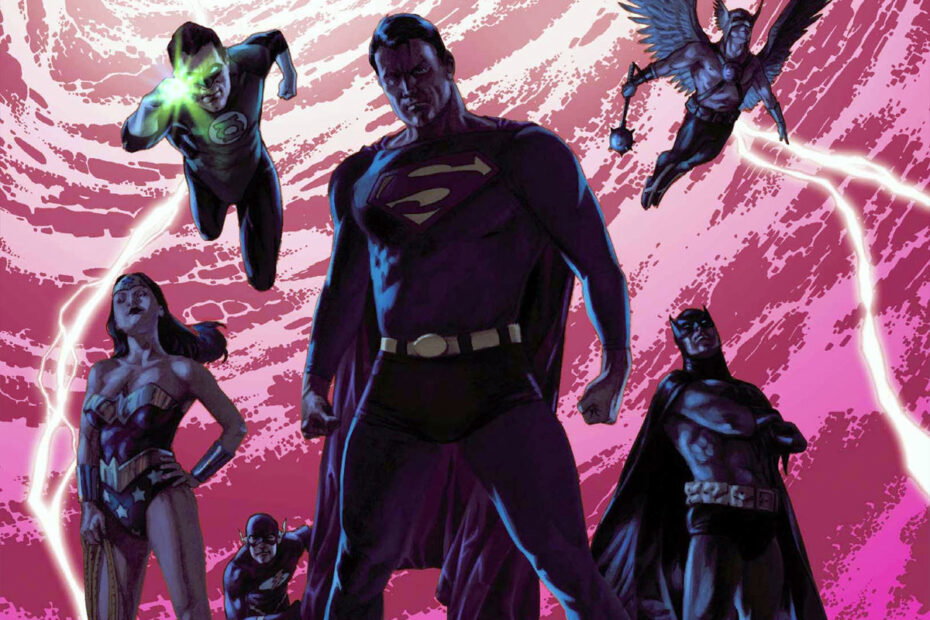
Now that DC All In is in full swing and has recently entered its second phase, we are celebrating the 10th anniversary of another DC era: Rebirth! That’s right, it’s already been ten years since DC Comics restored the DC Universe to a form closer to the pre-Flashpoint era, following the darker, grittier New 52 era. Rather than a complete reboot, the idea was a soft relaunch that combined the best of the pre-New 52 DC Universe (Superman!) with the New 52 continuity and a few other elements that were also considered worth keeping.

Geoff Johns, President and COO of DC Entertainment, wrote the 80-page DC Universe: Rebirth #1, which introduced readers to the new status quo and marked the official return of Wally West to the DC Universe. The idea behind Rebirth was to celebrate and reconnect with DC’s past and present. The old continuity and some past concepts were reintroduced, while characters were redefined to embrace their history and going back to their roots.

The Rebirth era officially began on 25 May 2016 and ended on 2 March 2021 with the Infinite Frontier relaunch. It’s worth noting that the Rebirth branding stopped much sooner, at the end of December 2017, morphing into the larger ‘DC Universe’ banner. A soft relaunch called ‘New Justice’ happened in the aftermath of Dark Nights: Metal. Almost no one considers these to be official breaking points in the timeline.

For this reason, the following guide covers the period from 2016 to 2021, during which the classic Superman returned, Jon Kent and Damian Wayne teamed up, Aquaman enjoyed one of his most successful periods, and the Dark Multiverse threatened everything…

Read More »DC Rebirth, The Complete Reading Order (10th Anniversary!)

Gotham Academy Reading Order

Welcome to Gotham Academy, Gotham City’s most prestigious school, which counts Harvey Dent and Dick Grayson among its former students.

Like many places in Gotham, it is filled with history, dark secrets, and hidden passageways. Admittedly, not every part of Gotham City has secret passages. but still… Gotham’s most prestigious prep school also happens to be just across the road from the Arkham Asylum. 

It is not that difficult to imagine that life at Gotham Academy is anything but normal. In 2014, Becky Cloonan, Brendan Fletcher, and Karl Kerschl decided to explore the lives of the students attending the famous school, particularly the special case of Olive Silverlock, her best friend Mia “Maps” Mizoguchi, and the rest of the Gotham Academy Detective Club.

Read More »Gotham Academy Reading Order

Doom Patrol Reading Order

Created by Arnold Drake and Bob Haney, with artist Bruno Premiani, the Doom Patrol first appeared in My Greatest Adventure #80 (1963), at a time when the struggling title needed a radical reinvention. Drake’s concept was to write about “freaks who banded together and the man in the wheelchair guiding them” (see American Comic Books Chronicles: The 1960s). The result was a team unlike any other in DC’s Silver Age, and this guide to reading Doom Patrol explores every iteration of that vision.

Originally dubbed “The World’s Strangest Heroes,” the group centered on victims of catastrophic accidents: actress Rita “Elasti-Woman” Farr, race car driver Cliff “Robotman” Steele, pilot Larry “Negative Man” Trainor, led by the enigmatic Niles “Chief” Caulder. Later additions such as Garfield “Beast Boy” Logan and Steve “Mento” Dayton expanded the roster but preserved its defining tension: powers born from trauma and alienation. From the start, the Doom Patrol stood apart from conventional superhero teams, with stories that foregrounded psychological strain and existential unease.

From their tragic origins to the mind-bending reality-warping of the Grant Morrison era and the modern “Young Animal” revival, this guide breaks down every era. Below, you will find the Doom Patrol reading order in chronological order, organized by creator runs and key graphic novels.

Read More »Doom Patrol Reading Order

DC All In Reading Order, The Complete Guide

Less than two years after the launch of Dawn of DC, a new status quo was established in the DC Universe following Amanda Waller’s failed coup in Absolute Power, launching DC’s latest publishing initiative, DC All In!

And everyone really went all in. Without a doubt, this is DC’s most successful relaunch since Rebirth nearly ten years ago, the most new-reader welcoming and the most engaging for longtime fans.

Led by writers Joshua Williamson and Scott Snyder, it began in October 2024 with the DC All In Special (2024) #1, which introduced the new status quo for readers. A new Justice League was formed, featuring the largest roster ever, while the Absolute Universe, a parallel reality shaped by Darkseid that redefines familiar characters and power structures across the DC multiverse, was created.

The first act of DC All In has recently concluded with the end of the first line-wide crossover, DC K.O.. A perfect time to look back and start to really go all in on the DC Universe with our DC All In trade paperback guide.

Read More »DC All In Reading Order, The Complete Guide

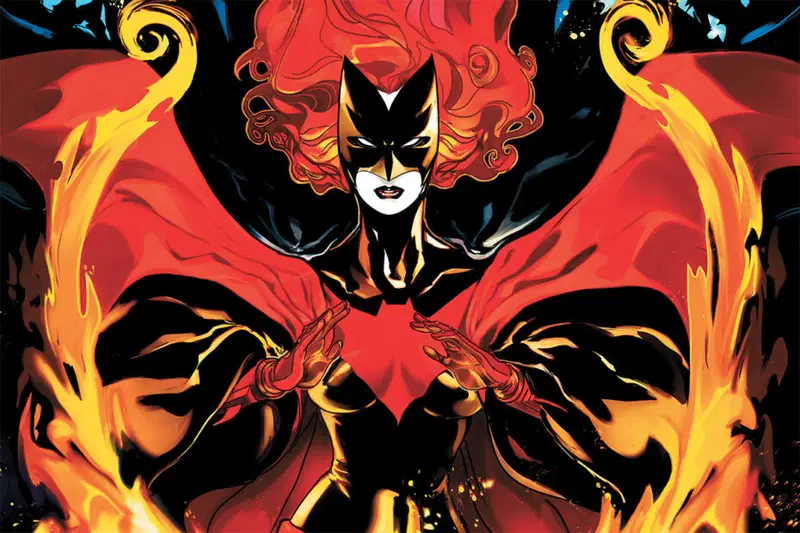
Batman: Dark Patterns (Review): A Carefully Crafted Dark Knight Tale

  • by

When it comes to superhero movies, people are no longer interested in origin stories, but comic book readers and writers are still passionate about what made a character become the crime fighter they are known to be. During the post-Crisis era, Batman’s early years as the Caped Crusader were explored in depth. Perhaps to the degree that DC Comics lost interest. A few decades later, the past feels more present than ever, with writers regularly revisiting the lore they discovered as readers and modernizing dated elements. But it goes even further. It’s not just about comic books from the past, it’s about giving characters a place in their own history. That said, this book is perfect for any new reader looking to enjoy a complete Batman tale.

Written by Dan Watters with art by Hayden Sherman, Batman: Dark Patterns is a 12-issue miniseries that explores Gotham City’s past and carves out a place for its greatest detective within it. Set around Batman’s third year, the story is divided into four thematically linked investigations that slowly build upon each other to form a larger tale.

Each case starts as an apparently self-contained crime. Batman follows leads, questions suspects, and moves methodically through the city. He collaborates with Jim Gordon, who introduced him to Dr. Sereika, a forensic pathologist at Gotham University. Sereika is an odd man, but a competent one. His insights are valuable, but his attitude is suspect. Like everybody else, he has secrets. Dark Patterns is about uncovering those secrets, and everyone else’s, especially those rooted in Gotham’s past.

Read More »Batman: Dark Patterns (Review): A Carefully Crafted Dark Knight Tale

Sinestro Reading Order, Your Essential Guide to the Master of Fear

When Sinestro was ranked the “15th-greatest comic book villain of all time” by IGN in 2009, it was certainly a place that the character had earned. However, Sinestro wasn’t always deserving of such a rank! While he was still the main Green Lantern villain, Thaal Sinestro was a classic Silver Age villain who liked to twirl his mustache and not much else.

Things started to change with Emerald Twilight and took a turn for the better in the 2000s when Geoff Johns updated the character and fleshed him out to give him more depth and a deeper and more complex relationship with Green Lantern Hal Jordan.

Since then, Sinestro has classically walked the line between good and evil, has shifted between Corps depending on his motivation and has been made an anti-hero. He even headlined his own comic at some point!

Once you meet Sinestro, chances are you will want to know about him! Below, you’ll find the most essential and classic Sinestro comics, from his debut in the Silver Age to the creation of the Sinestro Corps and beyond!

Read More »Sinestro Reading Order, Your Essential Guide to the Master of Fear

Zatanna Reading Order, the magician of the DC Universe

  • by

Navigating the DC Universe can be a challenge, especially for fan-favorite characters who often shine in team books rather than solo titles. Zatanna Zatara is the perfect example. Since her debut in Hawkman #4 (1964), created by Gardner Fox and Murphy Anderson, the Mistress of Magic has evolved from a stage illusionist searching for her father into one of the most powerful sorcerers in DC Comics.

Whether you are looking for her early “backward-magic” adventures or her modern leadership in Justice League Dark, tracking her history requires a clear roadmap. This Zatanna reading guide breaks down her essential appearances, solo miniseries, and her complicated history with characters like John Constantine and Batman.

Read More »Zatanna Reading Order, the magician of the DC Universe