Skip to content

DC Comics

Clayface Explained: The Many Faces of Batman’s muddiest Rogue

It may not be surprising that a character made of clay has been reshaped multiple times. In the world of DC Comics (and superhero comics in general), legacy characters are now pretty common, but few have passed the baton–or the moniker–as much as Clayface. Known for being one of Batman’s Rogues Gallery members, this adversary is undoubtedly not a simple villain but “multiple.”

From actor Basil Karlo to firefighter Johnny Williams, the Clayface name is rooted in horror and tragedy, with each version bringing something different and reshaping the character’s relationship with the Caped Crusader.

Read More »Clayface Explained: The Many Faces of Batman’s muddiest Rogue

Best Joker Comics: Your Essential Reading Order for the Clown Prince of Crime

  • by

Everyone knows the Joker. He’s Batman’s archenemy and one of the most dangerous and unpredictable villains in Gotham City (and across DC Comics).

The origins of the Joker are as mysterious as the character himself. Bill Finger, Bob Kane, and Jerry Robinson—credited for the character’s conception—each offer their own version of the story. What can’t be denied was the influence of actor Conrad Veidt’s grinning visage from the movie The Man Who Laughs (1928) as inspiration for the Joker design.

Regardless of the story behind the Joker’s creation, Batman’s villain has become over time a larger-than-life character, an unstoppable force of nature representing everything Batman stands against. He is often used to represent unresolved societal issues and has been, throughout the years, a criminal mastermind, a comical prankster, an anarchist, and a classic trickster who shifts between violence and dark humor.

Read More »Best Joker Comics: Your Essential Reading Order for the Clown Prince of Crime

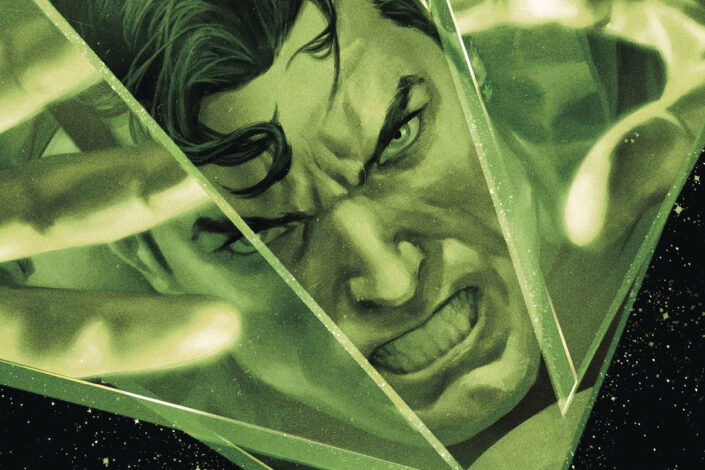
The Phantom Zone Explained: The Evolution of the Kryptonian Prison

Before Marvel Comics introduced its Negative Zone, DC Comics had presented to its readers a different type of zone, one connected to Superman‘s world, The Phantom Zone. Created by Robert Bernstein and George Papp, this prison parallel dimension first appeared in Adventure Comics #283 in 1961. Back then, Superboy found a stash of Kryptonian weapons that included the Phantom Zone Projector. Since then, the subject has been developed by multiple authors and retconned by others.

The Pre-Crisis Origins of the Phantom Zone

As explained in Superboy #104 by Edmond Hamilton and Papp, the Phantom Zone was created by Kryptonian scientist Jor-El. He introduced it as a humane alternative to replace the “orbit exile system.” Following that, Krypton’s legal system sentenced the criminals to an intangible, timeless exile in a pocket dimension. Within the Phantom Zone, prisoners exist as spectral entities, unable to interact with the physical world but still conscious and aware—essentially, ghosts stuck in eternal imprisonment without the ability to age or die.

With the Phantom Zone Projector saved from destruction, those Kryptonian prisoners survived the explosion of their planet and found their way to Earth. The evil Jax-Ur was the first to escape and torment Superboy, but not the last. The Zone quickly became a recurring plot device in Superman used for decades.

Read More »The Phantom Zone Explained: The Evolution of the Kryptonian Prison

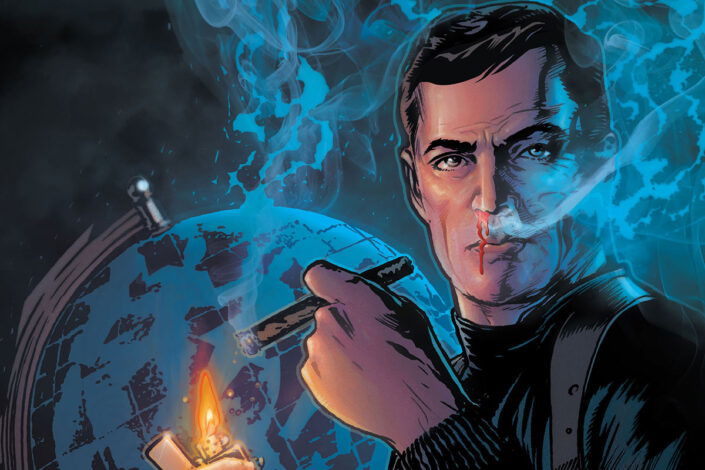
Maxwell Lord: The Comic Book History of a Master Manipulator

« Lord was always sort of a nebulous, self-serving hard ass » said Keith Giffen (RIP) in a CBR interview twenty years ago. He’s talking about Maxwell Lord, power broker, master manipulator, cyborg for a time, spy and full-blown villain.

The Maxwell Lord appearing in the pages of DC Comics today is not the same man readers encountered when he made his first appearance almost 40 years ago in Justice League #1 (May 1987). His origins were rewritten post-Flashpoint to better align with his modern characterization. Once an amoral power broker, Lord has since become a more straightforward villain.

With a new version of Maxwell Lord set to appear in the upcoming Superman movie this summer, we take a look back at Maxwell Lord’s history, and how the character has changed over time.

Read More »Maxwell Lord: The Comic Book History of a Master Manipulator

Elvira, Mistress of the Dark Comic Book’s History, From DC to Dynamite

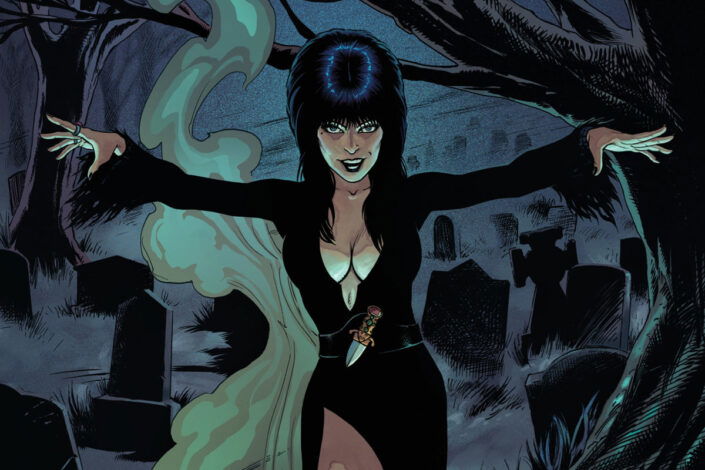
Amateurs of horror are certainly familiar with Elvira, Mistress of the Dark. Played by Cassandra Peterson, Elvira is a campy horror-themed TV hostess with a razor-sharp wit and an iconic gothic sense of style–her plunging black dress and beehive hairdo are immediately identifiable. She rose to fame in the early 1980s as the Movie Macabre star, a show featuring her clever, satirical, and innuendo-filled commentary on low-budget horror films. 

Her popularity led her to host another type of horror show, as she became one of the caretakers of DC’s House of Mystery, the horror anthology comic book. Since then, her adventures in comics have taken a different path, as she became the protagonist of a long-running series—not just the hostess—before coming back in a pop-culture-heavy series that Dynamite regularly publishes. So today, we are taking a look at Elvira’s comics history.

Read More »Elvira, Mistress of the Dark Comic Book’s History, From DC to Dynamite

John Stewart’s Evolution: From Green Lantern Backup to Corps Leader

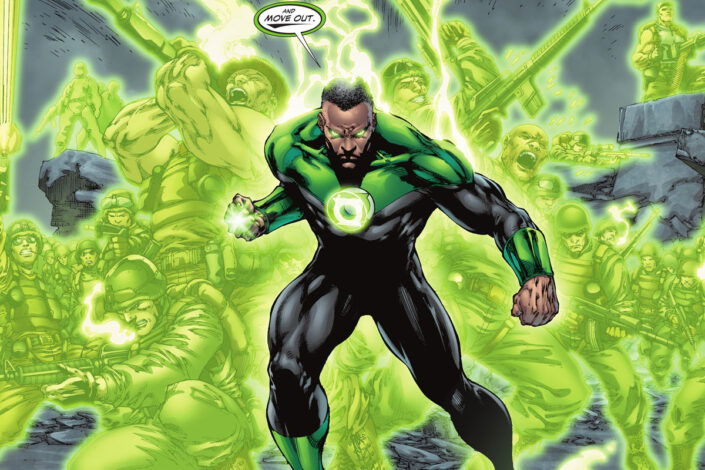
Among the Green Lanterns from Earth, John Stewart is one of the most popular and he may be gaining more fans soon as he is one of the main characters in the Green Lantern TV Show coming on HBO–played by actor Aaron Pierre.

Created by Dennis O’Neil and Neal Adams in Green Lantern vol. 2 #87 (1971), John Stewart was one of the first African-American superheroes to appear in DC Comics. Still, he didn’t immediately become one of the most prominent ones.

In fact, after this first appearance, he only came back four years later for a team-up with the Justice League of America (in Justice League of America #110, in 1974). He then continued to pop up only sporadically in Green Lantern comics until the mid-1980s with Crisis on Infinite Earths and his time as the main protector of sector 2814 in Green Lantern (from #182 to #200).

It was a slow start but John Stewart’s cosmic adventures are still going strong today.

Read More »John Stewart’s Evolution: From Green Lantern Backup to Corps Leader

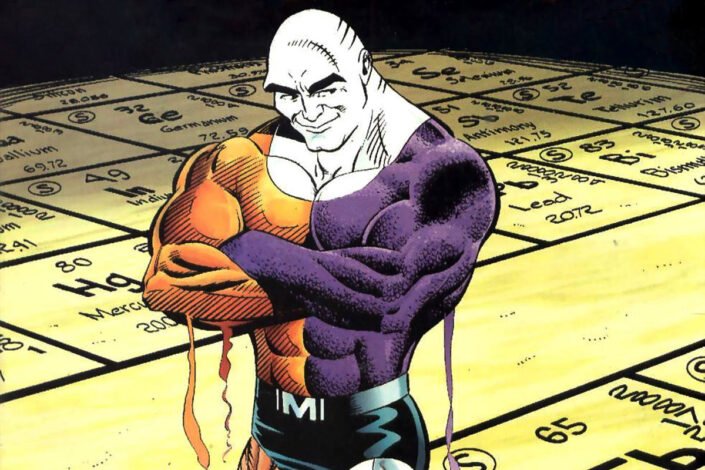
Metamorpho: DC Comics’s Element Man, Rex Mason

  • by

Metamorpho DC Comics Elemental Man

During the mid-1960s, unconventional comic book heroes like the Doom Patrol or the Metal Men found a bit of success at DC Comics. To build some more on what seems to be a trend, writer Bob Haney and artist Ramona Fradon were asked to create a new character in the same vein. The result was Metamorpho, who debuted in The Brave and the Bold #57 (January 1965).

Also known as the Element Man, Metamorpho found immediate success and started appearing in other popular comics like Justice League of America (even if he refused to become a full-time member). He also got his own ongoing comic book series, but it lasted only 17 issues. However, this was by far the end of the character.

Read More »Metamorpho: DC Comics’s Element Man, Rex Mason

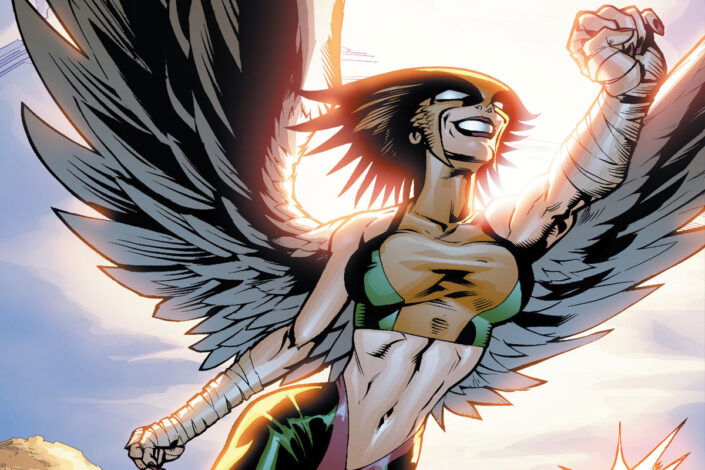
Hawkgirl Kendra Saunders Reading Order

There were other Hawkgirls before Kendra Saunders made her first appearance in 1999 in JSA: Secret Files #1 (by James Robinson, David Goyer, and Scott Benefiel). It’s part of being Hawkgirl, an immortal warrior following a reincarnation cycle that reunites her with her lover Hawkman (Carter Hall).

But unlike past Hawkgirls who fully embrace their process, she actively resists it, trying to forge her own path rather than be bound by fate. A troubled young woman, Kendra Saunders died by suicide. When she was found by her grandfather, Speed Saunders, her body was miraculously revived—but her soul had been replaced by that of her ancestor, Shiera Hall, the original Hawkgirl.

While she doesn’t initially remember her past lives, she struggles with the memories of them and is pushed by unforeseen events to reunite with Carter and fight alongside the Justice Society of America to survive. Kendra retains her own personality and memories, and refuses to be defined by a past she doesn’t remember living.

However, she unconsciously acquires Shiera’s fighting skills and instincts. Like other Hawk avatars, she wields weaponry made from the mystical Nth Metal, which grants her flight, enhanced strength, and durability.

Read More »Hawkgirl Kendra Saunders Reading Order

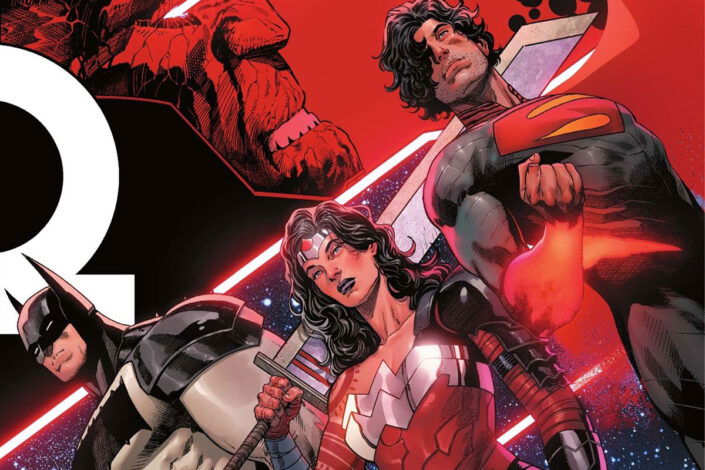
DC Absolute Universe Reading Order

A new alternate reality has recently emerged in the DC Universe. As part of the DC All In Initiative, DC Comics has launched The Absolute Universe (AU), an imprint overseen by Scott Snyder that tells stories set on Earth-Alpha and features new versions of of DC’s iconic superheroes.

Similar to Marvel’s Ultimate Universe, this Universe is friendly to new readers. You don’t need to have a PhD in DC’s complex history or its many crisis to enjoy these new comic series.

Ready to explore DC’s newest reality? Here’s a quick guide to the Absolute Universe and how to start reading.

Read More »DC Absolute Universe Reading Order

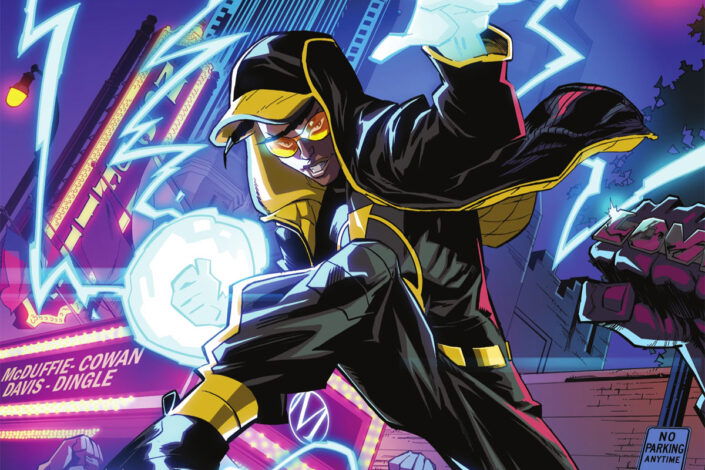
Static Shock Reading Order

  • by

Helped by a popular 4-season animated show titled “Static Shock” broadcasted between 2004 and 2004 on the WB Television Network’s Kids’ WB programming block, Static became the most popular superhero from the Milestone Comics imprint (distributed by DC Comics). Even before the show started, he was already one of the highlights of the line.

Created by Dwayne McDuffie, Denys Cowan, Michael Davis, Derek T. Dingle, and Christopher Priest, Static made his first appearance in a 3-page preview in Icon #1 before the launch of the ongoing Static comics series written by McDuffie and Robert L. Washington III and illustrated by John Paul Leon. The comic book would last 45 issues but the characters appeared in more comics from the Milestone line as it was part of the shared universe called the Dakotaverse.

Static is really Virgil Hawkins, an African-American teenager living in Dakota City who gains his superpowers during the “Big Bang.” The Big Bang happened when the police disrupted a gang conflict by using an experimental gas with catastrophic consequences. This gas gave many people in the area superhuman abilities.
Read More »Static Shock Reading Order