Skip to content

Marvel

Where to Start Reading X-Men Comics? An Introduction to the X-Universe

X-Men were the first Marvel superheroes I read. I remember picking up the latest release from the shelf, which turned out to be the conclusion of a storyline! From then on, I started exploring the X-Men’s history, following their contemporary adventures and tracking down older stories — from Chris Claremont’s run to the many spin-offs, limited series and maxi-series (I loved Cable back then!).

These days, it’s easier than ever to get into reading good X-Men comics thanks to the different collected editions, which explore the many eras of the mutants’ history. But with over 60 years’ worth of stories, it can also be hard to know where to start!

So, where should you start? The X-Men are a big family with many characters and various types of adventures. Whether you prefer the old comic book styles of the ’80s, epic modern stories, high-concept ideas, or personal and intimate tales, there’s an X-Men comic for you!

To help you find the perfect one, here’s a curated beginner’s guide with several routes you can take to read some great X-Men stories!

Read More »Where to Start Reading X-Men Comics? An Introduction to the X-Universe

Did you miss a DC or Marvel omnibus in 2025? Here is this year’s release guide

It’s the end of the year 2025 and, as far as Marvel and DC Comics are concerned, the publication of new omnibus collected editions has once again been both abundant and wide-ranging. As every comic book collector knows, these oversized hardcovers are not printed in large quantities.

Keeping track of announcements and release dates can quickly become complicated, which is why we maintain a dedicated page for the Marvel Omnibus release schedule and a similar one for DC Omnibuses. These pages are updated monthly, reflecting the new batches of titles Marvel and DC announce as their publishing plans evolve (with dates currently available through the end of summer).

With a constant flow of releases, it is easy to miss a book or two over the course of a year. As 2025 comes to a close, it is worth looking back with a comprehensive list of all the omnibuses published—or republished—by DC and Marvel Comics during the past twelve months.

Read More »Did you miss a DC or Marvel omnibus in 2025? Here is this year’s release guide

Kamala Khan Reading Order (Ms. Marvel!)

  • by

When Carol Danvers got her promotion and officially became known as Captain Marvel in 2014, a place opened up for a new Mrs. Marvel. That’s when Kamala Khan became a Marvel superhero. She made a background cameo in Captain Marvel #14 before making her first official appearance in the anthology All-New Marvel Now! Point One #1. Co-created by writer G. Willow Wilson, artists Adrian Alphona and Jamie McKelvie, and editors Sana Amanat and Stephen Wacker, she went on to star in her own solo series shortly afterward. Her arrival marked Marvel’s first Muslim character to lead a comic book series, quickly making her a landmark figure within modern superhero storytelling.

Kamala Khan is a teenager, Pakistani-American, Muslim, and Inhuman with shapeshifting abilities (mostly elongation, shrinking…) from Jersey City. After discovering her power, she assumes the mantle of Ms. Marvel because Carol Danvers was her idol. Of course, she had to learn how to be a superhero, but she quickly joined famous teams such as the Avengers, the Champions, Secret Warriors, and more (she’s quite popular).

She rapidly got her own series and took part in major Marvel events, including Civil War II, Secret Empire, and Outlawed. She’s young, but there’s already a lot to read: several volumes of her solo comic, team books, crossovers, and even adaptations outside of comics—animated appearances, video games, and her 2022 live-action series on Disney+. Also, even if she’s still a fairly new character, Kamala has already been killed and resurrected, coming back to life with a new perspective on the origins of her powers (she’s a mutant now!), a shift that ties her even more directly into Marvel’s evolving X-Men mythology.

Read More »Kamala Khan Reading Order (Ms. Marvel!)

The New Ultimate Universe Reading Order

  • by

In 2019, Jonathan Hickman successfully relaunched the X-Men with the Krakoan Age. In 2023, he came back with a miniseries set up to help him do the same with the Ultimate Universe. Ended in 2015 and destroyed by the Secret Wars event (also by Hickman), the original Ultimate Marvel Universe (Earth-1610) still left behind it a few characters, like Miles Morales (Spider-Man), Jimmy Hudson (the son of Wolverine), Aaron Davis (Miles Morales’ uncle), The Maker (evil Reed Richards), and more. 

For the New Ultimate Universe, everything starts with The Maker coming back and setting up his own new alternate universe. He indeed went to Earth-6160 and used time travel to stop the apparition of most superheroes, which allowed him to become the leader of that Earth. However, he was defeated and trapped inside The City, a futuristic infrastructure that will reopen in 24 months. Before that happens, the heroes have to prepare themselves and contend with other menaces, including the secretive Maker’s Council.

As a result, the New Ultimate Universe came with a programmed end. One that was confirmed by Marvel Comics. In April 2026, the last issue will be published. But let’s go back to the reading from the beginning.

Read More »The New Ultimate Universe Reading Order

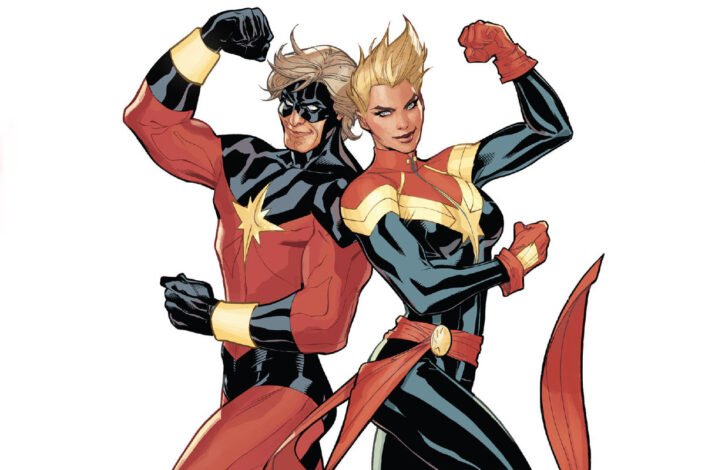
Captain Marvel Reading Order: From Mar-Vell to Carol Danvers

  • by

There are several characters known as Captain Marvel. We are not here to talk about Shazam, but we have to start the story with him. As you may know, Fawcett’s Captain Marvel was enormously popular in the 1940s, outselling even Superman, becoming one of the most successful superheroes of the Golden Age of Comics. His popularity, however, brought legal trouble. In 1941, DC Comics filed a lawsuit against Fawcett Publications, claiming that Captain Marvel was an infringement on Superman. The case dragged on for over a decade, with multiple appeals and shifting rulings.

Ultimately, in 1953, Fawcett agreed to cease publication of its superhero comics, citing declining sales and the high cost of litigation. Captain Marvel disappeared from newsstands for nearly twenty years. DC Comics would later license and eventually purchase the character from Fawcett, reintroducing him in the early 1970s under the title “Shazam!” since by that time, Marvel Comics had legally claimed the trademark “Captain Marvel.”

Marvel’s claim to the name began in 1967, when writer-editor Stan Lee and artist Gene Colan introduced their own Captain Marvel in Marvel Super-Heroes #12. This version, a Kree military officer named Mar-Vell, was created largely to secure the trademark and prevent others from using it. To maintain ownership, Marvel was required to publish a comic featuring the name “Captain Marvel” periodically. As a result, readers have seen a long succession of characters (Mar-Vell, Monica Rambeau, Genis-Vell, Phyla-Vell, Noh-Varr, and Carol Danvers) take up the mantle in various ongoing series, limited runs, team books, and one-shots from the late 1960s to the present day.

Read More »Captain Marvel Reading Order: From Mar-Vell to Carol Danvers

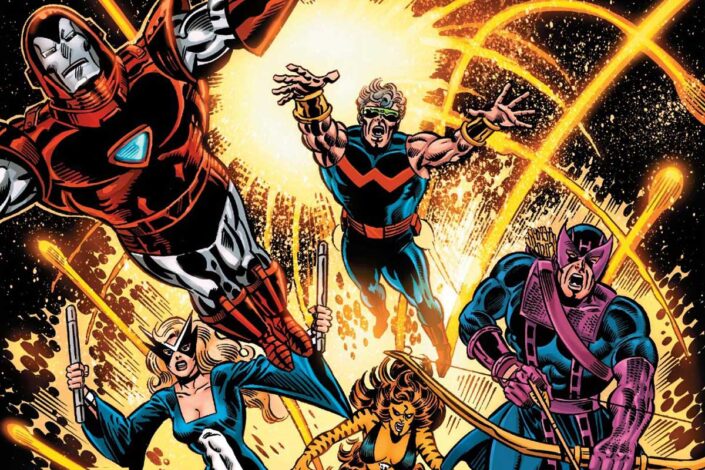
West Coast Avengers Reading Order, Golden Coast’s Mightiest Heroes

Since its launch in 1963, The Avengers have expanded into a comic franchise. The title spawned many spin-offs, such as The New Avengers, Mighty Avengers, Avengers Academy, Dark Avengers, Great Lakes Avengers, Secret Avengers, Young Avengers, and more! 

None of this would have been possible without the success of the first Avengers spin-off: West Coast Avengers. Following the success of the four-issue miniseries created by Roger Stern and Bob Hall released in 1984, the team really settled on the western side for around 10 years.

While the idea of having another Avengers branch to protect the other coast in a world where space and time travel exist can seem a little bit ridiculous, things were different in the eighties. More than moving on the other side of the country, the West Coast Avengers simply expanded the Avengers Universe, opening the doors for more types of adventures.

Read More »West Coast Avengers Reading Order, Golden Coast’s Mightiest Heroes

Ultimate Marvel Universe, The Complete Reading order

In 2000, Marvel Comics redefined its heroes for a whole new generation with the launch of the Ultimate Marvel imprint. Explore the stories of Ultimate Spider-Man, Miles Morales, Ultimatum, and the imprint’s relaunch with our complete Ultimate Marvel Universe comics guide, now available in Omnibus, Epic Collection, and classic trade paperbacks!

Welcome to Earth-1610! Or, more specifically, welcome to the Ultimate Universe, an alternate reality featuring reimagined and modernized versions of your favorite superheroes. Marvelophiles discovered this world in 2000 with the official launch of the Ultimate imprint.

Behind the Ultimate Marvel was Bill Jemas, a lawyer who had worked mainly in the collectible-trading-card industry. He was first appointed executive vice president of Marvel Entertainment Group in 1993, and put in charge of Marvel’s editorial direction in 2000. He replaced editor-in-chief Bob Harras with Joe Quesada, and with him, formed the public face of Marvel Comics. Together, they transformed Marvel Comics with the addition of the Marvel MAX line, the development of Marvel Knights, the increase of trade paperbacks, the removal of the Comics Code, and, of course, the creation of Ultimate Marvel.

Read More »Ultimate Marvel Universe, The Complete Reading order

Knull Reading Order, The King in Black

  • by

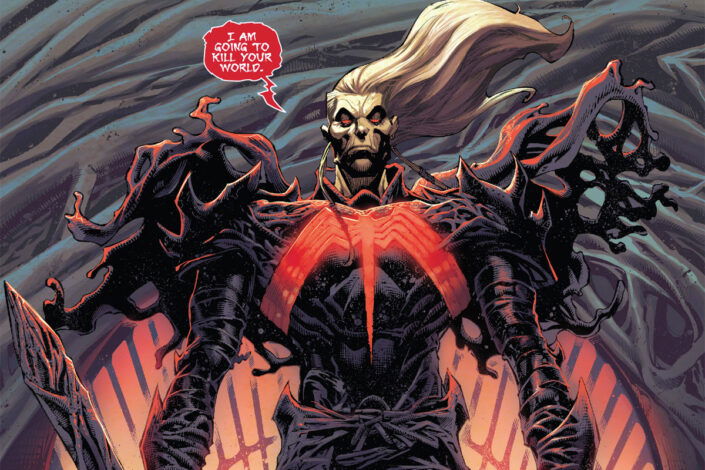
In recent years, the most significant new villain to emerge in the Marvel Comics Universe is Knull, the King in Black. Created by writer Donny Cates and artist Ryan Stegman, he first appeared in Venom #3 (2018) and slowly grew to become one of the biggest cosmic menaces the superheroes had to face.

Knull is introduced as the god of the symbiotes and one of the primordial beings of the Marvel Universe. As his story unfolds, we learn that he existed before the current Marvel Universe, in the endless void that preceded creation. When the Celestials began shaping the universe, their light angered him, leading him to forge the first symbiote (the All-Black Necrosword) and wage war against them. After decapitating a Celestial, Knull used its head to forge more weapons and eventually created the symbiote species, which he bound into a hive mind under his control.

An embodiment of darkness and nihilism, Knull has powers that make him able to manipulate darkness and, obviously, maintain control over the symbiote, but he is also “immortal” and possesses godlike strength.

While Knull was at the center of the King in Black crossover event, he appeared before that, becoming a real menace to Eddie Brock and the rest of the Marvel Universe. He and his All-Black Necrosword.

Read More »Knull Reading Order, The King in Black

Where to Start Reading Fantastic Four Comics? A Beginner’s Guide to Marvel’s First Family

  • by

So, you want to read some Fantastic Four comics? Whether you have recently discovered the Fantastic Four with the new movie, is a DC Fan, or just haven’t given the F.F. a chance yet, there’s a Fantastic Four comic out there for you. In fact, there’s a Fantastic Four comic for everyone! With over 60 years of stories, you are spoiled for choice, maybe too much and you don’t know where to start! 

So, where should you start? Throughout time, the Fantastic Four have had many adventures that reflect the evolution of the Marvel Universe, from the wonder of the Silver Age to the darker tone of the Modern Age, epic family sagas, and decompressed storytelling. Whether you like the old comic book styles of the sixties, prefer more modern family adventures, or love the high-concept ideas and inventions of Reed Richards, there’s a perfect first story for you to explore the world of Reed Richards, Ben Grimm, Sue, and Johnny Storm (and other temporary members of the team!).

Here’s a curated beginner’s guide with several routes to help find the perfect place to start reading Marvel’s First Family! 

Read More »Where to Start Reading Fantastic Four Comics? A Beginner’s Guide to Marvel’s First Family

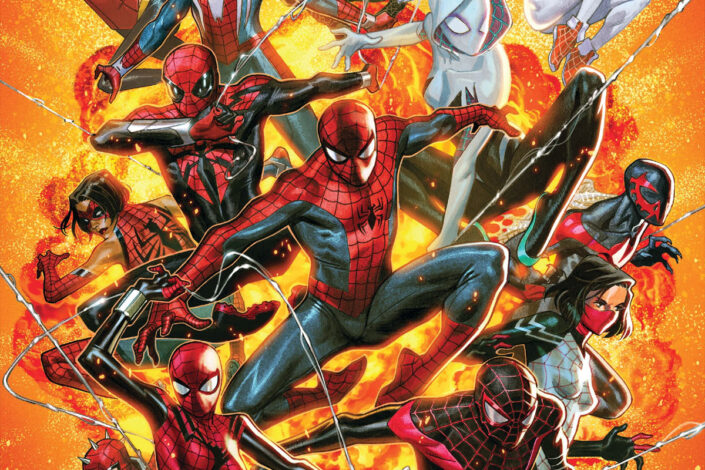
Spider-Man Spider-Verse Reading Order (with all the sequels!)

  • by

Now widely known thanks to the 2018 animated movie Spider-Man: Into the Spider-Verse, the “Spider-Verse” is not one of those concepts that Marvel introduced decades ago. In fact, it was conceived as a crossover event written by Dan Slott, with art by Olivier Coipel and Giuseppe Camuncoli, in 2014. An idea that was inspired by Slott’s work on the 2010 video game Spider-Man: Shattered Dimensions.

Since then, the Spider-Verse has become way bigger than a simple crossover. It can now almost be considered a line of comics inside the Spider-Man publishing world. There have been sequels to the original crossovers, spin-off series, and short story anthologies. The whole concept has been used in every other media featuring Spider-Man.

Everything started years ago, during J. Michael Straczynski’s Coming Home story, when Morlun was introduced. He is a powerful being who hunts and consumes “Spider-Totems” (the essence of spider-powered heroes). When the first Spider-Verse event starts, Morlun is back with his horrible family, the Inheritors, who begin exterminating spider-characters throughout the multiverse to feed on their force. Every single Spider-Man ever is needed to save the day!

The Spider-Verse treats every alternate take on Spider-Man as part of a connected multiverse: classic Peter Parker, Miles Morales, Spider-Gwen (Gwen Stacy), Spider-Man 2099, Spider-Ham, Japanese Spider-Man with his giant robot Leopardon, and countless others. Now, there are constantly new Spider-Heroes introduced, ready to fight to save all the spiders.

Read More »Spider-Man Spider-Verse Reading Order (with all the sequels!)