Skip to content

Marvel

Hercules Reading Order (Marvel Comics)

  • by

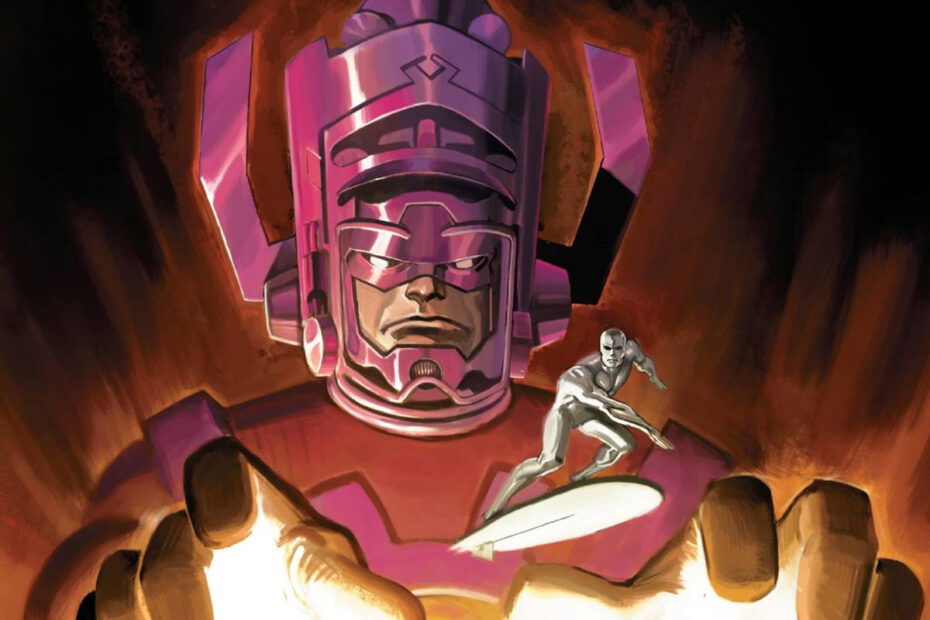
Everybody knows Thor, the God of Thunder and one of Marvel’s most popular heroes. When the Norse God was adapted into a Marvel character in the sixties, a pantheon of deities and heroes was also introduced, such as Hercules Panhellenios. 

Created by Stan Lee and Jack Kirby, Hercules first appeared as a rival to Thor and is portrayed as a screw-up demi-god who is frequently cast out of Olympus by Zeus. From there, he quickly became a regular guest star in Thor’s adventures, went on to smash against the Hulk, and has been part of The Champions, The Avengers, and, more recently, the Guardians of the Galaxy. 

While Hercules may not be a big name in Marvel Comics, the Prince of Power has maintained a regular presence in the superhero community. From his origins to becoming The Incredible Hulk and his many battles alongside the Avengers, follow our guide to discover the Hercules comics to read!

Read More »Hercules Reading Order (Marvel Comics)

Fantastic Four First Appearance: A Look Back at the First Family’s debut

Marvel’s First Family is making her first steps (again) this summer on the big screen with a new adaptation set in the Marvel Cinematic Universe. While the MCU officially launched in 2008 with Iron Man, the Fantastic Four laid the groundwork for the Marvel Comics we know today.

Now is a good time to take a look back at the debut of the Fabulous Foursome in The Fantastic Four #1, which hit the shelves on August 8, 1961—64 years ago.

Read More »Fantastic Four First Appearance: A Look Back at the First Family’s debut

The Best of Franklin Richards Comics, Your Essential Reading Order

  • by

Mister, I'm the law 'round these parts, said Franklin Richards wearing a cowboy hat and pointing a smoking revolver forward, with his sister Valeria standing behind him.

With Reed and Susan Storm Richards as his parents, Franklin Benjamin Richards was destined to be anything but ordinary. Created by Stan Lee and Jack Kirby, Franklin made his first appearance in Fantastic Four Annual #6 (1968), and readers have watched him grow up in the pages of Marvel Comics ever since.

Franklin Richards is a reality-warper and one of the most powerful beings in the universe. An Omega-level mutant, he manifested his powers at a very young age, far earlier than most mutants, at a time when he had little control over them. But his powers were only part of the challenge.

As the son of two founding members of the Fantastic Four, the nephew of Johnny Storm (the Human Torch), the godson of Ben Grimm (the Thing), and the older brother of Valeria Richards, Franklin has lived some extraordinary adventures and been part of some cosmic events. Over the years, Franklin has been kidnapped by Doctor Doom, traveled across space and alternate realities, put his life on the line, and even taken on the heroic mantle of Powerhouse.

Discover Franklin Richards’ most important stories with our Recommended Reading Order and explore his place in Marvel’s history.
Read More »The Best of Franklin Richards Comics, Your Essential Reading Order

Marvel’s Secret Wars Explained: The Events That Changed Comics

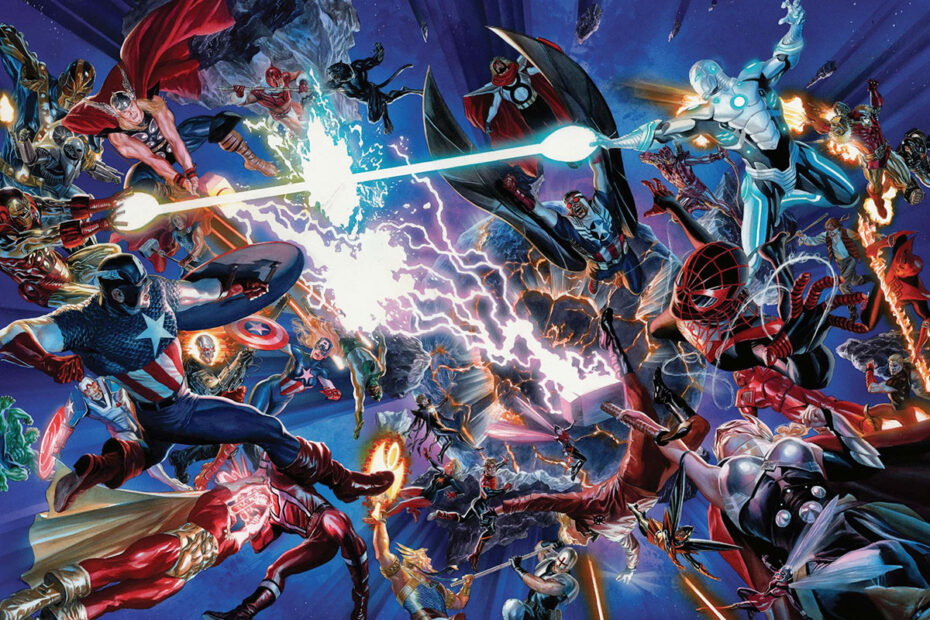
Fans had been dreaming about it for years, but it was ultimately the call for a toy line that would finally give life to the biggest team-up Marvel Comics could put together in 1984. Secret Wars was a commercial opportunity and became an industry-altering event that forever changed comics. No matter what people think about Jim Shooter’s tenure as Marvel editor-in-chief, this is his legacy.

Secret Wars (1984): The Original Battleworld

It was 1984, and toy manufacturer Kenner was about to launch its DC Comics-inspired line of action figures, Super Powers. At Mattel Toys, it was necessary not to let the comic book market go to the competition. That’s what led to a collaboration with Marvel Comics. Jim Shooter was all in and proposed to produce a story to promote the new line of Marvel action figures, “Cosmic Champions.” The title would eventually change, but the idea would stay the same: to provide a showcase of marketable superheroes and supervillains.

Following focus group tests, the twelve-issue limited series became “Marvel Super Heroes Secret Wars.” The story starts with an omnipotent being called the Beyonder abducting dozens of characters to a patchwork planet named Battleworld. There, he announced, “I am from beyond! Slay your enemies and all that you desire shall be yours! Nothing you dream of is impossible for me to accomplish!” What follows is constant action, alliances, twists, and lasting developments that impacted the Marvel Universe.

Read More »Marvel’s Secret Wars Explained: The Events That Changed Comics

Ultimate Spider-Man Reading Order

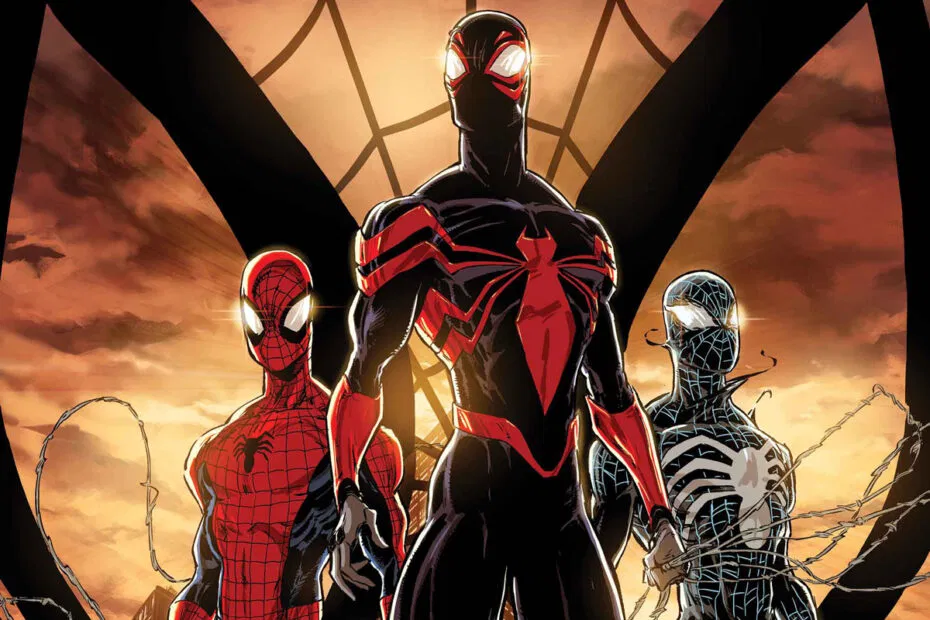
Thanks to the Into the Spider-Verse animated movies, it is widely known that many versions of Spider-Man exist across the Marvel Universe. And they are not all called Peter Parker. Miles Morales was one of the breakout characters of the Ultimate Universe, set on Earth-1610. But he wasn’t the first one wearing the Spidey costume in this reality. The first Ultimate Spider-Man began to appear in 2000 in his own comic series, as part of the Ultimate Imprint. 

He became a commercial and critical success at the time, and his story would be mostly told in his own comic book series, Ultimate Spider-Man. Peter Parker’s life would shape differently from the classic Spidey, offering a new perspective, but still embodying the values that the character represents since the sixties. Following later in his footsteps is Miles Morales, who has grown up to become one of the most emblematic Spider-People in the Marvel Universe since then.

And since 2024, a new Ultimate Universe has been created, introducing a new Ultimate Spider-Man. 

Read More »Ultimate Spider-Man Reading Order

The Best of Juggernaut Comics, A Recommended Reading Order

  • by

There may be no other family tree as complex as the Grey-Summers one in the X-Men Universe, but it doesn’t mean that other characters haven’t had their share of pain and problems with their relatives. Case in point with Marko Cain, better known as Juggernaut, who is also the stepbrother of Professor X!

Unlike Charles Xavier, Juggernaut is not a mutant, but a human empowered by an ancient jewel powered by the deity Cyttorak, which transformed him into the unstoppable Juggernaut. Created by Stan Lee and Jack Kirby, he made his first appearance in X-Men #12 (1965) as an enemy of the X-Men. For a long time after his introduction, Juggy was a one-note villain, popping up in one or two issues to rampage and disappear (or get thrown into prison for a while). Still, that didn’t stop him from making a name for himself as a member of the Brotherhood of Mutants and as the criminal partner and BFF of Black Tom Cassidy. For many decades, he fought against the X-Men, as well as Spider-Man and the Hulk.

Things changed for Juggernaut in the early 2000s during Chuck Austen’s infamous run on Uncanny X-Men. While that era is often panned, it is also when Ol’ Jughead got some noticeable character development as he joined the X-Men and officially crossed the line between villain and hero, becoming more of an anti-hero (or anti-villain).

Read More »The Best of Juggernaut Comics, A Recommended Reading Order

Marvel Runaways Reading Order

  • by

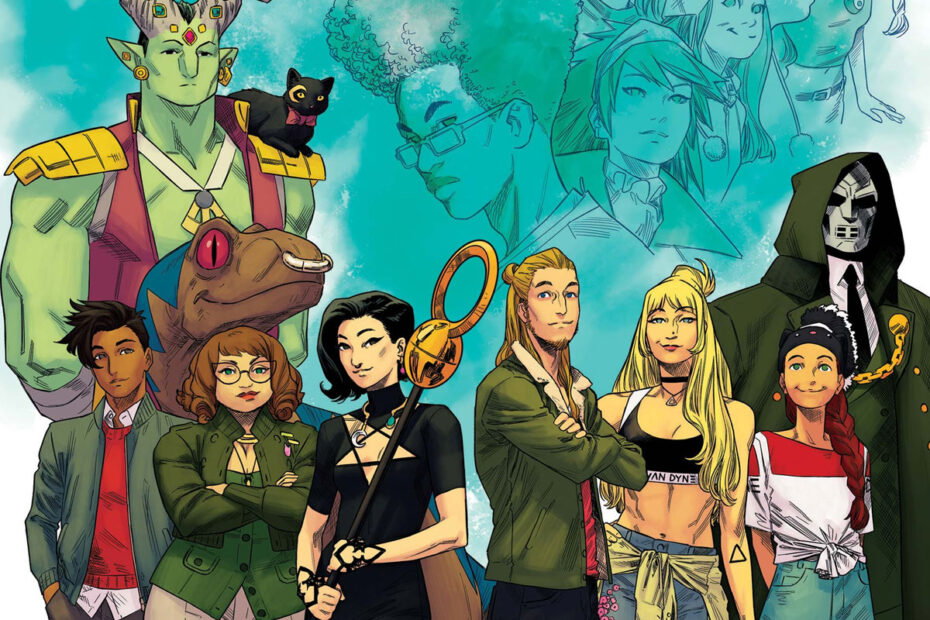
First published by Marvel Comics in July 2003, The Runaways is a comic book series created by writer Brian K. Vaughan (Saga) and artist Adrian Alphona. It launched as part of Marvel’s “Tsunami” imprint, an initiative designed to attract readers who were fans of manga and other youth-oriented genres. Although the Tsunami line was discontinued after a brief period and despite modest initial single-issue sales, The Runaways found new readers with the help of the trade paperback collections, which led Marvel to revive the title in 2005 after an initial cancellation.

This starts as the story of six teenagers from Los Angeles: Nico Minoru, Chase Stein, Karolina Dean, Gertrude Yorkes, Molly Hayes, and Alex Wilder. They have little in common beyond the annual gatherings of their wealthy parents. When they accidentally discover that their parents are part of a secret criminal cabal known as the Pride, an organization that has covertly controlled much of the city’s underworld, their lives are upended. Shocked by the revelation, the teens band together and flee from their homes, determined to put an end to their parents’ criminal activities while struggling to survive on their own.

Over time, the group members each develop distinct roles and abilities that aid them in their fight against the Pride and other adversaries. Nico Minoru wields a powerful magical artifact called the Staff of One; Chase Stein utilizes advanced technology stolen from his parents; Karolina Dean learns she is an alien with the ability to manipulate solar energy; Gertrude Yorkes bonds telepathically with a genetically engineered dinosaur; Molly Hayes manifests superhuman strength and invulnerability; and Alex Wilder emerges as a strategic leader, though his loyalty becomes a pivotal point in the early narrative.

Following Vaughan and Alphona’s departure after 30 additional issues, The Runaways was continued by other creative teams, including notable writers such as Joss Whedon and Terry Moore. The Runaways inspired a 3-season (2017-19) live-action adaptation for the streaming service Hulu.

Read More »Marvel Runaways Reading Order

X-Men: From The Ashes Reading Order (Part. 8)

  • by

Welcome back to the world of the X-Men with part 8 of our ultimate reading guide. Once the “Krakoan Age” came to an end, Marvel Comics launched a new era called “From The Ashes.” A complete relaunch of the X-Line of comics starting summer 2024.

This was teased in X-Men (vol. 6) #35 (legacy Uncanny X-Men #700), announcing a return to something similar to the old status quo with mutants rejoining the rest of the world and facing hatred and fear. 

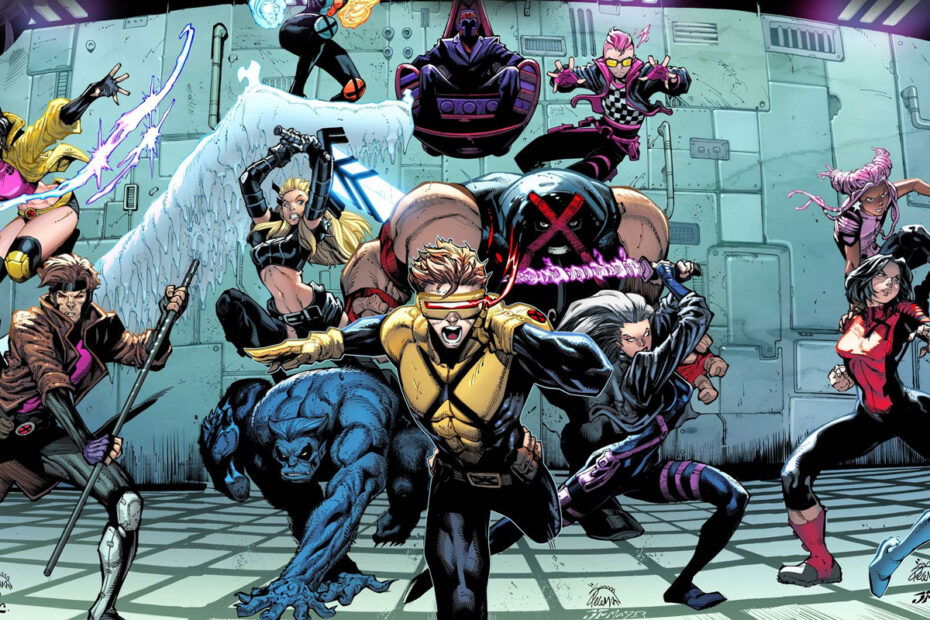
The new era of X-Men kicks off with three flagship titles. First, in X-Men (vol. 7) by Jed MacKay and Ryan Stegman, Cyclops, Beast, Magneto, Psylocke, Kid Omega, Temper (formerly Oya), Magik, and Juggernaut come together to face emerging threats, fighting not just for survival, but for the future and guiding philosophy of mutantkind. Then, in Uncanny X-Men (vol. 6) by Gail Simone and David Marquez, outlaws once more, Rogue, Gambit, Nightcrawler, Jubilee, and Wolverine are now based in the heart of the Big Easy, and they continue to defend a world that fears and hates them. Then, in Exceptional X-Men by Eve L. Ewing and Carmen Carnero, Kate Pryde returned to her hometown of Chicago in the aftermath of the war with Orchis, hoping to leave the world of mutant affairs behind. But when she encounters three young mutants—Bronze, Axo, and Melee—in desperate need of training and guidance, she finds herself reluctantly drawn back in. And to make matters more complicated, Emma Frost wholeheartedly agrees.

Those X-Men comic book series are soon joined by NYX (vol. 2), Phoenix, Storm (vol. 5), Wolverine (vol. 8), X-Factor (vol. 5), X-Force (vol. 7), and some limited series and, soon, the first crossovers. 

Read More »X-Men: From The Ashes Reading Order (Part. 8)

Norman Osborn: The Evolution of Spider-Man’s Nemesis, from Green Goblin to Reformed Man

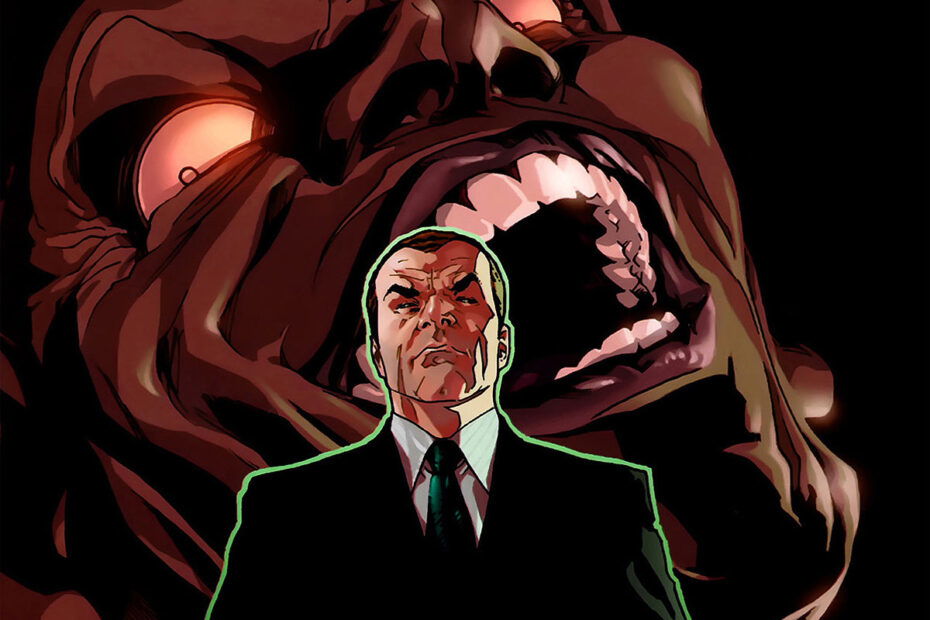
In the world of superhero comics, so many villains are just coming back, barely evolving as the decades pass. Still, some took on prominent roles and were forced to grow with the times as their continuing existence became so tightly connected to one of the superheroes that they couldn’t stop fighting. They may not be legion, but Norman Osborn is certainly one of them.

As one of Marvel Comics’ most complex and enduring antagonists, he is known primarily as the original Green Goblin. A personal nemesis to Spider-Man, Osborn’s career of villainy has led to some of the most impactful moments in Peter Parker’s life, but also in the Marvel Universe as a whole. 

Read More »Norman Osborn: The Evolution of Spider-Man’s Nemesis, from Green Goblin to Reformed Man

Star Wars Omnibus Reading Order!

  • by

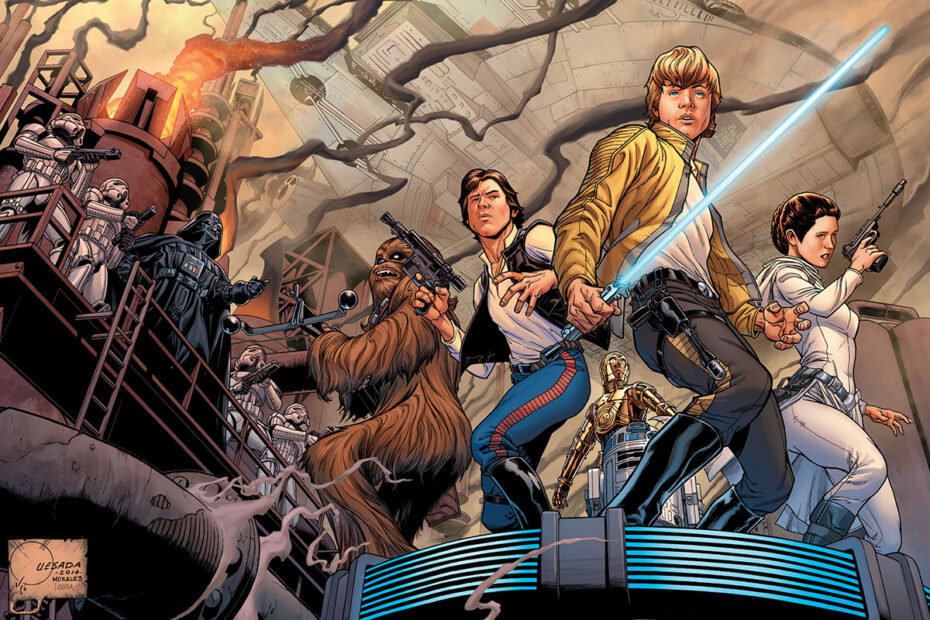
May the 4th Be With You! Since the movie’s release in 1977, Star Wars Comics have been produced with few interruptions. It all started at Marvel Comics with a six-issue comic book adaptation of the film. It was such a success that it helped Marvel survive the financial difficulties of the time. The series continued with original stories starting from issue #7 and became one of the top-selling titles. Marvel published the series until 1986, totaling 107 issues and three Annuals.

During this period, a newspaper strip was also distributed by the Los Angeles Times Syndicate and the Watertown Daily Times, while Pendulum Press released in 1978 a 31-page loose adaptation designed for classroom use. For several years after Marvel’s comic series ended, there was few Star Wars material. This changed in 1991 when Dark Horse acquired the license and revived the franchise with the release of the novel Heir to the Empire—the first book of a trilogy by Timothy Zahn—which was also adapted into a comic book. After that, the publisher launched dozens of series set in the Star Wars universe over the next 20 years.

A well-established fact now, Dark Horse lost the license in 2014 to Marvel Comics, which became the primary publisher of Star Wars Comics. It marked the end of the Star Wars Expanded Universe and the beginning of a new continuity known as Star Wars Canon. In 2017, IDW Publishing launched the anthology series Star Wars Adventures, and in 2022, Dark Horse started publishing new Star Wars comics and graphic novels.

For Star Wars Day, we look closer at the many Star Wars omnibus editions—from Dark Horse’s older collections to Marvel’s ongoing omnibus line to help you navigate this vast galaxy!

Read More »Star Wars Omnibus Reading Order!