Skip to content

Marvel

Star-Lord Comics Reading Order, Peter Quill’s Cosmic Marvel Guide

  • by

The introduction of Star-Lord in the Marvel Comics Universe didn’t come with a boom but with editorial complications. Created by Steve Englehart and Steve Gan, the character made his first appearance in Marvel Preview #4 in 1976. He was supposed to go, according to its creator, from “being a jerk to the most cosmic being in the universe.” However, things changed quickly when Steve Englehart left Marvel, and Chris Claremont took over the character. Claremont’s revamp led to some legal issues due to his heavy reliance on Robert A. Heinlein’s work as inspiration. fter that, Star-Lord made only a few appearances before disappearing from the scene. This version of the character is no longer considered a part of the regular Marvel Universe anymore.

In 2005, Peter Quill/Star-Lord was introduced by Keith Giffen and Ron Lim in the ongoing Thanos comic series. This introduction led him to play a part in the Annihilation saga, and then in the new incarnation of the Guardians of the Galaxy series from Dan Abnett and Andy Lanning.

Now with a revised origin story, Peter is revealed to be the son of an alien named J’son, who crashed on Earth and met Meredith Quill. When J’son left to go back to fighting his intergalactic war, he didn’t know that Meredith was pregnant. A decade later, enemies of his father J’son came to Earth and murdered his mother. Orphaned, Peter was raised by hMeredith’s ‘s best friend Lisa Chang, a commander at NASA. He was destined to join the stars.

During a mission in Space, Peter Quill’s ship malfunctioned and was discovered by a group of space pirates led by Yondu, the Ravagers. After some convincing, he was allowed to join them. That’s how his cosmic adventures started… that you can right now discover with our Star-Lord Reading Guide!

Read More »Star-Lord Comics Reading Order, Peter Quill’s Cosmic Marvel Guide
The Maker Reading Order, The Ultimate Reed Richards

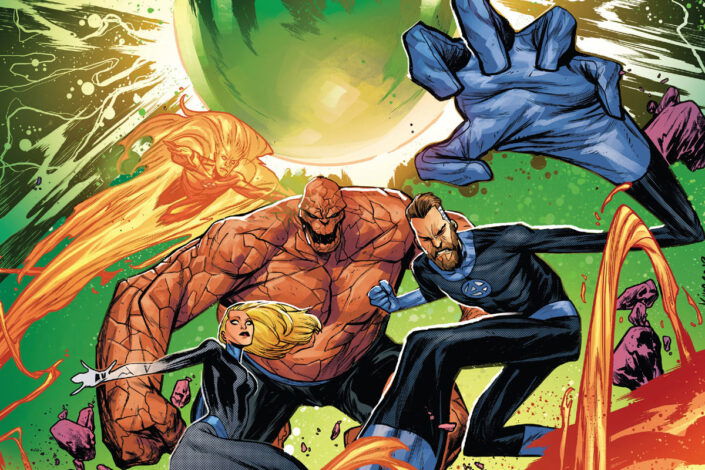
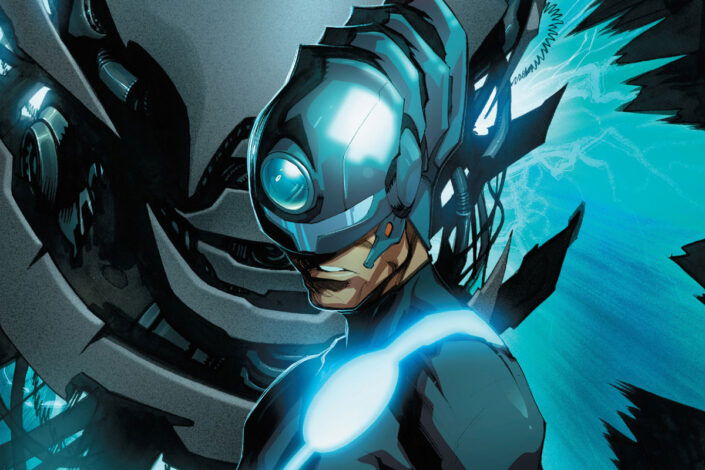
As one of the Fantastic Four, Mister Fantastic, aka Reed Richards, stands as one of Marvel’s greatest heroes. One of the most intelligent beings on the planet, he is driven by an insatiable curiosity and a deep sense of responsibility to protect others, even as his single-minded focus on science sometimes causes him to struggle with personal relationships and emotional connections.

But what if Mister Fantastic were transformed into a supervillain and chose to use his intellect to become a multiversal threat? This scenario was explored in the Ultimate Universe (Earth-1610), where the Reed Richards variant is now known as the Maker.

Created by Brian Michael Bendis, Mark Millar, and Adam Kubert, the Ultimate Reed Richards made his first appearance in Ultimate Fantastic Four #1. Initially introduced as a younger, modernized version of the beloved character created by Stan Lee and Jack Kirby, his turn toward villainy was depicted in the pages of Ultimate Comics and Ultimate Comics: The Ultimates, orchestrated by writer Jonathan Hickman. Like Miles Morales, the character didn’t disappear following the destruction of their Earth. He survived the Secret Wars and began working for his own gain on the new Earth-616.

Discover more about this Reed Richards doppelganger with our reading order, highlighting his appearances in the Ultimate Universe and beyond.

Read More »The Maker Reading Order, The Ultimate Reed Richards

The Negative Zone: Marvel’s Antimatter Universe Explained

The Marvel Universe doesn’t lack realities, dimensions, and other parallel Earths. But one is particularly famous as it has been firmly tied to the Fantastic Four for decades now: The Negative Zone.

First introduced in Fantastic Four #51 (published in 1966) by writer Stan Lee and artist Jack Kirby, the Negative Zone is an antimatter universe–a universe parallel to Earth’s in which all matter is negatively charged. As such, it is a dangerous place for those who come from the regular Marvel Universe, those who are positive matter beings. It’s not immediately dealy for them, but being there for a prolonged period of time is quite dangerous.

Read More »The Negative Zone: Marvel’s Antimatter Universe Explained

Daredevil by Frank Miller Reading Order (with Elektra, of course!)

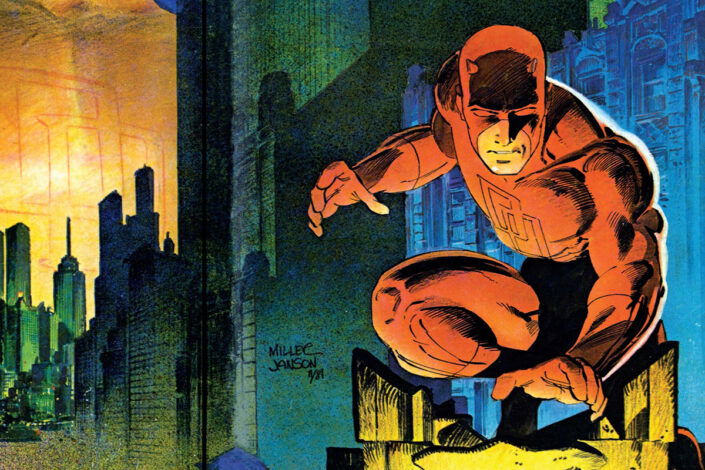
Young Frank Miller wasn’t working at Marvel for very long when he saw an opportunity to do a crime comic with Daredevil. After drawing two issues of Spectacular Spider-Man guest-starring Daredevil, he requested to work on the Daredevil title. The timing couldn’t have been more perfect, as artist Gene Colan wanted to leave Daredevil. While Miller hadn’t yet proven his ability to handle a regular commitment at this stage, as he remembers in The Comics Journal #70, Marvel took a gamble on him, and it paid off.

However, success didn’t arrive with his first Daredevil issue. Initially, Miller only drew the stories, with Roger McKenzie as the writer (and Klaus Janson as the inker). While both men didn’t always agree on everything, they worked well together and conspired to “steal away as many Spider-Man villains as we could.” But sales weren’t improving. Things turned around with the arrival of Denny O’Neil as editor on the title. Following a backup story written by Miller, O’Neil put the artist on writing duties, and the rest is history.

Influenced by Will Eisner, Gil Kane, Harvey Kurtzman, and film techniques, Miller made a name for himself through his care for research and his exploration of darker themes—violence being a major theme of his Daredevil run. He also decided to emphasize that Matt Murdock was a Catholic, as, for him, “only a Catholic could be a vigilante and an attorney at the same time.” (The Men Without Fear: Creating Daredevil, 2003 documentary). He took the time to clearly define the parameters of Daredevil’s powers to make them more believable. He added some martial arts to Daredevil’s fighting skills and introduced Elektra in Daredevil #168 in his first issue as main writer. As Klaus Janson put it, the arrival of Elektra was “the culmination of Frank’s intent to rebuild Daredevil and his supporting cast.”

Read More »Daredevil by Frank Miller Reading Order (with Elektra, of course!)

Deathlok Reading Order, Marvel’s Deadly Cyborgs

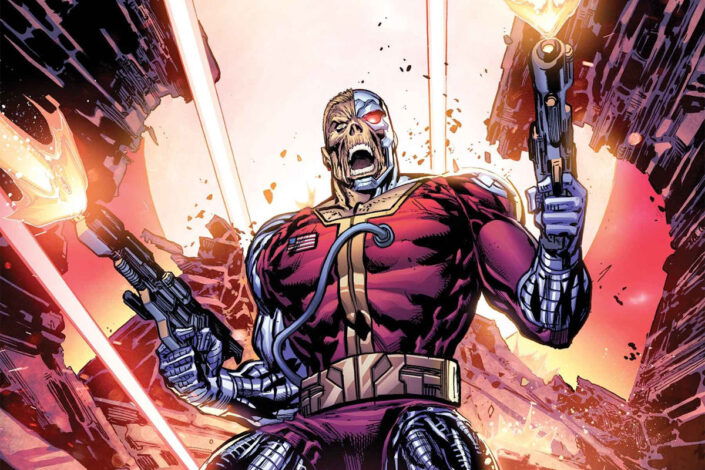
Not to be confused with DC’s Deadshot or Deathstroke, Deathlok is a Marvel Comics character. In fact, it’s the codename of more than one character. The First one was created by cartoonist Rich Buckler in Astonishing Tales #25 (he plotted and pencilled it, Doug Moench wrote the script and suggested the name), in 1974, the same year as The Punisher and Wolverine. Marvel was into violent warriors at the time and The Six Million Dollar Man TV Show had popularized the concept of a cyborg just a few months earlier.

Known at first as Deathlok the Demolisher, Luther Manning was an American soldier who was killed and subsequently brought back to life by Simon Ryker who transformed him into a cyborg. This takes place in a dystopian future: 1990. He escaped Ryker’s control and fought against him, up until the end of his Astonishing Tales run when he was sent back in time to the regular Marvel timeline. This was only the beginning for him as he got to meet other Marvel heroes, and eventually went back to his timeline.

Manning was just the first. Through the years, Michael Collins, Jack Truman, Rebecca Ryker, Henry Hayes, and Jemma Simmons used the “Deathlok” identity. They mostly followed the same route, dead humans reanimated as cyborgs.

Read More »Deathlok Reading Order, Marvel’s Deadly Cyborgs

Meet the Web-Warriors, the protectors of the Spider-Verse

Thanks to the animated movie Spider-Man: Into the Spider-Verse and its sequel Across the Spider-Verse, it is no secret that the Marvel Universe contains an infinite number of versions of Spider-Men, Spider-Women, and Spider-villains.

Before Miles Morales and company web-slung onto the big screen, a Spider-Army was created on the pages of Marvel Comics. During the Spider-Verse event, their mission was to protect the Spiders from the Inheritors, a vampiric family who hunt Spider-Totems to access what is called the Web of Life and Destiny, which can be described as a celestial map of the multiverse – and with Spiders created to repair, maintain, and expand it.

Read More »Meet the Web-Warriors, the protectors of the Spider-Verse

Marvel’s Dracula Reading Order

  • by

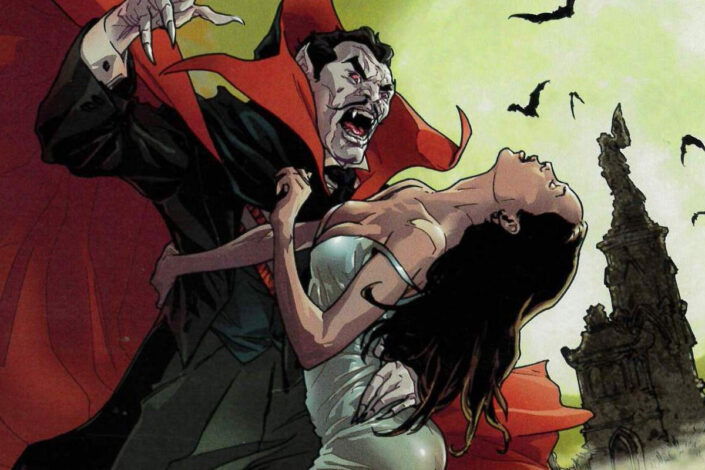
In 1972, as the Comics Code started to loosen and Stan Lee became Marvel’s Publisher, making Roy Thomas the new editor-in-chief, Marvel launched new horror titles like Ghost Rider, The Man-Thing, Werewolf by Night, and The Tomb of Dracula.

Written by Gerry Conway, plotted by Roy Thomas, and drawn by Gene Colan (who fought to get this assignment), The Tomb of Dracula #1 introduced the famous vampire created by author Bram Stoker into the Marvel Universe. The concept seduced the readers, but the writing not that much. Conway rapidly left the book, Archie Goodwin then Gardner Fox took over for only two issues each before Marv Wolfman assumed the writing duties and received critical success–he also introduced Blade and other vampire hunters.

Like most of Marvel’s horror books, The Tomb of Dracula was not part of the Marvel Universe until issue #44 which was a crossover with Doctor Stange (concluding in issue #14 of the Sorcerer Supreme’s series). The series ended with over-sized issue #70 but was quickly revived as a black & white magazine. That didn’t last.

Some of The Tomb of Dracula‘s characters came back in regular Marvel books like Doctor Strange. Dracula himself reappeared with Rachel Van Helsing in 1982 in Chris Claremont’s X-Men. Then in 1991, The Tomb of Dracula was revived for a 4-part miniseries. A few years later, Dracula came back in more Marvel series. Since then, he occasionally appeared in stand-alone stories or full storylines, finding a place in the Marvel Universe.

Read More »Marvel’s Dracula Reading Order

The Inhumans: Unraveling the Origins of Marvel’s Enigmatic Royal Family

The story goes that during the 2010s, Marvel decided to push the X-Men to the side in favor of the Inhumans, as they preferred properties for which they had full screen rights at the time. Their attempt to position the Inhumans as replacements for the X-Men didn’t pay off and, worse, gave the public a misleading image of this superhuman race, which is not comprised of mutants. This effort was further hampered by the failure of the 2017 Inhumans TV series.

However, a look back at their origins in comic book titles reveals that the Inhumans are quite different from the X-Men. Originally conceived with Jack Kirby’s psychedelic aesthetic, they were weirder, their powers crazier, and their stories more otherworldly.

It all started twenty-five thousand years ago when Kree scientists, drawn to Earth beings’ incredible potential, experimented on them to create a superhuman army. These experiments ultimately resulted in the development of the Inhumans, a species with superhuman strength and long lifespans.

Read More »The Inhumans: Unraveling the Origins of Marvel’s Enigmatic Royal Family

Rocket Raccoon Reading Order

  • by

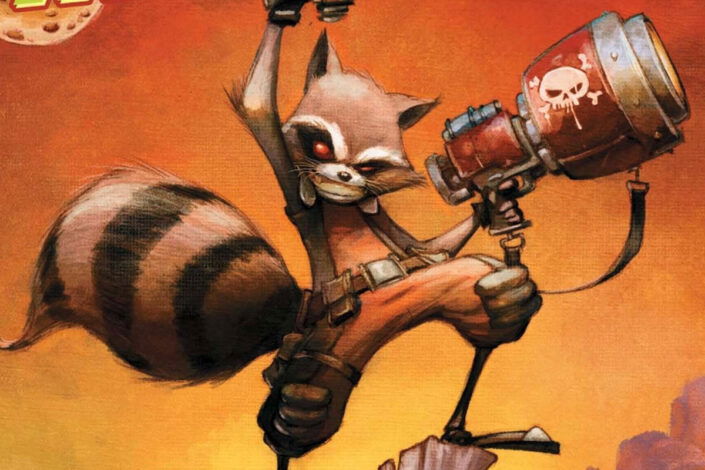
During the 1970s, Marvel expanded its offer with magazines. One of them was the black and white “Marvel Preview” in which Bill Mantlo started the science-fiction serial “The Sword in the Star.” The story was about a character named Prince Wayfinder of the planet Ithacon who was searching for a mythical sword. This didn’t last long, only two chapters were published, but the second one published in Marvel Preview #7 in 1976 introduced an anthropomorphic character who’s quite popular now, the famous Rocket Raccoon.

At the time though, in this story drawn by Keith Giffen (his first professional comic book job), he was called Rocky. A fan of the Beatles, Mantlo was inspired by their 1968 song “Rocky Raccoon” from the White Album which is a cowboy story. Elements of the song were also used for Rocket’s second appearance equipped with rocket-powered skates and laser pistols, in The Incredible Hulk #271 (published in 1982). That’s when it was explained that his real name was Rocket. After his team up with the Hulk, Rocket Raccoon starred in his first miniseries and then made a few apparitions next to other heroes. Nothing of note for a long time.

It really was during the Annihilation: Conquest crossover that Rocket Raccoon found its place in the Marvel Universe, with the Guardians of the Galaxy. He went from law officer from the planet Halfworld to military tactician protecting the Universe.

Now, let’s explore the comic books featuring Rocket Raccoon with this reading order!

Read More »Rocket Raccoon Reading Order

What Is the Marvel Method?

Roy Thomas explained the Marvel MEthod in the backup story in Avengers Annual #2

There is not one and only proven way that every cartoonist follows to make comics. In mainstream comics, it’s common for a writer to produce a full script that the artist follows to produce the illustrations—then the inker, colorist, and many more people add to it.

This was not the standard for a long time at Marvel Comics. There, writers and artists worked together by following what is commonly known as The Marvel Method.

Read More »What Is the Marvel Method?