Skip to content

Reading Order

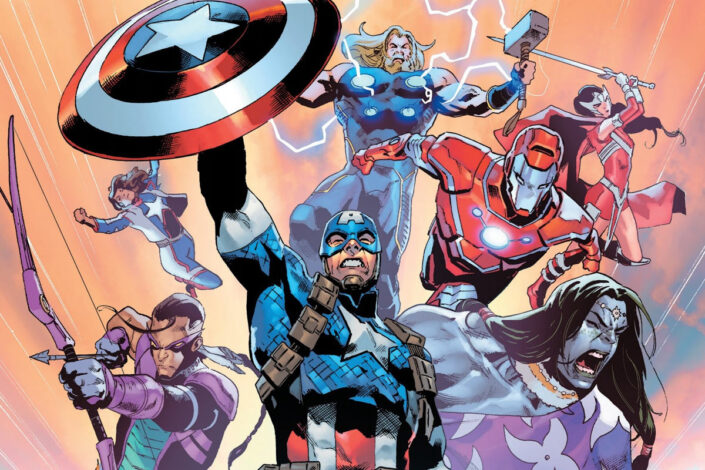
Marvel 2099 Reading Order, the dystopian future of Marvel Comics

  • by

Welcome to the future! Or, more specifically, welcome to 2099, a cyberpunk dystopia without superheroes. Marvelophiles discovered this world in 1992 with the official launch of the Marvel 2099 imprint.

Long after the original Age of Heroes had ended, society is dominated by corporate entities in this dystopian future, the most famous of which is Alchemax. The superheroes of the past have become the stuff of religion, as seen with the Church of Thor. It is harder than ever to rise above the status quo. But things are about to change, as a new Age of Heroes is about to begin…

Marvel 2099 found success with readers and expanded until the end of the ’90s. Marvel’s top talent left for Image Comics, and the entire comic book industry struggled after Marvel challenged Diamond over distribution. These turbulent times had a financial impact that affected the 2099 line and, unfortunately, led to the firing of editor Joey Cavalieri. Many of the 2099 creators quit in protest, and the line simply didn’t survive long after that.

Read More »Marvel 2099 Reading Order, the dystopian future of Marvel Comics

DCAU Comics Reading Order: The Extended DC Animated Universe

With the launch of the Batman: The Animated Series, a new and popular version of the DC Comics universe found its way to a new generation of fans. While not connected to the main line of comics, it borrowed a lot, adapted many comics into episodes, and also created new stories and characters that would eventually be later introduced in the canonical timeline of the post-Crisis DC Comics Universe.

With its easily recognizable art style and its own developing universe, Batman: TAS opened the way for what we know call the DC Animated Universe. Guided by producers Bruce Timm, Paul Dini, Alan Burnett, and others, it’s whole universe of animated shows that was created with Superman: The Animated Series (1996–2000), Batman Beyond (1999–2001), and Justice League (2001–2004) along with its follow-up Justice League Unlimited (2004–2006), but also a new line of comics was launched.

Although primarily aimed at younger readers, the comics were noted for their storytelling quality, which appealed to a broader audience. It often introduced original characters, bridged episode narratives, and explored side stories within the DCAU continuity. Serving both as accessible entry points for new readers and as canonical expansions of the animated franchise, the comics were typically written and illustrated by creators closely associated with the animated productions, including Kelley Puckett, Ty Templeton, and Rick Burchett, ensuring fidelity to the shows’ tone, characterizations, and art style.

Over time, the DCAU comics evolved into a cohesive publishing universe in their own right. The universe has been revisited through miniseries, specials, and digital-first projects well into the 2020s, establishing it as one of DC Comics’ most enduring multimedia spin-offs.

Read More »DCAU Comics Reading Order: The Extended DC Animated Universe

Buffyverse Comic Book Reboot Reading Order by Boom Studios (2019-2023)

  • by

After publishing stories in the ‘Buffy Universe’ for two decades, Dark Horse lost the licensing rights in 2018, which were transferred to Boom Studios. The publisher chose not to continue where the story was left off, instead choosing to start the series over from the beginning.

The Buffy comics released by Boom Studios are set in an alternate continuity and reimagine the series for modern readers. While the Slayer still looks like Sarah Michelle Gellar, she is back in high school, with Joss Whedon credited as story consultant.

Boom Studios quickly expanded the Buffyverse with an Angel spin-off, a crossover event, and a Willow miniseries. The publisher also released several stories set in alternate futures or realities.

However, the main Boom Studios continuity didn’t last long, as the publisher chose not to renew the license when the time came, thus bringing it to an official end in 2024.

This article is devoted to the Buffy Comics from Boom Studios, published between 2018 and 2023. For the Dark Horse Comics, you can find the reading order over here.

Read More »Buffyverse Comic Book Reboot Reading Order by Boom Studios (2019-2023)

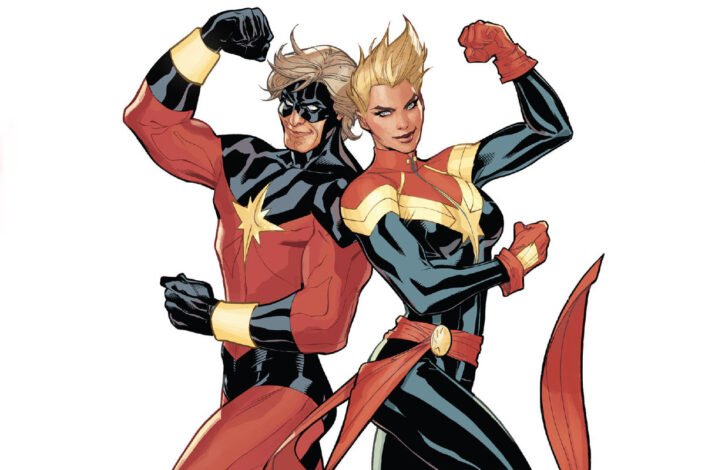
Big Barda Reading Order, The Fiercest of DC Comics Furies

With a name like that, it’s no surprise that Big Barda is no ordinary warrior among the DC Comics superheroes. She’s one of the New Gods. Created by writer and artist Jack Kirby, Barda made her first appearance in Mister Miracle #4 (1971), as part of Kirby’s “Fourth World” saga.

A warrior raised on the planet Apokolips, Big Barda was trained to lead the Female Furies, an elite fighting force in the service of the tyrant Darkseid. After aiding Scott Free, also known as Mister Miracle, to escape from their world, she accompanied him to Earth, where the two built a life together outside of Darkseid’s control. Their marriage became one of the most enduring partnerships in the DC Comics universe.

Depicted as physically imposing (way more than her husband) and exceptionally skilled in combat, Barda quickly distinguished herself as one of the most powerful female characters in the DC Universe. On Earth, she has been a member of the Justice League and also joined the Birds of Prey. 

Read More »Big Barda Reading Order, The Fiercest of DC Comics Furies

Blade Runner Comics Reading Order (Titan Comics)

In 1982, Blade Runner, directed by Ridley Scott, premiered in movie theaters and didn’t become a hit. However, it became a Marvel Comics title as it was adapted into a two-issue miniseries by Archie Goodwin, Al Williamson, and Carlos Garzon. With the film becoming a cult classic, those comics are not the last to be associated with the franchise.

Based on the 1968 novel “Do Androids Dream of Electric Sheep?” by Philip K. Dick, Blade Runner follows Rick Deckard of the Los Angeles Police Department’s Replicant Detection Unit. In Scott’s neo-noir science fiction film, it’s 2019, and Deckard is charged to hunt down a group of replicants, biorobotic androids virtually identical to adult humans, that have escaped an off-world colony and now hide on Earth. 

The cyberpunk franchise had extended to other media with novels, video games, and comics, even before the 2017 movie Blade Runner 2049, directed by Denis Villeneuve, which brought back Harrison Ford as Deckard on the big screen. This sequel set the stage for the subsequent comics series published by Titan Comics and Alcon Publishing, a collection of maxiseries focusing on LAPD’s best Blade Runner and detective, Aahna ‘Ash’ Ashina, but also a few more spin-off miniseries.

Read More »Blade Runner Comics Reading Order (Titan Comics)

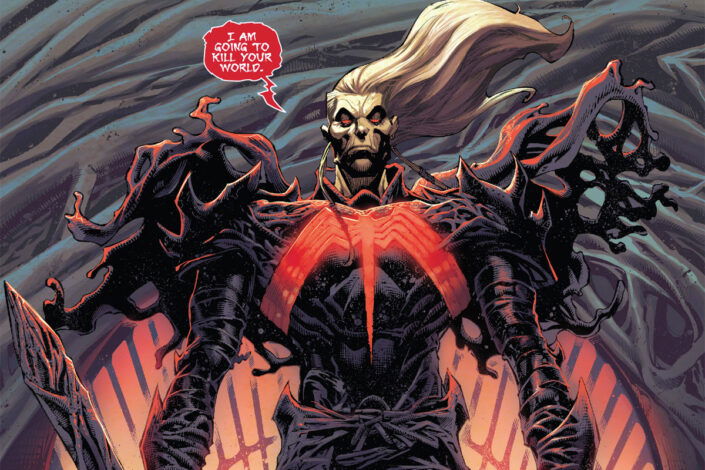
DC K.O. Reading Order for DC Comics Fighting Event

  • by

For his fall crossover event, DC Comics is going all in with the action, thanks to DC K.O., a deadly tournament. Coming from writers Joshua Williamson and Scott Snyder, the architects of the DC All-In/Absolute universes, this crossover is presented as a cosmic, bracket-style tournament where 32 of the DC Universe’s greatest heroes and villains are forced to fight for the fate of existence.

The story follows the emergence of a massive, five-tier gladiatorial arena that rises from the Earth, drawing the DC Universe’s most powerful champions into a series of escalating battles. Each level of the arena tests its combatants through increasingly brutal and symbolically resonant trials, with the ultimate goal of generating enough Omega Energy to rival Darkseid’s power. Darkseid, having ascended to a new and more dangerous form, has erased the DC Universe’s future, leaving the present as the heroes’ only chance to stop him. The tournament’s victor is destined to be crowned the new “King Omega,” a cosmic being capable of realigning the universe’s fate.

While the event features iconic heroes and villains from all over the DC Universe, it is described as a Superman story, exploring themes of morality, inner darkness, and the weight of leadership under extreme circumstances.

Read More »DC K.O. Reading Order for DC Comics Fighting Event

Thomas Wayne Reading Order (The Flashpoint Batman)

Today is Batman Day! Everybody knows the origin story of Batman. Thomas and Martha Wayne went out with their son Bruce for a family outing in town. In the infamous Crime Alley, they are murdered in a street mugging gone wrong. Only one of them survives and ultimately becomes Batman.

In the 2011 reality-shattering crossover event Flashpoint, written by Geoff Johns and pencilled by Andy Kubert, the one who survives is not young Bruce, but his father, the renowned Gotham City surgeon and philanthropist Thomas Wayne. 

Flashpoint begins when Barry Allen, the Flash, wakes up in an altered timeline where the world is on the brink of collapse. Wonder Woman and Aquaman are at war, Superman is missing, and the Justice League was never formed. At the heart of this reality is a changed Gotham City, where crime is rampant and hope is scarce. This is not the world Barry knows, and at its center is a very different Batman.

Read More »Thomas Wayne Reading Order (The Flashpoint Batman)

Conan the Barbarian from Titan Comics, a Simple Reading Guide

There is no more iconic pulp hero than Conan the Barbarian. Born from the imaginary mind of writer Robert E. Howard, Conan made his debut in 1932 in the pages of the Weird Tales magazine.

His creator wrote 21 stories featuring Conan before his passing in 1936. However, Conan’s adventures didn’t stop there: fantasy writer Lyon Sprague de Camp obtained the rights, rewrote and expanded the tales, and the character went on to solidify his place in pop culture through comic book adventures.

Capitalizing on the sword-and-sorcery vogue of the 70s, Conan became a commercial success for Marvel in this decade, and the publisher released stories with the Barbarian until 1993 where he was often partnered with Red Sonja. Dark Comics acquired the rights for a time (2003-2018), before Conan returned to Marvel Comics in 2018. This run only lasted 25 issues, and stopped when Titan Comics acquired the license in 2022, in collaboration with Heroic Signatures.

Read More »Conan the Barbarian from Titan Comics, a Simple Reading Guide

Buffyverse Comics Reading Order, The Dark Horse and IDW Years

  • by

Welcome to Sunnydale, a California city located on a Hellmouth, a mystical portal attracting supernatural evils, and the setting of the Buffy the Vampire Slayer tv series. Vampires and other demons are omnipresent and they can prey easily on their victims in the many dark alleys, abandoned houses, factories, and such. Well, that is, if they don’t encounter a little blonde with a stake named Buffy! 

Buffy Summers is the Chosen One, granted powers to fight and kill vampires, demons, and other supernatural creatures. She was a cheerleader in high school when she learned about her destiny and accidentally burned down the school gym while fighting vampires before moving to Sunnydale with her mother for a new start in life. She has the surprise to discover that vampires are well established in her new little town, and she now must juggle between the challenge of her teenage life and her mission as a Slayer. She killed many vampires, saved many lives and lived many other dangerous, dark, funny adventures with her family and friends during the seven seasons comprising the series. 

However, Buffy’s story didn’t stop there! The vampire slayer also lived many adventures in the pages of several comic books! Publisher Dark Horse Comics released the first Buffy comic in 1998, as an extension to the television series, but not officially part of the canon. It will continue to do so until 2003, telling parallel adventures of Buffy and the Scooby Gang. 

Read More »Buffyverse Comics Reading Order, The Dark Horse and IDW Years

Groot Reading Order

A well-known member of the Guardians of the Galaxy, Groot didn’t start out as a hero, but as a villainous alien intent on capturing humans for experimentation. He first appeared in Tales to Astonish #13 (November 1960), created by writer Stan Lee, artist Jack Kirby and scripter Larry Lieber. Of course, this is not the Groot we know today.

In 2006, he was reimagined as a heroic character in Annihilation: Conquest – Star-Lord #1 (2007), written by Keith Giffen. Hailing from the planet X, a world characterised by sentient plant life, Groot belongs to the Flora Colossus species. Distinguished by his arboreal physiology and limited verbal expression, he primarily communicates through tone, inflection, and context, which is understood by those familiar with him, such as his friend Rocket Raccoon. Despite his linguistic limitations, Groot exhibits considerable emotional depth and intelligence, as well as formidable strength and regenerative capabilities. He often serves as both protector and moral anchor within his narrative contexts.

Throughout his cosmic adventures, Groot has demonstrated several unique abilities, including regenerative healing, size manipulation, limited photokinesis, and the power to grow and control plant matter. He has died and regenerated multiple times, with each incarnation sometimes being treated as a rebirth or a new version of the character. The cinematic version, voiced by Vin Diesel, introduced in 2014 in the Guardians of the Galaxy movie directed by James Gunn, made that element quite popular with “Baby Groot” and later “Teen Groot.”

In solo or with his friends, Groot certainly went through epic adventures in space during the last two decades. So, let’s follow the guide!

Read More »Groot Reading Order