Skip to content

Fabien

Co-founder of Comic Book Treasury, your Hellboy Specialist and the man behind the Batman Modern Age and the Amazing Spider-Man Guides.
The Outerverse Reading Order, The Horror Universe by Mike Mignola and Christopher Golden

  • by

Mostly known today for creating Hellboy and its expanded universe, Mike Mignola has also written (and sometimes drawn) a variety of other stories exploring similar themes full of supernatural, folklore, horror, and other paranormal elements.

With Christopher Golden, he co-created Baltimore in 2007, an illustrated novel that led to a comic-book series published by Dark Horse Comics, then to an expanded universe called “The Outerverse.”

Baltimore, or, The Steadfast Tin Soldier and the Vampire introduced us to Lord Henry Baltimore. The story begins in November 1914. A British officer during World War I, Lord Baltimore is left for dead on a battlefield in the Ardennes Forest. When he awakes, he sees the most unexpected scene: giant bat-like creatures are feeding on his dead men.

When he is attacked, he fights back and wound the vampire who tried to feed on him. This action inadvertently changes Baltimore himself, but also in the course of the war, and of human history. 

Read More »The Outerverse Reading Order, The Horror Universe by Mike Mignola and Christopher Golden

Maximum Security Reading Order, a Marvel Crossover

  • by

At the end of the year 2000, Marvel Comics launched a crossover event titled Maximum Security that was written by Kurt Busiek and drawn by Jerry Ordway–at least the three-issue self-titled limited series.

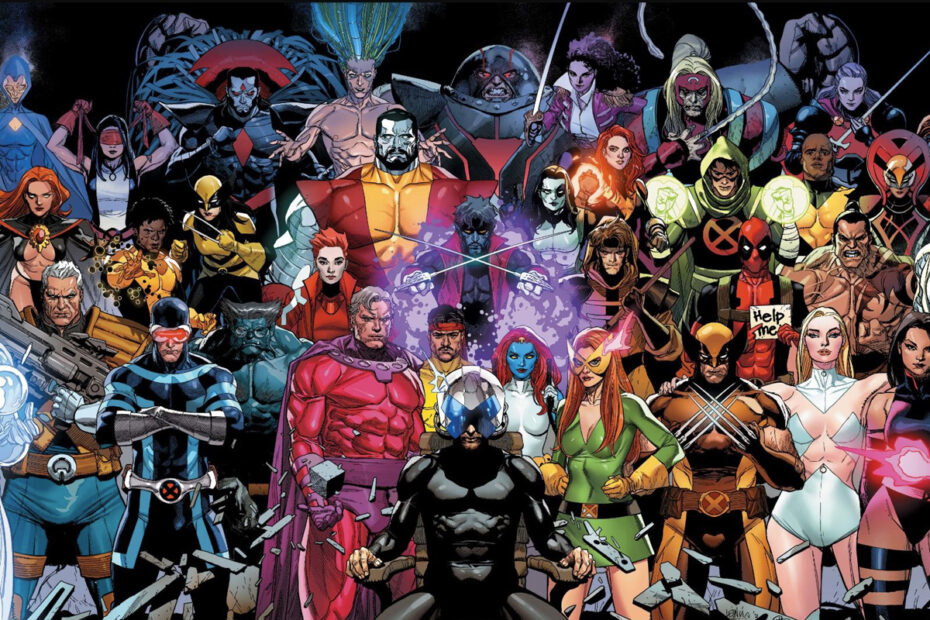
Here is how Marvel presents the main plot: “Welcome to Earth: penal colony for the universe’s deadliest villains! When the civilized alien races-influenced by the Supreme Intelligence and his newly-evolved Kree-tire of Earth’s involvement in their affairs, they decide to make it their new prison planet! Featuring all the world’s greatest heroes-including the Avengers, the X-Men, and the Fantastic Four–against the most bizarre and deadly threats they can conceive of!”

Influenced by Australian history, and more precisely the way the British used Australia as a penitentiary–sending their convicts so far they would never come back to England!–, Busiek’s Maximum Security introduced the idea that Earth would become a prison for the scum of the galaxy. It was introduced as a way for the Intergalactic Council to deal with Earth–and its interfering heroes.

Maximum Security is composed of a three-issue limited series and almost 20 tie-in issues.

What to read before Maximum Security?

Thor, Tigra, Starfox, Moondragon, and Monica Rambeau are the Avengers in Space in the mini-series Avengers Infinity by Roger Stern and Sean Chen that set up the events of Maximum Security.

Read More »Maximum Security Reading Order, a Marvel Crossover

Luke Cage Reading Order, Marvel’s Power Man

At the beginning of the 1970s, Blaxploitation movies became quite popular and Marvel Comics wanted to cash in on the trend–as well as with other trends, see Ghost Rider or Werewolf by Night. Luke Cage was then introduced as an urban African-American hero like no other.

Described at the time as “a combination of Superman and Shaft,” Luke Cage was created by Archie Goodwin, George Tuska, Roy Thomas, and John Romita Sr. He made his first appearance in Luke Cage, Hero for Hire #1 (June 1972). He was the first black American superhero to have his own comic book series at Marvel Comics (Black Panther is not an American!).

Introduced as a prisoner in “Little Alcatraz,” the Seagate Prison, Carl Lucas is recruited by research scientist Dr. Noah Burstein to be a test subject in a cellular regeneration experiment based on a variant of the Super-Soldier process. Lucas gains superstrength and escapes. He ends up in New York City’s Harlem neighborhood where he grew up and reinvents himself. Now call Luke Cage, the “Power Man,” he becomes a freelance “hero for hire.”

The Hero for Hire comics was not a hit, but Luke Cage rapidly found his place in the Marvel universe. He befriended the Fantastic Four, fought next to the super-team the Defenders, developed a relationship with Dr. Claire Temple, and teamed up with Iron Fist and Misty Knight…

Read More »Luke Cage Reading Order, Marvel’s Power Man

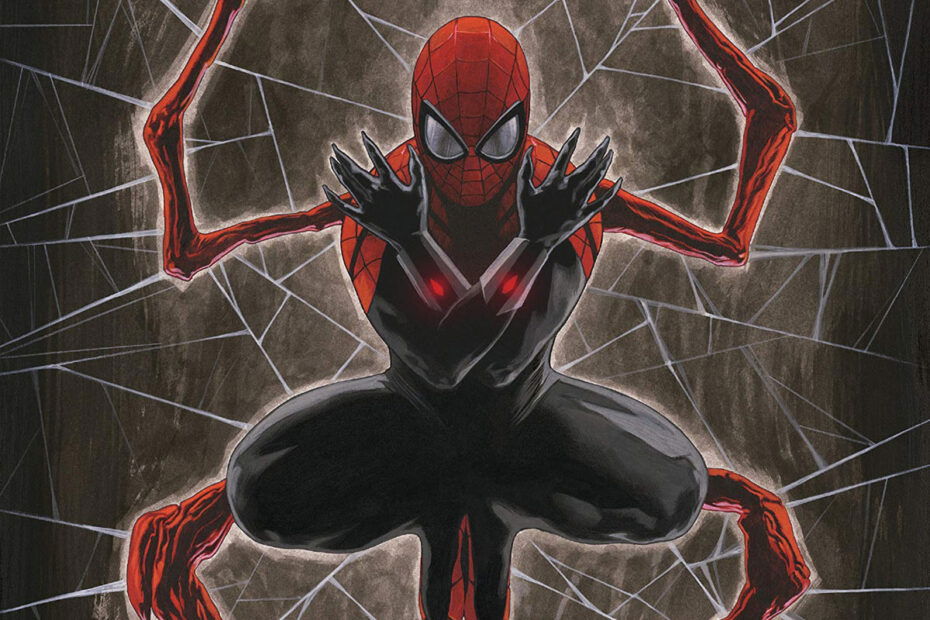
Spider-Man Dark Web Reading Order, a Marvel crossover featuring Spider-Man and the X-Men

Barely one month after the A.X.E.: Judgment Day event, the X-Men are caught in a new crossover. However, this one also revolves around Spider-Man. Written by Zeb Wells and drawn by artist Adam Kubert, Dark Web is about clones. Here is the official synopsis:

“The worlds of Spider-Man and the X-Men collide, thanks to the unholy alliance of Madelyne Pryor, AKA the Goblin Queen, and Ben Reilly, now known as Chasm! The two most famous and famously wronged clones are back…and they’re going to claim what’s rightfully theirs! The Dark Web they spin over Manhattan is going to change the NYC skyline forever!”

So, the Dark Web event involves Spider-Man and the X-Men, but also Mary Jane Watson, Black Cat (Felicia Hardy), Venom (Eddie Brock), Ms. Marvel (Kamala Khan), and Scarlet Spider (Ben Reilly).

Read More »Spider-Man Dark Web Reading Order, a Marvel crossover featuring Spider-Man and the X-Men

Sandman (Wesley Dodds), a pulp hero in the DC Universe

  • by

Long before Neil Gaiman introduced his version of the Sandman in the DC Universe, another Sandman haunted the pages of comic books. For a long time, I mean 60 years. The original Sandman was one of the first “superheroes,” a DC Golden Age superhero.

Really, this Sandman was more of a pulp hero. Created by writer Gardner Fox and artist Bert Christman for Adventure Comics #40—but he appeared a bit earlier in the New York World’s Fair Comics #1 (April 1939), a book published on the occasion of the 1939 World’s Fair—, The Sandman was one of the one original mystery men, a vigilante wearing a green business suit, a fedora, and a World War I gas mask, who used a gun emitting a sleeping gas to incapacitate criminals.

Read More »Sandman (Wesley Dodds), a pulp hero in the DC Universe

Inhumans Reading Order (with Black Bolt, Medusa, Karnak, Lockjaw and Maximus)

While they are often compared to the X-Men, the Inhumans occupy a unique, cosmic corner of the Marvel Universe. Created by the legendary duo Stan Lee and Jack Kirby in 1965 (Fantastic Four #45), these powerful beings aren’t just “born with it,” they are the product of ancient alien engineering and a ritualistic transformation that changes their lives forever.

Inhumans vs. Mutants: What’s the Difference?

The primary difference lies in the source of their power. While Mutants carry the X-Gene that naturally activates during puberty, Inhumans are the result of Kree science experiments. To gain their abilities, an Inhuman must undergo Terrigenesis, a process where they are exposed to the Terrigen Mist (vaporized Terrigen Crystals).

Originally intended as weapons for the Kree-Skrull War, the Inhumans instead formed a secluded, highly advanced society governed by the Royal Family and the Genetic Council.

Read More in The Origins of The Inhumans, Marvel’s Royal Family.

Meet the Inhuman Royal Family

To understand the best Inhumans stories, you have to know the key players living in their lunar kingdom of Attilan:

  • Black Bolt: The King, whose voice is so destructive that a mere whisper can level a city.
  • Medusa: The Queen, with powerful, prehensile hair.
  • Crystal: Mistress of the elements (fire, water, earth, air).
  • Karnak: The philosopher who never underwent Terrigenesis but can see the flaw in all things.
  • Maximus: Black Bolt’s brother, a mad genius.
  • Lockjaw: The fan-favorite giant bulldog with the power of teleportation.

From Classic Lore to the NuHumans

The Inhuman mythos expanded significantly in recent years with the arrival of NuHumans. These are individuals with dormant Inhuman DNA living among humans who were transformed when a Terrigen Cloud drifted across Earth. This era gave us modern icons like Kamala Khan (Ms. Marvel), Daisy Johnson (Quake), and Moon Girl.

With over 50 years of complex political drama, cosmic wars, and genetic evolution, diving into their history can be daunting. Whether you’re a fan of the classic Kirby era or the modern “Inhumanity” event, here is the definitive Inhumans reading order to guide you through the mists.

Read More »Inhumans Reading Order (with Black Bolt, Medusa, Karnak, Lockjaw and Maximus)

Deadman Reading Order (DC Comics)

  • by

Created by writer Arnold Drake and artist Carmine Infantino for DC Comics in the pages of Strange Adventures #205 (October 1967), Deadman was a tough sell at first as the Comics Code Authority frightened the editor into staying away from potential horror material. After all, Deadman is a ghost.

It’s a bit more complicated than that as the late 1960s saw an interest in the mystic growing in America. Drake was interested to use the Zen movement, Hare Krishna, and things like that in a story to explore the “notion of a being that was neither living nor dead.”

The story begins when Boston Brand, a circus trapeze artist who performed under the name Deadman, is shot dead during a performance by the mysterious murderer known as the Hook. Brand didn’t really die as a Hindu god named “Rama Kushna” gave his spirit the power to possess any living being in order to find his killer.

Even if Arnold Drake left the title after two issues over creative differences, Deadman continued his search—and found the truth. After that, when Neal Adams took over the series, Deadman got a new mission: to establish a balance between Good and Evil. Nevertheless, Strange Adventures was canceled soon after.

Deadman became a recurring supporting character in the DC Universe. In the mid-1980s, he finally got a new series, but it was a short one. It also was not the last one as the character continued to appear in limited series as well as a guest star in other titles. He became part of the mystical part of the DC Universe, which led him to the Justice League Dark (during the New 52 era and beyond).

Read More »Deadman Reading Order (DC Comics)

Ghost Rider Reading Order

  • by

Marvel introduced a western character named Ghost Rider in 1967, but he is now known as the Phantom Rider. The Ghost Rider we are talking about here made his burning entrance in 1972 in Marvel Spotlight #5 and was created by Roy Thomas, Gary Friedrich, and Mike Ploog.

The original idea behind Ghost Rider came from Gary Friedrich as he developed a villain to be used in the page of Daredevil. Intrigued, Roy Thomas decided that the character should have his own series. He even suggested that the costume should be inspired by one Elvis wore in his comeback special in 1968. Mike Ploog took their concept and designed the biker, introducing the head on fire just because he thought it looked cool.

There is more than one Ghost Rider. The first was Johnny Blaze, a stunt motorcyclist who gave his soul to Mephisto to save his adopted father’s life. After that, he discovers that he was bonded with the demon Zarathos. Now, he is forced to punish the wicked and evil as the Ghost Rider, a violent biker with a flaming head. Though, he only transformed when he is in the presence of evil.

At the beginning of the 1990s, Marvel introduced a new Ghost Rider, the young Danny Ketch. In 2014, it was the turn of Robbie Reyes, a Mexican-American resident of East Los Angeles, who’s not a biker. His ride is a muscle car.

Others became temporarily Ghost Riders, and the mythology behind the characters, as well as its history, evolved through the years. As the host or the ride changed, the Ghost Rider’s abilities also changed. Every rider is different, but the fight against Evil never stops.

Read More »Ghost Rider Reading Order

Thanos Reading Order

The Marvel Comics supervillain Thanos first appeared in The Invincible Iron Man #55 in February 1973. He was created by writer and artist Jim Starlin, who was inspired by Jack Kirby’s work on DC’s New Gods. He was Marvel’s response to Darkseid, following instructions from Roy Thomas, but Starlin also drew inspiration from his college psychology classes when creating Thanos and Drax the Destroyer.

Hailing from Titan, Saturn’s moon, Thanos is the son of the Eternals A’lars and Sui-San. After falling in love with the physical embodiment of Death, Thanos finally became the murderous nihilist monster feared by the universe. He killed millions on Titan, but that was just the beginning. In order to do more, he started seeking universal power in the form of the Cosmic Cube.

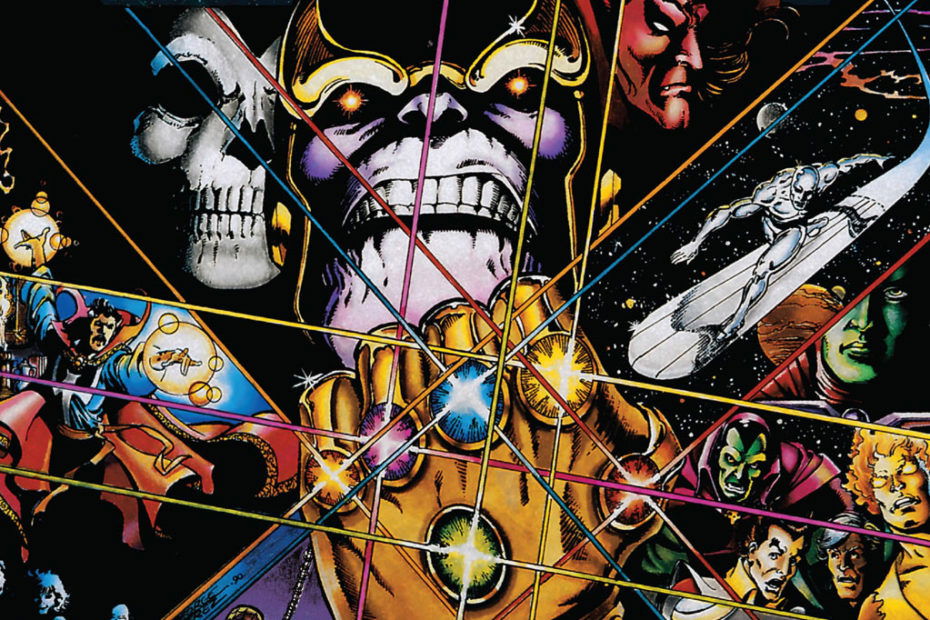
This quest led to the creation of his enemy, Drax the Destroyer, and confrontations with Captain Marvel and other superheroes. But his story ended… for a time. He was resurrected in the 1990s, when Jim Starlin launched his Infinity Saga — a classic Marvel tale of epic proportions. Thanos resumed his quest to find the Infinity Gems.

After that, he became a constant menace, concocting evil plans that only made sense to him. Even when defeated, he always came back.

Read More »Thanos Reading Order

Mister Miracle Reading Order

  • by

During his brief but influential stint at DC Comics in the 1970s, Jack Kirby introduced revolutionary ideas that continue to affect the DCU to this day. He was the king of comics for a reason.

His most notable work for DC Comics was known as “The Fourth World“, which consists of several interconnected series based on a new mythology surrounding the New Gods. The core titles of the Fourth World saga were New Gods, The Forever People, and Mister Miracle. The latter is the focus of our article today.

Introduced in Mister Miracle #1 (April 1971), Scott Free is the son of the sage Highfather, ruler of New Genesis, the positive counterpart to the hellish planet Apokolips ruled by Darkseid. To stop the war between the two planets, heirs were exchanged. As a result, Scott Free was raised in the brutal “Terror Orphanages” overseen by Granny Goodness on Apokolips, without knowledge of his true origin. Despite his indoctrination, Scott rejected the oppressive regime and eventually escaped.

While part of the underground Resistance movement on Apokolips, Scott encountered Big Barda, a formidable warrior who would later become his wife. He ultimately fled to Earth, where he met Thaddeus Brown, a retired circus performer known by the stage name Mister Miracle. Following Brown’s death, Scott adopted his mentor’s identity and continued the legacy of escape artistry, aided by Brown’s assistant Oberon.

Though residing on Earth, Scott remained engaged in the broader struggle against Darkseid and the forces of Apokolips. Alongside Big Barda, he continued to oppose their tyrannical influence and later aligned himself with the Justice League. Like the other New Gods, he died at some point and was later resurrected.

Read More »Mister Miracle Reading Order