Skip to content

Fabien

Alias Jessica Jones Reading Order

  • by

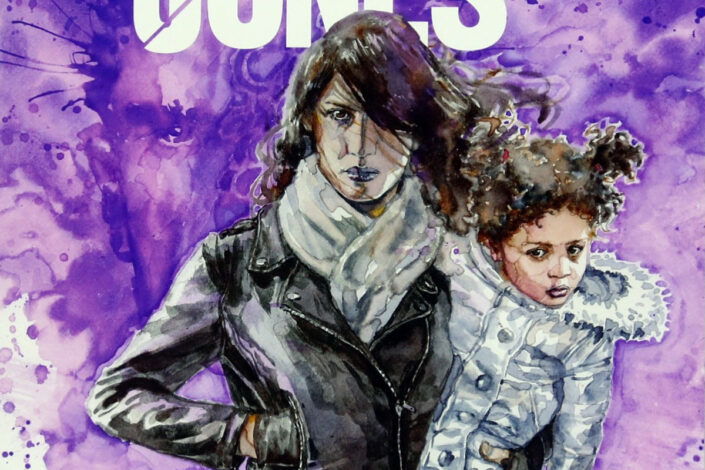
Popularized by the Netflix television series, Jessica Jones was created in the pages of a Marvel comic book series by writer Brian Michael Bendis and artist Michael Gaydos. She first appeared in Alias #1 (November 2001), published under Marvel’s MAX imprint, which allowed for explicit language, sexual content, and adult themes.

Jessica Jones is a private investigator with a past tied to the Avengers. Once a costumed superhero operating under the name Jewel, she abandoned that identity after a traumatic career marked by failure and psychological abuse. By the time Alias begins, she is a chain-smoking, self-destructive alcoholic and the owner and sole employee of Alias Investigations, a small New York detective agency specializing in cases involving superhuman individuals.

The early storyline follows Jessica as she navigates morally compromised investigations and personal demons, including a case involving the exposure of a superhero’s secret identity, which draws her into a larger and increasingly dangerous conspiracy. Central to her backstory is her history of manipulation and control by the villain Zebediah Killgrave, the Purple Man, an experience that defines much of who she became.

Although Alias was published under the MAX imprint, Bendis moved Jessica Jones to the core Marvel Universe. Subsequent stories fully integrated her into mainstream continuity, establishing that she attended Midtown High School alongside Peter Parker and later became a member of the Avengers during the New Avengers era and started a romantic relationship with Luke Cage. Over time, Jessica Jones evolved from a noir-styled deconstruction of superhero tropes into a recurring figure within Marvel’s primary ensemble of characters.

Read More »Alias Jessica Jones Reading Order

Annihilation: Conquest Reading Order, a Marvel Cosmic Event

  • by

Annihilation: Conquest Reading Order

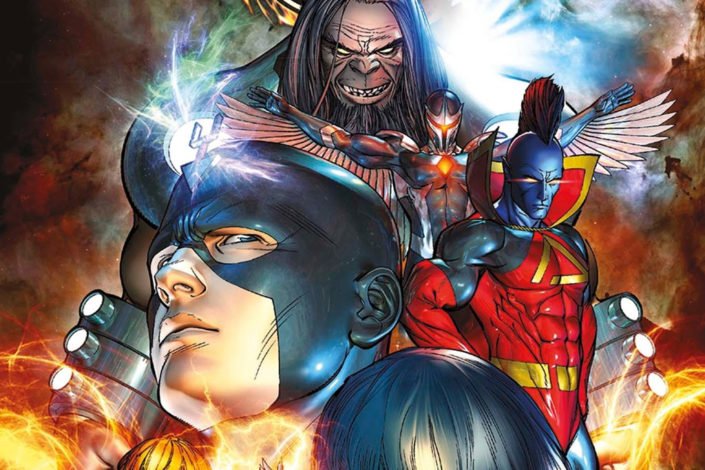
Almost directly after the first Annihilation event (see reading order), Marvel published its sequel as part of the modern Marvel Cosmic saga. Annihilation: Conquest is a 2007-08 crossover storyline that focuses on Marvel’s cosmic heroes defending the universe against the Phalanx, now led by Ultron. 

Here is the official synopsis: In the aftermath of the Annihilation War, a devastated galaxy struggles to rebuild. The Nova Corps are destroyed, leaving only Richard Rider. Who will rise to guard the galaxy against the threat of Ultron? When the Kree homeworld is invaded by the techno-organic Phalanx, Star-Lord must lead a ragtag team into battle behind enemy lines with a lineup that includes Mantis, Bug, Groot, and Rocket Raccoon! Meanwhile, the new Quasar seeks a mysterious savior — and Nova and Gamora are taken over by the Phalanx! Who is the haunted loner called Wraith? Can the New Mutants’ Warlock free Nova? And what are Ultron and the Phalanx really after?

What to read before Annihilation: Conquest?

Being a direct sequel to Annihilation, it is necessary to read that first cosmic event (see reading order). Once this one ended, only three Nova issues were published before Annihilation: Conquest began – they are collected with the rest of the event or here.

  • Annihilation Omnibus
    Collects Drax The Destroyer #1-4, Annihilation: Prologue, Annihilation: Nova #1-4, Annihilation: Silver Surfer #1-4, Annihilation: Super-Skrull #1-4, Annihilation: Ronan #1-4, Annihilation #1-6, Annihilation: Heralds Of Galactus #1-2 And Annihilation: Nova Corps Files.

Read More »Annihilation: Conquest Reading Order, a Marvel Cosmic Event

Jonathan Hickman X-Men Reading Order – The Age of Krakoa

Welcome to Part 6 of our ongoing effort to compile a comprehensive X-Men Reading Order through the lens of collected editions. If you’re just joining us, you can start from the beginning with Part 1: The Silver Age & Chris Claremont (1963–1991), then follow through Part 2: Age of Apocalypse & Onslaught (1991–2001), Part 3: From the Grant Morrison Era to Civil War, Part 4: The Road to Avengers vs. X-Men, Part 5: Marvel NOW to ResurrXion, and Part.7: The Second Age of the X-Men of Krakoa.

After the Age of X-Man event, Marvel set out to redefine the X-Men for a new era and entrusted writer Jonathan Hickman to lead the charge. He began with the groundbreaking House of X / Powers of X miniseries, which reimagined the X-Men’s place in the Marvel Universe with a bold new premise.

In this story, Professor X unveils the island nation of Krakoa, a sovereign mutant homeland offering humanity miraculous scientific advancements in exchange for recognition. “While you slept, the world changed,” the story begins. Xavier’s dream of peaceful coexistence is over. In its place rises a new vision, one that spans centuries and ambitions to challenge not just human prejudice, but the inevitability of machine-dominated futures.

Following this successful relaunch, Marvel expanded the line under the banners of Dawn of X and later Reign of X, introducing a wave of interconnected series, new mutant teams, political intrigue, and existential threats, all orbiting the fragile promise of the Krakoan dream.

Read More »Jonathan Hickman X-Men Reading Order – The Age of Krakoa

The Incal Reading Order, The French Comic Book by Jodorowsky and Moebius

  • by

The Incal is a French graphic novel series (“L’Incal” in French) written by Alejandro Jodorowsky and illustrated by Moebius (aka Jean Giraud) that started in 1980 in the pages of “Métal hurlant.”

As the official synopsis explains it, The Incal is about the tribulations of the shabby detective John Difool as he searches for the precious and coveted Incal. John Difool, a low-class detective in a degenerate dystopian world, finds his life turned upside down when he discovers an ancient, mystical artifact called The Incal. Difool’s adventures will bring him into conflict with the galaxy’s greatest warrior, the Metabaron, and will pit him against the awesome powers of the Technopope. These encounters and many more make up a tale of comic and cosmic proportions that has Difool fighting for not only his very survival, but also the survival of the entire universe.

Read More »The Incal Reading Order, The French Comic Book by Jodorowsky and Moebius

Cassandra Cain Reading Order (Batgirl, Orphan, Black Bat)

  • by

Created by Kelley Puckett and Damion Scott, Cassandra Cain is a member of the Batfamily who made her first appearance in Batman #567 (July 1999), during the No Man’s Land event. She then became the official Batgirl and got her own solo series. She’s also known as Black Bat and Orphan.

Cassandra Cain is the deadliest member of the Batfamily. The daughter of assassins David Cain and Lady Shiva, she was raised to be a killer. In fact, she was conditioned to become the world’s greatest assassin. To this end, she was deprived of speech and human contact during her childhood, which enabled her to develop an incredible ability to interpret body language to the extent that she could read complex thoughts. In essence, body movement was her first language, and she didn’t speak for a long time. This unique way of communicating has made her a martial artist like no other.

Batman took her under his wing and, with Barbara Gordon’s blessing, she soon became the new Batgirl. This happened before the New 52 era. After being reintroduced in the DCU in the Batman & Robin Eternal series, she got a new origin story.

Read More »Cassandra Cain Reading Order (Batgirl, Orphan, Black Bat)

Annihilation Reading Order, a Marvel Cosmic Event

  • by

Annihilation Reading Order

At a time when Marvel was all about its Civil War, another massive event took place. This 2006 cosmic crossover storyline was written by Keith Giffen, Dan Abnett, Simon Furman, Javier Grillo-Marxuach & Andy Lanning, with art by Renato Arlem, Giuseppe Camuncoli, Andrea Di Vito, Scott Kolins, Jorge Lucas, Mike McKone, Gregory Titus, and Kev Walker. It was the beginning of the modern Marvel Cosmic saga.

Here is the official synopsis: Annihilus, lord of the Negative Zone, has declared war! And as his unstoppable Annihilation Wave swarms into the Marvel Universe, demolishing all in its path, only a handful of heroes can resist the destruction! As Nova learns the ways of war from Drax the Destroyer, the Silver Surfer seeks out his former master Galactus for aid, the Super-Skrull fights for his son’s life and Ronan the Accuser faces Gamora and her woman warriors! Nova and Quasar’s army leads the charge, but as heroes fall and Annihilus rises, the universe’s one remaining hope may be Thanos, the Mad Titan.

What to read before Annihilation?

Most of the Annihilation prelude miniseries are considered part of the event, but one is often not treated as such:

Read More »Annihilation Reading Order, a Marvel Cosmic Event

Old Man Logan Reading Order

  • by

Old Man Logan Reading Order

In Marvel Comics, Wolverine is one of the most popular characters. So much that there is more than one! We are not speaking about X-23, maybe the most famous Wolverine after the Original, but about Old Man Logan today. But be careful as there are actually three versions of the older and grimmer Logan!

The original Old Man Logan made his first appearance in Fantastic Four (1998) #558 before appearing in Wolverine #66. Created by Mark Millar and Steve McNiven, he lives in a dystopian future where the villains won — Earth-807128, aka the Wastelands timeline. He is mostly the star of a famous storyline and made a few other appearances.

Another version of the character was introduced in Secret Wars and found its way into Marvel’s main continuity after his Earth-shattering events. If you thought that the two characters were the same Old Man Logan, nobody could blame you! It was first suggested as such, with the character blending elements from the original dystopian story with elements from 616 Wolverine. It was later explained that this version was this was another Old Man Logan. And, let’s not forget that an alternate version of the second Old Man Logan was introduced in Edge of Venomverse #4.

Today, we’re taking a closer look at both versions of Old Man Logan—to avoid any confusion—starting with the story that began it all, then moving on to the second Old Man Logan’s many adventures across the Marvel Universe.

Read More »Old Man Logan Reading Order

New Mutants Reading Order (The X-Men)

  • by

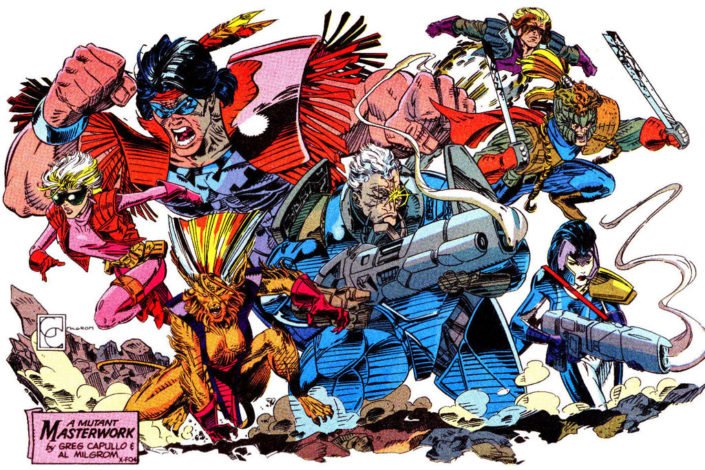
With Chris Claremont at the helm, the X-Men became big business for Marvel Comics in the ’80s. Marvel editor-in-chief Jim Shooter decided to expand the franchise with a spin-off call The New Mutants. Claremont was a bit reluctant to do it at first, but the series will soon—with the arrival of artist Bill Sienkiewicz (Bob McLeod was the artist at the beginning)—become something different and a real success.

But what New Mutants is about? Here is the official synopsis of the beginning of the series. Meet the future of the X-Men! Karma. Wolfsbane. Sunspot. Cannonball. Moonstar. They’re teenagers, thrown together by the X-gene that makes them different. Follow the adventures of these young mutants from Karma’s first meeting with Spider-Man and the Fantastic Four to their early days at the Xavier School!

The New Mutants’ on-the-job training begins in earnest with battles against Sentinels, the Silver Samurai, Viper, and the Hellfire Club; a team-up with Spidey and Cloak and Dagger — and the team gets a taste of life as X-Men in a disturbing encounter with the Brood! Plus: Meet fiery new recruit Magma, and discover how Colossus’s sister, Illyana, became the demon sorceress known as Magik!

Being part of the X-Men Universe, you can find how to read the New Mutants with the other X-series in our complete X-Men Reading Order.

Read More »New Mutants Reading Order (The X-Men)

Spider-Man by J. Michael Straczynski Reading Order

  • by

From 2001 to 2007, J. Michael Straczynski was the main writer of The Amazing Spider-Man series. An important run, even if Marvel’s editors ruined it at the end (Civil War! One More Day!!!). In January 1999, Howard Mackie started to write volume 2 of the series, and Straczynski took over with issue #30.

His run is mostly famous for his great and lengthy “Spider-Totem” arc that questioned the source of Spider-Man’s powers (Magic?). Also, Aunt May discovered the truth about her nephew, Mary Jane came back, and Peter started to teach at his former high school.

Of course, with the Civil War, things didn’t go well for Spidey, everything changed until it was time to clean up and let another writer take over (after a short while, Dan Slott started his 10-year run).

What to read before Spider-Man by J. Michael Straczynski?

First, you can check out our Spider-Man Reading Order that covers the adventures of Spidey from the start to today.

As J. Michael Straczynski took over The Amazing Spider-Man after Howard Mackie, you might be tempted to take a look at what was done at that time (it’s optional, of course). Mackie’s run is not fully collected for now, but you can find the last storyline, which was published after the Marvel Crossover event Maximum Security.

Read More »Spider-Man by J. Michael Straczynski Reading Order

Zero Hour Reading Order, a Crisis in Time

  • by

Zero Hour Reading Order

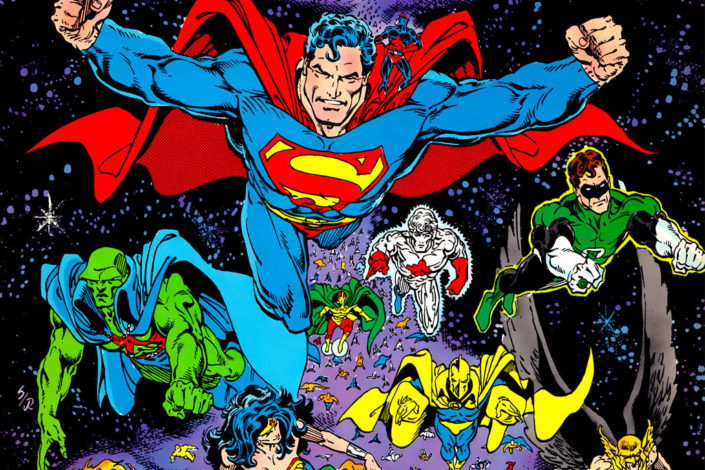
Written and illustrated by Dan Jurgens, along with Jerry Ordway and others, Zero Hour: A Crisis in Time was the major event of 1994 in the DC Universe. In fact, it was the biggest since 1985 Crisis on Infinite Earths as it involved almost every DC Universe monthly series published at the time, and, in the end, some past events were changed—and some series were rebooted.

Here is the official synopsis of Zero Hour: A Crisis in Time: All of reality comes under attack when a mysterious force of entropy begins slowly erasing time itself—making its way from both the past and future toward the present! As history itself unravels around them, the heroes of the world—including Superman, Batman, Wonder Woman, The Flash, The Justice Society, and the Titans—scramble to fix the broken timestream. But even if they stop the true source of the chaos, the world they save will never be the same!

What to read before Zero Hour: A Crisis in Time?

Being an event affecting all of the DC Universe, every character came in with baggage, but what’s really important is the motivations of Hal Jordan. Here is what is recommended before reading Zero Hour: A Crisis in Time:

Read More »Zero Hour Reading Order, a Crisis in Time