Skip to content

Carole

Co-founder and owner of Comic Book Treasury. The woman behind the Batfamily Guide (and the many Robins Guides), the Fables Universe and some of your favorite Spider-People among others!

DC Comics Bombshells Reading Guide, a reality where superheroines guard the homefront during World War II

  • by

DC Comics Bombshells Reading Guide

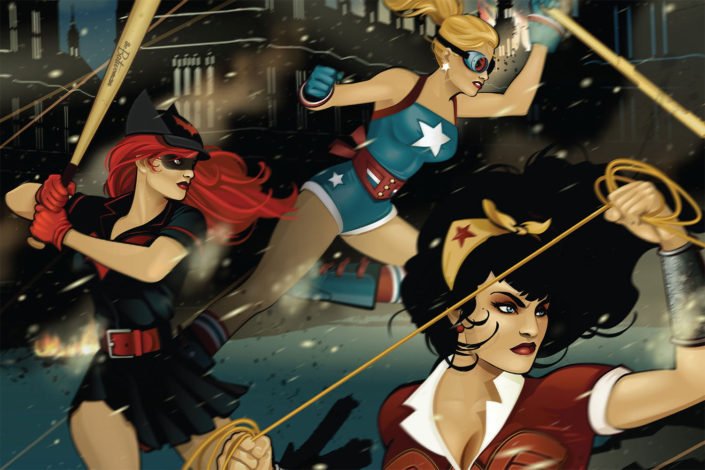
First and foremost, DC Comics Bombshells is a line of variant covers and collectible statues created by Ant Lucia and featuring superheroines reimagined in a 1940s-era pinup style. The line was launched in 2013 with Wonder Woman and the brand became soon enough popular enough for DC Comics to expand the line with art prints, T-shirts, mugs but also an out-of-continuity series.

Written by Marguerite Bennett and illustrated by rotating artists, DC Comics Bombshells is a reality where female superheroes guard the homefront during World War II. When the story began, Kate Kane is the Batwoman, a player in an all-women’s baseball league where the players’ identities are kept secret to protect them from sexist backlash. Kate Kane plays baseball and fights crime in her Batwoman identity. Soon enough, she is recruited by Commander Amanda Waller who offers her to join her Bombshell, her team working to end the war.

Bombshells is an ensemble comic book series, in which you can also find alternate versions of Queen Mera Curry (Aquawoman), The Question (Renee Montoya)Stargirl (Kortni Duginovna), Supergirl (Kara Starikov), Diana Prince (Wonder Woman), Zatanna “Zee” Zatara, and more.

As a digital-first ongoing series, Bombshells ran for 100 digital issues (the equivalent of 33 print issues), with the final issue released in August 2017. That same month, the second digital-first series named Bombshells United was launched, picking up from the end of the previous Bombshells series. The first arc introduced Bombshells versions of Donna Troy and Cassie Sandsmark. This second series was less successful as the title was canceled after 38 digital issues and 19 print issues.

Read More »DC Comics Bombshells Reading Guide, a reality where superheroines guard the homefront during World War II

Elektra Reading Order, Marvel’s most deadly assassin

  • by

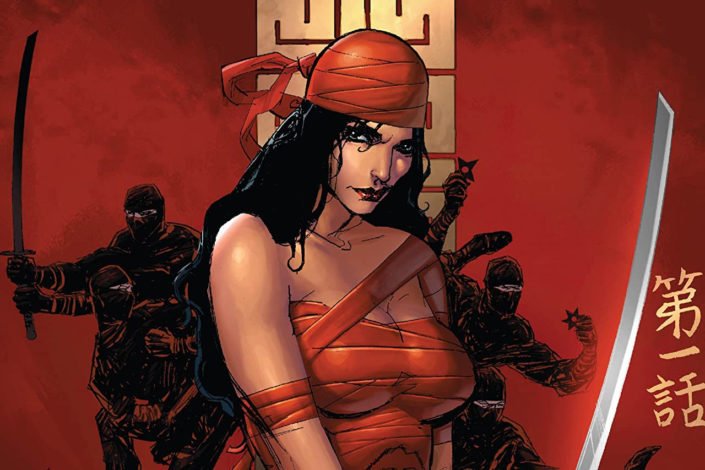
Created by Frank Miller, Elektra Natchios is a dangerous woman and a true antihero. The daughter of a Greek ambassador with a troubled childhood, Elektra is a highly trained assassin and martial artist who never goes out without her pair of sai. She is also known as a love interest to Matt Murdock aka Daredevil, both of them having a very complicated relationship, where love, passion, violence, and ideals merge and collide.

As a character evolving in a gray area, between a hero and a villain, Elektra has been associated with several groups, one of the most important being the Hand, an order of evil mystical ninjas who are heavily involved in organized crime and mercenary activities. Since her first appearance, she has also been part of Hydra, The Shield, The Thunderbolts, and Heroes for Hire. Whatever the team she’s part of, Elektra is a deadly character who will prefer to die than show you what she feels.

Read More »Elektra Reading Order, Marvel’s most deadly assassin

Archie Horror Reading Order (with Afterlife With Archie and Chilling Adventures of Sabrina)

  • by

Archie Horror Reading Order

As a publisher that exists since 1939, it’s understandable that once in a while, the people at Archie Comics feel the need to go out of their comfort zone to expand their audience and modernize their image. It’s what happened in 2010, with Afterlife with Archie.

It’s the early 2010s, when we are in a full-blown Zombie renaissance, thanks to successful zombie comedies (like Shaun of the Dead, Zombieland, and more). So, what would happen if a zombie apocalypse happened in Riverdale? It gave us Afterlife with Archie, the first title in the company not to be aimed at children, containing graphic horror scenes and moderate language.

The successes of Afterlife with Archie and Chilling Adventures of Sabrina lead to the creation of the imprint Archie Horror in 2015,  with Afterlife #8 the first to feature the company’s Archie Horror logo.

Soon they published other titles, each taking place in their own alternate universe existing independently of each other, full of zombies, evil witches or werewolves. They all exist independently of each other, with one exception to that rule–the crossover story between Jughead and Vampironica.

Read More »Archie Horror Reading Order (with Afterlife With Archie and Chilling Adventures of Sabrina)

Hunt for Wolverine (and Return of Wolverine) Reading Order, the follow-up to Death of Wolverine

  • by

Hunt for Wolverine - Reading Order

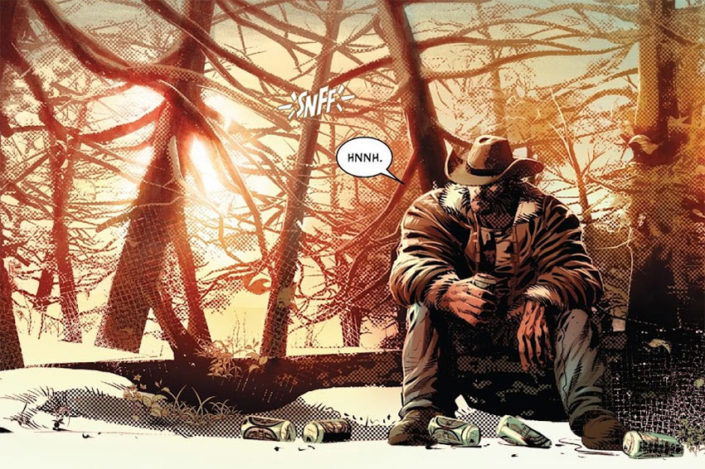
At the end of 2014, Marvel did the unthinkable: kill Wolverine! It would take almost four years for our favorite mutant to reappear (don’t worry so, Old Man Logan was here during that period). But before Logan could really come back, he had to be found. And this is how was launched the Hunt for Wolverine!

Per Marvel official synopsis: Wolverine is back – but where is he? Just as the X-Men have finally come to terms with Logan’s death, a terrible secret means old wounds are reopened, truths are questioned, and an epic quest begins across the Marvel Universe. But who will solve the puzzle first? Will it be Daredevil and his crack squad of investigators, including Misty Knight? Or Logan’s former fellow New Avengers, Iron Man, Spider-Man, Jessica Jones and Luke Cage? Or perhaps Sabretooth, Lady Deathstrike and Daken will be the ones to track him down! With mystery in Madripoor and around the globe, the return of Wolverine will keep you guessing!

What to read before the Hunt for Wolverine?

Hunt for Wolverine is a follow-up to the Death of Wolverine storyline, which had happened almost four years before. To know more about it, check out our Death of Wolverine reading order.

  • Death of Wolverine: The Complete Collection
    Collects Death Of Wolverine #1-4, Death Of Wolverine: The Weapon X Program #1-5, Death Of Wolverine: The Logan Legacy #1-7, Death Of Wolverine: Deadpool & Captain America #1, Death Of Wolverine: Life After Logan #1

To discover more stories with our favorite Canadian mutant, check out the Wolverine reading order.

Read More »Hunt for Wolverine (and Return of Wolverine) Reading Order, the follow-up to Death of Wolverine

X-23/Wolverine, Laura Kinney Reading Order

  • by

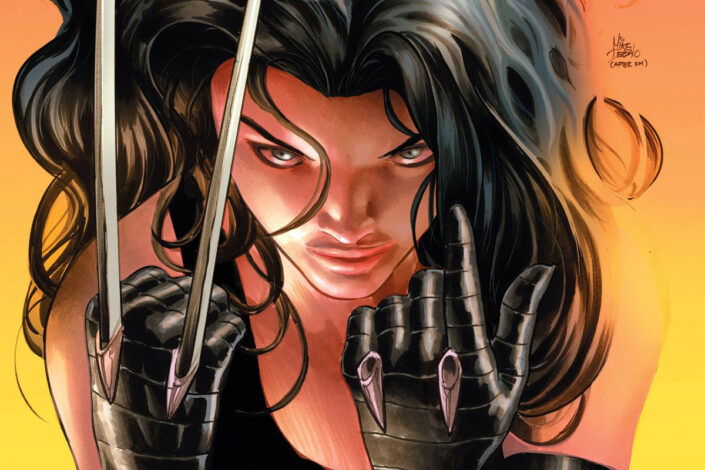
Created by writer Craig Kyle, X-23 first appeared – not in a comic book! — in the television series X-Men: Evolution, in season 3 episode 10. At the time, Kyle created her in an attempt to make a Wolverine to “connect more to the younger kids”.  It was a success and, after a second episode, she became so popular, that she ended up in the comics, like Harley Quinn in her time. Her first appearance in comics was in NYX #3, published in February 2004 and written by Joe Quesada before headlining two miniseries written by Craig Kyle and Christopher Yost where her origins were explained.

In the beginning, X-23 is simply a product of The Facility, an organization that attempted to recreate Weapon X and failed. The geneticist Sarah Kinney thought that cloning was the way to go, but the genome recovered from Wolverine was too damaged. Sarah decided to alter the DNA against the Facility orders and Laura was born. She was trained to kill Wolverine, but when she got the opportunity, she joined the X-Men. Since then, she has realized she was Wolvie’s biological daughter, and eventually, his successor.

Since her first appearance on television, Laura has made quite a name for herself, on the comic book pages, but also on the big screen in the movie Logan. She’s a perfect example of a legacy character done right, well worth having her own reading order.

Read More »X-23/Wolverine, Laura Kinney Reading Order

Deathstroke Reading Order (Slade Wilson)

Deathstroke Reading Order

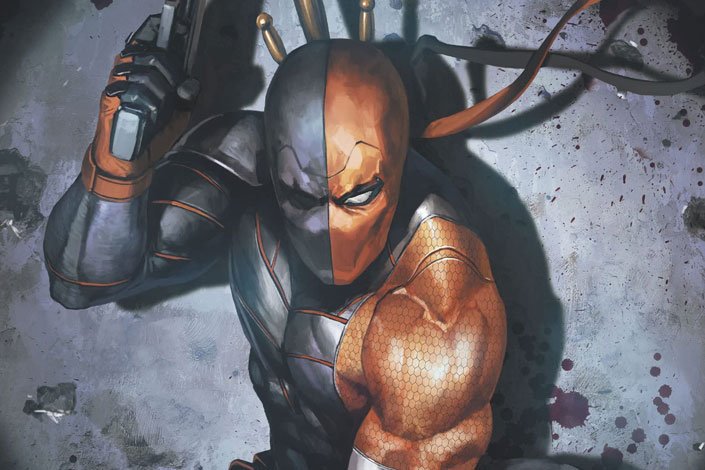
Created by Marv Wolfman and George Pérez, Slade Wilson is Deathstroke the Terminator, the world’s greatest assassin/mercenary and an enemy of the Teen Titans, but also of Batman, the Justice League, and Green Arrow. Introduced as a supervillain, acting sometimes as an anti-hero, always the great strategist and manipulator, Slade Wilson is certainly one of the most emblematic DC’s antagonists.

At 16, young Slade Wilson enlisted in the United States Army and, at some point, was chosen to be part of an experimental super-soldier project where he gained enhanced strength, agility, and intelligence. Father of three children (Joe, Rose and Grant), Wilson’s vendetta against the Titans began when he swore revenge for the death of his oldest son Grant. A real professional who never lost time, Deathstroke has been a member of  Secret Society of Super-Villains, Suicide Squad, Titans East, H.I.V.E., Checkmate, League of Assassins, Defiance, Injustice League, Team 7, and T.R.U.S.T.

Deathstroke had also quite a decent career in other media and has been portrayed, among others, by Manu Bennett on The CW’s Arrow and by Esai Morales on the DC Universe series Titans. He also appears as a playable character in Injustice: Gods Among Us, voiced by J. G. Hertzler, and in the Batman: Arkham franchise.

Today, we explore Slade Wilson’s history with a Deathstroke/Slade Wilson Reading Order, from his villain role in New Teen Titans to his own titles and much more…

Read More »Deathstroke Reading Order (Slade Wilson)

Spider-Man 2099 Reading Order (Miguel O’Hara)

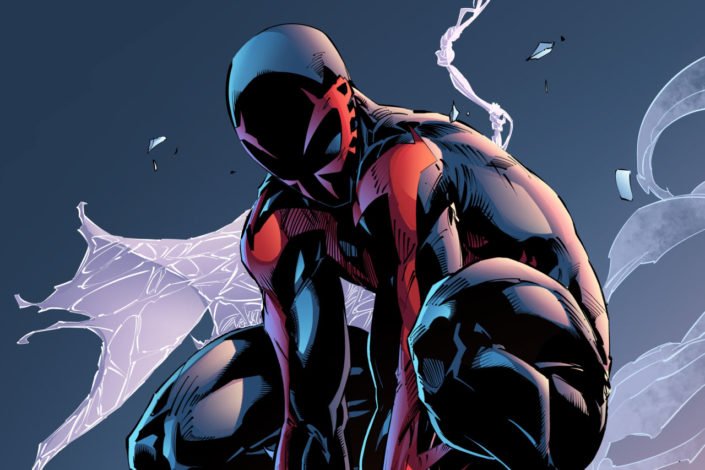
Miguel O’Hara alias Spider-Man 2099 was created by Peter David and Rick Leonardi for the Marvel 2099 comic book line and was, without a doubt, the breakout star of this imprint. He made his first appearance in The Amazing Spider-Man #365 (as a preview) in August 1992 before headlining his own title with Spider-Man 2099, launched in November 1992.

Welcome to 2099 also known as Earth-928, where there are no active superheroes in this world. The present-day Marvel continuity is referred to as an “Age of Heroes” that abruptly ended in a catastrophe a century before that also set back society. This is a dystopia where North America is a corporate police state ruled by a few huge megacorporations, mostly Alchemax. Owned by Tyler Stone, it produces everything, from everyday products to military weaponry and private space travel.

A brilliant Irish-Mexican geneticist, Miguel O’Hara is living in Nueva York (a renamed New York City) in the year 2099 and actually working for Alchemax on genetically giving humans superpowers, but things didn’t go as planned — as always in the experimental field of science Marvel.

When one of his experiments to replicate the powers of superhero Spider-Man is used against him, his DNA is rewritten and becomes fifty percent spider. With great power comes great responsibility, and Miguel decides to use his new abilities to take down Tyler Stone and Alchemax. He becomes Spider-Man 2099.

Find out everything you need to know about Miguel O’Hara (and his complicated timeline) in the Spider-Man 2099 reading order!

Read More »Spider-Man 2099 Reading Order (Miguel O’Hara)

The Death of Superman Reading Order

The Death and Return of Superman Reading Order

ABC launched the television series Lois & Clark: The New Adventures of Superman in 1993, where the marriage of Lois and Clarke was discussed during the production. Even if the comics and the show didn’t take place in the same continuity, Warner Bros wanted the Superman brand to stay consistent across all media. They wanted the wedding of the couple to happen at the same time on screen and paper.

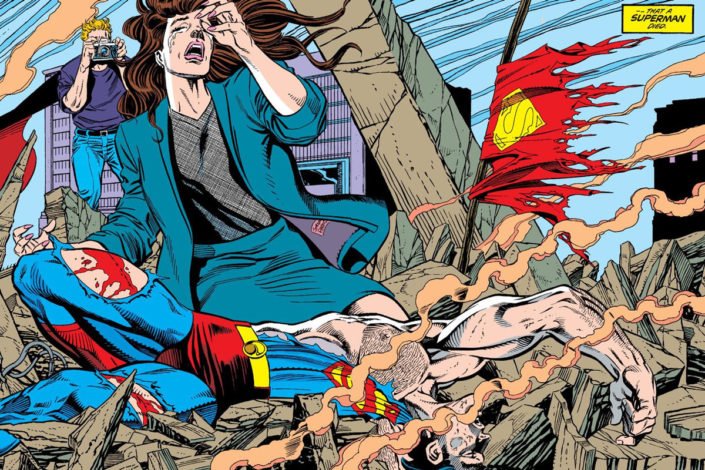
What did it mean for the Superman comics? After all, the creative team was planning the wedding of Lois and Clark, and they had to stop and build a whole new storyline. Writer Jerry Ordway made the joke to just kill Superman, and it became the most attractive scenario for the creative team. If they couldn’t marry the Man of Steel, they could kill him… and make comic history!

That’s how the now-classic storyline The Death of Superman was born. It is divided into a trilogy of story arcs: “Doomsday!” (or Death of the Superman) leads to Superman’s Death; “Funeral for a Friend” is focused on the aftermath; and “Reign of the Supermen!” introduced the Supermen. For Lois Lane fans, it’s also an important period, as the death of Superman puts her on the front line, and she was used as the glue between all the titles. After this trilogy, the inevitable happens, titled “The Return of Superman”.

Launched at the end of 1992, The Death (and Return) of Superman was published almost all the year 1993. The creative team consisted of Dan Jurgens, Louise Simonson, Roger Stern, Jerry Ordway, Karl Kesel, William Messner-Loebs, and Gerard Jones on the writer front. Jon Bogdanove, Tom Grummett, Jackson Guice, Dan Jurgens, Dennis Janke, Denis Rodier, Walt Simonson, Curt Swan, and M. D. Bright on the artist front.

One of the biggest best-sellers at DC, The Death (and Return) of Superman had a major impact on the company, as a similar event happened shortly after with Batman: Knightfall (reading order), followed by the deaths of numerous superheroes. Also, some characters established during the arc became recurring characters afterward.

No doubt about it, The Death (and Return) of Superman occupy a special place in Superman and DC history, and today, we revisit it with a reading order, and the different ways to read this iconic story.

What to read before The Death of Superman?

Like a lot of readers at the time of publication, you can just go straight ahead without any required reading before. A few issues teased Doomsday breaking free from his prison, and we have listed them in the issue-by-issue reading order for the occasion.


I just told you no background reading was necessary, but for those out there who like to know a little more, here are a few things to know:

  • The Justice League’s incarnation at the time of this storyline was Justice League International, with Booster Gold, Blue Beetle, Guy Gardner, and more. It was written by Dan Jurgens.
  • A few issues during that storyline are part of the Bloodlines event.
  • Not long ago, Luthor faked his own death and transplanted his brain into a clone of himself, which he passed off as his unknown son, Lex Luthor II, raised by foster parents in Australia to protect him from Luthor’s enemy. The charade is completed by an Australian accent, a full head of red hair, and a beard. Luthor uses this opportunity to seduce Supergirl (Matrix at the time). Those issues where those events take place are not really well collected (between Action Comics #660 and #678).
  • Finally, if you simply want to discover more stories with Superman, check out our Superman Reading Order, The Modern Age (Post-Crisis).

Read More »The Death of Superman Reading Order
Jessica Drew Reading Order, the first Spider-Woman

  • by

Spider-Woman / Jessica Drew Reading Ordere

Like Spider-Girl, the code name Spider-Woman has been used by multiple characters in the Marvel Universe. However, the original and most popular incarnation is Jessica Drew. Created by writer Archie Goodwin and artist Marie Severin, Jessica Drew made her first appearance in Marvel Spotlight #32 in February 1977. In that debut, she was portrayed as a mysterious agent of Hydra, suffering from amnesia and unsure of her true origins.

At the time, the creation of Spider-Woman was a strategic move by Marvel Comics to secure the trademark for the name before any rival publisher could claim it (like with She-Hulk). Despite the character being born of legal necessity, Jessica Drew quickly gained popularity with readers. This led to Marvel launching her own ongoing series in 1978, with the early issues written by Marv Wolfman. Wolfman revamped the character significantly, giving her the civilian identity of Jessica Drew and establishing her backstory.

Jessica’s origin is famously convoluted. The original version told in her solo series involved her being the daughter of scientist Jonathan Drew and Merriam Drew.? Her father and High Evolutionary built a lab in the fictional Balkan nation of Transia, where, after being exposed to uranium radiation, young Jessica was injected with an experimental serum made from irradiated spider blood and placed in a genetic accelerator to save her life. Over time, her backstory has been retconned multiple times, most notably by Brian Michael Bendis in the early 2000s, who reimagined her past and tied her more directly to Hydra and the espionage world, while changing the explanation for her powers.

Throughout her history, Jessica Drew has had a foot in both the superhero and spy worlds. Known for her enhanced strength, agility, venom blasts, and immunity to toxins, Jessica has worked as an agent for Hydra, S.H.I.E.L.D., and S.W.O.R.D., and has operated as a private investigator. On the superhero front, she’s been a member of the Avengers, the Secret Avengers, the Web-Warriors, the West Coast Avengers, and more. 

Read More »Jessica Drew Reading Order, the first Spider-Woman

Age of X-Man reading order, an X-Men alternate-universe event

  • by

Age of X-Man Reading Order

There are multiple alternate realities in the Marvel Universe, some more famous and impactful than others. For the X-Man, nothing beats Age of Apocalypse, one of the most iconic storyline for the X-Men. With a name and a premise similar, Zac Thompson and Lonnie Nadler gave us Age of X-Man in 2019, a utopia led by Nate Grey (X-Man). 

Per the official Marvel synopsis: Enter the Age of X-Man, a perfect world with perfect heroes! In this alt-universe read, the commune-dwelling X-Men live on a utopia planet where fear and hatred are things of the past… along with concepts like “love” and the nuclear family. United under the banner of mutantkind, all mutants idolize the X-Men. Then the cracks begin to show, and a rebellion grows against this weird world order…

What to read before Age of X-Man?

As writer Zac Thompson indicated at the time on Twitter, you just need to know who the X-Men are to jump into this event. For those who like to go deeper, here are some of the recommended stories to read before Age of X-Man:

Nate Grey, also known as X-Man, is an alternate version of the regular Marvel Universe hero Cable, coming from the Age of Apocalypse where he made his first appearance in 1995. This major alternate reality also serves as an inspiration for Age of X-Man, but it is not required reading to understand it. If you want to know more about it, you can consult the complete X-Men Age of Apocalypse Reading Order.

  • X-Men: Age of Apocalypse Omnibus
    Collects Uncanny X-Men #320-321, X-Men #40-41, Cable #20, X-Men Alpha, Amazing X-Men #1-4, Astonishing X-Men #1-4, Factor X #1-4, Gambit & The Externals #1-4, Generation Next #1-4, Weapon X #1-4, X-Calibre #1-4, X-Man #1-4, X-Men Omega, Age Of Apocalypse : The Chosen and X-Men Ashcan #2.

After disappearing for a few years from the Marvel Universe, Nate Grey makes his comeback in the rebooted Uncanny X-Men, with the storyline X-Men Dissambled from which spanned out the alternate-reality event (but, despite that fact, you can go read the event without the prelude).

Read More »Age of X-Man reading order, an X-Men alternate-universe event