Skip to content

DC Comics

Suicide Squad Reading Order

  • by

The Suicide Squad as we know it today wasn’t always like that. First created by writer Robert Kanigher and artist Ross Andru in 1959 in the pages of The Brave and the Bold #25, the first incarnation of The Suicide Squad was a team of good guys with a scientific edge led by Rick Flag Jr. They faced monsters and nuclear bombs. It didn’t last long, and we will not talk about it more here.

The Suicide Squad, as we know it, was introduced by writer John Ostrander (with Len Wein) and artist John Byrne in the pages of the Legends miniseries in 1986, the first major DC Universe crossover after the events of Crisis on Infinite Earths. This governmental team, controlled by the morally ambiguous Amanda Waller, is really called Task Force X and is composed of supervillains like Blockbuster, Bronze Tiger, Captain Boomerang, Deadshot, and Enchantress. Rick Flag Jr. is still the leader. The team is sent on “suicide” missions—sometimes, not everybody comes back.

After Ostrander’s run ended in 1992, Suicide Squad saw multiple revivals. In 2001, Keith Giffen and Paco Medina reintroduced the team, and in 2011, as part of DC’s New 52, written by Adam Glass, Harley Quinn was introduced as a core member for the first time. Another relaunch came with DC Rebirth in 2016 by Rob Williams and Jim Lee, cementing Harley’s prominence alongside Deadshot. The Squad continues to appear across comics and media, with frequent roster changes and thematic ties to espionage and black ops missions. Amanda Waller stayed in control through the multiple incarnations of the team and has grown to become a central figure in the DC Universe.

Read More »Suicide Squad Reading Order

Stephanie Brown Reading Order (Spoiler, Robin, Batgirl)

  • by

Stephanie Brown Reading Order (Spoiler, Robin IV, Batgirl III)

Created in 1992 by Chuck Dixon and Tom Lyle as a plot device in Detective Comics #647-649, Stephanie Brown is a DC Comics superheroine considered part of the Batfamily. She is first introduced as the vigilante Spoiler, had a brief stint as Robin, and has also taken the mantle of Batgirl.

Before the New 52 reboot, Stephanie Brown had a difficult life, one that had some similarities with Jason Todd’s. Her mother was a drug addict and her father was the third-rate villain known as Cluemaster. It was in order to stop him that Stephanie Brown became the vigilante named Spoiler (as she was trying to ‘spoil’ things for her abusive father), starting out with little training, relying on her determination and natural agility. She lived in poverty and didn’t have a great track record when it comes to her love life.

Initially seen as an amateur, Spoiler’s tenacity caught the attention of Tim Drake/Robin II, with whom she developed a romantic relationship–though she didn’t know his real name for a long time. Stephanie’s relationship with Batman was a difficult one, a sort of reflection of the way some people at DC Comics seemed to perceive her–leading us to some mistreatment of her character.

During the DC New 52 era, Stephanie Brown’s story was rewritten, her past and her relationship with Batman were way less harsh and complicated than it has been before. In the subsequent reboots of the DC line of comics, she remained part of the Bat Family, sometimes questioning Batman’s methods but ultimately establishing herself as a valuable ally.

Right now, Stephanie Brown is protecting Gotham City as one of the Batgirls, alongside Cassandra Cain, while being guided by Oracle/Barbara Gordon.

The following is Stephanie Brown’s reading order to discover all her adventures.

Read More »Stephanie Brown Reading Order (Spoiler, Robin, Batgirl)

The Final Night Reading Order, 1996 DC crossover event

  • by

Published in 1996, The Final Night is a DC Comics crossover event written by Karl Kesel with art by Stuart Immonen. For a change, it was not about a Super-Villain fighting the Heroes, but about an extraterrestrial entity called the Sun-Eater that envelopes and extinguishes the Sun, causing Earth to freeze and wither into ecological collapse. It’s an End of the World scenario in which heroes, villains, and everybody else had to work together to surmount the impossible.

Here is the official synopsis: In The Final Night, the heroes and citizens of Earth face the impending end of the universe. When a cosmic force of nature known as the Sun-Eater extinguishes the Sun, Earth is thrust into its final night. Deprived of the massive star’s illumination and heat, the world experiences a catastrophe of epic proportions.

But even in a situation devoid of hope, the world’s greatest champions struggle on against the inevitable. Featuring many of the heroes of the DC Universe, including Superman, Batman, Wonder Woman, The Flash, Green Lantern, and Aquaman, this book graphically illustrates the true definition of a hero, as Hal Jordan, the former Green Lantern, makes the ultimate sacrifice to save the world.

What to Read Before The Final Night?

The Final Night is a self-contained event, but you may want to be familiar with the character of Parallax to have a better understanding of his decisions in this story. First, the famous Emerald Twilight storyline (Green Lantern Vol. 3 #48–50), collected in:

Second, the event “Zero Hour: Crisis in Time!” You can find our reading order here.

Read More »The Final Night Reading Order, 1996 DC crossover event

Justice League Rebirth Reading Order (with Justice League of America, Justice League Odyssey and Justice League Dark)

  • by

Following the ending of The New 52 era, DC Comics relaunched its entire line in 2016 under the Rebirth banner. For this occasion, the company restored the timeline to a form much closer to what it was before the famous Flashpoint storyline while still maintaining several elements of the New 52.

What does it mean for the Justice League? The most famous DC superteam still continues saving the world! No continuity changes were introduced at the beginning, but the team’s roster changed with the two Green Lanterns Simon Baz and Jessica Cruz joining the League (taking the place of Hal Jordan).

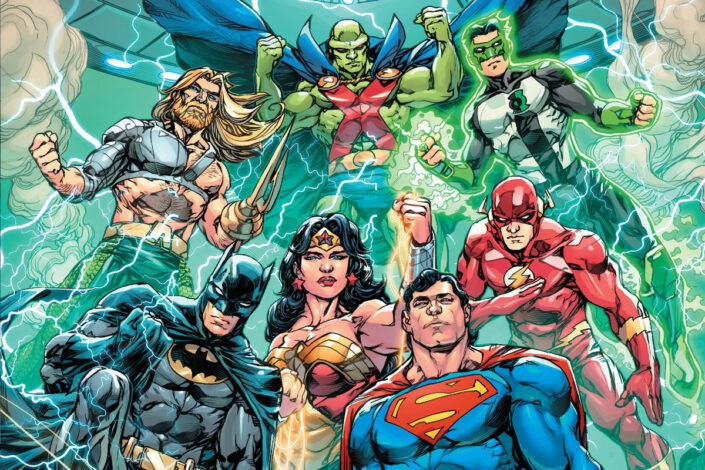
Here is the official synopsis: Superman. Batman. Wonder Woman. The Flash. Cyborg. Green Lantern. They’re more than just a team of superheroes. They’re the Justice League…and they’re about to enter a whole new era! The Superman these incredible heroes once knew is dead, leaving an older, wiser Man of Steel from a vanished universe to take up the fight against evil. Hal Jordan, the greatest of the Green Lanterns, has taken to the stars, entrusting his place in the League to his powerful but untested young protégés, Jessica Cruz and Simon Baz. Now the Justice League must get used to these new faces and learn to work as a team once more. But they’d better do it fast. They’re about to confront the biggest threats they’ve ever faced, from godlike machines capable of converting all life on Earth into a weapon, to a humble hacker who’s ready to hit them where it hurts most…

What to Read Before The Justice League Rebirth Comics?

As a new era is launched, it’s fairly safe to simply jump right in with the one-shot DC Universe Rebirth #1 serving as an introduction. But if you want a little more context, here are the comics you may be interested to read before:


As the Justice League has been active since the 1960s, you can obviously explore the team’s past.

Read More »Justice League Rebirth Reading Order (with Justice League of America, Justice League Odyssey and Justice League Dark)

Batman: War Games Reading Order

  • by

Batman War Games Reading Order

Published in 2004-2006, the Batman: War Games Saga is a Batman crossover event that spanned every Batman Family title being published at the time. Part of the Batman Modern Age (check out our reading order), the story was written by Devin Grayson, Andersen Gabrych, A.J. Lieberman, Bill Willingham, Dylan Horrocks and Ed Brubaker, with illustrations by Ramon Bachs, Pete Woods, Brad Walker, Mike Lilly, Al Barrionuevo, Giuseppe Camuncoli, Sean Phillips, Paul Gulacy and Kinsun Loh. 

Taking place after No Man’s Land and Bruce Wayne: Murderer, Batman: War Games tried to be a sort of mix of those two stories, with stakes on a street level as it is an all-gang war, but still on a big full scale like No Man’s Land. It’s also an event happening when Tim Drake had given up on his Robin role and Stephanie Brown had taken his place — and for her fans, this story is simply her character assassination.

But what is really Batman: War Games about? Tensions escalate and war comes to Gotham City when Batman is drawn into a skirmish between rival gangs. As Gotham’s biggest gang battle ignites, Batman must call on all his available allies—Oracle, Batgirl, Nightwing, Orpheus, Onyx, and Tarantula—to preserve life and contain the chaos while trying to determine who started this outbreak of violence.

Read More »Batman: War Games Reading Order

Dick Grayson as Robin Reading Order (Pre-Crisis)

  • by

Dick Grayson Robin Reading Order (Pre-Crisis era)

Despite the fact that Batman has a reputation as a solo vigilante, Batman’s readers know the truth is quite different. Just under a year after Batman’s first adventure, Dick Grayson, the first Robin debuted in Detective Comics #38 (April 1940). Created by writer Bill Finger, artist Bob Kane and illustrator Jerry Robinson (who also came up with the character’s name inspired by Robin Hood), Dick was designed to appeal to younger readers. It was a success, as sales doubled and critics were overwhelmingly positives.

Dick Grayson was the son of John and Mary Grayson and part of the “Flying Graysons”, a family of trapeze artists working at Haly’s Circus and famous for always working without a net. As tragedy is never far away, Dick’s parents are killed following the sabotage of their trapeze by Tony Zucco, a mafia leader. Present that day at the circus was billionaire Bruce Wayne who choose to take little under his care and train him as his sidekick. Dick became his crime-fighting partner Robin. Batman and Robin became known as the Dynamic Duo, and there was rarely a Batman published story without the Boy Wonder. From 1947 through 1952, our original Robin appeared in Star-Spangled Comics, in stories devoted to him. Our original Robin also stars alone in Star Spangled Comics for nearly five years (1947-1952), and was a founding member of the Teen Titans team, created in July 1964.

Before becoming Batman’s sidekick, Dick Grayson was already a young talented athlete with amazing acrobatic skills. Batman trained him to become an expert tactician and field commander, as well as a martial artist, hand-to-hand combatant, and a highly skilled detective. Not to mention the use of all Batman’s gadgets.

To know more about Dick Grayson’s time as Robin, the iconic Batman’s sidekick, check out the following reading order!

Read More »Dick Grayson as Robin Reading Order (Pre-Crisis)

Dark Crisis Reading Order, the Dark Crisis on Infinite Earths (DC Comics)

  • by

Dark Crisis Reading Order

Since the launch of the Infinite Frontier era, Joshua Williamson has been building up to his first major crossover event, Dark Crisis on Infinite Earths (originally named “Dark Crisis,” the event was officially retitled “Dark Crisis on Infinite Earths” after it launched).  Williamson teamed up with artist Daniel Sampere, colorist Alejandro Sánchez, and letterer Tom Napolitano for this crisis. As the official synopsis puts it:

Superman, Batman, Wonder Woman, and the rest of the Justice League are dead. The remaining heroes are left to protect the world from an onslaught of violent attacks by DC’s greatest villains! Leading the charge is a super-powered Slade Wilson … but this time there’s something dark fueling his rage.

Can the younger heroes, led by the 21st century Superman Jonathan Kent, step out of the shadows of the classic icons to form a new Justice League? And will that be enough to stop a darkness greater than anything they’ve ever faced from destroying everything? The world burns as Pariah and the Great Darkness make their play for planet Earth!

Dark Crisis on Infinite Earths is an event built on older stories, as DC Comics explains it:

“In the original Crisis on Infinite Earths by Marv Wolfman and George Pérez, the homeworld of Pariah, along with the infinite Multiverse, was obliterated. Now, this mad sole survivor has found a way to bring his homeworld and the entire infinite Multiverse back from the dead: Earth-0 must die. An ancient destructive force called the Great Darkness, first appearing in Swamp Thing by Alan Moore and Stan Woch, is the weapon Pariah will wield as he paves a path to rebirth and vengeance.”

Dark Crisis on Infinite Earths marked the end of another short era in the DC Universe, but it also introduced a new roadmap to follow for the year to come. Before diving into the event, you may want to do some reading. Here is our reading guide.

Read More »Dark Crisis Reading Order, the Dark Crisis on Infinite Earths (DC Comics)

Best Batman Stories For Beginners

Batman - Best Batman Stories For Beginners

We often explore the way to read Batman stories. We’ve got a Batman Post-Crisis Reading Order, a Batman New 52 Reading Order, a Batman Rebirth Reading Order, and even more specific ones following writers’ works on the famous characters or about specific crossover and bigger events. There is a lot to cover in the Batman Universe.

But all of this is not beginner-friendly. There are always too many books to track down if we just want to see if we like it or not. Everybody is not heavily invested in the Dark Knight Universe, yet. We all start somewhere and there’s nothing better than a good story to discover if we want to read more.

This article is here to provide those who are not that familiar with Batman with a list of possible entry points in his world or just some good stories to read without the pressure to complete a series or to invest too much time. The title says it all: the best stories for beginners.

But first, we assume that everybody knows who Batman is, but there are always younger people who just start to learn about those things. So, let me introduce you to Batman–quickly because we have now a complete article about his origins. Created by artist Bob Kane and writer Bill Finger in 1939, Batman is the superhero identity of Bruce Wayne, a wealthy man from Gotham City who witnessed the murder of his parents as a child. After training himself physically and intellectually, he started fighting crime, masking his true identity behind a mark, and becoming a symbol of justice in the process.

Simply put, he is a vigilante but also the greatest detective and, with his sidekick Robin, he’s now facing costume villains like the Joker, Two-Face, The Riddler, the Penguin, and more. But he also has a lot of allies in his crusade for justice like Commissioner James Gordon, his previous sidekicks, and numerous vigilantes and powerful superheroes.

Read More »Best Batman Stories For Beginners

Justice League (New 52) Reading Order, the Geoff Johns’ era

  • by

Justice League New 52 Reading Order

One of the most famous superhero teams today, The Justice League was conceived as a revival of the Justice Society of America. A team from the 1940s, the JSA title was canceled due to to a decline in sales, as superheroes were in decline after World War II.

When editor Julius Schwartz asked writer Gardner Fox to reintroduce his creation, the JSA, he decided to rename it the “Justice League of America”, a name he thought would appeal better to young readers. After having made its first appearance in The Brave and the Bold #28 in March 1960, the Justice League got quickly its own title and became one of DC’s best-selling title.

The Justice League is usually comprised of highly popular heroes (like Batman, Superman, and Wonder Woman) who generally operate independently, but would team up to tackle more ruthless villains of world epic menace. That way, the characters gain exposure that helps sales titles and participate to build the DC shared universe by working and interacting with each other. Though, DC gas deviated from this formula at different times, most notably in the late 1980s and early 1990s with the Justice League International, which purposefully starred an ensemble of lesser-known characters. This more quirky and humourous Justice League led to the creation of several spin-offs.

DC revamped the Justice League in the second part of the nineties, first with the help of Mark Waid and Fabian Nicieza, returning to the basic, then with Grant Morrison’s run named JLA, where he made the Justice League an analogy for a pantheon of gods and wrote more epic stories. It became a staple for years to come, with the Justice League specializing in world-shattering threats with epic stakes.

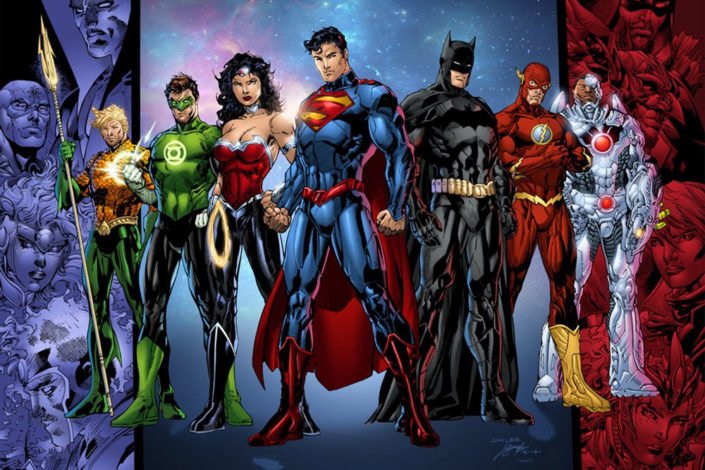
Which lead us to New 52 in 2011, when DC relaunched its entire line for a partial reboot and with a new continuity. This era begins with a new origin story for the Justice League, featuring initial team members Superman, Batman, Green Lantern, Flash, Wonder Woman, Aquaman, and Cyborg. Those heroes must come together when loner vigilante Batman stumbled upon a dark evil that threatens to destroy the earth as we know it. To save the world, they must put aside their differences…

Read More »Justice League (New 52) Reading Order, the Geoff Johns’ era

Shazam Reading Order (aka DC Comics’ Captain Marvel)

  • by

The history of Shazam, originally known as Captain Marvel, is one of the most legal-heavy in comic book history. The character was created by writer Bill Parker and artist C. C. Beck in 1939, debuting in Whiz Comics #2 (1940) under Fawcett Comics.

By the early 1940s, Captain Marvel had become the most popular superhero of the Golden Age, outselling even Superman. However, this success led to a legal battle when DC Comics sued Fawcett, alleging that Captain Marvel was an infringement on Superman’s character. After years of litigation, Fawcett ceased publishing Captain Marvel stories in 1953.

In 1972, DC Comics licensed the rights to the character, eventually purchasing them outright in 1991. However, by that time, Marvel Comics had secured the trademark for the name “Captain Marvel,” forcing DC to market the character and his associated heroes under the Shazam! banner from the 1970s onward.

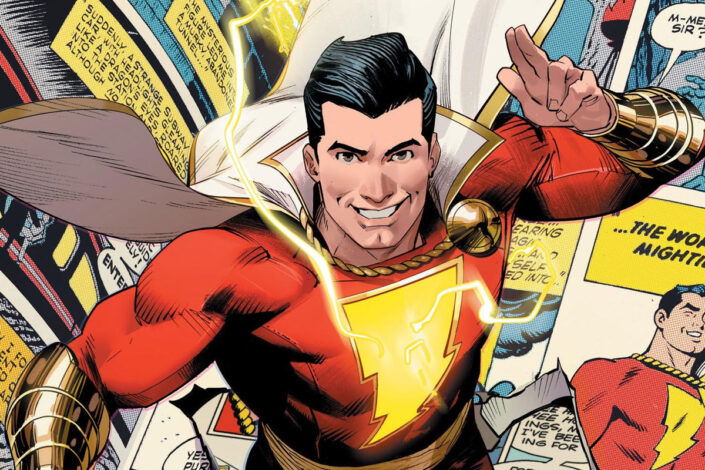
Shazam’s story centers on Billy Batson, a 12-year-old orphan who is chosen by the ancient wizard Shazam to become Earth’s champion. By speaking the wizard’s name—an acronym representing the six mythological figures who empower him (Solomon, Hercules, Atlas, Zeus, Achilles, and Mercury)—Billy is transformed into the powerful adult superhero Captain Marvel.

Over time, he shares his abilities with his sister Mary Batson, and their friend Freddy Freeman, forming the Marvel Family, later rebranded as the Shazam Family. Together, they battle villains such as Doctor Sivana, Black Adam, and the sinister Mister Mind, leader of the Monster Society of Evil.

Read More »Shazam Reading Order (aka DC Comics’ Captain Marvel)