Skip to content

DC Comics

Aquaman Reading Order, the King of Atlantis

Aquaman emerged from the sea during the Golden Age, making his first appearance in More Fun Comics #73. It was only one month after Wonder Woman‘s first appearance, and it was the same issue as Green Arrow and Speedy. Since then, he has been one of the more enduring heroes of DC Comics. Yet, the King of the Sea is still often overshadowed and overlooked. Even his splash on the big screen where he was played by Jason Momoa didn’t change the situation.

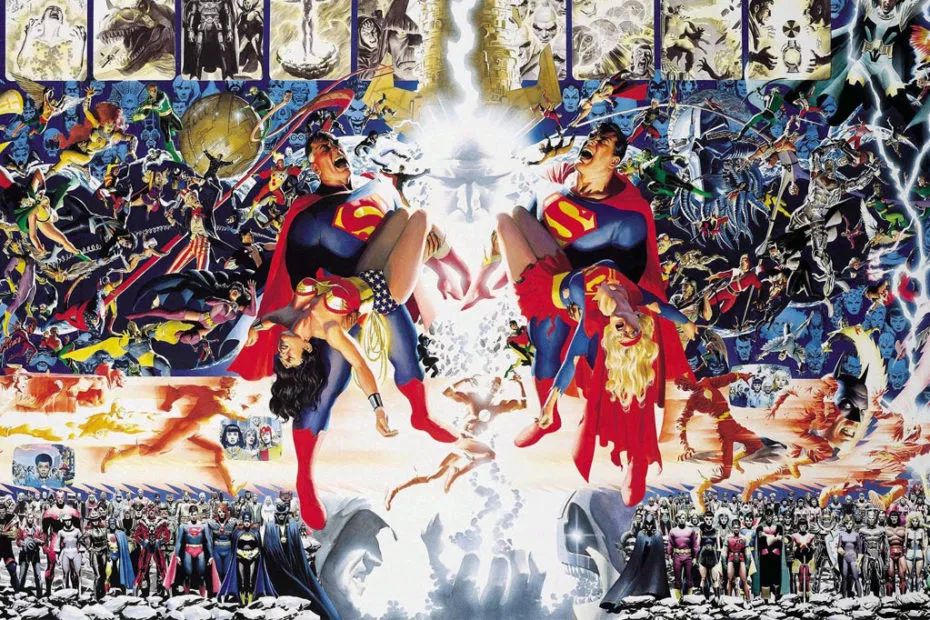
Created by Paul Norris and Mort Weisinger, Aquaman from the Golden Age was quite different from the hero we know today. First, this version of the character – known today as the Aquaman of Earth-2 – was not a true denizen of Atlantis. He had no particular powers. His father was a scientist and undersea explorer who discovered the ancient city of Atlantis. He taught his son how to survive and breathe underwater, and how to use all the power of the sea to make him strong and swift. Then, he was erased from existence with Crisis on Infinite Earths.

His origin story has been revised a few times since then. He is now known as Arthur Curry, half Atlantean, half-human, and undersea royalty. Since his debut and his gained popularity from his 1960s animated appearances, DC worked at making Aquaman more powerful and edgier, but failed to give him a more defined role and purpose. For a very long time, DC Comics didn’t know what to do with the character.

If Aquaman is more of a joke for some people, the character has lived some great, strange, colorful, and exciting adventures. He has gained a devoted fan base and the respect that he is due as one of the top-tier DC superheroes. Long live the King!

Read More »Aquaman Reading Order, the King of Atlantis

Batman: Hush Reading Order

  • by

Not unlike The Batman Who Laughs, Hush is a DC Comics supervillain, and more precisely, an adversary of Batmanto created during the Modern Age (aka the Post-Crisis era). Recognized for his distinctive visual design and lethality, Hush has become one of the more memorable additions to Batman’s rogues’ gallery in the 21st century.

The character was created by writer Jeph Loeb and artist Jim Lee, making his debut in Batman #609 (2003), the opening chapter of the 12-part story arc Batman: Hush. In this storyline, we learn that Hush is Dr. Thomas “Tommy” Elliot, a brilliant surgeon and childhood friend of Bruce Wayne. Elliot orchestrates an elaborate campaign against Batman, manipulating several of Gotham’s most notorious villains while concealing his own identity beneath his trademark bandaged visage.

Following the conclusion of the Hush storyline, the character reappeared in multiple Batman titles and related media, cementing his status as a recurring foe. However, with the launch of DC Comics’ New 52 initiative in 2011, which rebooted much of the company’s continuity, Hush’s presence temporarily diminished. He was later reintroduced in the weekly series Batman Eternal (2014–2015), where aspects of his backstory and motivations were reinterpreted. During the DC Rebirth (2016), elements of pre-New 52 continuity were reintroduced, and new developments followed. Hush returned once more, clashing not only with Batman but also with members of the extended Bat-Family.

Outside the mainline comics, Hush has appeared in various adaptations, including the animated film Batman: Hush (2019), video games, and merchandise, further solidifying his cultural impact.

Read More »Batman: Hush Reading Order

Stargirl Reading Order (Courtney Whitmore)

  • by

Created by Geoff Johns and Lee Moder, Courtney Whitmore made her first appearance in Stars and S.T.R.I.P.E. #0 (July 1999)–she was in part based on Johns’ sister Courtney, who died in the explosion of TWA Flight 800 in 1996.

Courtney is the stepdaughter of Pat Dugan, the inventor of the powered armor suit S.T.R.I.P.E. and former sidekick of the original Star-Spangled Kid. Before becoming Stargirl, she was in fact the new Star-Spangled Kid. She joined the Justice Society of America (JSA) and, after being given Starman Jack Knight’s cosmic staff, she officially became known as Stargirl.

She stayed with the JSA for a long time, until the moment when DC rebooted its universe and launched the New 52 era. Then, Stargirl became a member of the new Justice League of America title. Her origin story was also rewritten. In this version, she found the staff and the rest of the uniform in Pat Dugan’s office who was then Barbara Whitmore’s boyfriend. Pat agreed to train her, and she became a full-time superhero.

Of course, there’s now a Stargirl TV Show. You may have seen it. Brec Bassinger is playing the young Courtney/Stargirl. The character also appeared in other TV shows, live or animated, through the years (and also in Video Games).

Read More »Stargirl Reading Order (Courtney Whitmore)

Green Lantern New 52 Reading Order, with the Green Lantern Corps, Red Lanterns, New Guardians and Sinestro

  • by

Green Lantern New 52 Reading Order

A new era started in the DC Universe with the New 52. But the impact on the Green Lantern was quite limited. Geoff Johns took over creative duties on Green Lantern with the limited series Green Lantern: Rebirth in 2004 and was still the main writer for this relaunch with Doug Mahnke as penciler.

Like most DC characters, Green Lantern Hal Jordan was five years younger than his previous incarnations but there was no change in his history — all of Johns’ run on the Green Lantern title was still part of the continuity. During Geoff Johns’ time, Green Lantern Corps vol. 3 was written by Peter Tomasi, and the new Red Lantern series (written by Peter Milligan) was launched, as well as the Green Lantern: New Guardians series (written by Tony Bedard).

After issue #20, all the teams were changed with writer Robert Venditti and artist Billy Tan taking over as the main creative team for Green Lantern Vol. 5. Venditti also co-wrote Green Lantern Corps vol. 3 with Van Jensen before the latter became the sole writer. The Red Lanterns series continued with Charles Soule (#21-37) and Landry Q. Walker (#38-40), and the Green Lantern: New Guardians series was written by Justin Jordan (#21-40). The new Sinestro was launched, written by Cullen Bunn.

What to read before Green Lantern New 52?

First, you can check out our Green Lantern Reading Order which covers the history of the GL characters from start to finish. But it may be a bit too big. After all, we are here for the New 52 era. The DC Universe was rebooted after the Flashpoint event. It is not required reading, but you could take a look at it before reading anything else.

If New 52 was presented as a jumping point for new readers, Geoff Johns was the main writer for Green Lantern for almost 7 years at this stage, and, as said above, his run stayed in continuity. The events in Green Lantern Vol. 5 take place immediately after the last two books, War of the Green Lanterns and Aftermath. Don’t hesitate to check out Geoff Johns’ massive and celebrated run before entering the New 52 era. 

Read More »Green Lantern New 52 Reading Order, with the Green Lantern Corps, Red Lanterns, New Guardians and Sinestro

Birds of Prey Reading Order

  • by


A force to be reckoned with, the Birds of Prey is traditionally an all-women group of DC vigilantes founded in the late ’90s. Discover all their adventures in Gotham and beyond with our Birds of Prey comics reading list, covering the full history of the team, from their first appearance to Gail Simone’s celebrated run and the recent relaunch by Kelly Thompson.

Birds of Prey Logo

At its core, the Birds of Prey started as a partnership between Black Canary and Oracle, gradually expanding over time to include more superheroines. Their relationship was first established in Showcase ’96 #3, written by Jordan B. Gorfinkel—who also gave the team its name in the first issue of the ongoing series by writer Chuck Dixon and artist Gary Frank.

Chuck Dixon described the dynamic between Oracle and Black Canary as a clash of values, with “Dinah’s more idealistic approach” being at the heart of the book. Dinah Laurel Lance, alias Black Canary, is portrayed as passionate and idealistic, while Barbara Gordon, alias Oracle, has a strong sense of morality but is also less morally conflicted, per Dixon’s words who described her as a woman who knows that, sometimes, you have to kill to save lives–even if she’s not comfortable with that fact.

While Barbara and Dinah formed the heart of the team, other crimefighters joined throughout the series. One of the most prominent additions was Helena Bertinelli, a.k.a. Huntress, who became a key member during Gail Simone’s run.

Read More »Birds of Prey Reading Order

Black Canary Reading Order (Dinah Laurel Lance)

  • by


Despite having few solo title comics, Black Canary is one of the most important female characters in DC Comics. She’s a legacy character, following in the footsteps of her mother, who was an important member of the Justice Society of America in the Golden Age.

Dinah Laurel Lance doesn’t live in the shadow of her mother, first kicking ass as part of the Justice League of America, and also as a co-founder of the Birds of Prey team. She is also the longtime partner of Oliver Queen and, as a member of the Arrow Family, has been an important part of the Green Arrow comics.

Created by Dennis O’Neil and Dick Dillin, our famous Black Canary made her first appearance in Justice League of America #75 (1969), almost 60 years ago. Let’s now explore every comic featuring Black Canary with our Reading Order!
Read More »Black Canary Reading Order (Dinah Laurel Lance)

Alan Scott, the comic origins of DC’s first Green Lantern

  • by

If Hal Jordan can be considered the most famous Green Lantern, he was not the first human to bear the name. That title belongs to Alan Scott, the Green Lantern of the Golden Age.

A selfless and dedicated man, Alan Scott could only become a role model for others and inspired other men to take up the fight. Even though he serves as an inspiration for many Green Lanterns, Alan Scott always holds himself to a higher standard than anyone else.

Though Alan Scott has never been a member of the Green Lantern Corps, he was a founding member of the Justice Society of America. With or without other superheroes, Alan Scott always fought to protect others and choose to make his emerald glow a sign of hope and a source of inspiration for decades…

Read More »Alan Scott, the comic origins of DC’s first Green Lantern

Justice League Reading Order, DC Comics’ Greatest Team of Superheroes

Almost nine years after the end of the original JSA comic book run, DC Comics introduced another team of Super Heroes in The Brave and the Bold #28 (dated March 1960) by writer Gardner Fox and artist Mike Sekowsky. It was viewed as a modernization of the Justice Society but with a new name chosen by editor Julius Schwartz who thought that a “‘Society’ meant something you found on Park Avenue”. He went with “League” instead–because of the popularity of the baseball leagues.

The first Justice League team was composed of Aquaman, Flash, Green Lantern, Martian Manhunter, and Wonder Woman, but also of Superman and Batman, even if they were mostly absent from the League’s early adventures (it was thought that they would quickly become overused if they appeared in too many titles). Soon, the team would welcome Green Arrow, the Atom, and Hawkman.

The Justice League comics became a hit. As the years passed, the roaster of superheroes changed a little, the DC Universe became more connected and events were organized like the famous annual crossovers with the Justice Society.

Read More »Justice League Reading Order, DC Comics’ Greatest Team of Superheroes

JSA Reading Order, The Justice Society of America!

  • by

The Justice Society of America is the first team of superheroes in comic book history. Launched during the Golden Age of Comic Books, making its first appearance in All Star Comics #3 (Winter 1940-41), the JSA was conceived at DC Comics by editor Sheldon Mayer and writer Gardner Fox–Everett E. Hibbard was the artist on the title.

The original members of the Justice Society of America were Doctor Fate, Hourman, The Spectre, Sandman, Atom, Flash, Green Lantern (Alan Scott), and Hawkman. For a good decade, they were quite popular, but the team didn’t survive the post-war disinterest in superheroes in comics. Their adventures ceased with All Star Comics issue #57 (March 1951), but it was not the end for the JSA.

During the Silver Age, multiple members of the Justice Society of America were revamped and the team became the Justice League (see our JL reading order for more about that). At one point, the original JSA resurfaced, but this was on what became known as Earth-Two (the JL being on Earth-One). With a multiverse annual team-up with the Justice League, the JSA stayed alive and well for two decades–and even got a spin-off. Then, there was the 1985 Crisis on Infinite Earths that put an end to the JSA (and Earth-Two) for a time.

This didn’t last as a revival of the JSA happened in 1991. The old characters returned, but not in the past. But that didn’t last, a tragedy (an editorial one) occurred, the JSA disappeared, but was not forgotten.

In fact, the team was constantly present in the new Starman series by James Robinson (following his JSA: The Golden Age Elsewhere miniseries). This title led to another, a new JSA series. The team stayed active until the New 52 era, then disappeared again. The Rebirth era reestablished its place in the continuity though, but it was not until Geoff Johns came back to relaunch the title during the Infinite Frontier/Dawn of DC era that the Justice Society regained a bit of staying powers.

Read More »JSA Reading Order, The Justice Society of America!

Batman: Endgame Reading Order (New 52)

  • by

Batman: Endgame Reading Order

Written by Scott Snyder with art by Greg Capullo, Batman: Endgame is a crossover storyline from 2014 – part of the New 52 era. It’s about the return of The Joker after his disappearance at the end of the “Death of the Family” story arc. It’s an exploration of the violent dynamic between Batman and the Joker.

Here is the official synopsis: He is Batman’s greatest enemy, his deadliest threat, his opposite number. His bloody-minded madness is exceeded only by his twisted genius. He is the Clown Prince, the Pale Man, and his crimes turn the world into one big, sick joke. But today, the joke is over.

As The Joker plays his endgame with the Batman, citizens, villains, and heroes alike must survive his deadly antics and come to terms with who The Joker is and what he means to them.

What to read before Batman: Endgame?

Scott Snyder presented Batman: Endgame as a conclusion of the Joker story developed previously in the Zero Year and Death of the Family storylines. To know more about this era and the Batman stories leading up to Endgame, take a look at our Batman by Snyder and Capullo Reading Order.

  • Batman: Zero Year
    Collects Batman #21-27 and Batman #29-33.
  • The Joker: Death of the Family
    Collects the tie-in Catwoman 13-14, Batgirl 13-16, Suicide Squad 14-15, Batman and Robin 15-16, Nightwing 15-16, Detective Comics 15-16, Red Hood and The Outlaws 15-16, and Teen Titans 15-16.

Read More »Batman: Endgame Reading Order (New 52)