
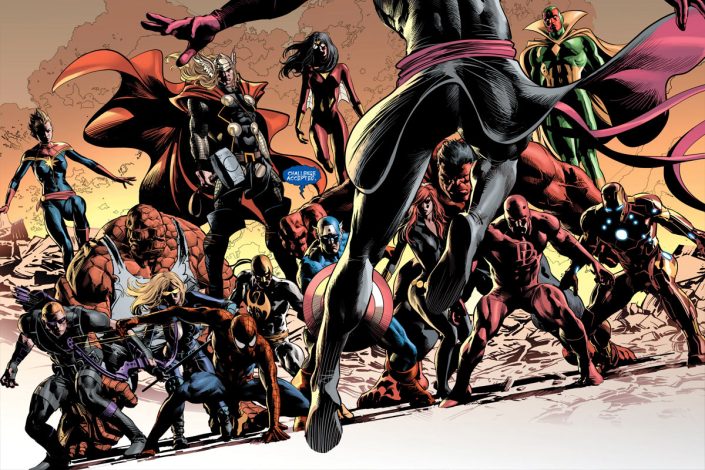
A quarter of the 21st century has already passed, yet there are still more comics to come. As readers, we don’t have the time or resources to read everything that has been published, and it can seem a bit daunting for new comic lovers to even try to look at what came before.
The eternal question is, ‘Where do I start?’ Answers are legion, depending on the topic. Where do you start with comics? Marvel Comics? Spider-Man comics? Or X-Men comics? Here at Comic Book Treasury, we are already trying to answer these questions within our dedicated reading orders or in specialised articles. Today, we’re answering another question: what are the essential Marvel comics published between 2000 and 2015?
Why stop in 2015? Because it was the year Jonathan Hickman’s Secret War brought the Marvel Universe to a stop. Ultimately, it did not work as a complete reboot in the same way some of DC Comics’ crises did, but it offered a semblance of an ending before the launch of a new era. So, it’s our first stop.
What will you find in our selection? Mostly complete stories, entry points, and full runs that marked the era. The ones you should be familiar with to get a full understanding of the Marvel Universe at the time. This is not necessarily the best, even if some of those comics are really great, it’s a road map, the essential Marvel Comics.
Due to severe restrictions to fit the purpose of the article, choices have to be made and are still debated even now that the article is published. Exhaustivity is not the goal. If you go through all of these, you’ll have a solid idea of what Marvel’s comics were about during that time.
Essential Marvel Universe (2000-2015): The 22 Runs/Stories To Read
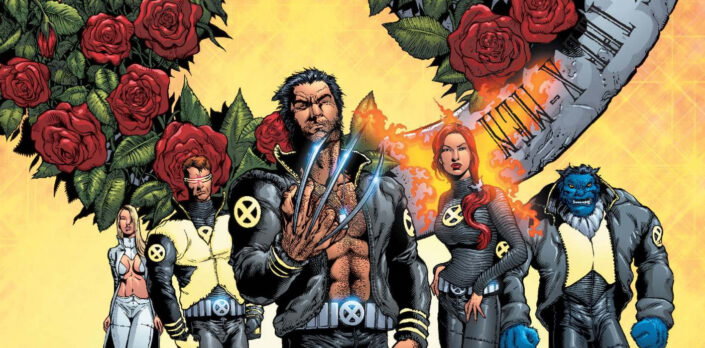
1. New X-Men by Grant Morrison & Frank Quitely (2001-2004)
Twenty-five years later, I think Grant Morrison and Frank Quitely’s work on the X-Men still feels fresh, and it works as the best entry point this side of the millennium into the X-Men, but also the Marvel Universe.
It was an original take on the X-Men that led them to explore new territories and character dynamics that felt new at the time. A lot of what Morrison did back then helped shape what the X-Men are today, from the way he wrote Emma Frost, Scott, Beast, Xorn, and many others. There’s also the new black leather uniforms, the destruction of Genosha…
It’s all collected in the New X-Men Omnibus. If you want to explore the era beyond Morrison’s New X-Men, check out our X-Men Reading Order: The Modern Era (2001-2005).
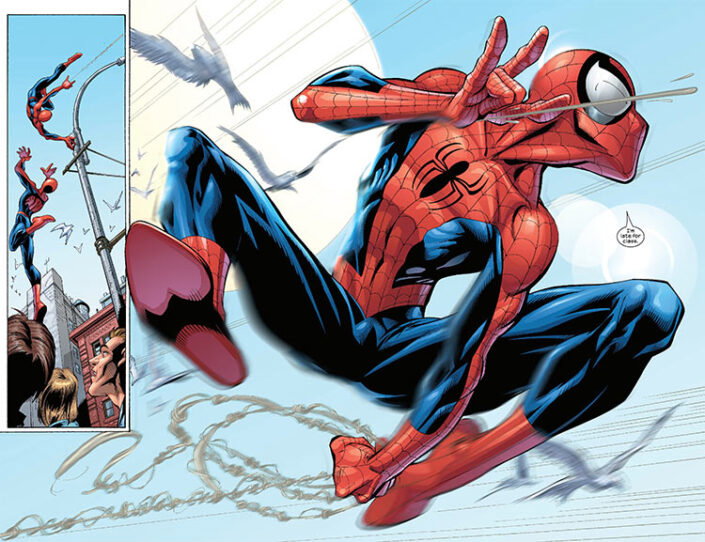
2. Ultimate Spider-Man by Brian Michael Bendis (2000-2011)
Designed to attract a new generation of readers, the Ultimate line was a new continuity that reimagined and modernized the famous Marvel superhero characters. Next to the X-Men, the Ultimates (aka the Avengers), the Fantastic Four, and others, we naturally had Spider-Man.
Coming from Brian Michael Bendis and the artist Mark Bagley (later replaced by Stuart Immonen and David Lafuente), Ultimate Spider-Man introduced a new version of Peter Parker’s origin story, taking the original 11-page comics by Stan Lee and Steve Ditko and turning them into a seven-issue story arc that redefined the character (and is known to have contributed to popularize decompressed storytelling). Bendis went on revisiting the classic bits of Spidey’s journey, putting its personal spin on them.
Ultimate Spider-Man was the most successful run in the Ultimate line. It lasted for 160 issues, famously ending with Peter Parker’s death, who passed the mantle to Miles Morales.
Where do you start with Ultimate Spider-Man? Check out the first omnibus, then explore the Complete Ultimate Marvel Universe Reading Order for what’s next.
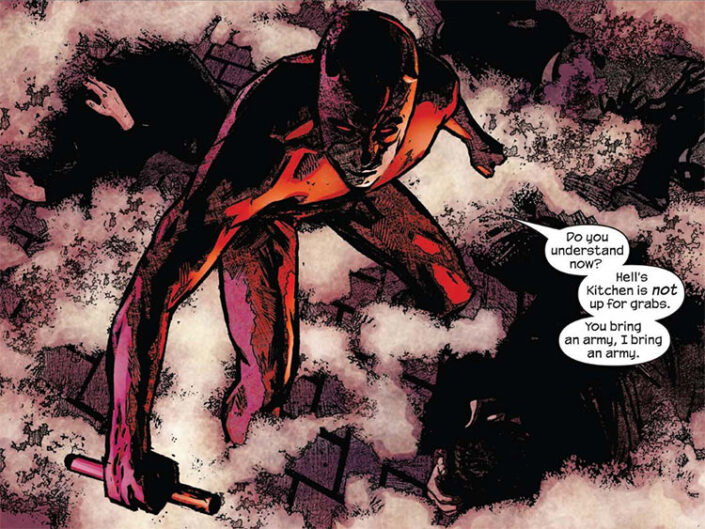
3. Daredevil by Brian Michael Bendis & Alex Maleev (2001-06)
In 1998, Marvel Comics was at an all-time low, having just filed for bankruptcy. Trying to keep things going, Joe Quesada and Jimmy Palmiotti of Event Comics were contracted to produce a new line of comics: Marvel Knights. The focus was on the then low-profile characters: Daredevil, Punisher, The Inhumans, and Black Panther.
At the launch, Quesada himself started working on the art of the Daredevil book written by movie director Kevin Smith. This was a success. Writer-artist David Mack soon took over and eventually brought in Brian Michael Bendis to produce a story (his first at Marvel, before he started working on Ultimate Spider-Man). Bendis would come back a few months later and work with Alex Maleev to produce their Eisner-winning run on Daredevil. It includes the introduction of romantic interest Milla Donovan, the comeback of the Kingpin (and Vanessa Fisk’s big turn), the public outing of Daredevil’s real identity, and much more.
With Bendis’ decompressed crime-noir writing and Maleev’s gritty, realistic, water-colored art style, these Daredevil comics looked and read like nothing else at the time and redefined Daredevil for a larger audience. It made me a Daredevil lifetime fan, and I think it still has that power on readers who discover the character with this run.
Where do you start with Daredevil by Bendis & Alex Maleev? Check out the first omnibus. And if you want to continue after that with Ed Brubaker’s run, check out our Daredevil Reading Order and the Daredevil Omnibus Reading Order!.
Collects Daredevil (1998) #61-81. Also collects Ultimate Marvel Team-Up (2001) #6-8 and What If Karen Page Had Lived? (2005) #1.
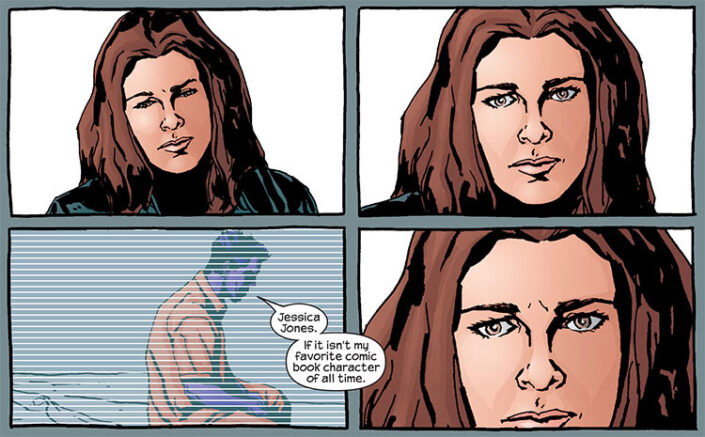
4. Alias by Brian Michael Bendis & Michael Gaydos (2001-03)
If you are new to Marvel Comics, you may only start realising that Brian Michael Bendis is the most important writer of that era. Before we start digging into his Avengers work, it’s impossible not to stop by Jessica Jones‘ office. Back in 2001, Marvel decided to break with the Comics Code Authority and established its own rating system. That’s the origin of the “MAX Comics” imprint, where Marvel published its adult-only comics. And the first series to be published under this new imprint was Alias. It’s the introduction of Jessica Jones, who was a former costumed superhero named Jewel. Her costumed career didn’t last, and she had left that life behind to become a private investigator.
Famously, the first issue starts with the word “fuck” which seemed to be a favorite of Jessica’s. It established the target audience immediately, but the book is not just about four-letter words. It deals with serious trauma, sex, and violence in a smart and mature way. The only downside for me is that if you learn to know Jessica through this book, but once it ended and she joined the regular Marvel Universe, she never felt the same. I regret there isn’t more of that Jessica Jones.
Where do you start with Alias by Brian Michael Bendis & Michael Gaydos? The complete Max series has been collected in one omnibus. After that, Jessica Jones was moved to the regular Marvel Universe and was seriously toned down. Bendis wrote the series The Pulse for which Michael Gaydos did the art for the last four issues. You can follow Jessica’s career with our Alias Jessica Jones Reading Order.
Collects Alias #1-28, What If Jessica Jones Had Joined the Avengers? (2005) #1
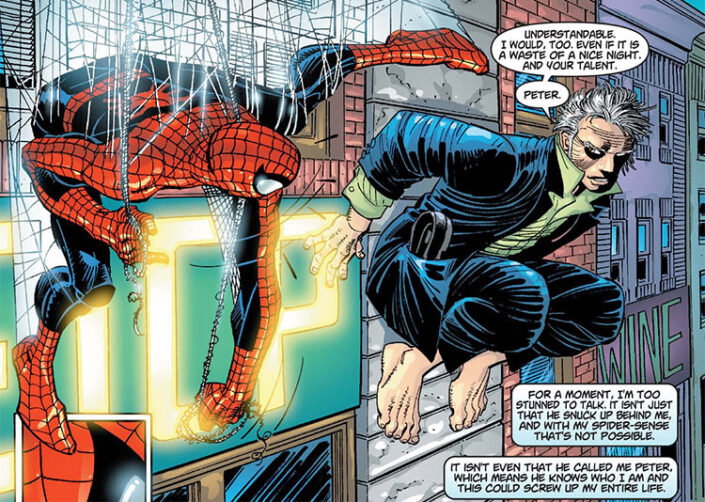
5. Amazing Spider-Man by J. Michael Straczynski (2001-2007)
I suppose that you can probably find a fan of 1990s Spider-Man and its never-ending Clone Saga. It’s not as bad as some claimed it to be, but it’s not prime Spider-Man by a large margin. So, when J. Michael Straczynski of TV Babylon 5 fame took over the book in 2001 with a still young and dynamic John Romita Jr. as a penciller, it felt that Peter Parker was finally back. The eternal problem that plagues Spidey is Marvel’s insistence on going back to the status quo every few years. The character is not allowed to grow. But it makes the beginning of this run the perfect entry point to Peter and Mary-Jane’s life for new readers.
Peter becomes a teacher at his old high school, and Straczynski quickly starts to introduce the most important additions to the Spider-Man mythos since the symbiote costume, connecting the spider-powers to a totem, and one of his most dangerous enemies, Morlun. It’s foundational storytelling for the two decades that follow, and I can recommend it enough to anyone wanting to get into the old Spider-Head comics. I’m also obligated to say that it has the worst ending ever, thanks to Marvel editorial. But reading “One More Day” is kind of a rite of passage for every comic book fan.
Where do you start with Amazing Spider-Man by J. Michael Straczynski? Check out the two omnibuses. But if you want to explore the run differently, you can check out our Spider-Man by J. Michael Straczynski Reading Order.
Collects Amazing Spider-man (1999) #30-58 & (1963) #500-514, plus #509 Director’s Cut.
Collects Amazing Spider-Man (1999) #515-545; Friendly Neighborhood Spider-Man (2005) #1-4, 24; Marvel Knights Spider-Man (2004) #19-22; Sensational Spider-Man (2006) #41; Spider-Man: The Other Sketchbook (2005) #1; Spider-Man: One More Day Sketchbook (2007) #1.
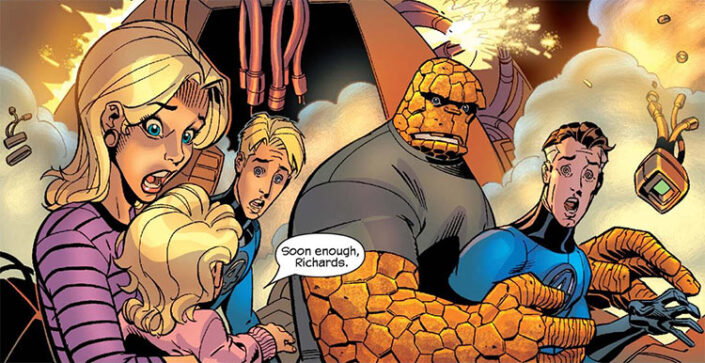
6. Fantastic Four by Mark Waid & Mike Wieringo (2002-2005)
When Tom Brevoort recruited Mike Wieringo and then Mark Waid to do a Fantastic Four run, both had to think about it before accepting the job because they never had a lot of interest in the book. That’s probably why it worked so well from the start, as they quickly decided to make their own thing in their personal style, not getting dragged on by their fandom.
Waid’s prime idea was that Mr. Fantastic is nobody’s favourite character, and he wanted to change that. The first issue is an introduction for new readers, which makes it the perfect entry point in the FF for this period. At some point, Marvel’s boss at the time, Bill Jemas, decided to suddenly micromanage the book despite its undeniable success, leading to Waid and Wieringo being fired, but Joe Quesada took over Jemas’s job, and the team came back, stronger than ever, continuing to make history (by making Jack Kirby the ‘God’ of the Marvel Universe).
When it ended, I’m not sure Reed had become anyone’s favourite character, but there was some serious improvement in the matter. Nowadays, this run is described by some as the best since the original Lee/Kirby run, while others think it’s the number one. I’ll let you decide.
Where do you start with Fantastic Four by Waid & Wieringo? It’s all collected in one omnibus. Marvel recently reprinted it in paperback, you can find more about that in our Fantastic Four Reading Order
Collects Fantastic Four (1998) #60-70, #500-524, and #500 Director’s cut.
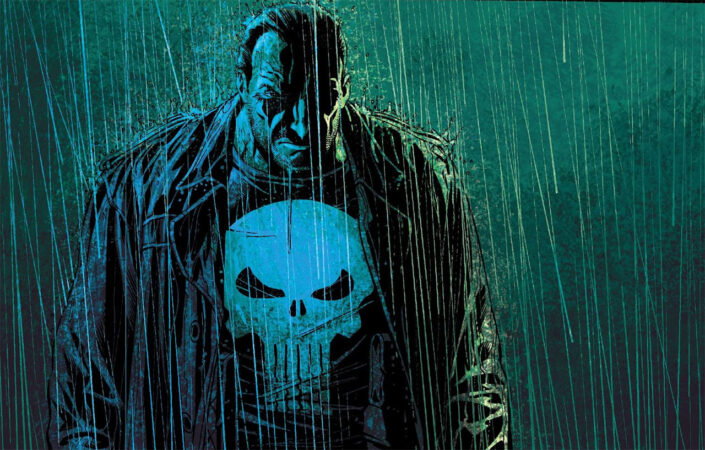
7. The Punisher Max by Garth Ennis
When you hear that Garth Ennis has written some of the best Punisher comics, it makes sense. He even did some with his collaborator on Preacher (a classic), cartoonist Steve Dillon, when he relaunched the character as part of the Marvel Knights imprint. It’s great, go read it. But if you think about it, Marvel Max is an even more logical place to put a Punisher book by Ennis.
The Punisher Max is a 60-issue run, plus a few one-shots and miniseries. It works as a relaunch, not connected to the larger Marvel Universe. It’s its own thing. Obviously, it’s a darker and more violent book. It’s set in a more realistic world and works as an exploration of violence centered on a bloodthirsty, broken man. This version of The Punisher’s war is something you don’t usually find in mainstream comics. I would not recommend it to anyone, as it’s undeniably an adult-only book, as much for its graphic content as for its psychological exploration of the character.
Where do you start with The Punisher Max by Garth Ennis? It’s all collected in two omnibuses, but if you also want to check out Ennis’ Marvel Knights Punisher, I’ll direct you to our The Punisher by Garth Ennis Reading Order.
Collects The Punisher #31–60, The Punisher Presents: Barracuda MAX #1–5, Punisher: The Tyger #1, Punisher: The Cell #1, Punisher: The End #1
 While Iron Man is an important figure in the Marvel Universe, his own solo series didn’t leave a big mark on that era. But if you are looking for a great story to read, an entry point if you wish, I’d recommend you check out Iron Man: Extremis by Warren Ellis & Adi Granov (2004)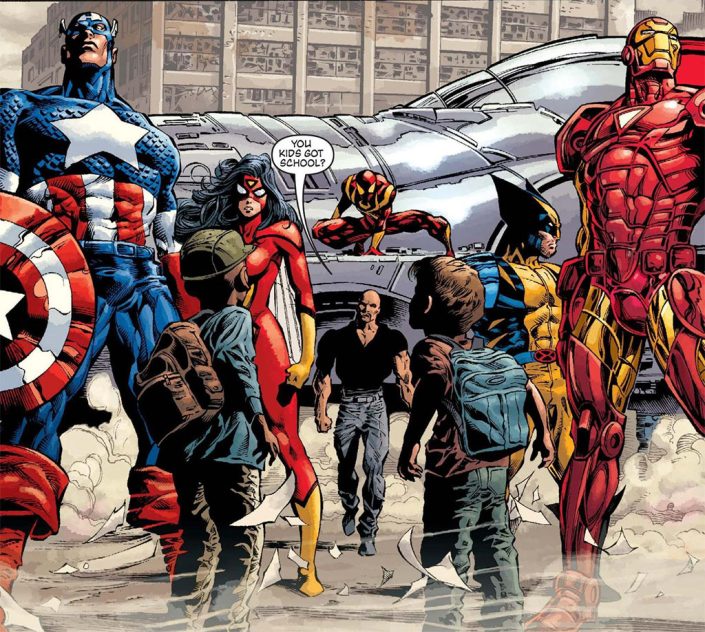
8. New Avengers by Brian Michael Bendis (2005-12)
Starting with Avengers Disassembled, Brian Michael Bendis’s run on New Avengers became the backbone of the Marvel Universe. Those comics take you from one big event to another, with everything connecting through them during most of that era. If you want to stay connected with the continuous flow of status quo-shattering events and not get lost in the numerous battles in the streets of New York, I would say unequivocally, this is one run you can’t avoid.
The Avengers team has Captain America and Iron Man, but the rest of the members seemed not as conventional at the time: Spider-Man, Wolverine, Luke Cage, Spider-Woman, Echo (aka Ronin), and the Sentry. A lot of street-level characters, as the book focused less on cosmic threats and more on shadowy conspiracies. As I said earlier, Bendis became known for his use of decompressed storytelling, it’s part of his style, like what we call now the “Bendis-Speak,” his way to write dialogue. Some find it irritating, others like it as a more naturalistic dialogue. You’ll recognize it when you read it. As for the art, the style was established by David Finch, then Steve McNiven, Leinil Francis Yu, Billy Tan, Stuart Immonen, and Mike Deodato Jr. worked on notable parts of this multi-year epic.
Where do you start with Brian Michael Bendis’s New Avengers? Best start with Avengers Disassembled, then the first New Avengers omnibus. After issue #10, read House of M, and after issue #20, it’s time for Civil War. After the Civil War, Bendis extended the line with Mighty Avengers. It’s really a big endeavour, and I can only recommend that you go through our complete Brian Michael Bendis’ Avengers Reading Order to help you navigate this.
Collects Avengers (1998) #500-503, Avengers Finale #1, New Avengers (2004) #1-31 and Annual (2006) #1, New Avengers Most Wanted Files #1, New Avengers Guest Starring The Fantastic Four #1, Giant-Size Spider-Woman #1, New Avengers: Illuminati (2006) #1, Civil War: The Confession And Civil War: The Initiative.
9. Captain America by Ed Brubaker (2005-12)
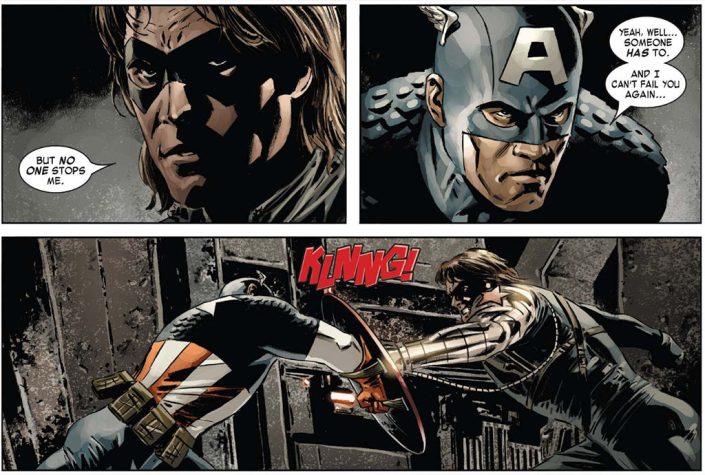
Almost parallel to Bendis’s New Avengers, Captain America had a solo revival in the hands of writer Ed Brubaker and artist Steve Epting. Their first order of business became one of the greatest stories of the decade, the introduction of Winter Soldier. But that was only the beginning of a 100-issue-long run (plus spin-offs and miniseries!).
This run redefined Cap for the modern age. It’s a high-stakes, geopolitical, cinematic spy thriller dealing with corporate corruption, Russian sleeper agents, and the psychological toll of war. Of course, this is a long run, so there is more than Bucky’s spectacular comeback and the “death” of Captain America, and subsequent return, there’s a lot more.
Where do you start with Captain America by Ed Brubaker? It’s all collected in five omnibuses, but if you really want to read the essentials, I would recommend you at least read the first 25 issues of the run. After that, I’ll direct you to our Captain America by Ed Brubaker Reading Order to navigate through the rest. Also, despite the event of the Civil War, Ed Brubaker’s run can be read on its own, it’s not that connected to what happened, surprisingly.
Collects Captain America (2005) #1-25, Captain America 65th Anniversary Special (2006) #1, Winter Soldier: Winter Kills (2007). Issues #22-24 of the Captain America comics and the Winter Soldier: Winter Kills one-shot are part of the Civil War event.
10. Planet Hulk by Greg Pak (2006-07)
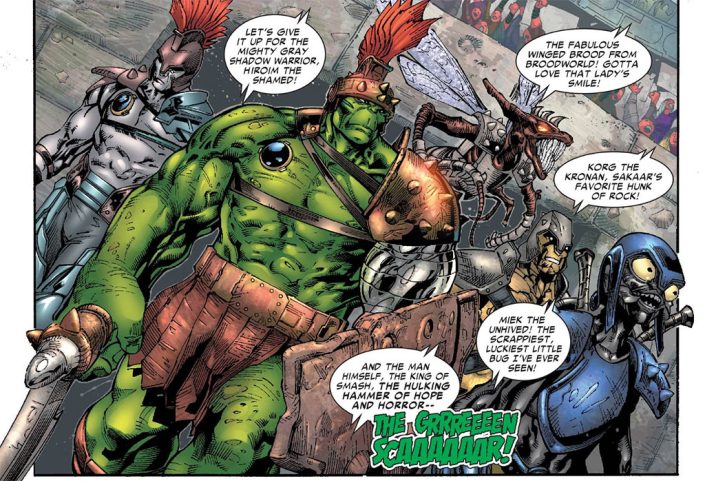
First, before going into Hulk, if you’re following the New Avengers, this starts after the introduction of The Illuminati (one of the most notable creations by Bendis). The group decided that the Hulk was too dangerous to remain on Earth, so they found a way to send him into space, so he can smash elsewhere. Things went wrong, and the Green Goliath landed on Sakaar, a savage, Roman-Empire-style planet ruled by the tyrannical Red King.
With artist Carlo Pagulayan, writer Greg Pak wrote a sci-fi epic, developing a whole world where the Hulk goes from beast to Gladiator, to king. A tale of rebellion, war, and peace, punctuated by a love story. And it’s really a Hulk story, I would not recommend it if you are looking to read some Bruce Banner tale. Hulk may have been away during Civil War, but he had a massive fight to lead on his side of the universe.
Where do you start with Planet Hulk by Greg Pak? It’s all collected in one omnibus, and once you have finished with it, you continue with World War Hulk to see how the Hulk came back to Earth. Go check out our massive Hulk Reading Order.
Collects Fantastic Four (1998) #533-535, Incredible Hulk (2000) #88-105, Giant-Size Hulk (2006) #1, What If? Planet Hulk (2007) #1, Planet Hulk: Gladiator Guidebook (2006) #1; material from New Avengers: Illuminati (2006) #1, Amazing Fantasy (2004) #15.
Collects World War Hulk Prologue: World Breaker, World War Hulk #1-5, Incredible Hulk vol. 2 #106-111, Iron Man (2005) #19-20, Avengers: The Initiative #4-5, Irredeemable Ant-Man #10, World War Hulk: X-Men #1-3, Ghost Rider (2006) #12-13, Heroes For Hire (2006) #11-15, Punisher War Journal (2007) #12, World War Hulk: Gamma Corps #1-4, World War Hulk: Front Line #1-6, World War Hulk: Aftersmash one-shot, World War Hulk: Aftersmash Damage Control #1-3, WWH: Aftersmash Warboung 1-5, Planet Hulk Saga.
11. Annihilation (2006-07)
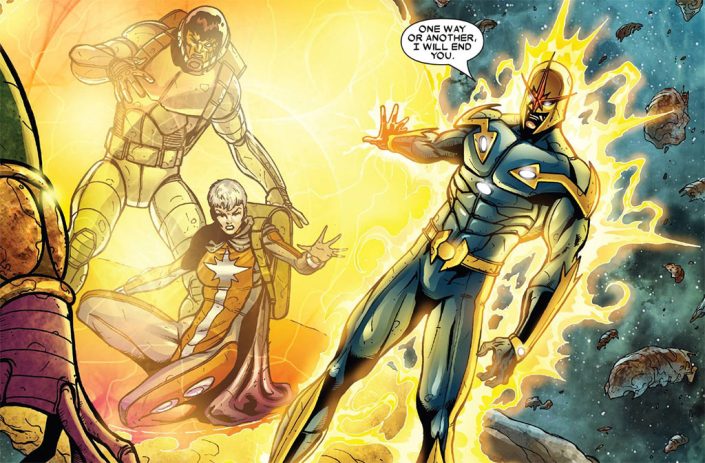
At the same time Civil War was happening on Earth, the cosmic side of the Marvel Universe was going through a revival that beagun with the Annihilation event. The story begins with Annihilus, a classic villain from the Negative Zone, launching into our universe the Annihilation Wave: a trillion-strong armada of insectoid warships! Entire civilizations are wiped out, and the Nova Corps (the galaxy’s police force) is decimated. Only one survivor is there to lead the resistance, the battle-hardened Nova (Richard Rider).
It’s not just a sci-fi war epic, it’s a rebirth with old characters being reintroduced, like Star-Lord (Peter Quill) and Drax the Destroyer. Orchestrated by Keith Giffen, Annihilation is one of those rare events that you need to read the tie-in miniseries to understand the story.
Where do you start with Annihilation? The whole event has been collected in one omnibus. It was the rebirth of Cosmic Marvel. So, once you have finished here, you can jump on our Marvel Cosmic Reading Order to know where to go next. A hint: check out the Guardians of the Galaxy a bit below in this article.
Collects Drax The Destroyer #1-4, Annihilation: Prologue, Annihilation: Nova #1-4, Annihilation: Silver Surfer #1-4, Annihilation: Super-Skrull #1-4, Annihilation: Ronan #1-4, Annihilation #1-6, Annihilation: Heralds Of Galactus #1-2, and Annihilation: Nova Corps Files.
12. Thor by J. Michael Straczynski & Oliver Coipel (2007-09)
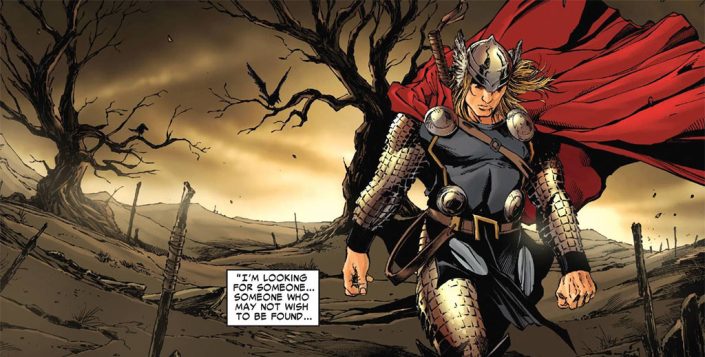
Following Avengers Disassembled, Thor was no more. But you can’t keep a God down, especially one in the Marvel Comics Universe. So, three years later, J. Michael Straczynski and artist Oliver Coipel were tasked to bring back Thor and the gods of Asgard. It’s a comeback book.
The big returns are Dr. Donald Blake, the human alter-ego of Thor, and Asgard, being brought back as a floating city based in the Oklahoma town of Broxton. And there’s also a slightly different Loki. The core idea at the beginning of the run is that Thor travels the globe to find his fellow gods, who are trapped in human forms without knowing their true identities. Things get complicated with some revelations, but also events. There was Secret Invasion (in 2008), but it’s Siege (2009) that caused problems, as Brian Michael Bendis’s plans for Asgard were imposed on Straczynski, who abruptly decided to quit instead of altering his planned stories. As a result, Kieron Gillen was tasked with dealing with everything that was left unresolved. Still, this is one of the greatest Thor runs.
Where do you start with Thor by J. Michael Straczynski & Oliver Coipel? It’s all collected in one omnibus, and you can check out our Thor Reading Order for more information on Kieron Gillen’s follow-up.
Collects Fantastic Four (1998) #536-537; Thor (2007) #1-12, 600-614; Thor Annual (2009) #1; Thor Giant-Size Finale (2009); Siege (2010) #1-4, 1 Director’s Cut; Siege: Loki (2010) #1; New Mutants (2009) #11; Secret Invasion Aftermath: Beta Ray Bill – The Green of Eden (2009) #1; Beta Ray Bill: Godhunter (2009) #1-3; material from Dark Reign: The Cabal One-Shot (2009).
 Following Secret Invasion (tied to New Avengers #38-47), Iron Man is fired and replaced by Norman Osborn, who rebrands S.H.I.E.L.D. into H.A.M.M.E.R. and assembles his own “Dark Avengers.” This famous “Dark Reign” era follows the true heroes as they go underground, struggling to survive in a world where the greatest monsters are now the official authorities. This is not an event. Check out our Dark Reign Reading Order for more context, as most of the Marvel series of that time were affected.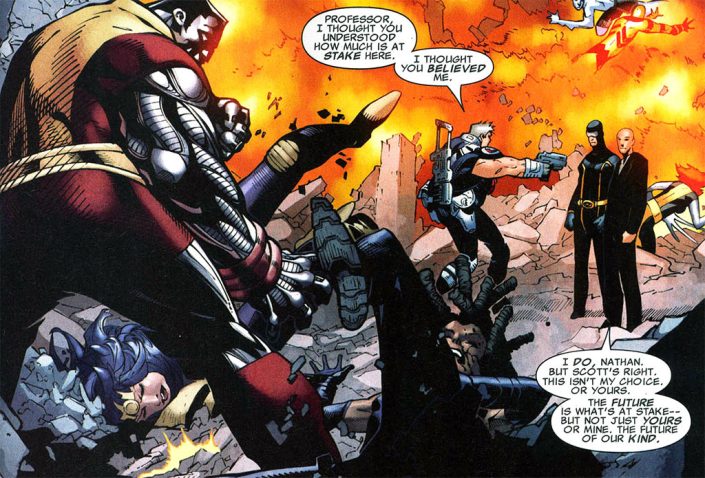
13. X-Men: The Messiah Trilogy (2007-10)
While the Avengers had to deal with Secret Invasion and Dark Reign, the X-Men had other problems because, following House of M, the mutant population was reduced from millions to about 198. No new mutants were being born until a single “ping” appeared on Cerebro. The trilogy begins with the story of the race to claim that one child: the “Mutant Messiah.” It sparked a bloody war between the X-Men, the Marauders, the Purifiers, and Cable.
The three chapters were not published consecutively, and every fan of the X-Men will tell you to read what was published between each of them. But if you really want to stick with the must-read stories of the era post-Morrison, when it comes to the X-titles, the Messiah Trilogy is one you can’t miss.
Where do you start with X-Men: The Messiah Trilogy? Now, Marvel Comics has reprinted the three books in one omnibus. Before it, though, I would recommend you read Endangered Species. For a more detailed reading order of the era, check out Part 4 of our complete X-Men Reading Order.
Collects X-Men: Endangered Species One-Shot and backup stories from X-Men #200-204, Uncanny X-Men #488-491, X-Factor #21-23, and New X-Men #40-42.
Collects X-Men: Messiah Complex (2007), Uncanny X-Men (1981) #492-494 And #523-525, X-Men (1991) #205-207, New X-Men (2004) #44-46, X-Factor (2005) #25-27, X-Men: Messiah Complex – Mutant Files (2007), X-Men: The Times And Life Of Lucas Bishop (2009) #1-3, Cable (2008) #11-15, X-Force/Cable: Messiah War (2009), X-Force (2008) #14-16 And #26-28, X-Men: Future History – The Messiah War Sourcebook (2009), Second Coming: Prepare (2009), Second Coming (2010) #1-2, New Mutants (2009) #12-14 And X-Men Legacy (2008) #235-237.
14. Guardians of the Galaxy by Dan Abnett & Andy Lanning (2008-10)
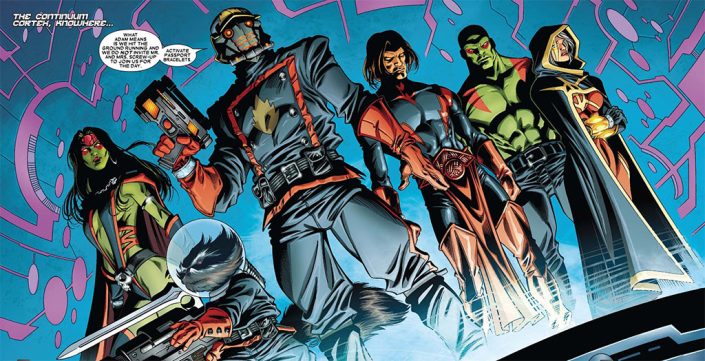
Once Annihilation ended, Marvel launched the sequel with Annihilation: Conquest, during which Marvel’s cosmic heroes have to defend the universe against the Phalanx, now led by Ultron. During that event, Star-Lord led a ragtag team into battle behind enemy lines! This is the creation of the modern Guardians of the Galaxy team that was immediately launched into its own series written by Dan Abnett and Andy Lanning with art by Paul Pelletier, Brad Walker, and Wes Craig.
Operating out of Knowhere, the severed head of a Celestial at the edge of the universe, the team Star-Lord assembled is made of Rocket Raccoon, Groot, Drax the Destroyer, Gamora, Adam Warlock, Phyla-Vell, and Cosmo (a telepathic Soviet space dog who runs security on Knowhere). It’s not the Guardians from the MCU, but it’s in part what inspired the movies. The team deals with its side of the Skrull invasion, “The Fault” leading to the Cancerverse, the War of Kings, and Thanos. It’s serious, epic, and now a true cult classic.
Where do you start with Guardians of the Galaxy by Dan Abnett & Andy Lanning? The omnibus collects the whole series plus The Thanos Imperative, the miniseries that concluded the Cancerverse story. You can start with Annihilation: Conquest, of course, I’d recommend it, but I don’t think it’s obligatory reading. Also, after issue #12, the War of Kings event takes place. I’d refer you to our Marvel Cosmic Reading Order for a clearer idea of how to deal with it. But also, you can gloss over if you only want to read the GotG series.
Collects Guardians of the Galaxy (2008) #1-25; Thanos Imperative: Ignition #1, #1-6, Devastation #1; material from Annihilators #1-4; material from Annihilators: Earthfall #1-4.
15. Dark Avengers by Brian Michael Bendis (2009-2010)
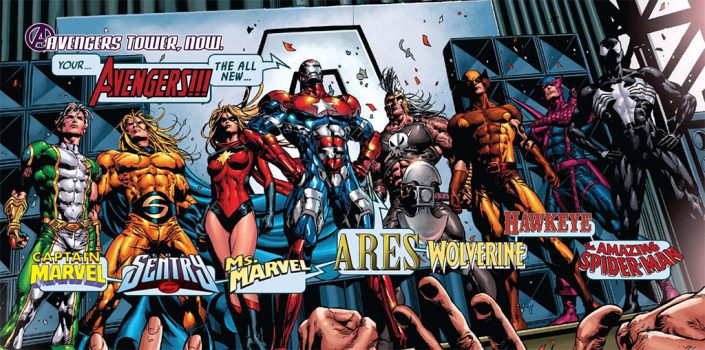
Back on Earth, let’s rewind slightly. Following Secret Invasion during which it was revealed that Skrulls had replaced some of the Super-Heroes, Norman Osborn became a national hero. Yes, the infamous Green Goblin. He was given control of S.H.I.E.L.D. (which he rebrands as H.A.M.M.E.R.) and decides that the world needs Avengers. It’s the Dark Reign era.
Since the real heroes refuse to work for him, he recruits his own team of supervillains to masquerade as the world’s greatest icons. The Dark Avengers are born (it’s basically The New Thunderbolts). They are Iron Patriot (Norman Osborn), Ms. Marvel (Moonstone), Hawkeye (Bullseye), Wolverine (Daken), Spider-Man (Mac Gargan/Venom), Ares (the literal God of War), and The Sentry. Brian Michael Bendis and artist Mike Deodato Jr. did something different with this series. It’s not about heroism or brotherhood anymore, it’s a group of insane, unstable people who hate each other and do cover-up missions to serve the political agenda of a man slowly losing his mind.
Where do you start with Dark Avengers by Brian Michael Bendis? Dark Avengers is only 12 issues long. If you know the context, you don’t need anything more. Issues #7-8 are part of the Utopia crossover with X-Men, and when you reach the end, you read the concluding event, Siege.
Collects Dark Avengers (2009) #1-6, #9-16, and Annual #1.
Collects Uncanny X-Men (1963) #513-514, X-Men: Legacy (2008) #226-227, Dark Avengers/Uncanny X-Men: Exodus, Dark Avengers/Uncanny X-Men: Utopia; Dark Avengers (2009) #7-8, Dark X-Men: The Beginning (2009) #1-3, Dark X-Men: The Confession.
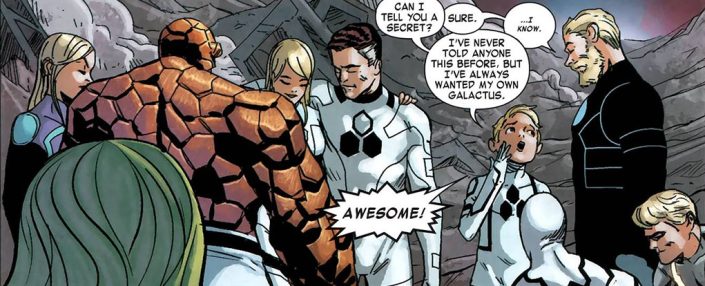
16. Fantastic Four by Jonathan Hickman (2009-12)
Back in 2009, Jonathan Hickman was not yet known to be the big idea guy at Marvel, but his run on Fantastic Four would change that pretty quickly. Working with artists like Dale Eaglesham and Steve Epting, he introduced The Interdimensional Council of Reeds, a group of versions of himself from across the multiverse who have abandoned their families to “solve everything,” as a way to remind Reed what would cost such ambitions. There is a big loss in the family, though, one that encouraged the introduction of the Future Foundation (FF), an evolution of the team into a think-tank of brilliant young minds. For short, I would say that Hickman’s FF is about personal family stories alongside serious sci-fi high-concepts, working towards an epic cosmic finale.
As often with him, it’s not necessarily an easy entry point for new readers, it’s better to be familiar with Marvel’s first family before (but if you are following this reading map, you are). Also, this run is the foundation for Secret Wars (see the end of the article).
Where do you start with Fantastic Four by Jonathan Hickman? It’s all collected in two omnibuses. I invite you to go check out our breakdown of Hickman’s FF run if you decide to go with other editions.
Collects Dark Reign: Fantastic Four #1-5, Fantastic Four #570-588, FF #1-5, And Material From Dark Reign: The Cabal #1.
Collects FF (2011) #6-23; Fantastic Four (2012) 600-611, 605.1.
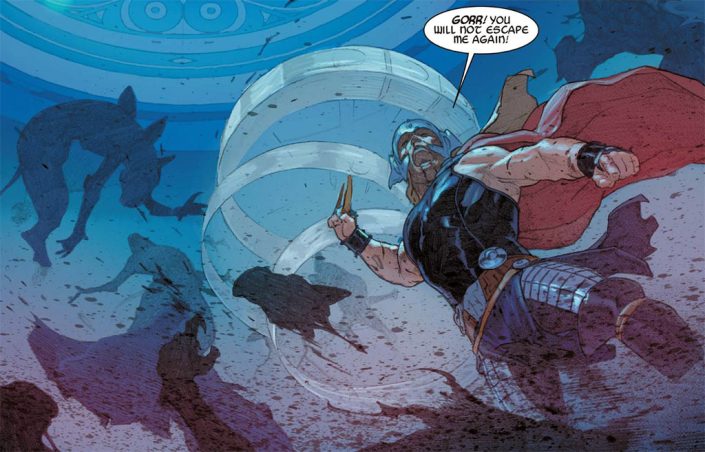
17. Thor by Jason Aaron (2012-2019)
Jason Aaron’s run on Thor lasted 7 years. Obviously, it continued beyond the ending point of this article, but the first part (or I would say the first two parts) of this run is worthy enough to be placed here. First, Aaron started with the 25-issue series Thor: God of Thunder that began with Thor, accompanied by an elderly Thor from the future and a young Thor from the past, battling Gorr the God Butcher.
It’s one of the greatest Thor stories from Marvel (with one of the greatest villains), really elevated with the gorgeous art by Esad Ribic. This first series also builds up Malekith the Accursed as the big antagonist for years to come. Then came the Original Sin event, which is totally optional, except for the ending when Thor became Unworthy and lost Mjolnir. That’s after that, with Volume 4 of Thor, that the famous Female Thor was introduced. This story is mainly developed after Secret Wars, so I’ll write about it in the next guide to read the essentials of the Marvel Universe. This whole run questions if the gods deserve the worship of mortals, so Thor will go through a lot, a serious deconstruction of the character, to let him evolve.
Where do you start with Thor by Jason Aaron? This part of the run (and beyond 2015) is collected in one omnibus, but also in many other formats. It’s a very popular run, and Marvel Comics reprinted it in multiple formats. I let you check out our Thor by Jason Aaron Reading Order to navigate between them.
Collects Thor: God of Thunder (2012) #1-25, Thor (2014) #1-8, Thor Annual (2015) #1, Thors (2015) #1-4, Mighty Thor (2015) #1-12.
 This is not the end of Bendis’s run on New Avengers (he was also writing Avengers at the time, but Avengers vs. X-Men is the beginning of the end. His last consequential event. One that is mostly hated by fans of X-Men and Avengers, but it had consequences for Cyclops and Wakanda. The story begins as the Phoenix Force heads for Earth. The X-Men believe the Phoenix will jumpstart the mutant race and save them from extinction. They see it as a messiah. The Avengers see the Phoenix as a world-ending threat that has destroyed entire civilizations. They want to contain or destroy it. You can read the complete event in the Avengers vs. X-Men Omnibus.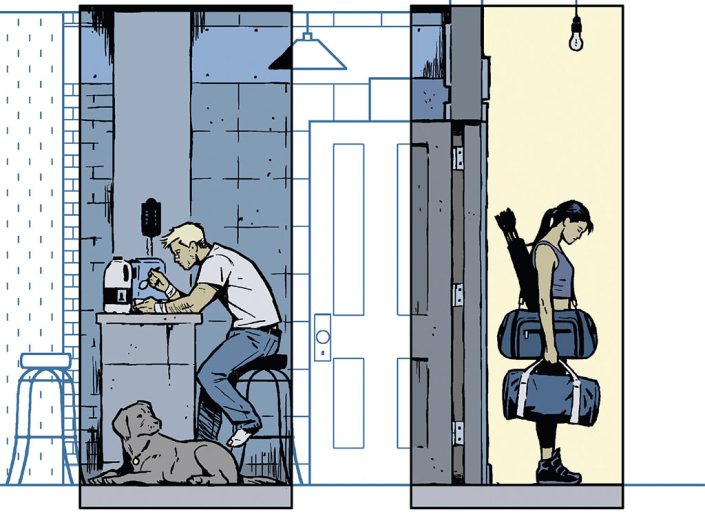
18. Hawkeye by Matt Fraction & David Aja (2012-2015)
Matt Fraction and David Aja’s Hawkeye is known as one of the greatest writer/artist collaborations of the era. It’s also not regular Hawkeye or even Marvel comics. It’s done with lower stakes, a more lighthearted approach, and an indie vibe.
In fact, the reputation of the book is in big part built on David Aja’s work. His minimalist, 1960s-inspired aesthetic had a huge impact on modern comics. And this run, being one of the very few in recent memory done using the Marvel Method, Aja is clearly the heart of the book. As for the stories, it’s at first about what Clint Barton does when he’s not an Avenger. I personally loved everything done with Kate Bishop, her messy life, and her relationship with Clint. It’s not a major work storytelling-wise, but it left a mark on Marvel Comics.
Where do you start with Hawkeye by Matt Fraction & David Aja? It’s a pretty self-contained book, and all has been collected in one omnibus. There are more collected editions, this is one of the books Marvel never stops reprinting in multiple formats. Check out our Hawkeye Reading Order, for more details on those comics.
Collects Hawkeye (2012) #1-22 and Annual #1, and Young Avengers Presents #6.
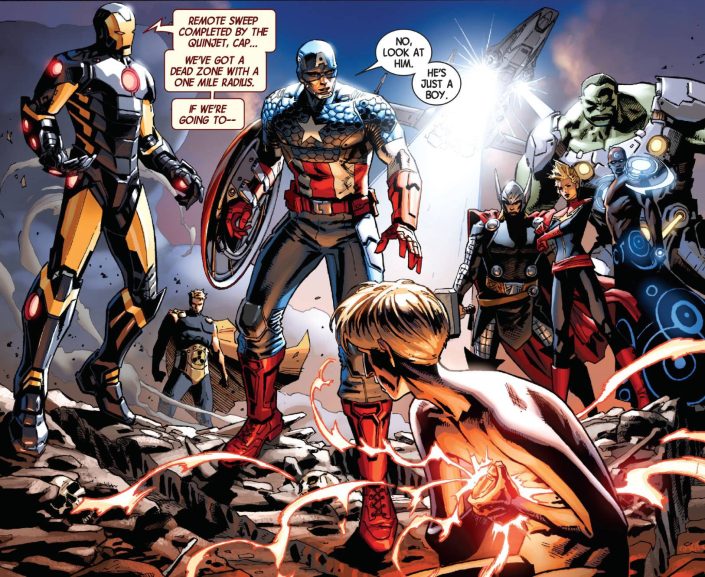
19. Avengers by Jonathan Hickman (2012-15)
After the Age of Ultron, Bendis left the Avengers, and Jonathan Hickman took over with high ambitions, expanding his work on the Fantastic Four. Far away from street crime heroes as possible, The Avengers are rebuilding into one massive force to fight threats from space, other dimensions, and everywhere you can think of. It is a high-concept, multi-dimensional epic that functions like a countdown clock to the end of everything.
Like its predecessor, Hickman wrote the two main Avengers series. One is building up towards a cosmic war (check out Infinity), while the other is about the Illuminati fighting against multidimensional invasions. The first goes as big as possible. The second deals with very high stakes covertly. It’s big ideas upon big ideas for three years, with the ending changing the Marvel Universe forever (for once, it was true).
Where do you start with Avengers by Jonathan Hickman? The whole run is collected in two omnibuses. If you want to track the issues individually, I can’t recommend you enough to follow the Jonathan Hickman’s Avengers Reading Order to avoid getting lost.
Collects Avengers (2012) #1-23, New Avengers (2013) #1-12, Free Comic Book Day 2013: Infinity #1, Infinity #1-6, Infinity: Against The Tide Infinite Comic #1-2, Astonishing Tales: Mojoworld #1-6, Material From Shang-Chi: Master Of Kung Fu (2009) #1.
Collects Avengers (2012) #24-44 and New Avengers (2013) #13-33.
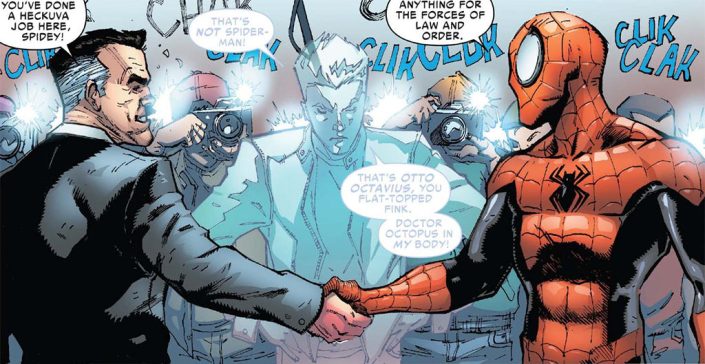
20. Superior Spider-Man by Dan Slott & Ryan Stegman (2013-14)
Dan Slott wrote Spider-Man for a decade. He started in 2011 and less than two years later, with The Amazing Spider-Man #700, he “killed” Peter Parker, introducing the most unexpected explosion of the status quo when dying Doctor Octopus managed to swap his consciousness with Peter Parker. It was quite controversial at the time, but the change became popular as the book explored in a fun way how a genius ego-maniac couldn’t fix Peter Parker’s life. Sure, Otto did a good job career-wise, but even he had to realise that his “superiority” was not enough, and the real amazing Spider-Man was the hero he could not be.
It’s a 31-issue run, so there are a lot of stories, it’s not just a gimmick for a few weeks. I’m personally a big fan of Anna Maria Marconi and the way she deals with “Peter,” but there are many more elements to that era that made Superior Spider-Man a great series.
Where do you start with Superior Spider-Man by Dan Slott? Everything you need is collected in one omnibus. After that, Otto kept trying for a while to become the ultimate hero in a solid series by Christos Gage that I would recommend if you liked this version of the character (it’s collected in Superior Spider-Man: Returns Omnibus).
Collects Amazing Spider-Man (1999) #698-700 And Superior Spider-Man #1-31 And Annual #1-2.
 Intrigued by the Moon Knight Disney+ series or just looking for a low-stakes short read before jumping into the last world-ending multiversal epic crossovers that put an end to this era, Moon Knight by Warren Ellis & Declan Shalvey is a 6-issue arc that definitive modern reinvention of Marc Spector, a precedural crime story with a weird twist that goes through the multiple personalities of Moon Night. It has been collected in Moon Knight Vol. 1: From The Dead.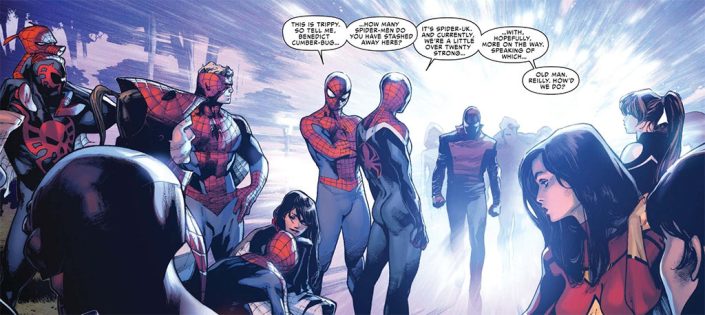
21. Spider-Verse by Dan Slott, Olivier Coipel, and Giuseppe Camuncoli (2014-15)
Rooted in J. Michael Straczynski’s Amazing Spider-Man run, uniting every Spider-Man ever and then some, Spider-Verse is the ultimate tale of the Multiverse. Morlun is back with his family, The Inheritors, traveling across the multiverse to hunt down and “eat” every person with spider-powers. To survive, the Spider-people from every conceivable reality (comics, cartoons, newspapers, alternate “what-ifs”, and even the recently introduced Silk and the recently departed Superior Spider-Man) must unite into a Spider-Army to fight back.
Dan Slott, with artists Olivier Coipel and Giuseppe Camuncoli, celebrated Spider-Man’s long history with a thrilling adventure of epic proportion that expanded Peter Parker’s world and consolidated the Spider-community into one big dysfunctional family. I would say that, today, the Spider-Verse has been a bit overused, but this first one is a must-read that left an impactful mark.
Where do you start with Spider-Verse by Dan Slott? Spider-Verse and its first sequel, Spider-Geddon, have been collected in one omnibus. You can stick to the original storyline, but if you want to look out for more multiversal adventures full of Spider-People, I recommend the enjoyable Web-Warriors set just after it. Go check out our Spider-Man Spider-Verse Reading Order for more info.
Collects Edge Of Spider-Verse #1-5; Spider-Verse (2014) #1-2; Superior Spider-Man (2013) #32-33; Amazing Spider-Man (2014) #7-15; Spider-Man 2099 (2014) #5-8; Scarlet Spiders #1-3; Spider-Woman (2014) #1-4; Spider-Verse Team-Up #1-3; Edge Of Spider-Geddon #1-4; Spider-Geddon #0-5; Superior Octopus #1; Spider-Force #1-3; Spider-Girls #1-3; Peter Parker, The Spectacular Spider-Man (2017) #311-313; Spider-Gwen: Ghost Spider #1-4; Vault Of Spiders #1-2; Spider-Geddon: Spider-Man Noir Video Comic; Spider-Geddon: Spider-Gwen – Ghost Spider Video Comic; Spider-Geddon: Spider-Man Video Comic; Spider-Geddon Handbook And Material From Free Comic Book Day 2014 (Guardians Of The Galaxy).
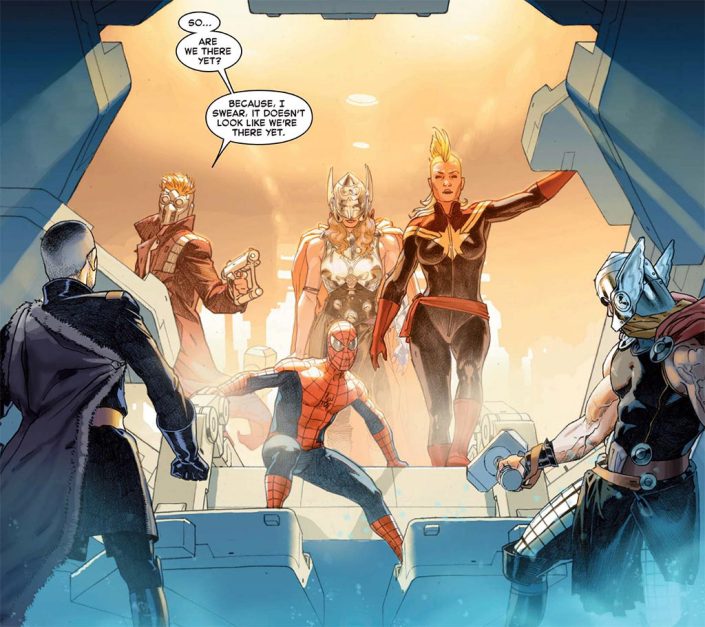
22. Secret Wars by Jonathan Hickman and Esad Ribic (2015-16)
The culmination of Jonathan Hickman’s work on the Fantastic Four and the Avengers, Secret Wars is also the end of the Marvel Universe (and of the Ultimate Marvel line). The Marvel Universe (Earth-616) and the Ultimate Universe (Earth-1610) collide, from the ashes, Doctor Doom creates Battleworld, a patchwork planet made of fragments of various realities. Years later, a small group of heroes and villains appears and puts Doom’s dominion in peril.
This was not just another crossover, it was a climactic event years in the making, which delivered what it promised. Of course, it was not an ending, but a new beginning, even if the changes that followed didn’t rewrite the whole history of the characters.
Where do you start with Secret Wars by Jonathan Hickman and Esad Ribic? The best is to read it in the continuity of Hickman’s run on the Avengers. I would recommend that you read the main miniseries in one go, as the tie-ins are “What If” scenarios that don’t impact the overall story. If you like more options, check out our Secret Wars Reading Order.
Collects Secret Wars #1-9, Free Comic Book Day 2015 Secret Wars #0 (Secret Wars story).

Create something like that for DC Comics.. also create a post for top 50 comics runs in dc by writers