Skip to content

Marvel

Thunderbolts Reading Order

  • by

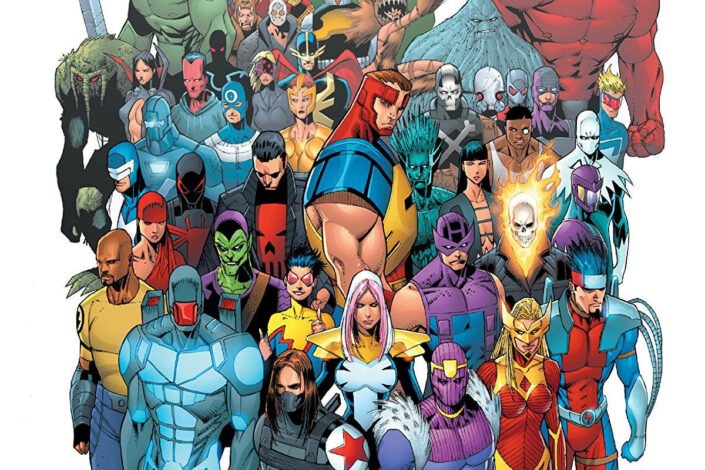
Following the events of 1996’s Onslaught, the Avengers and the Fantastic Four were declared dead. A new group of ‘superheroes’ decided to step in to help protect the world: The Thunderbolts!

Considered the equivalent of DC’s Suicide Squad, The Thunderbolts was created by Kurt Busiek and Mark Bagley and they made their first appearance in The Incredible Hulk #449 (January 1997) before the launch of their ongoing series the following month.

What seemed to be a basic superhero team then changed on the last page, when it was revealed that The Thunderbolts, led by Baron Zemo, were actually the Masters of Evil in disguise! This is known as one of the most famous twists in Marvel history.

With themes of redemption and heroism, The Thunderbolts will walk away from their evil nature, choosing to reject Baron Zemo and try to become heroes in their own right. Throughout the years, this team of anti-heroes has worked to do good things when led by Hawkeye, Luke Cage, and the Winter Soldier, but has also been used as a dangerous and malevolent force by leaders like Norman Osborn and Wilson Fisk. As you can imagine, between changes in leadership and direction, the roster of the team has changed a lot over the years.

A new version of Thunderbolts will soon be on the big screen, as a movie featuring the team will be released in 2024. Before that, you can start reading The Thunderbolts, and exploring their past (and present) history with this reading order!

Read More »Thunderbolts Reading Order

Elsa Bloodstone Reading Order (and Ulysses Bloodstone)

  • by

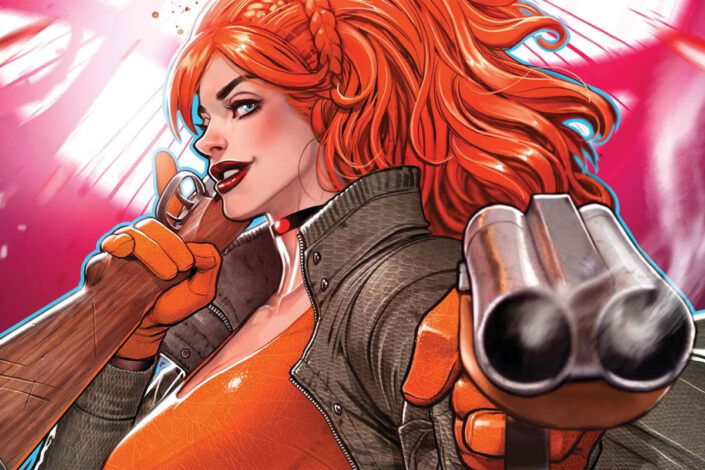
Not everyone is a superhero in the Marvel Universe. Some are Monster Hunters! This is the case of Elsa Bloodstone who, since her first appearance in Bloodstone #1 (Dec. 2001), has made a name for herself as such.

Created by Dan Abnett, Andy Lanning, and Michael Lopez, Elsa Bloodstone is the daughter of another famous Monster Hunter, Ulysses Bloodstone, and the sister of Cullen Bloodstone. Her father was killing monsters with other monster hunters during the Bronze Age. He made a few appearances before meeting his maker, but Ulysses captured the public’s imagination and was after that still referenced in several issues. 

Today, his legacy in the Marvel Universe takes clearly the form of his children, especially Elsa. Introduced in the Bloodstone miniseries, Elsa Bloodstone could be perceived at the time as a mix between Buffy the Vampire Slayer and the adventurer Lara Croft, and didn’t make a lasting impression on readers. A few years down the line, the character was rebooted by Warren Ellis and Stuart Immonen on Nextwave: Agents of HATE, where Elsa really came into her own as a foul-mouthed and violent young woman.

Though Elsa didn’t have a specific place in the Marvel Universe at this time, she became a more prominent character in the 2010s. She was a playable character in several video games, joined the Legion of Monsters, worked with the Thunderbolts and the Defenders, teamed up with Wolverine and Deadpool, and more.

Now, she is making her debut in the Marvel Cinematic Universe in the television special “Werewolf by Night,” where she is played by actress Laura Donnelly.

Following is an Elsa Bloodstone reading order (including information about her father Ulysses and her brother Cullen!) to help you become more familiar with the character and her family!

Read More »Elsa Bloodstone Reading Order (and Ulysses Bloodstone)

Werewolf by Night Comics: Origin, History, and Reading Order Explained!

  • by

1972 was a year of transition for Marvel Comics. Stan Lee was promoted and started handing over his management responsibilities to his protégé, Roy Thomas, who became the new editor-in-chief of the company. This was also the year that Marvel finally surpassed DC Comics in terms of overall sales. Superheroes were not that widely popular at the time. Their popularity was waning, so Marvel diversified to stay relevant.

Taking advantage of the loosening of the Comics Code, Marvel launched new horror titles like The Tomb of Dracula, Ghost Rider, The Man-Thing, and Werewolf by Night, of course. Back then, Roy Thomas was trying a lot of new concepts.

The title Werewolf by Night was not entirely new when it debuted as an ongoing series in the 1970s. Marvel Comics had previously used the title in 1953 for a short horror story published in Marvel Tales #116, during the company’s Atlas Comics era. However, the 1970s Werewolf by Night introduced an original character and mythology, marking a significant departure from the earlier standalone tale. Conceived by Roy Thomas and co-plotted with Jean Thomas, the series was scripted by Gerry Conway and illustrated by Mike Ploog.

As was common practice at the time, the new Werewolf by Night character was first introduced through an anthology title—Marvel Spotlight #2 (February 1972). The initial storyline unfolded over three issues, concluding with Marvel Spotlight #4. Following a positive reception, the character was given his own ongoing comic book series, launching with Werewolf by Night #1 in September 1972. This not only solidified the presence of supernatural horror within Marvel’s publishing line but also paved the way for the introduction of other monster-themed characters and series throughout the 1970s.

Read More »Werewolf by Night Comics: Origin, History, and Reading Order Explained!

Generation X Reading Order (part of the X-Men Universe)

  • by

After New Mutants and X-Force, Generation X is another Marvel Comics series set in the X-Men Universe. Created by Scott Lobdell and Chris Bachalo, the Generation X team first appeared in Uncanny X-Men #318 (November 1994) during the “Phalanx Covenant” storyline and immediately got its own monthly series.

Generation X is the first team of X-Men not mentored by Charles Xavier, but by Banshee and former supervillainess Emma Frost (aka the White Queen). In fact, these young mutants did not attend Xavier’s School for Gifted Youngsters in upstate New York, but the Massachusetts Academy, located in Berkshire County, Massachusetts.

During the first volume, Generation X consisted of Jubilee (Jubilation Lee), Chamber (Jonothon “Jono” Starsmore), Husk (Paige Guthrie), M (Monet St. Croix), Mondo, Penance, Skin (Angelo Espinosa), Synch (Everett Thomas), and Gaia.

Read More »Generation X Reading Order (part of the X-Men Universe)

Captain America Reading Order

Created by Joe Simon and Jack Kirby, Captain America was introduced in March 1941 to fight the AXIS powers during WWII. He was the most popular character from Timely Comics (a predecessor of Marvel Comics) during the wartime period before fading into obscurity with falling sales in the 1950s.

If several heroes bearing the flag motif didn’t survive and are forgotten today, the man known as Steve Rogers found his way back to the public when The Avengers got him out of ice in 1964. He became a man out of time but one still committed to fighting evil in all its forms. Though he sometimes struggles to maintain his ideals, Cap never gives up and always stands up for what he believes is right. It’s no wonder he became a highly respected figure both with the American public and in the superhero community, serving as the long-time leader of the Avengers.

More than a man, Captain America is an American icon, a symbol of hope. For this reason, other men have taken the mantle of Captain America in Steve Rogers’ various absences, including John Walker, Bucky Barnes, and Sam Wilson. 

Read More »Captain America Reading Order

Heroes Reborn: Marvel Heroes, Image Style, the famous 1996 relaunch

  • by

In 2021, Marvel published a new Heroes Reborn storyline. The company loves confusing readers by using the same titles over and over. But why Heroes Reborn? The 1996 original storyline was not a success and does in fact has not the best reputation. Let’s take a look back at that strange pure 1990s experiment.

Everything started in 1992 when Jim Lee, Todd McFarlane, Rob Liefeld, Erik Larsen, Whilce Portacio, Jim Valentino, and Marc Silvestri left Marvel to form Image Comics. Those creators found big success at Marvel. In fact, they were quite famous and wanted the company to recognize that in ways that were not agreeable for Marvel—they wanted better treatment, pay, and rights.

Everybody thought that they were coming back quickly, but Image became an instant hit that changed the industry forever. And then, the comic speculator bubble burst in 1993, changes in the distribution of comics created cash flow difficulties for some publishers, and poor sales numbers certainly didn’t help.

In fact, 1996 was a very bad year for Marvel. In January, the stock price dropped, and 275 staffers were laid off, and it was not the first time nor the last that year. In December, Marvel Comics declared bankruptcy—in truth, that was mostly the result of a battle to control the company between leaders that didn’t care for comics.

Read More »Heroes Reborn: Marvel Heroes, Image Style, the famous 1996 relaunch

Adam Warlock Reading Order

  • by

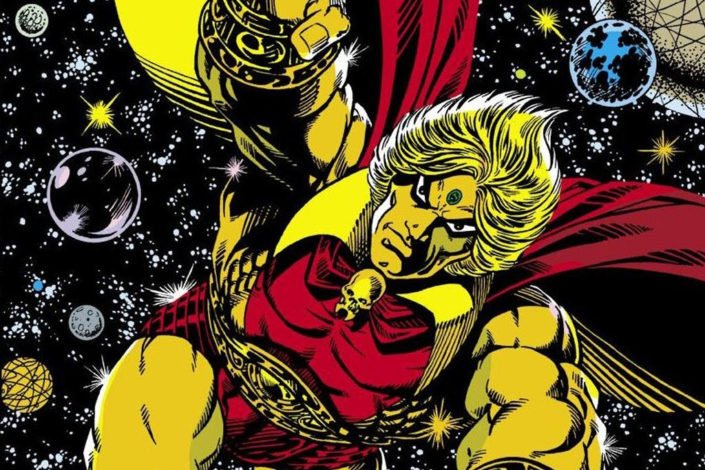
Originally introduced in 1967 by Stan Lee and Jack Kirby under the name “Him” in Fantastic Four #66-67, Adam Warlock really started in Marvel Premiere #1 (April 1972) written by Roy Thomas and penciled by Gil Kane.

Adam Warlock is a synthetic lifeform created in the image of a perfect human being. He is one of the most powerful heroes of the entire cosmos–and possessed magical abilities and has to use them to fight The Magus, his malevolent future self.

At the start, a coalition of scientists known as The Enclave incubated Warlock in an artificial cocoon. Once out, he rebelled against his creators after realizing they were nefarious. When he re-emerged, years later, he was named “Warlock” by the High Evolutionary and was gifted the Soul Gem. He didn’t become a hero on Earth, but on Counter-Earth–a new planet generated from a chunk of Earth and set in orbit on the opposite side of the sun.

A few years later, Jim Starlin revived the character and made him more of a cosmic hero, twice. The first time, it only lasted for a few issues, but he brought Adam Warlock back for his Infinity Saga eleven years later–during the 1990s.

During the 2000s, when Marvel decided to revive its cosmic universe, Warlock made his comeback, playing his part in the Annihilation Saga.

Read More »Adam Warlock Reading Order

Cable Reading Order

  • by

Cable looks straight at you with his signature intensity

Meet Nathan Summers, time-traveling soldier, powerful mutant, and original X-Force leader, with this Cable comics reading list, covering everything from his first appearance to his team-ups with Deadpool, his X-Men days, the Messiah Trilogy, and more.

X-Men Reading Order - X-Logo

Few characters at Marvel have a backstory as complicated as Cable (with the possible exception of Psylocke). Born Nathan Christopher Charles Summers, Cable is the time-traveling son of Scott Summers (Cyclops) and Madelyne Pryor (a clone of Jean Grey). Behind his conception lurks the mad geneticist Mr. Sinister, who planned to use the child as a weapon to destroy his archenemy, Apocalypse.

As an infant, Nathan was infected by a deadly techno-organic virus incurable in the present. To save him, Cyclops gave Nathan up, sending him 2,000 years into the future (Earth-493) where he could be treated and raised. There was no hope for Scott to ever see his son again… or so he thought.

In this future world, Nathan was raised by the Askani Clan to become the warrior known as Cable, a sworn enemy of Apocalypse. The religious order was led by Mother Askani, a time-displaced version of Rachel Summers, Cable’s half-sister.

Read More »Cable Reading Order

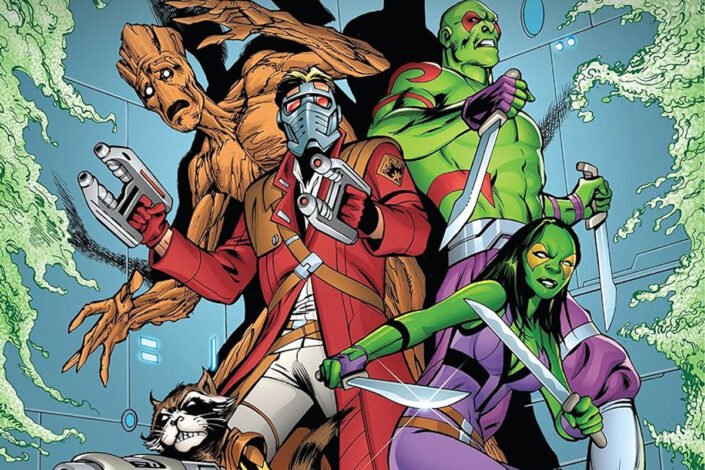
Guardians of the Galaxy Reading Order

  • by

First appearing in Marvel Super-Heroes #18 (Jan. 1969), the Guardians of the Galaxy is a superhero team that originated from an idea Roy Thomas had about “super-guerrillas fighting against Russians and Red Chinese who had taken over and divided the USA.” Thomas didn’t have the time to research it so Stan Lee gave it to Arnold Drake. He took it and placed it in space.

Penciled by Gene Colan, the first story introduced us to an alternative timeline of the Marvel Universe known as Earth-691, in the 31st century. The members of the Guardians of the Galaxy were Major Vance Astro, an astronaut from 20th century Earth who spends a thousand years traveling to Alpha Centauri in suspended animation; Martinex T’Naga, a crystalline being from Pluto; Captain Charlie-27, a soldier from Jupiter; and Yondu Udonta, a blue-skinned “noble savage” from Centauri-IV.

Together, they fight against the Badoon, a reptilian alien species, determined to conquer Earth’s Solar System. The team grew as the fight went on. And when the Guardians defeated the Badoon, the evil Korvac became their main foe. They traveled in time, developed into a multiple-team organization, and simply continued to fight… up until Guardians of the Galaxy #62 (July 1995).

In May 2008, Dan Abnett and Andy Lanning introduced a new version of the Guardians of the Galaxy following the Annihilation: Conquest event–the old team appeared as guest stars during the series and got a new title, Guardians 3000.

The new roster united Star-Lord, Rocket Raccoon, Groot, Phyla-Vell, Gamora, Drax the Destroyer, and Adam Warlock. Together, they play an important part in the Annihilation storylines that relaunched the Cosmic Universe of Marvel.

With the movie coming out, the team was pushed to the front, and, in 2012 with the launch of the Marvel NOW! initiative, Brian Michael Bendis became the main writer of the series (drawn by Steve McNiven). New members joined, spin-offs were developed, and guest appearances in other titles multiplied. The Guardians of the Galaxy became big players in the Marvel Universe.

Read More »Guardians of the Galaxy Reading Order

Black Panther Reading Order, The King of Wakanda

Created by writer Stan Lee and artist Jack Kirby, Black Panther made his first comic book appearance in Fantastic Four #52 (July 1966). He was introduced as T’Challa, the ruler and protector of Wakanda, a fictional African nation that is the most technologically advanced country in the Marvel Comics Universe. This hidden nation owes much of its advancements to Vibranium, a nearly indestructible metal that crash-landed in Wakanda centuries ago, shaping its scientific and cultural evolution.

T’Challa is not only a formidable warrior but also one of the most intelligent minds in the Marvel Universe. He ranks among the top ten smartest characters, alongside Reed Richards, Tony Stark, and Amadeus Cho. His genius extends to physics, engineering, and political strategy, making him an exceptional leader. Beyond his intelligence, T’Challa possesses enhanced physical abilities granted by the Heart-Shaped Herb, which links him to the Panther God, Bast. This connection allows him to access the knowledge and experiences of every Black Panther who came before him. His combat skills, agility, superhuman strength, endurance, and heightened senses make him one of the most formidable heroes in Marvel Comics.

Initially introduced as a guest character in Fantastic Four, Black Panther soon became a recurring hero, later joining The Avengers. He starred in Jungle Action during the 1970s, a critically acclaimed series that explored themes of colonialism and racial identity. Over the years, he has played major roles in Marvel storylines, serving as a member of the Illuminati, The Ultimates, and various Avengers teams.

Black Panther made his live-action debut in the Marvel Cinematic Universe (MCU), portrayed by Chadwick Boseman. His first appearance in Captain America: Civil War (2016) was quickly followed by the solo film Black Panther (2018), which became a cultural and box office phenomenon. The film’s success cemented Black Panther as one of Marvel’s most iconic and influential characters.

Read More »Black Panther Reading Order, The King of Wakanda