Skip to content

Reading Order

Jennifer Blood Reading Order

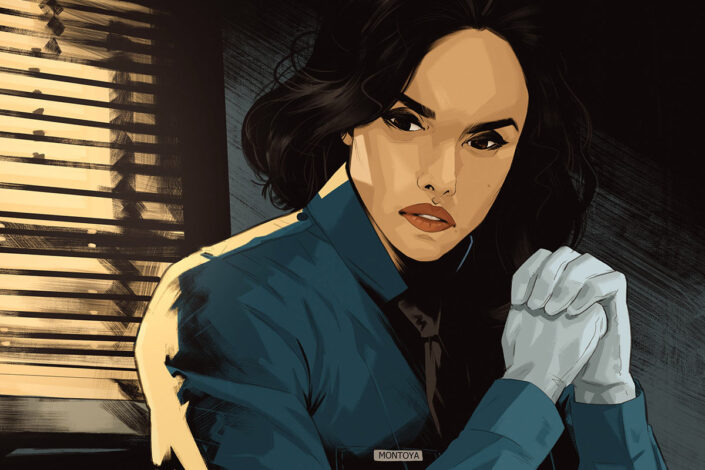
Created by writer Garth Ennis and artist Adriano Batista, Jennifer Blood is a vigilante character who made her debut in her own comic book series published by Dynamite Entertainment in 2011. 

Her story will sound slightly familiar to fans of Ennis’s work, as she may be described as the female suburban version of The Punisher (the first issue is even titled “War Journal“). Jessica Blute is the daughter of Sam and Jennifer Blute, members of the violent Blute family. Betrayed by his brothers (Jimmy, Michael, Nicholas, Pete, and Steve), who thought his marriage softened him, Sam was murdered. Pete decided to take care of Jennifer, who learned what really happened to Sam and revealed it through letters to her daughter, who was then at boarding school. After Jennifer took her own life, Jessica disappeared, faking her death during Spring Break.

As Jenny Bell, she spent years training in combat, weapons, espionage, and forgery, preparing to avenge her parents. In college, she met Andrew Fellows, married him, and had two children. Though nearly ready to abandon her mission, the Blutes’ repeated escapes from prosecution pushed her to create her vigilante persona, Jennifer Blood, to go after her uncles one by one. But that’s only the beginning for Jennifer’s bloody journey…

Read More »Jennifer Blood Reading Order

The New Ultimate Universe Reading Order

  • by

In 2019, Jonathan Hickman successfully relaunched the X-Men with the Krakoan Age. In 2023, he came back with a miniseries set up to help him do the same with the Ultimate Universe. Ended in 2015 and destroyed by the Secret Wars event (also by Hickman), the original Ultimate Marvel Universe (Earth-1610) still left behind it a few characters, like Miles Morales (Spider-Man), Jimmy Hudson (the son of Wolverine), Aaron Davis (Miles Morales’ uncle), The Maker (evil Reed Richards), and more. 

For the New Ultimate Universe, everything starts with The Maker coming back and setting up his own new alternate universe. He indeed went to Earth-6160 and used time travel to stop the apparition of most superheroes, which allowed him to become the leader of that Earth. However, he was defeated and trapped inside The City, a futuristic infrastructure that will reopen in 24 months. Before that happens, the heroes have to prepare themselves and contend with other menaces, including the secretive Maker’s Council.

As a result, the New Ultimate Universe came with a programmed end. One that was confirmed by Marvel Comics. In April 2026, the last issue will be published. But let’s go back to the reading from the beginning.

Read More »The New Ultimate Universe Reading Order

Captain Marvel Reading Order: From Mar-Vell to Carol Danvers

  • by

There are several characters known as Captain Marvel. We are not here to talk about Shazam, but we have to start the story with him. As you may know, Fawcett’s Captain Marvel was enormously popular in the 1940s, outselling even Superman, becoming one of the most successful superheroes of the Golden Age of Comics. His popularity, however, brought legal trouble. In 1941, DC Comics filed a lawsuit against Fawcett Publications, claiming that Captain Marvel was an infringement on Superman. The case dragged on for over a decade, with multiple appeals and shifting rulings.

Ultimately, in 1953, Fawcett agreed to cease publication of its superhero comics, citing declining sales and the high cost of litigation. Captain Marvel disappeared from newsstands for nearly twenty years. DC Comics would later license and eventually purchase the character from Fawcett, reintroducing him in the early 1970s under the title “Shazam!” since by that time, Marvel Comics had legally claimed the trademark “Captain Marvel.”

Marvel’s claim to the name began in 1967, when writer-editor Stan Lee and artist Gene Colan introduced their own Captain Marvel in Marvel Super-Heroes #12. This version, a Kree military officer named Mar-Vell, was created largely to secure the trademark and prevent others from using it. To maintain ownership, Marvel was required to publish a comic featuring the name “Captain Marvel” periodically. As a result, readers have seen a long succession of characters (Mar-Vell, Monica Rambeau, Genis-Vell, Phyla-Vell, Noh-Varr, and Carol Danvers) take up the mantle in various ongoing series, limited runs, team books, and one-shots from the late 1960s to the present day.

Read More »Captain Marvel Reading Order: From Mar-Vell to Carol Danvers

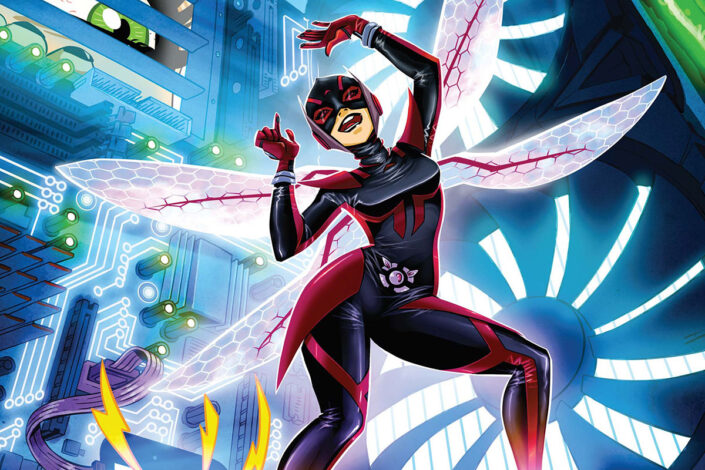
Lumberjanes Reading Order (Boom! comics)

Friendship to the Max! Published by Boom! Studios under its Boom! Box imprint, Lumberjanes is a comic book series created by Shannon Watters, Grace Ellis, ND Stevenson, and Brooklyn A. Allen. Launched in April 2014, it was initially conceived as an eight-issue limited run, but its popularity led to an extended publication, ultimately concluding with issue #75 in 2020.

Set at Miss Qiunzella Thiskwin Penniquiqul Thistle Crumpet’s Camp for Hardcore Lady Types, the series follows five friends (Jo, April, Mal, Molly, and Ripley) who attend a summer camp where the ordinary rules of nature and reality rarely apply. Strange phenomena abound: three-eyed foxes roam the forest, mysterious caves hide ancient secrets, and cryptic messages appear in the form of anagrams. Despite the chaos, the campers face every challenge with courage, wit, and unwavering friendship, embodying the series’ recurring motto: “Friendship to the max!”

Paying homage to classic “Girl Scout” and camp adventure tropes, Lumberjanes blends adventure, fantasy, and humor with strong themes of teamwork, empowerment, and inclusivity through its mix of magical realism and heartfelt friendship. Critically acclaimed, the series has been the recipient of multiple awards, including two Eisner Awards (Best New Series and Best Publication for Teens in 2015) and a GLAAD Media Award for Outstanding Comic Book in 2016.

The success of the Lumberjanes comics led to various spin-offs and adaptations, including Lumberjanes: Gotham Academy (a crossover with DC Comics), a series of middle-grade novels co-written by Mariko Tamaki, and an animated television adaptation in development at HBO Max (later canceled during restructuring).

Read More »Lumberjanes Reading Order (Boom! comics)

Ultimate Marvel Universe, The Complete Reading order

In 2000, Marvel Comics redefined its heroes for a whole new generation with the launch of the Ultimate Marvel imprint. Explore the stories of Ultimate Spider-Man, Miles Morales, Ultimatum, and the imprint’s relaunch with our complete Ultimate Marvel Universe comics guide, now available in Omnibus, Epic Collection, and classic trade paperbacks!

Welcome to Earth-1610! Or, more specifically, welcome to the Ultimate Universe, an alternate reality featuring reimagined and modernized versions of your favorite superheroes. Marvelophiles discovered this world in 2000 with the official launch of the Ultimate imprint.

Behind the Ultimate Marvel was Bill Jemas, a lawyer who had worked mainly in the collectible-trading-card industry. He was first appointed executive vice president of Marvel Entertainment Group in 1993, and put in charge of Marvel’s editorial direction in 2000. He replaced editor-in-chief Bob Harras with Joe Quesada, and with him, formed the public face of Marvel Comics. Together, they transformed Marvel Comics with the addition of the Marvel MAX line, the development of Marvel Knights, the increase of trade paperbacks, the removal of the Comics Code, and, of course, the creation of Ultimate Marvel.

Read More »Ultimate Marvel Universe, The Complete Reading order

Knull Reading Order, The King in Black

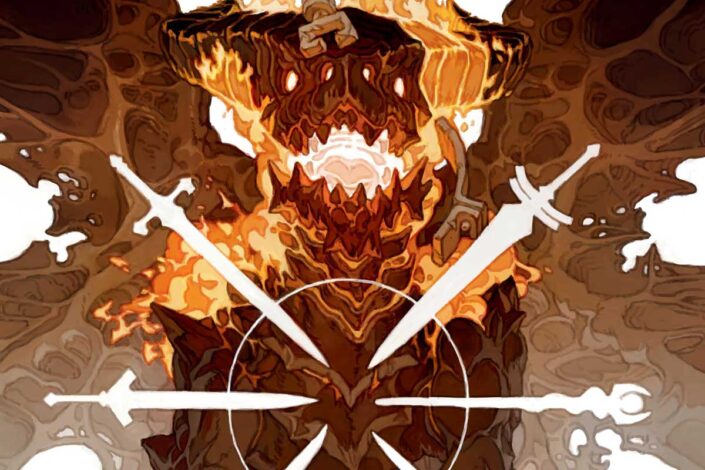
In recent years, the most significant new villain to emerge in the Marvel Comics Universe is Knull, the King in Black. Created by writer Donny Cates and artist Ryan Stegman, he first appeared in Venom #3 (2018) and slowly grew to become one of the biggest cosmic menaces the superheroes had to face.

Knull is introduced as the god of the symbiotes and one of the primordial beings of the Marvel Universe. As his story unfolds, we learn that he existed before the current Marvel Universe, in the endless void that preceded creation. When the Celestials began shaping the universe, their light angered him, leading him to forge the first symbiote (the All-Black Necrosword) and wage war against them. After decapitating a Celestial, Knull used its head to forge more weapons and eventually created the symbiote species, which he bound into a hive mind under his control.

An embodiment of darkness and nihilism, Knull has powers that make him able to manipulate darkness and, obviously, maintain control over the symbiote, but he is also “immortal” and possesses godlike strength.

While Knull was at the center of the King in Black crossover event, he appeared before that, becoming a real menace to Eddie Brock and the rest of the Marvel Universe. He and his All-Black Necrosword.

Read More »Knull Reading Order, The King in Black

Teen Titans Go! Comics Reading Order

The first time Teen Titans Go! was used as a title on a DC Comics property was with the comic book spin-off of the 2003 Cartoon Network Teen Titans animated series created by Glen Murakami. The show went on for 5 seasons, officially ending in 2006 with a movie. 

A very popular show in its time, Teen Titans eventually spun off another animated TV show on Cartoon Network, this one titled Teen Titans Go!, and was developed by Aaron Horvath and Michael Jelenic. Still ongoing, it was launched in 2013 following the popularity of DC Nation’s New Teen Titans shorts. The series is only loosely connected to the original show, featuring occasional references and cameos but adopting a far more comedic and parodic tone.

Primarily aimed at a younger audience, Teen Titans Go! quickly became a cultural phenomenon, noted for its self-aware humour, fast-paced gags, and frequent pop culture references. Like its predecessor, this new series has also received its own comic book spin-off, expanding the franchise into print while maintaining the humour-driven style and broad appeal of the show.

Read More »Teen Titans Go! Comics Reading Order

Black Hammer Reading Order by Jeff Lemire and Dean Ormston

  • by

Black Hammer is an American comic book series created by writer Jeff Lemire and artist Dean Ormston, published by Dark Horse Comics. It tells a different kind of superhero story, mixing mythology with elements of mystery and rural drama in a way that explores the psychological and emotional consequences of heroism. A very Twilight Zone take on the genre.

The story begins a decade after an epic battle in which the legendary hero Black Hammer and the other costumed champions of Spiral City, known as the Parazone Defenders, defeated the cosmic entity Anti-God. Despite their victory, the heroes vanished in the aftermath of the fight. To the outside world, they were presumed dead.

In reality, the group became inexplicably trapped in the small, timeless town of Rockwood, a rural community isolated from the rest of existence. Any attempt to leave is met with failure. As a matter of fact, Black Hammer himself died trying. Without a way to escape their confinement, Abraham Slam, Golden Gail, Colonel Weird, Madame Dragonfly, and Barbalien adopt new identities and attempt to lead ordinary lives, struggling with their fading memories, growing despair, and uncertainty about the nature of their imprisonment.

Launched in 2016, the original critically acclaimed Black Hammer comic book series has since expanded into a shared universe through numerous spin-offs and companion series, collectively known as The Hammerverse.

Read More »Black Hammer Reading Order by Jeff Lemire and Dean Ormston

A Guide to Grant Morrison comics at DC Comics

If you have read American superhero comics or searched for unconventional indie titles over the past three decades, you will certainly have come across Grant Morrison’s work.

Born in 1960 in Glasgow, Scotland, Morrison emerged in the British comics scene during the late 1970s and early 1980s, gaining recognition with comics such as Zenith (1987-1992) for 2000 AD before following Alan Moore‘s steps and joining the “British Invasion” of writers recruited by DC Comics who reshaped American superhero comics during the 1980s and 1990s.

Morrison began in 1988 with Animal Man, which quickly earned acclaim for its postmodern take on the superhero genre, combining environmental themes with metafictional commentary. This was followed by Doom Patrol, where Morrison’s surreal and avant-garde storytelling redefined the series and solidified their reputation for revitalizing obscure characters. By the early 1990s, Morrison had become central to DC’s publishing strategy, contributing both to mainstream superhero titles and the emerging Vertigo imprint.

After a period at Marvel in the early 2000s, Morrison returned to DC to lead a new era of high-profile projects, ambitious narratives, and large-scale crossover events, consolidating their reputation as one of the publisher’s most innovative and influential writers. Today, Morrison’s work is regarded as essential to the modern DC canon, with their influence visible across the company’s most notable publications.

And now, let’s take a closer look at Morrison’s works at DC Comics!

Read More »A Guide to Grant Morrison comics at DC Comics

Spider-Man Spider-Verse Reading Order (with all the sequels!)

  • by

Now widely known thanks to the 2018 animated movie Spider-Man: Into the Spider-Verse, the “Spider-Verse” is not one of those concepts that Marvel introduced decades ago. In fact, it was conceived as a crossover event written by Dan Slott, with art by Olivier Coipel and Giuseppe Camuncoli, in 2014. An idea that was inspired by Slott’s work on the 2010 video game Spider-Man: Shattered Dimensions.

Since then, the Spider-Verse has become way bigger than a simple crossover. It can now almost be considered a line of comics inside the Spider-Man publishing world. There have been sequels to the original crossovers, spin-off series, and short story anthologies. The whole concept has been used in every other media featuring Spider-Man.

Everything started years ago, during J. Michael Straczynski’s Coming Home story, when Morlun was introduced. He is a powerful being who hunts and consumes “Spider-Totems” (the essence of spider-powered heroes). When the first Spider-Verse event starts, Morlun is back with his horrible family, the Inheritors, who begin exterminating spider-characters throughout the multiverse to feed on their force. Every single Spider-Man ever is needed to save the day!

The Spider-Verse treats every alternate take on Spider-Man as part of a connected multiverse: classic Peter Parker, Miles Morales, Spider-Gwen (Gwen Stacy), Spider-Man 2099, Spider-Ham, Japanese Spider-Man with his giant robot Leopardon, and countless others. Now, there are constantly new Spider-Heroes introduced, ready to fight to save all the spiders.

Read More »Spider-Man Spider-Verse Reading Order (with all the sequels!)