Skip to content

Vertigo

The Best Vertigo Comics Series: 20 must-read comics books
  • by

In 2026, Vertigo Comics is officially back in business. DC Comics discontinued the imprint in January 2020 and announced its return 4 years later, but nothing significant came of it until now. New series, including spin-offs of old hits, are coming, and this makes for the perfect time to look back at the greats that earned Vertigo its reputation.

If you are not familiar with the history of Vertigo, it was launched in 1993 under the direction of editor Karen Berger. Dedicated to creator-driven comics for mature readers, the imprint was freed from the constraints of DC’s main continuity and the Comics Code Authority (CCA), providing writers and artists with a level of creative autonomy that led to some of the medium’s most influential series.

Its true origin can be traced to DC’s mature-reader experiments of the 1980s and to landmark works such as The Dark Knight Returns and Watchmen, which demonstrated a growing audience for adult-oriented comics. But everything truly began when DC stopped submitting The Saga of the Swamp Thing to the CCA. Under Alan Moore, the series helped usher in a new wave of writers (many from the United Kingdom) often referred to as the “British Invasion.”

Read More »The Best Vertigo Comics Series: 20 must-read comics books

Hellblazer John Constantine Reading Order, from the Swamp Thing to the Justice League Dark

  • by

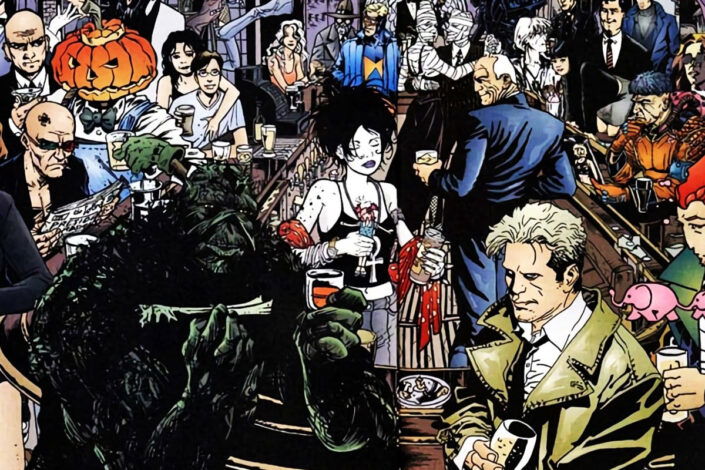
Created by Alan Moore, Steve Bissette, and John Totleben in 1984 in The Saga of Swamp Thing series, John Constantine is an arrogant foul-mouthed working-class occult detective and con man from London. Originally a supporting character, he continued to appear in the series before getting his own ongoing in 1988, Hellblazer.

As Alan Moore was too busy (or didn’t want to) do it, DC Comics recruited another British writer, Jamie Delano, to develop the Hellblazer comics in which John Constantine was faced with much horror, demons, and others in Great Britain. This quickly cemented him as the antihero of the DC universe. Not loved by many, he still found people to join him during his fight against vile creatures, and they are often the ones who have to pay the harsher price.

Known for his cynicism, his deadpan snarking, his ruthless cunning, and his constant chain-smoking, John Constantine wants to help save lives, but his technique can be deadly if it’s for the greater good. Being his friend can be as dangerous as being his enemy.

The long-running Hellblazer comic book series was part of the Vertigo line and lasted 300 issues. After that, John Constantine was made a little more respectable as he joined the other magic heroes of the DC main universe. He joined teams and helped save the world, the universe, and reality.

Read More »Hellblazer John Constantine Reading Order, from the Swamp Thing to the Justice League Dark

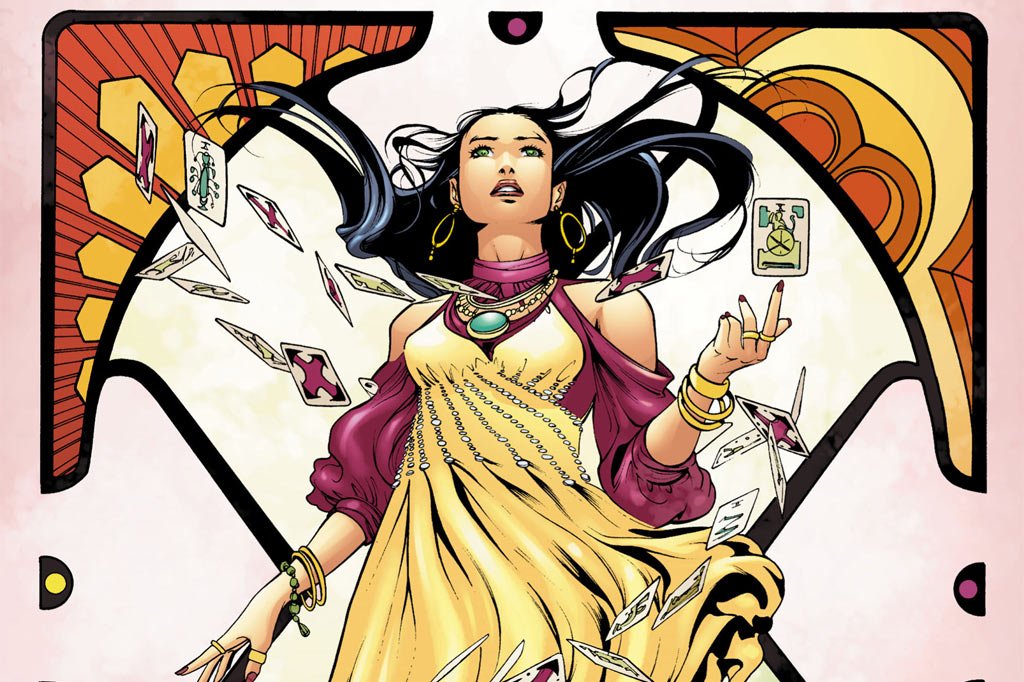
Madame Xanadu, DC Comics’ Powerful Sorceress

In 1977-78, a new strategy was implemented by DC Comics, it was called the “DC Explosion.” The idea was to give readers more stories for their money and, as a result, happy customers were to buy more and put an end to the unsatisfying sales that started to worry everybody. Multiple new books were then launched. One was Doorway to Nightmare, a horror anthology series with an intriguing new character named Madame Xanadu.

The Creation of Madame Xanadu

Design by artist Michael William Kaluta who based her appearance on real-life model Cathy Ann Thiele, Madame Xanadu was herself a mystery. Co-created by David Michelinie, she was introduced as a mystical fortune teller who did tarot readings to the clients who entered her shop in Greenwich Village (originally in the East Village).

The stories in Doorway to Nightmare were about those clients with Madame Xanadu playing a secondary role. This was for only 5 issues as Warner Communications declared the end of the DC Explosion just after it was launched—barely three weeks after. It was the infamous “DC Implosion” and Madame Xanadu had to move her shop in the pages of the anthology The Unexpected (for only 4 issues). That said, she eventually got a one-shot title simply titled “Madame Xanadu” in 1981.

Read More »Madame Xanadu, DC Comics’ Powerful Sorceress

American Vampire Reading Order: A guide to Scott Snyder and Rafael Albuquerque’s Horror Comics

  • by

In 2010, before becoming very well-known by working on the Batman series at DC Comics, Scott Snyder teamed up with artist Rafael Albuquerque to launch the ongoing American Vampire comics series at Vertigo. A title that gained a lot of attention at first with Stephen King writing a storyline.

King only put his name on the first 5 issues (backstories only), the story went on for a few years after that. In fact, it concluded in October 2021. That said, we didn’t get a decade’s worth of American Vampire comics as it was divided into three cycles published non-continuously. The first series lasted 34 issues, from 2010 to 2013; the second series was called “American Vampire: Second Cycle,” and lasted 11 issues, from 2014–2015; and the third series, called “American Vampire: 1976“, lasted 10 issues, from 2020 to 2021.

But what is the American Vampire comic book about? Vampire in America, of course! In a way, it’s about the story of America. It’s about Skinner Sweet, a violent outlaw who lived in the Wild West. He was going to be killed for his crimes, but an accident led him to be turned into a vampire, the first one to be made in America. He was of a new breed, one that doesn’t suffer from the same limitations as the vampires from the old continent—he is impervious to sunlight, but also faster and stronger.

Read More »American Vampire Reading Order: A guide to Scott Snyder and Rafael Albuquerque’s Horror Comics

Books of Magic Reading Order, The Adventures of Tim Hunter

Launched in 1991 by Vertigo with a miniseries, The Books of Magic is a creation of Neil Gaiman (with artists John Bolton, Scott Hampton, Charles Vess, and Paul Johnson). Contrary to some beliefs, it was not developed as a spin-off of The Sandman, even if the Endless appeared in it. DC Comics commissioned it as a way to highlight the already existing mystical characters in its universe.

The original miniseries introduced us to Timothy Hunter, a twelve-year-old boy who could be the most powerful magician in the world (a character inspired by T. H. White’s The Once and Future King and other classic fantasy stories). The question is: does he really want to be? To find the answer, Tim goes on a trip through the magical world, guided by John Constantine, Phantom Stranger, Mister E, and Doctor Occult, a group of magicians (aka the Trenchcoat Brigade). They want to aid Timothy in his decision.

Once the original Books of Magic miniseries concluded, the story continued with an ongoing 75-issue series written by John Ney Rieber (who penned the first 50 issues) and illustrated by Gary Amaro, Peter Gross, and Peter Snejbjerg. We reconnected with Tim when an enigmatic man named Tamlin decided that he was the key to saving the dying world of Faerie. But exactly how is Tim supposed to do that? And who is Tamlin? Read the book to discover the answers!

After that, Tim Hunter went through what most DC Comics characters have to deal with, from relaunches to alternate versions. He grew up, then later came back to being a 12-year-old boy. It’s a magical life after all. 

Read More »Books of Magic Reading Order, The Adventures of Tim Hunter

Sandman (Wesley Dodds), a pulp hero in the DC Universe

  • by

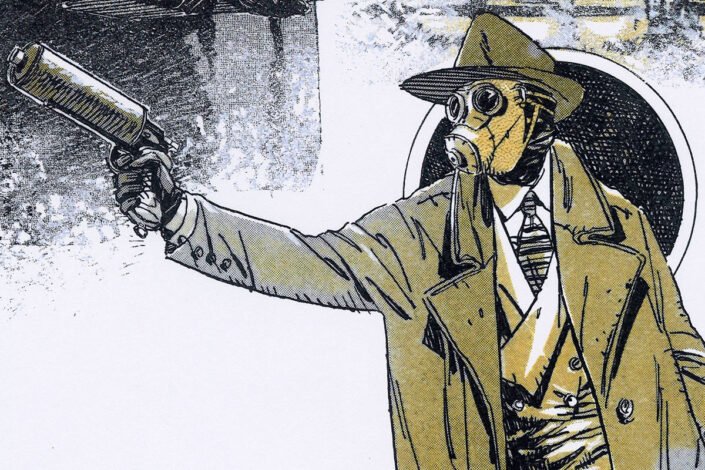
Long before Neil Gaiman introduced his version of the Sandman in the DC Universe, another Sandman haunted the pages of comic books. For a long time, I mean 60 years. The original Sandman was one of the first “superheroes,” a DC Golden Age superhero.

Really, this Sandman was more of a pulp hero. Created by writer Gardner Fox and artist Bert Christman for Adventure Comics #40—but he appeared a bit earlier in the New York World’s Fair Comics #1 (April 1939), a book published on the occasion of the 1939 World’s Fair—, The Sandman was one of the one original mystery men, a vigilante wearing a green business suit, a fedora, and a World War I gas mask, who used a gun emitting a sleeping gas to incapacitate criminals.

Read More »Sandman (Wesley Dodds), a pulp hero in the DC Universe

Dead Boy Detectives Reading Order, From the Sandman Universe

  • by

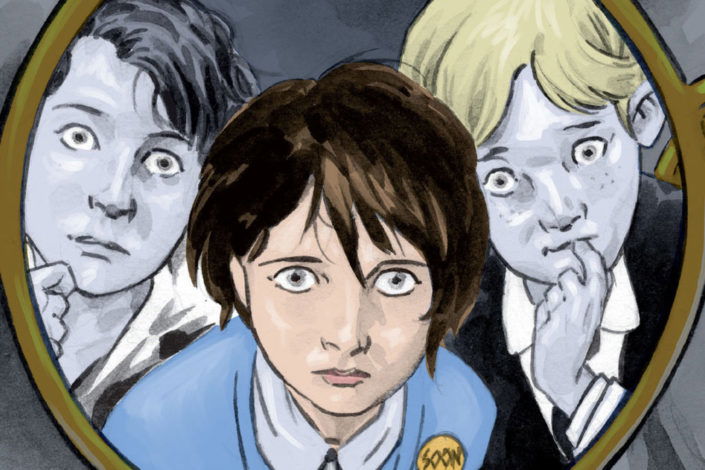
Neil Gaiman’s Sandman (reading order here) led to the creation of multiple spin-offs, not all became as successful as Lucifer (reading order here). It was the case with The Dead Boy Detectives, two young sleuths that are also ghosts.

Created by Gaiman and artist Matt Wagner in Sandman #25, The Dead Boy Detectives are Charles Rowland and Edwin Paine. Edwin was murdered at his boarding school in 1916 and he went to Hell. But when Hell was emptied of its residents, Edwin and the souls of past teachers and pupils came back to the boarding school when Charles and a few teachers stayed for the holidays.

They didn’t survive and Charles became a ghost, like Edwin. The two boys decided to forego going to the afterlife with Death and became detectives investigating crimes involving the supernatural.

Read More »Dead Boy Detectives Reading Order, From the Sandman Universe

Astro City Reading Order, Kurt Busiek’s classic comi book series

  • by

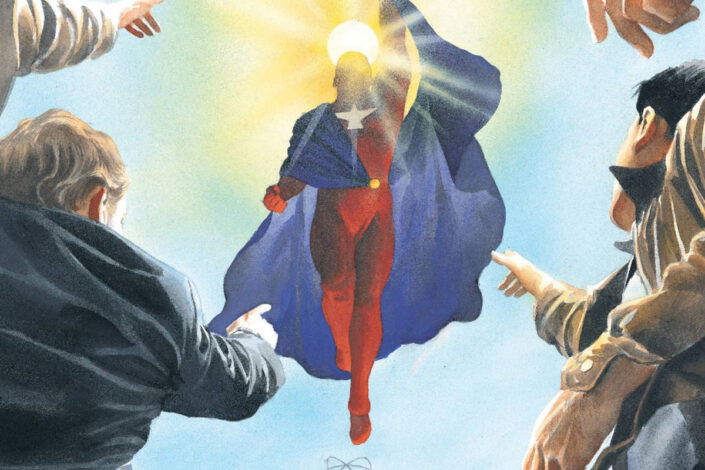
Created and written by Kurt Busiek, the Astro City comic book series is an American superhero anthology comics (mostly) illustrated by Brent Anderson (of X-Men: God Loves, Man Kills’ fame), with character designs and painted covers by Alex Ross.

The series debuted under Image Comics’ Homage imprint in 1995 before changing publishers–it moved to WildStorm when Jim Lee’s imprint was sold to DC Comics and, in 2013, it was relaunched as part of DC’s Vertigo Comics before continuing under DC’s main publishing line. Now, it is back at Image Comics.

Composed of three volumes, some miniseries, and special issues, the Astro City comics are about the superheroes of the City, a mid-sized American metropolis, and the citizens who are affected by the many super-beings who live there since the end of World War I. It’s an exploration of the relationship between society and heroes, and how they shape each other.

It was seen as a modern reinvention of the genre, an exploration of the possibilities coming with a shared universe as Astro City is home to an entire original superhero universe, with its own history, legacy characters, and classic superhero archetypes.

While individual issues often tell complete stories, they contribute to a larger mythos. Kurt Busiek uses the comic book series to deconstruct and celebrate superhero storytelling, blending Silver and Bronze Age sensibilities with modern storytelling depth. Due to its anthological format, you can easily jump into the Astro City comics at any point.

Read More »Astro City Reading Order, Kurt Busiek’s classic comi book series

The Sandman’s Death Reading Order: What to read with Death of the Endless?

  • by

The world of Vertigo’s The Sandman has inspired numerous spin-offs, a whole comic book expanded universe with anthologies, one-shots, miniseries, and other specials.

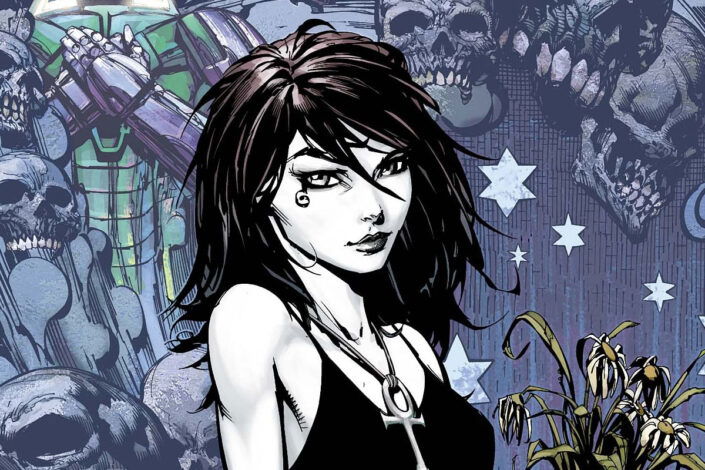
The character of Death is not one of those who were lucky enough to get a comic book ongoing series, unlike Lucifer Morningstar and Dead Boy Detectives, even if she is extremely popular. Despite that, we can still find Death in a few publications outside the main Sandman comics.

If you are not too familiar with the world of Sandman, in it, we met the Endless, the personification of concepts, who all play a specific part in the human world. Dream (or Morpheus) is the king of the Dreaming World, where you go when you sleep. His older sister is Death and she mostly meets with the recently deceased and guides them into their next existence.

Death is the second eldest of Endless and possibly the most powerful being in the Universe. In The Sandman, Death takes the appearance of a young goth woman. She is omnipotence and omnipresence, being with all those who die when they die.

Read More »The Sandman’s Death Reading Order: What to read with Death of the Endless?

Y The Last Man Reading Order: How to read Brian K Vaughan’s comic book series?

  • by

Y The Last Man Reading Order

Y: The Last Man is a dystopian science fiction comic book series by Brian K. Vaughan and Pia Guerra. It was published under the DC Comics Vertigo imprint between September 2002 and March 2008 and had recently been adapted as a television series. The adaptation didn’t find success and was canceled after one season, but you can just read the comic instead!

The series centers around the sole surviving male human after the spontaneous, simultaneous death of every male mammal on Earth. More precisely, Y: The Last Man starts in the summer of 2002, when Earth is struck by a pandemic plague of unknown origin. This plague destroyed every mammal with a Y chromosome, including spermatosa and unborn children. Referred to as “gendercide”, the plague exterminated 48% of the global population, approximately 2.9 billion men. Two male mammals survived: a young man from Brooklyn named Yorick Brown and his pet Capuchin monkey Ampersand. How and why? The answers to those questions could save humanity from a possible extinction.

Read More »Y The Last Man Reading Order: How to read Brian K Vaughan’s comic book series?