Skip to content

Reading Order

Justice League Reading Order, DC Comics’ Greatest Team of Superheroes

Almost nine years after the end of the original JSA comic book run, DC Comics introduced another team of Super Heroes in The Brave and the Bold #28 (dated March 1960) by writer Gardner Fox and artist Mike Sekowsky. It was viewed as a modernization of the Justice Society but with a new name chosen by editor Julius Schwartz who thought that a “‘Society’ meant something you found on Park Avenue”. He went with “League” instead–because of the popularity of the baseball leagues.

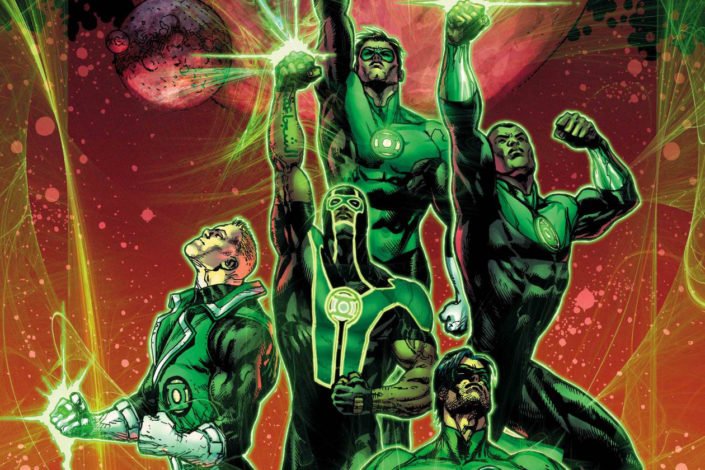
The first Justice League team was composed of Aquaman, Flash, Green Lantern, Martian Manhunter, and Wonder Woman, but also of Superman and Batman, even if they were mostly absent from the League’s early adventures (it was thought that they would quickly become overused if they appeared in too many titles). Soon, the team would welcome Green Arrow, the Atom, and Hawkman.

The Justice League comics became a hit. As the years passed, the roaster of superheroes changed a little, the DC Universe became more connected and events were organized like the famous annual crossovers with the Justice Society.

Read More »Justice League Reading Order, DC Comics’ Greatest Team of Superheroes

Wolverine Reading Order

Created by Roy Thomas, Len Wein, and John Romita Sr. in 1974 (in The Incredible Hulk #180-181) but first drawn for publication by Herb Trimpe, Wolverine quickly became the most popular X-Man.

Described as a Canadian of small stature and with a wolverine’s fierce temper, Wolverine has a complicated past, multiple origin stories, and a lot of deaths and resurrections. In fact, he already had a long life before joining the X-Men, as we discovered over the years. He was born during the late 19th century, and his youth was marked by family secrets and tragedies. He already had claws, but they were not made of adamantium. He also already had his animal-keen senses, enhanced physical capabilities, and a powerful healing factor. That made him the perfect candidate for the mysterious Weapon X program that kidnapped him before having adamantium forcibly fused onto his bones.

Obviously, he escaped and found his way toward Professor Charles Xavier who recruited him into his new X-Men with Jean Grey and Cyclops (go to our X-Men Reading Order). With the team, he fought against many foes. He lost his claws, his adamantium, his memories, his loves, his family, and his friends, but he also got most of them back, joined other teams, and discovered even more about himself, his friends, his place in this world, and his powers.

Wolverine is so popular that he appeared in a lot of series. Too many in fact to the point that his story doesn’t always make sense. As a consequence, writing an exhaustive reading order is almost an impossible task to complete, but we can still try to write one that is usable. This is what we are trying to do here, with a focus on his solo career.

Read More »Wolverine Reading Order

Star Wars: War of the Bounty Hunters Reading Order, a Boba Fett story

  • by

Star Wars War of the Bounty Hunters Reading Order

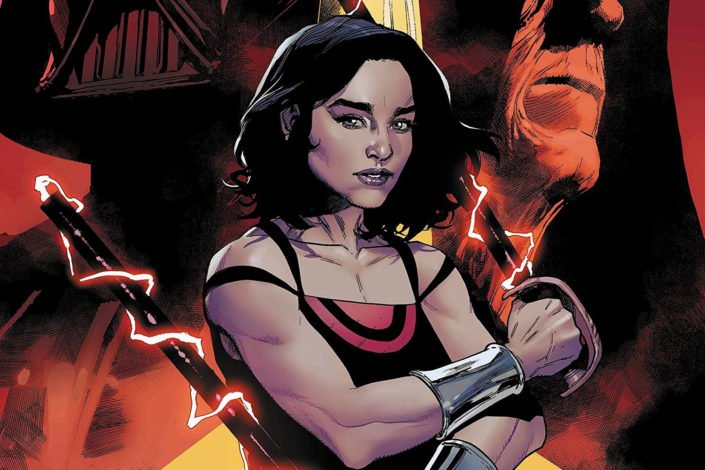
Every Marvel reader could tell you how much the publisher loves a crossover event, for better or worse. So, I’m pretty sure no one was surprised when they finally announced a big crossover event in the Star Wars Universe.

Coming from writer Charles Soule and artist Luke Cross, Star Wars: War of the Bounty Hunters takes place during the Age of the Rebellion, between the Empire Strikes Back and Return of the Jedi. As the official synopsis reveals, “the notorious bounty hunter Boba Fett has finally landed his greatest prize — Han Solo, frozen in carbonite for easy transport. Fett will bring the smuggler to Tatooine to collect the massive bounty placed on Solo’s head by the fearsome crime lord Jabba the Hutt. Sounds easy. What could go wrong? There’s just one problem standing between Fett and the payday…and it’s a big one. But Fett will stop at nothing to get the job done!”

What to read before Star Wars: War of the Bounty Hunters?

There is no background reading necessary to do before jumping into The Star Wars: War of the Bounty Hunters event. Still, if you want to know what’s happened in the comics before this crossover, check out our Star Wars Comics Canon Reading Order.

Read More »Star Wars: War of the Bounty Hunters Reading Order, a Boba Fett story

Carol Danvers Reading Order, From Mrs. to Captain Marvel

Created by Roy Thomas and Gene Colan in Marvel Super-Heroes #13 (March 1968), Carol Danvers was originally an officer in the United States Air Force and a colleague of the Kree superhero Mar-Vell, the original Captain Marvel—you can see our Captain Marvel Reading Order to know more about all the incarnations of the famous superhero.

It wasn’t until 1977 that Carol got her powers and became known as Ms. Marvel (created by writer Gerry Conway and artist John Buscema). At that time, she resurfaced as the editor of Women Magazine, a spin-off of the Daily Bugle. We then discovered that the energy exposure from the explosion of a “Psyche-Magnetron” was behind the melding of Carol’s genetic structure with Captain Marvel’s. She technically became a human-Kree hybrid.

At the beginning of the 1980s, Mrs. Marvel was the victim of bad writing before being mixed up with the X-Men—and especially with Rogue who absorbs her abilities and memories. This story led her to become known as Binary, the superhero capable of generating the power of a star. During the 1990s, after some cosmic adventures, she reverted to her original Ms. Marvel powers and later rejoined the Avengers as Warbird.

When Brian Michael Bendis took over the Avengers, he introduced the idea of Carol Danvers becoming Captain Marvel. This didn’t become a reality immediately as she reclaimed her place in the hero community as Ms. Marvel, playing significant roles in major events. In fact, it was in July 2012 that Carol Danvers finally assumed the mantle of Captain Marvel in an ongoing series written by Kelly Sue DeConnick with art by Dexter Soy. And now, she got her own movies!

Read More »Carol Danvers Reading Order, From Mrs. to Captain Marvel

JSA Reading Order, The Justice Society of America!

  • by

The Justice Society of America is the first team of superheroes in comic book history. Launched during the Golden Age of Comic Books, making its first appearance in All Star Comics #3 (Winter 1940-41), the JSA was conceived at DC Comics by editor Sheldon Mayer and writer Gardner Fox–Everett E. Hibbard was the artist on the title.

The original members of the Justice Society of America were Doctor Fate, Hourman, The Spectre, Sandman, Atom, Flash, Green Lantern (Alan Scott), and Hawkman. For a good decade, they were quite popular, but the team didn’t survive the post-war disinterest in superheroes in comics. Their adventures ceased with All Star Comics issue #57 (March 1951), but it was not the end for the JSA.

During the Silver Age, multiple members of the Justice Society of America were revamped and the team became the Justice League (see our JL reading order for more about that). At one point, the original JSA resurfaced, but this was on what became known as Earth-Two (the JL being on Earth-One). With a multiverse annual team-up with the Justice League, the JSA stayed alive and well for two decades–and even got a spin-off. Then, there was the 1985 Crisis on Infinite Earths that put an end to the JSA (and Earth-Two) for a time.

This didn’t last as a revival of the JSA happened in 1991. The old characters returned, but not in the past. But that didn’t last, a tragedy (an editorial one) occurred, the JSA disappeared, but was not forgotten.

In fact, the team was constantly present in the new Starman series by James Robinson (following his JSA: The Golden Age Elsewhere miniseries). This title led to another, a new JSA series. The team stayed active until the New 52 era, then disappeared again. The Rebirth era reestablished its place in the continuity though, but it was not until Geoff Johns came back to relaunch the title during the Infinite Frontier/Dawn of DC era that the Justice Society regained a bit of staying powers.

Read More »JSA Reading Order, The Justice Society of America!

Batman: Endgame Reading Order (New 52)

  • by

Batman: Endgame Reading Order

Written by Scott Snyder with art by Greg Capullo, Batman: Endgame is a crossover storyline from 2014 – part of the New 52 era. It’s about the return of The Joker after his disappearance at the end of the “Death of the Family” story arc. It’s an exploration of the violent dynamic between Batman and the Joker.

Here is the official synopsis: He is Batman’s greatest enemy, his deadliest threat, his opposite number. His bloody-minded madness is exceeded only by his twisted genius. He is the Clown Prince, the Pale Man, and his crimes turn the world into one big, sick joke. But today, the joke is over.

As The Joker plays his endgame with the Batman, citizens, villains, and heroes alike must survive his deadly antics and come to terms with who The Joker is and what he means to them.

What to read before Batman: Endgame?

Scott Snyder presented Batman: Endgame as a conclusion of the Joker story developed previously in the Zero Year and Death of the Family storylines. To know more about this era and the Batman stories leading up to Endgame, take a look at our Batman by Snyder and Capullo Reading Order.

  • Batman: Zero Year
    Collects Batman #21-27 and Batman #29-33.
  • The Joker: Death of the Family
    Collects the tie-in Catwoman 13-14, Batgirl 13-16, Suicide Squad 14-15, Batman and Robin 15-16, Nightwing 15-16, Detective Comics 15-16, Red Hood and The Outlaws 15-16, and Teen Titans 15-16.

Read More »Batman: Endgame Reading Order (New 52)

Barbara Gordon Reading Order (Batgirl and Oracle)

Barbara Gordon Reading Order

Created by television producer William Dozier, editor Julius Schwartz, writer Gardner Fox, and artist Carmine Infantino, Barbara Gordon first appeared in the pages of Detective Comics #359 published in January 1967 as Batgirl. As she was the by-product of the Adam-West Television show, following a request by Schwartz who wanted a new female counterpart to Batman, she was introduced into the television series in September of that same year, in the season 3 premiere of Batman.

Barbara Joan Gordon is the daughter of Gotham City police commissioner James Gordon and one of the most female iconic vigilante super-hero in the DC Universe. She began her career as Batgirl, working close to Batman and the first Robin. Quite a popular character during the Silver era thanks to her presence in the media, Barbara has a tumultuous history, filled with violence and tragedy but also reinvention and successes and love.

Following the events of Alan Moore’s Killing Joke, where the Joker paralyzed her from the waist down with a gunshot, Barbara lost everything and was changed forever. After that, Barbara reinvented herself as Oracle (created by Kim Yale and John Ostrander in the pages of Suicide Squad). Behind a computer, Babs as Oracle became one of the most valuable assets to Batman and other DC superheroes, using her above than normal intellect, eidetic memory, and hacking talents to fight crimes. She became one of the most emblematic characters for disabled people, regarded as a symbol of empowerment.

So, it was controversial when DC decided, as part of The New 52 relaunch, that Barbara had finally recovered from her paralysis following a surgical procedure and returned as Batgirl. The character was still affected by posttraumatic stress disorder and had difficulty asking for help. Barbara Gordon is as much Batgirl as she is Oracle, and now, she embodies her two vigilante identities.

As both Batgirl and Oracle, Barbara Gordon has gone through a lot and has one of the richest histories in the Batfamily. And to know more about it, here is a Barbara Gordon reading order:

Read More »Barbara Gordon Reading Order (Batgirl and Oracle)

A.X.E: Judgment Day Reading Order (Avengers/X-Men/Eternals)

Starting this summer, Judgment Day is the latest Marvel Comics crossover event! Written by Kieron Gillen and with art by Valerio Schiti, A.X.E: Judgment Day will put the Avengers, X-Men, and Eternals in the heart of a deadly conflict.

Here is the official synopsis: The battle for the planet is here! The X-Men claim they’re Earth’s new gods. The Eternals know that position is already filled. And the Avengers are about to realize exactly how many secrets their so-called friends have been keeping from them!

Years of tension are about to lead to a volcanic eruption — and two worlds will burn! Who has leaked the X-Men’s secrets to their latest foes? Why is Tony Stark abducting an old friend? And who stands in judgment over the whole world?

What to read before A.X.E: Judgment Day?

Being an event coming from Kieron Gillen and Valerio Schiti, you certainly need to be up-to-date with their Eternals’ run:

But also with Kieron Gillen and Mark Brooks’ Immortal X-Men

  • Immortal X-Men
  • as well as other Destiny of X titles like X-Men (#11-12, X-Men – Hellfire Gala (2022) #1), X-Men Red. No Avengers reading really required.

Read More »A.X.E: Judgment Day Reading Order (Avengers/X-Men/Eternals)

Green Arrow Reading Order, DC Comics’ Archer

  • by

Green Arrow Reading Order

Created by Mort Weisinger and George Papp, Green Arrow made his first appearance in More Fun Comics #73 in November 1941. His real name is Oliver Queen and, with his sidekick Speedy, he fights crime in his home city of Star City – or Seattle at some point. He doesn’t have superpowers. Like Marvel’s Hawkeye, he is an extremely skilled archer, but he’s more like Bruce Wayne than Clint Barton, because Oliver Queen is a wealthy businessman and owner of Queen Consolidated.

He is one of the rare Golden Age heroes who survived the 1940s and 1950s without a lot of alterations and entered the Silver Age without much trouble and he even joined the Justice League. That said, he was seriously retooled at the end of the 1960s by Neal Adams and Dennis O’Neil. He then lost his money and became an advocate for the underprivileged with a lot of left-wing views to express. At that time too, his teammate Black Canary became a love interest and his friendship with Hal Jordan (Green Lantern) became iconic – also, that’s when it was revealed that Speedy was addicted to heroin! Strangely enough, Green Arrow had to wait until the 1980s to be the star of his own series. And then came the Crisis on Infinite Earths that led to a retcon.

In 1987, Green Arrow came back with a series for a mature audience. No more gadgets and Star City. Oliver Queen moved to Seattle where he was faced with a lot of violence. Written and illustrated by Mike Grell, this series was not fully integrated into the DC Universe. That changed when Grell stopped writing. Green Arrow quickly found a place alongside the other heroes, and also discovered a son!

Dead for a few years, Green Arrow was revived in 2001. He then picked up his bow to again fight crime in Star City. He faced horrors, got married, and a lot more as each crisis (and relaunch of the DC Universe) changed the course of his life. Also, The CW TV Adaptation led DC Comics to introduce new elements to the story (mainly the character of John Diggle).

As his past was revisited and his relationships with his sidekicks and Black Canary were explored, Green Arrow evolved through the years (more than 80 now!).

Read More »Green Arrow Reading Order, DC Comics’ Archer

Blade Reading Order, Marvel’s Vampire Hunter

Created by writer Marv Wolfman and artist Gene Colan in The Tomb of Dracula #10 (July 1973), Blade was at first a supporting character but quickly gained prominence.

Blade’s real name is Eric Cross Brooks. He is an Afro-American vampire hunter who used to sport 1970s-style Afro hair and wield teak-bladed knives. He really became a solid character during the 1990s, first in the team series Nightstalkers, then in his own ongoing series Blade the Vampire Hunter.

At first, he was presented as a human immune to vampire bites, but it was retroactively established that he was a “dhampir” (the son of a vampire and a mortal human) following his adaptation as such in Spider-Man: The Animated Series and the Blade film series. In the comics, he also became a “Daywalker” after being bitten by Morbius.

It took years to establish the definitive mythology of Blade in the comics because he never really got a long ongoing series, playing a supporting role between miniseries. That didn’t stop him from becoming a member of the Avengers.

Read More »Blade Reading Order, Marvel’s Vampire Hunter