Skip to content

DC Comics

Earth 2 New 52 Reading Order

  • by

Earth-Two (or Earth 2) is famously known as the home of DC Golden Age heroes, including the Justice Society of America. The setting was, after all, introduced in The Flash #123 (1961) to explain the differences between the Golden Age and the Silver Age versions of the characters.

When Crisis on Infinite Earths happened, Earth-Two was merged with other planets into one, and thus was the end of the Multiverse… for a time. The Multiverse was indeed reborn following the events of Infinite Crisis, although Earth-Two was not the same world.

It was the first time, but not the last time that the setting of Earth-Two was revised. The DC Universe was rebooted following another event, Flashpoint. The series changed the DC Status quo and lead us into New 52 and a new Earth-Two, now called Earth 2.

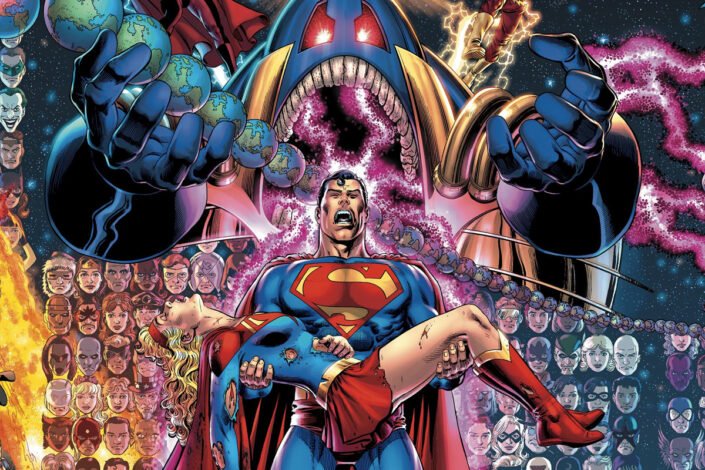
Earth 2’s history was different with an added tragic backstory. This was the home of a group of superheroes named the Eight Wonders of the World, led by Superman, Batman, and Wonder Woman. They have defeated grave threats from Apokolips, but not at a grave price.

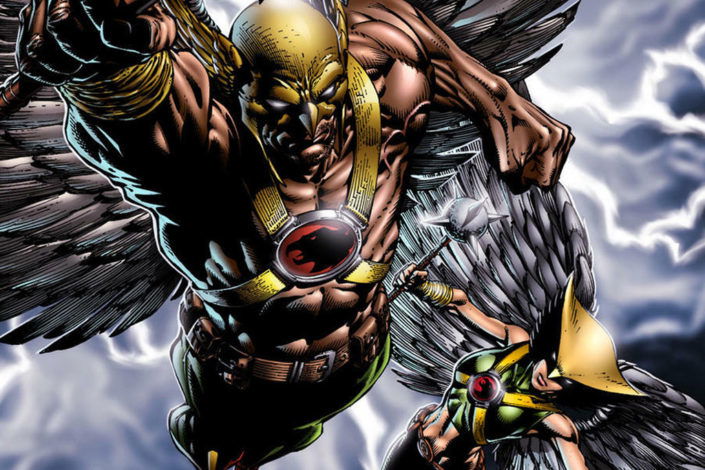
Left in their stead is a group of young, untrained heroes who pick up the pieces in the dusty aftermath. The Flash, Green Lantern, Hawkgirl and the Atom are humanity’s nascent guardians, but not the ones we’ve all known and revered. These are different heroes, in a strange and foreign world with dangerous new villains.

Dive into Earth 2’s history during New 52 with the following reading order!

Read More »Earth 2 New 52 Reading Order

Duke Thomas Reading Order (member of the Batfamily, The Signal)

  • by

This has been less than ten years since Duke Thomas made his debut in the DC Universe. Created by writer Scott Snyder and artist Greg Capullo during their already classic run on Batman, Duke first appeared in Batman (vol. 2) #21, as an unnamed character, then he made his real entry in Batman (vol. 2) #30 as Duke Thomas.

Raised in the Gotham Narrows by his mother Elaine, a social worker, and Doug Thomas, a humble construction worker, Duke had an ordinary childhood. He was then unaware of who his biological father was (a villain named Gnomon) and that he was a metahuman and had powers.

Anyways, no one in Gotham can claim to have an ordinary life too long. Like so many Gothamites, Duke’s life was changed by the Joker during the events of Endgame with the disappearance of his parents. He was placed into the foster system and soon after, became the leader of a youth movement inspired by Robin.

Duke’s parents were later found, but permanently jokerized. Following this discovery, Bruce officially took Duke under his wings to make him his latest ward and partner-in-crime-fighting. He officially became The Signal in Batman and The Signal #1 (March 2018). He also joined the Outsiders, under Black Lightning’s supervision. You can’t miss him in the streets of Gotham with his yellow armor! 

Read More »Duke Thomas Reading Order (member of the Batfamily, The Signal)

Sandman (Wesley Dodds), a pulp hero in the DC Universe

  • by

Long before Neil Gaiman introduced his version of the Sandman in the DC Universe, another Sandman haunted the pages of comic books. For a long time, I mean 60 years. The original Sandman was one of the first “superheroes,” a DC Golden Age superhero.

Really, this Sandman was more of a pulp hero. Created by writer Gardner Fox and artist Bert Christman for Adventure Comics #40—but he appeared a bit earlier in the New York World’s Fair Comics #1 (April 1939), a book published on the occasion of the 1939 World’s Fair—, The Sandman was one of the one original mystery men, a vigilante wearing a green business suit, a fedora, and a World War I gas mask, who used a gun emitting a sleeping gas to incapacitate criminals.

Read More »Sandman (Wesley Dodds), a pulp hero in the DC Universe

Deadman Reading Order (DC Comics)
  • by

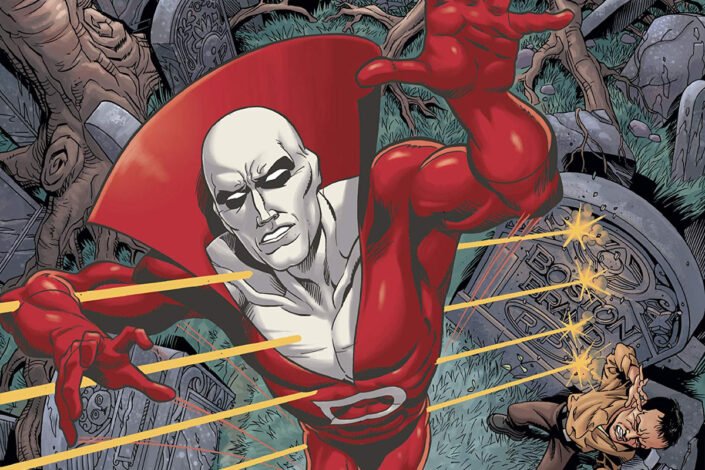
Created by writer Arnold Drake and artist Carmine Infantino for DC Comics in the pages of Strange Adventures #205 (October 1967), Deadman was a tough sell at first as the Comics Code Authority frightened the editor into staying away from potential horror material. After all, Deadman is a ghost.

It’s a bit more complicated than that as the late 1960s saw an interest in the mystic growing in America. Drake was interested to use the Zen movement, Hare Krishna, and things like that in a story to explore the “notion of a being that was neither living nor dead.”

The story begins when Boston Brand, a circus trapeze artist who performed under the name Deadman, is shot dead during a performance by the mysterious murderer known as the Hook. Brand didn’t really die as a Hindu god named “Rama Kushna” gave his spirit the power to possess any living being in order to find his killer.

Even if Arnold Drake left the title after two issues over creative differences, Deadman continued his search—and found the truth. After that, when Neal Adams took over the series, Deadman got a new mission: to establish a balance between Good and Evil. Nevertheless, Strange Adventures was canceled soon after.

Deadman became a recurring supporting character in the DC Universe. In the mid-1980s, he finally got a new series, but it was a short one. It also was not the last one as the character continued to appear in limited series as well as a guest star in other titles. He became part of the mystical part of the DC Universe, which led him to the Justice League Dark (during the New 52 era and beyond).
Read More »Deadman Reading Order (DC Comics)

Ghost Rider Reading Order

  • by

Marvel introduced a western character named Ghost Rider in 1967, but he is now known as the Phantom Rider. The Ghost Rider we are talking about here made his burning entrance in 1972 in Marvel Spotlight #5 and was created by Roy Thomas, Gary Friedrich, and Mike Ploog.

The original idea behind Ghost Rider came from Gary Friedrich as he developed a villain to be used in the page of Daredevil. Intrigued, Roy Thomas decided that the character should have his own series. He even suggested that the costume should be inspired by one Elvis wore in his comeback special in 1968. Mike Ploog took their concept and designed the biker, introducing the head on fire just because he thought it looked cool.

There is more than one Ghost Rider. The first was Johnny Blaze, a stunt motorcyclist who gave his soul to Mephisto to save his adopted father’s life. After that, he discovers that he was bonded with the demon Zarathos. Now, he is forced to punish the wicked and evil as the Ghost Rider, a violent biker with a flaming head. Though, he only transformed when he is in the presence of evil.

At the beginning of the 1990s, Marvel introduced a new Ghost Rider, the young Danny Ketch. In 2014, it was the turn of Robbie Reyes, a Mexican-American resident of East Los Angeles, who’s not a biker. His ride is a muscle car.

Others became temporarily Ghost Riders, and the mythology behind the characters, as well as its history, evolved through the years. As the host or the ride changed, the Ghost Rider’s abilities also changed. Every rider is different, but the fight against Evil never stops.

Read More »Ghost Rider Reading Order

Huntress (Helena Bertinelli) Reading Order

  • by

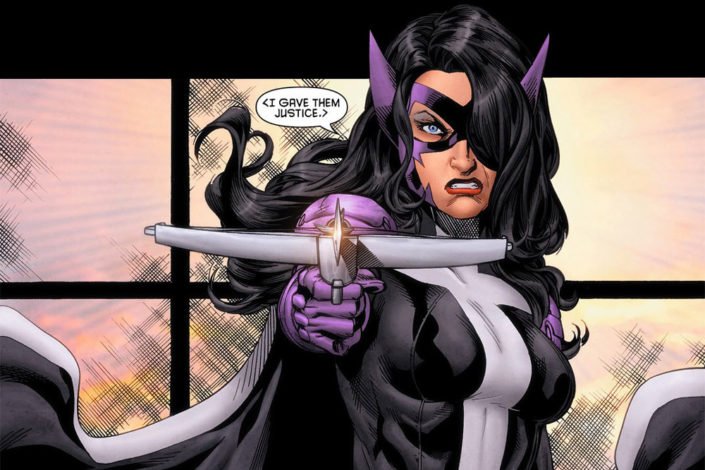
The Huntress is a DC Character considered part of the Bat-family. But there is also more than one Huntress in the DC Universe, though the one that interests us today is one of the most famous women to bear the name: Helena Bertinelli. She was also the last one to date to become the Huntress…

Way before Helena Bertinelli made her debut, Huntress was a recurring villainess with no name from the Golden Age. Created in the pages of Sensation Comics #68 by artist Mort Meskin and an unnamed writer in 1947, she was retconned in the Bronze Age by writer Roy Thomas.

He gave her the name Paula Brooks and built her a real backstory in Young All-Stars, a title set in DC’s Golden Age. Over the course of the series, Thomas recounted Paula’s transformation, from the superheroine to the villainess named Huntress.

During her short stint, Paula stayed an obscure character. It was a certain Helena Wayne who popularized the name Huntress during the Bronze Age. Created by Paul Levitz and Joe Staton, she made her debut in DC Super Stars #17  (1977).

The daughter of Batman and Catwoman from Earth-2, Helena became a vigilante to avenge her mother’s death and choose the code name The Huntress when she decided to continue to fight crime. Later, Helena found herself fighting against Paula Brooks and winning the right to the name Huntress in All-Star Comics #72.

She bore the name until the destruction of the DC Universe in Crisis of Infinite Earths.

Following the reboot, Helena Wayne died and her family never existed. In this new continuity, Helena Bertinelli is introduced as the Huntress.

Created by Joey Cavalieri and Joe Staton, Bertinelli was conceived at first as a new interpretation of Helena Wayne. Making her debut in The Huntress #1 in 1989, this Helena has no link with Batman/Catwoman, but was born in one of the most powerful mafia families. She became a ruthless vigilante, ready to do justice by any means necessary. It puts her at odds with Batman, and she was for a long time the black sheep in the Bat-family, before Jason Todd/Red Hood was attributed that role. Her origins have been rewritten more than once, and she became the third member of the team Birds of Prey.

She was also recently played by Mary Elizabeth Winstead in the 2020’s film Birds of Prey.

To avoid confusion with Helena Wayne, what follows is a comprehensive reading order for Helena Bertinelli.

Read More »Huntress (Helena Bertinelli) Reading Order

Mister Miracle Reading Order

  • by

During his brief but influential stint at DC Comics in the 1970s, Jack Kirby introduced revolutionary ideas that continue to affect the DCU to this day. He was the king of comics for a reason.

His most notable work for DC Comics was known as “The Fourth World“, which consists of several interconnected series based on a new mythology surrounding the New Gods. The core titles of the Fourth World saga were New Gods, The Forever People, and Mister Miracle. The latter is the focus of our article today.

Introduced in Mister Miracle #1 (April 1971), Scott Free is the son of the sage Highfather, ruler of New Genesis, the positive counterpart to the hellish planet Apokolips ruled by Darkseid. To stop the war between the two planets, heirs were exchanged. As a result, Scott Free was raised in the brutal “Terror Orphanages” overseen by Granny Goodness on Apokolips, without knowledge of his true origin. Despite his indoctrination, Scott rejected the oppressive regime and eventually escaped.

While part of the underground Resistance movement on Apokolips, Scott encountered Big Barda, a formidable warrior who would later become his wife. He ultimately fled to Earth, where he met Thaddeus Brown, a retired circus performer known by the stage name Mister Miracle. Following Brown’s death, Scott adopted his mentor’s identity and continued the legacy of escape artistry, aided by Brown’s assistant Oberon.

Though residing on Earth, Scott remained engaged in the broader struggle against Darkseid and the forces of Apokolips. Alongside Big Barda, he continued to oppose their tyrannical influence and later aligned himself with the Justice League. Like the other New Gods, he died at some point and was later resurrected.

Read More »Mister Miracle Reading Order

Supergirl Reading Order (Kara Zor-El, Matrix, Cir-El)

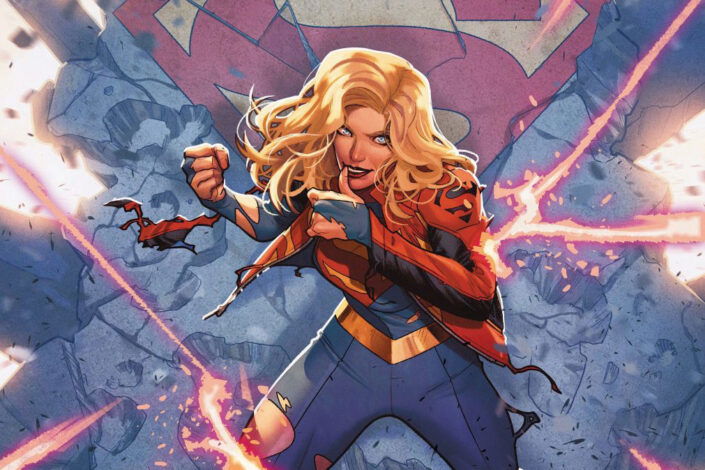
It’s a Bird… It’s a Plane… It’s Supergirl! One of Superman’s happiest moments in life was discovering he had a long-lost living relative when Supergirl made her first appearancee in Action Comics #252 (May 1959). This was also one of the most important events in the development of the Superman Universe. Sent to Earth in a rocket by her father, Zor-El, Supergirl is Superman’s cousin from Krypton and she was chosen to star in the backup story of Action Comics even before making her debut.

The first adventures of the Girl of Steel were conceived with the idea of appealing to female readers who “were thought to be more interested in seeing a girl use super powers closer to home.” (American Comic Book Chronicles, The 1950s). While her earlier stories were clearly not as thrilling as the adventures of her more famous cousin, this was only the start for Supergirl, as the character would grow in popularity and complexity.

Since her creation, Supergirl has been killed off, replaced, rebooted, retconned and much much more. The Last Daughter of Krypton has used several names and been part of various teams, including the Legion of Super-Heroes, the Justice League, the Red Lantern Corps, and the DEO. Her history is not simple, complicated by the fact that Kara-Zor-El isn’t the only person to have taken on the mantle of Supergirl!

There’s also no doubt that the Girl of Steel gained popularity thanks to the several iterations of the character on the big and small screen. She first appeared in the film Supergirl (1984), played by Helen Slater. On TV, She has been played by Laura Vandervoort in Smallville and Melissa Benoist in the Arrowverse. Sasha Calle recently portrayed the character in The Flash (2023) while a new version of the character has been announced with Milly Alcock playing the character in Superman: Legacy (2025) and Supergirl: Woman of Tomorrow (2026). Naturally, she has also appeared in several animated movies and television series!

Let’s now explore the comic book history of Supergirl, from her first appearance in Action Comics as the Supergirl from Krypton to her recent adventures in space and beyond! Check out our Supergirl Comics Order for a guide to the many stories featuring the Maid of Might!

Read More »Supergirl Reading Order (Kara Zor-El, Matrix, Cir-El)

The Joker’s Last Laugh Reading Order

The Joker was disrupting the DC Universe at the beginning of the noughties. He was  first accidentally given nigh-unlimited reality-shaping powers by Mr. Mxyzptlk and reshaped the universe in his image in Superman: Emperor Joker. Not long after that, the Joker was at it again, spreading chaos in the way less received event The Joker’s Last Laugh (also known as The Joker: Last Laugh), written by Chuck Dixon and Scott Beatty with art by Pete Woods.

What The Joker’s Last Laugh is about? The Joker is a prisoner at the Slabside Penitentiary when a prison doctor informs them that they have found a malignant tumor after a brain scan. The Joker is going to die. Facing this news, The Clown Prince of Crime decides he wants to go out with a bang. He concocts a scheme to carry on his legacy by transforming his fellow villains into “jokerized” versions of themselves.

Published in 2001, this storyline comprises a six-issue miniseries and 25 tie-ins, covering almost everything that was published at the time, from the Batman titles to the Superman family, and more.

Read More »The Joker’s Last Laugh Reading Order

Young Justice Reading Order

  • by

They are the next generation of superheroes and want to live on their own adventures, far from their mentor. They are the Young Justice! The team was founded by Robin (Tim Drake), Superboy (Kon-El), and Impulse (Bart Allen), but will soon become a beacon for the young superheroes in the DC Universe.

Created by Todd Dezago and artist Todd Nauck, the Young Justice made its first appearance in 1998, in Young Justice: Secret #1, at a time when the Teen Titans had become the Titans and there was no current superheroes’ teen team.

The team’s base was established in the empty JLA headquarters in Happy Harbor, Rhode Island, where they met Red Tornado. The sentient android stayed with the team as an adult supervisor and adviser. Soon enough, some new members were added to the team: Wonder Girl (Cassandra “Cassie” Sandsmark), Arrowette (Cissie King-Jones), and Secret (Greta Hayes). Other heroes would come and go from the team: Empress, Li’l Lobo/Slobo, The Ray, but also Teen Lantern, Jinny Hex, and Amethyst. Red Tornado was also eventually replaced with civilian Snapper Carr.

If Young Justice was created on paper, the team also made a name for itself on television, thanks to the Young Justice animated television series, launched in 2010 on Cartoon Network. It is not an adaptation of the comic book series (and not in continuity), but the adventures of another version of the team from another Earth. And there are tie-ins to the television adventures!

To find out more about Young Justice, take a look at this complete reading order!

Read More »Young Justice Reading Order