Skip to content

DC Comics

From Crisis to Crisis: A DC Comics Reading Order

  • by

For decades now, every DC Comics reader has been dealing with continuity issues. Some see that as a problem and, in order to fix it, multiple reboots/relaunches were introduced, installing a new status-quos, and launching new “eras.” All that with the use of what are called “Crisis” events.

The original “Crisis” took place in Justice League of America #21, titled “Crisis On Earth-One!” The story introduced the idea of two different realities, explaining how the heroes of the Justice League teamed up with their predecessors from the Justice Society of America. This led to multiple crossovers between Earth-One and Earth-Two.

But what cemented “Crisis” as a synonym for “universe-altering event” was the 1985 Crisis on Infinite Earths, the famous crossover storyline from Marv Wolfman and George Pérez. This 12-issue limited series is now credited with popularizing the idea of a large-scale crossover in comics. At the time, the goal was to create a single and unified DC Universe.

Crisis on Infinite Earths was used to launch what is now called the Modern-Age era. It became–and still is for a lot of readers–a good entry point into the DCU. The event didn’t fix everything and other Crisis events try to do more. The DCU was just destined to become a confusing affair once more.

Nevertheless, reading from Crisis to Crisis is not a simple task as the series are numerous, as well as the crossovers. If you want to explore this rich story, the task is overwhelming. There are a lot of roads to follow, but you may only want the short version–or at least, the essential reading recommendation.

This reading guide is here to offer one possible road to follow. It’s not definitive, feel free to submit more books to read in the comment section (and tell us why they are a must-read!).

Read More »From Crisis to Crisis: A DC Comics Reading Order

Green Lantern Rebirth Reading Order

  • by

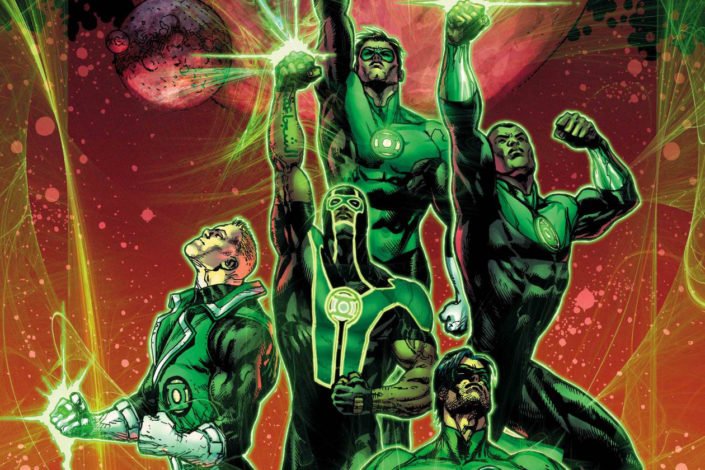
After almost five years, the New 52 era came to an end to make way for a new era, a new beginning: Rebirth! It had, from a continuity point of view, minimal impact on the Green Lanterns, as their story simply continues from the previous era.

From a more behind-the-scene angle, new creative teams worked on the title. Or titles should I write, as the main Green Lantern series was replaced by two books. Simon Baz and Jessica Cruz headlined Green Lanterns, written by Sam Humphries for its first 32 issues and for the most part penciled by Robson Rocha. Humphries was followed by Tim Seeley (#33-47), Aaron Gillespie (#48-49), and Dan Jurgens (#50-57) with art from Ronan Cliquet, Carlo Barberi, V. Ken Marion, Mike Perkins and Marco Santucci. Our two Green Lanterns were also members of the Justice League during this period. At the same time, Hal Jordan was still flying with writer Robert Venditti and artist Rafa Sandoval in Hal Jordan and the Green Lantern Corps

Things changed not long after Dark Nights: Metal. Grant Morrison took over and teamed up with British comic book artist Liam Sharp for a run on Green Lantern. There was also some shake-up in the Justice League, following the No Justice arc, with the creation of different teams. Simon Baz stayed with the classic Justice League, but Jessica Crews joined the Justice League Odyssey, a team formed to bring order to the newly created space sector known as the Ghost Sector. And a little bit later, a new Green Lantern was introduced…

Read More »Green Lantern Rebirth Reading Order

Superman Reading Order, The Modern Age (Post-Crisis)

  • by

It’s a Bird… It’s a Plane… It’s Superman! Created by Jerry Siegel and Joe Shuster in Action Comics #1 (1938), Superman is an alien from the planet Krypton who fights crime in Metropolis and the rest of the world. Under the costume is Kal-El, who was sent to Earth as a baby and adopted by farmers Jonathan and Martha Kent, who named him Clark Kent and raised him in the small town of Smallville. As Clark developed superhuman abilities, his parents taught him to use his talents to help humanity.

Clark relocated to Metropolis to pursue a career in journalism. He landed a job at the Daily Planet, where he met the love of his life and journalist Lois Lane, photographer Jimmy Olsen, and editor-in-chief Perry White. In parallel, he put on a colorful costume and used the codename Superman to fight powerful enemies, including General Zod, Brainiac, and the most emblematic of them all, the narcissistic-genius Lex Luthor.

The superhero genre wouldn’t be the same without Superman. Although there were others before him who could be said to fit the bill, he established the conventions and popularized the entire genre, being the best-selling superhero in American comic books until the 1980s.

As the DC Universe was becoming more complicated and sales were declining, a new page of history was written following a Crisis like no one else: Crisis on Infinite Earths. This was the beginning of the Modern Age and the creation of new instant-classic stories. The event was used to retcon the history of most characters. The idea was to clean up the timeline (something DC is still trying to do, in vain) and to update the superheroes to appeal to a contemporary audience. 

This is when this Superman reading order begins. From his new origin story by John Byrne to his iconic death, The Triangle Era, and much more, this guide covers the Superman comics released over 25 years, before DC Comics relaunched their universe with New 52.

Read More »Superman Reading Order, The Modern Age (Post-Crisis)

Hawkman Reading Order

  • by

There is more than one DC Comics superhero named Hawkman. Created by writer Gardner Fox–who was apparently inspired by the sight of a bird while trying to come up with new superheroes–and Dennis Neville in Flash Comics #1 (January 1940) during the Golden Age of comic books, the first of the several incarnations of Hawkman was Carter Hall, a reincarnation of the ancient Egyptian prince Khufu.

Hall had discovered the “ninth metal” (aka “Nth metal”) that allow him to fly by negating the effects of gravity. He put on a costume and started to fight crime. He soon became a founding member of the Justice Society of America–and even became the chairman of the team. Also at that time, he started romancing Shiera Saunders, the reincarnated bride of Khufu, who became known as Hawkgirl.

Like most of the superheroes of the Golden Age, Hawkman disappeared for a while during the 1950s and was reinvented for the Silver Age under the guidance of famed DC editor Julius Schwartz. Revived in The Brave and the Bold # 34 (Feb–Mar 1961), his powers were quite similar but Hawkman was this time a police officer from the planet Thanagar–not a human anymore! Named Katar Hol he came to Earth with his wife Shayera in search of a criminal and stayed–the couple adopted secret identities, becoming Carter and Shiera Hall who worked at a museum in Midway City.

This time again, he joined the main DC Team, the Justice League of America, and met the original Hawkman during crossovers with the JSA from Earth-Two.

Like the rest of the DC Universe, the 1985 Crisis on Infinite Earths changed a lot for Hawkman and Hawkwoman. Everything became quite confusing until the 1989 Hawkworld series rebooted the Hawkman story. This time, Katar Hol and his partner Shayera were sent to Earth after rebelling against the Thanagarian government whose policy was predatory against other worlds.

Their arrival on Earth forced a retcon of the Golden Age Hawkman and Hawkgirl, as they were still alive and well. It was then revealed that the Nth metal was in reality from Thanagar. Also, we learned that it was really Fel Andar, a Thanagarian agent, who was the 1980s Hawkman who previously joined the JLA in order to spy on the heroes. All these corrections didn’t simplify the Hawk mythology as new events added complications to the point that DC decided to put the Hawks aside for a while.

It was in the 1990s, in the JSA series, that the continuity was revised. We then learned that Carter Hall and Shiera who got their powers from Thanagarian Nth metal had been reincarnated multiple times since ancient Egypt. Katar Hol come to Earth during the 1990s and Fel Andar returned to Thanagar. The reincarnation angle was used to launch a new Hawkman series in 2002.

All of this is the simple version, things were even more complicated in the books…

Read More »Hawkman Reading Order

Legion of Super-Heroes Reading Order, the team from the future

When Superboy met three teenagers and members of the Legion of Super-Heroes for the first time in the comic book Adventure Comics #247 (April 1958), he couldn’t predict how popular this young team would become. Created by writer Otto Binder and artist Al Plastino for a one-off story, the Legion is a team of young superheroes from the 30th and 31st centuries.

They proved so popular that they returned again and again, eventually becoming a regular feature in Adventure Comics #300. Sharing the spotlight with Superboy for years, the Legion finally earned its own comic title in the 1970s.

By the 1980s, the Legion of Super-Heroes was among DC’s best-selling series, alongside Uncanny X-Men and New Teen Titans. During this time, Paul Levitz wrote some of the most iconic stories in Legion history, including The Great Darkness Saga. Later, Keith Giffen took the series in a darker, more experimental direction, but not without its share of continuity challenges.

To reconnect with a lighter and simpler Legion, the Legion of Super-Heroes title was rebooted by Mark Waid, Tom McCraw, and Stuart Immonen In 1994. Ten years later, sales were failing, and despite good reviews, Waid and Barry Kitson rebooted the series again, creating a third incarnation of the Legion.

Generally, when a new version of the Legion was introduced, the previous team was usually erased from continuity, as they all occupied the same place in history. Each team was meant to represent a different possible future for DC. In 2008, writer Geoff Johns changed this concept with Final Crisis, revealing that the different versions of the Legion come from separate worlds but still interact with the main Earth’s history. This allowed all the Legion teams to coexist, and the pre-Crisis team was restored to continuity for the occasion. In 2019, a new version of the team was introduced by Brian Michael Bendis.
 
The Legion became a beloved team, with a history that’s anything but simple. Full of stories ranging from lighthearted to dark and serious, from soap opera to high sci-fi, and everything in between, you can now explore their rich past with our Legion of Super-Heroes Comics reading order!

Read More »Legion of Super-Heroes Reading Order, the team from the future
Who is Black Adam? The origin story of Shazam’s villain

  • by

Like several DC characters created in the 1940s, the history of Black Adam is a complicated one. His origin story has been told multiple times and changes have been made throughout the years.

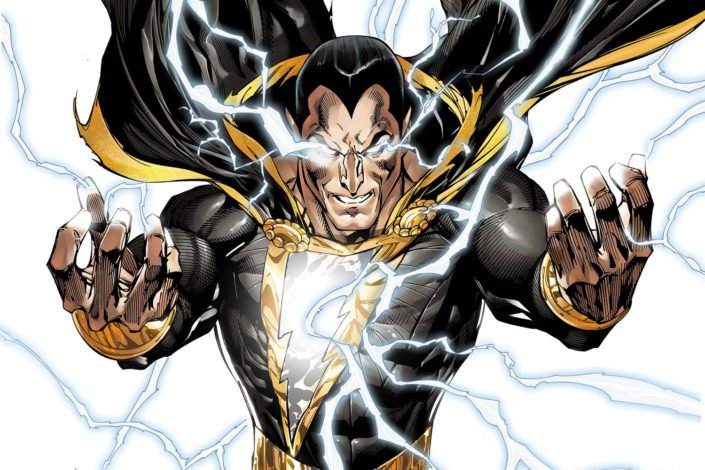
Soon played by Dwayne Johnson on the big screen, Black Adam was created by Otto Binder, Bill Parker, and C.C. Beck. He made his first appearance in The Marvel Family #1 (1945) published by Fawcett Comics where he served as a powerful one-time enemy of the superhero Shazam (see reading order) and the Shazam Family. 

However, Black Adam was resurrected nearly 30 years later as a recurring character following DC’s acquisition of the Fawcett characters. The character was redefined with time by writers Jerry Ordway, Geoff Johns, and David S. Goyer and the character has evolved from outright villain to sometimes anti-hero.

Read More »Who is Black Adam? The origin story of Shazam’s villain

Blue Beetle Reading Order (Ted Kord and Jaime Reyes)

Officially created by Charles Nicholas Wojtkoski in 1939 (working for the Eisner and Iger shop), Blue Beetle is a superhero who started his career at Fox Comics. Charlton Comics acquired FOX Comics and, ultimately, was itself bought by DC Comics. That’s how Blue Beetle joined the Justice League. In truth, the original Blue Beetle was not the same as the one that became friends with Booster Gold.

Everything began with Dan Garret, the original Golden Age Blue Beetle. Introduced in Mystery Men Comics #1 (August 1939), Dan was a Rookie patrolman and the son of a police officer killed by a criminal. He simply became a vigilante, without powers, who wore a bulletproof blue costume–looking a lot like The Phantom. At some point, he temporarily gained power with the help of a special vitamin. He even got a sidekick named Sparky. Also, during World War II, Garret became a government agent–he got his cop uniform back after the war ended. As time went by, he gained even more powers, but that didn’t save him from Fox Comics going out of business.

Charlton Comics reprinted some Blue Beetle comics for a time and, during the Silver Age of comics, launched a new series–in 1964, written by Joe Gill. This time, Dan Garrett (with two “t”) was an archaeologist who discovered a mystical scarab during a dig in Egypt. This artifact gave him superpowers. Like Shazam, he only needed to say the word (“Kaji Dha!” in his case) to transform into the Blue Beetle. This Dan Garrett only got two years on the newsstands before getting replaced.

Introduced by Gary Friedrich and Steve Ditko in a backup story in Captain Atom #83 (November 1966), Ted Kord was a genius-level inventor and a gifted athlete without superpowers who operated out of his airship, “the Bug”. When he died, Garrett passed the torch to Ted–years later, DC Comics retconned his origins by adding that Ted was a former student of Dan Garrett. The series was canceled shortly after its launch.

When Charlton Comics went out of business in the early ’80s, AC Comics bought the right to the character, among others, did some stories, then the rights reverted back to Charlton, and DC Comics purchased them.

Using the Crisis on Infinite Earths event, DC Comics introduced Charlton’s characters into its newly revised universe. After the Crisis ended, Len Wein wrote a new Blue Beetle series after penning Secret Origins Vol. 2 #2 in which he rewrote Ted Knight’s origins. After 24 issues, the series was canceled, but Blue Beetle joined the Justice League International not too long after and found a new life. Ted became Booster Gold’s best friend, a relationship that defined the hero as a proper character in the DC Universe.

In 2006, DC Comics decided to retcon and expand upon the Blue Beetle mythos with the help of Jaime Reyes. Introduced in Infinite Crisis #3 (February 2006), he really became the new Blue Beetle in Infinite Crisis #5. Created by Keith Giffen, John Rogers, and Cully Hamner, Jaime bonds with the scarab, and it is revealed that it is an artifact alien in origin. Soon, Jaime became friends with Booster, and joined the Teen Titans and even the Justice League.

Read More »Blue Beetle Reading Order (Ted Kord and Jaime Reyes)

Aquaman Reading Order, the King of Atlantis

Aquaman emerged from the sea during the Golden Age, making his first appearance in More Fun Comics #73. It was only one month after Wonder Woman‘s first appearance, and it was the same issue as Green Arrow and Speedy. Since then, he has been one of the more enduring heroes of DC Comics. Yet, the King of the Sea is still often overshadowed and overlooked. Even his splash on the big screen where he was played by Jason Momoa didn’t change the situation.

Created by Paul Norris and Mort Weisinger, Aquaman from the Golden Age was quite different from the hero we know today. First, this version of the character – known today as the Aquaman of Earth-2 – was not a true denizen of Atlantis. He had no particular powers. His father was a scientist and undersea explorer who discovered the ancient city of Atlantis. He taught his son how to survive and breathe underwater, and how to use all the power of the sea to make him strong and swift. Then, he was erased from existence with Crisis on Infinite Earths.

His origin story has been revised a few times since then. He is now known as Arthur Curry, half Atlantean, half-human, and undersea royalty. Since his debut and his gained popularity from his 1960s animated appearances, DC worked at making Aquaman more powerful and edgier, but failed to give him a more defined role and purpose. For a very long time, DC Comics didn’t know what to do with the character.

If Aquaman is more of a joke for some people, the character has lived some great, strange, colorful, and exciting adventures. He has gained a devoted fan base and the respect that he is due as one of the top-tier DC superheroes. Long live the King!

Read More »Aquaman Reading Order, the King of Atlantis

Batman: Hush Reading Order

  • by

Not unlike The Batman Who Laughs, Hush is a DC Comics supervillain, and more precisely, an adversary of Batmanto created during the Modern Age (aka the Post-Crisis era). Recognized for his distinctive visual design and lethality, Hush has become one of the more memorable additions to Batman’s rogues’ gallery in the 21st century.

The character was created by writer Jeph Loeb and artist Jim Lee, making his debut in Batman #609 (2003), the opening chapter of the 12-part story arc Batman: Hush. In this storyline, we learn that Hush is Dr. Thomas “Tommy” Elliot, a brilliant surgeon and childhood friend of Bruce Wayne. Elliot orchestrates an elaborate campaign against Batman, manipulating several of Gotham’s most notorious villains while concealing his own identity beneath his trademark bandaged visage.

Following the conclusion of the Hush storyline, the character reappeared in multiple Batman titles and related media, cementing his status as a recurring foe. However, with the launch of DC Comics’ New 52 initiative in 2011, which rebooted much of the company’s continuity, Hush’s presence temporarily diminished. He was later reintroduced in the weekly series Batman Eternal (2014–2015), where aspects of his backstory and motivations were reinterpreted. During the DC Rebirth (2016), elements of pre-New 52 continuity were reintroduced, and new developments followed. Hush returned once more, clashing not only with Batman but also with members of the extended Bat-Family.

Outside the mainline comics, Hush has appeared in various adaptations, including the animated film Batman: Hush (2019), video games, and merchandise, further solidifying his cultural impact.

Read More »Batman: Hush Reading Order

Stargirl Reading Order (Courtney Whitmore)

  • by

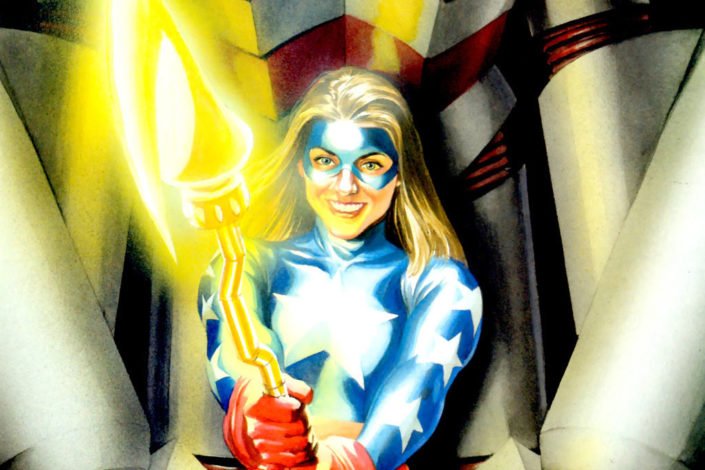
Created by Geoff Johns and Lee Moder, Courtney Whitmore made her first appearance in Stars and S.T.R.I.P.E. #0 (July 1999)–she was in part based on Johns’ sister Courtney, who died in the explosion of TWA Flight 800 in 1996.

Courtney is the stepdaughter of Pat Dugan, the inventor of the powered armor suit S.T.R.I.P.E. and former sidekick of the original Star-Spangled Kid. Before becoming Stargirl, she was in fact the new Star-Spangled Kid. She joined the Justice Society of America (JSA) and, after being given Starman Jack Knight’s cosmic staff, she officially became known as Stargirl.

She stayed with the JSA for a long time, until the moment when DC rebooted its universe and launched the New 52 era. Then, Stargirl became a member of the new Justice League of America title. Her origin story was also rewritten. In this version, she found the staff and the rest of the uniform in Pat Dugan’s office who was then Barbara Whitmore’s boyfriend. Pat agreed to train her, and she became a full-time superhero.

Of course, there’s now a Stargirl TV Show. You may have seen it. Brec Bassinger is playing the young Courtney/Stargirl. The character also appeared in other TV shows, live or animated, through the years (and also in Video Games).

Read More »Stargirl Reading Order (Courtney Whitmore)