Skip to content

X-Men

Generation X Reading Order (part of the X-Men Universe)

  • by

After New Mutants and X-Force, Generation X is another Marvel Comics series set in the X-Men Universe. Created by Scott Lobdell and Chris Bachalo, the Generation X team first appeared in Uncanny X-Men #318 (November 1994) during the “Phalanx Covenant” storyline and immediately got its own monthly series.

Generation X is the first team of X-Men not mentored by Charles Xavier, but by Banshee and former supervillainess Emma Frost (aka the White Queen). In fact, these young mutants did not attend Xavier’s School for Gifted Youngsters in upstate New York, but the Massachusetts Academy, located in Berkshire County, Massachusetts.

During the first volume, Generation X consisted of Jubilee (Jubilation Lee), Chamber (Jonothon “Jono” Starsmore), Husk (Paige Guthrie), M (Monet St. Croix), Mondo, Penance, Skin (Angelo Espinosa), Synch (Everett Thomas), and Gaia.

Read More »Generation X Reading Order (part of the X-Men Universe)

Cable Reading Order

Cable looks straight at you with his signature intensity

Meet Nathan Summers, time-traveling soldier, powerful mutant, and original X-Force leader, with this Cable comics reading list, covering everything from his first appearance to his team-ups with Deadpool, his X-Men days, the Messiah Trilogy, and more.

X-Men Reading Order - X-Logo

Few characters at Marvel have a backstory as complicated as Cable (with the possible exception of Psylocke). Born Nathan Christopher Charles Summers, Cable is the time-traveling son of Scott Summers (Cyclops) and Madelyne Pryor (a clone of Jean Grey). Behind his conception lurks the mad geneticist Mr. Sinister, who planned to use the child as a weapon to destroy his archenemy, Apocalypse.

As an infant, Nathan was infected by a deadly techno-organic virus incurable in the present. To save him, Cyclops gave Nathan up, sending him 2,000 years into the future (Earth-493) where he could be treated and raised. There was no hope for Scott to ever see his son again… or so he thought.

In this future world, Nathan was raised by the Askani Clan to become the warrior known as Cable, a sworn enemy of Apocalypse. The religious order was led by Mother Askani, a time-displaced version of Rachel Summers, Cable’s half-sister.

Read More »Cable Reading Order

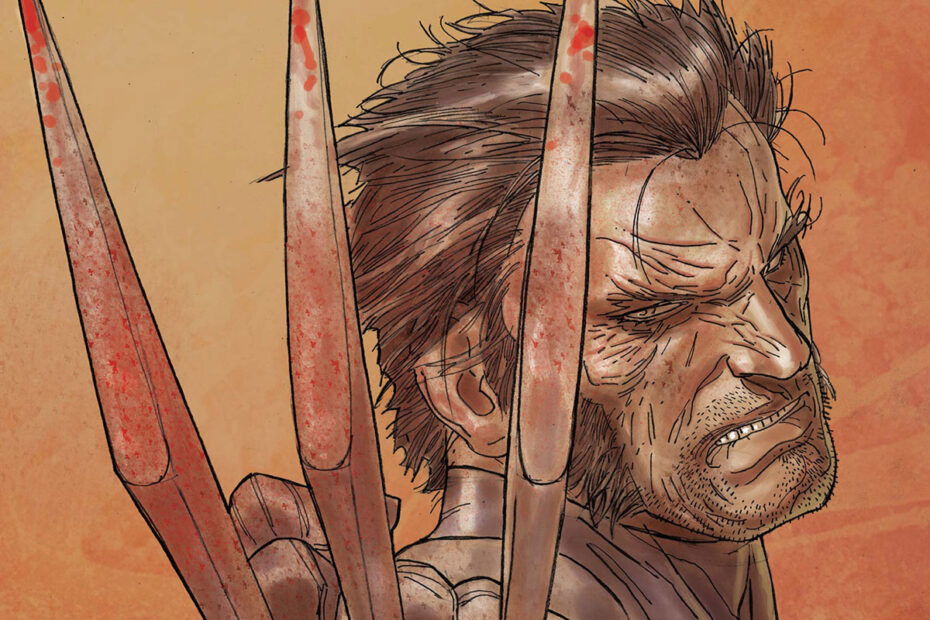
Wolverine Reading Order: The Solo Adventures of the Most Popular X-Man

Created by Roy Thomas, Len Wein, and John Romita Sr. in 1974 (in The Incredible Hulk #180-181) but first drawn for publication by Herb Trimpe, Wolverine quickly became the most popular X-Man.

Described as a small-statured Canadian with a fierce temper like a wolverine, Wolverine has a complicated past, multiple origin stories, and many deaths and resurrections. In fact, he had already lived a long life before joining the X-Men, as we have discovered over the years. Born during the late 19th century, his youth was marked by family secrets and tragedies. He already had claws, but they were not made of adamantium. He also had his animal-keen senses, enhanced physical capabilities, and powerful healing factor from an early age. This made him the perfect candidate for the mysterious Weapon X programme, which kidnapped him and forcibly fused adamantium to his bones.

He obviously escaped and found his way to Professor Charles Xavier, who recruited him into the new X-Men alongside Jean Grey and Cyclops (see our X-Men reading order). As a member of the team, he fought against many foes. He lost his claws, his adamantium, his memories, his loved ones, his family, and his friends. Nevertheless, he got most of them back, joined other teams, and discovered more about himself, his friends, his place in the world, and his powers.

Marvel Comics has featured Wolverine in many series over the years due to his popularity. In fact, there have been so many that it is difficult to maintain a coherent continuity. This Wolverine reading order focuses on Wolverine’s solo career rather than covering everything. 

Read More »Wolverine Reading Order: The Solo Adventures of the Most Popular X-Man

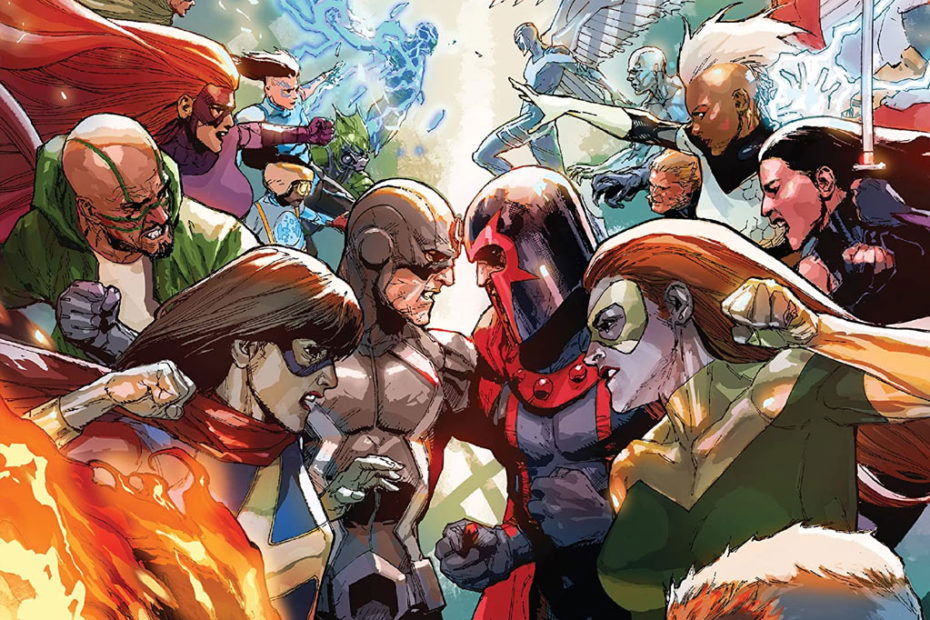
A.X.E: Judgment Day Reading Order (Avengers/X-Men/Eternals)

Starting this summer, Judgment Day is the latest Marvel Comics crossover event! Written by Kieron Gillen and with art by Valerio Schiti, A.X.E: Judgment Day will put the Avengers, X-Men, and Eternals in the heart of a deadly conflict.

Here is the official synopsis: The battle for the planet is here! The X-Men claim they’re Earth’s new gods. The Eternals know that position is already filled. And the Avengers are about to realize exactly how many secrets their so-called friends have been keeping from them!

Years of tension are about to lead to a volcanic eruption — and two worlds will burn! Who has leaked the X-Men’s secrets to their latest foes? Why is Tony Stark abducting an old friend? And who stands in judgment over the whole world?

What to read before A.X.E: Judgment Day?

Being an event coming from Kieron Gillen and Valerio Schiti, you certainly need to be up-to-date with their Eternals’ run:

But also with Kieron Gillen and Mark Brooks’ Immortal X-Men

  • Immortal X-Men
  • as well as other Destiny of X titles like X-Men (#11-12, X-Men – Hellfire Gala (2022) #1), X-Men Red. No Avengers reading really required.

Read More »A.X.E: Judgment Day Reading Order (Avengers/X-Men/Eternals)

X-23/Wolverine, Laura Kinney Reading Order

  • by

Created by writer Craig Kyle, X-23 first appeared – not in a comic book! — in the television series X-Men: Evolution, in season 3 episode 10. At the time, Kyle created her in an attempt to make a Wolverine to “connect more to the younger kids”.  It was a success and, after a second episode, she became so popular, that she ended up in the comics, like Harley Quinn in her time. Her first appearance in comics was in NYX #3, published in February 2004 and written by Joe Quesada before headlining two miniseries written by Craig Kyle and Christopher Yost where her origins were explained.

In the beginning, X-23 is simply a product of The Facility, an organization that attempted to recreate Weapon X and failed. The geneticist Sarah Kinney thought that cloning was the way to go, but the genome recovered from Wolverine was too damaged. Sarah decided to alter the DNA against the Facility orders and Laura was born. She was trained to kill Wolverine, but when she got the opportunity, she joined the X-Men. Since then, she has realized she was Wolvie’s biological daughter, and eventually, his successor.

Since her first appearance on television, Laura has made quite a name for herself, on the comic book pages, but also on the big screen in the movie Logan. She’s a perfect example of a legacy character done right, well worth having her own reading order.

Read More »X-23/Wolverine, Laura Kinney Reading Order

Excalibur Reading Order (Marvel Comics)

  • by

Created by writer Chris Claremont and artist/co-writer Alan Davis, the Excalibur team made its debut in 1987 with Excalibur Special Edition #1 (also known as Excalibur: The Sword is Drawn). The series was conceived as a way to merge elements of two distinct Marvel properties: the X-Men and Captain Britain, combining British superheroics with mutant mythology.

The United Kingdom’s champion, Captain Britain, gained his powers with the guidance of the wizard Merlyn, and his shapeshifting partner Meggan, joined forces with former X-Men Nightcrawler and Kitty Pryde. Together, they confront threats such as Gatecrasher and her Technet, the Warwolves, the Juggernaut, Mojo, Arcade, the Crazy Gang, the X-Babies, and alternate universe adversaries like the Lightning Squad. The team operates from their lighthouse base in the United Kingdom but is drawn into global conflicts, including the chaos of Inferno in New York.

The original Excalibur series ran from 1988 to 1998, chronicling the adventures of the founding team. Like New Mutants, the title has been revived intermittently for limited runs and remains part of the broader Marvel continuity, including the more recent Krakoa Era, ensuring Captain Britain and his allies continue to play a role in contemporary storylines.

Read More »Excalibur Reading Order (Marvel Comics)

Age of X-Man reading order, an X-Men alternate-universe event

  • by

Age of X-Man Reading Order

There are multiple alternate realities in the Marvel Universe, some more famous and impactful than others. For the X-Man, nothing beats Age of Apocalypse, one of the most iconic storyline for the X-Men. With a name and a premise similar, Zac Thompson and Lonnie Nadler gave us Age of X-Man in 2019, a utopia led by Nate Grey (X-Man). 

Per the official Marvel synopsis: Enter the Age of X-Man, a perfect world with perfect heroes! In this alt-universe read, the commune-dwelling X-Men live on a utopia planet where fear and hatred are things of the past… along with concepts like “love” and the nuclear family. United under the banner of mutantkind, all mutants idolize the X-Men. Then the cracks begin to show, and a rebellion grows against this weird world order…

What to read before Age of X-Man?

As writer Zac Thompson indicated at the time on Twitter, you just need to know who the X-Men are to jump into this event. For those who like to go deeper, here are some of the recommended stories to read before Age of X-Man:

Nate Grey, also known as X-Man, is an alternate version of the regular Marvel Universe hero Cable, coming from the Age of Apocalypse where he made his first appearance in 1995. This major alternate reality also serves as an inspiration for Age of X-Man, but it is not required reading to understand it. If you want to know more about it, you can consult the complete X-Men Age of Apocalypse Reading Order.

  • X-Men: Age of Apocalypse Omnibus
    Collects Uncanny X-Men #320-321, X-Men #40-41, Cable #20, X-Men Alpha, Amazing X-Men #1-4, Astonishing X-Men #1-4, Factor X #1-4, Gambit & The Externals #1-4, Generation Next #1-4, Weapon X #1-4, X-Calibre #1-4, X-Man #1-4, X-Men Omega, Age Of Apocalypse : The Chosen and X-Men Ashcan #2.

After disappearing for a few years from the Marvel Universe, Nate Grey makes his comeback in the rebooted Uncanny X-Men, with the storyline X-Men Dissambled from which spanned out the alternate-reality event (but, despite that fact, you can go read the event without the prelude).

Read More »Age of X-Man reading order, an X-Men alternate-universe event

X-Men Reading Order, Part. 7: Destiny of X and Fall of X, The Second Age of the X-Men of Krakoa


Welcome to Part 7 of our ongoing effort to compile a comprehensive X-Men Reading Order through the lens of collected editions. If you’re just joining us, you can start from the beginning with Part 1: The Silver Age & Chris Claremont (1963–1991), then follow through Part 2: Age of Apocalypse & Onslaught (1991–2001), Part 3: From the Grant Morrison Era to Civil War, Part 4: The Road to Avengers vs. X-Men, Part 5: Marvel NOW to ResurrXion, and Part 6: The Jonathan Hickman Era.

This chapter picks up where Hickman left off—literally. After wrapping his ambitious reimagining of the X-Men with the Inferno (2021) miniseries, Hickman stepped away, and a new creative collective carried the torch. What followed is not a reboot, but a continuation: The Second Age of the X-Men of Krakoa, informally known as the Destiny of X era.

This era builds directly on the foundation laid during Reign of X. Much like Dawn of X before it, Destiny of X launches with a prelude and then branches out into a wave of new titles—Immortal X-Men, X-Men Red, Legion of X, Knights of X, and more. The promise is clear: Krakoa’s future is still being written, with its greatest victories and most harrowing trials yet to come.

Read More »X-Men Reading Order, Part. 7: Destiny of X and Fall of X, The Second Age of the X-Men of Krakoa

Death of Wolverine Reading Order

  • by

Death of Wolverine Reading Order

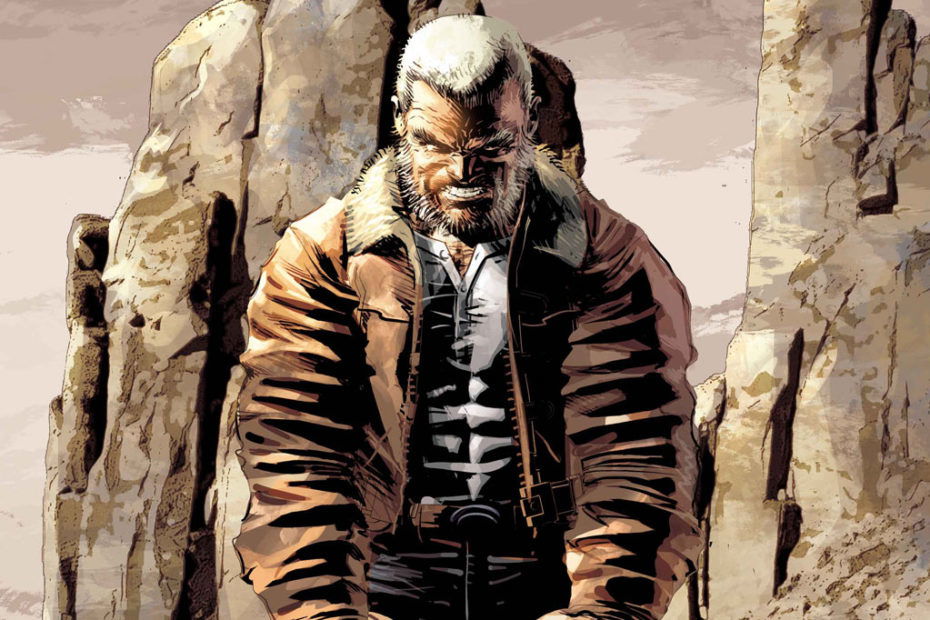
At the end of 2014, something unimaginable happened in the Marvel Universe: the Death of Wolverine! As one of the most famous X-Man in all the universes and a healing factor, Wolverine was not destined to bite the dust like other Marvel characters.

But all that changed in the pages of Wolverine vol. 5, and when his enemies learned that, finally, Wolverine could be killed, it didn’t take too much time for them to attempt to kill him once and for all. Better yet, there’s a bounty on Wolverine’s head, a price so big his enemies and few assassins can’t pass the chance. The race is on to find Wolverine, but who put out the contract? When Logan discovers that his mystery foe wants him alive, he turns on the offensive. As the hunted becomes the hunter once more, he’s determined to die the way he lived.

Read More »Death of Wolverine Reading Order

X-Factor Reading Order

  • by

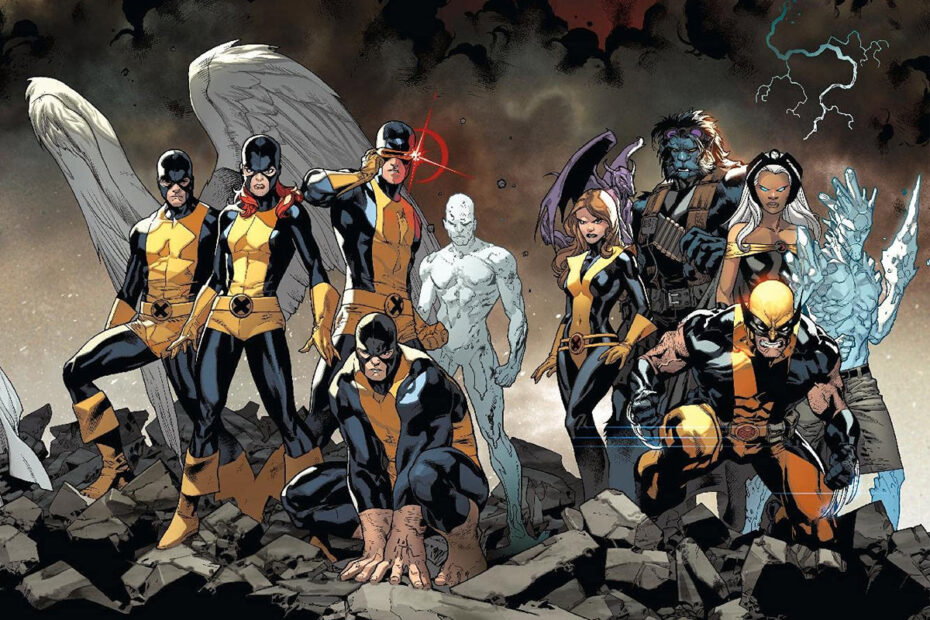
Launched in 1986 by Bob Layton and Jackson Guice as a spin-off from the X-Men franchise, X-Factor was a team formed by the five original X-Men – Angel, Beast, Cyclops, Jean Grey (Marvel Girl), and Iceman – in response to the outlaw status of the then-current X-Men team.

The five original members X-Men disassociate with the current team because Professor X had placed Magneto as its leader. Quickly, they decide to set up a business advertised as mutant-hunters for hire in New York City, pretending to be “normal” (non-superpowered) humans to their clients. Eventually, the X-Factor team decides that the “mutant hunter” angle was bad for everybody and stops. Louise Simonson took over the title (with art by Walt Simonson) and quickly introduced Apocalypse and other major elements of the X-Mythos.

At that time, the series was massively connected to the other X-Titles and events. In 1991, the original members of X-Factor rejoined the main X-Men team. Marvel didn’t kill the title though. Peter David became the main writer (with art by Larry Stroman) and began by reintroducing X-Factor with new members (with Havok, Multiple Man, Polaris, Quicksilver, Strong Guy, Valerie Cooper, and Wolfsbane).

Read More »X-Factor Reading Order