Skip to content

Fabien

Harrow County Reading Guide to Cullen Bunn’s Horror series

  • by

Published by Dark Horse Comics, Harrow County is an Eisner-nominated horror comic book series created by writer Cullen Bunn and artist Tyler Crook that blends elements of folk horror, dark fantasy, and Southern Gothic traditions. It’s also part of our list of Horror Comic Books to read and the Best Dark Horse Comics Series.

The concept originated as a serialized prose story titled Countless Haints, written by Bunn and released online. When adapted into a comic form in collaboration with Crook, the story underwent substantial reworking, evolving into a visually rich, serialized narrative that debuted in May 2015. The story follows Emmy Crawford, a young woman in rural Harrow County, who discovers on the eve of her eighteenth birthday that she is mystically connected to the land around her and the supernatural beings—ghosts, haints, and monsters—that inhabit it.

The original Harrow County series ran for 32 issues from 2015 to 2018. It has since been collected in multiple formats, including trade paperbacks, library editions,  deluxe hardcover omnibuses, and a compendium.

Following its conclusion, the franchise continued with the spin-off series Tales from Harrow County (2019–2021), not to be confused with the Tales of Harrow County short stories, written by Bunn with art by Naomi Franquiz and later Emily Schnall. These stories expand the mythology and explore events set after the main series, focusing on Emmy’s friend Bernice and the lingering supernatural forces in Harrow County.

Read More »Harrow County Reading Guide to Cullen Bunn’s Horror series

Invasion! Reading Order, a DC Crossover Event

  • by

DC Invasion Reading Order

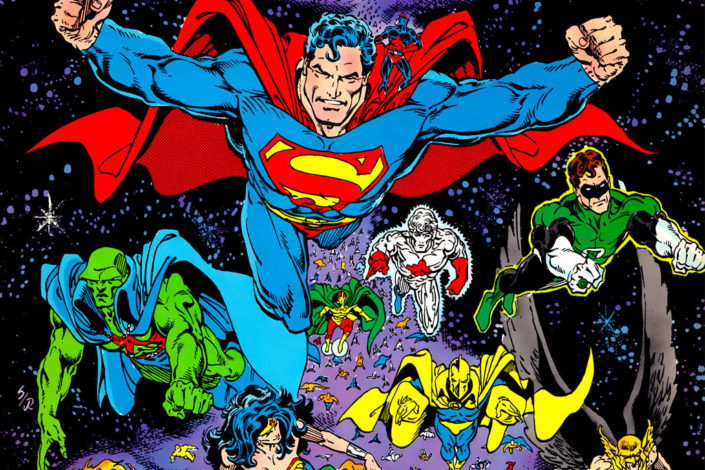
Published in late 1988-early 1989 by DC Comics, Invasion! is crossover event plotted by Keith Giffen (from Justice League International) with the main series scripted by Bill Mantlo (with art from Todd McFarlane, Bart Sears, and Giffen). It was the biggest DC event since Crisis on Infinite Earths, and it was about the heroes of Earth facing a massive Alien invasion. It is now known for its introduction of the metagene as the explanation within the DC Universe as to how some people gain superhuman abilities. Also, it’s the inspiration for the 2016 TV crossover event between the series from the Arrowverse on The CW.

Here is the official synopsis: Resilient. Overpowering. Unstoppable. By their very nature, our planet’s superheroes have become a threat to the rest of the universe. Now, an alliance has formed between the fiercest, most calculating alien races (led by the war-like Dominators and Khunds) to pursue a single goal: the elimination of Earth’s guardians. As war erupts all over the world, Superman leads the charge against these would-be alien conquerors. Can our planet’s greatest champions repel an army of invaders, each with the strength to rival the Man of Steel? One thing is certain: surrender is not an option!

What to read before Invasion?

You don’t really need to read anything specific before Invasion!, but these (optional) issues contain minor references to the event to come.

  • Wonder Woman (vol. 2) Annual #1 & #24
  • Adventures of Superman #448
  • The Flash (vol. 2) #20
  • Swamp Thing (vol. 2) #80
  • Spectre (vol. 2) #22

Read More »Invasion! Reading Order, a DC Crossover Event

Azrael Reading Order (aka Jean-Paul Valley)

  • by

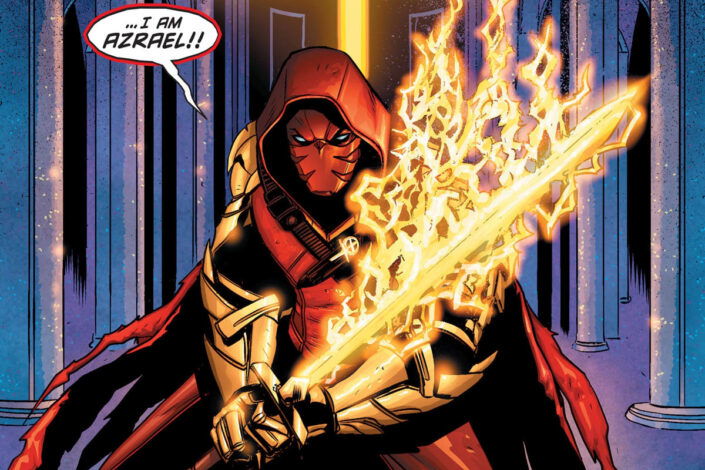
Introduced in Batman: Sword of Azrael #1 (October 1992), Azrael is a DC Comics character created by Denny O’Neil, Joe Quesada, and Peter Milligan. When we met Jean-Paul Valley, he was a Gotham University graduate student and his father had just died and made him his successor in the Sacred Order of St. Dumas.

He became their warrior known as the vigilante Azrael. He was not an enemy of Batman and eventually joined him and his allies in their fight to protect Gotham City—he also played a controversial role during the Knightfall event.

We later discovered that Jean-Paul was created by “Mother,’ a villain who worked with the Order of St. Dumas. For a time, Azrael did the dirty work the Order needed him to do, but Nightwing put him on the right path so he could help people. He then started to fight crime.

Azrael is an antihero, a conflicted warrior who fights his violent nature and the twisted sense of justice forced on him by his indoctrination in the Order. Because of that, he had to earn his place in the BatFamily, and he often has to prove he is good enough to keep it.

Read More »Azrael Reading Order (aka Jean-Paul Valley)

Robin War Reading Order

  • by

Robin War Reading Order

Published by DC Comics between December 2015 to January 2016, Robin War is a crossover event featuring most of the incarnations of Batman’s crime-fighting partner, Robin, including Damian Wayne, Tim Drake, Jason Todd, and the original, Dick Grayson. It was set during that time when Commissioner Gordon replaced Batman by using a robotic Bat-suit (see Batman New 52 or Batman by Snyder & Capullo) and the We Are Robin movement put the spotlight on the young crimefighters.

Here is the official synopsis: In a Gotham City turned upside down, Robin has become more than a single hero—Robin is a movement. With Bruce Wayne sidelined and the Batman co-opted by the police, a legion of teens are putting on the yellow “R” and following in the footsteps of their crime-fighting icons. But all it takes is one tragic accident for everything to go wrong. And when it does, the crackdown on the Robins is swift and merciless. Now, all of the original Boy Wonders—Dick Grayson, Jason Todd, Tim Drake and Damian Wayne—are back in Gotham, determined to save the kids who have taken up their legacy.

This Robin War is not as spontaneous as it seems. From their shadowy lair, Gotham’s oldest and most powerful secret society is manipulating all sides of the conflict—and not even those who trained for years with the World’s Greatest Detective can guess the true purpose behind the Court of Owls’ intricate plan—for more information about the Court here.

What to read before Robin War?

As the Robin War event is connected to the Court of Owls, I invite you to take a look at our reading guide dedicated to this secret society. But the essential is:

Before reading Robin War, you may want to be up-to-date with the new “Robins” group. It’s in the pages of the We are Robin series.

Optional, but if you want to know more about Gordon as Batman, take a look at Batman, Vol. 8: Superheavy, Pt. 1.

Read More »Robin War Reading Order

Love and Rockets Reading Order, by the Hernandez brothers

  • by

Love and Rockets is a long-running comic book series by brothers Gilbert and Jaime Hernandez, launched in 1981 with a self-published issue co-edited by their brother Mario. After the first issue gained attention, it was picked up by Fantagraphics Books in 1982, which has published the series in various formats ever since. The series blends science fiction, magical realism, and slice-of-life storytelling in an anthology format. Each brother works independently, developing separate but occasionally intersecting narratives that follow a large cast of characters across decades.

Jaime’s stories are grouped under the title Locas, an ongoing story centered on Margarita “Maggie” Chascarrillo and Esperanza “Hopey” Glass, two queer women navigating friendship, love, and adulthood in the fictional Southern California town of Hoppers (also known as Huerta). His characters age in real time, and the series traces their evolving relationships and personal growth over the years.

Gilbert’s contributions are more varied in structure, combining serialized stories and stand-alone shorts, often with elements of magical realism. His central narrative, Palomar, is set in a fictional Central American village and focuses on characters such as Luba, a strong-willed bathhouse owner; Chelo, a midwife who becomes the town’s sheriff; and Fritz, a voluptuous actress known for appearing in sexploitation films. These stories branch out into later volumes centered on Luba and her extended family.

Gilbert and Jaime’s stories are self-contained and can be read independently of one another. Together, they helped define the alternative comics movement of the 1980s, pushing beyond the superhero genre with grounded, character-driven stories. Love and Rockets has been praised for its nuanced depictions of Latinx, queer, and working-class lives, as well as its complex female characters. The series has influenced generations of cartoonists and remains one of the most critically acclaimed independent comics of all time.

Read More »Love and Rockets Reading Order, by the Hernandez brothers

X-Force Reading Order (including Uncanny X-Force & X-Statix)

  • by

X-Force Reading Order

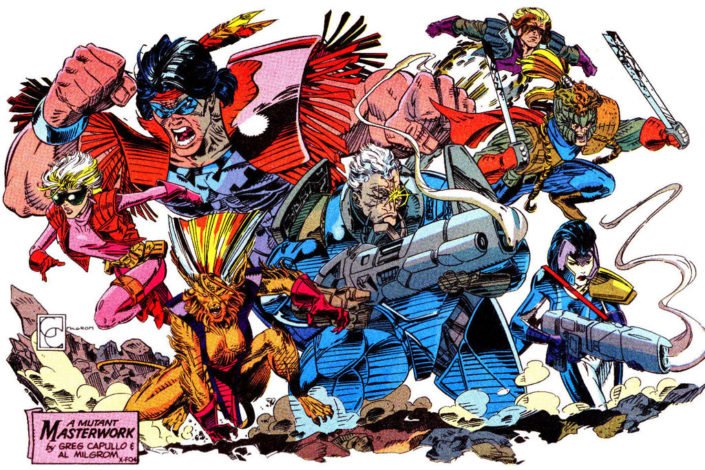
In 1991, the first volume of New Mutants (see the reading order) just ended, but Rob Liefield jumped to a new series called X-Force (introduced in New Mutants #100) with the help of writer Fabian Nicieza. In the beginning, this new (and more military) team included Boom-Boom, Cable, Cannonball, Domino, Feral, Shatterstar, Warpath, and Siryn.

But what is X-Force about? Here is the official synopsis of the beginning of the series. Beset from all sides by a growing roster of vicious foes, the New Mutants and their mysterious mentor Cable have no choice but to transform into a proactive, butt-kicking, take-no-prisoners mutant strike team! But can the new X-Force survive head-on clashes with Deadpool, the Morlocks, Proteus, Stryfe and his Mutant Liberation Front, the Juggernaut, the new Brotherhood of Evil Mutants, and…S.H.I.E.L.D.? 

Being part of the X-Men Universe, you can find how to read X-Force with the other X-series in our complete X-Men Reading Order.

Read More »X-Force Reading Order (including Uncanny X-Force & X-Statix)

Jonathan Hickman’s Avengers Reading Order

  • by

After his run on the Fantastic Four and a few years before taking over The X-Men, Jonathan Hickman became the main writer on The Avengers titles of the Marvel Now era after Brian Michael Bendis left in 2012.

With the Avengers (Volume 5), Hickman introduced new threats, but also expand the roster and sphere of influence of the team to a global and even interplanetary level. This will lead to a cosmos-threatening event. In New Avengers (Volume 3), he focused more on the members of The Illuminati (Black Panther, Iron Man, Dr. Strange, Black Bolt, Mr. Fantastic, Sub-Mariner, and the Beast) who are armed with the six Infinity Gems against an infinite legion of parallel realities. 

Here is the official synopsis: As threats to Earth mount, the Avengers expand! And while Iron Man and Captain America assemble their Avengers World and strive to decipher the meaning of the White Event, Tony Stark secretly tries to solve the biggest crisis of all, along with his influential allies, the Illuminati! While they seek to prevent the collapse of reality itself, the Avengers face a war on two fronts! Protecting Earth from the Builders may only hand it to…Thanos! 

Read More »Jonathan Hickman’s Avengers Reading Order

Wonder Woman Reading Order

Princess Diana of Themyscira is Wonder Woman, the most famous female superhero in the Patriarch’s World and a powerful feminist icon. Known in her civilian identity as Diana Prince, she hails from the hidden island of Themyscira, home of the Amazons, and is a founding member of the Justice League.

Armed with her Lasso of Truth, indestructible bracelets, and razor-sharp tiara, Diana battles gods, mythical beasts, and formidable foes—including her most persistent enemies in her rogues gallery: Ares, Cheetah, Doctor Poison, Circe, Doctor Psycho, and Giganta.

Created by William Moulton Marston, a psychologist and writer inspired by his wife Elizabeth Marston and their partner Olive Byrne, Wonder Woman was brought to life by artist Harry G. Peter and made her debut in All-Star Comics #8 on October 21, 1941.

Her origin story has been reimagined many times, but its core remains the same: a champion of justice who fights with strength and compassion, even toward her enemies. It often begins with Captain Steve Trevor’s plane crashing on Themyscira, leading Diana to win the right to escort him back to the outside world—the “Patriarch’s World.” To honor her mission, her mother, Queen Hippolyta, bestows upon her a sacred uniform, marking her as Wonder Woman.

She is a princess, a warrior, and an ambassador. Beautiful as Aphrodite, wise as Athena, stronger than Hercules, and swifter than Mercury—she is Wonder Woman!

Read More »Wonder Woman Reading Order

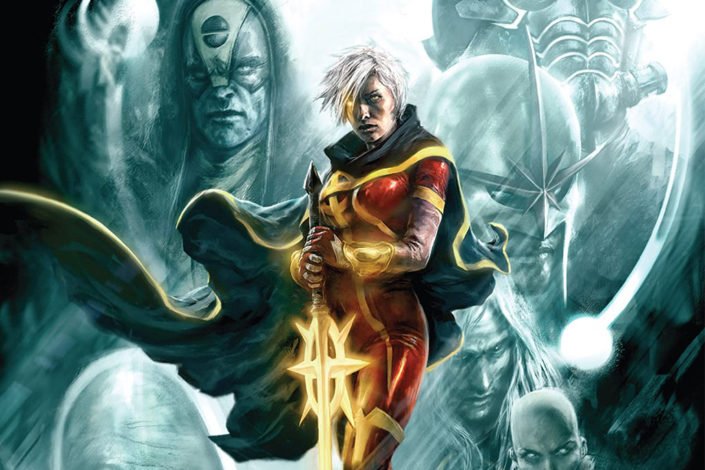
War of Kings Reading Order, a Marvel Cosmic Event (leading to Realm of Kings and The Thanos Imperative)

  • by

War of Kings Reading Order

After Annihilation event (see reading order) and its direct sequel as part of the modern Marvel Cosmic saga, Annihilation: Conquest (see reading order), the Marvel Cosmic Universe kept going forward for a good year, then a new crossover storyline written by Dan Abnett and Andy Lanning titled War of King happened.

Here is the official synopsis: Intending to restore their strength and security in the aftermath of the Secret Invasion, Black Bolt finds he has to lead the Inhumans into direct confrontation with the Shi’Ar Empire and their insane ruler, Vulcan. What happens when an Inhuman-led Kree go to war with the Shi’ar led by the crazed Summers brother Vulcan? When these mighty powers turn their rage upon one another, what happens to those caught in the crossfire? When two mighty rulers wage war, who will rule?

What to read before War of Kings?

A lot happened since Annihilation: Conquest with the Guardians of the Galaxy, Nova, but also the X-Men and the Secret Invasion. In order to go in fully prepared, you’ll want to take a look at those books:

  • War of Kings Prelude: Road to War of Kings Omnibus
    Collects Son Of M #1-6, X-Men: Deadly Genesis #1-6, Silent War #1-6, Secret Invasion: Inhumans #1-4, Guardians Of The Galaxy (2008) #1-12, Nova #13-22, Nova: The Origin Of Richard Rider, War Of Kings Saga.

War of Kings Prelude Road to War of Kings Reading Order Omnibus

Or in trade paperbacks:

Read More »War of Kings Reading Order, a Marvel Cosmic Event (leading to Realm of Kings and The Thanos Imperative)

The Best Alan Moore Comics to Read

  • by

Alan Moore Best Comics

Alan Moore is the most influential comics writer of the 1980s-1990s. It’s a fact. His work helped to define a new creative era of the medium at a time when it needed a way to grow, to mature. Nobody can deny how important some of his books were and still are for the comic book industry and for a lot of readers. His way to push the boundaries of what superhero comics can be never stopped to amaze and his success is undeniably justified.

Although he became a controversial figure and sometimes a tragic one too, you can not look at his career with anything but respect. In fact, reading Alan Moore’s work is required to fully understand the History of comic books – it helps that he collaborated with some of the greatest artists of his time like Dave Gibbons, Eddie Campbell, Ian Gibson, Stephen R. Bissette, Rick Veitch, John Totleben, Kevin O’Neill and more.

Of course, everybody has something to say about Alan Moore and his work. Us too! That’s why we are here today, to talk about his best comics, in my opinion. Some books are hard to find, a lot of his independent comics are in fact out-of-print, so it’s not easy to read everything he wrote. That said, there’s still enough available out there to enjoy and this is my selection of 10 of the best Alan Moore comics to read. You can write your own suggestions in the comments section.

Read More »The Best Alan Moore Comics to Read