Skip to content

DC Comics

Tim Drake Reading Order (Robin III, Red Robin, Drake)

Tim Drake (Robin) Reading-Order

After Dick Grayson and Jason Todd, Timothy Jackson Drake is our third Robin. Created by writer Marv Wolfman and artist Pat Broderick, Tim Drake made his first appearance in Batman #436 in August 1989. He introduced himself to Dick Grayson in the storyline Batman: A Lonely Place of Dying, and is convinced that “Batman needs Robin.”

Having great detective skills and Genius-level intellect, Tim Drake had discovered the real identity of Batman and the original Robin (though, I’m not convinced you need to be Sherlock Holmes to arrive at this conclusion!). As Dick refuses to become Robin again, Tim was the perfect young boy to take the mantle and become the third Robin. Though Batman will make him go through a rigorous training program for his own safety (to avoid history repeating itself), Tim Drake will obviously rise up to the challenge.

Recognized as the most intellectually gifted of the Robins, he speaks several languages, excels in computer science, and possesses a large knowledge in other scientific fields, including biology, engineering, and genetics. He is also the most calculated of all Robins in combat, and of course a great martial artist.

What to read before?

Though Tim is not present in this storyline, we invite you to read the now classic ‘A Death in the Family’, marking the end of Jason Todd as Robin, offering a better context about where Batman stands when Tim enters the scene and explaining some of his choices.

  • Batman: A Death in the Family
    Collects the original Death in the Family tale from Batman #426-429 plus “A Lonely Place of Dying” from Batman #440-442 and The New Titans #60-61.

Read More »Tim Drake Reading Order (Robin III, Red Robin, Drake)

DC Comics Bombshells Reading Guide, a reality where superheroines guard the homefront during World War II

  • by

DC Comics Bombshells Reading Guide

First and foremost, DC Comics Bombshells is a line of variant covers and collectible statues created by Ant Lucia and featuring superheroines reimagined in a 1940s-era pinup style. The line was launched in 2013 with Wonder Woman and the brand became soon enough popular enough for DC Comics to expand the line with art prints, T-shirts, mugs but also an out-of-continuity series.

Written by Marguerite Bennett and illustrated by rotating artists, DC Comics Bombshells is a reality where female superheroes guard the homefront during World War II. When the story began, Kate Kane is the Batwoman, a player in an all-women’s baseball league where the players’ identities are kept secret to protect them from sexist backlash. Kate Kane plays baseball and fights crime in her Batwoman identity. Soon enough, she is recruited by Commander Amanda Waller who offers her to join her Bombshell, her team working to end the war.

Bombshells is an ensemble comic book series, in which you can also find alternate versions of Queen Mera Curry (Aquawoman), The Question (Renee Montoya)Stargirl (Kortni Duginovna), Supergirl (Kara Starikov), Diana Prince (Wonder Woman), Zatanna “Zee” Zatara, and more.

As a digital-first ongoing series, Bombshells ran for 100 digital issues (the equivalent of 33 print issues), with the final issue released in August 2017. That same month, the second digital-first series named Bombshells United was launched, picking up from the end of the previous Bombshells series. The first arc introduced Bombshells versions of Donna Troy and Cassie Sandsmark. This second series was less successful as the title was canceled after 38 digital issues and 19 print issues.

Read More »DC Comics Bombshells Reading Guide, a reality where superheroines guard the homefront during World War II

Grant Morrison’s JLA Reading Order

In 1986, Keith Giffen and J.M. DeMatteis launched Justice League International, a series that quickly became popular (see the reading order for details). By the mid-1990s, though, the success had faded, and the titles were canceled. DC Comics tried to revamp the League with Mark Waid and Fabian Nicieza’s miniseries Justice League: A Midsummer’s Nightmare. But it wasn’t until 1997, when Grant Morrison and artist Howard Porter launched the new JLA series, that the team found success again.

After years without A-listers, Grant Morrison brought the core team back together—Superman, Batman, Wonder Woman, and the rest—and introduced the idea of JLA as a modern pantheon of gods. To match this larger-than-life vision, the League moved into a new headquarters on the Moon, the Watchtower, and faced villains who threatened the world—or the entire universe. The creative team revisited and rebranded classic threats such as the White Martians, The Injustice Gang, and the Key, while also introducing new foes like Prometheus and Mageddon. Simply put, “JLA has rallied to save humankind from the brink of extinction. These are the adventures that have made them living legends.”

Grant Morrison’s run on JLA lasted four years, from 1997 to 2001. He wrote the series for the first 41 issues, along with a brief crossover during JLA’s “World War III” arc. During that time, the Justice League became one of DC’s best-selling titles and completely redefined the team for decades to come. It’s one of the most important runs in JLA history, and now you can explore it with our reading order!

Read More »Grant Morrison’s JLA Reading Order

Batman RIP Reading Order

  • by

Batman RIP Reading Order

Some storylines are more complicated than you can think – or they just seemed weirdly confusing for no reason. In the case of Batman R.I.P., the complication (and confusion) comes from the fact that it’s connected to the Final Crisis event. This story concluded the first third of Grant Morrison’s Batman run (full reading order here), leading to a new status quo as the series was renamed Batman and Robin for a time.

Here is the official synopsis: The troubled life of Bruce Wayne seems to spin out of control when his relationship with the mysterious Jezebel Jet deepens. Soon Bruce Wayne drops out completely, having seemingly become the victim of mental illness and abandoning his Batman identity for a life on the streets of Gotham City. Capitalizing on the fall of their greatest foe, the Club of Villains begins a crime spree through the streets of Gotham that threatens to bring the city to its knees.

What to read before Batman R.I.P.?

  • Batman: The Black Casebook
    Collects Batman #65, 86, 112, 113, 134, 156 And 162, Detective Comics #215, 235, 247 And 267, And World’s Finest Comics #89.
  • Batman and Son (collects previous editions Batman & Son and The Black Glove in one volume)
    Collects Batman issues #655-658, #663-669 and #672-675.
  • Batman: Heart of Hush
    Collects Detective Comics #846-850.

  • Grant Morrison’s run and Batman R.I.P. take place during the Modern Age period. For more Batman’s adventures during this time, check out our Batman reading order, the Modern Age.

Read More »Batman RIP Reading Order

Harley Quinn Reading Order

Harley Quinn is a rarity in the Comic Book World because she was created on TV by Paul Dini and Bruce Timm in Batman: The Animated Series, in 1992. She became a recurring character on the show and, because of her popularity, she made the transition to paper, joining the Batman comic book canon seven years later.

Here was her story at the beginning, as told in the Mad Love comics: When she was only seven years old, Harleen Quinzel witnessed her father being beaten up by thugs, and then arrested by the police. That night, she ran away to the safest place she could think of: Coney Island amusement park. But there, pursued into the Funhouse by the men who brutalized her father, she beheld unimaginable horrors. Years later, Harleen has put her past behind her and used her intelligence and ambition to escape her childhood of poverty with a career in psychiatry. Assigned to her first position at Arkham Hospital, she will discover, deep in the asylum, something dangerous and alluring, something quite unlike anything else she has ever known before: The Joker.

She became Harley Quinn and, after having been injected with a special formula by Poison Ivy, she got new abilities, such as immunity to toxins and enhanced strength and agility. She left Joker behind and became a solo criminal. It was not a hit at first, but Harley came back a few years after the end of her first solo series to team up with Catwoman and Poison Ivy (forming the Gotham City Sirens).

Harley was a criminal, then an anti-heroine. Her backstory was refined, as was her relationship with Poison Ivy. She became quite popular on paper (especially during the 2010s), and later on the big screen too.

Read More »Harley Quinn Reading Order

Shadow War Reading Order, a Batman, Robin & Deathstroke, Inc. crossover event

  • by

Since James Tynion IV stopped writing Batman, Joshua Williamson is the main writer of the series. He also writes Robin, Deathstroke, Inc., and everything linked to Infinite Frontier. This summer, he will be in charge of the Dark Crisis event, but before that he organized another crossover event in the Batmanverse called Shadow War—illustrated by Viktor Bogdanovic.

Here is how it starts: When Deathstroke assassinates Ra’s al Ghul, Talia al Ghul demands revenge and sends her League of Shadows to kill Deathstroke and Deathstroke Inc.! Batman and Robin must team up to track down Deathstroke and bring him to justice … but do they?

Expect over-the-top fights, action, mystery, and betrayal as this crossover event creates a major impact on the DCU!

What to read before Shadow War?

With this kind of event, it’s always better to be up-to-date, especially with Joshua Williamson’s writing. First, we’ve got Batman, the first story after the Fear State event, then Damian Wayne in Robin (see Damian Wayne Reading Order for more info), and Deathstroke in the new Deathstroke, Inc. series.

Read More »Shadow War Reading Order, a Batman, Robin & Deathstroke, Inc. crossover event

Deathstroke Reading Order (Slade Wilson)

Deathstroke Reading Order

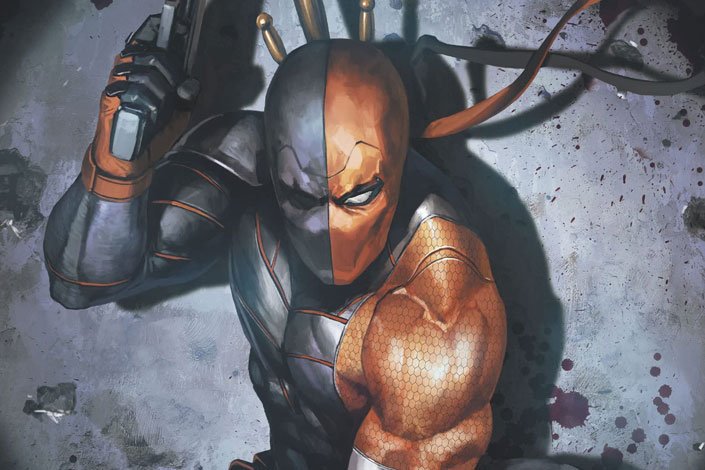
Created by Marv Wolfman and George Pérez, Slade Wilson is Deathstroke the Terminator, the world’s greatest assassin/mercenary and an enemy of the Teen Titans, but also of Batman, the Justice League, and Green Arrow. Introduced as a supervillain, acting sometimes as an anti-hero, always the great strategist and manipulator, Slade Wilson is certainly one of the most emblematic DC’s antagonists.

At 16, young Slade Wilson enlisted in the United States Army and, at some point, was chosen to be part of an experimental super-soldier project where he gained enhanced strength, agility, and intelligence. Father of three children (Joe, Rose and Grant), Wilson’s vendetta against the Titans began when he swore revenge for the death of his oldest son Grant. A real professional who never lost time, Deathstroke has been a member of  Secret Society of Super-Villains, Suicide Squad, Titans East, H.I.V.E., Checkmate, League of Assassins, Defiance, Injustice League, Team 7, and T.R.U.S.T.

Deathstroke had also quite a decent career in other media and has been portrayed, among others, by Manu Bennett on The CW’s Arrow and by Esai Morales on the DC Universe series Titans. He also appears as a playable character in Injustice: Gods Among Us, voiced by J. G. Hertzler, and in the Batman: Arkham franchise.

Today, we explore Slade Wilson’s history with a Deathstroke/Slade Wilson Reading Order, from his villain role in New Teen Titans to his own titles and much more…

Read More »Deathstroke Reading Order (Slade Wilson)

Wonder Woman: Trial Of The Amazons Reading Order

  • by

Wonder Woman: Trial Of The Amazons Reading Order

This year, DC Comics planned multiple short events like War For Earth-3 and now Wonder Woman: Trial Of The Amazons. Introduced as the first Wonder Woman crossover of its kind, it was developed by the teams behind Wonder WomanNubia & the Amazons, and Wonder Girl—written by Stephanie Williams, Vita Ayala, Joëlle Jones, Michael Conrad, and Becky Cloonan, with art by Skylar Patridge, Laura Braga, Elena Casagrande, Joëlle Jones.

Here is the official synopsis: After the events of Nubia & the Amazons, the dangers of Doom’s Doorway have found their way to Man’s World and garnered the attention of not one, but all three Amazonian tribes. The Bana-Mighdall consider it to be a weakness in the current regime and have decided to return to the shores of Themyscira to stake their claim over the island. Little do they know, the Esquecida are not far behind, but instead looking for help to combat the evil unleashed. Tempers rise and swords are brandished as the women argue about the best course of action. Now Queen Nubia must show them all the way to peace by calling for one of the most famous Amazon traditions … the Contest. Who among them is worthy of leading them into the future? Find out as the bravest, wisest, and fiercest warriors compete to be the champion of all the Amazons!

What to Read before Wonder Woman: Trial Of The Amazons?

First, the story takes place after the events of Nubia & the Amazons, you’ll need to read:

Don’t know who is Wonder Girl? (she’s pretty new) Take a look at her first series:

  • Wonder Girl: Homecoming
    Collects Wonder Girl #1-7, Future State: Wonder Woman #1-2, and a selection from Infinite Frontier #0.

What’s up with Wonder Woman lately? See her last adventures in:

Read More »Wonder Woman: Trial Of The Amazons Reading Order

Starman Reading Order, the celebrated James Robinson run

  • by


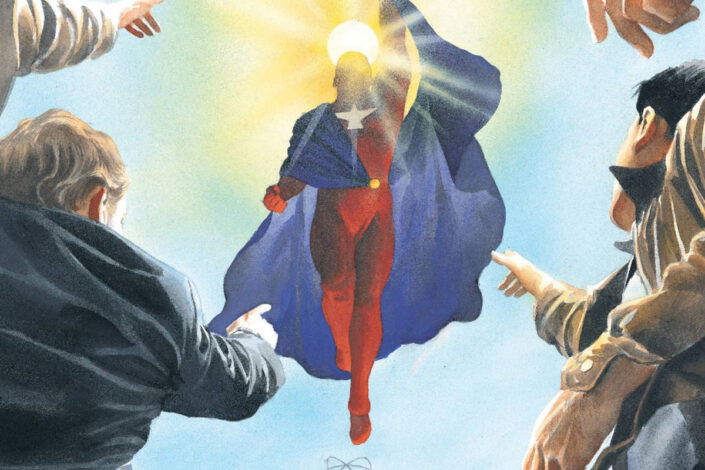
The original Starman debuted in Adventure Comics #61 (April 1941) and was created by writer Gardner Fox and artist Jack Burnley. Ted Knight, a brilliant scientist, developed the Gravity Rod—later upgraded to the Cosmic Rod—which allowed him to manipulate energy, fly, and generate force fields. As Starman, he became a key Golden Age superhero and a founding member of the Justice Society of America.

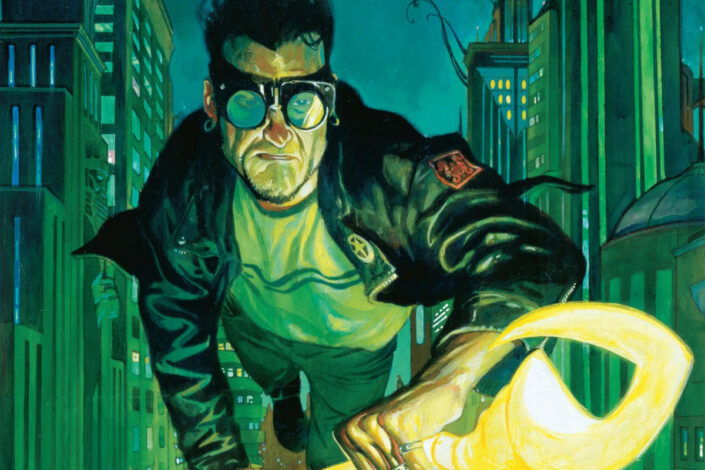
Decades later, in 1994, DC Comics introduced a new take on the Starman legacy with the Starman series, written by British writer James Robinson and illustrated by Tony Harris. The series, which ran from 1994 to 2001, focused on Jack Knight, Ted’s younger son, who reluctantly inherited the Starman mantle after his older brother, David, was murdered. Unlike traditional superheroes, Jack refused to wear a costume or conceal his identity. He was more interested in running his antique and collectibles store in Opal City than fighting crime.

The story begins when Ted Knight’s longtime enemy, The Mist, resurfaces, launching an attack that forces Jack into action. Despite his reluctance, he wields the Cosmic Rod and, over time, grows into the role of Starman, though on his own terms. The series explored themes of legacy, family, and personal growth, making it one of the most critically acclaimed superhero comics of the 1990s.

Robinson’s Starman is notable for its rich world-building, incorporating past Starmen from DC history and revamping the villain Shade, a morally complex former villain who becomes Jack’s unlikely ally. The series concluded in 2001 with Jack ultimately stepping away from superhero life—a rare instance of a major DC hero being allowed to retire voluntarily. He passed the mantle to the young Courtney Whitmore, aka Stargirl.

What to read before James Robinson’s Starman?

Before writing the ongoing Starman comics, James Robinson collaborated with Paul Smith on The Golden Age miniseries in which they revisited the Golden Age Justice Society. This comic book is part of the Elseworlds collection, but he still used elements of that story in his work. It’s not obligatory reading, but it gives a good insight into the old-school characters.

Read More »Starman Reading Order, the celebrated James Robinson run

War For Earth-3 Reading Order

  • by

Written by Robbie Thompson and Dennis “Hopeless” Hallum, with art by Steve Pugh (War for Earth-3), Eduardo Pansica, Julio Ferreira, Dexter Soy (Suicide Squad), Fernando Pasarin (The Flash), and Mike Norton (Teen Titans Academy), War for Earth-3 is a 2022 crossover storyline composed of a 2-part limited series and issues from Suicide Squad, The Flash, and Teen Titans Academy.

Here is the official synopsis: The Teen Titans, the Flash and the Suicide Squad all collide on Earth-3—home of the evil Crime Syndicate—on the hunt for former Task Force X mastermind Amanda Waller.

As Waller tries to take over the alternate Earth and dethrone evil versions of Superman, Wonder Woman, Batman, and other heroes that rule it, her former partner—Rick Flag—arrives on E-3 bent on making Waller pay for her crimes, while the Titans and Flash hunt for a missing academy student they believe was kidnapped by Waller to form her mysterious Justice Squad.

What to read before War For Earth-3?

First, to know more about the evil Crime Syndicate of Earth-3, you have to read the miniseries spinning out of Dark Nights: Death Metal written by Andy Schmidt with art by Bryan Hitch and Keiron McKeown:

After The War For Earth-3 crossover event, the ongoing series of Suicide Squad and Teen Titans Academy will soon be concluded, you may want to be up-to-date with this two at least (especially with Suicide Squad).

As for The Flash, it’s now Wally West show and you can read about his return in:

Read More »War For Earth-3 Reading Order