Skip to content

Batman

Batman Family: An Introduction to the Members of the Gotham Knights

  • by

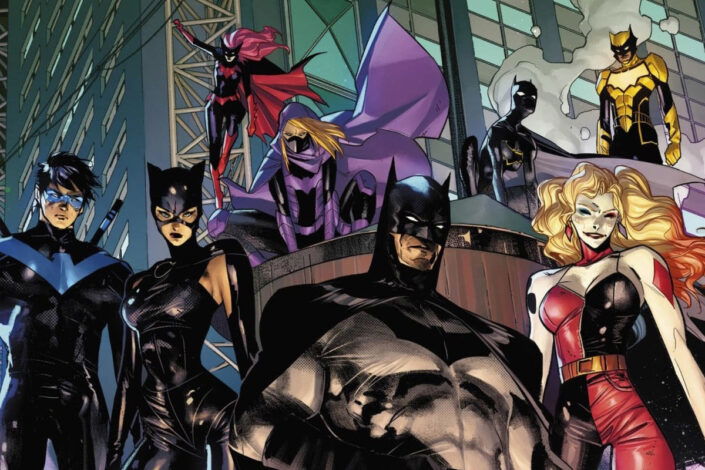
As one of the most iconic DC superheroes, Batman has the reputation of being a loner. The Cape Crusader has unraveled many mysteries, solved many crimes, and confronted Gotham’s villains by himself on countless occasions. But he also did the same many times over with fellow superheroes such as Superman and Wonder Woman and many more with his found family that readers affectionately called The Bat Family.

What is the Bat Family, you ask? You may have noticed that there are a whole lot of crimefighters in Gotham City to resolve cases and stop criminals. Those vigilantes, whether trained by The Dark Knight himself or operating in Gotham with his implicit approval, are generally Batman’s closest allies, constituting The Bat Family.

Referred to at times as the Gotham Knights, the Bat Family is an informal name, and there is no official first appearance although we could argue that the earliest appearance would be with the introduction of Robin in Detective Comics #38 (April 1940).

Follow the guide as we introduce you to the members of one of the most important families of the DC Universe!

Read More »Batman Family: An Introduction to the Members of the Gotham Knights

Batman Comics, Classic Tales from the Golden Age through Bronze Age!

  • by

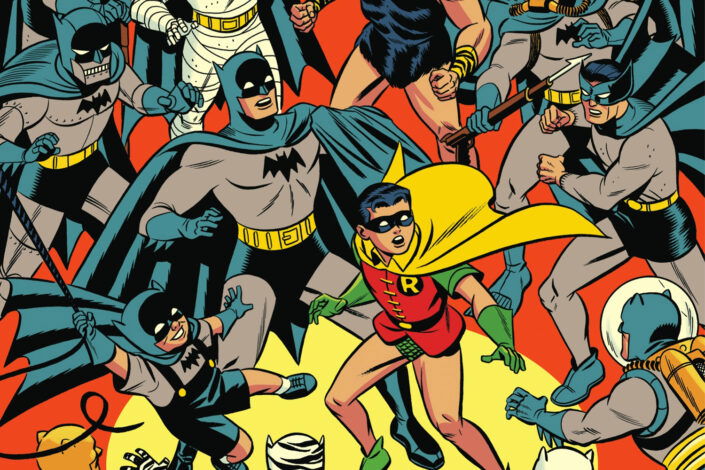
Holy Batman! The Cape Crusader is one of the most popular comic book superheroes out there and at Comic Book Treasury, but we – until now – didn’t explore his glorious comics past! And by that, I mean the publication from the Golden Age to the Silver/Bronze Age, before the famous Crisis on Infinite Earths and the start of the modern Batman era.

As you know, Batman made his first appearance in Detective Comics #27 (1939) and became so popular that he soon had his own ongoing series with his name on it. And only one year after his debut, he was joined by the most iconic sidekick, Robin!

From the 1940s to the mid-1980s, there have been many Batman (and Robin) adventures, and DC Comics has reprinted them in different collections. This article is here to help you navigate all those collections (some only available second-hand, very pricey or not), and explore those old colorful times for Batman!

Read More »Batman Comics, Classic Tales from the Golden Age through Bronze Age!

DC Black Label Comics, The Complete Reading List

  • by

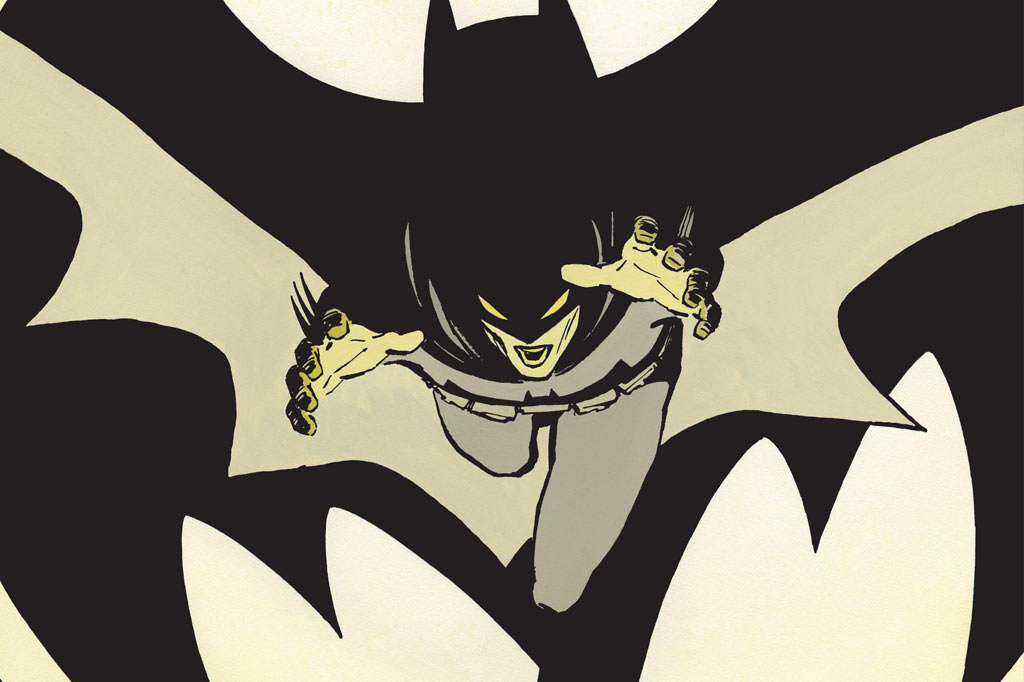
The World of DC always finds a way to expand and craft new and/or stand-alone stories, mostly outside the current DC Continuity, in the specific case of DC Black Label. Presented at first as an imprint for adults featuring alternate versions of familiar DC Comics characters, DC Black Label was founded in 2018, with Batman: Damned, the first title of the imprint. The limited series made more of a splash for a scene with full frontal nudity than for the story.

Before the official end of Vertigo Comics, DC Black Label had clearly been developed to take the place of the famous imprint under which classic titles like Hellblazer, Fables, Preacher, The Sandman, and more have been published. However, Vertigo declined in the 2010s and was officially discontinued in 2020. New and old titles published under the now-defunct imprint were now published as part of DC Black Label. Things became more confusing recently with the revival Vertigo imprint, with the original Black Label title Nice House By The Sea repositioned as a Vertigo title… but still collected under Black Label (?!).

In all cases, you’ll find under the Black Label imprint many Batman stories, as well as several stories with Harley Quinn and the Joker, but also some new takes on Superman, Wonder Woman, Catwoman, and more…

Read More »DC Black Label Comics, The Complete Reading List

Batman: The Animated Series: A Look Back at The Best Adaptation That Ever Is (and ever will be?)

  • by

We chose to publish this article today as this is the third Saturday in September, which means it is Batman Day! For more Batman-related articles and reading orders, we invite you to check out our Batman archives!

Batman Logo (pré New 52)

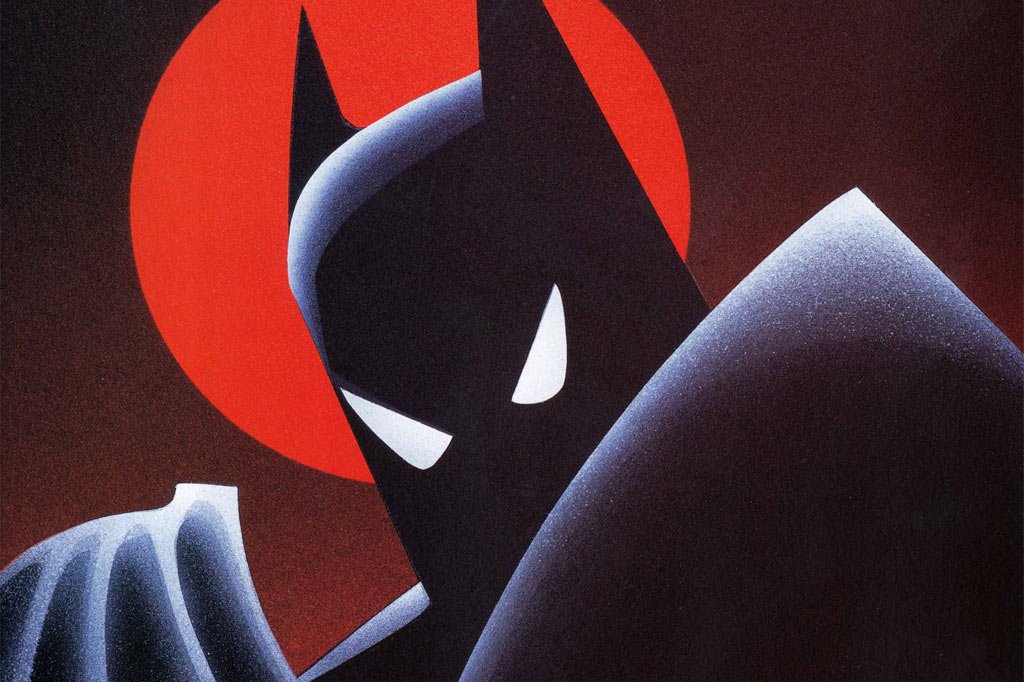
During the 1980s, as Disney dominated the afternoon on TV, some affiliate stations contacted FOX to ask if the young network wouldn’t be interested in entering that market. This led to the creation of the Fox Kids Network which debuted on September 1990. Margaret Loesh who was head of Marvel Productions at that time was recruited to launch the new venture. To achieve her goals, she started working with Warner Bros. Animation.

It started slow, but things became serious in the third season with shows that eventually impacted a generation of kids and the comic book industries: X-Men and, of course, Batman: The Animated Series!

Read More »Batman: The Animated Series: A Look Back at The Best Adaptation That Ever Is (and ever will be?)

Batman/Catwoman: The Gotham War Reading Order

The Dawn of DC line is full of events to the point that one is spinning off the other. Batman/Catwoman: The Gotham War is indeed taking place right after the Nightmares of Knight Terrors: Batman.

In Gotham City, a concerted effort has reduced violent crime, but at what cost? Villains disperse as their lives under the new rule start to fall apart. One name comes to Batman’s mind as he recovers from his epic struggle through the Multiverse and the horrors of Knight Terrors. Catwoman is the driving force behind this new, safer Gotham.

The Bat-Family will be torn apart when a feud that has been festering for well over a year finally breaks out on the streets!

Batman/Catwoman: The Gotham War is a crossover event that takes place in Batman and Catwoman, as well as in special one-shots and a miniseries. Mostly written by Chip Zdarsky and Tini Howard, with art by Jorge Jimenez, Mike Hawthorne, Nico Leon, and Adriano Di Benedetto, the story is sold as an all-out war between the Bat and the Cat.

Read More »Batman/Catwoman: The Gotham War Reading Order

Batman Origin Stories: Explore Bruce Wayne’s tragic past in the comics

  • by

In 1938, the success of Superman prompt the company now called DC Comics—it was National Comics Publications at that time—to launch another one. Editor Vin Sullivan was tasked to do exactly that in the pages of Detective Comics.

The writer and artist Bob Kane came up with an idea based on Sherlock Holmes, Zorro, and other pulp heroes (like The Phantom), but also, apparently, a Leonardo da Vinci sketch of a bat-winged flying machine. He took all this to the writer Bill Finger who added his own inspiration like the Dracula movie (the one from 1931) and the 1926 silent film The Bat. He then suggested a new costume as Kane’s was then basically Superman with a mask and bat wings (the Da Vinci inspiration). Finger suggested a cape, a cowl, and a gray bodysuit. As a result, The Bat-Man silhouette really looked like a bat.

Read More »Batman Origin Stories: Explore Bruce Wayne’s tragic past in the comics

Batman Infinite Frontier Reading Order


In the middle of James Tynion IV’s run on Batman comics, the DC Comics Universe was once more softly relaunched. Following the events of Dark Nights: Death Metal, Generations, and Future State, the DC Multiverse has in fact expanded into a larger Omniverse (and everything became canon). This was how the Infinite Frontier era was introduced—and launched in March 2021. It concluded with the Dark Crisis on Infinite Earths crossover event, in December 2022.

It was less than two years, but a lot has happened in Batman’s life with events like Fear State and Shadow War, and a new costume at one point. As usual, the Dark Knight’s adventures were published in Batman and Detective Comics, but also in the comic book anthology Batman: Urban Legends, the team books Batman/Superman and Batman/Superman: World’s Finest, and more!

There’s also a new Batman Incorporated comics and a new and different Batman in I Am Batman. Jace Fox is first introduced as the new Batman during Future State but soon gets his own series, written by John Ridley, and a lot of miniseries, most of which are out-of-continuity.

Of course, this is mainly about Batman, but the BatFamily is also featured. Nevertheless, their books are not necessarily included. Though, you can find them on their dedicated pages: Nightwing, Tim Drake, Damian Wayne, Jason Todd, Cassandra Cain, Stephanie Brown, Barbara Gordon, Batwoman, Catwoman, Harley Quinn, and Terry McGinnis (The Batman Beyond).

What to Read Before Batman Infinite Frontier?

As this new era started during James Tynion IV’s Batman comics run, it is recommended to be up-to-date with his work.

  • Batman Vol. 1: Their Dark Designs
    Collects stories from Batman (vol. 3) #85-94 and Batman Secret Files #3
  • The Joker War Saga
    Collects Batman (vol. 3) #95–100; Batgirl (vol. 5) #47; Detective Comics #1025; Red Hood: Outlaw #48; Nightwing (vol. 4) #74; The Joker War Zone #1; material from Harley Quinn (vol. 3) #75 and Catwoman (vol. 5) #25
  • Batman Vol. 3: Ghost Stories
    Collects Batman (vol. 3) #101–105, Annual (vol. 3) #5; Detective Comics #1027

Following Dark Nights: Death Metal, the DC Comics Universe went to the future with Future State. It may be skipped, but it is better to be familiar with some elements of this story to fully apprehend what is at stake, especially during the Fear State event. You can learn more about Future State in the dedicated reading order.

  • Future State: Dark Detective
    Collects Future State: Dark Detective #1-4 (main story), Future State: Catwoman #1-2, Future State: Harley Quinn #1-2, Future State: Robin Eternal #1-2, Future State: Batman/Superman #1-2.
  • Future State: The Next Batman
    Collects Future State: The Next Batman #1-4, Future State: Nightwing #1-2, Future State: Dark Detective #1 & 3 (select stories), and backup stories.

Read More »Batman Infinite Frontier Reading Order

Lazarus Planet Reading Order, a DC Magical Crisis

Barely one month after the conclusion of Dark Crisis on Infinite Earths, the DC Universe is affected by another crisis. Writer Mark Waid teams up with Riccardo Federici, Gene Luen Yang, Billy Tan, Nicole Maines, Skylar Patridge, Francis Manapul, Dan Watters, Phillip Kennedy Johnson, Josie Campbell, and more, for the Lazarus Planet, a Magical Crisis where heroes are transformed, secrets are revealed and powers are unleashed. Here is the official synopsis:

Following the events of Mark Waid and Mahmud Asrar’s Batman vs. Robin #4 this December, the Lazarus Volcano has erupted—spewing dangerous and transformative chemicals into Earth’s atmosphere, resulting in chaos across the DC universe! As these Lazarus clouds rain down upon the planet, people across the globe begin to develop strange new abilities, watch their already-extraordinary abilities change, and witness a whole host of chaos, unlike anything the DCU has experienced before!

A lot of DC characters are involved in this event, from the obvious Batman and Robin (Damian Wayne), but also Martian Manhunter, Red Canary, Jon Kent, Poison Ivy, Power Girl, but also Monkey Prince, Shazam/Billy Batson, Mary Marvel, and Yara Flor.

Read More »Lazarus Planet Reading Order, a DC Magical Crisis

Batman White Knight Reading Order, exploring the Murphyverse

  • by

Launched in 2017 with the book Batman: White Knight, The Murphyverse is a universe created by Sean Gordon Murphy (Punk Rock Jesus, The Wake) and published under the DC Black Label imprint.

As the imprint suggests, this is not a series set within the DC continuity—it could be considered an Elseworlds series. The first book introduced us to a world where the Joker is cured of his insanity and homicidal tendencies. Now a politician under his real name of Jack Napier, The Joker sets about trying to right his wrongs. First, he plans to reconcile with Harley Quinn, and then he’ll try to save the city from the one person he thinks is truly Gotham City’s greatest villain: Batman!

The success of Batman: White Knight was massive, and the trade paperback quickly became a best-seller (it has since been republished in multiple formats). A sequel was commissioned, Batman: Curse of the White Knight.

This second limited series confirmed the popularity of this alternate version of Batman. This prompted DC Comics to give Sean Murphy his own line of books to be published under its Black Label imprint. The Murphyverse was born.

Read More »Batman White Knight Reading Order, exploring the Murphyverse

Batman: Hush Reading Order

  • by

Not unlike The Batman Who Laughs, Hush is a DC Comics supervillain, and more precisely, an adversary of Batmanto created during the Modern Age (aka the Post-Crisis era). Recognized for his distinctive visual design and lethality, Hush has become one of the more memorable additions to Batman’s rogues’ gallery in the 21st century.

The character was created by writer Jeph Loeb and artist Jim Lee, making his debut in Batman #609 (2003), the opening chapter of the 12-part story arc Batman: Hush. In this storyline, we learn that Hush is Dr. Thomas “Tommy” Elliot, a brilliant surgeon and childhood friend of Bruce Wayne. Elliot orchestrates an elaborate campaign against Batman, manipulating several of Gotham’s most notorious villains while concealing his own identity beneath his trademark bandaged visage.

Following the conclusion of the Hush storyline, the character reappeared in multiple Batman titles and related media, cementing his status as a recurring foe. However, with the launch of DC Comics’ New 52 initiative in 2011, which rebooted much of the company’s continuity, Hush’s presence temporarily diminished. He was later reintroduced in the weekly series Batman Eternal (2014–2015), where aspects of his backstory and motivations were reinterpreted. During the DC Rebirth (2016), elements of pre-New 52 continuity were reintroduced, and new developments followed. Hush returned once more, clashing not only with Batman but also with members of the extended Bat-Family.

Outside the mainline comics, Hush has appeared in various adaptations, including the animated film Batman: Hush (2019), video games, and merchandise, further solidifying his cultural impact.

Read More »Batman: Hush Reading Order